The 8 Best Trail Cameras
Cellular live streaming, solar power, or no-glow night vision: find the trail camera that fits your scouting style, property size, and budget with our research-backed picks.
 By Jerry Gutierrez
Updated July 23, 2026
By Jerry Gutierrez
Updated July 23, 2026

Trail cameras have become essential tools for hunters scouting deer movement, wildlife researchers documenting animal behavior, and landowners monitoring remote property.
Whether you need a simple motion-activated camera that runs for months on AA batteries or a fully cellular model that pushes real-time photos straight to your phone, the market in 2026 offers more options than ever at nearly every price point.
The challenge is knowing which specs actually matter in the field and which are just marketing noise.
To help you cut through the confusion, ProductFind analyzed dozens of trail camera models by synthesizing manufacturer specifications, expert review consensus from hunting and wildlife publications, and verified buyer feedback from confirmed purchases.
Our picks span a range of use cases, from no-frills standalone cameras to solar-powered cellular units built for round-the-clock remote monitoring. Scroll down to see our top-rated trail cameras ranked and ready to compare.
| Award | Product | PF Score About PF ScoreThe PF Score is our own rating from 0 to 10, based on performance, design and build, ease of use, and value. It reflects independent research and is never influenced by manufacturers, retailers, or affiliate commissions. Learn more › | Price | |
|---|---|---|---|---|
| Best Overall |
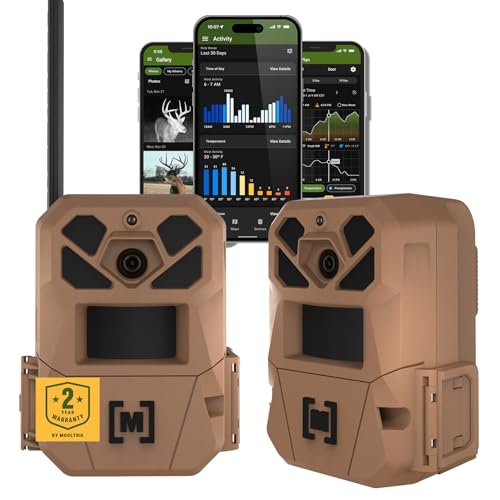 Moultrie Edge 3 Cellular 40MP Trail Camera 2-Pack
|
8.1/10 | Buy | |
| Editor's Pick |
 Spartan GoLive3 Cellular Trail Camera with Live Streaming
|
7.8/10 | Buy | |
| Best Value |
 Spartan GoLive3 2-Pack Cellular Trail Camera, 8MP
|
7.5/10 | Buy | |
| Top Rated |
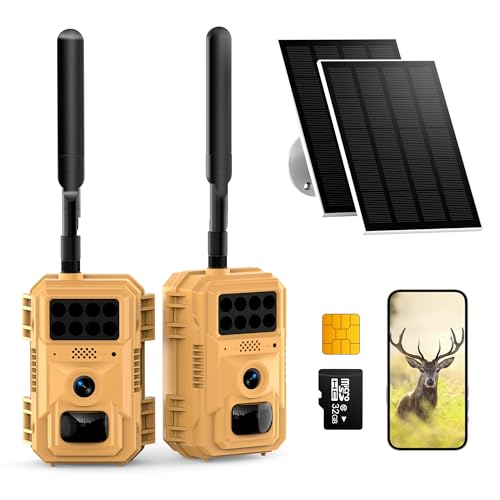 UYF 2K 4G LTE Solar Trail Camera 2-Pack
|
7.4/10 | Buy | |
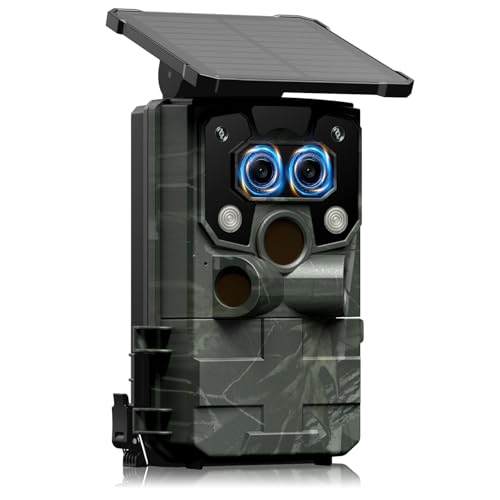 VOOPEAK TC37 Dual-Lens Trail Camera 60MP 4K
|
7.3/10 | Buy | ||
 XTU 4K 64MP Solar Trail Camera with WiFi
|
7.2/10 | Buy | ||
 GardePro E5S 64MP Trail Camera
|
6.5/10 | Buy | ||
 Reolink 4K 4G LTE Wireless Cellular Trail Camera
|
9.8/10 | Buy |
Moultrie Edge 3 Cellular 40MP Trail Camera 2-Pack
A cellular trail camera built for serious hunters, the Edge 3 pairs AI-powered buck detection with real-time alerts and nationwide 4G connectivity. Fast 0.5-second trigger speed and 40MP resolution capture sharp detail, though no verified buyer reviews yet limit confidence in long-term reliability.
Pros
- AI identification and auto-alerts save time scouting and reduce notification fatigue
- Fast trigger speed and long detection range capture deer movement without blur
- Cellular connectivity with automatic carrier selection simplifies remote property monitoring
- Live preview and GPS mapping enable precise camera placement and tracking
- No long-term contracts; seasonal or year-round plans fit different hunting schedules
Cons
- No verified customer reviews available, so real-world durability and app reliability are unconfirmed
- Cellular service fees add ongoing cost beyond hardware purchase
- Requires Moultrie app ecosystem for full functionality, limiting integration with other platforms
Spartan GoLive3 Cellular Trail Camera with Live Streaming
A cellular trail camera built for hunters who need real-time connectivity and wide coverage. The GoLive3 delivers 8MP photos, 1080p video with sound, and live streaming via the Spartan app, plus a 96-degree field of view to cover larger areas with fewer units.
Pros
- Real-time live streaming lets you monitor action as it happens through the mobile app
- Wide 96-degree lens and 80-foot detection range reduce the number of cameras needed for large properties
- Extended battery life and improved power options make it practical for remote, off-grid locations
- IP65 weatherproofing handles rain, snow, and temperature extremes reliably
- Sound recording on videos provides more context than silent clips
Cons
- No verified buyer reviews available yet to assess long-term reliability or real-world performance
- Cellular service required for live streaming and app connectivity, adding potential ongoing costs
- Dimensions and weight specs suggest it may be bulkier than some competing trail cameras
Spartan GoLive3 2-Pack Cellular Trail Camera, 8MP
This 2-pack cellular trail camera combines live streaming capability with 8MP photo clarity and 60-second HD video to monitor hunting property in real time. The 96-degree wide angle lens and 80-foot detection range cover expansive areas, while extended battery life and flexible power inputs support long-term remote deployment.
Pros
- Live streaming capability lets you monitor activity as it happens through the Spartan App
- Wide 96-degree field of view and 80-foot detection range reduce the number of cameras needed for large areas
- Improved battery life and support for multiple external power sources make long-term remote monitoring practical
- IP65 weatherproof rating and blackout flash deliver reliable performance in harsh conditions
- 8MP image quality with sound recording captures detail for hunting and property surveillance
Cons
- No customer reviews available yet to validate real-world performance claims
- Requires cellular service and the Spartan Camera Management App for full functionality
- Premium pricing position typical of cellular trail cameras may exceed budget for casual users
UYF 2K 4G LTE Solar Trail Camera 2-Pack
This two-camera set eliminates WiFi dependency by using 4G LTE with pre-installed IoT SIM cards, making it ideal for remote properties and farms. Fast 0.2-second trigger times and solar charging keep operational costs low, though cellular data plans are required after the free trial period.
Pros
- 4G LTE connectivity works across AT&T, T-Mobile, and Verizon without needing home WiFi
- Solar panel with 6000mAh battery reduces manual charging frequency
- 0.2-second trigger speed with 70-foot detection range and adjustable sensitivity levels
- 2K video with no-glow infrared up to 50 feet, plus two-way audio via app
- Two 32GB SD cards included, expandable to 128GB per camera
Cons
- Requires ongoing cellular data plan after 15-day free trial, adding recurring costs
- 4.7 rating with zero verified buyer reviews limits real-world usage insights
- Personal SIM cards not supported, restricting flexibility for existing cellular plans
VOOPEAK TC37 Dual-Lens Trail Camera 60MP 4K
This dual-lens trail camera switches between color daytime and starlight night modes, eliminating the grainy infrared look common in standard game cameras. Built-in solar charging and WiFi connectivity make it practical for remote wildlife monitoring without frequent manual maintenance.
Pros
- Starlight night vision eliminates washed-out infrared look while maintaining stealth with 940nm technology
- Solar charging system reduces dependency on battery replacements in remote locations
- 2-inch onboard display and direct WiFi hotspot allow quick verification without disturbing the monitoring area
- Fast 0.1-second trigger captures sharp images of rapid animal movement
Cons
- No customer reviews available yet to validate real-world performance claims
- SD card not included, requiring separate purchase for operation
- Dual-lens system and advanced features command a premium price positioning
XTU 4K 64MP Solar Trail Camera with WiFi
This solar-powered trail camera combines 4K video, 64MP photos, and a fast 0.2-second trigger to capture wildlife in remote locations without monthly subscriptions. Built for hunters and property monitors who need reliable night vision and flexible charging options in the field.
Pros
- 0.2-second trigger speed minimizes missed shots and reduces false captures
- Dual power system: rechargeable battery with solar charging plus USB-C and DC 6V options for flexibility
- 4K video and 64MP photos with enhanced low-light processing reduce blur and noise
- Local WiFi app viewing up to 49 feet with no cellular plan or monthly fees required
- IP66 weatherproof rating handles rain, snow, and temperature extremes
Cons
- WiFi range limited to 49 feet and requires on-site viewing only, no remote access from home
- No microSD card included; requires Class 10/U1 or higher card (up to 128GB noted in specs, though title mentions 256GB support with unclear guidance)
- No reviews yet posted, so real-world performance feedback unavailable at this time
- Requires 4 AA backup batteries sold separately for cloudy-day reliability
GardePro E5S 64MP Trail Camera
A no-frills trail camera designed for hunters and wildlife monitoring, the E5S delivers 64MP stills and 1296P video with a rapid 0.1-second trigger. The non-cellular, non-WiFi design minimizes power drain, though it requires manual SD card retrieval to view footage.
Pros
- Exceptional trigger speed minimizes missed shots of fast-moving wildlife
- High-resolution output with solid video quality for detailed footage
- Weather-sealed construction built for remote outdoor placement
- Battery-efficient operation reduces maintenance needs in field conditions
Cons
- No cellular or WiFi connectivity means manual SD card retrieval to review footage
- Requires 8 AA batteries plus optional solar panel purchase for extended use
- Lacks real-time alerts or remote viewing capability
Reolink 4K 4G LTE Wireless Cellular Trail Camera
A 4K cellular trail camera designed for remote wildlife monitoring without Wi-Fi or grid power. Built-in AI detection, no-glow night vision, and PTZ auto-tracking make it effective for wildlife surveys, though it requires separate microSD cards and carrier setup.
Pros
- 4K dual-view setup captures both wide landscape and zoomed details simultaneously
- Cellular operation eliminates Wi-Fi and power dependency for truly remote placement
- AI detection reduces false triggers and unnecessary recordings
- PTZ auto-tracking follows moving subjects for clearer event documentation
- No-glow night vision preserves animal behavior without disruption
Cons
- Requires separate microSD card purchase and ongoing cellular carrier plan costs
- No verified owner reviews available to assess real-world reliability and battery life
- Bulk dimensions (9.45 x 7.8 x 7.8 inches) may be challenging to mount in tight spaces
Trail Cameras Buying Guide
Picking the right trail camera comes down to matching your specific use case to the right combination of features.
A camera left on a remote ridgeline for three months has very different requirements from one monitoring a backyard feeder 200 yards from your house. The six criteria below cover everything you need to evaluate before committing to a purchase.
Cellular vs. Standalone Connectivity

This is the single biggest decision you will make. Standalone cameras store images and video on an SD card, which means you have to physically visit the camera to retrieve data.
That works well for low-traffic spots where disturbing the area matters, and it keeps ongoing costs to zero beyond batteries and storage cards.
Cellular trail cameras transmit photos and sometimes live video directly to an app on your phone over 4G LTE networks.
You get real-time alerts without spooking deer or tipping off intruders, which is why they have become the preferred choice for serious hunters and remote property owners.
The tradeoff is a monthly data plan fee and the need for cell coverage at the camera location.
Options like the REOLINK 4K 4G LTE Cellular Trail Camera and the UYF 2K 2-Pack cellular units are built entirely around this workflow, with pre-installed SIM cards that eliminate setup friction.
If you already rely on wireless security cameras around your home, adding a cellular trail cam to your property monitoring setup is a natural extension.
WiFi and Bluetooth cameras occupy a middle ground. They can push images to a phone when you are within range, but they do not offer true remote transmission.
They are useful for checking cameras near a cabin or barn without disturbing the area, but they are not a substitute for cellular if your property is genuinely remote.
Trigger Speed and Detection Zone

Trigger speed is the delay between a motion sensor detecting movement and the camera capturing an image. It is measured in fractions of a second, and it matters enormously when a deer walks through the frame at a normal pace.
A 0.1-second trigger like the one on the GardePro E5S is effectively instant and will rarely miss an animal. A 0.5-second trigger is still competitive and adequate for most hunting applications.
Beyond trigger speed, pay attention to the detection angle and range.
A narrow detection zone of 90 degrees may miss animals approaching from the sides, while a wide 96-degree field of view like Spartan Camera’s GoLive3 captures more of the scene with a single unit.
Detection range typically matches flash range, and most mid-range cameras cover 80 to 100 feet reliably.
Recovery time, which is how quickly the camera resets and arms itself after each trigger event, is equally important in high-traffic areas. A slow recovery means you could miss the second deer in a group of five.
Look for recovery times under five seconds for active scrapes or feeding areas.
Night Vision: No-Glow vs. Low-Glow vs. White Flash
Most trail cameras use infrared night vision, and the type of IR emitter you choose has real consequences. White flash cameras produce the sharpest, full-color images at night but are highly visible and will alert deer and trespassers immediately.
Low-glow cameras emit a faint red light visible at close range. No-glow cameras, also called black flash, are completely invisible to animals and humans, making them the preferred choice for hunting over bait sites or for security applications.
No-glow night vision typically produces slightly darker grayscale images compared to white flash, though sensor quality varies significantly between manufacturers. The GardePro E5S specifies 100-foot no-glow range, which is solid for its price tier.
Higher-end cellular cameras like the Spartan GoLive3 pair blackout IR flash with GPS tagging, giving you not just stealth but location metadata for every image.
Resolution and Video Quality

Trail camera megapixel counts are frequently inflated through interpolation. A camera claiming 64MP often starts with a lower-resolution native sensor and digitally upscales the output.
This is not necessarily a dealbreaker, but it is worth understanding that native sensor resolution is more important than the advertised headline number. A genuine 12MP native sensor will outperform a 64MP interpolated image in low-contrast conditions.
Video resolution matters if you plan to review footage for identifying individual animals or using clips as scouting content. 1080p is standard and sufficient for most purposes.
4K video, as offered by the XTU Solar Trail Camera and VOOPEAK Starlight dual-lens model, is genuinely useful if you want to crop or zoom into footage while retaining sharpness.
Keep in mind that higher video resolution drains batteries and fills storage faster. If battery life is your primary constraint, setting the camera to photo-only mode is often the smarter tradeoff.
Power Source and Battery Life

Standard trail cameras run on AA batteries, typically 8 to 12 cells. Battery life varies enormously based on trigger frequency, temperature, flash type, and whether cellular transmission is active.
In cold climates, lithium batteries significantly outperform alkaline and are worth the extra cost for winter deployments. Cameras that spend most of their time in standby mode rather than actively transmitting will always last longer.
Solar-powered options like the XTU Solar Trail Camera and UYF 2K Cellular 2-Pack use integrated or panel-mounted solar charging to top off rechargeable batteries continuously.
This effectively makes them maintenance-free for months in locations with reasonable sun exposure, which is a major advantage for remote cellular cameras that would otherwise drain quickly from constant data transmission.
If reliable electricity access matters to your broader property setup, smart plugs and smart light switches can complement a wired base camp setup alongside your trail cameras.
The Spartan GoLive3 takes a different approach with a built-in lithium battery pack rather than replaceable cells, trading flexibility for a more integrated power management system. Evaluate your access frequency and deployment duration before deciding which power configuration fits your workflow.
Weatherproofing and Build Quality

Trail cameras are left outdoors year-round in conditions ranging from summer humidity to winter ice. Look for an IP65 or IP66 weatherproof rating as a baseline, which indicates protection against dust ingress and high-pressure water jets.
The XTU Solar Trail Camera carries an IP66 rating, making it one of the more rigorously sealed options at its price.
Most cameras in this category at least meet IP54 splash resistance, but that standard is not equivalent and will show limitations in sustained rain.
Beyond the IP rating, consider mounting hardware, strap quality, and whether the housing can be locked against theft.
Cellular cameras are higher-value targets for theft, so investing in a Python cable lock or a lockbox is worth considering alongside the camera itself.
A robust build that handles freeze-thaw cycles without cracking the housing is particularly important in northern climates.
Why You Should Trust Us
ProductFind is an independent review publication. We do not sell the products we cover, and we have no involvement in order fulfillment, returns, or manufacturer warranties.
Our editorial team evaluates products by synthesizing manufacturer-published specifications, expert review consensus drawn from hunting, wildlife, and outdoor technology publications, and verified buyer feedback from confirmed purchase reviews.
We do not conduct our own product trials; our evaluations are grounded in research, published data, expert review consensus, and verified buyer feedback.
Each product in our roundups receives a PF Score on a scale of 0 to 10, calculated against a consistent set of criteria specific to the product category.
For trail cameras, those criteria include trigger speed, night vision performance, connectivity reliability, battery or solar efficiency, image quality, weatherproofing, and overall value. Scores reflect the totality of a product’s performance profile against those criteria, not a single standout feature.
ProductFind may earn a commission when you purchase through links on this page. That affiliate relationship has no influence on product selection, ranking order, or PF Score. Our recommendations are editorially independent and determined solely by research quality and performance data.
Final Thoughts
The right trail camera depends heavily on how you plan to use it. A hunter checking a remote food plot needs something fundamentally different from a homeowner monitoring a gate camera or a wildlife photographer documenting nocturnal species.
Across the eight cameras we evaluated, there are strong picks at every tier from budget-friendly standalone options to premium cellular units with GPS and live streaming. Here are our standout picks by use case.
- Best Overall: REOLINK 4K 4G LTE Cellular Trail Camera earns the top PF Score in this roundup with a combination of true 4K cellular transmission, broad LTE compatibility, and a build quality that translates to consistent real-world reliability across a wide range of verified buyer deployments.
- Best Cellular Value: Moultrie Edge 3 Cellular Trail Camera 2-Pack delivers dependable cellular connectivity, a fast 0.5-second trigger, and 40MP image output in a two-camera bundle at a mid-range price, making it the smartest dollar-per-camera option for hunters setting up multiple locations.
- Best for Live Streaming: Spartan Camera GoLive3 stands apart with on-demand FHD live streaming, GPS tagging, and a blackout IR flash, giving serious hunters real-time situational awareness that standard cellular cameras cannot match.
- Best Solar-Powered Pick: UYF 2K Cellular Trail Camera 2-Pack combines solar charging, pre-installed IoT SIM cards, and no-glow night vision in a two-unit bundle designed for set-and-forget remote deployments on farms and large properties.
- Best Budget Standalone: GardePro E5S Trail Camera is the most accessible entry point in this roundup, offering a genuine 0.1-second trigger and 100-foot no-glow night vision for users who do not need cellular connectivity and want a reliable camera at a low upfront cost.
If you are building out a broader property monitoring or smart home setup, pairing trail cameras with capable smart light bulbs or a dedicated home automation routine can create a more integrated perimeter awareness system.
For wearable devices that complement an active outdoor lifestyle, fitness trackers are another category worth exploring.
Frequently Asked Questions
Do I need a subscription plan for a cellular trail camera?
Most cellular trail cameras require a monthly data plan to transmit photos and video over LTE networks.
Some cameras, like the UYF 2K 2-Pack, come with a pre-installed IoT SIM card that gets you started without a separate activation step, but ongoing data fees still apply.
If you want to avoid recurring costs entirely, a standalone WiFi or non-cellular camera stores everything locally on an SD card with no subscription required.
How long do trail camera batteries typically last?
Battery life varies dramatically depending on trigger frequency, temperature, flash type, and whether the camera is transmitting data.
A standalone no-glow camera on a quiet trail in mild weather can run for several months on a fresh set of lithium AA batteries. A cellular camera on an active scrape in sub-freezing temperatures may need attention every few weeks.
Solar-powered models largely sidestep this issue by continuously topping off their battery reserves during daylight hours, making them the most practical solution for genuinely remote deployments.
What is the difference between no-glow and low-glow infrared flash?
Low-glow cameras emit a faint red light from their IR emitters that is visible to humans and can be detected by deer and other game animals at close range.
No-glow cameras, also called black flash, use 940nm IR emitters that are completely invisible to both animals and people. No-glow is the preferred choice for hunting applications and security monitoring where stealth is critical.
The tradeoff is that no-glow images are typically slightly dimmer, though the gap has narrowed significantly on current-generation sensors.
Can I use a trail camera for home security?
Trail cameras can absolutely serve a home security function, particularly for monitoring driveways, gates, and outbuildings where running power for a dedicated security camera is impractical. Cellular models with motion-activated photo alerts are especially useful here.
That said, purpose-built outdoor security cameras generally offer features like two-way audio, continuous recording, and broader smart home integration that trail cameras do not provide.
For a comprehensive home perimeter setup, trail cameras and dedicated wireless security cameras each fill a different role and can complement each other effectively.
How do I choose between a single camera and a multi-pack?
Multi-packs like the Spartan GoLive3 2-Pack and UYF Cellular 2-Pack offer meaningful savings per unit and make the most sense when you are covering multiple entry points, food sources, or property boundaries simultaneously.
A single camera is the right call if you are new to trail cameras and want to evaluate a specific location before committing to a larger deployment, or if your budget constrains you to a single high-quality unit rather than two mid-range ones.
For hunters, setting cameras on multiple travel corridors leading to a core bedding area almost always yields better scouting data than a single camera on one trail.
What memory card should I use in a trail camera?
Most trail cameras accept standard SD cards up to 32GB, 64GB, or 128GB depending on the model. Use a Class 10 or UHS-I rated card for reliable write speeds, particularly if you are capturing 4K video.
Avoid cheap no-brand cards, which have higher failure rates in outdoor temperature extremes.
Some cellular cameras like the UYF 2-Pack come with a 32GB card pre-installed, which is a useful convenience for buyers who want to deploy immediately out of the box.
About the author
Jerry is a reviewer and writer for ProductFind who specializes in Hunting & Shooting Sports. Jerry evaluates products through independent research: specifications, expert review consensus, and verified buyer feedback, and rates each one on the PF Score. Jerry focuses on helping readers pick the right hunting & shooting sport for their needs and budget.