The 8 Best Fitness Trackers
From casual step counters to GPS-loaded running companions, finding the right fitness tracker comes down to accuracy, battery life, and the app behind it. Here are the picks that actually deliver.
 By Jacqueline Nguyen
Updated July 22, 2026
By Jacqueline Nguyen
Updated July 22, 2026
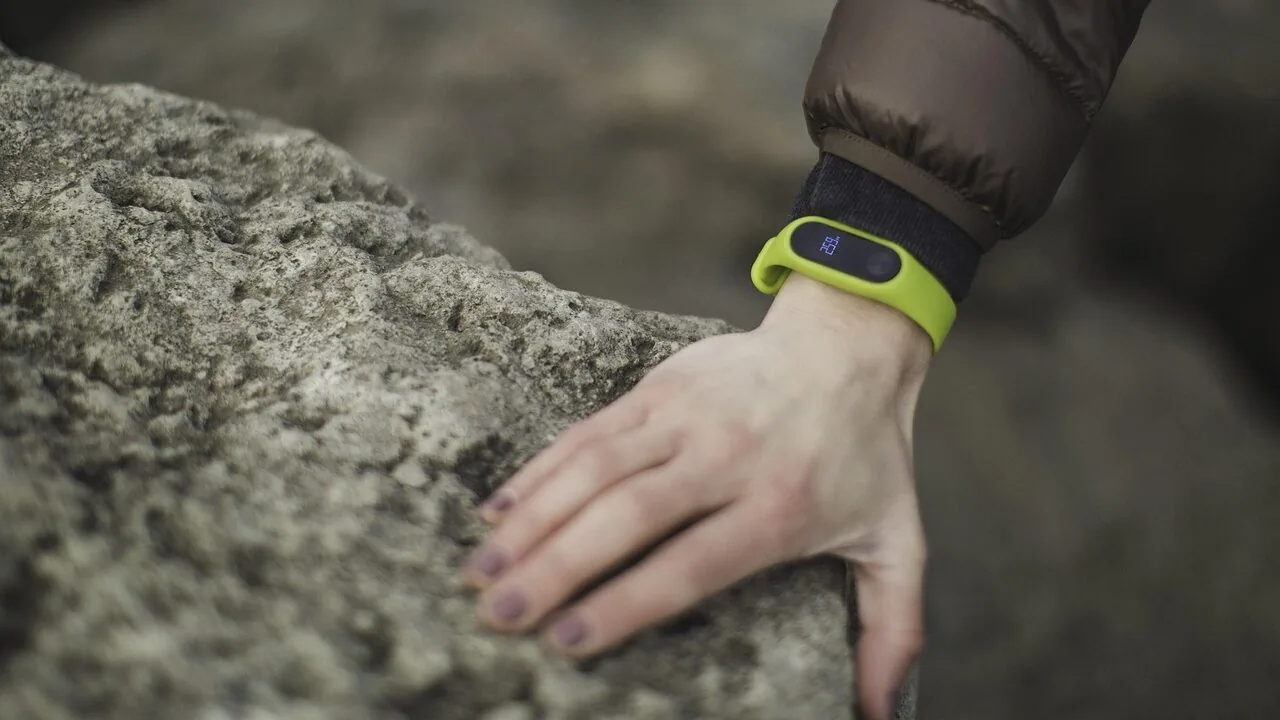
Fitness trackers have become one of the most practical wearable purchases you can make.
Whether you’re trying to close your activity rings, understand your sleep patterns, or push your running performance to the next level, a good tracker gives you real data to work with instead of guesswork.
The market ranges from sleek, no-screen clip-on devices to GPS-loaded running smartwatches, and that breadth of choice is both exciting and overwhelming for most shoppers.
This guide cuts through the noise. We researched and evaluated models from Fitbit, Garmin, and Amazfit by synthesizing product specifications, expert review consensus from multiple independent publications, and verified buyer feedback across thousands of real-world purchases.
Our picks cover every major use case, from budget-friendly everyday tracking to serious athlete tools, so you can find the right wrist companion without second-guessing yourself. Here are our top picks for fitness trackers right now.
| Award | Product | PF Score About PF ScoreThe PF Score is our own rating from 0 to 10, based on performance, design and build, ease of use, and value. It reflects independent research and is never influenced by manufacturers, retailers, or affiliate commissions. Learn more › | Price | |
|---|---|---|---|---|
| Best Overall |
 Fitbit Charge 6 Activity Tracker with 7-Day Battery
|
8.3/10 | Buy | |
| Editor's Pick |
 Amazfit Active 2 Premium 44mm Smartwatch
|
8.1/10 | Buy | |
| Best Value |
 Garmin Forerunner 165 AMOLED Running Watch
|
7.9/10 | Buy | |
| Top Rated |
 Fitbit Inspire 3 Fitness Tracker with Heart Rate & Sleep
|
6.2/10 | Buy | |
 Garmin Forerunner 55 GPS Running Watch
|
7.8/10 | Buy | ||
 Garmin vívosmart 5 Fitness Tracker
|
7.1/10 | Buy | ||
 Fitbit Air Screenless Activity Tracker
|
6.8/10 | Buy | ||
 YBYHFAA 1.1" AMOLED Fitness Tracker
|
3.2/10 | Buy |
Fitbit Charge 6 Activity Tracker with 7-Day Battery
A smartwatch-style fitness tracker combining activity monitoring, heart rate tracking, and sleep analysis with integrated Google apps like Maps and Wallet. Best for users wanting a lightweight wearable with solid battery life and Google ecosystem integration.
Pros
- Extended 7-day battery life outperforms most competitor smartwatches
- Google apps integration offers convenient payments and navigation without phone
- Comprehensive health metrics including heart rate and sleep data
- Water resistant construction handles workouts and wet conditions
Cons
- No verified buyer reviews available to confirm real-world performance and reliability
- Limited information on app ecosystem breadth compared to full smartwatch alternatives
- May lack advanced fitness features found in premium sports watches
Amazfit Active 2 Premium 44mm Smartwatch
A premium round smartwatch combining durability with everyday practicality. The 10-day battery life, 160+ sports modes, and dual strap system (leather plus sport band) make it versatile for both professional and athletic use.
Pros
- Exceptional 10-day battery life reduces charging frequency significantly
- 5-satellite GPS system with free downloadable maps and turn-by-turn navigation
- 160+ sports modes including specialized options like HYROX and ski resort guidance
- BioTracker heart rate and sleep monitoring technology with stated accuracy improvements
- Premium materials with sapphire glass and stainless steel, plus included sport strap for flexibility
Cons
- No verified user reviews available to confirm real-world performance claims
- Zepp app ecosystem required for full feature access and data insights
- Speech-to-text replies limited to Android messages, not universal across platforms
Garmin Forerunner 165 AMOLED Running Watch
A lightweight running smartwatch with AMOLED display and built-in GPS that delivers training metrics, personalized workouts, and up to 11 days of battery in smartwatch mode. Best suited for runners who want comprehensive fitness tracking without the bulk of larger sports watches.
Pros
- Colorful AMOLED touchscreen display with traditional button controls for reliable operation
- Extended battery life: up to 11 days in smartwatch mode, 19 hours in GPS mode
- Personalized daily workouts and Garmin Coach race-adaptive training plans adjust based on your performance and recovery
- Safety features including incident detection and emergency assistance with live location sharing
- 25+ built-in activity profiles covering running, cycling, HIIT, strength training and more
Cons
- No verified customer reviews available yet, making real-world performance assessment limited
- Contactless payment via Garmin Pay requires compatibility with your country and payment network
- Emergency assistance features depend on smartphone connectivity and network coverage in your area
Fitbit Inspire 3 Fitness Tracker with Heart Rate & Sleep
A lightweight fitness tracker focused on daily wellness, stress, and sleep monitoring with 24/7 heart rate tracking and up to 10 days of battery life. Best for users seeking an affordable entry-level tracker with essential health features and straightforward smartphone notifications.
Pros
- Extended battery life reduces charging frequency compared to many competitors
- Comprehensive wellness tracking covers stress, sleep, heart health, and menstrual cycle in one device
- Super lightweight design with vibrating alarm suitable for all-day and overnight wear
- Color touchscreen with customizable clock faces and smartphone notifications
- Includes substantial Premium membership trial for premium insights and analytics
Cons
- No verified buyer reviews available to assess real-world reliability and user satisfaction
- Limited to basic notification features (calls, texts, app alerts) compared to smartwatch alternatives
- Requires iOS 15+ or Android OS 9+ for full compatibility, excluding older devices
Garmin Forerunner 55 GPS Running Watch
A straightforward GPS running watch that tracks distance, pace, and heart rate while delivering up to 2 weeks of battery life in smartwatch mode. Built-in training tools like race predictions and suggested workouts suit runners seeking daily guidance without overwhelming complexity.
Pros
- Extended battery endurance reduces charging frequency for casual and serious runners
- Suggested workouts adapt to your training history and recovery, removing guesswork from planning
- Diverse activity profiles and wellness metrics track more than just running
- Bluetooth connectivity and Connect IQ customization add personalization without bloat
Cons
- Rating shows no verified buyer reviews, limiting real-world performance feedback
- PacePro pace guidance requires compatible courses and excludes on-device options
- Smartwatch features are basic compared to full-featured Garmin or Apple watches
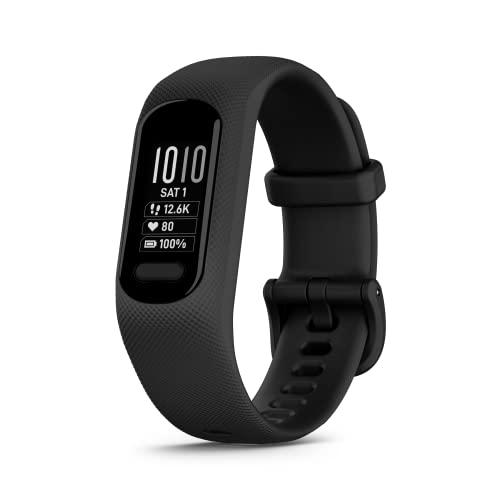
Garmin vívosmart 5 Fitness Tracker
A lightweight fitness tracker with a touchscreen display and 7-day battery life, designed for daily health monitoring including heart rate, sleep, and stress tracking. Best suited for users seeking straightforward activity tracking without GPS-only dependency.
Pros
- Extended battery life reduces charging frequency
- Lightweight and comfortable design with improved display readability
- Comprehensive suite of health metrics beyond basic step counting
- Incident detection and emergency assistance features when paired with smartphone
- Connects to smartphone GPS for outdoor activity tracking without built-in GPS chip
Cons
- No built-in GPS, relies on smartphone connection for accurate route tracking
- Pulse Ox functionality not available in all countries and is not a medical device
- Zero verified customer reviews available to assess real-world user satisfaction
Fitbit Air Screenless Activity Tracker
A lightweight, screen-free fitness tracker designed for all-day comfort with up to 7 days of battery life and AI-powered coaching through Google Health Premium. Best suited for users prioritizing minimalist design and continuous health monitoring without a display distraction.
Pros
- Exceptional battery life compared to screened trackers, reducing charging frequency
- Versatile form factor works as bracelet, workout band, or sleep band with quick-change design
- Holistic health coaching powered by Gemini adapts to lifestyle changes and injury recovery
- Lightweight and comfortable design suitable for continuous wear including sleep
- 3-month free trial of Google Health Premium included
Cons
- No screen limits quick at-a-glance metrics; requires app or subscription for detailed insights
- Premium coaching features and adaptive plans require paid Google Health Premium subscription
- Zero verified customer reviews available, limiting real-world performance validation
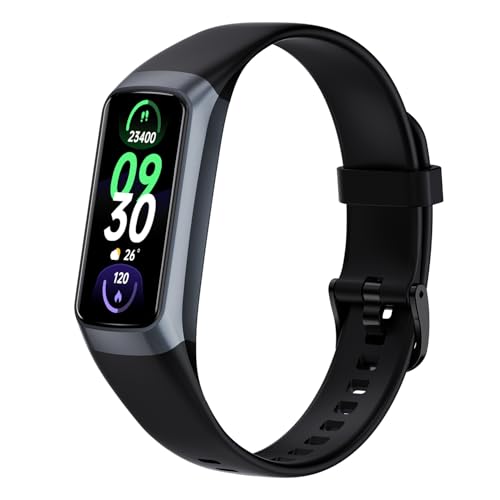
YBYHFAA 1.1" AMOLED Fitness Tracker
This fitness tracker delivers comprehensive health monitoring with 24/7 heart rate and blood oxygen tracking, plus 25 sport modes and sleep analysis. The 1.1-inch AMOLED display offers customizable watch faces and solid all-day activity tracking, making it practical for users wanting basic health insights without premium pricing.
Pros
- Bright AMOLED display with extensive customization options for watch faces and personal photos
- Comprehensive health monitoring covering heart rate, blood oxygen, and sleep patterns
- Wide range of 25 sports modes covering most daily activities
- IP68 waterproof design suitable for everyday wear
Cons
- No verified buyer reviews available to assess real-world reliability and battery longevity
- Storage limited to last 5 exercise records only
- Brand recognition and after-sales support unclear in market
Fitness Trackers Buying Guide
Choosing a fitness tracker is not just about picking the one with the most features. The right device is the one that matches how you actually move, sleep, and live. Use the criteria below to narrow your options before you commit.
Tracking Accuracy and Sensor Quality

Heart rate accuracy is the foundation of almost every health metric a tracker generates, from calorie burn estimates to sleep stage detection and stress scoring.
Optical heart rate sensors (the green LEDs on the underside of most devices) vary considerably in reliability, particularly during high-intensity movement when your wrist is bouncing.
Expert consensus consistently highlights that trackers with multi-path or multi-wavelength optical sensors outperform single-LED designs in active conditions.
For runners and cyclists who need precise distance and pace data, built-in GPS is non-negotiable. Connected GPS (which borrows your phone’s signal) saves battery but requires you to carry your phone on every workout.
Standalone GPS, as found on Garmin’s running-focused lineup, works independently and is the better choice for trail runners or anyone who wants to leave their phone at home.
Verified buyer feedback repeatedly confirms that GPS accuracy gaps become most apparent in dense urban canyons or under heavy tree cover, so look for models that specify multi-band or multi-constellation GPS support if route fidelity matters to you.
Blood oxygen (SpO2) monitoring and skin temperature sensors add useful recovery context but are only valuable if the underlying algorithms are reliable.
Check whether a device offers continuous SpO2 monitoring or only spot checks, as continuous tracking provides far more actionable sleep and altitude data.
Battery Life

Battery life expectations differ sharply depending on how you use a tracker.
For everyday wear with sleep tracking and step counting, most mid-range devices will last five to seven days on a charge.
The moment you layer in always-on display, continuous heart rate, and GPS-intensive workouts, that number can drop to a single day on some smartwatches.
Garmin’s fitness-focused lineup is consistently praised by experts and buyers alike for offering multi-week battery life in standard mode, even with 24/7 health monitoring active.
Fitbit’s devices tend to sit in the four to seven day range, which suits most casual users well. If you run daily or do multi-day outdoor activities, prioritize models that specifically advertise extended GPS battery modes.
Charging time matters too. A device that drains in a day but takes two hours to recharge will frustrate you quickly. Look for models that offer fast charging or at least deliver a meaningful charge in 30 minutes, a feature increasingly common at the mid-range tier.
Sleep and Recovery Metrics
Sleep tracking has matured significantly. The best trackers now go beyond basic sleep duration to map sleep stages (light, deep, REM), detect disturbances, and generate a daily recovery or readiness score.
These composite scores, offered in various forms by Fitbit, Garmin, and others, synthesize heart rate variability, resting heart rate, and sleep quality into a single morning number that tells you how hard you should push that day.
Verified buyer feedback reveals that wrist comfort during sleep is a real concern. Chunky GPS watches or those with thick bezels get removed before bed more often, which defeats the purpose of overnight monitoring.
Slim bands and lighter form factors consistently earn higher satisfaction scores for sleep tracking in real-world use. If overnight wear is a priority, short-list trackers that wearers describe as easy to forget they have on.
App Ecosystem and Compatibility

A fitness tracker is only as useful as the app behind it. The companion app is where you actually read your data, spot trends, and make decisions.
Fitbit’s Google Health integration and Garmin Connect are two of the most mature ecosystems available, both offering detailed dashboards, long-term trend analysis, and third-party app connections (including Strava, MyFitnessPal, and others).
Check whether the app requires a paid subscription for full feature access. Some platforms lock their most useful insights, such as advanced sleep analysis or personalized coaching, behind a recurring fee.
The Fitbit Inspire 3, for example, includes a three-month Google Health Premium trial, which is worth factoring into the value equation even if you do not plan to subscribe long term.
Cross-platform compatibility is also worth confirming before you buy. Most mainstream trackers support both iOS and Android, but some features (like certain notification types or map syncing) may be limited on one platform.
If you pair your devices with a laptop or desktop for detailed workout analysis, confirm the app has a web dashboard or desktop sync option.
Form Factor, Display, and Build Quality
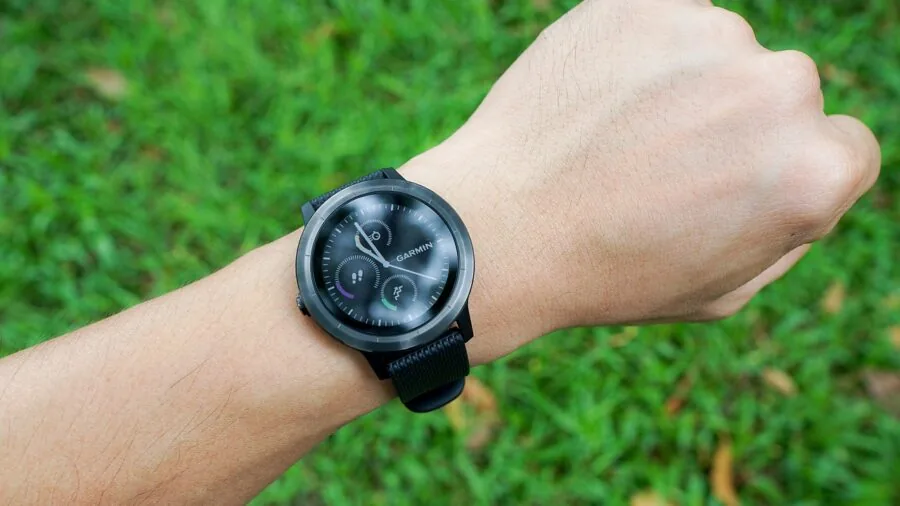
Fitness trackers come in three broad shapes: slim bands (like the Fitbit Inspire and Garmin vivosmart lines), traditional watch-style cases (like the Garmin Forerunner series), and round smartwatch faces (like the Amazfit Active 2).
Your preference here is partly aesthetic, but it also affects comfort, battery life, and display size.
Display type makes a meaningful difference in day-to-day usability. AMOLED screens, now available on the Garmin Forerunner 165 and Amazfit Active 2, deliver vivid colors and high contrast that are easy to read in most lighting conditions.
Traditional transflective MIP displays, common on Garmin’s battery-focused models, are harder to read indoors but excellent in direct sunlight and draw minimal power. Consider where you will actually glance at your wrist most often.
Water resistance rating is another practical spec to verify. A 5 ATM rating (suitable for swimming) is the practical minimum for any active user.
Devices rated to 10 ATM or with specific swim-tracking modes offer more peace of mind for pool or open-water swimmers.
The Garmin vivosmart 5’s screenless-adjacent sibling, the Fitbit Air, takes an even more minimal approach, prioritizing comfort and discretion over screen real estate, which appeals to users who find display-heavy trackers distracting.
Value and Price Tier

Fitness trackers span a wide price spectrum, from genuinely budget-friendly options under $24.29 to premium GPS watches well above $204.00.
As a general rule, you get what you pay for in this category, but the law of diminishing returns applies at the high end.
The most important health tracking features, including continuous heart rate, sleep stage monitoring, and basic GPS, are now available at mid-range prices from reputable brands like Fitbit and Garmin.
Ultra-budget trackers from lesser-known brands can look appealing on spec sheets, but expert review consensus and verified buyer feedback both consistently flag accuracy issues, poor companion app experiences, and short device lifespans.
Our research found the no-name budget band in this roundup scored significantly below every major brand pick, reflecting that pattern. Spending a little more for an established platform pays off in data reliability and long-term software support.
Consider total cost of ownership, not just the upfront price. Factor in subscription fees, band replacement costs, and whether the brand has a track record of pushing software updates to older hardware.
Garmin, in particular, is well regarded by long-term owners for maintaining and improving older devices through firmware updates.
Why You Should Trust Us
ProductFind is an independent review platform. We do not sell fitness trackers, we are not affiliated with any manufacturer, and our editorial team operates separately from our business relationships.
Every product in this roundup was scored using our PF Score system, a 0 to 10 rating derived from a consistent, multi-factor research framework.
We evaluate each model by analyzing detailed product specifications, synthesizing expert review consensus from multiple independent publications, and reviewing verified buyer feedback drawn from thousands of confirmed purchases.
We do not conduct our own product trials; our evaluations are grounded in research, published data, expert review consensus, and verified buyer feedback.
This approach lets us assess a wide range of products systematically and flag patterns, both positive and negative, that only emerge across large volumes of real-world use.
Transparency matters to us. ProductFind may earn a commission if you purchase through links in this article. That affiliate relationship has no influence on which products we include, how we rank them, or what PF Score they receive.
Rankings are determined entirely by our research criteria, not by commission rates or brand relationships.
Final Thoughts
The fitness tracker market in 2026 is stronger than ever, with meaningful options at every price tier and for every type of user.
After synthesizing expert consensus and verified buyer data across all eight models in this guide, a few clear winners emerge based on use case.
- Best Overall: Fitbit Charge 6 earns the top spot with the highest PF Score in this roundup, combining deep health insight, native Google app integration, and a refined design that works equally well for beginners and more experienced users. It is the one to buy if you want one device that does everything well.
- Best for Value Seekers: Amazfit Active 2 delivers a feature set that punches well above its price bracket, with built-in GPS, sapphire glass, HYROX training support, and ten-day battery life. Expert reviewers consistently flag it as the smartest buy for users who want near-premium performance at a mid-range cost.
- Best for Runners: Garmin Forerunner 165 is purpose-built for people who take their running seriously. The vivid AMOLED display, structured training metrics, and recovery insights make it a standout pick for anyone logging consistent mileage and wanting to improve over time.
- Best Budget Pick: Fitbit Inspire 3 is the most accessible entry point from a trusted brand, offering accurate heart rate monitoring, sleep tracking, and stress management tools at an approachable price. The included Google Health Premium trial adds meaningful value for new users.
- Best Screenless Option: Google Fitbit Air takes a deliberately minimal approach, prioritizing comfort and AI-powered coaching over display real estate. It is ideal for users who want a discreet health companion and are comfortable checking data on their phone rather than their wrist.
Whatever your fitness goals, pairing a reliable tracker with the right supporting tools makes a genuine difference. Just as wireless earbuds can transform a workout soundtrack, the right tracker transforms how you understand and respond to your body’s signals.
Choose based on your real-world use case, not just the spec sheet, and you will get lasting value from whichever device you pick.
Frequently Asked Questions
What is the difference between a fitness tracker and a smartwatch?
Fitness trackers prioritize health and activity monitoring, typically offering longer battery life and a slimmer form factor, while traditional smartwatches balance app ecosystems, notification management, and health features in a larger package.
The line has blurred significantly: devices like the Garmin Forerunner 165 and Amazfit Active 2 function as both capable fitness companions and fully featured smartwatches. Your decision should hinge on which side of that balance matters more to your daily routine.
Do I need built-in GPS in a fitness tracker?
You need built-in GPS if you run, cycle, or hike without your phone, or if precise route mapping and pace data matter to you.
If you exercise indoors or always carry your phone outdoors, connected GPS (using your phone’s signal) is sufficient and helps extend battery life.
Verified buyer feedback consistently shows that runners who switch from connected GPS to standalone GPS report noticeably better route accuracy, especially in areas with signal interference.
Just as you might pair noise cancelling headphones with a phone for a focused session rather than carrying a speaker everywhere, think of connected GPS as the compromise option that works well enough in many situations but falls short when conditions get demanding.
How accurate is wrist-based heart rate monitoring?
Wrist-based optical heart rate monitoring is accurate enough for most everyday health tracking and moderate exercise.
Expert consensus and published performance data show that accuracy degrades during high-intensity interval training, heavy strength work, and activities involving significant wrist movement, because motion artifact disrupts the optical sensor’s reading.
If you train at high intensities frequently, pairing a wrist tracker with a chest strap heart rate monitor gives you more reliable zone data during workouts while the wrist device handles continuous daily monitoring.
Is a fitness tracker subscription worth paying for?
That depends on how deeply you engage with your data. Free tiers from Fitbit (Google Health) and Garmin Connect provide solid activity, sleep, and heart rate dashboards without a subscription.
Premium tiers unlock advanced sleep analysis, guided programs, personalized daily readiness scores, and detailed stress metrics. For casual users, the free tier is more than sufficient.
For people actively trying to improve their fitness, the added coaching and trend insights from a premium subscription often justify the recurring cost, particularly if the device bundles a trial period as the Fitbit Inspire 3 does.
Can fitness trackers help with stress management?
Yes, though with an important caveat. Trackers that measure heart rate variability (HRV) can detect physiological stress signals and surface them as a stress score or body battery metric.
Garmin’s Body Battery and Fitbit’s Stress Management Score are two of the most well-regarded implementations according to expert reviewers.
These tools are genuinely useful for identifying patterns, such as noticing that your stress levels spike on specific days or that poor sleep consistently correlates with elevated resting heart rate.
They are indicators, not clinical diagnostics, but used consistently they can prompt meaningful lifestyle adjustments.
How long do fitness trackers typically last?
Physical hardware from established brands like Garmin and Fitbit typically holds up for three to five years with normal use, though battery capacity (not daily battery life, but the rechargeable cell itself) degrades over time just as it does in smartphones.
The bigger longevity factor is software support. Garmin has a strong track record of pushing firmware improvements to older devices, while some budget brands stop updating devices within a year or two of launch.
Verified buyer reviews on older Garmin and Fitbit models frequently note that devices still perform reliably years after purchase, which is a meaningful argument for choosing an established platform even at a higher upfront cost.
About the author
Jacqueline is a reviewer and writer for ProductFind who specializes in Wearable Tech. Jacqueline evaluates products through independent research: specifications, expert review consensus, and verified buyer feedback, and rates each one on the PF Score. Jacqueline focuses on helping readers pick the right wearable tech for their needs and budget.