The 9 Best Smart Glasses
Camera, AI assistant, open-ear audio, or full AR display: smart glasses now cover real ground. Here are the strongest picks across every style and use case.
 By Jacqueline Nguyen
Updated July 23, 2026
By Jacqueline Nguyen
Updated July 23, 2026

Smart glasses have evolved from clunky, battery-hungry novelties into genuinely wearable devices that blend style with real utility.
Whether you want an AI assistant that answers questions through open-ear speakers, a camera you can trigger with a voice command, or a crisp AR display that floats a virtual screen in your field of view, there is now a pair designed specifically for your use case.
Paired with the continued rise of other wearable tech like smartwatches and smart rings, smart glasses are quickly becoming a core part of the connected everyday carry.
Navigating this market is harder than it looks.
Manufacturers use overlapping terms like AR, XR, and AI glasses to describe very different experiences, prices range from budget-friendly to premium flagship, and the right pair depends heavily on whether you prioritize style, display quality, battery life, or AI features.
ProductFind assessed each model below through a research-based approach, drawing on publicly published specifications, expert review consensus across the industry, and verified buyer feedback, then scored each pair on our 0 to 10 PF Score scale.
The picks below represent the strongest options available across the full spectrum of smart glasses in 2026.
| Award | Product | PF Score About PF ScoreThe PF Score is our own rating from 0 to 10, based on performance, design and build, ease of use, and value. It reflects independent research and is never influenced by manufacturers, retailers, or affiliate commissions. Learn more › | Price | |
|---|---|---|---|---|
| Best Overall |
 Meta Ray-Ban Gen 2 Smart Glasses with 3K Camera
|
8.6/10 | Buy | |
| Editor's Pick |
 Meta Ray-Ban Gen 2 Smart Glasses with 3K Camera
|
8.4/10 | Buy | |
| Best Value |
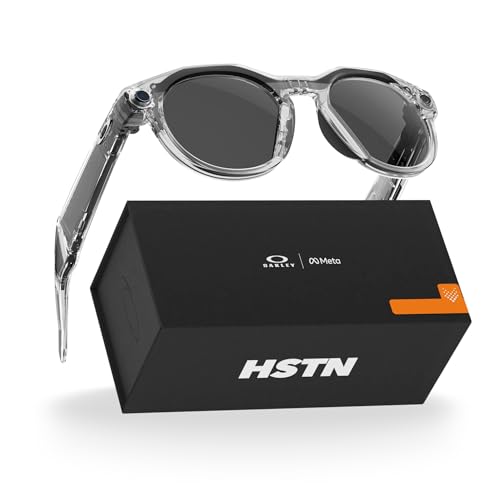 Meta Oakley HSTN Smart Glasses with Transitions Lenses
|
8.2/10 | Buy | |
| Top Rated |
 XREAL 1S AR Glasses with 500" Display and 3DoF
|
7.8/10 | Buy | |
 RayNeo Air 4 Pro 201" AR Glasses with HDR10
|
7.4/10 | Buy | ||
 Plunthorn AI Smart Glasses with 8MP Camera and 4K Video
|
5.4/10 | Buy | ||
 AMZISH AI Smart Glasses with 8MP Camera
|
5.3/10 | Buy | ||
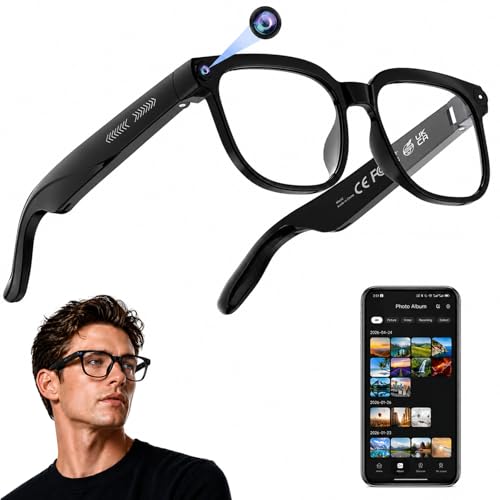 Plunthorn AI Smart Glasses with 4K Camera & Translation
|
5.2/10 | Buy | ||
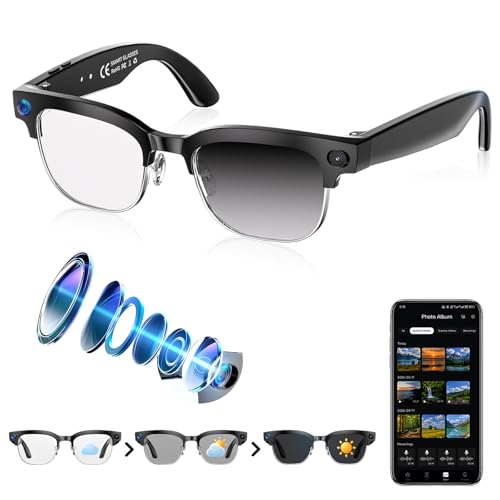 SGUKZF AI Smart Glasses with 4K Camera and Translation
|
5.0/10 | Buy |
Meta Ray-Ban Gen 2 Smart Glasses with 3K Camera
These AI-powered smart glasses combine Ray-Ban's iconic Wayfarer design with practical features like 3K video recording, open-ear audio, and hands-free Meta AI access. Best for users who want wearable tech without obvious displays, though functionality depends on smartphone connectivity.
Pros
- Extended 8-hour battery life, double the previous generation, plus 48-hour charging case
- 3K ultra-wide video recording captures sharp detail in hands-free format
- Real-time translation across 8+ languages without requiring WiFi
- Open-ear audio design lets you hear ambient sound and conversations naturally
- Wind and street noise reduction technology improves call quality significantly
Cons
- Requires Bluetooth connection to smartphone and Meta AI app for core features, limiting standalone functionality
- Video clips limited to 3 minutes per session, requiring multiple recordings for longer content
- No verified user reviews available, making real-world reliability and durability difficult to assess
Meta Ray-Ban Gen 2 Smart Glasses with 3K Camera
Meta's second-generation Ray-Ban smart glasses combine style with practical AI features, including 3K video recording, hands-free calls, and real-time translation across seven languages. Battery life reaches 8 hours per charge with Transitions lenses that adapt to changing light, making them versatile for all-day wear.
Pros
- Extended 8-hour battery with charging case providing 48 hours total power
- Transitions lenses eliminate need for separate prescription or sunglasses
- Live translation feature works without WiFi connection
- Noise-canceling mic designed for clear call quality
- Privacy controls allow users to disable voice commands at any time
Cons
- No user reviews available yet to verify real-world performance claims
- Meta AI requires smartphone Bluetooth connection and active internet on your phone
- Video clips limited to 3 minutes per session, requiring manual restart for longer recordings
Meta Oakley HSTN Smart Glasses with Transitions Lenses
Meta's Oakley HSTN merges athletic eyewear with AI-powered features, offering hands-free photo and video capture, open-ear audio, and real-time Meta AI assistance. The adaptive Transitions lenses and 8-hour battery life make it practical for all-day outdoor use, though smartglasses remain a niche product category.
Pros
- Extended battery life with substantial charging case capacity
- Adaptive Transitions lens technology eliminates need to switch frames
- Hands-free AI assistance and real-time information for athletes
- Open-ear design maintains situational awareness while using audio
- Integration with fitness platforms for performance metric overlay
Cons
- No verified user reviews available to assess real-world durability or performance
- Smartglasses remain an early adoption category with limited mainstream appeal
- Limited information on actual video quality, audio clarity, and battery performance under varied conditions
XREAL 1S AR Glasses with 500" Display and 3DoF
XREAL 1S delivers spatial AR viewing with a massive 500-inch virtual screen, native 3DoF head tracking via the proprietary X1 chip, and REAL 3D content transformation. Designed for USB-C DP devices including iPhones and handhelds, it targets users seeking immersive portable entertainment with serious specs.
Pros
- Exceptional motion latency (3ms at 120Hz) reduces motion sickness and delivers smooth head tracking
- REAL 3D on-glasses processing instantly adds spatial depth to any content without app setup
- Broad device compatibility via USB-C DisplayPort works across smartphones, tablets, and gaming handhelds
- Premium optical engineering with individual color tuning per unit and 9% clarity boost edge-to-edge
- TUV Rheinland certification confirms low blue light, flicker-free viewing, and 100% UV protection
Cons
- No user reviews available yet, limiting real-world performance validation from verified buyers
- REAL 3D mode limited to 30fps with 90-100ms latency, slower than native 3DoF performance
- IPD range of 59.5-70.5mm accommodates ~95% of users, potentially excluding those outside this range
RayNeo Air 4 Pro 201" AR Glasses with HDR10
These AR glasses deliver a 201-inch virtual display with HDR10 color depth and 120Hz refresh rates, making them versatile for movies, gaming, and streaming across iPhones, Android devices, and consoles. The lightweight 76g design and universal USB-C connectivity offer practical convenience, though the lack of user reviews and potential audio limitations without accessories warrant consideration.
Pros
- Massive 201-inch virtual screen with HDR10 contrast and color depth makes streaming and gaming immersive
- Works directly with iPhone 17/16/15, Android, MacBook, iPad, PS5, Steam Deck, and Switch 2 via USB-C without apps
- Lightweight 76g frame with adjustable fit reduces fatigue during extended wear
- AI upscaling enhances clarity and motion on lower-resolution sources in real time
- 4-speaker spatial audio system from Bang & Olufsen delivers directional sound for movies and gaming
Cons
- Zero verified user reviews, so real-world performance and durability remain unconfirmed
- Audio quality may require optional Sound Tube accessory for adequate volume in noisy environments
- No onboard battery means total dependence on connected device power, limiting true portability
Plunthorn AI Smart Glasses with 8MP Camera and 4K Video
These AI-powered smart glasses combine a built-in 8MP camera for 4K video recording with real-time translation, object recognition, and ChatGPT-backed voice assistance. Open-ear audio and Bluetooth connectivity make them practical for hands-free calls and music, though the lack of verified buyer feedback means durability and real-world performance remain uncertain.
Pros
- Comprehensive AI features including translation and object recognition in one wearable device
- Interchangeable lens system provides versatility for different environments and occasions
- Open-ear audio design prioritizes safety during commuting, cycling, and outdoor activities
- IP65 water resistance handles sweat and splashes from active use
- No smartphone required for core AI functions thanks to built-in ChatGPT model
Cons
- Zero verified buyer reviews make it impossible to assess real-world reliability, battery accuracy, or video quality claims
- IP65 rating excludes swimming and full submersion, limiting use cases despite water-resistance claims
- 300mAh battery capacity is modest for a device with 4K video recording and continuous AI processing demands
AMZISH AI Smart Glasses with 8MP Camera
These smart glasses combine an 8MP camera with real-time AI translation across 164 languages and voice assistance, making them useful for travel, vlogging, and outdoor activities. The open-ear audio design keeps you aware of surroundings while delivering clear calls, though the battery lasts only 60 minutes for continuous video recording.
Pros
- AI translation feature eliminates language barriers during travel and international meetings
- Interchangeable lens system offers flexibility for different settings and personal style
- Open acoustics allow ambient sound awareness while maintaining audio quality
- IP65 water resistance suitable for sports, cycling, and outdoor use
- Dual-mic noise cancellation performs well in active environments
Cons
- 60-minute continuous video recording battery life is limited for extended vlogging sessions
- IP65 rating excludes swimming and submersion, limiting water activity use
- Product has zero verified reviews, making real-world performance validation difficult
Plunthorn AI Smart Glasses with 4K Camera & Translation
These AI-powered smart glasses combine 4K video recording, real-time translation, and ChatGPT voice assistance in a transparent frame designed for travel and daily use. The open-ear audio and IP65 waterproof rating make them practical for on-the-go capture, though limited reviews mean real-world performance remains unverified.
Pros
- 4K recording capability captures high-quality travel footage hands-free
- Real-time translation feature breaks language barriers for international users
- IP65 waterproof rating and open-ear design suit active, outdoor lifestyles
- ChatGPT integration adds practical AI assistant functionality
- Object recognition supports learning and exploration during travel
Cons
- Zero verified customer reviews limit insight into actual reliability and durability
- 4.7 rating without reviews raises questions about rating methodology and authenticity
- 290mAh battery capacity suggests limited all-day runtime for heavy video recording use
SGUKZF AI Smart Glasses with 4K Camera and Translation
First-person perspective camera glasses featuring 4K video with stabilization, real-time translation across 139+ languages, and open-ear audio for hands-free use. Designed for active users who need documentation, travel, or outdoor recording without traditional camera gear.
Pros
- Comprehensive feature set combining video capture, AI translation, and open-ear audio in one device
- IP66 waterproof rating and lightweight design suit active outdoor use and sports
- Photochromic lenses eliminate need for separate sunglasses while reducing UV exposure
- ChatGPT integration and multi-language translation add practical utility for work and travel
Cons
- No verified user reviews available to assess real-world reliability and battery performance claims
- 290mAh battery capacity suggests limited recording time, particularly unclear for 4K video duration
- Camera and translation quality performance cannot be independently verified from specifications alone
Smart Glasses Buying Guide
With so many fundamentally different products sharing the “smart glasses” label, buying blind is a real risk.
Before spending anything from budget to premium tier, it pays to understand exactly what distinguishes a camera-and-audio lifestyle pair from a full AR display headset, and which trade-offs matter most for your daily routine.
Display Type: AR Passthrough vs. No Display at All

This is the single most important fork in the road.
AR display glasses like the XREAL 1S project a virtual screen into your line of sight using waveguide or birdbath optics, letting you watch video or interact with content without pulling out a phone or tablet.
The tradeoff is that they tend to be bulkier, require a tethered USB-C connection to a source device, and do not look much like ordinary eyewear.
Lifestyle AI glasses like the Meta Ray-Ban Gen 2 series and Meta Oakley HSTN have no heads-up display at all. Instead, they pair stylish frames with open-ear speakers, a forward-facing camera, and an on-device AI assistant.
They look and feel like normal sunglasses or optical frames, which makes them far more socially acceptable in everyday settings.
If your priority is ambient audio, quick photo capture, and AI responses while you go about your day, a display-free pair will serve you better than a bulky AR unit.
Budget no-display glasses from brands like Plunthorn and SGUKZF occupy a third tier: they add a camera and Bluetooth audio to a conventional frame at a much lower price point, sacrificing AI depth and build quality in the process.
Think carefully about which experience you are actually buying before committing.
Camera Quality and Video Recording

For any smart glasses that include a camera, resolution and field of view matter enormously in practice.
The Meta Ray-Ban Gen 2 lineup shoots at 3K ultra-HD with a 12 MP ultra-wide sensor, producing shareable photos and video that rival dedicated action cameras for casual use. The Oakley HSTN variant uses the same camera hardware inside a sportier frame.
Budget alternatives frequently advertise “4K” recording but tend to rely on heavily interpolated or software-upscaled footage that does not hold up at close inspection, a pattern consistently noted in verified buyer reviews.
Stabilization is a secondary but important spec. Optical or electronic image stabilization (EIS) matters most if you plan to record while moving, cycling, or hiking.
The SGUKZF glasses specifically advertise EIS anti-shake, which is worth noting at its price point even though the overall imaging pipeline remains modest compared to Meta’s hardware.
Also consider where the camera sits on the frame and how visible it is to bystanders. Cameras embedded in the bridge or lens corners are less obvious than prominent lens-mounted modules, but the physical placement also affects the angle and field of view you capture.
Audio: Open-Ear Speakers and Call Quality
Open-ear audio is a defining feature of lifestyle smart glasses. Rather than sealing your ears like headphones, the speakers sit inside the temples and project sound toward your ears while ambient noise passes through naturally.
This makes them excellent for situational awareness during outdoor activities or commutes, and a natural complement to a fitness tracker setup where you want to hear your surroundings while still getting audio feedback.
Volume, bass response, and audio leakage vary widely between price tiers. Meta’s glasses use custom-designed directional speakers that have earned strong praise from buyers for richness and low leakage at moderate volumes.
Budget glasses from Plunthorn and AMZISH deliver functional but noticeably thinner audio, which is acceptable for podcasts and navigation but less satisfying for music.
If audio quality is important to you, read owner feedback specifically about speaker volume at outdoor ambient levels before purchasing.
AI Features and On-Device Intelligence

“AI smart glasses” is an increasingly competitive marketing claim, but the actual intelligence varies dramatically.
Meta Ray-Ban Gen 2 glasses run Meta AI, which can answer questions about what the camera sees, translate speech in real time, send messages by voice, and identify objects or text in your environment.
This is genuinely useful and deeply integrated with Meta’s app ecosystem on both iOS and Android.
Budget glasses that advertise real-time translation, object recognition, and AI assistants typically rely on companion apps that route requests to cloud services over a Bluetooth connection to your phone.
Performance depends on signal quality, app stability, and the underlying cloud model, all of which tend to be less reliable than a first-party integration like Meta AI.
Before buying a budget AI pair, look specifically at verified buyer reviews that mention translation accuracy and AI response latency in real-world conditions.
Battery Life and Charging

Battery life in smart glasses is inherently constrained by frame size and the need to keep weight low enough for all-day wear.
Meta Ray-Ban Gen 2 doubles the battery life of its predecessor and advertises meaningful all-day use across mixed audio, AI, and recording tasks.
The Oakley HSTN variant lists up to 8 hours of use, which puts it among the longest-running lifestyle glasses currently available.
AR display glasses like the XREAL 1S draw power directly from the connected device via USB-C, so the “battery life” equation shifts to the source device’s capacity rather than an internal cell.
Most smart glasses charge via a dedicated case that doubles as a power bank, similar to true-wireless earbuds.
Check whether the included case provides one full recharge or several, and confirm whether the case itself charges over USB-C or a proprietary cable. Proprietary connectors are a long-term inconvenience that is easy to overlook at purchase time.
Frame Style, Fit, and Prescription Compatibility

Unlike most consumer electronics, smart glasses live on your face, so aesthetics and comfort are legitimate technical criteria.
Meta’s partnership with Ray-Ban and Oakley results in frames that are genuinely fashionable and available in multiple sizes, which is why the Meta Ray-Ban line consistently ranks at the top of expert and consumer recommendation lists.
AR display glasses are a different proposition: they tend to resemble performance eyewear or light gaming visors rather than street-style frames, which limits where you can comfortably wear them.
Prescription compatibility is a critical accessibility factor. Some frames accept prescription inserts or can be fitted by an optician with corrective lenses; others cannot.
The Meta Ray-Ban HSTN with Transitions lenses is specifically designed to work with clear indoor prescriptions that darken in sunlight, a detail worth confirming with your optician if you rely on corrective eyewear.
Budget AR and AI glasses rarely offer prescription support, so factor this in if you wear glasses regularly.
Why You Should Trust Us
ProductFind is an independent review platform with no brand partnerships, no sponsored placements, and no manufacturer relationships that influence our recommendations.
Every product in this roundup was evaluated using our structured research methodology: we analyze publicly published specifications, synthesize consensus across professional expert reviews from across the industry, weigh verified buyer feedback gathered from confirmed purchasers, and cross-reference published benchmark data where available.
We do not conduct our own product trials; our evaluations are grounded in research, published data, expert review consensus, and verified buyer feedback.
Each product receives a PF Score on a 0 to 10 scale reflecting overall performance relative to its category and price tier.
A score reflects how consistently a product delivers on its stated use case across all sources we reviewed, not just a single data point.
This makes the PF Score a more reliable signal than any single publication’s opinion or a manufacturer’s own marketing claims.
ProductFind may earn an affiliate commission when you purchase through links on this page. That relationship does not affect our rankings, scores, or picks in any way. Products are ranked on merit.
If a higher-commission product scored lower than a less profitable option, the lower-margin product ranks higher. Our editorial independence is the foundation of whatever trust you place in our recommendations, and we protect it accordingly.
Final Thoughts
Smart glasses in 2026 cover a wider range of genuine use cases than at any previous point in their history.
Whether you are after a stylish daily driver with built-in AI or a high-FOV AR display for gaming and productivity on the go, the right pair exists within this list. Here are the standout picks by category:
- Best Overall: Meta Ray-Ban Gen 2, Wayfarer, Matte Black earns the top PF Score in this roundup by delivering the best balance of camera quality, battery life, AI integration, and everyday wearability in a genuinely iconic frame.
- Best for Sunglasses Style: Meta Ray-Ban Gen 2, Skyler, Shiny Transparent Peach brings the same Gen 2 hardware in a fashion-forward frame with Transitions Brown lenses, making it the strongest pick for buyers who want smart glasses that double as a primary pair of sunglasses.
- Best for Sports and Active Use: Meta Oakley HSTN pairs performance sport styling from Oakley with up to 8 hours of battery life and Transitions Grey lenses, making it the most practical option for outdoor and athletic contexts.
- Best AR Display Glasses: XREAL 1S offers the most capable immersive display in this roundup, with a wide field of view, native 3DoF, and broad USB-C device compatibility including iPhone and handheld gaming consoles, making it the top choice for virtual screen productivity and entertainment.
- Best Budget Pick: Plunthorn AI Smart Glasses with 8MP Camera provides an accessible entry point into smart glasses with camera, Bluetooth audio, and AI assistant features at a fraction of flagship pricing, earning a reasonable PF Score for buyers who want to explore the category without a large upfront commitment.
Whichever direction you go, pairing smart glasses with a broader wearable ecosystem amplifies their value. A capable fitness tracker handles health metrics while your glasses handle audio and AI; smartwatches surface notifications so your glasses stay free for richer interactions.
The wearable layer is becoming genuinely useful, and smart glasses are now a serious part of that conversation.
Frequently Asked Questions
What Is the Difference Between AR Glasses and AI Smart Glasses?
AR glasses (augmented reality) project a digital image or virtual screen into your field of view using onboard optics, so you see computer-generated content layered on the real world.
Examples include the XREAL 1S and RayNeo Air 4 Pro in this list. AI smart glasses, like the Meta Ray-Ban Gen 2 series, have no heads-up display; instead they add a camera, open-ear speakers, and an AI assistant to a conventional frame.
They look like normal glasses but let you interact with an AI, take photos, and listen to audio hands-free.
Neither category is strictly better. AR display glasses suit productivity, gaming, and video consumption; AI lifestyle glasses suit daily social wear, quick capture moments, and ambient audio. Many buyers end up wanting both for different contexts.
Can I Use Smart Glasses with Prescription Lenses?
It depends on the frame.
Meta Ray-Ban frames, including the Wayfarer and Skyler variants, are compatible with prescription lenses fitted by a licensed optician, and the Oakley HSTN version with Transitions lenses is specifically designed to work indoors as a clear prescription frame and darken outdoors.
Most budget smart glasses and AR display headsets do not support prescription inserts, though some AR glasses accept clip-on prescription adapters sold separately.
If you rely on corrective eyewear, confirm prescription compatibility before purchasing. It is the most frequently overlooked spec in this category.
How Long Does the Battery Last on Smart Glasses?
Battery life varies significantly by type. Meta Ray-Ban Gen 2 glasses advertise roughly double the runtime of their predecessor, with the Oakley HSTN rated at up to 8 hours for active use.
Budget Bluetooth audio-and-camera glasses tend to offer 3 to 5 hours of continuous use before needing a charge.
AR display glasses like the XREAL 1S draw power directly from a connected USB-C device, so their effective runtime equals whatever the host device can supply.
Real-world battery life drops when you use the camera heavily, stream audio continuously, or activate AI features frequently. Most smart glasses ship with a charging case that provides at least one additional full charge, extending total daily use time considerably.
Are Smart Glasses Worth It If I Already Have a Good Smartwatch?
Smart glasses and smartwatches serve complementary rather than overlapping roles. A smartwatch excels at glanceable notifications, health tracking, and quick replies from the wrist.
Smart glasses add an audio layer and a camera perspective that a watch cannot provide, plus AI interaction that works naturally while your hands are occupied. They work better together than as substitutes for each other.
If audio quality and ambient AI assistance matter to you, smart glasses add real value on top of a wearable stack that already includes a fitness tracker or smartwatch.
If you are primarily looking for health metrics or notification management, a dedicated fitness tracker remains the more focused tool.
Do Smart Glasses Work with Both iPhone and Android?
Most AI lifestyle glasses, including the Meta Ray-Ban lineup, work with both iOS and Android via a companion app, though some AI features may be deeper or faster on one platform depending on how the manufacturer has prioritized development.
AR display glasses like the XREAL 1S and RayNeo Air 4 Pro use USB-C DisplayPort output, which makes them hardware-agnostic: they work with any device that supports USB-C DP, including iPhones from iPhone 15 onward, Android phones, and handheld gaming devices like Steam Deck and ROG Ally.
Budget Bluetooth glasses are generally compatible with any phone that supports standard Bluetooth audio profiles, though their companion apps may have more limited iOS or Android support. Always check the manufacturer’s current compatibility list before purchasing if you rely on a less common device.
What Should I Expect to Spend on a Decent Pair of Smart Glasses?
The market spans a wide range. Budget options from brands like Plunthorn and SGUKZF sit at the entry level with basic camera and Bluetooth audio functionality.
Mid-range AR display glasses like the RayNeo Air 4 Pro offer a significant step up in display and gaming performance.
Premium AI glasses from Meta and Meta’s brand collaborations occupy the upper tier, delivering the most polished hardware, deepest AI integration, and strongest build quality in the category.
As a general principle, smart glasses reward spending more than most wearables do, because the gap between entry-level and premium in camera quality, audio fidelity, and AI reliability is substantial.
If you are on the fence between budget and mid-range, verified buyer reviews consistently suggest the mid-range tier is where the experience starts to feel complete rather than compromised.
For context on how this category fits within broader wearable spending, our guide to smart rings worth wearing explores another wearable category where price-to-value tiers follow a similar pattern.
About the author
Jacqueline is a reviewer and writer for ProductFind who specializes in Wearable Tech. Jacqueline evaluates products through independent research: specifications, expert review consensus, and verified buyer feedback, and rates each one on the PF Score. Jacqueline focuses on helping readers pick the right wearable tech for their needs and budget.