The 8 Best GPS Watches
GPS accuracy, battery life, and training smarts vary more than brands admit. Here are the GPS watches that genuinely earn their place on your wrist, across every budget.
 By Jacqueline Nguyen
Updated July 23, 2026
By Jacqueline Nguyen
Updated July 23, 2026
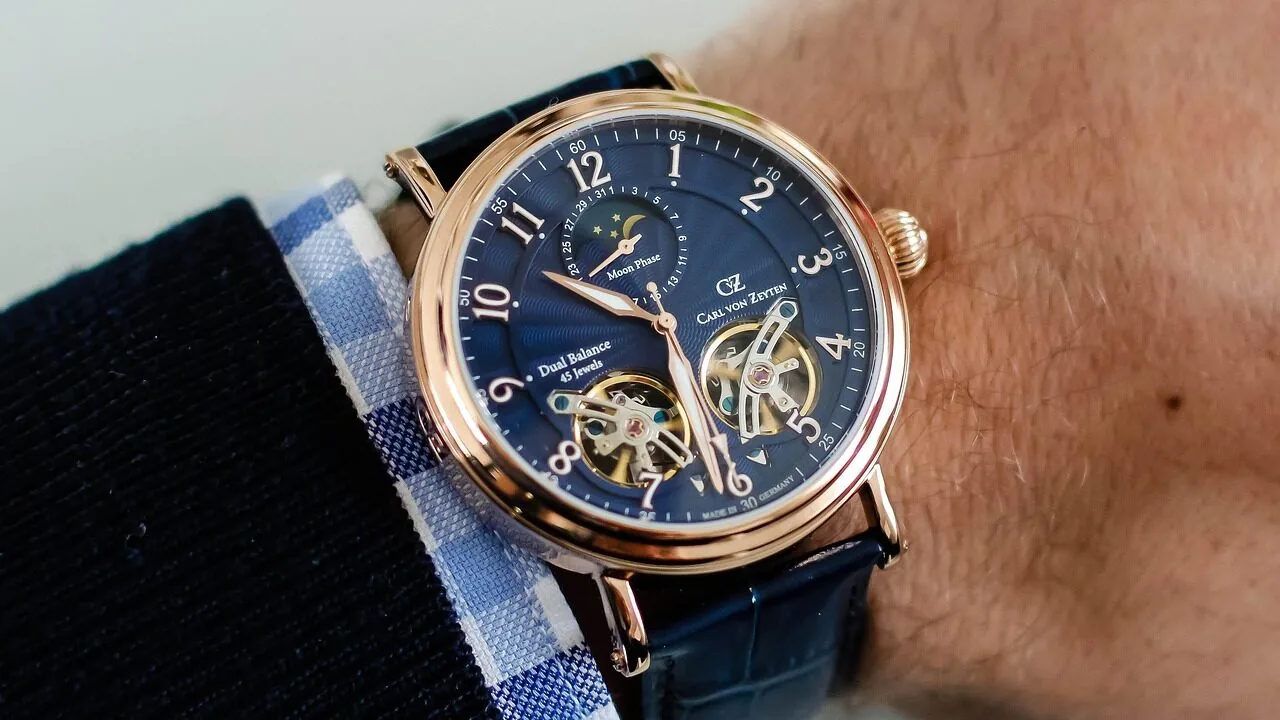
A GPS watch does far more than track distance.
Whether you’re logging morning runs, hiking remote trails, or simply trying to close activity rings throughout the day, the right GPS watch delivers accurate positioning, meaningful health metrics, and smart notifications right on your wrist.
The category has matured rapidly, with options ranging from approachable entry-level running companions to sophisticated multisport devices packed with training analytics, offline maps, and multi-satellite support.
Sorting through the noise takes real research, and that’s exactly what ProductFind is here for.
Our team analyzed specifications, synthesized consensus from expert reviewers, and combed through verified buyer feedback to surface the most trustworthy GPS watches across budgets and use cases.
From Apple’s polished ecosystem integration to Garmin’s deep training intelligence and Amazfit’s impressive battery-to-price ratio, the picks below cover the full spectrum of what shoppers actually need.
Scroll down to see our ranked recommendations and the buying guide that will help you match the right watch to your goals.
| Award | Product | PF Score About PF ScoreThe PF Score is our own rating from 0 to 10, based on performance, design and build, ease of use, and value. It reflects independent research and is never influenced by manufacturers, retailers, or affiliate commissions. Learn more › | Price | |
|---|---|---|---|---|
| Best Overall |
 Apple Watch Series 11 42mm GPS Smartwatch
|
8.3/10 | Buy | |
| Editor's Pick |
 Amazfit Active Max 1.5" AMOLED Smartwatch
|
8.1/10 | Buy | |
| Best Value |
 Garmin Forerunner 165 AMOLED Running Watch
|
7.9/10 | Buy | |
| Top Rated |
 Garmin Forerunner 55 GPS Running Watch
|
7.8/10 | Buy | |
 Garmin Venu Sq 2 AMOLED Smartwatch
|
7.2/10 | Buy | ||
 SOUYIE SM-7 1.43" AMOLED Smartwatch
|
5.2/10 | Buy | ||
 Tiwain Military Smartwatch 1.43" AMOLED GPS
|
4.8/10 | Buy | ||
 Odsslgw 1.96" GPS Smartwatch with AI & Health Tracking
|
4.5/10 | Buy |
Apple Watch Series 11 42mm GPS Smartwatch
Apple's latest smartwatch combines comprehensive health monitoring with practical fitness features in a thin, lightweight design. The 24-hour battery life and advanced sleep tracking appeal to users wanting daily wearable insights without frequent charging.
Pros
- Comprehensive health monitoring including ECG, heart rate zones, and sleep quality analysis
- Extended 24-hour battery life reduces daily charging burden
- Durable construction with improved scratch resistance and water resistance up to 50m
- Safety features like fall detection and emergency contact notification
- Works seamlessly with iPhone for calls, texts, and Siri voice commands
Cons
- Health monitoring features marked with asterisks indicating limitations or legal disclaimers that are not fully detailed
- GPS-only model requires iPhone or Wi-Fi connection for full functionality, unlike cellular variants
- No user reviews available yet, limiting real-world feedback on reliability and actual battery performance
Amazfit Active Max 1.5" AMOLED Smartwatch
A feature-rich smartwatch with a large, bright AMOLED display and exceptional 25-day battery life, designed for fitness enthusiasts and outdoor adventurers. Offers offline maps, 170+ sport modes, and AI-powered training coaching through Zepp Coach.
Pros
- Exceptional battery endurance means less frequent charging compared to typical smartwatches
- Large 1.5-inch display with high brightness makes it practical for outdoor use and readability during exercise
- Offline map downloads and multi-satellite positioning eliminate dependency on phone connection for navigation
- Comprehensive sport mode library and adaptive AI coaching cater to diverse training needs
- Built-in speaker and microphone enable call handling and voice replies on Android phones
Cons
- No verified user reviews available yet, limiting real-world performance feedback on durability and everyday usability
- Zepp Flow voice reply feature requires Android phone connection, limiting functionality for iPhone users
- Large size and heavier weight may feel bulky for users preferring more compact wearables
Garmin Forerunner 165 AMOLED Running Watch
A lightweight running smartwatch with AMOLED display and built-in GPS that delivers training metrics, personalized workouts, and up to 11 days of battery in smartwatch mode. Best suited for runners who want comprehensive fitness tracking without the bulk of larger sports watches.
Pros
- Colorful AMOLED touchscreen display with traditional button controls for reliable operation
- Extended battery life: up to 11 days in smartwatch mode, 19 hours in GPS mode
- Personalized daily workouts and Garmin Coach race-adaptive training plans adjust based on your performance and recovery
- Safety features including incident detection and emergency assistance with live location sharing
- 25+ built-in activity profiles covering running, cycling, HIIT, strength training and more
Cons
- No verified customer reviews available yet, making real-world performance assessment limited
- Contactless payment via Garmin Pay requires compatibility with your country and payment network
- Emergency assistance features depend on smartphone connectivity and network coverage in your area
Garmin Forerunner 55 GPS Running Watch
A straightforward GPS running watch that tracks distance, pace, and heart rate while delivering up to 2 weeks of battery life in smartwatch mode. Built-in training tools like race predictions and suggested workouts suit runners seeking daily guidance without overwhelming complexity.
Pros
- Extended battery endurance reduces charging frequency for casual and serious runners
- Suggested workouts adapt to your training history and recovery, removing guesswork from planning
- Diverse activity profiles and wellness metrics track more than just running
- Bluetooth connectivity and Connect IQ customization add personalization without bloat
Cons
- Rating shows no verified buyer reviews, limiting real-world performance feedback
- PacePro pace guidance requires compatible courses and excludes on-device options
- Smartwatch features are basic compared to full-featured Garmin or Apple watches
Garmin Venu Sq 2 AMOLED Smartwatch
A square smartwatch with vibrant AMOLED display and impressive 11-day battery life, built for all-day health tracking and 25+ sports. Best for users wanting detailed wellness monitoring without constant charging.
Pros
- Exceptional battery endurance means minimal nightly charging and continuous 24/7 health data collection
- Large, bright AMOLED screen with always-on mode provides quick, readable glances without waking the display
- Extensive health metrics monitoring goes beyond basics to include Body Battery, respiration, hydration, and women's health tracking
- Diverse activity library with 25+ indoor and GPS sports covers most fitness interests
- Contactless payments and smart notifications reduce need to carry phone during workouts
Cons
- No user reviews available yet to validate real-world performance and reliability
- Health metrics are estimates only, not medical-grade measurements
- Safety and tracking features require smartphone pairing and network coverage to function
SOUYIE SM-7 1.43" AMOLED Smartwatch
This men's smartwatch combines a 1.43-inch AMOLED display with Bluetooth calling, 100+ sport modes, and health monitoring in a dual-strap design suited for business or active wear. The 400mAh battery delivers 7-10 days of use, though it lacks swimming capability and has no verified buyer reviews to validate real-world performance.
Pros
- High-resolution AMOLED screen (466x466) with anti-glare and energy efficiency
- Comprehensive health suite including sleep stage analysis and 24-hour monitoring
- Dual strap system (metal for business, silicone for fitness) with quick-change tool
- Strong battery life relative to smartwatch class, charges fully in 2 hours
- Broad app notification support (SMS, Facebook, WhatsApp, Instagram, Messenger, etc.)
Cons
- No verified buyer reviews to assess actual durability or software reliability
- Water resistance limited to handwashing and rain; cannot be worn swimming or showering
- No information provided on app ecosystem quality or voice assistant capabilities
Tiwain Military Smartwatch 1.43" AMOLED GPS
A rugged smartwatch built for outdoor enthusiasts, featuring military-grade durability, 170+ sport modes, built-in GPS with multi-system positioning, and a 7-10 day battery life. Includes health monitoring, LED flashlight, and works with both iOS and Android devices.
Pros
- Multi-system GPS (GPS, GLONASS, Beidou, Galileo, NAVIC, QZSS) ensures fast and accurate positioning globally
- Extensive sport mode library covers niche activities beyond standard fitness tracking
- Military-grade construction with vacuum-plated zinc alloy resists extreme temperatures and dust
- Practical LED flashlight adds genuine utility for nighttime outdoor use
- Solid battery endurance with standby mode extending to 30 days
Cons
- GPS continuous use reduces battery to approximately 3 days, limiting extended backcountry trips without recharging
- No product reviews available yet to verify real-world durability and user experience claims
- Cannot send messages or texts directly from watch, only receive notifications
Odsslgw 1.96" GPS Smartwatch with AI & Health Tracking
A feature-rich smartwatch for Android and iOS users seeking comprehensive health monitoring plus practical daily functions. Built-in GPS, 100+ sports modes, and stress tracking distinguish it from basic fitness trackers, though real-world performance data remains limited.
Pros
- Comprehensive health suite including stress/mood monitoring alongside standard vitals
- Built-in GPS and offline maps eliminate phone dependency for outdoor tracking
- AI translation and real-time Q&A add practical daily-use value beyond fitness
- Extended 7+ day battery life reduces frequent charging hassle
- Dual watch bands and 1.96" HD touchscreen accommodate different styles and preferences
Cons
- Zero verified buyer reviews available, so real-world reliability and accuracy claims remain unvalidated
- AI features (translation quality, Q&A accuracy) not independently assessed
- Compatibility limited to Android 5.0+ and iOS 9.0+, excluding older devices
GPS Watches Buying Guide
Picking the right GPS watch means thinking carefully about how you’ll actually use it day to day.
A device that excels at marathon training may feel overwhelming on a casual walk, while an entry-level running watch may lack the sensor suite a backcountry hiker needs.
The criteria below are the ones that consistently separate strong performers from disappointing purchases, drawn from expert review consensus and the real-world concerns voiced most often by verified buyers.
GPS Accuracy and Satellite System Support
Positional accuracy is the foundation of any GPS watch. Most modern devices support multiple satellite constellations, including GPS, GLONASS, Galileo, and BeiDou.
Multi-band or dual-frequency GNSS reception, which cross-references signals at two frequencies simultaneously, significantly reduces the positional drift that can plague single-frequency watches in urban canyons, dense forests, and deep valleys.
If you run routes with tall buildings or tree cover, multi-band support is worth prioritizing even at a modest price premium.
For casual fitness use, standard GPS is typically sufficient, and the Garmin Forerunner 55 demonstrates that accurate route recording does not require a flagship price.
However, if you rely on your watch for navigation rather than just data logging, look closely at whether the device offers onboard maps, not just breadcrumb trails.
Watches like the Amazfit Active Max include offline maps storage, which is a meaningful advantage on longer adventures away from cell service.
Battery Life and Charging Strategy

Battery life in GPS mode is one of the most contested specs in this category because manufacturers measure it under idealized conditions.
A watch claiming 20 hours of GPS runtime may deliver considerably less if you enable heart rate, SpO2 monitoring, music playback, and notifications simultaneously.
Expert reviewers consistently find real-world GPS endurance runs 15 to 30 percent below official figures, so build in a buffer when comparing options.
Consider your longest activity and work backward. Marathon runners need at least five to six hours of continuous GPS; ultra-runners and mountaineers may need 24 hours or more.
Watches with power-saving GPS modes, such as recording position every 60 seconds instead of every second, can dramatically extend runtime at the cost of fine-grained route fidelity.
For everyday fitness tracking paired with occasional longer efforts, a watch offering two weeks of smartwatch endurance with 20-plus hours of active GPS strikes a practical balance.
Garmin’s lineup is particularly well-regarded for clearly disclosing multiple battery-mode estimates, which helps shoppers set realistic expectations.
Display Quality and Readability
Display technology shapes both the watch’s usability and its battery efficiency. AMOLED panels deliver vivid, high-contrast visuals that make data easy to read at a glance, and they look striking on the wrist for all-day wear.
The Apple Watch Series 11, Garmin Forerunner 165, and Amazfit Active Max all rely on AMOLED, and expert reviewers consistently praise their clarity indoors and in low light.
The tradeoff is that AMOLED screens consume more power, which is one reason mid-range AMOLED watches tend to have shorter GPS endurance than their transflective or MIP-display counterparts.
Outdoor readability matters greatly if you train in bright sunlight. Transflective MIP displays, used on many rugged Garmin models, become easier to read as ambient light increases, making them natural choices for outdoor athletes.
If you spend most of your time indoors or in mixed light and prioritize appearance, AMOLED is the better choice.
Always-on display functionality, available on the Apple Watch Series 11 and Garmin Forerunner 165, is a convenience feature but further reduces battery life, so weigh it against your charging habits.
Complementary wearable options such as fitness trackers are worth considering if you want a lighter display-focused device for daily health monitoring.
Health and Fitness Sensor Suite

At minimum, a GPS watch today should offer continuous optical heart rate monitoring. Most mid-range and premium devices go further, adding blood oxygen (SpO2) saturation sensors, skin temperature monitoring, stress tracking, sleep staging, and menstrual cycle logging.
Verified buyers frequently highlight sleep tracking quality as an underappreciated differentiator: a watch you wear around the clock is only valuable if it’s comfortable enough to keep on overnight and smart enough to surface actionable data in the morning.
Training-focused metrics, including training load, recovery time, VO2 max estimation, and daily suggested workouts, are where Garmin’s ecosystem earns its premium.
The Garmin Forerunner 165 and Garmin Forerunner 55 both include Garmin’s Daily Suggested Workouts feature, which adapts recommendations based on your recent activity history.
This kind of coaching intelligence is harder to replicate on budget-tier devices, which often provide raw data without the analytical layer that helps translate numbers into better training decisions.
Buyers interested in a broader wearable ecosystem should also explore smartwatches that blend fitness capability with deeper app support.
Smart Features, Connectivity, and App Ecosystem

Smart features bridge the gap between dedicated sports instrument and everyday wearable. Bluetooth call answering, contactless payment via NFC, onboard music storage, and app notifications all reduce the need to pull out your phone during workouts or meetings.
The Apple Watch Series 11 leads the pack in ecosystem depth, thanks to watchOS and its extensive third-party app library, making it the most capable everyday smartwatch in this roundup.
However, Apple’s GPS endurance in active tracking mode is shorter than purpose-built running watches, so dedicated athletes often accept that tradeoff deliberately.
The app ecosystem behind a GPS watch determines how useful your data remains six months after purchase.
Garmin Connect is widely considered the most comprehensive free training platform, offering detailed performance analytics, route planning, and a growing library of Connect IQ apps.
Amazfit’s Zepp app has matured considerably and handles daily health summaries well, though it offers less depth for structured training plans than Garmin or Apple Health.
Budget devices from smaller brands often rely on generic companion apps that lack long-term data retention and meaningful trend analysis, which is a hidden cost worth factoring into any purchase decision.
Those considering hands-free health insight options alongside their watch might find smart rings a useful passive complement to wrist-based tracking.
Durability, Water Resistance, and Build Quality

A GPS watch faces sweat, rain, accidental submersion, and physical knocks as a matter of routine.
Water resistance ratings follow the ATM or MIL-STD-810 standard: 5 ATM allows swimming and surface water sports, while deeper ratings support snorkeling and more aggressive aquatic use.
Most sport-focused GPS watches in this roundup carry at least 5 ATM ratings, but it’s worth verifying the precise rating for any watch you intend to use in water regularly, as some budget devices use IP68 ratings that do not directly translate to swim-proof performance.
Case and lens materials affect both longevity and weight. Polycarbonate cases keep weight down and cost low but show scratches more readily over time.
Fiber-reinforced polymer composites and Corning Gorilla Glass lenses represent a middle tier that balances durability with affordability. At the premium end, titanium cases and sapphire crystal lenses offer the best scratch and impact resistance but add meaningful cost.
For hiking and outdoor adventure, the additional ruggedness is often justifiable; for gym-focused training, a mid-tier build is typically more than sufficient.
Why You Should Trust Us
ProductFind is an independent review publication with no brand sponsorships and no manufacturer relationships that influence coverage.
Every GPS watch in this article was evaluated through a structured research process: we analyzed published specifications, synthesized expert review consensus drawn from multiple authoritative sources, assessed verified buyer feedback across large purchase samples, and cross-referenced published performance data.
Each product receives a PF Score on a 0 to 10 scale, calculated against a consistent rubric that weights GPS accuracy, battery life, display quality, sensor suite, smart features, durability, and value.
We do not conduct our own product trials; our evaluations are grounded in research, published data, expert review consensus, and verified buyer feedback.
ProductFind may earn a commission when you purchase through links in this article. That affiliate relationship has no bearing whatsoever on which products appear, how they are ranked, or what scores they receive.
Our recommendations exist solely to help you make an informed purchase decision. If a product underperforms against its price and category peers, that finding is reflected in its PF Score regardless of margin.
Final Thoughts
The GPS watch market in 2026 offers genuinely strong options at almost every price tier. Here is how our top picks shake out by use case, each linked to their Amazon listing for current pricing and availability.
- Best Overall: Apple Watch Series 11 earns the top PF Score in this roundup by delivering the most complete package of health monitoring, always-on display, ecosystem integration, and smart connectivity. It is the GPS watch that does the most for the widest range of users.
- Best for Dedicated Runners: Garmin Forerunner 165 blends a vivid AMOLED display with Garmin’s proven training metrics and recovery insights at a mid-range price, making it the strongest choice for runners who want coaching intelligence without flagship spending.
- Best Battery-to-Price Value: Amazfit Active Max stands out for its exceptional rated battery endurance, offline maps support, and generous onboard storage. It earns one of the highest PF Scores in the roundup while sitting firmly in the accessible price tier.
- Best Budget GPS Watch: Garmin Forerunner 55 proves that accurate GPS and intelligent daily suggested workouts do not require a premium outlay. It consistently earns strong marks from expert reviewers as the most capable entry-level running watch available.
- Best Lifestyle Smartwatch with GPS: Garmin Venu Sq 2 brings Garmin’s health platform to an AMOLED watch designed for all-day wear, appealing to buyers who want health monitoring depth without a sport-focused aesthetic.
If you want broader context for your wearable setup, our coverage of fitness trackers for every goal and budget explores lighter-weight alternatives, and our overview of smartwatches for every lifestyle digs into devices where smart features outweigh dedicated sport functionality.
For outdoor-focused adventurers, pairing a GPS watch with reliable rangefinders for hunting and beyond can round out a complete navigation and awareness kit.
Those who enjoy extended off-grid travel might also find our roundup of car refrigerators for road trips and compact solar panels helpful for keeping devices charged in the field.
Frequently Asked Questions
Do I need a dedicated GPS watch, or will a regular smartwatch do?
It depends on how seriously you track your activities. General-purpose smartwatches like the Apple Watch Series 11 handle GPS well and layer on rich ecosystem features, making them excellent all-rounders.
Dedicated running GPS units like the Garmin Forerunner 55 or Forerunner 165 prioritize training analytics, long GPS battery life, and coach-style feedback that general smartwatches typically lack.
If structured training data matters to you, a purpose-built GPS watch tends to deliver more actionable insight over time.
How accurate are wrist-based heart rate monitors on GPS watches?
Optical wrist-based heart rate monitors have improved substantially and are accurate enough for general fitness zones and daily health trends.
However, they can struggle during high-intensity interval training, activities with significant wrist movement, or cold conditions that restrict blood flow to the skin.
If heart rate precision is critical, for instance during structured threshold intervals, pairing a GPS watch with a chest strap heart rate monitor will always be more accurate than wrist-based optical sensing alone.
Most GPS watches in this roundup support Bluetooth or ANT+ chest strap connectivity for exactly this reason.
What does multi-band GPS actually mean in practice?
Standard GPS watches receive satellite signals on a single frequency, which can be reflected or disrupted by tall buildings, dense tree canopies, and canyon walls, causing positional drift and inaccurate distance data.
Multi-band receivers simultaneously track signals on two frequencies, cross-referencing them to filter out reflected noise and deliver tighter, more consistent positional accuracy.
The practical benefit is most noticeable on city runs, trail races with dense overhead cover, and any activity where a precise route line matters more than an approximate one.
Multi-band support is increasingly available at mid-range prices, making it a worthwhile checkbox even for non-elite athletes.
Are budget GPS watches from lesser-known brands worth buying?
Budget GPS watches from smaller brands can offer impressive hardware specifications on paper, including AMOLED screens, SpO2 sensors, and extensive sport modes, but expert review consensus and verified buyer feedback reveal consistent gaps in software stability, long-term data accuracy, and app ecosystem depth.
Brands like SOUYIE, Tiwain, and Odsslgw score below mid-range Garmin and Amazfit options in our research, primarily because software quality and sensor calibration lag behind their spec sheets.
If your budget is firmly limited, these devices can serve casual step counting and basic notification use.
For anyone who relies on GPS accuracy or training analytics, investing a little more in an established brand pays off noticeably in day-to-day reliability.
How do I choose between Apple Watch and Garmin for GPS tracking?
Apple Watch excels if you’re already in the Apple ecosystem and want seamless iPhone integration, a wide app library, and strong everyday health monitoring.
GPS accuracy is solid for most fitness activities, and the always-on display and notification management are best-in-class.
Garmin watches tend to win on battery life during active GPS use, depth of training analytics, and sport-specific metrics like running dynamics, vertical oscillation, and structured workout coaching.
Serious runners, triathletes, and outdoor adventurers typically favor Garmin for training; lifestyle users who also want fitness data often prefer Apple Watch for its versatility and polish.
What water resistance rating do I need for swimming?
For pool swimming and open-water swimming, look for a water resistance rating of at least 5 ATM, which means the watch can handle submersion to 50 meters under static pressure.
The Amazfit Active Max carries a 5 ATM rating, and the Apple Watch Series 11 is water resistant for swimming use.
IP68-rated watches, common on budget devices, offer some submersion protection but are not always rated for swimming strokes, which generate dynamic pressure.
Always verify the specific swim suitability claim in the manufacturer’s documentation rather than relying solely on the ATM or IP number.
About the author
Jacqueline is a reviewer and writer for ProductFind who specializes in Wearable Tech. Jacqueline evaluates products through independent research: specifications, expert review consensus, and verified buyer feedback, and rates each one on the PF Score. Jacqueline focuses on helping readers pick the right wearable tech for their needs and budget.