The 10 Best Laptops
Performance, battery life, display quality, and value vary enormously across today's laptop market. Here are the strongest picks across every major use case.
 By Eric Harvey
Updated July 22, 2026
By Eric Harvey
Updated July 22, 2026

Choosing the right laptop in 2026 is genuinely complicated. The market spans budget-friendly everyday machines, powerhouse gaming rigs, ultra-light productivity workhorses, and versatile 2-in-1 convertibles, all at wildly different price points.
Whether you’re a student hunting for reliable endurance, a creative professional who needs raw processing muscle, or a gamer chasing high frame rates, the wrong pick wastes real money on specs you either don’t need or desperately lack.
The good news: the current generation of processors from Intel, AMD, and Apple delivers meaningful leaps in performance and efficiency that make 2026 one of the better times to buy.
To build this list, the ProductFind editorial team conducted a thorough research synthesis: we analyzed published specifications, cross-referenced expert review consensus across multiple publications, and combed through verified buyer feedback to identify where real-world performance matches on-paper claims.
Every model here was assessed for performance, display quality, battery endurance, build quality, and value relative to its category.
The picks below represent the strongest options across every major use case and budget, from a surprisingly capable entry-level HP to a premium ASUS gaming laptop packing the latest discrete GPU. Read on for our top picks.
| Award | Product | PF Score About PF ScoreThe PF Score is our own rating from 0 to 10, based on performance, design and build, ease of use, and value. It reflects independent research and is never influenced by manufacturers, retailers, or affiliate commissions. Learn more › | Price | |
|---|---|---|---|---|
| Best Overall |
 Apple MacBook Neo 13-inch A18 Pro
|
8.7/10 | Buy | |
| Editor's Pick |
 ASUS ROG Strix G16 RTX 5070 Ti 240Hz Gaming Laptop
|
8.6/10 | Buy | |
| Best Value |
 Acer Aspire AI 14 Core Ultra 7, 32GB RAM, 1TB SSD
|
7.2/10 | Buy | |
| Top Rated |
 LG gram Pro 17-inch Lightweight Laptop
|
7.8/10 | Buy | |
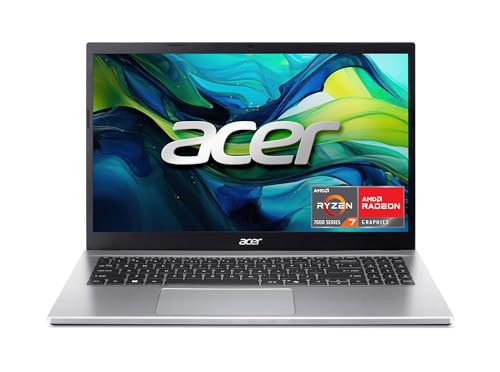 Acer Aspire Go 15 AG15-42P Ryzen 7 Laptop
|
7.4/10 | Buy | ||
 Lenovo 16" i7-13620H Laptop, 16GB DDR5, 512GB SSD
|
7.3/10 | Buy | ||
 Lenovo Yoga 7i 16in 2-in-1 with Core Ultra 7
|
8.6/10 | Buy | ||
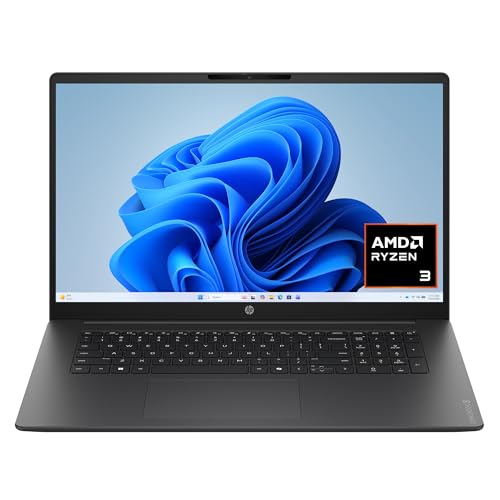 HP OmniBook 3 17.3-inch Laptop, AMD Ryzen 3, 8GB RAM
|
6.8/10 | Buy | ||
 HP 15.6" FHD Laptop with Intel N100, 8GB RAM, 256GB SSD
|
6.5/10 | Buy | ||
 Lenovo 15.6" Business Laptop, Intel N100, 8GB DDR5
|
6.3/10 | Buy |
Apple MacBook Neo 13-inch A18 Pro
Apple's entry-level MacBook Neo pairs the A18 Pro chip with a colorful aluminum design and up to 16 hours of battery life, targeting students and everyday users. It delivers Apple Intelligence capabilities, a vibrant Liquid Retina display, and seamless Mac-iPhone integration in a portable 2.7-pound package.
Pros
- Exceptional battery life eliminates frequent charging during school or work days
- Liquid Retina display with vivid color reproduction and crisp text
- Built-in Apple Intelligence for productivity tasks like note summarization
- Multiple color options with coordinated keyboards offer personalization
- Seamless integration with iPhone and other Apple devices
Cons
- Base model includes only 256GB SSD storage, limiting space for large files and applications
- 8GB unified memory may become limiting as software demands increase over time
- No reviews available yet to assess real-world performance and durability claims
- Aluminum design, while durable, offers no ruggedization for accidental drops
ASUS ROG Strix G16 RTX 5070 Ti 240Hz Gaming Laptop
A high-end 16-inch gaming laptop built for competitive play and content creation, pairing Intel's latest Core Ultra 9 processor with RTX 5070 Ti graphics and a fast 240Hz display. The advanced cooling system and premium specs justify the premium positioning, though potential buyers should weigh the investment against their specific use case.
Pros
- Next-generation hardware stack (Core Ultra 9 275HX and RTX 5070 Ti) delivers cutting-edge gaming and creative performance
- 240Hz display with 3ms response time is ideal for competitive gaming and fast-paced content
- Premium cooling architecture with vapor chamber and liquid metal thermal solution maintains thermal stability under load
- Ample memory and storage (32GB DDR5, 1TB SSD) supports multitasking and large game libraries without bottlenecks
- Wi-Fi 7 support ensures future-proof connectivity for streaming and online gaming
Cons
- No user reviews available yet, so real-world durability and quality control feedback cannot be verified
- Premium pricing reflects flagship specifications, making it a significant investment for casual gamers
- Weight of 5.84 pounds and thickness of 0.9 inches suggest this is a desktop replacement rather than a portable daily driver
Acer Aspire AI 14 Core Ultra 7, 32GB RAM, 1TB SSD
A lightweight 14-inch business laptop built around Intel's Core Ultra 7 258V processor with dedicated NPU for Copilot+ PC features like real-time video effects and AI-assisted tasks. Designed for remote workers and content creators who need solid performance, touchscreen editing capability, and portability at 3.09 lbs.
Pros
- Dedicated NPU enables practical AI features like Copilot+ PC without cloud dependency
- Strong GPU performance for photo/video editing and GPU-accelerated tasks
- Excellent portability paired with robust specs for content creators and remote workers
- Comprehensive connectivity hub eliminates need for multiple adapters
- Windows 11 Home with Office 365 for productivity out of the box
Cons
- No customer reviews available yet to validate real-world performance and reliability
- Specifications list shows weight as 1 pound (conflicts with stated 3.09 lbs), creating uncertainty
- Limited graphics performance compared to dedicated GPUs for intensive 4K video work
LG gram Pro 17-inch Lightweight Laptop
A 3.3 lb ultraportable with a 17-inch display, Intel Core Ultra 9 processor, and RTX 5050 GPU designed for creators and professionals who need performance without the weight. Hybrid AI features and 25-hour battery life make it practical for extended work away from outlets.
Pros
- Exceptionally light for its 17-inch size, meeting seven military-grade durability standards
- Powerful hybrid AI system combining local processing with cloud capabilities via gram chat
- Strong GPU performance with RTX 5050 for gaming, rendering, and creative applications
- Extended battery life with AI-driven optimization to match user patterns
- Seamless multi-device connectivity through LG gram Link across Android and iOS
Cons
- No verified user reviews available yet to assess real-world reliability and performance consistency
- Premium positioning likely reflects higher cost compared to similarly-specced traditional laptops
- Cooling system performance under sustained heavy workloads not detailed in specifications
Acer Aspire Go 15 AG15-42P Ryzen 7 Laptop
A 15.6-inch mid-range laptop built around AMD's Ryzen 7 7730U processor, 16GB RAM, and 512GB SSD storage, designed for everyday productivity with Windows 11 and Copilot integration. The IPS display, Wi-Fi 6 connectivity, and lightweight 3.92-pound frame make it practical for casual users and content consumption.
Pros
- Solid processor performance with 16GB RAM for multitasking and general productivity
- Full HD IPS display with comfortable viewing angles suitable for web browsing and streaming
- Fast Wi-Fi 6 and USB Type-C connectivity for modern peripherals
- Built-in Copilot support for AI-assisted productivity
- Portable form factor at under 4 pounds
Cons
- Limited to 1080p resolution on a 15.6-inch screen, not ideal for detailed design or photo work
- No user reviews available yet, making real-world reliability assessment difficult
- Mid-range specs may struggle with demanding software or gaming applications
Lenovo 16" i7-13620H Laptop, 16GB DDR5, 512GB SSD
A 16-inch business laptop built for multitasking and content creation, featuring Intel's 13th-gen i7 processor, DDR5 memory, and a larger-than-standard display. Best suited for professionals, students, and creators who need sustained performance across demanding applications without portability sacrifices.
Pros
- Powerful 10-core i7 processor with up to 4.9GHz handles demanding workloads without lag
- DDR5 memory and fast SSD enable smooth multitasking and quick file access
- Larger 1920x1200 display with anti-glare coating provides practical workspace for productivity tasks
- Portable form factor (3.75 lbs) balances performance with genuine mobility
- Full connectivity suite including USB-C with Power Delivery, HDMI, and SD card slot
Cons
- FHD+ resolution on a 16-inch screen results in lower pixel density, less ideal for design work
- No reviews available yet to validate real-world performance and reliability claims
- GPU specifications not detailed, limiting suitability for gaming or GPU-heavy creative tasks
Lenovo Yoga 7i 16in 2-in-1 with Core Ultra 7
A versatile 2-in-1 convertible with a 16-inch touchscreen, Intel Core Ultra 7 processor, and 360-degree flip design that transitions between laptop, tablet, tent, and stand modes. Well-suited for users who want flexibility and modern connectivity in a mid-to-premium package.
Pros
- Flexible form factor with smooth 360-degree hinge and four practical modes
- Modern Wi-Fi 6E and Thunderbolt 4 support for current connectivity standards
- Solid port selection with both legacy USB-A and modern Type-C options
- 16GB DDR5 and 1TB SSD configuration handles everyday productivity and light creative work
Cons
- No verified buyer reviews available to assess real-world reliability and user satisfaction
- 4.63-pound weight and 0.75-inch thickness may be considered heavier than ultraportable competitors
- Core Ultra 7 155U is entry-level within Intel's current lineup, limiting performance for demanding applications
HP OmniBook 3 17.3-inch Laptop, AMD Ryzen 3, 8GB RAM
A budget-friendly 17.3-inch laptop built for everyday computing, streaming, and light creative work. Strong battery life, solid display quality, and AI-enhanced audio make it practical for remote work and casual gaming.
Pros
- Extended battery life up to 14+ hours with fast 45-minute 0-50% charge
- Large 17.3-inch FHD IPS display with 178-degree viewing angles for comfortable viewing
- Advanced AI noise reduction and FHD camera with HDR for clear video calls
- Fast 512GB SSD and 8GB LPDDR5 RAM for responsive everyday multitasking
- Wi-Fi 6 and Bluetooth 5.4 for reliable wireless connectivity
Cons
- AMD Radeon 610M graphics limits performance for demanding games or professional 3D work
- No user reviews available yet to validate real-world reliability and long-term performance
- Entry-level Ryzen 3 processor handles multitasking but may struggle with heavy workloads
HP 15.6" FHD Laptop with Intel N100, 8GB RAM, 256GB SSD
A lightweight, budget-friendly 15.6-inch laptop designed for students and remote workers needing reliable everyday performance. Intel N100 processor, 8GB RAM, and 256GB SSD handle multitasking, video calls, and streaming without lag, while the 3.64 lb weight and long battery life make it genuinely portable.
Pros
- Lightweight and portable at 3.64 lbs, fits easily in backpacks for classes and commutes
- Intel N100 processor with 8GB RAM manages multiple tabs, Office apps, and video conferencing smoothly
- 256GB SSD provides fast boot times and ample storage for schoolwork and documents
- Includes Windows 11 Home and lifetime Office for web access out of the box
- WiFi 6 connectivity and full-size keyboard with numeric keypad add practical value
Cons
- Intel N100 is entry-level, not suitable for demanding tasks like video editing or gaming
- No user reviews yet make it harder to verify real-world durability and customer satisfaction
- Specifications list shows conflicting weight data (1 pound listed vs. 3.64 lbs claimed in description)
Lenovo 15.6" Business Laptop, Intel N100, 8GB DDR5
A lightweight business laptop designed for productivity work, remote meetings, and everyday tasks with solid connectivity and security features. The Intel N100 processor handles multitasking well, though performance expectations should align with entry-level specifications.
Pros
- Extremely portable and lightweight design ideal for commuters and traveling professionals
- Comprehensive connectivity options including WiFi 6, dual USB-C, and HDMI for multi-monitor setups
- Strong security features appropriate for business use, including physical privacy controls and encryption chip
- Anti-glare 15.6" display with adequate brightness for office environments and remote work
- Quad-core processor with DDR5 RAM suitable for productivity software and video conferencing
Cons
- Intel N100 processor is entry-level and may struggle with demanding applications, heavy video editing, or complex multitasking
- 256GB SSD provides limited storage for users with large files or extensive software libraries
- No customer reviews available to verify real-world performance and reliability claims
Laptops Buying Guide
A laptop is one of the most personal tech purchases you’ll make, because how you use it shapes every specification that matters.
A student who mostly writes papers and joins video calls needs completely different hardware from someone rendering 4K video or playing AAA games at high settings.
Before focusing on brand names or raw numbers, get clear on your primary use cases. The sections below break down the criteria we weight most heavily in our evaluations, translated into practical guidance for real buying decisions.
Processor and Platform

The processor is the single most consequential component in any laptop. In 2026, the main contenders are Intel’s Core Ultra series (including the high-performance HX and efficient U/V families), AMD’s Ryzen 7000 and AI-enhanced 300 series, and Apple’s in-house silicon.
Each platform carries genuine trade-offs. Intel’s Core Ultra HX chips, found in the ASUS ROG Strix G16, pair with discrete GPUs for maximum gaming and creative throughput.
AMD’s Ryzen 7 7730U, as in the Acer Aspire Go 15, delivers strong multithreaded efficiency at a lower cost. Apple’s A-series chips integrate CPU, GPU, and memory into a single die, yielding remarkable performance-per-watt in the MacBook Neo.
For productivity-focused buyers, look for a chip rated at 15W to 28W TDP if portability and battery life are priorities. For gaming or content creation, a 45W-plus chip paired with a discrete GPU is worth the extra weight and cost.
AI-accelerated workloads are increasingly relevant: models labeled “AI Ready” or “Intel Evo Edition” include dedicated neural processing units (NPUs) that offload tasks like real-time noise cancellation, background blur, and on-device AI features, reducing strain on the main cores.
While NPU performance varies, these platforms tend to age better as AI-assisted software becomes standard. Pair your laptop choice with quality wireless earbuds to get the most out of its built-in conferencing tools.
One common mistake: over-indexing on core count while ignoring thermal design. A powerful CPU in a thin chassis often throttles under sustained load.
Expert reviews consistently flag sustained performance (not just peak burst speed) as the real-world differentiator, especially for creative professionals running long renders or compile cycles.
RAM and Storage

In 2026, 16GB of RAM is the practical minimum for comfortable multitasking, and 32GB is worth the investment if you work with large files, multiple virtual machines, or professional creative applications.
Models in this list range from 8GB entry-level configurations to 32GB high-performance builds.
Keep in mind that Apple’s unified memory architecture is architecturally more efficient than traditional DDR5, so 16GB of unified memory often competes with 24GB of conventional RAM in everyday use.
For storage, a 512GB SSD covers most users who store media in the cloud. If you work with large video libraries, sample packs, or game installs, 1TB is the comfortable baseline and 2TB is increasingly available at competitive prices.
PCIe Gen 4 and Gen 5 SSDs dramatically accelerate large file transfers and application load times compared to older SATA drives. Always verify the generation before purchasing; some budget laptops still ship PCIe Gen 3 drives.
Avoid machines with less than 256GB unless you’re confident about external or cloud storage solutions.
Display Quality
Display quality separates a pleasant daily driver from one you’ll grow to resent. Key variables are resolution, panel type, peak brightness, color accuracy, and refresh rate.
For general productivity, a 1080p or 1200p IPS panel with at least 300 nits of brightness handles most indoor environments well. If you regularly work outdoors or in bright conference rooms, look for 400 nits or higher.
For creative work, color accuracy matters: a panel covering 100% of sRGB is the minimum, while DCI-P3 coverage above 90% signals a display suitable for photo or video editing.
Gaming laptops like the ASUS ROG Strix G16 push the spec sheet further, offering 2.5K resolution at 240Hz refresh rates. High refresh rates reduce motion blur and improve competitive gaming responsiveness in a measurable way.
For creative professionals more concerned with color fidelity than motion clarity, a high-resolution IPS or OLED panel at 60Hz to 120Hz is the better trade-off.
Aspect ratio also matters: 16:10 panels, increasingly common in premium laptops, offer meaningfully more vertical space for documents, code, and spreadsheets compared to the older 16:9 standard.
If sound quality while watching content matters, consider adding a Bluetooth speaker for a richer listening experience away from the desk.
Battery Life and Portability

Battery life is where marketing claims diverge most dramatically from real-world experience. Manufacturer figures typically reflect video playback at reduced brightness, not mixed workloads.
Expert review consensus generally benchmarks battery life under realistic productivity conditions: browser tabs, document editing, video calls, and occasional media playback. For most portable use cases, eight to ten hours of real-world endurance is a reasonable target.
Anything above twelve hours is genuinely all-day capable.
Efficient platforms help considerably here. Apple’s A-series chips and Intel’s Core Ultra V series are designed for exceptional efficiency; they can stretch to fifteen or more hours of mixed use in well-optimized designs.
Gaming laptops with discrete GPUs are the outliers: expect four to six hours of general use and far less under gaming load. Portability also involves weight and chassis thickness.
Sub-1.4kg ultrabooks are genuinely comfortable to carry all day; 2kg-plus gaming laptops demand a dedicated bag.
If you travel frequently, verify that the charger supports USB-C Power Delivery, which allows you to top up from smaller, lighter GaN chargers rather than bulky proprietary bricks.
Connectivity and Ports

Port selection is an underappreciated spec that affects daily convenience significantly. Thunderbolt 4 (TB 4) and USB4 support external displays, fast storage docks, and eGPU connections from a single cable.
Verify how many USB-A ports are available for legacy peripherals, and whether a full-size HDMI port is included, which matters for direct projector or monitor connections without adapters. Card readers are still valuable for photographers.
Models like the Lenovo Yoga 7i cover professional port needs with TB 4, HDMI, and a full card reader in a single chassis.
Wi-Fi generation is equally relevant for future-proofing. Wi-Fi 6E provides substantially lower latency and better performance in congested environments compared to Wi-Fi 5, while Wi-Fi 7, present in the ASUS ROG Strix G16, is the forward-looking choice for demanding wireless workloads.
Webcam quality has improved markedly: 1080p front cameras are now common in mainstream models and noticeably better for video calls than the 720p cameras that dominated the previous generation.
If you plan to use your laptop as a media hub, pairing it with a quality soundbar or a set of over-ear headphones rounds out the audio experience that most laptop speakers simply cannot deliver on their own.
Value and Budget Matching

Budget matching is about honestly aligning your use case with what you genuinely need to spend.
Entry-level machines like the HP 15.6″ FHD and the Lenovo 15.6″ Business Laptop cover basic tasks reliably at accessible prices; they are not designed for sustained heavy workloads.
Mid-range options in the moderate-price tier, including the Acer Aspire Go 15 and the Lenovo 16″ Premium Laptop, deliver a meaningful jump in CPU performance and RAM that justifies the extra outlay for users who multitask seriously or hold onto machines for four or more years.
Premium and enthusiast-class picks like the ASUS ROG Strix G16 and the LG gram Pro 17 carry a significant price premium that is only justified when the specific capabilities (discrete GPU performance, extreme battery efficiency, ultralight build) directly match your workflow.
Paying for a premium gaming GPU you’ll never stress is poor value; paying for exceptional battery life and a lightweight build when you travel extensively is a sound investment.
Use the criteria above to filter ruthlessly before price-comparing, and you’ll consistently end up with better long-term value than spec-chasing alone allows.
If long work sessions involve voice calls or music, a set of noise cancelling headphones can be a meaningful companion purchase.
Why You Should Trust Us
ProductFind is an independent editorial platform with no brand partnerships that influence our rankings. Every laptop in this list was evaluated by our research team using a consistent, multi-factor framework.
We do not conduct our own product trials; our evaluations are grounded in research, published data, expert review consensus, and verified buyer feedback.
Each model receives a PF Score on a 0 to 10 scale, derived from performance benchmarks drawn from published data, display measurements, battery life reports, build quality assessments, and real-world user feedback from verified purchasers.
Scores weight each criterion according to the category: for productivity laptops we emphasize battery endurance, display quality, and keyboard comfort; for gaming laptops we weight GPU performance, thermal management, and display refresh rate more heavily.
Our editorial recommendations are independent of commercial relationships.
ProductFind may earn an affiliate commission when you purchase through links on this page, but that relationship has no bearing on which products appear in the list, their ranking, or their PF Score.
We include products because they perform well for readers, not because of margin or promotional arrangements. Our goal is straightforward: give you the clearest, most reliable research synthesis available so you can buy with confidence and avoid costly mistakes.
Final Thoughts
The laptops in this list cover the full spectrum of needs, from capable budget machines to serious gaming powerhouses. After comprehensive research synthesis and scoring, here is how our top picks shake out by use case:
- Best Overall: Apple MacBook Neo 13-inch earns the top PF Score in this list thanks to its premium Liquid Retina display, efficient A18 Pro chip with strong AI capabilities, refined aluminum build, and an outstanding camera. It sets the benchmark other laptops in this roundup are measured against.
- Best for Gaming: ASUS ROG Strix G16 (2025) is the clear choice for serious gamers, combining a Core Ultra 9 275HX processor, RTX 5070 Ti discrete graphics, a 240Hz 2.5K display, and Wi-Fi 7 into a well-built chassis. Its PF Score reflects consistently high expert consensus on raw gaming and creative performance.
- Best for Business and Creators: Acer Aspire AI Laptop (Core Ultra 7 258V) stands out at its price point with a generous 32GB of RAM, a 1TB SSD, a touchscreen display, and a strong battery-efficient platform, making it a compelling all-rounder for professionals who need capable everyday hardware without a gaming premium.
- Best Budget Pick: Acer Aspire Go 15 delivers a solid AMD Ryzen 7 processor, 16GB of DDR4 RAM, and a 512GB SSD at an accessible price, making it one of the better-value options for students and light-to-moderate users who want capable hardware without stretching their budget.
- Best 2-in-1: Lenovo Yoga 7i 2-in-1 combines a 16-inch 2K touchscreen, a versatile convertible form factor, TB 4 connectivity, and a Core Ultra 7 processor in a well-rounded package that serves productivity users who want flexibility between laptop and tablet modes.
Ultimately, no single machine is the right laptop for every person.
Use the buying guide above to identify which criteria matter most to your specific workflow, match those to the picks that score highest in those dimensions, and you’ll be well positioned to make a purchase you’ll be satisfied with for years.
If your setup extends to your desk or home office, remember that quality smart plugs can help manage power consumption across your devices efficiently.
Frequently Asked Questions
How Much RAM Do I Actually Need in a Laptop?
For most everyday users, students, and general office workers, 16GB is the sweet spot in 2026. It handles browser-heavy multitasking, video calls, light photo editing, and streaming without noticeable slowdowns.
If you run professional applications like Adobe Premiere, DaVinci Resolve, or multiple virtual machines simultaneously, 32GB is a worthwhile investment and future-proofs you considerably.
Only casual users who stick strictly to basic document work and web browsing can comfortably manage on 8GB, and only then if the rest of the system is efficient.
Is a Gaming Laptop Worth It If I Also Want to Use It for Work?
Gaming laptops like the ASUS ROG Strix G16 are excellent for work tasks because their high-performance CPUs handle demanding creative and productivity workloads extremely well. The trade-offs are weight, battery life, and price.
A gaming laptop typically weighs noticeably more than a slim productivity machine and will deliver shorter battery endurance during general use. If you regularly travel and need all-day battery without a charger, a dedicated productivity laptop is the smarter choice.
If you primarily work at a desk and game in the evenings, a gaming laptop can legitimately serve both purposes without compromise.
What Is the Difference Between a 2-in-1 and a Traditional Laptop?
A 2-in-1 laptop, like the Lenovo Yoga 7i in this list, features a hinge that allows the screen to rotate 360 degrees or detach entirely, letting you use the device as a tablet, in a tent configuration for presentations, or in a traditional laptop mode.
They are particularly useful for note-taking with a stylus, sketching, or reading in a more relaxed posture. Traditional clamshell laptops tend to offer slightly better keyboard and trackpad experiences and often better cooling, since the form factor is less constrained.
The right choice depends on whether the flexibility of a convertible matches real habits you have, not aspirational ones.
Does Screen Size Matter for Productivity?
Screen size directly affects how comfortable it is to work for extended periods. Larger displays (15 to 17 inches) give you more screen real estate for side-by-side windows, spreadsheets, and code, but they add weight and reduce portability.
A 13 to 14 inch laptop is genuinely portable and still productive when paired with an external monitor at a desk.
For users who work primarily from a fixed location, a larger display like the LG gram Pro 17 or HP OmniBook 3 17.3″ makes practical sense. For frequent travelers, the compact efficiency of a 13 to 14 inch machine is hard to argue against.
Should I Prioritize CPU or GPU in a Laptop?
It depends entirely on your workload. For productivity, programming, general office work, and even most photo editing, CPU performance, RAM, and display quality matter far more than GPU capability.
Integrated graphics on modern Intel Core Ultra and AMD Ryzen chips handle everyday visuals, video playback, and even light creative tasks capably.
A discrete GPU becomes genuinely valuable when you play demanding games, work with 3D modeling, run real-time video effects, or perform GPU-accelerated machine learning tasks.
Buying a discrete GPU purely for bragging rights when your workload does not demand it means paying extra for battery drain and added weight with no tangible benefit.
How Long Should a Laptop Last Before Needing Replacement?
A well-chosen laptop should serve you comfortably for four to six years if the initial configuration matches your needs.
The limiting factors are usually RAM (which cannot be upgraded in most modern slim laptops), SSD capacity, and battery degradation over charge cycles. Buying slightly more RAM and storage than you currently need gives you meaningful runway.
Battery health typically drops to around 80% of original capacity after 500 to 1,000 full charge cycles, which translates to roughly two to four years of heavy use.
Most manufacturers offer battery replacement services, which can meaningfully extend a machine’s practical lifespan at a fraction of replacement cost.
About the author
Eric is a reviewer and writer for ProductFind who specializes in Computers & Laptops. Eric evaluates products through independent research: specifications, expert review consensus, and verified buyer feedback, and rates each one on the PF Score. Eric focuses on helping readers pick the right computers & laptop for their needs and budget.