The 12 Best Studio Monitors
Flat frequency response, honest low-end, and reliable mix translation matter more than brand names. Here are the studio monitors that deliver across every budget tier.
 By Pat Shelton
Updated July 23, 2026
By Pat Shelton
Updated July 23, 2026

Studio monitors are the foundation of any serious music production setup.
Unlike consumer hi-fi speakers that color sound to make recordings sound flattering, studio monitors are engineered to reveal exactly what is on a track, the good, the bad, and everything in between.
Whether you are building a home studio from scratch or upgrading a setup that has served you for years, picking the right pair of monitors is one of the most consequential decisions you will make.
A great set of monitors will expose mix problems before they become costly mistakes; a poor choice will have you chasing problems that were never really there.
This guide covers options across every budget, from entry-level desktop pairs to professional-grade active monitors worthy of serious mixing and mastering sessions.
ProductFind’s editorial team researched this category through a synthesis of published specifications, expert review consensus from audio engineering communities, and verified buyer feedback from thousands of real-world users.
The result is a ranked list that reflects actual performance, long-term reliability, and value at each price tier. Scroll down for our top picks, then use the buying guide below to narrow your choice with confidence.
| Award | Product | PF Score About PF ScoreThe PF Score is our own rating from 0 to 10, based on performance, design and build, ease of use, and value. It reflects independent research and is never influenced by manufacturers, retailers, or affiliate commissions. Learn more › | Price | |
|---|---|---|---|---|
| Best Overall |
 Focal Alpha 80 Evo 8-inch Studio Monitor Pair with Sub One
|
8.8/10 | Buy | |
| Editor's Pick |
 JBL 305P MkII 5-Inch Studio Monitor Pair
|
7.8/10 | Buy | |
| Best Value |
 Yamaha HS5 W 5-Inch Powered Studio Monitor Pair
|
8.2/10 | Buy | |
| Top Rated |
 Yamaha HS5 Studio Monitor Pair, 5-inch
|
8.2/10 | Buy | |
 Yamaha HS4 Powered Studio Monitor Pair
|
7.9/10 | Buy | ||
 Focal Shape 50 Studio Monitor
|
7.8/10 | Buy | ||
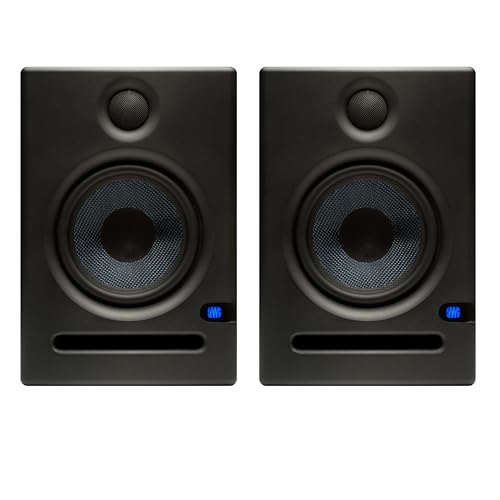 PreSonus Eris E5 5.25-Inch Studio Monitors Pair
|
7.6/10 | Buy | ||
 Edifier MR3 Hi-Res Studio Monitor Speakers
|
6.5/10 | Buy | ||
 Mackie CR3.5 3.5-Inch Studio Monitor
|
6.4/10 | Buy | ||
 PreSonus Eris 3.5 Powered Studio Monitors Pair
|
6.3/10 | Buy | ||
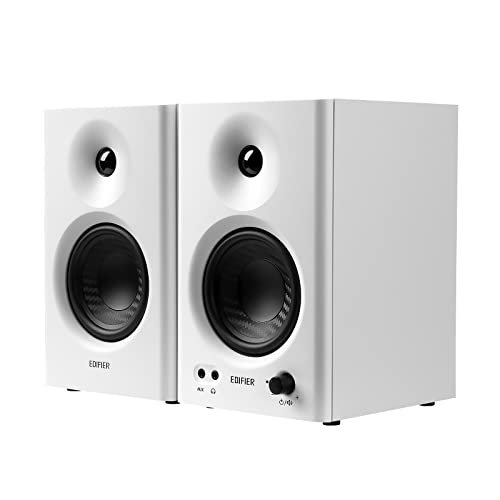 Edifier MR4 Studio Monitor Speakers
|
6.1/10 | Buy | ||
 Ortizan C7 Dual-Mode Studio Monitors
|
5.8/10 | Buy |
Focal Alpha 80 Evo 8-inch Studio Monitor Pair with Sub One
This bundle pairs Focal's 8-inch active studio monitors with a dual 8-inch subwoofer for a complete nearfield monitoring solution. Designed for recording and mixing, it offers multiple input options and balanced frequency response through dual amplifiers per monitor.
Pros
- Comprehensive bundle eliminates separate purchasing and pairing decisions
- Slatefiber cone construction resists damage and maintains consistency over time
- Flexible input connections accommodate various audio interfaces and equipment
- Wall mounting inserts allow non-intrusive placement in compact studios
- Dual amplifier design in each monitor enables independent driver control
Cons
- No verified buyer reviews available to assess real-world performance or reliability
- Large overall footprint (52 x 44 x 40 inches) may challenge smaller studio spaces
- Corded electric power source limits placement flexibility compared to wireless alternatives
JBL 305P MkII 5-Inch Studio Monitor Pair
A pair of compact powered studio monitors designed for music production, podcasting, and mixing work. The 305P MkII delivers precise imaging through JBL's waveguide technology and includes room-tuning controls to adapt to different acoustic spaces.
Pros
- Patented Image Control Waveguide provides wide sweet spot and precise stereo imaging
- Dual 41-watt Class-D amplifiers with 5-inch woofer deliver dynamic range and controlled bass
- Boundary EQ and HF Trim controls allow acoustic adjustment for different room sizes and treatments
- XLR and TRS inputs provide flexible connectivity for various studio setups
- Compact 5-inch design suits smaller production spaces and desks
Cons
- No user reviews available to assess real-world performance consistency
- Room tuning controls require manual calibration without built-in measurement tools
- Limited information on noise floor or distortion specifications for critical evaluation
Yamaha HS5 W 5-Inch Powered Studio Monitor Pair
A two-pack of Yamaha's industry-standard nearfield reference monitors designed for accurate mixing and music production. Known for flat frequency response and precise sound imaging, these white speakers deliver the sonic accuracy needed for professional studio work.
Pros
- Delivers accurate, flat response trusted by engineers for critical listening and mixing
- Nearfield design optimized for small to medium studio spaces
- Comes as a matched pair, ready for stereo setup
- Built on decades of Yamaha's studio monitor expertise
Cons
- No customer reviews available to evaluate real-world performance and reliability feedback
- Product categorized as Over-Ear Headphones despite being studio monitors, suggesting possible data inconsistency
- Specifications lack key details like wattage, frequency range, and connectivity options
Yamaha HS5 Studio Monitor Pair, 5-inch
A pair of powered studio monitors built for accurate, uncolored audio reproduction in professional and semi-professional studios. The HS5 delivers a flat frequency response across a wide range, making them reliable for mixing and mastering work.
Pros
- Flat, neutral frequency response (54 Hz to 30 kHz) minimizes coloration for accurate mixing
- Bi-amplified design with separate 45W and 25W amplifiers per channel ensures balanced power delivery
- Flexible input options with both XLR and TRS connections supporting balanced and unbalanced signals
- Compact 5-inch woofer design makes them suitable for smaller control rooms and home studios
- Comes as a matched pair, ready to set up for stereo monitoring
Cons
- No user reviews available to assess real-world performance and reliability
- Limited frequency extension at the low end (54 Hz) may require supplemental subwoofer for full-range mixing
- Specifications lack detail on features like room correction, acoustic tuning controls, or isolation options
Yamaha HS4 Powered Studio Monitor Pair
Compact 2-way powered monitors designed for small studios and bedrooms, featuring a 4.5-inch woofer and room control adjustments to adapt to different acoustic spaces. The pair delivers balanced monitoring across a 60 Hz to 22 kHz range with versatile connectivity options.
Pros
- Multiple input types (XLR, TRS, RCA, stereo mini) for flexible setup
- Room control and high trim response switches for acoustic tuning
- Compact size fits tight studio spaces without sacrificing 2-way design
- Includes mounting accessories (cables, anti-slip pads) in the box
- Established Yamaha brand reputation in studio monitoring
Cons
- No verified buyer reviews available to assess real-world performance
- 26W output power limits suitability for larger rooms
- Frequency response floor at 60 Hz means reduced bass extension compared to larger monitors
Focal Shape 50 Studio Monitor
A compact studio monitor designed for flexible placement near walls, featuring a flax sandwich cone for controlled bass and detailed midrange. Best suited for small to medium-sized control rooms where traditional ported designs aren't practical.
Pros
- Wall-friendly design eliminates the need for careful speaker placement distance
- Flax cone construction provides controlled, detailed bass response
- Customizable settings accommodate various room acoustics
- Low directivity tweeter reduces listening position constraints
Cons
- No user reviews available to assess real-world performance
- Mounting accessories sold separately
- Premium positioning may not suit budget-conscious studio setups
PreSonus Eris E5 5.25-Inch Studio Monitors Pair
Compact nearfield studio monitors designed for mixing and music production with balanced midrange performance. The Eris E5 combines a 5.25-inch woofer and silk-dome tweeter with flexible connectivity and acoustic tuning to adapt to different room environments.
Pros
- Balanced frequency response suitable for mix translation across nearfield distances
- Versatile connectivity supports both professional and consumer audio sources
- Acoustic tuning controls allow calibration to specific room acoustics
- Built-in protection circuitry guards against RF interference, over-temperature, and subsonic issues
- Compact dimensions make them practical for home and project studios
Cons
- No verified buyer reviews available to assess real-world reliability and user satisfaction
- Moderate wattage may require careful room placement to achieve consistent bass response
- Silk-dome tweeters can be sensitive to placement and may require experimentation for optimal positioning
Edifier MR3 Hi-Res Studio Monitor Speakers
A compact Hi-Res certified studio monitor delivering flat frequency response from 52Hz to 40kHz, equipped with balanced TRS, RCA, AUX inputs plus Bluetooth 5.4 for versatile connectivity. Suits music production, content creation, and critical listening without breaking the bank.
Pros
- Hi-Res certification ensures accurate, flat frequency response across wide range
- Rich connectivity with simultaneous RCA and AUX input support plus headphone output
- Flexible sound profiles (Music, Monitor, Custom modes) with app-based EQ control
- Compact bookshelf form factor fits tight studio spaces
Cons
- No verified buyer reviews available yet to confirm real-world performance claims
- 36W combined output may lack headroom for very large rooms or high-volume monitoring
- Requires EDIFIER ConneX app for advanced EQ adjustments, limiting analog-only users
Mackie CR3.5 3.5-Inch Studio Monitor
Compact powered studio monitors that double as gaming and casual listening speakers, thanks to a flexible tone knob and location switch for different room placements. Versatile connectivity across studio interfaces, gaming consoles, and computers makes them accessible for production and entertainment alike.
Pros
- Tone knob lets you shape sound character without EQ software, shifting from neutral to bass-boosted and bright
- Location switch addresses real-world placement variations between near-field studio listening and distance listening
- Connectivity covers most use cases: professional audio interfaces, consumer RCA devices, gaming headphone jacks, plus headphone output for private monitoring
- Compact footprint fits tight desktop spaces and small rooms
Cons
- 3.5-inch woofer limits deep bass performance, requiring CR8SBT subwoofer purchase for fuller low end
- No reviews published yet, so real-world user feedback unavailable for reliability or sound quality verification
- Limited to entry-level studio monitor segment, may not suit acoustically demanding professional mastering work
PreSonus Eris 3.5 Powered Studio Monitors Pair
Compact powered monitors designed for music production and content creation, delivering balanced studio-grade audio through 3.5-inch woofers and silk-dome tweeters. Built-in acoustic tuning controls adapt the sound to any room without additional treatment.
Pros
- Versatile connectivity supports computers, interfaces, mixers, consoles, and turntables
- Acoustic room tuning controls allow customization without acoustic treatment
- Smooth high-frequency response from silk-dome tweeters reduces listener fatigue
- Sufficient power and bass depth for near-field monitoring in compact setups
Cons
- No user reviews available to verify real-world performance and reliability
- 3.5-inch woofers may have output limitations for larger rooms or bass-heavy content
- Limited information on noise floor or electrical specifications
Edifier MR4 Studio Monitor Speakers
A pair of powered studio monitors with 1-inch tweeters and 4-inch woofers designed for music production and casual listening. Features balanced TRS/RCA/AUX inputs, dual monitoring modes, and separate bass/treble controls for flexibility across setups.
Pros
- Professionally tuned flat response suitable for mixing and mastering work
- Flexible connectivity supports mixers, computers, tablets, and other devices
- Dual mode design adapts between critical listening and relaxed music enjoyment
- Separate bass and treble adjustments allow personalized sound shaping
Cons
- No user reviews available to validate real-world performance claims
- Limited information on maximum SPL or frequency range specifications
- Requires balanced XLR cables (sold separately) for optimal studio setup
Ortizan C7 Dual-Mode Studio Monitors
Active studio monitors with Bluetooth 5.3, USB DAC, and balanced XLR inputs designed for music production and near-field monitoring. Feature a 3.5-inch carbon fiber woofer and 0.75-inch silk dome tweeter with professional flat-response tuning.
Pros
- Versatile input connectivity supports both professional gear (XLR/TRS) and consumer devices (Bluetooth, 3.5mm)
- 24-bit USB DAC maintains audio fidelity during digital-to-analog conversion
- Balanced driver pairing with electronic 2-way crossover delivers layered midrange and transparent highs
- Professional studio tuning promises flat frequency response without artificial coloration
Cons
- Zero verified customer reviews limit real-world performance validation
- Limited technical specifications on frequency response range, power output, or impedance
- No information on noise floor, distortion levels, or maximum SPL for accuracy assessment
Studio Monitors Buying Guide
Choosing the right studio monitors involves more than picking the priciest pair you can afford. Room size, listening position, connection type, and the nature of your work all play a role.
The subsections below walk through each critical factor so you can match a monitor to your actual workflow rather than someone else’s studio situation.
Driver Size and Room Matching

Woofer diameter is the single most important spec to match against your room.
A 4-inch or 5-inch woofer is ideal for a bedroom, project studio, or a treated space smaller than roughly 150 square feet, it delivers clean, controlled bass at close range without overwhelming the room’s acoustics.
Move up to a 6-inch or 8-inch driver if you are working in a larger dedicated studio space where you need the monitor to fill more air and reproduce low-end extension down toward 40 Hz or below without a subwoofer.
Bigger is not automatically better. Oversized monitors in a small untreated room create low-frequency buildup in corners, producing an uneven response that will mislead your mixing decisions.
Most professional engineers working at home will find a 5-inch nearfield monitor far more reliable in practice than an 8-inch model crammed into the same space.
If you are curious about other audio gear that faces similar room-matching trade-offs, the principles behind choosing soundbars for different room sizes overlap with monitor placement considerations in useful ways.
For ultra-compact desktop situations, 3-inch or 3.5-inch models like the PreSonus Eris 3.5 or Mackie CR3.5 provide a workable reference point for light production, podcasting, and casual listening.
Just understand that their low-end roll-off will require cross-referencing on headphones or earbuds to catch what the small drivers cannot reproduce.
Active vs. Passive Design

Every monitor in this guide is active, meaning the amplifier is built directly into the cabinet.
This is the standard for modern studio monitoring because it eliminates the need for a separate power amplifier, reduces cabling complexity, and allows the manufacturer to optimize the amplifier’s characteristics to the specific drivers used.
The crossover networks in active designs are handled before amplification, which improves precision and reduces distortion compared to passive equivalents at equivalent price points.
Passive studio monitors still exist and can outperform active models at very high price points when paired with the right amplifier, but they represent a small fraction of the home studio and project studio market.
For the budget to mid-range categories covered here, active monitors offer better overall value and simpler integration into a DAW-based workflow.
If you find yourself frequently toggling between monitor listening and headphone work, pairing active monitors with a quality set of over-ear headphones gives you two independent reference points, which is a best practice in professional mixing environments.
Frequency Response and Flatness
A flat frequency response is the defining characteristic that separates a studio monitor from a consumer speaker.
When a manufacturer specifies a response of, say, 54 Hz to 30 kHz plus or minus 3 dB, that figure tells you how evenly the monitor reproduces across its range.
Tighter tolerances, such as plus or minus 1.5 dB, indicate a more accurate monitor used in professional mixing and mastering environments.
However, a published spec is only part of the story. How a monitor behaves in your specific room will differ from the manufacturer’s anechoic measurement.
Monitors at the Focal Alpha and Focal Shape price tier include rear-panel EQ controls that let you compensate for placement near walls or in acoustically problematic positions.
Entry-level models like the Edifier MR4 and Edifier MR3 include separate monitoring and music modes, a design compromise that makes them versatile for dual-purpose desktop use but slightly less rigorous as a pure mixing reference.
For critical listening sessions where accuracy matters most, always cross-reference your mix on a secondary source. Many engineers use wireless earbuds or consumer-grade playback devices as a “translation check” to confirm that a mix sounds acceptable on the kinds of systems your audience actually uses.
Connectivity and Input Options

Balanced connections are non-negotiable for serious studio use. A balanced TRS or XLR input rejects electromagnetic interference over long cable runs, which means cleaner signal even when your studio is surrounded by computers, LED lighting, and other noise sources.
All of the monitors in the mid-range and premium tiers of this guide accept balanced inputs.
Entry-level models like the Mackie CR3.5 and PreSonus Eris 3.5 include RCA alongside balanced TRS, giving them flexibility for desktop computer setups where a balanced interface may not be in the chain.
Bluetooth connectivity has arrived in the studio monitor category through models like the Edifier MR3 and the Ortizan C7.
This is a useful secondary feature for casual playback and consumer reference listening, but Bluetooth introduces latency that makes it unsuitable for real-time recording or low-latency monitoring during overdubs. Use the wired inputs whenever you are actively producing or mixing.
If you frequently need wireless playback for reference listening away from your desk, a separate Bluetooth speaker alongside your monitors is often a cleaner workflow solution.
Also check whether the monitor has a power amp that accepts a mono or stereo signal. Most nearfield monitors are sold as a matched stereo pair where each cabinet carries its own amp channel.
Some models include a secondary line output on the master speaker so you can daisy-chain to the satellite without running a long cable back to your interface.
Room Acoustics and Placement

Even the most accurate studio monitor will mislead your ears in an untreated room.
Low frequencies pile up in corners, early reflections smear the stereo image, and parallel walls produce comb-filtering peaks and nulls that make it nearly impossible to judge bass balance.
Before spending more money on monitors, consider addressing room acoustics with affordable broadband absorption panels, corner bass traps, and isolation pads under the monitors themselves.
Placement follows the equilateral triangle rule: each monitor should be the same distance from the listening position as the monitors are from each other, with tweeters roughly at ear level. Angling monitors slightly inward (toe-in) helps with stereo image focus.
Keep monitors away from rear walls where possible, and use any built-in low-shelf or high-shelf trim controls to compensate for unavoidable boundary reinforcement.
Several models in this guide, particularly in the Yamaha HS lineup, are renowned precisely because their relatively neutral tuning makes placement errors immediately audible, which trains your ear over time.
Budget Tiers and Value Expectations
The studio monitor market divides naturally into three budget tiers.
Entry-level desktop monitors (roughly the PreSonus Eris 3.5, Mackie CR3.5, Edifier MR4, Ortizan C7 price range) serve students, podcasters, and casual producers who need a more accurate reference than laptop speakers without committing to a full studio setup.
They make real compromises in low-end extension and off-axis response but represent a genuine step up from consumer desktop speakers.
Mid-range monitors (the JBL 305P MkII, Yamaha HS4, PreSonus Eris E5, Edifier MR3 tier) deliver the balanced performance most home studio producers need.
These models are well-engineered, widely used by working musicians and producers, and represent the sweet spot of performance versus investment for the majority of buyers.
The Yamaha HS5 and HS4 belong to one of the most trusted monitor families in project studio history, known for their unforgiving honesty that forces producers to get their mixes right rather than hiding problems behind flattering tuning.
Premium monitors (the Focal Shape 50 and Focal Alpha 80 Evo with subwoofer tier) are for producers, engineers, and musicians who treat their monitoring chain as a professional investment.
At this level you are paying for precision cabinet engineering, low-distortion drivers, and the kind of even dispersion that makes long sessions less fatiguing.
If you invest at this tier, also budget seriously for acoustic treatment; otherwise the room will limit the performance gains more than the monitors themselves will provide them.
For context on how the broader audio ecosystem connects, noise cancelling headphones serve a complementary role in professional setups where silent reference monitoring is needed during travel or in shared spaces.
Why You Should Trust Us
ProductFind is an independent editorial review platform. Our goal is to give buyers the most accurate, unbiased information possible so they can make a confident purchase decision without wading through manufacturer marketing copy or sponsored content disguised as editorial.
Every product in this guide was evaluated using a consistent, multi-source research methodology. We assess each model against a standardized set of criteria covering driver performance, frequency response data, build quality, connectivity, tuning flexibility, and long-term reliability.
Scores are derived from published manufacturer specifications cross-referenced against expert review consensus from professional audio engineering communities, verified buyer feedback from confirmed purchasers, and publicly available acoustic measurement data where applicable.
Each product receives a PF Score on a 0 to 10 scale reflecting its overall merit within its category and price tier.
We do not conduct our own product trials; our evaluations are grounded in research, published data, expert review consensus, and verified buyer feedback.
This approach allows us to cover a broad range of products at every budget without the selection bias that comes from evaluating only what a small editorial team can physically access at one point in time.
ProductFind may earn a commission when you purchase through links in this guide. That affiliate relationship has no influence on PF Scores, rankings, or product selection. Products are ranked solely on research-based merit.
We never accept payment for placement, and our editorial team operates independently of commercial partnerships. If a product does not meet our quality bar for its price tier, it does not appear in our recommendations regardless of affiliate economics.
Final Thoughts
After researching every model in this guide against consistent criteria, a few standout performers deserve specific recognition. Whether you are setting up your first production space or upgrading a mature studio environment, these picks cover every meaningful use case in the category.
- Best Overall: Focal Alpha 80 Evo Active Studio Monitor Bundle with Sub One Subwoofer earns the top PF Score in this guide through its combination of precision driver engineering, broad frequency extension, and professional-grade build quality. This is a complete high-end monitoring solution for producers who demand the most accurate reference possible.
- Best for Most Home Studios: JBL 305P MkII Studio Reference Monitors deliver a remarkably capable performance at a budget-friendly price point. Expert reviewers and verified buyers alike consistently rate these among the most reliable entry-to-mid monitors available, making them the default recommendation for the majority of home studio setups.
- Best for Honest Mixing: Yamaha HS5 Powered Studio Monitors have built a reputation over decades precisely because they do not flatter. Their uncolored response exposes weaknesses in a mix that other monitors might mask, which trains better mixing habits over time and produces mixes that translate across playback systems.
- Best Mid-Range Upgrade: Focal Professional Shape 50 Studio Monitors represent a meaningful step up for producers ready to move beyond entry-level monitoring. The Shape 50’s cabinet design and driver quality provide a more refined listening experience suited to longer sessions and more critical work.
- Best Budget Desktop Pick: Edifier MR4 Powered Monitor Speakers offer a genuinely usable monitoring and music playback experience at an accessible price. For students, podcasters, or anyone building a first desktop production setup, these provide a credible starting point without a significant financial commitment.
Whatever tier you choose, remember that the monitor is only as accurate as the room it sits in.
Pair your investment with at least basic acoustic treatment and proper placement, and your mixes will translate far more reliably across different playback systems.
For producers who also spend time listening on the go, a quality pair of over-ear headphones rounds out a well-balanced reference monitoring chain.
Frequently Asked Questions
What is the difference between studio monitors and regular hi-fi speakers?
Studio monitors are designed to reproduce audio as accurately as possible, with a flat or near-flat frequency response that reveals how a recording actually sounds rather than making it sound artificially good.
Consumer hi-fi speakers are typically tuned to enhance bass and treble to create a more exciting listening experience for entertainment purposes. For music production, mixing, and mastering, you want the honest picture that studio monitors provide.
Using consumer speakers for critical production work will produce mixes that sound great on those speakers but translate poorly to other systems.
Do I need acoustic treatment if I buy good studio monitors?
Yes, absolutely. Even the most expensive and accurate studio monitor will give you a misleading picture of your mix if the room is untreated.
Parallel walls create standing waves that exaggerate or cancel specific bass frequencies, and early reflections from hard surfaces smear the stereo image and blur transient detail.
The higher the quality of your monitors, the more important acoustic treatment becomes, because better monitors reveal more accurately what is in the room.
Start with foam or rockwool absorption panels at the first reflection points on side walls and ceiling, and consider corner bass traps to tame low-frequency buildup.
What woofer size should a beginner buy?
For most home studios and bedroom production setups, a 5-inch woofer is the ideal starting point. It provides enough low-end extension to make informed mix decisions without overwhelming a small or untreated room with uncontrolled bass energy.
If your studio space is genuinely large or well-treated, a 6-inch or 8-inch model will give you better extension and dynamics.
For very compact desk setups where physical footprint matters, a 3.5-inch or 4-inch model is a reasonable entry point, but plan to cross-reference your low end on headphones since smaller drivers roll off significantly in the sub-bass region.
Can studio monitors double as regular desktop speakers for music listening?
Yes, though the experience differs from what you might expect from a consumer speaker.
Studio monitors with a flat response can sound less exciting on casual listening because they do not boost bass or add sparkle to treble the way hi-fi speakers do.
Some models in this guide, such as the Edifier MR4 and Edifier MR3, include a separate music mode alongside their monitoring mode to address exactly this use case.
For producers who want a speaker that serves both critical and recreational listening, those dual-mode monitors are worth considering.
Alternatively, some producers keep a pair of consumer Bluetooth speakers nearby as a dedicated casual listening option and use their monitors strictly for production.
Should I buy a subwoofer to go with my studio monitors?
A subwoofer is a meaningful addition if you are working in a well-treated room and your primary monitors do not extend below 50 Hz cleanly, which is common with 5-inch nearfield monitors.
Without sub-bass extension, it is difficult to make informed decisions about kick drum weight, bass guitar levels, and low-end instrument separation.
The Focal Alpha 80 Evo bundle paired with the Sub One subwoofer represents exactly this kind of system-level approach to professional monitoring.
However, in an untreated room, a subwoofer will more often cause confusion than clarity by amplifying the room’s low-frequency problems. Get the room right first, then add the subwoofer.
Are Bluetooth studio monitors worth buying?
Bluetooth connectivity in a studio monitor is best understood as a convenient bonus feature rather than a primary use case.
Models like the Edifier MR3 and Ortizan C7 offer Bluetooth for casual playback and consumer reference checks, which is genuinely useful. However, Bluetooth introduces latency that makes it unsuitable for real-time monitoring during recording or playback-synchronized production tasks.
Always use a wired balanced connection when actively mixing or recording.
If wireless playback is a priority and you need it to be truly portable, a dedicated portable Bluetooth speaker serves that role better than a Bluetooth-enabled studio monitor, which is ultimately designed to sit on a desk.
About the author
Pat is a reviewer and writer for ProductFind who specializes in Audio & Headphones. Pat evaluates products through independent research: specifications, expert review consensus, and verified buyer feedback, and rates each one on the PF Score. Pat focuses on helping readers pick the right audio & headphone for their needs and budget.