The 9 Best Speaker Wires
Speaker wire gauge, conductor material, and jacket rating all affect how your system performs. Here are the most reliable options across every installation type.
 By Pat Shelton
Updated July 23, 2026
By Pat Shelton
Updated July 23, 2026
Speaker wire is one of the most overlooked components in any audio setup, yet it is the physical bridge that carries every signal from your amplifier to your speakers.
Choose poorly and you risk signal loss, distortion, or a cable that fails under load. Choose well and you get a clean, reliable connection that lets your speakers perform exactly as they were designed to.
Whether you are wiring a dedicated home theater, a stereo listening room, or a car audio system, the gauge, conductor material, and jacket rating of your cable all play a meaningful role in long-term audio quality and installation safety.
At ProductFind, we researched the speaker wire market by analyzing published specifications, synthesizing consensus from expert audio reviewers, and combing through verified buyer feedback across dozens of real-world installations.
From budget-friendly bulk spools to audiophile-grade terminated cables, the picks below represent the most defensible choices across every major use case.
Read on for our top recommendations and the buying guidance that will help you match the right cable to your system.
If you are also building out a complete listening setup, our roundup of home theater speakers and the guide to AV receivers are natural starting points alongside this one.
| Award | Product | PF Score About PF ScoreThe PF Score is our own rating from 0 to 10, based on performance, design and build, ease of use, and value. It reflects independent research and is never influenced by manufacturers, retailers, or affiliate commissions. Learn more › | Price | |
|---|---|---|---|---|
| Best Overall |
 Monoprice 12AWG Speaker Wire, 50 Feet, CL2 Rated
|
8.5/10 | Buy | |
| Editor's Pick |
 Worlds Best Cables WBC-GOLD 10 Ft Speaker Cable Pair
|
7.8/10 | Buy | |
| Best Value |
 GEARit 12 AWG 10ft Speaker Cable with Banana Plugs
|
7.6/10 | Buy | |
| Top Rated |
 MaxBrite 14 AWG Speaker Wire 50ft Spool
|
7.4/10 | Buy | |
 GEARit 14 Gauge Speaker Wire 100 ft
|
7.1/10 | Buy | ||
 Worlds Best Cables Ultimate 6ft Speaker Cable Pair 9 AWG
|
6.8/10 | Buy | ||
 Install Link 14 Gauge CCA Speaker Wire, 100ft
|
6.5/10 | Buy | ||
 Mygatti 16/2 Speaker Cable 10 FT Flat Wire with Banana Plugs
|
6.3/10 | Buy | ||
 GEARit 14 Gauge Speaker Wire 100ft
|
6.2/10 | Buy |
Monoprice 12AWG Speaker Wire, 50 Feet, CL2 Rated
Budget-friendly speaker wire with high-purity copper conductors and color-coded jackets for easy installation. CL2 fire rating makes it safe for in-wall use in residential settings.
Pros
- High-purity bare copper reduces signal degradation and maintains accurate amplifier impedance matching
- Color-coded conductors eliminate guesswork during installation
- CL2 fire safety rating approved for residential in-wall use
- Generous 50-foot length covers longer cable runs
Cons
- No customer reviews available to validate real-world performance claims
- Limited product information about shielding or noise rejection capabilities
- Bare copper construction requires care during handling to prevent oxidation
Worlds Best Cables WBC-GOLD 10 Ft Speaker Cable Pair
Budget-friendly audiophile speaker cables featuring 12 AWG high-purity OFC conductors with low capacitance design and 24K gold-plated spade connectors. Built for entry-level audio enthusiasts seeking quality construction without premium pricing.
Pros
- Expanded dumbbell design claims lowest capacitance and inductance in price range
- High-purity OFC and gold-plated connectors reduce signal degradation
- Reinforced spade plugs support heavy gauge cable without strain
- Affordable entry point for those upgrading from standard speaker cables
Cons
- No verified customer reviews available to validate performance claims
- Proprietary silver solder process lacks independent verification
- Limited to 10-foot length option in this data
GEARit 12 AWG 10ft Speaker Cable with Banana Plugs
A mid-range speaker cable featuring 12 AWG oxygen-free copper wire with gold-plated banana plugs and a braided jacket for protection. Designed for home theater and audiophile setups seeking a balance between durability and clean audio connectivity without premium pricing.
Pros
- High-quality oxygen-free copper conductor reduces signal loss
- Pre-installed banana plugs with color coding make setup straightforward
- Braided jacket protects the cable while maintaining flexibility
- Gold-plated connectors resist corrosion for long-term reliability
- Professional appearance at a budget-friendly price point
Cons
- No verified buyer reviews available to confirm real-world performance claims
- Fixed 10-foot length may not suit all room configurations
- Banana plug design limits compatibility with binding post terminals without adapters
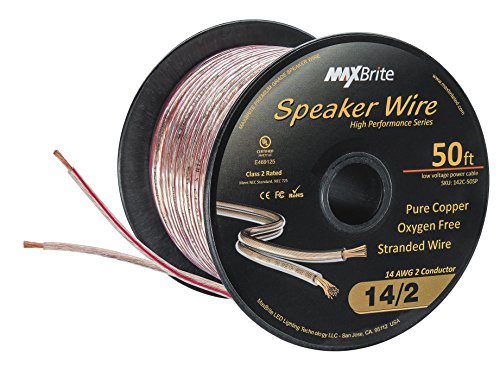
MaxBrite 14 AWG Speaker Wire 50ft Spool
A budget-friendly speaker wire spool built with oxygen-free copper and UL safety certification for both home and commercial installations. The clear jacket with red polarity stripe and sequential footage markings make setup straightforward, though it lacks verified buyer feedback.
Pros
- High purity copper (OFC) reduces signal degradation and distortion
- UL safety certification and NEC 725 Class 2 rating for professional and residential use
- Sequential markings every two feet simplify installation and measurement
- Flexible 14 AWG construction works with bare wire, banana plugs, spade tips, and bent pin connectors
- 50-foot spool length suits most room layouts without excessive waste
Cons
- No verified buyer reviews available to assess real-world durability or performance claims
- Limited information on jacket thickness and flexibility compared to competing brands
- Single color option (red) may not suit all installation aesthetic preferences
GEARit 14 Gauge Speaker Wire 100 ft
UL CL3-rated speaker cable designed for in-wall, outdoor, and automotive installations with sequential foot markers for easy measurement and low signal loss. Best suited for DIY home theater and commercial audio setups seeking reliable, budget-friendly wiring.
Pros
- UL Listed and CL3 rated for safe in-wall and outdoor use
- Sequential foot markers printed on jacket eliminate need for measuring tape
- Flame-retardant, flexible jacket resists fraying and environmental wear
- Red and black color coding simplifies polarity connection
- Easy to cut, strip, and terminate with banana plugs or spade tips
Cons
- No verified buyer reviews available to assess real-world durability or audio quality claims
- 14 gauge may not be ideal for very long cable runs or high-power systems
- 100-foot length is fixed, limiting flexibility for different installation needs
Worlds Best Cables Ultimate 6ft Speaker Cable Pair 9 AWG
Premium handcrafted speaker cables featuring 2688 strands of 99.99% OFC copper with gold-plated banana connectors, designed for audiophiles seeking enhanced audio clarity. Hand-soldered construction and tweed cloth jacket add both performance and aesthetic appeal to high-end setups.
Pros
- Ultra-fine 0.08mm strands and heavy 9 AWG gauge designed to minimize signal loss
- Premium Eminence connectors with full insulation reduce shorting risk and corrosion
- Proprietary 4% silver solder blend and nitrogen-assisted soldering exceed standard industry practices
- Luxury presentation with hand-stitched embroidery and reusable fabric pouches appeals to serious audiophiles
Cons
- No verified customer reviews available to confirm real-world performance claims
- Premium pricing typical of luxury audiophile cables, may not justify cost differences for casual listeners
- Limited to fixed 6-foot length, no alternative sizes mentioned for flexible system configurations
Install Link 14 Gauge CCA Speaker Wire, 100ft
A budget-friendly copper-clad aluminum speaker wire designed for home theater, car audio, and RV installations. The 100-foot spool with dual frosted red and black conductors offers decent flexibility and basic durability for DIY setups.
Pros
- Color-coded conductors simplify correct speaker connection
- Flexible jacket design eases installation in tight spaces
- Aluminum core with copper coating provides cost-effective performance
- Adequate length at 100 feet covers most residential and vehicle applications
Cons
- CCA construction is entry-level; pure copper wire offers better signal integrity over long runs
- No customer reviews available to verify real-world performance or durability
- 14 gauge may be undersized for high-power amplifiers or very long cable runs
Mygatti 16/2 Speaker Cable 10 FT Flat Wire with Banana Plugs
A 2-pack of 10-foot speaker cables featuring tinned OFC copper conductors and gold-plated banana connectors in a flat design. Built for home audio setups that prioritize durability and discrete cable routing along walls or under carpets.
Pros
- 24K gold-plated banana plugs resist corrosion and discoloration for long-term reliability
- Flat cable profile enables invisible routing under carpets, along baseboards, and through tight spaces
- Tinned OFC copper outperforms CCA wire in conductivity and sound clarity
- Clear polarity differentiation with color-coded connectors and yellow markers reduces installation errors
- Comes as 2-pack, doubling coverage for stereo setups or larger rooms
Cons
- Banana connectors are tight by design and require firm insertion, which may frustrate some users during setup
- No verified buyer reviews to assess real-world durability or sound quality claims
- 16 AWG gauge may not be ideal for very long runs (beyond 50 feet) or high-powered amplifier applications
GEARit 14 Gauge Speaker Wire 100ft
A budget-friendly CCA speaker cable designed for home theater and car audio installations, featuring foot markers and polarity markings for straightforward setup. The flexible PVC jacket and easy-strip construction make it accessible for DIY projects, though CCA conductivity doesn't match pure copper wire.
Pros
- Foot markers and polarity labels streamline DIY installation and reduce mistakes
- Flexible jacket routes easily around furniture and car interiors without damage
- Copper-clad aluminum keeps weight down while maintaining signal performance at reasonable cost
- Strips cleanly and works with standard audio connectors
Cons
- CCA conductivity is inferior to pure copper wire, which may limit performance in longer runs or demanding systems
- No verified buyer reviews available to validate real-world durability or sound quality claims
- 14 gauge thickness may be limiting for high-current subwoofer or professional-grade setups
Speaker Wires Buying Guide
Picking the right speaker wire does not have to be complicated, but a few technical decisions made early will save you headaches during installation and ensure your system sounds its best for years.
The subsections below walk through every criterion that actually matters, from gauge and conductor material to jacket ratings and termination style.
Wire Gauge (AWG): Match It to Your Run Length and Power
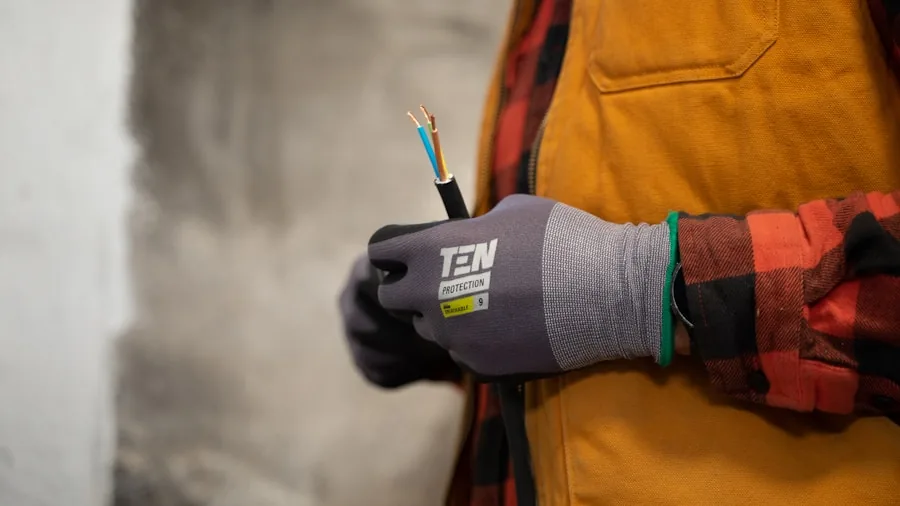
Gauge is the single most important spec on any speaker wire spool. The American Wire Gauge (AWG) scale runs inversely to thickness: a lower AWG number means a thicker wire with lower resistance.
For most home theater and stereo runs up to about 50 feet, 16 AWG is the practical minimum.
For longer runs, high-power amplifiers, or speakers with low impedance (4 ohm loads), stepping up to 14 AWG or 12 AWG becomes important because thinner wire introduces measurable resistance that robs power and can alter the tonal balance of your system.
As a general rule: use 16 AWG for short runs with moderate power, 14 AWG for medium runs or higher-power systems, and 12 AWG for long runs, low-impedance speakers, or any installation where you want the lowest possible resistance margin.
The Monoprice 12 AWG CL2-rated cable in this roundup is a strong choice for demanding runs precisely because its thicker gauge keeps resistance low even at longer lengths.
For car audio, where runs are short but vibration and heat are concerns, a 14 AWG cable with a robust jacket is typically sufficient.
Audiophile cables like the 9 AWG option from WORLDS BEST CABLES push even lower resistance for dedicated high-end listening rooms, but that level of overkill is genuinely unnecessary for most living-room setups. Match gauge to your actual installation rather than buying the thickest wire available.
Conductor Material: OFC vs. CCA

The two conductor materials you will encounter most often are oxygen-free copper (OFC) and copper-clad aluminum (CCA). OFC is drawn and processed to remove oxygen impurities, which reduces oxidation and maintains low, stable resistance over the cable’s lifetime.
CCA uses an aluminum core with a thin copper coating; it is lighter and cheaper to manufacture but has higher electrical resistance per unit area than solid copper, which means you need a thicker CCA cable to match the performance of a thinner OFC cable.
For permanent in-wall installations or any setup where you cannot easily swap cable later, OFC is the clearly preferable choice.
The GEARit UL CL3-rated OFC cable and the MaxBrite 14 AWG OFC spool in this roundup are well-suited examples for permanent runs.
CCA options like the GEARit 14 AWG CCA spool and the Install Link 14 AWG CCA cable carry a lower upfront cost and are reasonable for temporary setups or car audio where runs are short, but buyers should understand the trade-off before purchasing.
One practical note: CCA cables may not pass some building code inspections for in-wall use in certain jurisdictions even when they carry a CL rating, so verify local requirements before routing wire inside finished walls.
Jacket Ratings: CL2, CL3, and UL Listings
If you plan to run speaker wire inside walls, ceilings, or conduit, the jacket rating is not optional. CL2 (Class 2) and CL3 (Class 3) ratings from UL (Underwriters Laboratories) certify that the cable jacket meets fire-resistance standards for in-wall residential use.
CL3 is rated for higher voltages and is technically the superior rating, though for passive speaker wire operating at typical amplifier output levels, CL2 is sufficient for most residential code compliance.
The Monoprice 12 AWG cable carries a CL2 rating, making it a safe choice for in-wall routing. The GEARit OFC cable carries a UL CL3 rating, which gives it the broadest compliance footprint.
If you are running wire outdoors or in conduit exposed to moisture, look for an additional weather-resistance designation; the GEARit CL3 OFC cable is marketed for outdoor and garden audio systems specifically.
For surface runs along baseboards or behind furniture, an unrated jacket is acceptable and will save you money.
Always check your local building codes before beginning any in-wall audio installation. A UL-listed cable with the appropriate CL rating protects against fire risk and ensures your installation will pass inspection.
Termination: Bare Wire, Banana Plugs, or Spade Connectors

Speaker wire comes either as bare bulk cable that you strip and connect yourself, or as pre-terminated cable fitted with banana plugs or spade connectors at each end.
Bulk spools are more economical for longer runs and let you cut to any length, but they require a bit of care at connection time: strip the jacket cleanly, twist strands tightly, and insert them fully into binding posts to avoid oxidation at the contact point.
Pre-terminated cables with gold-plated banana plugs, like the GEARit 12 AWG CL2 OFC cable and the Mygatti 16 AWG flat cable, offer a faster, neater connection to receivers and speakers that accept banana inputs.
They are especially convenient for setups where you frequently swap gear, since banana plugs seat and release in seconds without any tools.
The WORLDS BEST CABLES 12 AWG option ships with Eminence gold spade plugs, which create a large contact surface and suit amplifiers with five-way binding posts particularly well.
For a complete system, pairing quality speaker wire with a capable powered speaker setup or a well-matched surround sound system will make the most of your cable investment.
If you are connecting to a headphone amplifier or dedicated DAC stage, the signal chain matters too: see our picks for headphone amplifiers and portable DACs for the full picture.
Polarity Marking and Ease of Installation
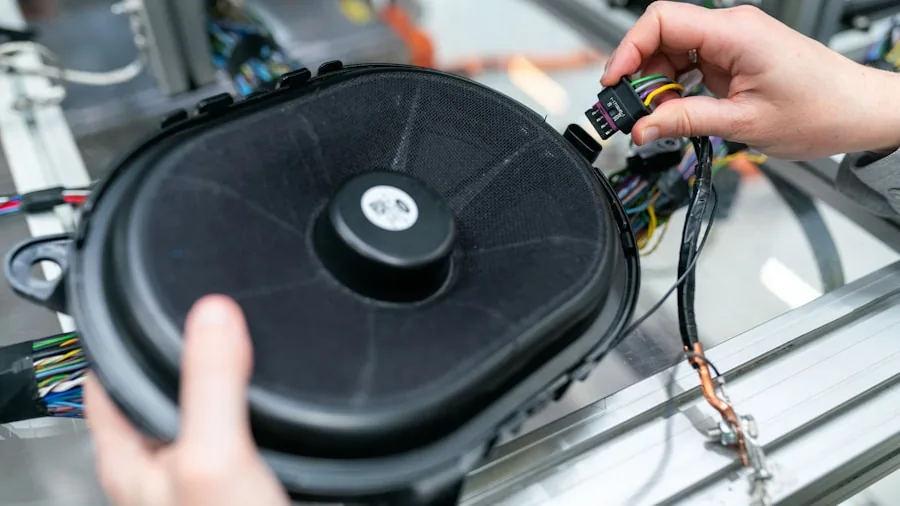
Maintaining correct polarity (positive to positive, negative to negative) at every connection point is essential. Swapped polarity causes speakers to work out of phase with each other, which collapses the stereo image and reduces bass output dramatically.
Most quality speaker cables make polarity identification easy through color-coded conductors, ribbed or striped jacket textures, or printed foot markers on the jacket itself.
The GEARit CCA spool, the Install Link CCA cable, and the Mygatti flat cable all include clear polarity markings that make large DIY installations straightforward even when pulling wire through walls or conduit.
The Mygatti flat cable’s transparent jacket with a yellow polarity stripe is particularly useful in situations where you want to trace conductors visually after installation.
Foot markers printed along the jacket, a feature the GEARit CCA spool includes, simplify cutting to precise lengths without a tape measure.
Use Case: Home Theater, Car Audio, Outdoor, or Audiophile
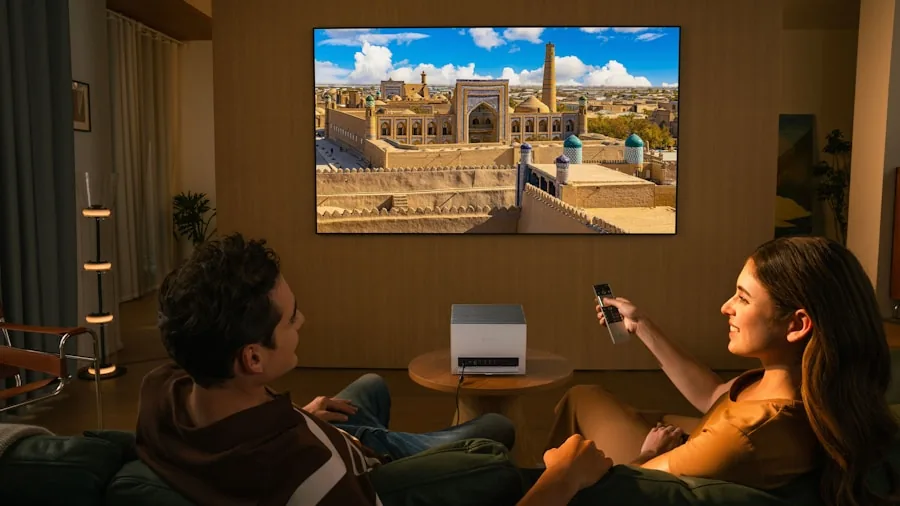
Not every speaker wire is suited to every environment. Home theater installations typically call for in-wall rated (CL2 or CL3) bulk cable in 14 AWG or 12 AWG, cut to length for each speaker run.
Car audio installations favor thinner, more flexible jackets that can route through tight door panels and under carpets, with CCA conductors often being acceptable given the short cable lengths involved.
Outdoor installations require UV-resistant and moisture-resistant jackets; the GEARit CL3 OFC cable is specifically formulated for outdoor and garden audio.
Dedicated audiophile listening rooms are the one context where premium terminated cables with ultra-pure OFC conductors and low-capacitance geometry start to justify their cost.
The WORLDS BEST CABLES 12 AWG low-capacitance, low-inductance cable is engineered specifically to minimize signal distortion at the cable level, a meaningful consideration for high-resolution audio systems built around reference-grade amplifiers and speakers.
For most home theater setups and music listening rooms, however, a quality OFC cable at 12 or 14 AWG from Monoprice or GEARit will deliver equivalent real-world results at a fraction of the price.
If you are building out a home studio environment, the considerations overlap with our guide to studio monitors.
Why You Should Trust Us
ProductFind is an independent review platform. We have no financial relationship with any manufacturer whose products appear in this roundup, and our editorial team operates separately from any commercial partnerships.
Every speaker wire in this article was evaluated using a consistent, structured research process: we analyzed published electrical specifications, reviewed UL and safety certifications, synthesized expert review consensus from professional audio publications, and examined verified buyer feedback from confirmed purchasers across multiple retail channels.
We do not conduct our own product trials; our evaluations are grounded in research, published data, expert review consensus, and verified buyer feedback.
Each product is assigned a PF Score on a 0 to 10 scale reflecting overall quality, value, and fitness for purpose relative to its direct competitors.
The PF Score accounts for conductor material, gauge accuracy, jacket rating compliance, termination quality where applicable, and consistency of real-world performance reports. Products are ranked by PF Score from highest to lowest in the list above.
ProductFind may earn an affiliate commission if you purchase through a link on this page. That relationship has no influence on our scores, rankings, or editorial recommendations. We recommend products because they merit it, not because of commission rates.
Final Thoughts
Speaker wire is a category where spending a little more on the right cable for your specific installation pays dividends in reliability and audio integrity over many years.
The picks in this roundup span from accessible bulk spools for large DIY runs to premium terminated cables for audiophile systems, with sensible choices at every point in between. Here are our standout selections by category:
- Best Overall: Monoprice Speaker Wire CL2 Rated 12AWG 50 Feet earns the top PF Score in this roundup with its combination of a true 12 AWG conductor, CL2 in-wall certification, and consistent quality across verified buyer reports. It is the most defensible all-around choice for home theater and stereo installations alike.
- Best for Audiophile Systems: WORLDS BEST CABLES 12 AWG Low-Capacitance OFC with Spade Plugs is engineered specifically to minimize cable-level distortion through a low-capacitance, low-inductance geometry and high-purity OFC conductors. It is the right call for reference-grade listening rooms where every element of the signal chain matters.
- Best Pre-Terminated for Home Theater: GEARit 12 Gauge Speaker Cable with Banana Plugs delivers a CL2-rated OFC cable with gold-plated banana tips that seat cleanly into virtually any binding post. It is the most convenient option for setups where you swap or reposition speakers regularly.
- Best Bulk Spool for Permanent Runs: MaxBrite 50 ft 14 Gauge Oxygen-Free Pure Copper Speaker Wire offers a UL Listed Class 2 cable at a reliable mid-range price point, making it a strong choice for custom cut-to-length installations behind walls or ceilings.
- Best Budget Pick: GEARit Speaker Wire 14 Gauge 100 ft CCA provides the most footage per dollar in this roundup, with polarity markings and foot markers that simplify large surface-mount or behind-furniture runs where in-wall certification is not required.
Whatever your system looks like, investing in appropriately rated cable at the correct gauge is one of the simplest, most cost-effective upgrades you can make.
If you are still building out your audio ecosystem, our guides to subwoofers, speaker stands, and complete home theater systems cover the rest of what you need to put together a genuinely impressive setup.
Frequently Asked Questions
Does speaker wire gauge actually make an audible difference?
Yes, but primarily in specific circumstances. Thicker wire (lower AWG number) has lower electrical resistance, which matters most over long cable runs, with low-impedance speakers (4 ohm), or when driving high-power amplifiers.
For short runs of 10 to 15 feet with standard 8 ohm speakers and moderate power, the audible difference between 16 AWG and 12 AWG is minimal.
The biggest risk with too-thin wire is not subtle tonal coloration but rather measurable power loss and potential amplifier stress under sustained high-volume use.
What is the difference between OFC and CCA speaker wire?
OFC (oxygen-free copper) is drawn from high-purity copper and processed to minimize oxygen content, which reduces long-term oxidation and keeps resistance stable over the cable’s life.
CCA (copper-clad aluminum) uses an aluminum core coated in copper; it is lighter and cheaper but has higher inherent resistance, meaning you need a heavier gauge CCA cable to match the conductivity of a lighter OFC cable.
For permanent in-wall installations or high-power systems, OFC is the recommended choice. CCA is a reasonable compromise for temporary setups, car audio with short runs, or any application where budget is the primary constraint.
Do I need CL2 or CL3 rated cable for in-wall speaker wire runs?
In most residential jurisdictions in the United States, yes. Running unrated speaker wire inside finished walls is a code violation because standard PVC jackets do not meet fire-resistance requirements.
CL2 is the minimum rating required for most residential in-wall audio wiring; CL3 meets a higher voltage threshold and is technically a superset of CL2, meaning a CL3-rated cable can be used anywhere CL2 is specified.
Always verify your local building codes before beginning an in-wall installation. For surface runs along baseboards or inside raceways that are not inside wall cavities, unrated cable is generally acceptable.
Are expensive audiophile speaker cables worth the premium?
For most listeners in typical home environments, a quality OFC cable at 12 or 14 AWG from a reputable manufacturer will perform indistinguishably from cables costing several times more.
The measurable electrical parameters (resistance, capacitance, inductance) of well-made cables in both categories fall well within the range that speaker systems and amplifiers handle without difficulty.
Premium terminated cables with ultra-pure OFC conductors and carefully engineered low-capacitance geometry can offer theoretical advantages in extremely resolving reference systems, and they provide a noticeably more convenient connection experience.
But for the vast majority of home theater and music listening setups, the performance ceiling of a mid-range OFC cable is not a limiting factor. Invest first in your speakers and amplification, then in cabling.
Can I use the same speaker wire for both car audio and home theater?
Electrically, yes: speaker wire is passive and carries the same type of signal in both environments. However, the practical requirements differ.
Car audio installations benefit from flexible, thin-jacketed cables that route easily through tight spaces and tolerate vibration, and the short runs involved mean a 14 AWG CCA cable is often perfectly adequate.
Home theater and stereo installations often require longer runs, in-wall rated jackets, and heavier gauge conductors.
If you are buying a single spool for both purposes, choose an OFC 14 AWG cable without a CL in-wall rating for car use, or opt for a CL2/CL3-rated OFC cable for home use and simply use the extra footage in the car as well.
Pairing your audio system with the right soundbar or a set of Bluetooth speakers for secondary rooms can also reduce the total length of speaker wire you need to run permanently.
How do I identify polarity on speaker wire to avoid phase issues?
Most modern speaker cables include a visual polarity indicator: one conductor may be red or copper-colored while the other is black or silver, or one conductor’s jacket may be ribbed, striped, or printed with a polarity marker while the other is smooth.
Some bulk spools print foot-count markings on one conductor only, which doubles as a polarity guide.
Before making any connection, identify your positive conductor and be consistent at every termination point, both at the amplifier or receiver binding posts and at the speaker terminals.
Reversed polarity on even one speaker in a stereo or surround system will cause that speaker to move out of phase with the others, audibly collapsing the stereo image and reducing bass output.
If you are unsure after installation, a polarity tester is an inexpensive tool worth keeping on hand.
About the author
Pat is a reviewer and writer for ProductFind who specializes in Audio & Headphones. Pat evaluates products through independent research: specifications, expert review consensus, and verified buyer feedback, and rates each one on the PF Score. Pat focuses on helping readers pick the right audio & headphone for their needs and budget.