The 11 Best Headphone Amplifiers
Not all headphones reach their potential from a phone or laptop alone. Here are the amplifiers worth considering across every budget, from portable picks to desktop DAC/amp combos.
 By Pat Shelton
Updated July 23, 2026
By Pat Shelton
Updated July 23, 2026
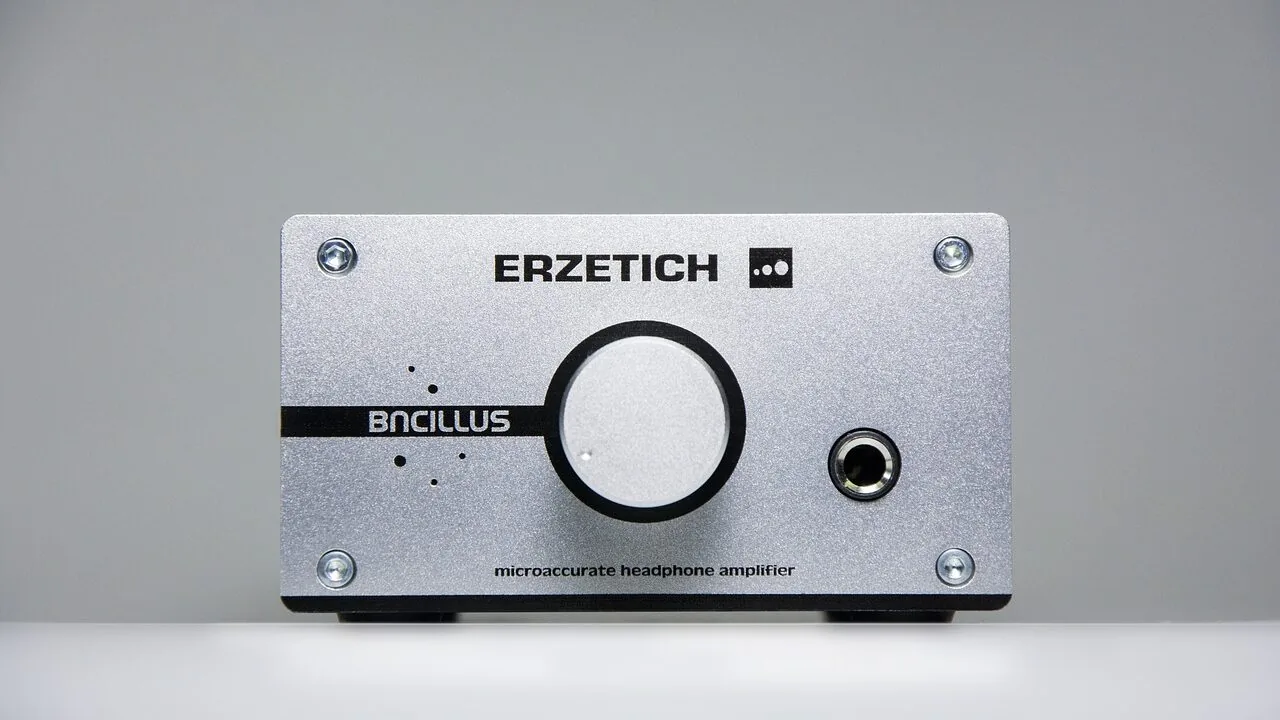
A headphone amplifier is one of the most impactful upgrades you can make to a personal audio setup, yet it remains one of the most misunderstood.
If your headphones are struggling with low volume, a flat soundstage, or a thin, underpowered presentation, the problem is almost certainly your source device delivering insufficient current or voltage. A dedicated amplifier solves that directly.
From compact portable units you can slip into a bag to full-featured desktop DAC/amp combos that anchor a home listening station, the range of options spans every budget and use case imaginable.
This guide covers eleven headphone amplifiers, ranging from ultra-affordable portable picks to premium desktop solutions from brands including Fosi Audio, TOPPING, FiiO, Mackie, and Neoteck.
ProductFind assembled this list through comprehensive research: we analyzed published specifications, synthesized expert review consensus from the audio community, and weighed verified buyer feedback to give each product a PF Score on our 0 to 10 scale.
Whether you need a budget-friendly amp for your commute, a multi-channel unit for a recording studio, or a high-performance desktop DAC/amp combo that handles balanced output, the ranked picks below have you covered.
| Award | Product | PF Score About PF ScoreThe PF Score is our own rating from 0 to 10, based on performance, design and build, ease of use, and value. It reflects independent research and is never influenced by manufacturers, retailers, or affiliate commissions. Learn more › | Price | |
|---|---|---|---|---|
| Best Overall |
 Fosi Audio K7 DAC Headphone Amp, PCM 384kHz
|
8.6/10 | Buy | |
| Editor's Pick |
 TOPPING L30II Headphone Amplifier, 141dB Dynamic Range
|
8.4/10 | Buy | |
| Best Value |
 FiiO K5 Pro Desktop DAC/Amp with ES9038PRO
|
8.2/10 | Buy | |
| Top Rated |
 Fosi Audio Q4 DAC Headphone Amp with USB/Optical/Coaxial
|
7.4/10 | Buy | |
 Mackie HM-4 4-Way Headphone Amplifier Mixer
|
7.3/10 | Buy | ||
 Neoteck Portable Headphone Amplifier, 16-300 Ohm
|
7.1/10 | Buy | ||
 Douk Audio U3 Mini Class A Headphone Amplifier
|
6.9/10 | Buy | ||
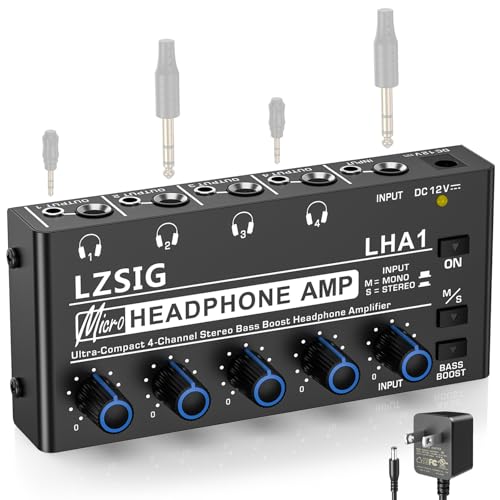 LZSIG 4-Channel Headphone Amplifier with Bass Boost
|
6.7/10 | Buy | ||
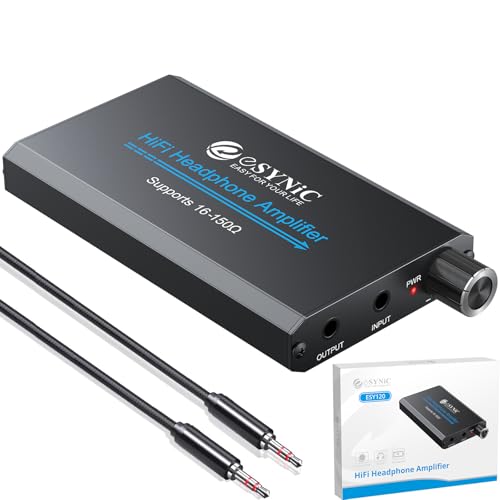 eSynic Portable Headphone Amplifier 16-150Ω
|
6.8/10 | Buy | ||
 Zendstanding HA400 4-Channel Headphone Amplifier
|
6.6/10 | Buy | ||
 Sennheiser HDV 820 Headphone DAC Amplifier
|
6.2/10 | Buy |
Fosi Audio K7 DAC Headphone Amp, PCM 384kHz
A desktop DAC amplifier combining high-resolution audio support (up to PCM 384kHz/32bit and DSD256) with versatile connectivity options including USB-C, Bluetooth aptX HD, optical, and coaxial inputs. Built for both audiophiles and gamers seeking a compact hub for multi-source audio setups.
Pros
- Supports high-resolution audio formats including PCM 384kHz/32bit and DSD256 decoding
- Comprehensive connectivity with USB-C, Bluetooth aptX HD/LL, optical, coaxial, and microphone inputs
- Powerful 2100mW output handles demanding headphones and multiple output options
- Solid aluminum construction with ergonomic angled chassis and intuitive controls
- Works across multiple platforms: gaming consoles, PCs, and portable devices via Bluetooth
Cons
- No verified buyer reviews available to assess real-world reliability and user experience
- Compact design may limit physical space for cable management in crowded desktop setups
- Lacks information on software driver compatibility or firmware update process
TOPPING L30II Headphone Amplifier, 141dB Dynamic Range
A compact headphone amp and preamplifier with ultra-low noise (0.3uV) and three gain settings to accommodate everything from sensitive IEMs to high-impedance headphones. Dual 6.35mm and 3.5mm outputs make it versatile for both audio production and gaming setups.
Pros
- Ultra-low noise floor (0.3uVrms) delivers 141dB dynamic range, ideal for sensitive in-ears
- Three adjustable gain settings (-9.9dB, 0dB, 9.5dB) adapt to different headphone impedances
- Dual headphone output support (6.35mm and 3.5mm jack with adaptor)
- Functions as both headphone amp and preamplifier for active monitors
- 12-month warranty included
Cons
- No verified buyer reviews available to confirm real-world performance claims
- Limited to headphone and preamp duties; no onboard DAC functionality
- Compact form factor may limit accessibility to connections depending on desk setup
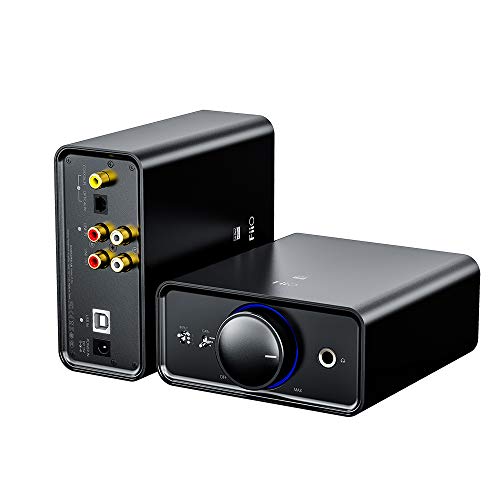
FiiO K5 Pro Desktop DAC/Amp with ES9038PRO
A desktop-class DAC and headphone amplifier combining high-resolution audio support (768kHz, DSD512) with flexible connectivity options. Suits audiophiles and PC/mobile users wanting quality amplification without portable constraints.
Pros
- Versatile input/output options for connecting multiple audio sources and devices
- Strong power delivery capable of driving a wide range of headphone impedances smoothly
- High-resolution audio support with modern DAC chip ensures detailed sound reproduction
- Adjustable line-out enables use as a preamp for active speakers
Cons
- No user reviews available to verify real-world performance claims
- Desktop form factor limits portability despite compact dimensions
- Limited information on noise floor, THD, and measured audio specifications beyond headline specs
Fosi Audio Q4 DAC Headphone Amp with USB/Optical/Coaxial
A compact entry-level DAC and headphone amplifier with multiple input options and adjustable tone controls, designed for desktop audio setups. Supports up to 24-bit/192kHz audio and works plug-and-play without driver installation, making it accessible for users upgrading from basic PC audio.
Pros
- Versatile input/output options suit various audio sources and destinations
- Adjustable bass and treble controls let you tailor sound to your preference
- Compact size and plug-and-play setup make it easy to integrate into existing systems
- Includes all necessary cables for immediate use
- Supports high-resolution audio formats up to 192kHz
Cons
- No microphone input limits functionality for voice recording or conferencing
- 4.6-star rating based on zero verified reviews provides limited real-world usage feedback
- Entry-level performance may not satisfy audiophiles seeking advanced features or boutique sound signatures
Mackie HM-4 4-Way Headphone Amplifier Mixer
A compact headphone distribution hub that lets up to four musicians monitor a single stereo source independently. Built with Mackie's durable construction and powered by included AC adapter, it's straightforward for small ensemble setups.
Pros
- Individual level control for each headphone output
- Supports up to 4 headphone pairs from one source
- Includes 12V AC power adapter
- Compact, portable footprint at 4.3 x 2.3 x 2 inches
- Solid construction quality
Cons
- No user reviews available to verify real-world performance
- Limited to mono or single stereo source, no multi-channel input mixing
- Requires AC power adapter, not battery-powered for portability
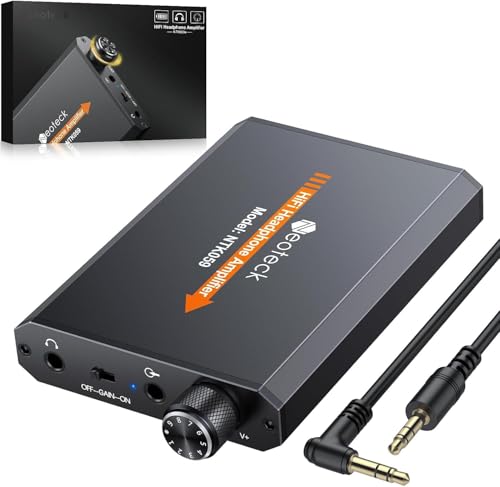
Neoteck Portable Headphone Amplifier, 16-300 Ohm
A compact, battery-powered headphone amp designed for portable use with wide impedance compatibility and a 12-hour runtime. Best suited for audiophiles and music enthusiasts who need consistent signal amplification across multiple devices.
Pros
- Wide impedance range accommodates budget to premium headphones
- Long battery life enables extended travel and studio use without frequent charging
- Lightweight and compact form factor fits easily in bags or pockets
- Dual gain levels allow flexibility in signal adjustment for different audio sources
- Low distortion specs support clean audio reproduction across device types
Cons
- No verified user reviews available yet to validate real-world audio quality performance
- Single 3.5mm connection limits simultaneous device connectivity
- Limited information on actual volume output levels or dB gain specifications
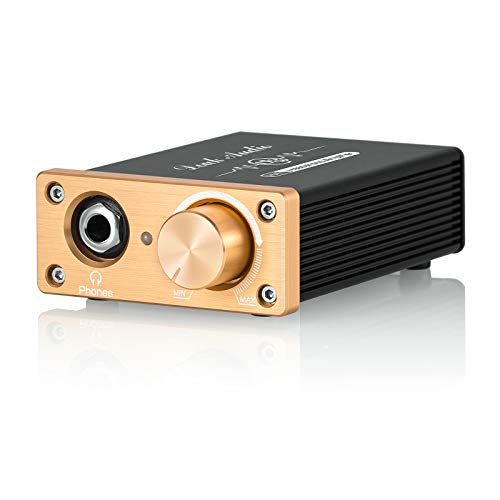
Douk Audio U3 Mini Class A Headphone Amplifier
A compact desktop headphone amp using Class A circuitry with TI-NE5532 op amps and pluggable socket design for DIY upgrades. Well-suited for driving high-impedance headphones and delivering warm, detailed sound in home or office setups.
Pros
- Pluggable op amp socket allows easy component upgrades for audio customization
- Class A amplification with 1300mA output transistors delivers low distortion and warm sound character
- Compact form factor with strong drive power for high-impedance headphones like HD600, K701, DT880
- Wide 5-20V input voltage range and excellent noise performance according to specs
- Supports both 6.35mm and 3.5mm headphone connections
Cons
- No verified buyer reviews available to confirm real-world performance claims
- Requires external power supply (DC 5V) rather than USB or battery operation
- Limited documentation on frequency response, THD measurements, or detailed specs beyond marketing descriptions
LZSIG 4-Channel Headphone Amplifier with Bass Boost
A compact four-channel headphone amplifier designed for studio and stage use, letting up to four users monitor audio independently from a single source. Built-in bass boost and ultra-low-noise circuitry appeal to professionals seeking clean signal distribution without converters.
Pros
- Four independent volume controls allow each user to set their own listening level
- Bass boost targets specific frequency ranges (400-600 Hz and 3000-7200 Hz) for vocal and bass enhancement
- Works with standard 3.5mm and 1/4-inch connectors without requiring adapters
- Designed to minimize noise and distortion for professional audio environments
- Stereo/Mono flexibility accommodates different input source types
Cons
- No verified customer reviews available to assess real-world reliability and durability
- Limited to headphones with 32-100 ohm impedance, may not work optimally with all models
- Requires external DC 12V power supply, not battery-powered for portable use
eSynic Portable Headphone Amplifier 16-150Ω
A compact, battery-powered headphone amp designed for IEMs and monitoring headphones across a wide impedance range. Features dual-gain switching, low distortion specs (0.0003% THD+N), and 8+ hours of battery life in a durable aluminum chassis.
Pros
- Impedance-matched gain settings ensure proper load matching without trial-and-error
- Verifiable low distortion and high SNR specifications support transparent amplification
- Extended battery life suitable for full workday or travel use
- Shielded aluminum construction minimizes interference in portable setups
- Universal 3.5mm standard works with phones, laptops, DAPs, and professional interfaces
Cons
- No verified customer reviews available to confirm real-world performance reliability
- Limited to 3.5mm analog connectivity, no USB or wireless options for modern devices
- Battery life claim (8+ hours) applies only to 30mW output into 150Ω loads; lighter loads may vary
Zendstanding HA400 4-Channel Headphone Amplifier
A compact metal headphone amplifier designed for studios, stages, and live performances that lets up to four users control independent volumes from a single audio source. Built with a low-noise JRC4580 chip and powered by a 12V adapter, it handles headphones in the 32-100 ohm range.
Pros
- Independent channel control allows each user to adjust their own volume without affecting others
- Compact metal build is genuinely portable for touring musicians and mobile setups
- Low-noise chip design maintains clean audio signal across all four channels
- Standard 1/4" TRS connectors integrate easily with existing studio gear
Cons
- No verified buyer reviews available to confirm real-world reliability and durability
- Limited to 40mA max output at 100 ohms, which may not power higher-impedance or power-hungry headphones
- Requires external 12V power adapter, reducing portability despite compact size
Sennheiser HDV 820 Headphone DAC Amplifier
A premium desktop DAC and headphone amplifier built around the ESS 9028PRO Sabre chip, designed as the reference-class companion for high-end headphones like Sennheiser's HD 800. Combines digital-to-analog conversion with dedicated amplification in a single chassis.
Pros
- Integrates DAC and amplifier in one device, reducing cable clutter
- ESS 9028PRO Sabre is a respected DAC chip used in professional audio equipment
- Direct pairing with Sennheiser's own flagship HD 800 headphones
- USB connectivity allows seamless computer integration
Cons
- No verified customer reviews available to assess real-world reliability or user experience
- Premium positioning suggests high cost with limited direct price transparency in listing
- Relatively large footprint (8.8 x 17.3 x 12 inches) requires dedicated desktop space
Headphone Amplifiers Buying Guide
Choosing the right headphone amplifier means thinking clearly about your headphones, your source devices, and how you actually listen. The amplifier market looks complex on the surface, but a few core criteria do most of the filtering work.
Use the sections below to match your needs before committing to a purchase.
Headphone Impedance and Sensitivity

Impedance, measured in ohms, is the single most important spec to cross-reference between your headphones and any amplifier you are considering.
Low-impedance headphones (under 50 ohms) and sensitive IEMs are easily driven by smartphones and motherboards, and adding a high-gain amplifier can actually introduce noise.
High-impedance headphones in the 150 to 300 ohm range, such as classic Sennheiser and Beyerdynamic models, genuinely need a proper amplifier to reach their potential.
Sensitivity, rated in dB/mW, tells you how loud a headphone gets per milliwatt of power. A highly sensitive headphone at 110 dB/mW may hiss audibly through a powerful amp even at minimum volume.
Look at the impedance range listed on each amplifier and confirm your headphones fall within it. Most portable amps in this guide cover 16 to 300 ohms, which handles the vast majority of consumer headphones.
If you are pairing with planar magnetics, prioritize current delivery over raw voltage output, which is one reason desktop DAC/amp combos consistently outperform phone-sized portables for that headphone type.
Portable vs. Desktop Form Factor
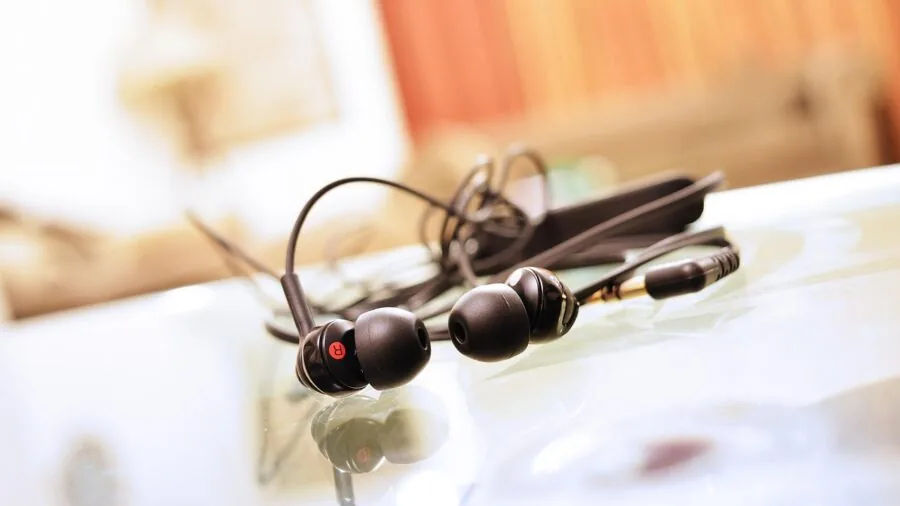
Portable amplifiers run on internal rechargeable batteries and connect via 3.5mm AUX. They are designed to sit between your phone or laptop and your headphones, providing a modest but meaningful boost.
Battery life is a real constraint: most quality portables offer 8 to 12 hours per charge, and aluminum alloy bodies help manage heat and durability when being carried daily.
Desktop amplifiers plug into wall power and can deliver far more headroom. Many combine a DAC (digital-to-analog converter) with the amp stage into a single unit, eliminating the need to manage two separate boxes.
If your primary listening happens at a desk, a desktop DAC/amp combo is almost always better value than a portable unit for equivalent money.
The connectivity difference is also significant: desktop units often include optical, coaxial, USB-C, and even Bluetooth inputs alongside standard 3.5mm and 6.35mm outputs, making them far more flexible as a central audio hub for a PC or gaming console.
This is worth considering alongside other desktop audio gear like soundbars if you share a room between gaming and critical listening.
DAC Integration and Input Options
A standalone headphone amplifier expects an analog signal in. If your source is a computer or game console outputting digital audio over USB or optical, you need a DAC stage before the amp.
Models in this guide that combine both functions, such as the Fosi Audio K7 and the FiiO K5 Pro, handle the full digital-to-analog conversion and amplification in a single chassis.
That simplicity has real appeal: fewer cables, one power supply, and a cleaner desk.
If you already own a quality DAC, a pure analog amplifier stage like the TOPPING L30II may be the smarter pairing, offering tighter specs and more output voltage headroom for the same price as a combo unit.
Check what inputs your chosen unit provides. Optical and coaxial inputs are useful for connecting TVs or disc players; USB-C is increasingly standard for PCs; Bluetooth with aptX HD adds wireless flexibility without sacrificing too much fidelity compared to wired.
For users who already invest in quality over-ear headphones, the DAC quality in the amplifier chain matters more than many buyers initially expect.
Output Connections and Balanced Audio

Most consumer headphone amplifiers offer a standard 3.5mm output for everyday use and a 6.35mm (quarter-inch) output for full-size audiophile headphones. These are unbalanced connections, meaning they share a common ground between left and right channels.
Balanced outputs, most commonly 4.4mm Pentaconn in modern desktop units, run completely separate signal paths for each channel, reducing crosstalk and, in well-implemented designs, lowering the noise floor measurably.
Balanced connectivity is worth paying for if your headphones support it (either natively or via a re-cable) and your source material justifies it. For most users, however, a high-quality unbalanced output is indistinguishable in practice.
Multi-channel headphone amplifiers with multiple 6.35mm or 3.5mm outputs (the Mackie HM-4, LZSIG, and Zendstanding HA400 in this guide) serve a different purpose entirely: they are designed for studio tracking sessions or live sound where multiple headphone mixes need to be distributed simultaneously.
They are not performance amplifiers for audiophile listening, so evaluate them purely on their intended use case.
Gain Stages and Volume Control

Gain is the amount of amplification applied to the input signal.
A two-stage gain switch (low/high) is a practical feature found on most portable amplifiers in this lineup, allowing you to use the lower gain setting with sensitive IEMs to avoid hiss, then switch to high gain for demanding full-size headphones.
Without adjustable gain, a single fixed amplification level forces compromise at both ends of the sensitivity spectrum.
Volume potentiometers vary in quality between price tiers. Budget portables use simple resistive pots that can exhibit channel imbalance at very low volume levels.
Higher-end desktop units often use stepped attenuators or precision-matched pots that track cleanly from minimum to maximum. If you frequently listen at low volumes with sensitive headphones, the quality of the volume control is not a trivial consideration.
This is one area where the TOPPING L30II’s NFCA topology genuinely differentiates itself from the field at its price point.
Power Output and Noise Floor

Output power, specified in milliwatts or watts at a given impedance, determines whether an amplifier can drive demanding headphones to comfortable listening levels without clipping.
As a general rule, 100 to 200 mW at 32 ohms is adequate for most consumer headphones, while 1 watt or more at 32 ohms provides the headroom that planars and high-impedance dynamics need.
The Fosi Audio K7 at 2100 mW is exceptionally powerful for its class; the TOPPING L30II at 37 Vpp output voltage handles high-impedance loads with ease.
Noise floor, expressed as signal-to-noise ratio (SNR) in dB or as THD+N percentage, matters most for IEM users and anyone listening in quiet environments.
A high-power amplifier with a noisy background is actively worse for sensitive in-ears than a modest-output amp with a black noise floor. Published SNR figures above 110 dB are generally considered excellent; figures above 120 dB represent reference-class performance.
If you also use noise cancelling headphones or wireless earbuds as part of your audio ecosystem, you may only need a dedicated amp for your wired, high-impedance cans.
Why You Should Trust Us
ProductFind operates as an independent review publication. Every product in this guide was evaluated using our structured research methodology: we analyze published specifications, synthesize expert review consensus from the broader audio community, and incorporate verified buyer feedback from confirmed purchasers.
We do not conduct our own product trials; our evaluations are grounded in research, published data, expert review consensus, and verified buyer feedback.
Each product is scored on our 0 to 10 PF Score scale using a consistent, criteria-weighted framework applied uniformly across the category, so scores are directly comparable within the list.
ProductFind may earn a commission if you purchase through links on this page. That affiliate relationship has no bearing on product rankings, scores, or selection. Products are ranked by PF Score, not by commission rate or brand relationship.
Our editorial positions are determined solely by the quality of the research findings.
Final Thoughts
The eleven headphone amplifiers in this guide span a wide range of use cases, from ultra-portable battery-powered units to full-featured desktop DAC/amp combos. Here are our top category awards based on PF Score and verified performance data:
- Best Overall: Fosi Audio K7 DAC Headphone Amp earns the top PF Score in this roundup thanks to its exceptional power output, versatile connectivity including USB-C, Bluetooth aptX HD, optical, coaxial, and mic input, plus 4.4mm balanced and 3.5mm outputs. It covers nearly every source and headphone combination a desktop listener could need.
- Best Pure Amplifier: TOPPING L30II NFCA is the pick for audiophiles who already own a quality DAC. Its NFCA topology, 37 Vpp output voltage, and near-reference noise specifications give it a performance edge over most amplifiers near its price bracket, and the PF Score reflects that consistently across expert assessments.
- Best Mid-Range DAC/Amp Combo: FiiO K5 Pro delivers 768K/32-bit decoding and native DSD512 support in a compact desktop chassis with both 6.35mm and RCA outputs. It is the straightforward one-box upgrade for anyone moving from onboard PC audio to a proper listening station.
- Best Budget Desktop DAC/Amp: Fosi Audio Q4 handles PC-USB, optical, and coaxial inputs with headphone and RCA outputs at a budget-friendly price, making it an accessible entry point into dedicated desktop audio without sacrificing connectivity.
- Best Budget Portable: Neoteck Portable Headphone Amplifier covers 16 to 300 ohm headphones with a two-stage gain switch and rechargeable battery at an entry-level price that removes any financial barrier to better headphone performance on the go.
If you are building out a full personal audio setup, pairing a capable headphone amplifier with quality over-ear headphones is the combination that delivers the most noticeable improvement in perceived audio quality.
For portable listening situations where wired amps are impractical, wireless earbuds with onboard DAC/amp chips have closed the gap significantly in recent years.
And for shared room listening, a well-chosen Bluetooth speaker or dedicated soundbar may serve better than a headphone amplifier entirely.
Frequently Asked Questions
Do I actually need a headphone amplifier?
It depends almost entirely on your headphones. If your headphones are under 50 ohms with sensitivity above 100 dB/mW, your phone or PC motherboard almost certainly drives them adequately.
If you use high-impedance headphones (150 ohms and above) or low-sensitivity planars and notice low volume, a flat soundstage, or distortion at high volume, a dedicated amplifier will make an audible difference. Most gaming headsets do not require an outboard amp.
What is the difference between a headphone amp and a DAC/amp combo?
A standalone headphone amplifier accepts an analog signal and amplifies it. It requires your source device to have already converted digital audio to analog.
A DAC/amp combo performs both steps in one unit: it accepts a digital input (USB, optical, coaxial, Bluetooth), converts it to analog internally, and then amplifies the result.
For most users connecting a PC or console, a combo unit is the simpler and often better-value solution. Separates make sense when you already own a high-quality DAC and want a purpose-built amplifier stage to match it.
Is a balanced output worth the premium?
Balanced outputs (4.4mm Pentaconn or XLR) reduce crosstalk between channels and can lower the noise floor in some implementations. In practice, the audible benefit over a high-quality unbalanced output is marginal on most headphones in typical listening conditions.
Balanced connectivity is worth prioritizing if your headphones are re-cabled for balanced or if you are building a reference-grade desktop setup where every measurable gain matters.
For everyday listening, an amplifier with an excellent unbalanced output will outperform a mediocre balanced one.
Can a headphone amplifier improve sound quality, or does it just make things louder?
Both, but the quality improvement is the more meaningful one. A good amplifier provides adequate current delivery so your headphone drivers respond correctly across the full frequency range, not just louder.
Underpowered headphones often exhibit compressed dynamics, rolled-off bass, and congested imaging. Proper amplification restores those qualities.
A transparent amplifier adds no character of its own; what you hear is more of what the headphones themselves are capable of, which is the goal.
Class A designs like the Douk Audio U3 introduce a small amount of warmth by design, which some listeners prefer with certain headphone signatures.
What should I look for in a multi-channel headphone amplifier for studio use?
Multi-channel headphone amps used in recording or live sound contexts need clean signal distribution without crosstalk between outputs, sufficient output level to drive whatever headphones your performers or engineers are wearing, and reliable build quality under continuous use.
Features like individual volume controls per output channel add significant flexibility during tracking sessions. Units in this guide such as the Mackie HM-4 and LZSIG 4-channel amp are designed for exactly this context.
They are distribution amplifiers first, not audiophile listening devices, so do not evaluate them on audiophile metrics. For the broader listening environment in a home studio, quality portable speakers or a soundbar may complement them for casual monitoring.
How much should I spend on a headphone amplifier?
Match your amplifier budget to your headphone budget. Spending significantly more on an amplifier than on the headphones it powers yields diminishing returns, because the headphone transducer is the primary determinant of sound character.
As a practical guideline, an entry-level portable amp is appropriate for consumer headphones up to mid-range impedance; a mid-range desktop DAC/amp combo suits serious audiophile headphones; and a premium desktop amplifier makes sense only when paired with reference-class headphones where the amplifier’s noise floor and output voltage headroom genuinely become the limiting factor.
Most listeners at any level are well-served by one of the mid-range picks in this guide without needing to step up to the premium tier.
About the author
Pat is a reviewer and writer for ProductFind who specializes in Audio & Headphones. Pat evaluates products through independent research: specifications, expert review consensus, and verified buyer feedback, and rates each one on the PF Score. Pat focuses on helping readers pick the right audio & headphone for their needs and budget.