The 12 Best Av Receivers
Choosing an AV receiver shapes how every movie, game, and album sounds in your home. Here are the top-rated options across budget, mid-range, and premium tiers.
 By Pat Shelton
Updated July 23, 2026
By Pat Shelton
Updated July 23, 2026
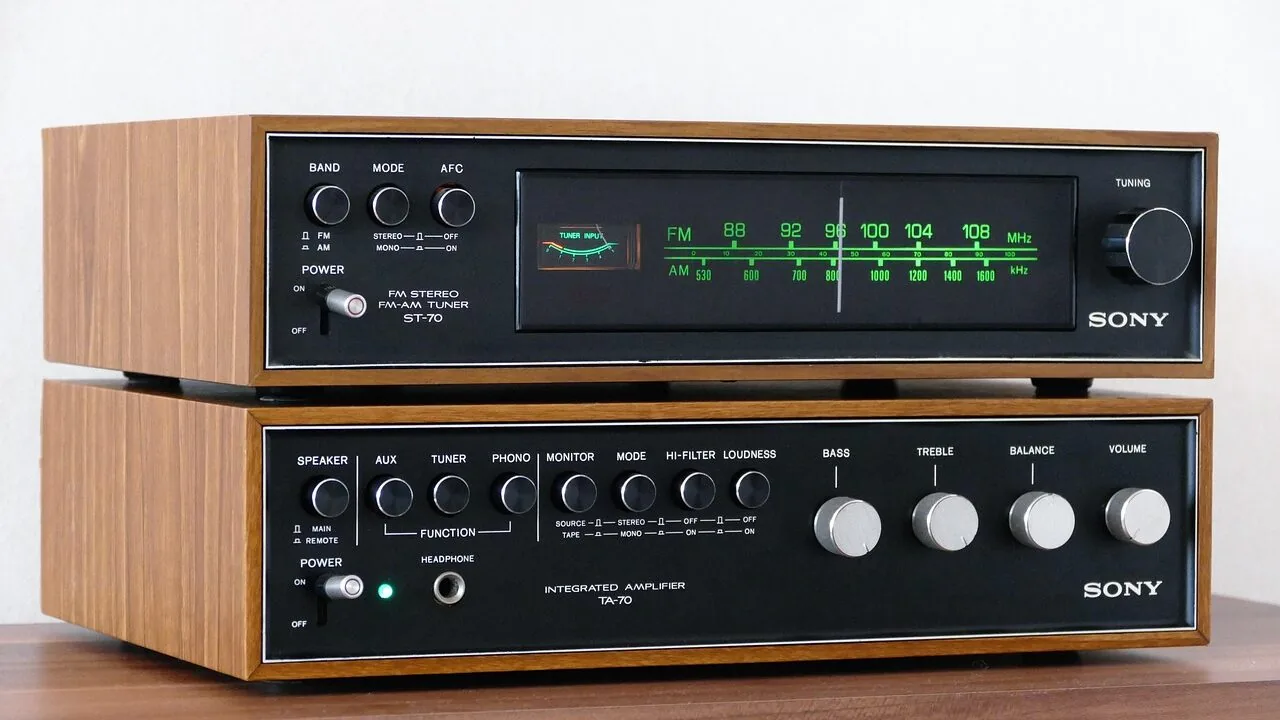
A quality AV receiver is the backbone of any serious home theater setup.
It powers your speakers, decodes immersive audio formats like Dolby Atmos and DTS:X, routes 4K and 8K HDMI signals, and connects every source device you own into a single, manageable hub.
Whether you are building a dedicated cinema room or upgrading a living room system that outgrew a basic soundbar, choosing the right receiver shapes every aspect of how your movies, music, and games sound and feel.
The market spans a wide range, from lean stereo receivers ideal for music listening to flagship 9.2-channel powerhouses loaded with room-correction technology and network streaming smarts.
To help you cut through the noise, the ProductFind editorial team researched the AV receiver category thoroughly, synthesizing manufacturer specifications, expert review consensus from across the audio press, and verified buyer feedback from thousands of real-world owners.
Our findings are distilled into a ranked list of top picks covering every budget tier, from an entry-level stereo option to a premium ES-series flagship.
Read on to see which receiver earned the highest marks and which one fits your specific setup best.
| Award | Product | PF Score About PF ScoreThe PF Score is our own rating from 0 to 10, based on performance, design and build, ease of use, and value. It reflects independent research and is never influenced by manufacturers, retailers, or affiliate commissions. Learn more › | Price | |
|---|---|---|---|---|
| Best Overall |
 Sony STR-AZ1000ES 7.2 Ch 8K A/V Receiver
|
8.9/10 | Buy | |
| Editor's Pick |
 Denon AVR-X1700H 7.2 AV Receiver
|
8.7/10 | Buy | |
| Best Value |
 Onkyo TX-RZ50 9.2-Channel THX Receiver
|
8.4/10 | Buy | |
| Top Rated |
 Onkyo TX-NR6100 7.2-Channel THX AV Receiver
|
7.9/10 | Buy | |
 Onkyo TX-NR7100 9.2-Channel AV Receiver
|
7.8/10 | Buy | ||
 Yamaha RX300A 5.2-Channel AV Receiver with Dolby Atmos
|
7.6/10 | Buy | ||
 Sony STR-DH590 5.2-Channel AV Receiver
|
7.2/10 | Buy | ||
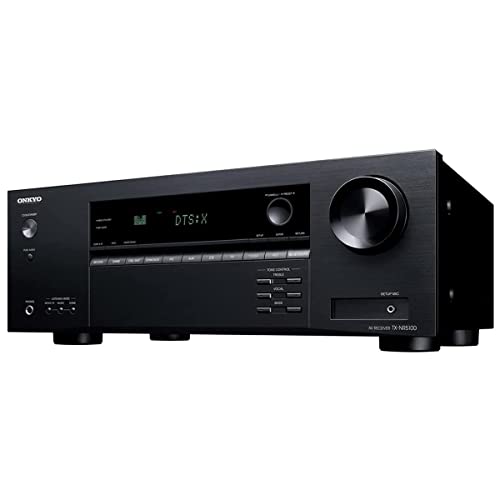 Onkyo TX-NR5100 7.2 Channel AV Receiver
|
7.1/10 | Buy | ||
 Sony STRDH190 2-Channel Stereo Receiver
|
6.8/10 | Buy | ||
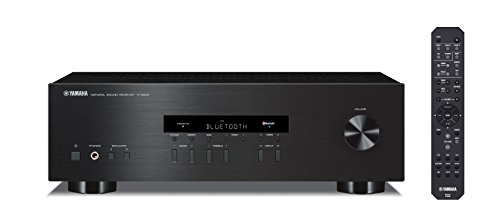 Yamaha R-S202BL Stereo Receiver
|
6.5/10 | Buy | ||
 Pyle 5.2 Channel Home Theater Receiver with 4K Support
|
5.8/10 | Buy | ||
 Donner 4-Channel Stereo Receiver 1000W Peak Power
|
4.2/10 | Buy |
Sony STR-AZ1000ES 7.2 Ch 8K A/V Receiver
A premium 7.2 channel receiver built for modern home theater setups with 8K and 4K/120 HDMI support, object-based audio decoding, and extensive streaming connectivity. Best suited for custom installations and users wanting seamless integration across Sonos, Google Assistant, and multiple audio formats.
Pros
- Supports cutting-edge 8K/4K-120 video with full HDMI 2.1 feature set
- Comprehensive immersive audio: Dolby Atmos, DTS:X, and 360 Spatial Sound Mapping
- Broad streaming ecosystem including Sonos, Chromecast, AirPlay, and Spotify Connect
- Professional-grade calibration tools and IP control for custom integrators
- Handles multiple premium HDR formats including Dolby Vision and IMAX Enhanced
Cons
- No user reviews available to validate real-world performance and reliability claims
- 100W per channel at 8 ohms may be limiting for large rooms with demanding speakers
- Primarily designed for custom installation, potentially requiring professional setup expertise
Denon AVR-X1700H 7.2 AV Receiver
A mid-range 7.2 channel receiver built for modern home theater with 8K-ready HDMI inputs, Dolby Atmos, DTS:X support, and built-in HEOS streaming. Best suited for enthusiasts upgrading from entry-level systems who want solid 4K performance without premium pricing.
Pros
- Advanced 8K HDMI video section with 3 dedicated 8K inputs, 8K upscaling on all 6 inputs, and support for HDR10, HDR10+, Dolby Vision, and HLG
- Multi-dimensional audio including Dolby Atmos, DTS:X, and Dolby Atmos Height Virtualization for immersive sound even without dedicated height speakers
- Built-in HEOS multi-room streaming with AirPlay 2 and Bluetooth support across popular services like Spotify and Amazon Music HD
- Full voice control integration with Amazon Alexa and compatibility with other voice assistants for hands-free operation
- Color-coded back panel and award-winning on-screen setup guide simplify installation and calibration
Cons
- No verified buyer reviews available, making real-world performance feedback unavailable at this time
- 80W per channel power output is modest compared to higher-end models, potentially limiting performance in very large rooms
- Limited pre-outs (2 subwoofer outputs) may constrain expansion options for advanced multi-subwoofer configurations
Onkyo TX-RZ50 9.2-Channel THX Receiver
A premium 9.2-channel AV receiver with THX certification and DIRAC LIVE room correction for serious home theater setups. Built for cinephile installations where spatial calibration and multi-channel immersion matter.
Pros
- THX certified for standardized audio performance
- DIRAC LIVE room correction calibrates acoustics to your space
- 9.2 channel configuration supports advanced surround formats
- Supports WMA audio format for broad file compatibility
- Substantial build quality at 36 pounds
Cons
- No user reviews available to verify real-world performance claims
- Limited documented feature set in available data
- Premium positioning may exceed casual home theater needs
Onkyo TX-NR6100 7.2-Channel THX AV Receiver
A THX Select certified receiver designed for immersive home theater, delivering 210W per channel and support for modern audio formats like Dolby Atmos and DTS:X. Best suited for enthusiasts building serious surround systems who prioritize certified audio performance over user reviews.
Pros
- THX Select certification ensures calibrated audio performance
- 210W per channel discrete amplification for dynamic playback
- Supports 5.2.2-channel Dolby Atmos and DTS:X immersive audio
- 8K HDMI 2.1 40Gbps inputs future-proof connectivity
- Discrete Zone 2 for independent audio and video in secondary spaces
Cons
- No verified buyer reviews available to assess real-world reliability or user experience
- Limited format support listed (WAV only), may lack broader codec compatibility details
- Substantial size and weight require careful placement and may not suit compact entertainment centers
Onkyo TX-NR7100 9.2-Channel AV Receiver
A premium AV receiver built for modern home theaters with native Dirac Live room correction, HDMI 2.1 gaming support, and seamless Sonos integration. Best suited for enthusiasts who want future-proof 8K connectivity and advanced spatial audio without breaking the bank.
Pros
- Dirac Live room correction arrives built-in, eliminating need for separate calibration mic purchase
- Strong gaming credentials with HDMI 2.1 enhancements (VRR, ALLM, QFT) for competitive advantage
- Sonos Port compatibility extends streaming flexibility across three independent zones simultaneously
- Robust connectivity with 8K readiness, eARC, and multiple streaming services pre-integrated (Spotify, TIDAL, Deezer, TuneIn, Pandora)
Cons
- No verified user reviews on file, limiting real-world performance feedback
- 27.46-pound chassis and 17.12 x 14.94 inch footprint requires dedicated shelf space
- Dirac Live PC/Mac calibration requires separate third-party USB microphone purchase if not using smartphone method
Yamaha RX300A 5.2-Channel AV Receiver with Dolby Atmos
A capable mid-range AV receiver that handles modern home theater needs with 5.2-channel flexibility, Dolby Atmos support, and 4K120/8K video passthrough. Room correction and Bluetooth Multipoint make setup and streaming straightforward for home theater enthusiasts.
Pros
- Dolby Atmos and DTS Virtual:X for immersive spatial audio with clear dialogue
- Supports 4K120 and 8K60 video with HDMI eARC, ALLM, and VRR for gaming
- Included setup microphone with automatic room correction optimization
- Bluetooth Multipoint allows pairing and switching between two source devices
- Flexible 5.2-channel configuration with up-firing or in-ceiling height options
Cons
- 70W per channel is modest for larger rooms requiring significant volume
- No verified buyer reviews available to assess real-world performance and reliability
- Limited sound mode customization compared to higher-tier Yamaha receivers
Sony STR-DH590 5.2-Channel AV Receiver
A budget-friendly home theater receiver that handles 4K HDR passthrough and delivers multi-channel surround sound via S-Force PRO virtual surround technology. Best suited for those building an entry-level home cinema setup or upgrading from basic stereo systems.
Pros
- 4K HDR passthrough with HDCP 2.2 support for modern video sources
- S-Force PRO virtual surround creates theater-like sound with minimal speakers
- Bluetooth connectivity and standby remote power-on for convenience
- Multiple input options including 4 stereo RCA inputs and digital audio outputs
- Includes accessories: foldable headphones, carry case, and cables
Cons
- No customer reviews available to verify real-world performance
- Limited to 4 HDMI inputs, which may constrain multi-source setups
- 0.9% THD specification is adequate but not exceptional for audio quality
Onkyo TX-NR5100 7.2 Channel AV Receiver
A 7.2 channel networked AV receiver designed for home theater setups, offering HDMI 2.1 support for 4K/120 gaming and streaming, plus smart home integration with Apple AirPlay, Alexa, and Google. This renewed unit suits users building a modern home theater who want seamless speaker compatibility and multi-service audio streaming.
Pros
- HDMI 2.1 with 4K/120 and eARC delivers modern video and audio standards for gaming and premium content
- Klipsch Optimize Mode simplifies setup for reference-grade speakers
- Multiple built-in streaming services eliminate need for external devices
- Smart home integration lets you control playback through Alexa or Google apps
Cons
- Renewed unit status means it may lack original packaging or full warranty coverage
- No user reviews available to validate real-world performance and reliability
- Limited audio format support listed (WAV, WMA only) compared to modern standards
Sony STRDH190 2-Channel Stereo Receiver
A compact stereo receiver designed for analog and Bluetooth audio playback, delivering 100 watts per channel into 8 ohms. Best suited for listeners seeking a straightforward amplifier with built-in phono preamp and wireless streaming, though it lacks modern surround sound capabilities.
Pros
- 100W per channel (8 ohms) provides solid power for passive speakers in small to medium rooms
- Phono input enables direct turntable connection without external preamp
- Built-in Bluetooth for wireless streaming from phones and tablets
- Low profile design (5.25 inches tall) fits standard AV cabinets
- Speaker A/B switching allows zone selection or dual-zone playback
Cons
- Stereo-only configuration, no surround or multichannel support
- Limited modern connectivity beyond Bluetooth and RCA inputs
- No reviews available to verify real-world performance claims
Yamaha R-S202BL Stereo Receiver
A compact stereo receiver built for simplicity and reliable performance. The R-S202BL pairs Bluetooth connectivity with dual speaker selector capability, making it practical for modest living spaces or as a secondary system.
Pros
- Bluetooth connectivity enables wireless streaming from phones and tablets
- Two speaker systems can be controlled independently, offering flexibility in room setup
- Minimalist design with brushed aluminum finish fits contemporary aesthetics
- Generous frequency response (10Hz-100kHz) supports detailed audio reproduction
- Includes 40 preset FM/AM stations for convenient radio access
Cons
- No user reviews available to verify real-world performance and reliability
- Limited connectivity options compared to modern receivers (no digital inputs or network streaming mentioned)
- Specifications lack power output ratings, making it difficult to assess amplification strength
Pyle 5.2 Channel Home Theater Receiver with 4K Support
A mid-range 5.2 channel surround sound receiver designed for home theater setups, offering 4K Ultra HD passthrough, Bluetooth streaming, and digital audio connectivity. Best suited for budget-conscious buyers looking to build an immersive audio system without breaking the bank.
Pros
- 5.2 channel setup delivers immersive surround sound for movies and music
- 4K Ultra HD passthrough ensures compatibility with modern displays
- Built-in Bluetooth eliminates cable clutter for wireless device pairing
- Overcurrent, short circuit, and overvoltage protection extends equipment lifespan
- Digital audio interface allows direct computer connectivity
Cons
- No verified customer reviews available to assess real-world reliability and performance
- Limited format support, WAV only, lacks common audio codec options
- Specifications lack detail on actual wattage output per channel and frequency response range
Donner 4-Channel Stereo Receiver 1000W Peak Power
A compact home audio amplifier with 1000W peak power across 4 channels, offering extensive connectivity including Bluetooth 5.3, dual mic inputs for karaoke, and digital optical/coaxial support. Best suited for budget-conscious users building a home theater or karaoke setup rather than audiophile listeners.
Pros
- Multiple input options cover most audio sources including modern digital TV connections
- Dual mic inputs with Talk Over function ideal for karaoke and speech applications
- EQ controls on both remote and amplifier allow sound customization across input modes
- 4 independently controlled channels support flexible speaker configurations
Cons
- No HDMI input, requiring optical or coaxial TV connection workaround
- 25W RMS per channel is modest power output despite 1000W peak rating
- Remote requires separate battery purchase, and power-off via device button recommended to avoid humming noise
- No verified buyer reviews available to assess real-world reliability
AV Receivers Buying Guide
Picking an AV receiver is not as simple as grabbing the model with the most channels or the loudest wattage claim on the box.
The right choice depends on your speaker layout, your room size, the source devices you own, and the audio and video formats you care about most.
The six criteria below are what our research consistently identified as the most decisive factors when comparing receivers across brands like Sony, Denon, Onkyo, and Yamaha.
Channel Configuration and Speaker Layout

AV receivers are sold with channel counts ranging from 2.0 stereo up to 11.2 and beyond.
The number before the decimal point tells you how many full-range amplified channels are built in; the number after reflects how many dedicated subwoofer pre-outs are included.
A 5.1-channel receiver is sufficient for a classic front-left, center, front-right, and two surround speakers plus a sub, which remains the most popular starter layout. Step up to 7.2 channels and you gain back and side surround capability.
Go to 9.2 and you unlock full-height Atmos support with four overhead or upward-firing channels.
Think about where you are today and where you realistically want to be in three to five years.
Buying a 7.2-channel receiver when you only have five speakers right now still makes sense because the extra amplified channels are there when you are ready to expand, without needing to replace the whole unit.
Conversely, spending heavily on a 9.2-channel receiver when your room cannot physically accommodate overhead channels is money wasted on amplification you will never use.
Audio Format Support: Dolby Atmos, DTS:X, and Beyond

Modern immersive audio formats, particularly Dolby Atmos and DTS:X, are now standard on most Blu-ray discs, 4K streaming platforms, and gaming consoles. Any receiver you buy in 2026 should decode both natively.
The difference shows up in how many physical height channels the receiver can simultaneously drive. A basic Atmos-capable 5.1.2 configuration adds two height speakers; a 7.2.4 configuration drives four height channels for a much more convincing overhead effect.
Higher-end receivers from Onkyo and Sony in this list also support Auro-3D and IMAX Enhanced, formats that matter mainly to enthusiasts with dedicated screening rooms.
For most buyers, solid Dolby Atmos and DTS:X decoding with at least two height channels is the practical sweet spot. Also check whether the receiver includes a proprietary room-correction system.
Technologies like Dirac Live (available out-of-the-box on the Onkyo TX-NR7100) or Audyssey MultEQ measure your room acoustically and apply digital corrections that genuinely close the gap between a professionally tuned installation and a typical living-room setup.
HDMI Version, 4K and 8K Passthrough
HDMI is where a lot of confusion enters the buying process. You want HDMI 2.1 ports if you own or plan to own a 4K or 8K display, a PS5, an Xbox Series X, or a gaming PC.
HDMI 2.1 supports 4K at 120 Hz (4K120), 8K at 60 Hz, Variable Refresh Rate (VRR), and Auto Low Latency Mode (ALLM), all of which matter for gaming.
Not every port on a given receiver is HDMI 2.1, so check the spec sheet carefully: a receiver may list eight HDMI inputs but only have two or three with full HDMI 2.1 bandwidth.
eARC (Enhanced Audio Return Channel) on the HDMI output to your TV is equally important. eARC allows your TV to send lossless Dolby Atmos and DTS:X audio back to the receiver from apps running natively on the TV, a critical capability given how much streaming content is consumed directly from smart TV platforms today.
If pairing your receiver with a projector-based system, also confirm the receiver supports the appropriate resolution passthrough for your projector.
Power Output and Real-World Headroom

Wattage claims on AV receiver packaging are notoriously inconsistent. Manufacturers frequently publish power figures measured at a single channel driven, with high distortion, at a different impedance than your speakers present.
A receiver rated at 100 watts per channel under those conditions may deliver significantly less in real multi-channel use.
Rather than fixating on the peak wattage number, look at whether the receiver is rated into 8 ohms and 4 ohms and whether the figure is stated with all channels driven simultaneously.
THX certification, carried by several Onkyo models in this roundup, imposes stricter power and signal-to-noise requirements that serve as an independent quality benchmark.
For a typical medium-sized room with moderately efficient speakers, 80 to 100 watts per channel (measured honestly) is more than enough.
Larger rooms, acoustically challenging spaces, or low-sensitivity speakers may benefit from the additional headroom a higher-powered receiver or a separate power amplifier provides.
Budget receivers from brands like Pyle or Donner often advertise very high peak wattage figures that bear little resemblance to their sustained output under real listening conditions.
Streaming, Networking, and Smart Home Integration

Most mid-range and premium receivers now include built-in Wi-Fi, Bluetooth, Apple AirPlay 2, Chromecast, and multi-room audio ecosystems like HEOS (Denon) or MusicCast (Yamaha).
These features determine how easily the receiver fits into your existing smart home and how conveniently you can stream music from a phone, tablet, or voice assistant.
Sonos Certified compatibility, which the Onkyo TX-NR7100 carries, lets the receiver appear natively inside the Sonos app alongside your other Sonos devices, a meaningful convenience for households already invested in that ecosystem.
For pure stereo music listening, some buyers prefer a simpler 2-channel receiver, like the Yamaha R-S202BL or the Sony STRDH190, which includes a phono input for a turntable.
These models strip away multichannel processing and surround decoding in exchange for a more straightforward signal path and a lower price.
If your primary use case is vinyl and two-channel hi-fi rather than immersive home cinema, a dedicated stereo receiver is often the more sensible tool.
Think of it as a counterpart to exploring soundbars or compact Bluetooth speakers: each format serves a different listening priority.
Build Quality, Reliability, and Brand Support

AV receivers are long-term investments. A well-chosen unit should serve you through multiple rounds of source-device upgrades, speaker expansions, and format evolution. Brand track record matters here.
Sony’s ES (Elevated Standard) series, represented in this list by the Sony STRAZ1000ES, carries the manufacturer’s premium engineering designation with stricter component tolerancing and extended warranty coverage.
Denon and Onkyo have decades of dedicated AV receiver engineering behind them, reflected in the reliability scores we found across verified owner reviews.
At the budget end of the market, white-label or lesser-known brands sometimes reach for specifications that outshine their actual build quality.
Receivers from Pyle and Donner, both included in this roundup for completeness, attract buyers with impressive paper specs at low prices, but expert consensus and owner feedback consistently flag concerns around long-term reliability, sustained output under load, and post-sale support.
For a receiver that anchors a real home theater investment, sticking with established audio brands is strongly recommended.
Similarly, when assembling a full home audio ecosystem, over-ear headphones and noise cancelling headphones from reputable brands tend to hold their value in the same way.
Why You Should Trust Us
ProductFind is an independent editorial platform. We do not sell any of the products we cover, and we have no commercial relationship with any manufacturer that influences our rankings.
Every receiver in this roundup was assessed using a consistent, multi-factor research framework that weighs specifications, expert review consensus drawn from the broader audio press, verified buyer feedback aggregated from confirmed purchasers, and published technical data from manufacturers and independent audio engineers.
Each product is assigned a PF Score on a 0 to 10 scale reflecting its overall performance across the criteria that matter most in the category.
We do not conduct our own product trials; our evaluations are grounded in research, published data, expert review consensus, and verified buyer feedback.
This approach lets us cover a broader range of products and price tiers than any single hands-on program could, while remaining transparent about how conclusions are reached.
ProductFind may earn an affiliate commission when you purchase through links on this page. That commercial arrangement does not influence which products appear in the list, how they are ranked, or what PF Score they receive. Rankings are determined by research quality alone.
Final Thoughts
The AV receiver market in 2026 covers an impressive range, from affordable stereo units that do one thing exceptionally well to sophisticated multichannel processors loaded with room-correction algorithms and 8K HDMI routing.
After thorough research across specifications, expert review consensus, and verified owner feedback, here are the standout picks from this roundup and the roles they are best suited for.
- Best Overall: Sony STRAZ1000ES Premium ES 7.2 CH 8K A/V Receiver earns the top position with the highest PF Score in the group, combining Sony’s ES-grade engineering, full HDMI 2.1 support, and comprehensive immersive audio decoding into a package that satisfies demanding enthusiasts without compromise.
- Best Mid-Range Pick: Denon AVR-X1700H is the strongest all-purpose receiver at its price tier, offering 7.2-channel amplification, advanced 8K HDMI with eARC, Dolby Atmos, DTS:X, built-in HEOS networking, and Alexa voice control in a package that consistently earns high marks from both audio critics and everyday owners.
- Best for Serious Surround Enthusiasts: Onkyo TX-RZ50 9.2-Channel THX Certified AV Receiver steps up to 9.2 channels with full THX certification, delivering the power headroom and signal integrity that larger rooms and high-end speaker systems demand.
- Best Budget Stereo Receiver: Yamaha R-S202BL Stereo Receiver strips the signal path down to its essentials, giving music-focused listeners a clean, reliable 2-channel foundation at an entry-level price without unnecessary surround-processing overhead.
- Best for Turntable and Vinyl Listeners: Sony STRDH190 2-ch Home Stereo Receiver stands out in the 2-channel tier by including dedicated phono inputs alongside Bluetooth, making it a natural companion for a vinyl-first listening room where a portable Bluetooth speaker or a pair of bookshelf speakers rounds out the setup.
Whichever tier fits your budget and speaker plan, an AV receiver remains one of the highest-impact upgrades you can make to a home audio system.
For those still deciding between a receiver-based system and a simpler all-in-one solution, our roundup of the best soundbars offers a useful comparison point.
And if you are building out a full home entertainment ecosystem, pairing a quality receiver with dedicated gaming headsets for late-night sessions covers both shared and personal listening needs.
Frequently Asked Questions
What Is the Difference Between an AV Receiver and a Stereo Receiver?
An AV (audio/video) receiver decodes multichannel surround formats like Dolby Atmos and DTS:X, routes HDMI signals between source devices and your display, and drives anywhere from 5 to 11 or more speakers simultaneously.
A stereo receiver is a simpler 2-channel amplifier focused on music playback, typically without HDMI switching or surround decoding. Stereo receivers like the Yamaha R-S202BL often include a phono stage for turntables, which most AV receivers omit.
Choose an AV receiver if home cinema is the priority; choose a stereo receiver if two-channel music listening is your main goal.
How Many Channels Do I Actually Need?
For most living rooms, a 5.1 or 7.2-channel receiver covers every mainstream use case, including streaming movies with Dolby Atmos soundtracks from services like Netflix and Apple TV Plus.
A 7.2-channel model gives you the flexibility to add surround-back speakers or a pair of height channels for overhead Atmos effects without replacing the unit.
Nine-channel and eleven-channel receivers are best suited to dedicated home cinema rooms where the physical space allows proper placement of overhead or front-wide speaker pairs.
Do I Need HDMI 2.1 on My AV Receiver?
If you own a PlayStation 5, Xbox Series X, or a gaming PC and want to output 4K at 120 Hz with VRR and ALLM to a compatible display, then yes, HDMI 2.1 on at least one or two of the receiver’s inputs is important.
If your setup is primarily streaming services and Blu-ray at standard 4K60, HDMI 2.0 ports are sufficient for today’s content.
Keep future-proofing in mind: gaming consoles and 8K displays will increasingly benefit from HDMI 2.1 bandwidth over the coming years, so buying a receiver with at least a couple of HDMI 2.1 inputs is a sensible hedge if your budget allows.
Is Room Correction Worth Paying for?
Yes, for most rooms. Automated room correction systems measure the acoustic properties of your listening space using a microphone and then apply digital equalization and delay adjustments that compensate for reflections, bass buildup in corners, and speaker placement imperfections.
The difference between a corrected and uncorrected setup in a typical furnished living room can be dramatic.
Dirac Live, available on the Onkyo TX-NR7100, is widely regarded by audio engineers as one of the most accurate room-correction implementations available at the mid-range price tier. Audyssey MultEQ XT32, found in higher-end Denon models, is another well-regarded option.
Budget receivers without any room correction place the full burden of optimization on physical speaker placement alone.
Can an AV Receiver Replace a Soundbar?
An AV receiver paired with a proper speaker system will outperform any soundbar in terms of soundstage width, dynamic range, and the convincing placement of Atmos overhead effects, but it requires separate speakers, speaker wire, careful placement, and more physical space.
A soundbar is a single-box solution that works well in rooms where separate speaker placement is impractical, and modern flagship soundbars close the gap considerably.
If you want to compare both approaches side by side before committing, our guide covering top-rated soundbars lays out the tradeoffs in detail. For truly immersive cinema-grade audio, a receiver-and-speaker system remains the benchmark that soundbars measure themselves against.
What Should I Look for in a Receiver for a Karaoke or Party Setup?
For karaoke or social audio use, look for dedicated microphone inputs with echo and key-control adjustment, support for multiple input types including optical and RCA, and enough power to drive speakers at party volume without distortion.
Some buyers find that a more specialized karaoke machine with integrated amplification is a more purpose-built solution than a home theater receiver for this specific use case.
If you want a single unit that covers both home cinema and occasional karaoke sessions, the Donner stereo receiver in this list is positioned at that niche, though its PF Score reflects the tradeoffs that come with a deeply budget-oriented build.
About the author
Pat is a reviewer and writer for ProductFind who specializes in Audio & Headphones. Pat evaluates products through independent research: specifications, expert review consensus, and verified buyer feedback, and rates each one on the PF Score. Pat focuses on helping readers pick the right audio & headphone for their needs and budget.