The 12 Best Subwoofers
Deep bass transforms any home theater or stereo setup. We researched subwoofers from SVS, Klipsch, Polk Audio, Sonos, and more to find the models worth buying.
 By Pat Shelton
Updated July 23, 2026
By Pat Shelton
Updated July 23, 2026
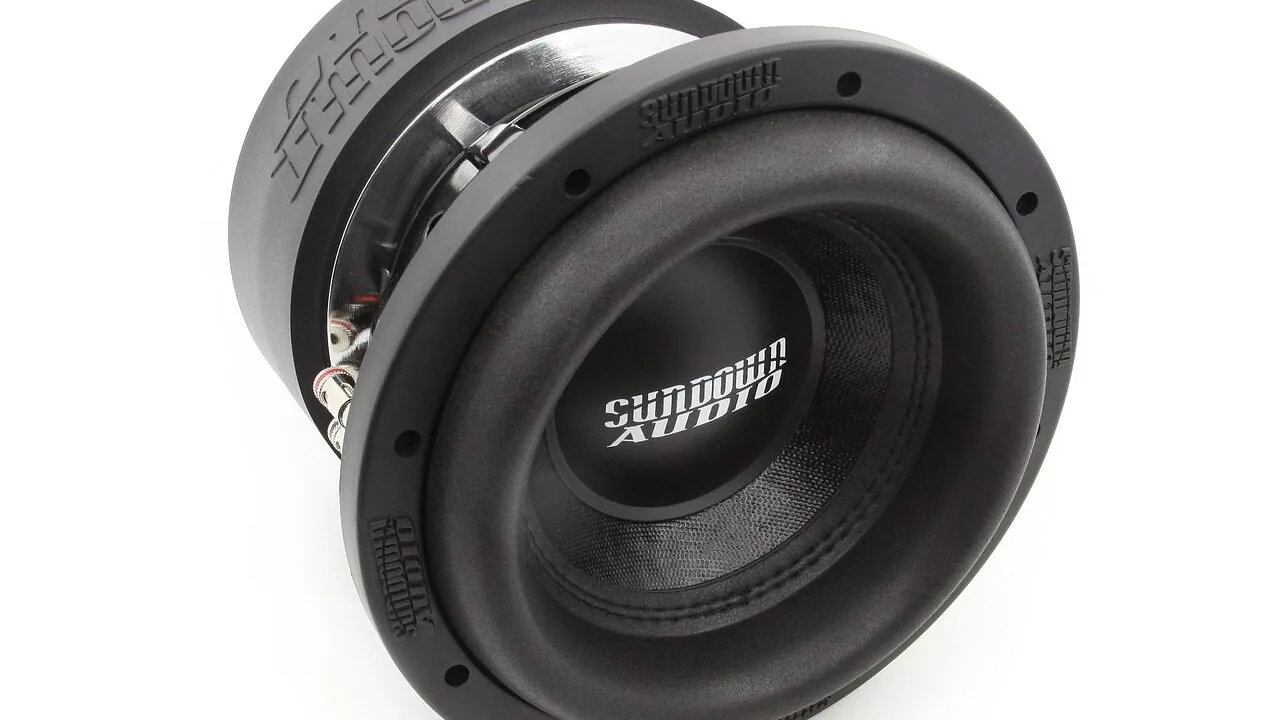
A subwoofer is the single upgrade that transforms a good home theater or stereo setup into a genuinely immersive one.
Without dedicated bass reproduction, even premium speakers leave explosions flat, music hollow, and movie soundtracks lacking the physical weight that makes them exciting.
Whether you are assembling your first home theater or filling in the missing low end of an existing system, choosing the right subwoofer matters far more than most buyers expect.
Options range from compact sealed boxes that tuck neatly into small living rooms to powerful ported cabinets that shake the foundations of dedicated home theaters, and understanding the differences saves you from overspending or underbuying.
At ProductFind, our team researched dozens of models from brands including SVS, Klipsch, Polk Audio, Sonos, Bose, Yamaha, and KICKER, synthesizing published specifications, expert review consensus from the audio community, and verified buyer feedback to surface the picks most likely to deliver real-world satisfaction.
If you are also building out the rest of your system, our roundup of soundbars for every room and budget is a natural companion read. Scroll down to see our ranked top picks and the detailed buying guide that follows.
| Award | Product | PF Score About PF ScoreThe PF Score is our own rating from 0 to 10, based on performance, design and build, ease of use, and value. It reflects independent research and is never influenced by manufacturers, retailers, or affiliate commissions. Learn more › | Price | |
|---|---|---|---|---|
| Best Overall |
 SVS SB-1000 Pro 12-inch Subwoofer
|
8.7/10 | Buy | |
| Editor's Pick |
 SVS SB-2000 Pro 12-Inch Sealed Subwoofer
|
8.4/10 | Buy | |
| Best Value |
 SVS PB-1000 Pro 12-inch Subwoofer
|
8.2/10 | Buy | |
| Top Rated |
 Sonos Sub 4 Wireless Subwoofer
|
8.1/10 | Buy | |
 Bose Lifestyle Ultra Wireless Subwoofer
|
7.5/10 | Buy | ||
 Polk Monitor XT12 12-Inch Powered Subwoofer
|
7.4/10 | Buy | ||
 Klipsch Reference 12" Front-Firing Subwoofer
|
7.3/10 | Buy | ||
 Klipsch R-120SW 12-Inch Subwoofer
|
7.2/10 | Buy | ||
 KICKER TRTP 12-inch Thin Down-Firing Subwoofer
|
6.8/10 | Buy | ||
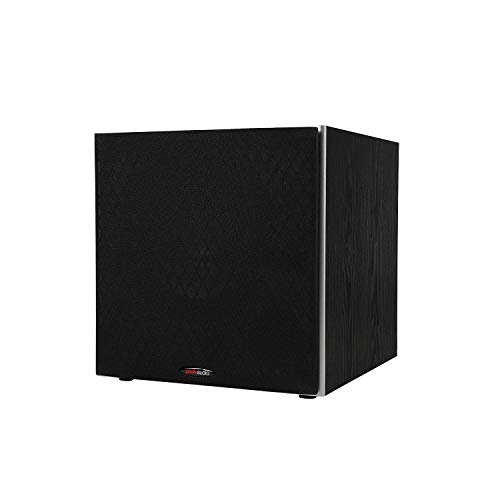 Polk Audio PSW10 10-Inch Powered Subwoofer
|
6.5/10 | Buy | ||
 Yamaha NS-SW100BL 10-Inch Powered Subwoofer
|
6.0/10 | Buy | ||
 Polk Signature Elite ES15 Bookshelf Speaker Pair
|
Buy |
SVS SB-1000 Pro 12-inch Subwoofer
A compact sealed subwoofer built around a 325-watt amplifier and high-excursion 12-inch driver, designed to deliver precise bass control without room boom. The integrated DSP and smartphone app offer fine-tuning flexibility, making it suitable for music and film enthusiasts who prioritize accuracy in smaller spaces.
Pros
- Low-distortion amplifier design maintains control at high volumes
- Advanced DSP and mobile app simplify in-room calibration and ongoing adjustments
- Sealed enclosure reduces placement constraints compared to ported designs
- Compact dimensions work in apartments, offices, or smaller listening rooms
Cons
- No verified customer reviews available to confirm real-world performance claims
- Premium positioning may limit appeal to budget-conscious buyers
- Sealed design inherently has lower efficiency than ported alternatives at equivalent price
SVS SB-2000 Pro 12-Inch Sealed Subwoofer
SVS's SB-2000 Pro pairs a sealed cabinet design with DSP control in a compact 12-inch format, delivering controlled bass suited to smaller rooms and music-focused listening. Weighing under 45 pounds, it integrates discretely into home theater or stereo setups without requiring extensive floor space.
Pros
- Sealed cabinet construction minimizes room placement constraints and provides tight, articulate bass response
- Compact dimensions (14.2 x 14.6 x 15.6 inches) fit smaller rooms and furniture layouts
- DSP-controlled crossover and EQ tuning for customizable integration with existing systems
- Reasonable weight distribution at 44.6 pounds simplifies repositioning if needed
Cons
- No verified buyer reviews available to assess real-world performance consistency
- 12-inch driver may limit output capability compared to larger subwoofer models in the same brand lineup
- Limited spec transparency regarding power output, frequency response, and DSP feature depth in provided data
SVS PB-1000 Pro 12-inch Subwoofer
A premium 12-inch subwoofer built around a 325-watt RMS amplifier and high-excursion driver designed for room-filling bass across music and film. The Sledge amplifier and advanced DSP tuning offer precision control, but the ported cabinet and significant output make this better suited to larger spaces than intimate rooms.
Pros
- Powerful 325W RMS / 820W peak amplifier with low distortion discrete MOSFET design
- High-excursion 12-inch driver with dual ferrite magnets for deep, controlled bass output
- 50MHz Analog Devices DSP with smartphone app for easy room tuning and preset management
- Acoustically tuned dual-port cabinet maximizes airflow and bass quality without bloat
Cons
- No user reviews available yet to validate real-world performance in different room types
- Ported design and 325W output best suited for larger spaces, may overwhelm smaller rooms
- Premium positioning means higher entry cost compared to entry-level subwoofers
Sonos Sub 4 Wireless Subwoofer
A premium wireless subwoofer designed to pair with Sonos soundbars for enhanced bass and home theater depth. Dual drivers and force-canceling architecture deliver dynamic low-end without distortion, though it requires a Sonos soundbar ecosystem to function.
Pros
- Dual engineered drivers and ported enclosure produce deep, dynamic bass with excellent low-frequency response
- Force-canceling acoustic architecture minimizes distortion, buzz, and rattle for clean sound
- Flexible placement with WiFi connectivity, upright or horizontal orientation, can hide under furniture
- Seamless integration with Sonos Arc Ultra, Arc, and Beam soundbars for immersive home theater
- Simple plug-and-play setup via Sonos app with single power cable
Cons
- Requires ownership of a compatible Sonos soundbar to operate, not standalone
- Relatively heavy at 26.46 pounds, may require planning for placement or repositioning
- Premium pricing positions it outside budget-conscious buyer range
Bose Lifestyle Ultra Wireless Subwoofer
Bose's wireless subwoofer pairs with compatible soundbars and speakers via the Bose app for seamless home theater setup. CleanBass Technology targets clear, resonance-free bass across volume levels, making it suitable for music and cinematic audio without extensive wiring.
Pros
- CleanBass Technology delivers clear, distortion-free bass without resonance issues
- Wireless connectivity eliminates cable clutter while pairing with compatible Bose gear
- Bose app provides simple control, setup, and ongoing software updates
- Handles both movie soundtracks and music playback effectively
Cons
- No customer reviews available yet to verify real-world performance claims
- Requires compatible Bose soundbar or speakers for optimal functionality
- Relatively heavy at 33.73 pounds, limiting placement flexibility
Polk Monitor XT12 12-Inch Powered Subwoofer
The Monitor XT12 delivers room-filling bass down to 24Hz through a 12-inch woofer paired with a 100W amplifier, making it suitable for music, movies, and gaming. Its rigid MDF cabinet and variable controls offer flexibility for different room setups, though no verified buyer feedback is currently available to validate real-world performance.
Pros
- Low frequency extension to 24Hz covers both music and home theater needs
- Adjustable crossover and phase controls allow tuning for different room acoustics
- Compatible with modern surround formats (Dolby Atmos, DTS:X)
- Rigid MDF cabinet design reduces unwanted resonance and cabinet coloration
- Can be paired with matching Monitor XT speakers for seamless system integration
Cons
- No verified user reviews available to assess build quality or long-term reliability
- 100W amplifier is modest compared to some competitors in the powered subwoofer category
- Fixed 12-inch size may limit placement options in smaller rooms
Klipsch Reference 12" Front-Firing Subwoofer
Klipsch's 12-inch front-firing subwoofer uses spun-copper polymer woofers designed for low distortion and flexible room placement. The all-digital amplifier and adjustable crossover make it adaptable to most AV systems, though it lacks user reviews to validate real-world performance claims.
Pros
- Lightweight woofer material reduces moving mass while maintaining low-frequency response
- Built-in all-digital amplifier eliminates need for external amplification
- Adjustable crossover and phase control enable customization to room acoustics
- Front-firing configuration increases placement flexibility compared to downward-firing designs
Cons
- No verified user reviews available to confirm performance in real-world installations
- 12-inch woofer may limit output in larger rooms compared to 15-inch alternatives
- Premium pricing typical of Klipsch brand with limited budget options
Klipsch R-120SW 12-Inch Subwoofer
A compact 12-inch subwoofer delivering 116dB max output with a 200-watt amplifier and bass-reflex design. Best suited for smaller rooms or as an entry-level upgrade to stereo systems seeking controlled low-frequency extension down to 29 hertz.
Pros
- 12-inch spun-copper woofer with high excursion capability for defined bass response
- Compact dimensions (19.2 x 14 x 16.5 inches) fit tight spaces better than larger models
- Rear-firing bass-reflex port provides flexible room placement options
- 200-watt amplifier with 400-watt peak handling supports dynamic bass demands
- Includes grill and power cord for immediate setup
Cons
- No customer reviews available to assess real-world reliability or room performance variation
- 29 hertz lower frequency limit may feel shallow for users seeking deeper subterranean bass
- 31-pound weight and fixed design limit portability compared to wireless subwoofer alternatives
KICKER TRTP 12-inch Thin Down-Firing Subwoofer
A shallow-mount 12-inch subwoofer with passive radiator designed to fit tight cargo spaces without compromising bass response. The forced-air cooling system keeps the CompRT driver running cooler, making it practical for vehicles where depth is limited.
Pros
- Genuinely shallow profile solves space constraints in most vehicles
- Passive radiator configuration delivers noticeable bass punch despite compact size
- Forced-air cooling extends driver longevity in demanding conditions
- Sturdy construction handles weight without flexing or rattling
Cons
- No customer reviews available to verify real-world performance claims
- Renewed unit status means limited or no warranty coverage details
- Requires proper amplifier integration to reach stated performance levels
Polk Audio PSW10 10-Inch Powered Subwoofer
A compact powered subwoofer with a 10-inch woofer and 50-watt RMS amplifier designed for small-to-mid size home theater setups. It offers straightforward integration with existing systems and variable crossover controls, making it accessible for users looking to add bass depth without complex installation.
Pros
- Delivers balanced bass with minimal distortion at higher volumes
- Easy setup and integration with existing receivers and speakers
- Timbre-matched with Polk Monitor and T-Series speaker lines
- Detachable grille and flexible input/output options provide practical connectivity
- Durable construction using resonance-free driver materials
Cons
- 50-watt RMS output may be limiting for larger rooms or demanding bass-heavy content
- Not waterproof, restricting placement options in humid or outdoor environments
- No verified buyer reviews available to assess real-world long-term reliability
Yamaha NS-SW100BL 10-Inch Powered Subwoofer
A compact 10-inch powered subwoofer designed to add controlled bass to smaller rooms or audio setups. Built-in YST II technology and a twisted flare port aim for tight, clear low-end without overwhelming the space.
Pros
- Advanced YST II servo technology for precise bass control
- Twisted flare port reduces port noise for cleaner output
- Compact 10-inch design fits tight spaces better than larger models
- Integrated amplifier eliminates need for separate components
- Neutral black finish works with most room aesthetics
Cons
- No verified buyer reviews available to assess real-world performance
- 100W power output is modest for larger rooms or bass-heavy content
- Limited specifications published on connectivity and frequency range
Polk Signature Elite ES15 Bookshelf Speaker Pair
Compact bookshelf speakers with 1-inch tweeter and 5.25-inch woofer, designed for surround or elevation channels in Dolby Atmos and DTS:X systems. Power Port technology delivers deeper bass than conventional ported speakers, with flexible placement options via stands or wall mounting.
Pros
- Power Port delivers 3dB louder bass with reduced distortion compared to conventional ported speakers
- Versatile mounting options: speaker stands, wall mounting, or as elevation channels
- Works with diverse amplifier and receiver setups including latest Atmos AVRs
- Modern aesthetic design integrates well with contemporary home decor
- High sensitivity supports directional surround sound placement
Cons
- No user reviews available yet to verify real-world performance claims
- Speaker stands sold separately, adding to total setup cost
- Limited information on frequency response range and impedance stability specifications
Best Subwoofers Buying Guide
Choosing a subwoofer involves more variables than almost any other speaker purchase.
The right model depends on your room size, the speakers you already own, how you listen (movies versus music or both), and whether you prioritize thunderous output or precise, tuneful low-end extension.
The criteria below walk you through each factor so you can match a model to your actual situation rather than just chasing the biggest woofer or the highest wattage figure on the spec sheet.
Cabinet Type: Sealed vs. Ported

The single most consequential design decision in any subwoofer is whether the cabinet is sealed (also called acoustic suspension) or ported (also called bass-reflex).
Sealed cabinets are smaller, roll off bass frequencies gradually and predictably, and generally deliver tighter, more accurate bass that integrates well with music. Audiophiles and listeners who prioritize musicality over maximum SPL tend to gravitate toward sealed designs.
Ported cabinets use a tuned opening to extend bass output lower and louder than a sealed box of comparable size. The tradeoff is a steeper roll-off below the tuning frequency and, in some designs, a slightly less precise low-end character.
For home theater use where you want to feel action sequences and bass-heavy soundtracks, a well-engineered ported sub often delivers more visceral impact per dollar.
Models like the SVS PB-1000 Pro exemplify this approach, trading some compactness for noticeably deeper extension. Understanding this distinction is the foundation for every other buying decision.
Driver Size and Amplifier Power

Subwoofer driver diameter is heavily marketed but frequently misunderstood. A larger woofer can move more air, which helps with output at very low frequencies, but cabinet design, amplifier quality, and driver engineering matter just as much.
A well-built 10-inch driver in a properly tuned enclosure can outperform a poorly designed 12-inch competitor. That said, for large rooms, a 12-inch or larger driver provides meaningful headroom that prevents the amplifier from clipping under demanding content.
Amplifier power is similarly nuanced. Manufacturers measure and advertise power differently (peak versus RMS, for example), so comparing raw wattage figures across brands is unreliable.
What matters more is whether the amplifier is appropriately sized for the driver and cabinet combination. SVS, for instance, publishes detailed DSP capabilities alongside their amplifier ratings, which allows buyers to understand what the numbers actually mean in practice.
Look for continuous (RMS) power ratings and be skeptical of unusually high peak figures used as the headline spec.
Room Size and Placement
A subwoofer that sounds impressive in a small apartment can feel completely underpowered in an open-plan living space or dedicated home theater room.
As a rough guideline, rooms under roughly 200 square feet are well served by compact 10-inch sealed designs; medium rooms up to 400 square feet generally benefit from a 12-inch model with adequate amplifier power; and larger spaces may require a high-output ported design or even dual subwoofers for even bass distribution.
Placement also has a dramatic effect on perceived bass quality. Corner placement maximizes output but can exaggerate certain frequencies. Placing the subwoofer near the front speakers generally produces the smoothest integration.
The “subwoofer crawl” technique, where you temporarily place the sub at the listening position and walk around the room to find the spot with the most even response, remains one of the most practical free tools available to any buyer.
Consider this before attributing bass unevenness to the subwoofer itself.
Connectivity and Integration

Most home theater receivers handle subwoofer integration through a dedicated LFE (Low Frequency Effects) output. Any subwoofer with a line-level RCA input will work in this configuration, and it is the standard approach for surround sound setups.
If you are running a stereo system without a subwoofer output, you will need a sub with speaker-level inputs, which accept connections directly from your amplifier’s speaker terminals. Check this compatibility before purchasing.
Wireless subwoofers, such as the Sonos Sub 4, simplify installation dramatically and eliminate cable runs across the room, which is a genuine convenience advantage in finished living spaces.
The tradeoff is that you are locked into the brand’s ecosystem, and wireless subwoofers typically cost more than wired equivalents at similar performance levels. The Bose Lifestyle Ultra Subwoofer follows a similar proprietary wireless approach.
If you already own a Sonos or Bose system, the ecosystem integration justifies the premium; otherwise, a wired model typically delivers better value at equivalent price points.
If you are exploring other wireless audio options alongside your subwoofer search, Bluetooth speakers for every budget may also be worth a look.
DSP Controls and Tuning Options
Entry-level subwoofers offer three physical controls: volume, crossover frequency, and a phase switch. These are adequate for most users getting started.
Mid-range and higher-end models, particularly those from SVS, add sophisticated DSP (Digital Signal Processing) controls, often accessible via a smartphone app.
These allow precise parametric EQ adjustments, room gain compensation, and crossover fine-tuning that can meaningfully improve integration with your main speakers in acoustically challenging rooms.
The crossover control is particularly important. It determines the frequency at which your subwoofer takes over bass duties from your main speakers.
If your AV receiver handles crossover settings (which most modern receivers do via Audyssey, YPAO, or similar room correction systems), you can typically bypass the subwoofer’s onboard crossover and set it to its maximum or bypass it entirely.
Understanding this interaction prevents the common problem of bass buildup caused by overlapping crossover points.
Music vs. Home Theater Use

Subwoofers optimized for home theater use prioritize maximum output and deep low-frequency extension to reproduce movie LFE tracks and game audio at reference levels.
These qualities, which ported designs typically excel at, can sometimes translate to a slightly “boomy” character that music listeners find less satisfying.
Music reproduction benefits from faster transient response and tighter bass that tracks the rhythm of recordings accurately rather than adding body indiscriminately.
Sealed designs are broadly considered more versatile across both use cases. The SVS SB-1000 Pro and SVS SB-2000 Pro, both sealed designs, receive consistent praise from music-focused listeners as well as home theater enthusiasts.
If your system is primarily for two-channel music with occasional movie watching, leaning toward a sealed design from a brand with strong audiophile credibility is a sound approach.
Dedicated home theater users who want maximum impact at higher listening levels should consider a ported option.
For a perspective on speakers that pair well with a subwoofer in a music-focused setup, our coverage of over-ear headphones offers useful context on reference listening.
You might also find waterproof Bluetooth speakers useful if you are building out an outdoor audio system alongside your home setup.
Why You Should Trust Us
ProductFind is an independent review platform with no brand relationships that influence our rankings.
Every subwoofer in this roundup was evaluated using our structured research methodology: we analyze published specifications, assess consensus from expert reviewers across the audio community, and incorporate verified buyer feedback from confirmed purchasers to build a composite picture of real-world performance.
Each product receives a PF Score on a scale of 0 to 10, applied consistently across every model we evaluate so that scores are comparable rather than impressionistic.
We do not conduct our own product trials; our evaluations are grounded in research, published data, expert review consensus, and verified buyer feedback.
This approach allows us to cover a broader range of products and price points than any single listening room could accommodate, and it means our rankings are not subject to the room-specific variables or reviewer bias that can affect individual subjective assessments.
We vet our sources and note where expert opinion is divided or where a product’s measured performance diverges from its subjective reputation.
ProductFind may earn a commission when you purchase through links on this page. That affiliate relationship has zero influence on which products are recommended, how they are ranked, or what PF Score they receive.
Our editorial process is independent of commercial outcomes, and no brand can pay for placement or a higher score.
Final Thoughts
After synthesizing specifications, expert review consensus, and verified buyer feedback across the full field, a clear hierarchy emerged.
SVS dominates the mid-range and upper-mid-range segments for good reason: their engineering consistency and DSP flexibility give buyers meaningful real-world control that few rivals match at comparable prices.
Wireless and ecosystem-integrated options from Sonos and Bose serve a distinct audience for whom convenience and aesthetic integration outweigh raw performance-per-dollar. Entry-level picks from Polk Audio and Yamaha remain credible starting points for buyers new to dedicated bass reproduction.
Here are our key awards from this roundup:
- Best Overall: SVS SB-1000 Pro Subwoofer. The highest-scoring model in this roundup earns its top position through a combination of precise sealed-cabinet bass, a powerful DSP-equipped amplifier, and exceptional versatility across both music and home theater use. Expert consensus consistently places it at or near the top of its class, and verified buyers report satisfaction well above average for its category.
- Best for Audiophiles: SVS SB-2000 Pro. A step up in driver size and amplifier sophistication, this sealed design earns particular praise from music-focused listeners who need deeper extension without sacrificing the tonal accuracy that makes bass instruments sound like themselves rather than a generalized low-frequency wash.
- Best Ported Option: SVS PB-1000 Pro. For home theater enthusiasts who want maximum impact and room-pressurizing bass from movie soundtracks and gaming audio, this ported design delivers output levels that sealed alternatives at the same price cannot match, with SVS DSP controls keeping character in check.
- Best Wireless Pick: Sonos Sub 4. The clear recommendation for existing Sonos households, offering seamless wireless integration and genuine low-end authority without a single cable crossing the room. Non-Sonos buyers will find the ecosystem lock-in a significant constraint.
- Best Budget Entry: Polk Audio PSW10. For buyers making their first move into dedicated bass reproduction, the PSW10 offers a reliable, well-documented starting point at an accessible price, with Polk’s Power Port technology providing more output than its compact footprint suggests.
Whichever model fits your room, system, and budget, adding a quality subwoofer consistently ranks as one of the highest-impact upgrades you can make to a home audio setup.
If you are building out a broader audio environment, portable Bluetooth speakers and noise cancelling headphones are worth exploring as complementary pieces.
Frequently Asked Questions
Do I need a subwoofer if my speakers already have good bass?
Most bookshelf and floorstanding speakers roll off somewhere between 40 Hz and 80 Hz, which means a significant portion of bass content in movies, games, and music is never reproduced.
A dedicated subwoofer extends that response to 20 Hz or below, adding physical weight to low-frequency content that speakers alone simply cannot produce.
Even listeners who feel satisfied with their current bass often notice a qualitative improvement after adding a well-integrated subwoofer, because the main speakers are relieved of bass duties and play more cleanly at higher volumes.
What crossover frequency should I set on my subwoofer?
If your AV receiver includes room correction (Audyssey, YPAO, Dirac, or similar), let the automatic setup routine set the crossover: it measures your speakers and subwoofer together and assigns an appropriate crossover point based on your specific combination.
As a manual starting point, the THX standard of 80 Hz works well for most bookshelf speakers paired with a subwoofer.
Larger floorstanding speakers with meaningful bass extension may benefit from a lower crossover (60 Hz or below) to maintain a seamless handoff. Experiment in small increments and listen for gaps or overlap in the bass region.
Is a wireless subwoofer as good as a wired one?
Modern wireless subwoofers, particularly from Sonos and Bose, transmit audio with latency low enough that synchronization with your main speakers is not a practical concern.
The audio quality of the wireless connection itself is not the limiting factor in these systems.
The relevant tradeoffs are ecosystem lock-in (you are committing to a specific brand’s speakers and receivers), price premium relative to wired alternatives, and the fact that the subwoofer still requires a power outlet regardless.
For buyers who already own compatible speakers and prioritize cable-free installation, wireless designs are a genuine convenience win. For buyers starting fresh and optimizing for performance per dollar, a wired sub typically offers better value.
Can I use a subwoofer for music as well as home theater?
Yes, and the best subwoofers in this roundup are specifically chosen to perform well in both contexts.
The key is proper integration: matching the crossover frequency to your main speakers, setting gain so the subwoofer supports rather than dominates the low end, and choosing a design (sealed, in most music-focused cases) whose character suits musical reproduction.
Listeners who use wireless earbuds or gaming headsets for personal listening sometimes underestimate how much a subwoofer changes the perceived scale of sound when listening on speakers in a room.
How do I know if a subwoofer is powerful enough for my room?
Room size, ceiling height, and acoustic treatment all affect how much output you need. A compact sealed subwoofer that excels in a bedroom or small apartment will struggle to pressurize a large open-plan space.
As a practical guideline, look at the subwoofer’s maximum SPL specification and frequency response extension together, not wattage alone. Buyer reviews from people who describe rooms similar to yours are among the most useful data points available.
SVS publishes room-size recommendations for their lineup, which is a helpful starting point for matching model to space.
If your listening space is part of a broader home environment you are outfitting with audio gear, our picks for home security cameras round out a smart home setup alongside your audio investment.
About the author
Pat is a reviewer and writer for ProductFind who specializes in Audio & Headphones. Pat evaluates products through independent research: specifications, expert review consensus, and verified buyer feedback, and rates each one on the PF Score. Pat focuses on helping readers pick the right audio & headphone for their needs and budget.