The 11 Best Home Theater Speakers
Room-filling surround sound starts with choosing the right system type. Our research covers soundbars, HTiB packages, and component builds from Sony, Yamaha, JBL, and more.
 By Pat Shelton
Updated July 23, 2026
By Pat Shelton
Updated July 23, 2026

Upgrading your living room audio from TV speakers to a true home theater setup is one of the most noticeable improvements you can make to your entertainment experience.
Whether you are watching a blockbuster film, streaming a concert, or playing games, the right combination of speakers, soundbars, and subwoofers delivers a sense of immersion that built-in TV audio simply cannot replicate.
The market in 2026 offers options across every budget and room size, from sleek all-in-one soundbars to full 5.1 and Dolby Atmos surround systems from brands like Sony, Yamaha, JBL, Nakamichi, Klipsch, Polk Audio, Bose, and ULTIMEA.
At ProductFind, we cut through the noise by synthesizing manufacturer specifications, expert review consensus, and verified buyer feedback to surface the options that consistently earn their keep.
Every product here has been assessed on our 0 to 10 PF Score framework so you can compare across categories with confidence. Scroll down to see our ranked picks and find the right system for your room and budget.
| Award | Product | PF Score About PF ScoreThe PF Score is our own rating from 0 to 10, based on performance, design and build, ease of use, and value. It reflects independent research and is never influenced by manufacturers, retailers, or affiliate commissions. Learn more › | Price | |
|---|---|---|---|---|
| Best Overall |
 Sony BRAVIA Theater System 6 5.1ch Soundbar
|
8.5/10 | Buy | |
| Editor's Pick |
 Nakamichi Shockwafe 9.2.4 Dolby Atmos Soundbar
|
8.4/10 | Buy | |
| Best Value |
 Yamaha YHT-5960U 5.1 Home Theater System with 8K HDMI
|
8.6/10 | Buy | |
| Top Rated |
 JBL Bar 800 5.1.2 Soundbar with Wireless Subwoofer
|
8.3/10 | Buy | |
 Yamaha YHT-4950U 5.1 Home Theater System
|
7.8/10 | Buy | ||
 Polk Audio Signa S2 Soundbar with Wireless Subwoofer
|
7.4/10 | Buy | ||
 ULTIMEA Aura A60 7.1ch Dolby Atmos Soundbar
|
7.2/10 | Buy | ||
 Klipsch R-120SW 12-Inch Subwoofer
|
7.2/10 | Buy | ||
 Bose TV Speaker Compact Soundbar
|
7.1/10 | Buy | ||
 ULTIMEA Poseidon M60 5.1 Soundbar with Dolby Atmos
|
6.9/10 | Buy | ||
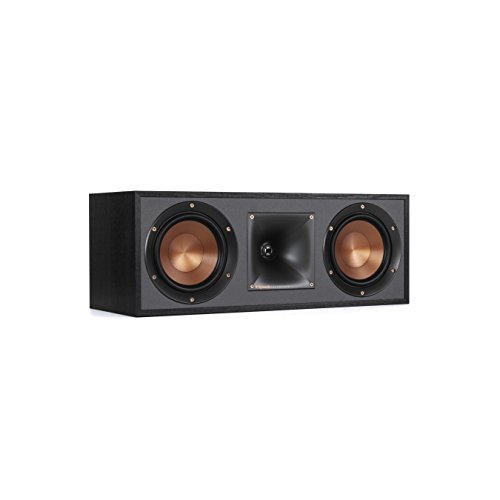 Klipsch R-52C Center Channel Speaker
|
6.8/10 | Buy |
Sony BRAVIA Theater System 6 5.1ch Soundbar
A full 5.1 surround setup that integrates seamlessly with Sony BRAVIA TVs, delivering cinematic sound with Dolby Atmos and DTS:X support. Best suited for home theater enthusiasts who want a complete system without separate purchases.
Pros
- All-in-one package eliminates need for separate component purchases
- BRAVIA TV integration offers seamless control and Voice Zoom 3 for dialogue enhancement
- Supports premium audio formats for streaming services and cinema content
- Music upscaling feature restores acoustic detail across different content types
Cons
- No verified user reviews available to confirm real-world performance and reliability
- Requires compatible BRAVIA TV to unlock full integration features
- Wireless connectivity limited to Bluetooth only, no mention of WiFi or other streaming protocols
Nakamichi Shockwafe 9.2.4 Dolby Atmos Soundbar
A premium 9.2.4 surround system with dual 10-inch wireless subwoofers and four modular satellite speakers delivering 360-degree immersion. Best suited for dedicated home theater setups with space for multiple components and cable runs between speakers and subs.
Pros
- Dual subwoofer design minimizes bass localization and fills room more evenly than single-sub alternatives
- Full 9.2.4 configuration with genuine surround speakers rather than simulated surround effects
- HDMI eARC with 4K HDR and Dolby Vision pass-through preserves video quality
- Flexible speaker configuration allows customization for different room layouts
Cons
- Satellite speakers connect via RCA cables to subwoofers, not wireless, requiring cable management planning
- Substantial footprint and weight distribution across five components makes placement planning essential
- No verified customer reviews available to assess real-world reliability or user satisfaction
Yamaha YHT-5960U 5.1 Home Theater System with 8K HDMI
Yamaha's 5.1-channel system delivers 80 watts of surround sound with modern connectivity via 8K60 and 4K120 HDMI 2.1 support, plus gaming features like ALLM and VRR. YPAO automatic calibration simplifies setup for mixed-use living rooms.
Pros
- Future-proof HDMI 2.1 connectivity with 8K60, 4K120AB, and eARC support
- Gaming-ready with ALLM (Auto Low Latency Mode) and VRR (Variable Refresh Rate)
- YPAO automatic room calibration handles speaker placement acoustics
- Dolby Vision and Dolby Atmos support for premium streaming and disc content
- Matched speaker wire included for each channel
Cons
- No user reviews available to assess real-world reliability or performance consistency
- 5.1 configuration lacks height channels for immersive Dolby Atmos object-based audio
- 80-watt output may require supplemental subwoofer for larger rooms
JBL Bar 800 5.1.2 Soundbar with Wireless Subwoofer
A premium soundbar system delivering true Dolby Atmos 3D sound through up-firing drivers and detachable wireless surrounds, plus a 10-inch subwoofer for theater-grade bass. Built-in Wi-Fi, voice control integration, and 720W output make it suited for serious home theater setups.
Pros
- True Dolby Atmos implementation with dedicated up-firing drivers for authentic 3D height channels
- Wireless surround speakers offer flexibility without cable clutter, powered by internal batteries
- Robust 720W system output provides substantive power for movies and music across room sizes
- Comprehensive streaming ecosystem built-in (AirPlay, Alexa Multi-Room, Chromecast) with 300+ service compatibility
- HDMI eARC connection simplifies setup while supporting 4K video passthrough
Cons
- No verified user reviews available to assess real-world reliability or long-term performance
- Detachable surrounds require battery management and occasional recharging for uninterrupted use
- Premium positioning may limit appeal to budget-conscious buyers despite feature set
Yamaha YHT-4950U 5.1 Home Theater System
A complete 5.1 surround setup from Yamaha with 4K HDMI support and Bluetooth streaming, designed for straightforward living room installation. Includes receiver, five speakers, and subwoofer with room optimization calibration.
Pros
- Complete all-in-one system eliminates separate purchasing decisions
- Automatic room optimization through YPAO calibration
- Low standby power consumption at 0.2W maximum
- 4K passthrough supports modern video sources
Cons
- No wireless speaker functionality, all connections require cables
- No waterproof rating limits placement flexibility
- Zero verified buyer reviews limit real-world performance data
Polk Audio Signa S2 Soundbar with Wireless Subwoofer
A compact soundbar system featuring five full-range drivers, exclusive VoiceAdjust technology for clearer dialogue, and a wireless subwoofer for added bass. Its ultra-slim 2-inch profile fits most TV setups without blocking remotes or picture, while multiple connectivity options (HDMI, optical, Bluetooth, AUX) make it versatile for different audio sources.
Pros
- Includes wireless subwoofer in the package for complete bass coverage
- VoiceAdjust technology specifically addresses common soundbar issue of unclear dialogue
- Extremely compact form factor fits almost any TV installation without visual obstruction
- Diverse input options accommodate most TV models and audio sources
- Mid-to-high range sound quality at accessible price point
Cons
- No verified buyer reviews available yet to assess real-world reliability and long-term performance
- Wireless subwoofer requires separate power outlet and pairing setup
- Limited details on maximum output levels or frequency response specifications
ULTIMEA Aura A60 7.1ch Dolby Atmos Soundbar
A 7.1-channel soundbar system with four surround speakers and Dolby Atmos that delivers immersive home theater audio. The Ultimea App provides extensive EQ customization with 121 presets, and HDMI-eARC ensures lossless audio transmission for compatible TVs.
Pros
- Complete surround system in one package with rear wireless speakers reducing cable management
- Extensive audio tuning options across 121 presets and customizable EQ modes for different content types
- HDMI-eARC support ensures highest-quality audio transmission compared to standard ARC
- Dolby Atmos creates genuinely immersive 3D soundscape for home theater environments
Cons
- No customer reviews yet to verify real-world performance and build quality
- Setup complexity with four surround speakers may require wall mounting or placement planning
- Recommended for spaces 108-270 sq ft, limiting suitability for very large or small rooms
Klipsch R-120SW 12-Inch Subwoofer
A compact 12-inch subwoofer delivering 116dB max output with a 200-watt amplifier and bass-reflex design. Best suited for smaller rooms or as an entry-level upgrade to stereo systems seeking controlled low-frequency extension down to 29 hertz.
Pros
- 12-inch spun-copper woofer with high excursion capability for defined bass response
- Compact dimensions (19.2 x 14 x 16.5 inches) fit tight spaces better than larger models
- Rear-firing bass-reflex port provides flexible room placement options
- 200-watt amplifier with 400-watt peak handling supports dynamic bass demands
- Includes grill and power cord for immediate setup
Cons
- No customer reviews available to assess real-world reliability or room performance variation
- 29 hertz lower frequency limit may feel shallow for users seeking deeper subterranean bass
- 31-pound weight and fixed design limit portability compared to wireless subwoofer alternatives
Bose TV Speaker Compact Soundbar
A no-frills soundbar built to make TV dialogue clearer without taking up much space. Its compact 2-inch profile and simple optical/HDMI setup appeal to anyone frustrated with muffled speech on their TV. The trade-off is modest sound stage compared to larger models, but it handles its core job well.
Pros
- Dialogue enhancement mode specifically designed to clarify speech and vocals
- Extremely compact at just over 2 inches tall, fits easily in front of or mounted above most TVs
- Multiple connectivity options: HDMI-ARC, optical, Bluetooth, and aux input with auto-switching for up to 3 devices
- Includes remote control with dialogue boost and bass adjustment
- Expandable with Bose Bass Module 500 or 700 for deeper bass if needed
Cons
- Limited soundstage from two angled drivers, not ideal for movies or music-focused listening
- No built-in subwoofer means bass-heavy content requires separate purchase
- Wall mounting brackets sold separately, adding to total cost
ULTIMEA Poseidon M60 5.1 Soundbar with Dolby Atmos
A compact 5.1-channel soundbar that delivers Dolby Atmos immersion without rear speakers, thanks to side-firing drivers and a dedicated wooden subwoofer. The 300W system emphasizes voice clarity through VoiceMX technology and offers extensive app-based customization with 121 sound presets. Best suited for viewers who want cinematic audio in a simplified setup.
Pros
- True Dolby Atmos via HDMI eARC with <0.5 ms latency for synchronized dialogue and effects
- VoiceMX technology isolates vocals effectively, making dialogue clear even at lower volumes
- Comprehensive app control with 10-band EQ, 121 presets, and 13 adjustable surround levels for room-specific tuning
- 18 mm high-excursion subwoofer with tuned cabinet delivers tight, room-filling bass down to 45 Hz
- One-minute setup with integrated CEC control eliminates complex wiring and manual syncing
Cons
- No verified buyer reviews available yet (2026 model), making real-world reliability unclear
- Requires HDMI eARC TV compatibility to access full Dolby Atmos capability; standard ARC limits functionality
- Wired subwoofer reduces placement flexibility compared to wireless alternatives
Klipsch R-52C Center Channel Speaker
A center channel speaker built around dual 5.25-inch woofers and a 1-inch aluminum tweeter housed in Klipsch's signature tractrix horn design. Delivers high sensitivity at 95dB and handles up to 400 watts, making it suitable for home theater setups that prioritize clear dialogue and detailed midrange performance.
Pros
- High sensitivity (95dB) means it plays loud with moderate amplifier power
- Dual 5.25-inch spun-copper woofers provide solid midrange and bass extension down to 89Hz
- 1-inch aluminum tweeter with 90x90 tractrix horn focuses sound and reduces room placement constraints
- Compact dimensions (7.62 x 18.75 x 7.3 inches) fit standard TV stand configurations
- Robust 400-watt power handling for demanding home theater applications
Cons
- No verified customer reviews available to assess real-world performance and reliability
- Requires adequate amplifier power to reach rated specifications, not suitable for passive standalone use
- Tractrix horn design, while beneficial for directivity, may not blend seamlessly with all room aesthetics
Home Theater Speakers Buying Guide
Choosing the right home theater audio setup involves more than picking the loudest or most expensive option. Room size, content habits, wiring tolerance, and long-term expandability all play a role.
The sections below walk through the criteria that matter most, so you can match a system to your actual listening environment rather than just a spec sheet.
System Type: Soundbar, All-in-One, or Component Setup

The first decision is whether you want a self-contained soundbar system, a boxed home theater in a box (HTiB), or a mix of discrete components.
Soundbars such as the Sony BRAVIA Theater System 6 and the JBL Bar 800 bundle everything into a manageable footprint with wireless subwoofers and, in some cases, detachable rear speakers.
They are ideal for apartments or rooms where running speaker wire is impractical. If you are looking for a deeper dive into soundbar-only options, our roundup of soundbars for every room and budget covers the full landscape.
All-in-one HTiB systems like the Yamaha YHT-4950U and YHT-5960U ship with a receiver plus a matched speaker package, giving you a true multi-channel setup out of the box.
Component builds, by contrast, let you pair a separate receiver with standalone subwoofers like the Klipsch R-120SW and a dedicated center channel like the Klipsch R-52C, which offers the most flexibility but requires more planning.
Neither approach is inherently superior; the right choice depends on how much you want to invest in setup time and room acoustics.
Budget-conscious shoppers who still want Dolby Atmos should consider the ULTIMEA lineup, which competes at an accessible price point and demonstrates how much value has moved into the mid-range tier in recent years.
Channel Configuration and Surround Sound Formats

Channel configuration describes how many speakers a system uses. A 5.1 system has five speakers plus a subwoofer; 7.1 adds two more surround channels; and a system with a “.2” or “.4” suffix includes upward-firing or ceiling-bounce drivers for Dolby Atmos height effects.
The Nakamichi Shockwafe 9.2.4, for example, uses dual subwoofers and four Atmos channels, making it one of the most immersive configurations available as a single-purchase soundbar bundle.
Dolby Atmos and DTS:X content is increasingly common across streaming platforms and 4K Blu-ray, so investing in a system that supports these formats future-proofs your setup.
When evaluating channel count, also check whether surround speakers are physical and discrete or simulated through psychoacoustic processing.
Physical rear drivers, like those included with the JBL Bar 800, produce more convincing surround positioning than virtualization alone, particularly for off-axis listening positions.
Subwoofer Performance and Placement
A quality subwoofer is arguably the single biggest upgrade you can make to any home theater experience.
Low-frequency effects in action films, music bass lines, and ambient rumble all rely on a subwoofer that can move air convincingly without distorting at high output.
Driver diameter matters: a 10-inch or 12-inch woofer generally reaches lower and plays louder than an 8-inch unit before bottoming out.
The Klipsch R-120SW features a 12-inch spun-copper driver that verified buyers consistently praise for tight, well-defined bass rather than the loose, boomy character common in budget subs.
Placement flexibility is equally important. Wireless subwoofers, such as those bundled with the Sony BRAVIA Theater System 6 and JBL Bar 800, allow you to position the driver where bass reinforcement is strongest in your room without routing cables.
That said, even wireless subs require a power outlet, so plan your room layout accordingly.
If you are building a component system around a dedicated sub, pair it with a center-channel speaker that handles dialogue reproduction cleanly, since voices anchored to the screen are what most listeners notice first when a system falls short.
Connectivity: HDMI eARC, Optical, and Wireless

HDMI eARC (Enhanced Audio Return Channel) is now the gold standard for connecting a soundbar or receiver to a modern TV. It passes lossless Dolby TrueHD and DTS-HD Master Audio signals, which optical and standard ARC connections cannot.
If your TV has an HDMI eARC port, prioritize systems that support it to ensure you are hearing audio at full quality from streaming apps and disc playback alike.
Optical remains a reliable fallback for compressed surround formats, while Bluetooth enables wireless music streaming from phones and tablets.
Higher-end systems like the JBL Bar 800 add Wi-Fi, Apple AirPlay 2, Google Chromecast, and Alexa multi-room audio, effectively turning your home theater speakers into part of a whole-home audio ecosystem.
The Yamaha YHT-5960U goes further with MusicCast multi-room support and 8K HDMI pass-through, which matters if you plan to upgrade your display in the near future.
For a wider look at wireless audio ecosystems that can complement a home theater build, Bluetooth speakers for every budget and use case and portable Bluetooth speaker options are worth consulting for secondary rooms.
Room Size and Acoustic Considerations

Speaker output that sounds powerful in a small apartment can feel thin in a large open-plan living room, and the inverse is equally problematic: an overpowered subwoofer in a hard-surfaced room creates unpleasant resonance rather than clean bass.
As a general rule, compact soundbars with virtual surround are well-suited to rooms under roughly 200 square feet, while full 5.1 HTiB systems or component builds are better matched to dedicated media rooms and larger spaces.
Soft furnishings such as sofas, rugs, and curtains absorb reflections and tighten bass response naturally. If your room is large and lively acoustically, consider systems with room calibration features.
The Yamaha HTiB lineup includes YPAO (Yamaha Parametric Room Acoustic Optimizer) in some configurations, which uses a microphone to measure your room and adjust equalization automatically, a feature that expert reviewers consistently flag as a meaningful real-world advantage.
App Control, Smart Features, and Long-Term Value

Smart features have become a meaningful differentiator at the mid-range tier and above. Dedicated companion apps let you adjust EQ, tweak bass and treble, switch between sound modes, and run firmware updates from your phone.
The ULTIMEA Poseidon M60 and Aura A60 both ship with app control, bringing software-driven tuning to a budget-friendly price point that was previously the domain of premium brands only.
Voice assistant integration (Amazon Alexa, Google Assistant) is a convenience feature rather than an audio quality differentiator, but it matters for households already invested in a smart home ecosystem.
Verified buyers who own systems with voice control consistently rate the hands-free experience highly for everyday TV and music use, even if audiophiles note it adds little to pure playback quality.
Finally, consider how a system can grow with you. A component build anchored around a Yamaha receiver and discrete Klipsch speakers can be upgraded one piece at a time, while an all-in-one soundbar is largely fixed.
If expandability matters to you, that trade-off is worth factoring into your budget from the start.
For households that also care about immersive audio during gaming sessions, pairing a home theater system with quality gaming headsets gives you the best of both worlds for competitive play and cinematic sound.
Why You Should Trust Us
ProductFind is an independent review publication. We do not sell products, we do not fulfil orders, and we have no affiliation with any retailer or manufacturer. Every recommendation on this page reflects our editorial judgment alone.
Each product is assessed using our PF Score framework, a 0 to 10 scale applied consistently across the categories we cover.
Scores are derived from a structured research process: we analyze published specifications, cross-reference expert review consensus from credible audio publications and community forums, and weigh verified buyer feedback from confirmed purchasers.
We do not conduct our own product trials; our evaluations are grounded in research, published data, expert review consensus, and verified buyer feedback.
This approach lets us evaluate a broad range of products fairly without the sampling bias that affects single-unit assessments.
ProductFind may earn a referral commission if you purchase through links on this page. That relationship does not influence our rankings, scores, or product selection.
We surface the products we believe are genuinely worth your money; commission size plays no role in which options appear here or how they are ranked.
Final Thoughts
The home theater speaker market in 2026 rewards buyers who match system type to room reality rather than chasing the highest channel count or wattage figure.
Whether you want a sleek two-piece soundbar or a full component build, there is a well-reviewed option in this list for your situation. Here are our standout picks by category:
- Best Overall: Sony BRAVIA Theater System 6 earns the top PF Score in this roundup with a complete 5.1-channel package that combines Dolby Atmos compatibility, rear wireless speakers, and Sony’s mature audio processing into a single cohesive system that expert reviewers and verified buyers consistently rate as class-leading.
- Best Surround Soundbar: Nakamichi Shockwafe 9.2.4 delivers the most immersive soundbar experience in this group, with dual subwoofers, four Atmos height channels, and a peak power figure that makes it suitable for larger rooms where other soundbars fall short.
- Best Full HTiB System: Yamaha YHT-5960U is the pick for buyers who want a complete five-speaker-plus-receiver package with 8K HDMI pass-through and MusicCast multi-room networking baked in from day one.
- Best Mid-Range Soundbar: JBL Bar 800 stands out with physical detachable surround speakers, a 10-inch wireless subwoofer, and a full suite of streaming protocols that make it the most versatile soundbar in this group for connected households.
- Best Budget Entry Point: ULTIMEA Poseidon M60 makes Dolby Atmos and app-driven EQ accessible at a budget-friendly price, making it the most logical starting point for first-time home theater buyers who want surround sound without a significant financial commitment.
If your priorities lean toward two-channel or stereo music listening rather than cinematic surround, a pair of quality waterproof Bluetooth speakers for outdoor use or a dedicated set of over-ear headphones may serve specific listening scenarios better than a full home theater rig.
And if deep bass and precise noise isolation matter most for private listening, noise cancelling headphones are worth considering as a complement to your main system.
Frequently Asked Questions
What is the difference between a soundbar and a home theater system?
A soundbar is a single elongated speaker enclosure, often paired with a wireless subwoofer and sometimes detachable rear speakers, that sits below or in front of your TV. It is designed for simplicity and minimal wiring.
A home theater system typically refers to a multi-component setup with a separate AV receiver, dedicated front left and right speakers, a center channel, surround speakers, and a subwoofer.
HTiB (home theater in a box) packages like the Yamaha YHT-4950U bundle all those components together, bridging the gap between the two categories.
Do I need Dolby Atmos for a good home theater experience?
Dolby Atmos adds overhead or height-channel audio that creates a three-dimensional sound field rather than the flat horizontal surround of traditional 5.1. It is genuinely impactful for action films and immersive music content.
That said, a well-implemented 5.1 system without Atmos still delivers a far more engaging experience than TV speakers. If your budget allows, choosing an Atmos-capable system is a worthwhile investment since streaming content with Atmos tracks is widely available.
If budget is tight, prioritize speaker quality and room-matching over channel count.
How important is a dedicated center-channel speaker?
Extremely important for dialogue clarity. In a typical film mix, roughly 60 to 70 percent of the audio information is routed to the center channel, including all on-screen dialogue.
A dedicated center channel like the Klipsch R-52C anchors voices to the screen so they do not wander during panning shots.
Systems that rely solely on phantom center imaging through left and right speakers lose this precision, which becomes noticeable during quiet dialogue scenes or when listening off-axis from the main seat.
Can I mix and match speakers from different brands?
Technically yes, but tonal matching matters. Speakers from the same product family share driver materials and voicing characteristics, which produces a coherent soundstage.
Mixing a bright, horn-loaded center channel with a warmer set of bookshelf surrounds can create tonal inconsistencies that become noticeable when audio pans across channels.
If you are building a component system, staying within one brand’s reference or signature lineup for at least the front three channels (left, center, right) is the approach most audio engineers recommend.
Your subwoofer is the one component where cross-brand pairing is least problematic, since bass is largely non-directional.
Is a wireless subwoofer as good as a wired one?
In practice, the best wireless subwoofer implementations are sonically indistinguishable from wired connections for typical home theater use. Latency is handled internally by the system and is not perceptible in normal listening.
The practical benefits of wireless placement flexibility generally outweigh any theoretical disadvantage.
That said, the wireless link in budget systems can occasionally be susceptible to interference from other 2.4 GHz devices, so placing the subwoofer within a reasonable line-of-sight distance from the main unit is still advisable.
What should I look for in a soundbar if I also care about music streaming?
Look for Wi-Fi connectivity alongside Bluetooth. Wi-Fi streaming via AirPlay 2, Chromecast, or a manufacturer’s own multi-room platform (such as Yamaha MusicCast) delivers higher audio quality and more stable connections than Bluetooth alone, particularly for lossless and high-resolution music services.
The JBL Bar 800 and Sony BRAVIA Theater System 6 both support multiple streaming protocols, making them strong dual-purpose options.
If music streaming across multiple rooms is a priority, wireless earbuds can extend your listening setup to other spaces without investing in additional speakers.
About the author
Pat is a reviewer and writer for ProductFind who specializes in Audio & Headphones. Pat evaluates products through independent research: specifications, expert review consensus, and verified buyer feedback, and rates each one on the PF Score. Pat focuses on helping readers pick the right audio & headphone for their needs and budget.