The 9 Best Vlogging Cameras
Finding the right vlogging camera means matching sensor size, stabilization, and autofocus to how you actually shoot. Our picks cover every style and budget.
 By Marian Wheeler
Updated July 23, 2026
By Marian Wheeler
Updated July 23, 2026
Whether you’re sharing travel adventures, daily routines, or creative projects, the camera you choose shapes how your audience connects with your content. A vlogging camera is not a one-size-fits-all purchase.
The right pick depends on whether you’re filming on the move, in a controlled indoor setting, or somewhere in between.
Sensor size, autofocus speed, image stabilization, and audio quality all matter far more than megapixel count alone, and the price range across this category spans from budget-friendly compacts to sophisticated mirrorless systems worth serious investment.
At ProductFind, we researched this category by synthesizing manufacturer specifications, expert review consensus from across the photography and video community, and verified buyer feedback from thousands of real-world creators. Our picks below cover a range of budgets and shooting styles.
If you’re also building out your photography kit more broadly, our guide to point and shoot cameras is worth a read alongside this one. Read on for our top-ranked vlogging cameras right now.
| Award | Product | PF Score About PF ScoreThe PF Score is our own rating from 0 to 10, based on performance, design and build, ease of use, and value. It reflects independent research and is never influenced by manufacturers, retailers, or affiliate commissions. Learn more › | Price | |
|---|---|---|---|---|
| Best Overall |
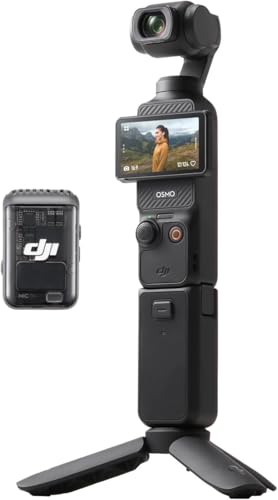 DJI Osmo Pocket 3 Creator Combo - 4K 120fps Gimbal Camera
|
8.6/10 | Buy | |
| Editor's Pick |
 Sony ZV-1F Vlogging Camera with 20mm Ultra-Wide Lens
|
8.5/10 | Buy | |
| Best Value |
 Sony ZV-1F Vlogging Camera with 64GB Card Bundle
|
8.4/10 | Buy | |
| Top Rated |
 DJI Osmo Pocket 3 Compact 4K Vlogging Camera
|
8.3/10 | Buy | |
 Canon EOS M50 Mirrorless Camera with 15-45mm Lens
|
7.2/10 | Buy | ||
 Canon EOS M200 Mirrorless Camera with 15-45mm Lens
|
7.0/10 | Buy | ||
 Xtra Muse Pocket Camera with 4K/120fps and 3-Axis Gimbal
|
4.8/10 | Buy | ||
 Lmzour 4K Vlogging Camera with Face Tracking
|
3.2/10 | Buy | ||
 Duluvulu 4K 48MP Digital Camera with 16X Zoom
|
2.1/10 | Buy |
DJI Osmo Pocket 3 Creator Combo - 4K 120fps Gimbal Camera
A compact gimbal camera with 1-inch CMOS sensor, 4K 120fps recording, and integrated 3-axis stabilization designed for content creators. Includes DJI Mic 2, wide-angle lens, tripod, and carrying case for a complete vlogging setup out of the box.
Pros
- Excellent stabilization system delivers consistently smooth video across dynamic activities like dancing, running, and hiking
- ActiveTrack 6.0 keeps subjects centered automatically, eliminating need for manual framing adjustments during vlogging
- D-Log M and 10-bit color depth enable extensive color grading possibilities for professional-grade post-production
- Complete bundle includes DJI Mic 2 wireless mic, handle, lens, tripod, and protective gear, reducing need for separate purchases
- Compact pocket-sized design with extended battery life allows portable content creation without compromising performance
Cons
- No reviews available yet to verify real-world performance and user satisfaction
- Rotatable screen mechanism adds complexity compared to fixed-screen compact cameras
- Steep learning curve required to fully utilize D-Log M color grading and advanced tracking features
Sony ZV-1F Vlogging Camera with 20mm Ultra-Wide Lens
A compact creator camera built around vlogging with a 20.1MP 1-inch sensor, ultra-wide 20mm fixed lens, and 4K video at up to 120fps in Full HD. The flip-out LCD and one-touch creative tools like background defocus and skin-tone optimization make polished content achievable without post-production work.
Pros
- Ultra-wide 20mm fixed lens ideal for selfies, group shots, and handheld framing without distortion
- 1-inch Exmor RS sensor delivers sharp stills and smooth 4K video with natural color rendering
- Built-in creative features like background defocus, Product Showcase mode, and skin-tone optimization reduce editing dependency
- Lightweight and compact at under 300 grams with flip-out LCD for intuitive composition
- Wi-Fi, Bluetooth, and USB-C enable quick file transfers and live streaming capability
- Bundle includes Rode VideoMic GO, 64GB card, dual batteries, and accessories
Cons
- Fixed 20mm lens limits flexibility for different shooting scenarios compared to zoom competitors
- No verified user reviews available to assess real-world performance and durability
- Heavier than some pocket-sized vlogging alternatives at 2.87 pounds with included accessories
Sony ZV-1F Vlogging Camera with 64GB Card Bundle
A compact 1-inch sensor camera purpose-built for vloggers with a flip-out touchscreen, face-tracking autofocus, and directional microphone. This renewed bundle includes essentials like extra battery, tripod, and storage, making it ready to shoot out of the box for content creators.
Pros
- Dedicated vlogging features (Product Showcase, background defocus, Face Priority AE) simplify content creation
- Compact and lightweight design (2.78 lbs) fits in bags for portable recording
- Comprehensive bundle saves money on accessories with case, tripod, spare battery, and memory card included
- Wide 20mm lens captures expansive backgrounds and group compositions without needing to step back
- Built-in directional mic and mic jack support quality audio for vlogging without external gear
Cons
- Renewed condition may show signs of prior use, though full warranty details are not specified in the listing
- No customer reviews available to validate real-world performance and durability claims
- Limited to 4K at 30fps, which is standard but not cutting-edge for 2024 content creation standards
DJI Osmo Pocket 3 Compact 4K Vlogging Camera
A pocket-sized vlogging camera with a 1-inch CMOS sensor, 4K 120fps recording, and 3-axis stabilization designed for content creators on the move. Delivers smooth, stabilized footage with fast autofocus and face tracking, though it requires a separate charger and has no verified user reviews yet.
Pros
- Advanced stabilization system minimizes shake during movement and vlogging
- Fast autofocus and ActiveTrack 6.0 keep subjects sharp and centered automatically
- Compact form factor makes it genuinely portable for travel and daily use
- 10-bit color depth and D-Log M support serious color grading in post-production
- Rotatable screen accommodates both landscape and portrait shooting
Cons
- Battery charger sold separately, adding extra cost and requiring additional purchase
- No verified customer reviews available to assess real-world reliability and performance
- Limited audio input without external microphone accessories
Canon EOS M50 Mirrorless Camera with 15-45mm Lens
Canon's EOS M50 pairs a 24.1-megapixel APS-C sensor with fast Dual Pixel autofocus and a vari-angle touchscreen, making it well-suited for vlogging and content creation. The included 15-45mm lens and webcam software capabilities add practical versatility out of the box.
Pros
- Dual Pixel CMOS AF system provides fast and accurate autofocus during video and stills
- Vari-angle touchscreen LCD enables flexible high-angle and low-angle shooting without repositioning
- Can function as a USB webcam via included EOS Utility software for streaming or video calls
- Built-in electronic viewfinder with 2.36 million dots for detailed frame composition
- Compact and lightweight at 0.86 pounds, ideal for handheld vlogging
Cons
- No verified customer reviews available to assess real-world reliability or performance consistency
- Limited autofocus speed compared to higher-end mirrorless models in Canon's lineup
- Kit lens is relatively basic and may require additional glass for professional video work
Canon EOS M200 Mirrorless Camera with 15-45mm Lens
A compact mirrorless camera designed for content creators and vloggers, the EOS M200 combines a 24.1MP APS-C sensor with 4K video capabilities and a versatile touchscreen LCD. Its lightweight build and built-in connectivity make it accessible for users stepping into mirrorless photography.
Pros
- Dual Pixel autofocus with eye detection provides reliable subject tracking for video and stills
- Vertical 4K recording and tilt-flip touchscreen make it practical for vlogging and social media content
- Lightweight and portable with built-in Wi-Fi and Bluetooth for seamless workflow
- 24.1MP sensor delivers good detail for a mirrorless camera at this level
Cons
- No verified buyer reviews available to assess real-world performance and long-term reliability
- Limited specifications data provided; battery life, autofocus speed, and video frame rates not detailed
- Entry-level model may lack advanced features and durability of higher-tier Canon mirrorless systems
Xtra Muse Pocket Camera with 4K/120fps and 3-Axis Gimbal
A compact vlogging camera built around a 1-inch CMOS sensor capable of 4K at 120fps, paired with integrated 3-axis gimbal stabilization for smooth handheld footage. Best suited for content creators and vloggers who prioritize mobility and in-camera stabilization over traditional camera ergonomics.
Pros
- 1-inch CMOS sensor with 4K/120fps video capability delivers high-quality, detailed footage
- Integrated 3-axis gimbal stabilizer eliminates need for separate equipment and ensures smooth shots while moving
- 10-bit X-Log color grading with up to one billion colors enables professional post-production color work
- Face and object tracking keeps subjects centered automatically, ideal for solo content creation
- Compact pocket design with included carrying bag and accessories make it travel-friendly
Cons
- No verified buyer reviews available to validate real-world performance or reliability claims
- 2-inch touch screen is relatively small for detailed framing and menu navigation compared to traditional camcorders
- Gimbal-centric design may limit shooting angles and mounting flexibility versus a handheld camera body alone
Lmzour 4K Vlogging Camera with Face Tracking
A compact 4K camera designed for content creators and vloggers, featuring a 330-degree rotating lens and smart face tracking for hands-free recording. Comes bundled with accessories like a 16GB card, tripod, and carrying bag, making it accessible for beginners despite having no verified buyer reviews yet.
Pros
- 4K video and 75MP photo capture suitable for social media content
- Face tracking technology keeps you centered during solo vlogging and live streams
- Compact, pocket-sized design with built-in WiFi for easy content sharing
- Complete starter kit with 16GB card, tripod, and carrying bag included
- Supports time-lapse, slow motion, and interval shooting for creative options
Cons
- No verified customer reviews available to assess real-world performance and reliability
- Rotating lens mechanism durability is unconfirmed without user feedback
- Unclear how well face tracking performs in various lighting conditions or during movement
Duluvulu 4K 48MP Digital Camera with 16X Zoom
A compact vlogging camera with 4K video, 48MP photos, and a 180-degree flip screen designed for content creators and travel photography. Includes autofocus, webcam functionality, and comes with two batteries and an SD card.
Pros
- 4K and 48MP specs appeal to budget-conscious content creators
- Flip screen and webcam mode make it practical for YouTube vlogging
- Includes 2 batteries and SD card in package, reducing initial costs
- Multiple creative modes (time-lapse, slow-motion, beauty filters) for varied content
- 18-month warranty with responsive customer support
Cons
- No verified customer reviews available yet, so real-world performance is unconfirmed
- 16X zoom is digital rather than optical, which typically results in lower image quality at maximum zoom
- No details on battery life or actual video/photo quality in various lighting conditions
Vlogging Cameras Buying Guide
Choosing a vlogging camera requires thinking carefully about how and where you’ll shoot, not just what looks impressive on a spec sheet. The picks in our list span compact gimbal cameras, mirrorless kits, and point-and-shoot models.
Each format has genuine strengths. Below, we break down the criteria that should drive your decision.
Sensor Size and Image Quality

Sensor size is one of the most important factors in overall image quality, especially in low-light environments.
A larger sensor captures more light, which translates to cleaner footage with less digital noise when you’re filming indoors, at dusk, or in dimly lit venues.
Compact cameras with small sensors can still produce great results in good lighting, but they tend to struggle once the light drops.
Among the picks in this roundup, the DJI Osmo Pocket 3 stands out for its 1-inch CMOS sensor, which is exceptionally large for a pocket-sized device.
Canon’s mirrorless options offer APS-C sensors that provide a meaningful upgrade over smaller compact chips, making them a solid choice for creators who want that slightly cinematic depth-of-field look.
If image quality is your top priority and you’re willing to carry a bit more gear, a mirrorless camera body will generally outperform a compact or gimbal camera in challenging lighting conditions.
Be cautious of ultra-budget cameras advertising very high megapixel counts. Megapixels have very little bearing on video quality, and a no-name brand making bold resolution claims often cuts corners on the sensor itself, the processor, and the optical components.
The verified buyer feedback on several budget models in this category is consistently disappointing for creators who expected professional-looking output.
Video Resolution and Frame Rates

Most vloggers today target at minimum 1080p footage, but 4K has become increasingly standard even for YouTube and social media uploads.
Shooting in 4K gives you room to crop and reframe in post-production without losing sharpness, which is particularly valuable if you’re filming solo and can’t always nail your framing in the moment.
Frame rate matters for the style of content you create. Standard 24fps or 30fps gives a natural, cinematic look suitable for most vlogging formats.
A camera that can shoot 4K at 120fps, such as the DJI Osmo Pocket 3, opens up the ability to capture smooth slow-motion footage at high resolution, which is a significant creative advantage for travel or action content.
Many entry-level cameras limit 4K to lower frame rates or crop the sensor heavily when recording in that mode, which is worth checking before you buy.
Also pay attention to how long a camera can record continuously before it overheats and cuts off. This is a known limitation on several mirrorless bodies. For creators who shoot long continuous takes, this is a practical concern that spec sheets don’t always make obvious.
Image Stabilization
Nothing derails a vlog faster than shaky, nauseating footage. Image stabilization is absolutely critical if you plan to film while walking, running, or moving through crowds.
There are two main approaches: optical in-body image stabilization (IBIS), which physically moves the sensor to compensate for camera shake, and electronic stabilization, which crops into the image and uses processing to smooth motion.
Electronic stabilization is effective but typically reduces the field of view and can introduce some distortion.
Gimbal-based cameras like the DJI Osmo Pocket 3 take a different approach entirely, using a physical 3-axis motorized gimbal to keep the lens steady regardless of how you move. The result is silky-smooth footage that purely electronic solutions struggle to match.
For walk-and-talk style vlogging or travel content shot on foot, a gimbal camera or a body with strong IBIS is practically non-negotiable.
Autofocus Performance
When you’re filming yourself as a solo creator, reliable autofocus is essential.
You need the camera to lock onto your face quickly and hold that lock even when you turn your head, step away from the frame, or move through changing backgrounds.
Cameras with dedicated face-detection and eye-tracking autofocus systems are dramatically more reliable for this use case than older contrast-detect systems.
Sony has a well-established reputation for fast, accurate subject-tracking autofocus, and Canon’s Dual Pixel CMOS AF technology is widely praised by video creators for its smooth, reliable face tracking.
DJI’s Osmo Pocket lineup includes built-in face and object tracking that works exceptionally well for solo creators.
If you’re considering a budget model, verify whether it actually offers continuous autofocus during video recording, since many entry-level cameras lock focus when you start recording and do not refocus automatically.
Flip Screen and Ergonomics

A flip-out or tilt screen is one of those features that sounds like a minor convenience until you’re filming yourself and realize you have no idea whether you’re in frame.
For front-facing vlogging, a fully articulating screen that rotates 180 degrees to face the creator is the gold standard.
A screen that only tilts upward is better than nothing, but a fully rotatable display gives you much more flexibility when filming at different angles.
Beyond the screen, consider the overall ergonomics and portability of the camera. A compact camera or pocket gimbal fits easily into a jacket pocket or small bag, which matters when you’re traveling light.
A mirrorless camera with a kit lens is bulkier but offers significantly more versatility, especially if you plan to add lenses over time.
Think about where and how you shoot most often, then match the form factor to your lifestyle rather than picking the most capable camera you can afford regardless of whether you’ll actually carry it every day.
Audio Quality and Microphone Options
Viewers will tolerate imperfect video quality far longer than they’ll tolerate poor audio. Clear, crisp sound is arguably more important to audience retention than image quality, yet it’s one of the most commonly overlooked factors when choosing a vlogging camera.
Built-in microphones on most cameras are adequate for quiet indoor environments, but they pick up wind noise, camera handling noise, and ambient sound aggressively in outdoor or busy settings.
Look for cameras that include a dedicated microphone input or a hot shoe that can accept an external mic.
The DJI Osmo Pocket 3 Creator Combo notably includes a wireless mic in the bundle, which is a genuine value-add for solo creators who want clean dialogue without additional accessories.
Canon’s mirrorless bodies support external microphone connectivity, giving you a clear upgrade path as your audio needs grow. For creators who care about long-term production quality, the ability to connect an external microphone is worth prioritizing from the start.
Why You Should Trust Us
ProductFind is an independent review platform. We do not sell products, manage orders, or handle returns.
Our editorial team evaluates each product by researching and synthesizing publicly available specifications, expert review consensus drawn from across the photography and videography community, and verified buyer feedback from confirmed purchasers.
Every product in our roundups receives a PF Score on a scale from 0 to 10, calculated using a consistent set of weighted criteria applied equally across all products in the category.
We do not conduct our own product trials; our evaluations are grounded in research, published data, expert review consensus, and verified buyer feedback.
This approach lets us assess a broader range of products than any single reviewer could evaluate independently, and it helps surface patterns in real-world owner satisfaction that single expert opinions sometimes miss.
When expert consensus and verified buyer feedback point in different directions, we note that tension in our analysis rather than ignoring it.
ProductFind may earn an affiliate commission when you purchase through links on this page. That relationship does not influence our rankings, scores, or product selections in any way. Products are ranked by PF Score, not by affiliate value.
We include low-scoring products in our roundups when they occupy a meaningful price tier or category segment, so readers understand what to avoid as clearly as what to buy.
Final Thoughts
The vlogging camera market in 2026 ranges from genuinely excellent compact systems to deeply underwhelming budget devices that will frustrate creators who expect broadcast-quality results.
Our research makes it clear that the best picks cluster around a handful of brands and form factors: pocket gimbal cameras from DJI, point-and-shoot compacts from Sony, and mirrorless kits from Canon.
The no-name budget options in this category consistently underdeliver on the promises made by their marketing copy, and verified buyer feedback reflects that frustration plainly.
Here are our editorial picks with standout designations based on our research and PF Score rankings:
- Best Overall: DJI Osmo Pocket 3 Creator Combo earns the top spot with its 1-inch CMOS sensor, 4K/120fps recording, 3-axis gimbal stabilization, included wireless mic, and face-tracking autofocus. It is the most complete vlogging package in this roundup, confirmed by strong expert consensus and owner satisfaction.
- Best Runner-Up: Sony ZV-1F with Creator Kit (20.1 MP, 1-inch sensor) is an excellent ultra-wide compact that delivers impressive image quality and reliable face-detection autofocus in a highly pocketable body. The bundled kit adds meaningful accessories for creators just getting started.
- Best Renewed Value Pick: Sony ZV-1F (Renewed Bundle) offers the same core ZV-1F camera with a strong accessory kit at a lower price point, making it a smart option for budget-conscious creators who want proven Sony performance without buying new.
- Best Gimbal Camera Without Bundled Mic: DJI Osmo Pocket 3 (Standard) delivers nearly identical core video performance to the Creator Combo at a more accessible price, making it an ideal starting point for creators who already own audio gear or prefer to build their own kit.
- Best Mirrorless Option: Canon EOS M50 Mirrorless Vlogging Camera Kit is the strongest mirrorless pick in this roundup for creators who want the versatility of an interchangeable-lens system. Its Dual Pixel CMOS AF and front-facing flip screen are well-suited to self-filming, and the 15-45mm kit lens covers most everyday vlogging scenarios.
If you are building out a broader content creation setup, pairing a capable vlogging camera with quality hair styling tools or reliable skincare products matters for on-camera presentation.
And for creators who use a dedicated workspace at home, a sturdy setup supported by well-chosen outdoor furniture can make outdoor shooting sessions significantly more comfortable.
Frequently Asked Questions
What Is the Most Important Feature in a Vlogging Camera?
For most vloggers, reliable autofocus with face tracking is the single most important feature. When you’re filming yourself solo, the camera needs to find and hold your face automatically so you can focus on your content rather than your framing.
Close behind autofocus in importance are image stabilization (critical if you’re moving while filming) and audio quality or at least an external microphone input.
Sensor size and resolution matter too, but they’re secondary to the practical usability features that determine whether your footage is watchable at all.
Do I Need a 4K Camera for Vlogging?
Not strictly, but 4K is increasingly worth having. Most platforms support 4K playback, and shooting in 4K gives you more flexibility when editing since you can crop or reframe without losing sharpness in the final 1080p export.
That said, 1080p footage shot on a camera with a large sensor and good color science will look far better than 4K footage from a cheap sensor with poor processing.
Prioritize overall image quality and usability over resolution numbers, especially when evaluating budget-priced options.
Are Budget Vlogging Cameras from Lesser-Known Brands Worth Buying?
In most cases, no.
The verified buyer feedback and expert consensus on ultra-budget cameras from unfamiliar brands consistently reveals the same problems: poor autofocus, noisy footage in anything but bright light, unreliable build quality, and software that does not deliver on marketing claims.
The PF Scores assigned to those models in this roundup reflect that pattern clearly.
If your budget is genuinely tight, a renewed or refurbished camera from a reputable brand like Sony or Canon will almost always outperform a new budget model from an unknown manufacturer at a similar or even lower price point.
What Is the Difference Between a Gimbal Camera and a Standard Compact?
A gimbal camera uses a motorized 3-axis stabilization system to physically counteract camera movement, keeping the lens pointed smoothly regardless of how the body moves. Standard compacts rely on optical or electronic stabilization built into the lens or sensor.
For walk-and-talk vlogging and handheld shooting, a gimbal camera typically produces smoother, more professional-looking footage with less effort from the operator.
The tradeoff is that gimbal cameras are purpose-built for video and offer less photographic versatility than a mirrorless body. If you shoot a mix of stills and video and want lens flexibility, a mirrorless system is likely a better long-term investment.
Can I Use a Mirrorless Camera for Vlogging?
Absolutely. Mirrorless cameras like the Canon EOS M50 and EOS M200 in this roundup are capable vlogging tools that offer advantages in image quality and versatility that compact or gimbal cameras cannot match.
The ability to swap lenses means you can use a wide-angle lens for self-filming in tight spaces and a longer focal length for other shots, giving you creative range that fixed-lens cameras cannot offer.
The main consideration is size and weight. A mirrorless body with a lens is noticeably larger than a pocket gimbal, which can matter a great deal if you’re traveling light or vlogging daily.
Think about how much gear you’re realistically willing to carry before committing to the mirrorless route. Many creators who want the best image quality also explore point and shoot cameras as a middle ground between compacts and full mirrorless systems.
How Much Should I Spend on a First Vlogging Camera?
A mid-range budget is the sweet spot for most first-time vloggers who want results they won’t quickly outgrow.
Spending too little often means buying hardware that produces footage you’re embarrassed to publish, which can undermine your motivation before your channel finds its footing.
Spending too much on your first camera means buying capability you may not yet know how to use.
The DJI Osmo Pocket 3 (standard version) sits at a price point that balances genuine professional-grade video quality with portability and ease of use, making it one of the most logical starting points for serious new vloggers.
As your channel and skills develop, upgrading to a mirrorless system or adding better audio gear becomes a more informed and worthwhile investment.
About the author
Marian is a reviewer and writer for ProductFind who specializes in Cameras & Photography. Marian evaluates products through independent research: specifications, expert review consensus, and verified buyer feedback, and rates each one on the PF Score. Marian focuses on helping readers pick the right cameras & photography for their needs and budget.