The 10 Best Table Saws
Rip capacity, fence quality, and motor performance vary enormously across table saws. Here are the top picks for contractors, hobbyists, and everyone in between.
 By Lydia Gordon
Updated July 23, 2026
By Lydia Gordon
Updated July 23, 2026
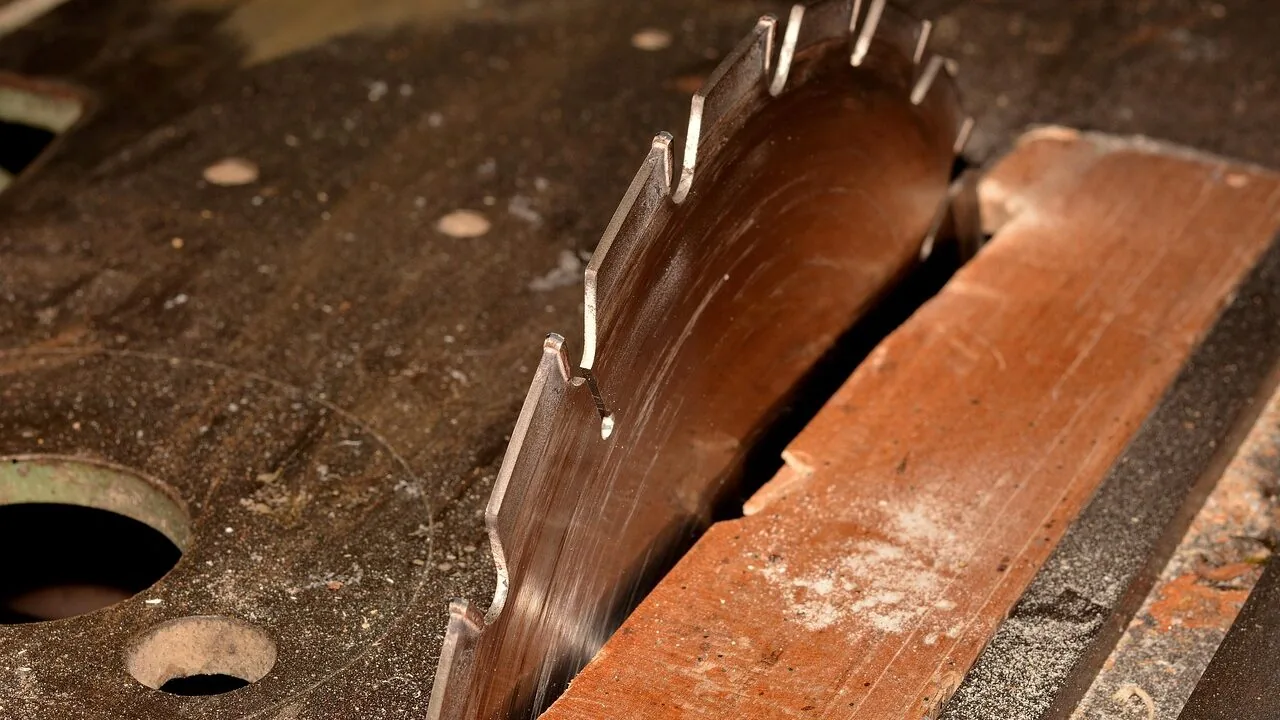
A table saw is one of the most transformative tools you can add to a workshop, capable of ripping lumber, crosscutting sheet goods, and tackling joinery that would take hours by hand.
Whether you are a seasoned contractor needing a reliable jobsite saw or a weekend woodworker building furniture in the garage, the right table saw dramatically expands what you can build and how accurately you can build it.
The market ranges from compact benchtop models priced well under the cost of a miter saw to professional-grade cabinet saws that anchor a dedicated shop, which makes choosing the right one genuinely confusing without solid guidance.
At ProductFind, we cut through that confusion by analyzing manufacturer specifications, synthesizing consensus from expert reviews, and weighing verified buyer feedback across hundreds of real-world purchases.
Our picks below span a wide price range and cover every realistic use case, from portable jobsite saws to stationary workshop workhorses. Scroll down to see our top-ranked table saws for 2026.
| Award | Product | PF Score About PF ScoreThe PF Score is our own rating from 0 to 10, based on performance, design and build, ease of use, and value. It reflects independent research and is never influenced by manufacturers, retailers, or affiliate commissions. Learn more › | Price | |
|---|---|---|---|---|
| Best Overall |
 DeWalt DWE7491X 10-Inch Table Saw with Stand
|
8.4/10 | Buy | |
| Editor's Pick |
 DEWALT DWE7491RS 10-Inch Table Saw with Rolling Stand
|
8.2/10 | Buy | |
| Best Value |
 SKILSAW SPT99-11 10-Inch Worm Drive Table Saw
|
8.1/10 | Buy | |
| Top Rated |
 Bosch GTS15-10 10-Inch Portable Table Saw
|
8.0/10 | Buy | |
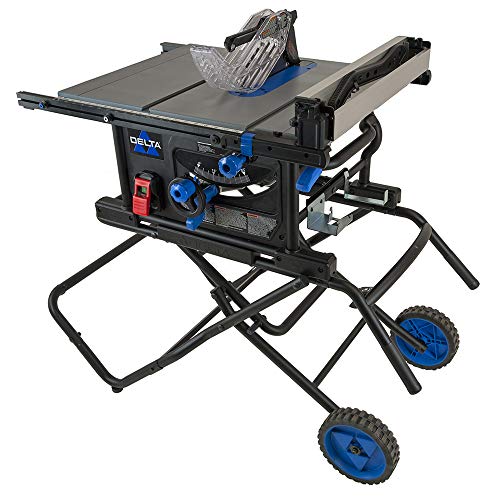 Delta 36-6023 10-Inch Table Saw, 32.5" Rip Capacity
|
7.8/10 | Buy | ||
 Evolution R10TS 10-Inch Jobsite Table Saw
|
7.6/10 | Buy | ||
 Skil TS6307-00 10-Inch Jobsite Table Saw
|
7.3/10 | Buy | ||
 Prostormer 10 Inch Table Saw with Stand
|
5.9/10 | Buy | ||
 EliteEdge 10-Inch Table Saw 15 Amp
|
5.4/10 | Buy | ||
 Saker Mini Table Saw 63mm with 160+ Accessories
|
3.2/10 | Buy |
DeWalt DWE7491X 10-Inch Table Saw with Stand
A 15-amp table saw designed for serious DIY and job site work, featuring a 32.5-inch rip capacity and rack-and-pinion fence for accurate crosscuts and rips. The included scissor stand and dust collection port make setup and cleanup straightforward for workshop or portable use.
Pros
- Generous 32.5-inch rip capacity reduces need for manual material handling on longer cuts
- Rack and pinion fence delivers repeatable accuracy without binding
- Flip-over fence design accommodates both standard and narrow rip cuts
- Tool-free guard adjustments speed up setup for different applications
- Included stand eliminates separate purchase for job site portability
Cons
- No customer reviews available to confirm real-world reliability and performance
- 87-pound weight and scissor stand may still be cumbersome for frequent transport
- Dust collection effectiveness depends on external vacuum quality and hose fit
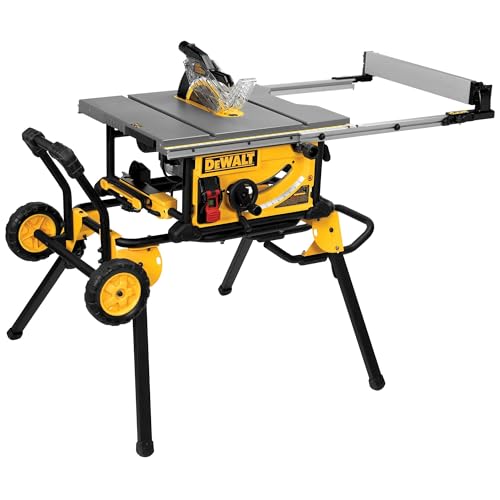
DEWALT DWE7491RS 10-Inch Table Saw with Rolling Stand
A portable 10-inch table saw built around jobsite convenience, featuring a 32.5-inch rip capacity and rack-and-pinion fence for quick adjustments. The included rolling stand and telescoping rails make setup straightforward for contractors and DIYers who need to move between projects.
Pros
- Large 32.5-inch rip capacity handles full-width shelving and trim materials
- Rack-and-pinion fence system enables fast, smooth fence adjustments without drift
- Foldable rolling stand provides stability and portability with telescoping rails that retract for compact storage
- Comprehensive onboard storage for blade guard, fence, miter gauge, wrenches, and accessories
- 15-amp motor powers through hardwoods efficiently at 4800 RPM
Cons
- No verified user reviews available to assess real-world durability or long-term reliability
- 110-pound weight and footprint may still be cumbersome for frequent single-person transport despite the rolling stand
- Dust collection limited to 2.5-inch port, which may require multiple adapters or reduced efficiency with standard shop vacuums
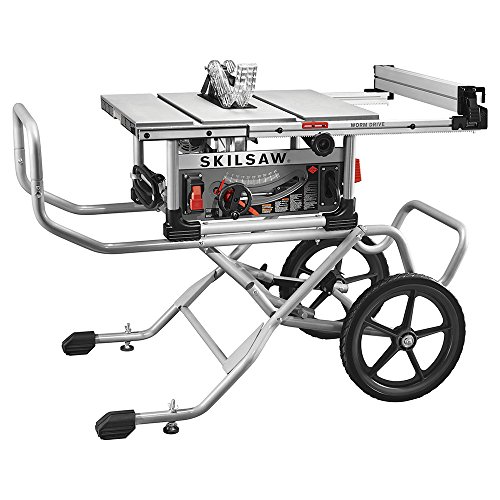
SKILSAW SPT99-11 10-Inch Worm Drive Table Saw
A heavy-duty worm drive table saw built for job site mobility with a rugged rolling stand and 16-inch wheels. The precision rack and pinion fence system and 30.5-inch rip capacity make it suited for contractors and serious DIYers handling larger cuts.
Pros
- Worm drive gearing delivers consistent cutting power and durability
- Rack and pinion fence system enables quick, smooth adjustments for accurate cuts
- Rolling stand with 16-inch wheels and easy-load handles provides excellent portability
- Outfeed and left support allow one person to safely handle larger workpieces
- Dust port containment keeps debris localized for easier cleanup
Cons
- No verified buyer reviews available to validate real-world performance claims
- 94.3-pound weight requires proper lifting technique even with wheeled stand
- 3.625-inch depth of cut may limit thickness capacity for certain applications
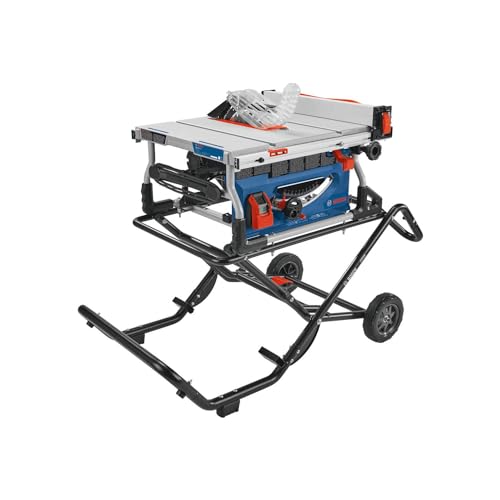
Bosch GTS15-10 10-Inch Portable Table Saw
A 15-amp jobsite table saw with 32.125-inch rip capacity and gravity-rise wheeled stand designed for on-the-go woodworking. Strong safety features including riving knife and anti-kickback pawls, plus convenient on-tool storage for accessories.
Pros
- Compact and portable at just over 102 pounds with wheeled stand included
- Safety-focused design with riving knife, anti-kickback pawls, and quick blade brake
- Color-coded rack and pinion fence system simplifies depth and angle adjustments
- Electronically regulated speed maintains consistent cutting performance under load
- All accessories and tools store directly on the saw for jobsite convenience
Cons
- No verified buyer reviews available to assess real-world reliability or durability
- Open frame design may offer less rigidity than enclosed cabinet saws for precision work
- 102-pound weight plus stand requires adequate transport capacity despite portability claims
Delta 36-6023 10-Inch Table Saw, 32.5" Rip Capacity
A contractor-grade table saw built for handling large stock and thick dados with its 15 Amp motor and generous rip capacity. The rack and pinion fence system delivers accurate cuts, making it suitable for woodworkers who need professional performance without premium pricing.
Pros
- Generous 32.5-inch rip capacity handles full-width lumber and large panels
- Stacked dado capacity up to 13/16 x 8 inches for decorative joinery work
- Rack and pinion fence system provides smooth, accurate adjustments
- 15 Amp motor built to handle treated lumber and hardwoods
- 5-year warranty backs professional-grade construction
Cons
- No verified buyer reviews available to assess real-world reliability and long-term durability
- 77-pound weight may require permanent shop placement or sturdy mobile base
- Limited details on dust collection and noise levels in product specifications
Evolution R10TS 10-Inch Jobsite Table Saw
A multi-material table saw with a 15A motor, zero-clearance throat plate, and included dado plate for versatility across wood, steel, and composites. Designed for jobsite portability with a 26-inch rip capacity and safety features like electronic blade brake and anti-kickback pawls.
Pros
- Multi-material cutting capability expands beyond standard woodworking
- Zero-clearance throat plate and cross-cut sled reduce tear-out for cleaner edges
- Dado plate included increases versatility without additional purchase
- Lightweight portable frame with outfeed support bar suits jobsite use
- Comprehensive safety features including electronic blade brake and anti-kickback pawls
Cons
- No verified buyer reviews available to assess real-world durability or user experience
- 10-inch blade size limits maximum cut depth compared to larger contractor saws
- Portable design may sacrifice some rigidity and stability versus stationary models
Skil TS6307-00 10-Inch Jobsite Table Saw
A portable 10-inch table saw designed for job sites with a folding stand for easy transport and storage. Rack and pinion fence rails and parallel blade alignment support accurate cuts up to 4x4 lumber at 90 degrees.
Pros
- Integrated folding stand makes transport practical for job sites
- Rack and pinion fence ensures consistent parallel cuts
- Handles 4x4 lumber at 90 degrees with positive stops at 0 and 45 degree angles
- Parallel blade adjustment improves rip fence accuracy
Cons
- Limited weight capacity and portability compared to full-size models at 51 pounds
- No customer reviews available to verify real-world durability or performance claims
- Specifications data incomplete, limiting detail on power and actual table dimensions
Prostormer 10 Inch Table Saw with Stand
A compact 10-inch benchtop table saw with 5000RPM motor designed for woodworking and angled cuts. Built-in safety features, blade angle adjustment, and dust collector port make it practical for small workshops, though it arrives without a dust collector.
Pros
- Strong motor power at 5000RPM handles general woodworking tasks
- Versatile cutting options with 90-degree cross-cuts and up to 45-degree bevels
- Thoughtful safety design featuring clear guard and included push stick
- Stable construction with reinforced metal bracket base reduces vibration
- Built-in storage compartments for wrenches and accessories
Cons
- Dust collector port included but dust collector not provided, requiring separate purchase
- No verified buyer reviews available to validate real-world performance and durability
- Benchtop design limits cutting capacity compared to full-size contractor saws
EliteEdge 10-Inch Table Saw 15 Amp
A 15 amp table saw with 5000 RPM motor designed for crosscutting and bevel work across wood, metal, and plastic. The 36x25 inch tabletop and included stand make it suitable for workshop use, though it lacks verified buyer feedback to confirm real-world performance.
Pros
- Dual cutting capability: 90-degree crosscut (74mm depth) and 0-45 degree bevel cut (52mm depth)
- Portable design with dust collector port and side storage for accessories
- Includes transparent blade guard and push stick for added safety
- Sturdy metal stand with triangle supports for stability
- 24-month return and exchange warranty
Cons
- No verified customer reviews available to assess actual performance and reliability
- 52-pound weight may limit portability despite 'portable' claim
- Specifications lack detail on arbor size, rip capacity, and noise level
Saker Mini Table Saw 63mm with 160+ Accessories
A compact desktop saw designed for precision work on small materials like wood, plastic, and PCB boards, powered by a 90W motor with adjustable speeds up to 5000 rpm. Best suited for hobbyists, crafters, and DIY enthusiasts who need versatile cutting and light engraving capabilities in a portable form factor.
Pros
- Versatile multi-functional design handles wood, plastic, acrylic, PCB boards, and metal tubes with four different blade types included
- 7 adjustable speed settings and 0-90 degree angle adjustment enable precise cuts for various materials and tasks
- Compact size (180mm x 160mm x 100mm) with anti-slip feet and transparent debris shield for safe operation
- Includes 160+ accessories and soft shaft for drilling heads with 0.5-3.2mm shanks, expanding functionality beyond cutting
- Clear panel markings and cast iron construction support accurate, stable cuts for detailed work
Cons
- No verified buyer reviews available to assess real-world performance and durability
- 16mm cutting depth and 63mm blade diameter limit it to small-scale projects, not suitable for larger woodworking
- Beginner-friendly design may lack advanced features or precision expected by professional users
Table Saws Buying Guide
Buying a table saw is a bigger commitment than most power tools. The differences between a well-matched saw and the wrong one affect not just convenience but actual safety and long-term cut quality.
The six criteria below reflect the factors that matter most across the range of saws in this roundup, drawing on specifications, published safety data, and the patterns we consistently see in expert review consensus.
Motor Power and Blade Speed
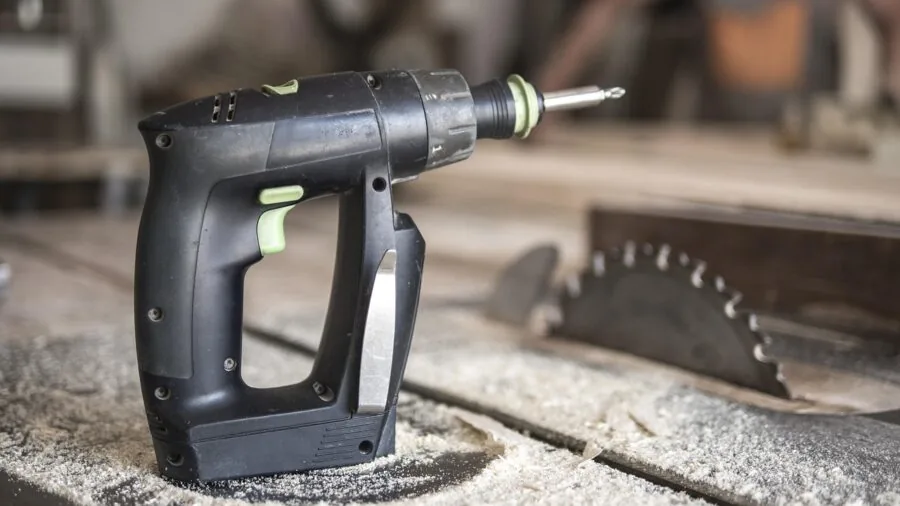
Every full-size table saw in this guide runs a 15-amp motor, which is the practical ceiling for a standard 120-volt household circuit without requiring dedicated wiring. That said, amp ratings alone do not tell the whole story.
Blade speed, expressed in RPM, and the motor’s duty cycle under load matter just as much.
A saw rated at 4,800 RPM will feed hardwoods and thick sheet goods more cleanly than one spinning at the same amperage but a slower speed, because the blade has less time to deflect between tooth contacts.
When evaluating motor specs, look for saws that maintain their rated RPM under load rather than bogging down noticeably. Expert reviewers consistently flag motor stall under demanding cuts as one of the top complaints in budget saws.
If your typical work involves dense hardwoods like oak or maple, prioritize saws from DEWALT and SKILSAW in this list, both of which draw strong marks for sustained cutting power across professional review sources.
Rip Capacity
Rip capacity is the maximum distance from the blade to the fence rail on the right-hand side, and it determines whether you can safely process full sheet goods like plywood and MDF without repositioning.
Standard jobsite saws hover around 24 to 26 inches of rip capacity, which handles most dimensional lumber but forces you to pre-cut sheet goods before bringing them to the saw.
Saws with 32 to 36 inches of rip capacity, like the DEWALT DWE7491RS and DWE7491X, open up the ability to rip full 4×8 sheets in a single pass, which is a significant workflow advantage for furniture builders and cabinet makers.
Fence quality is equally important. A fence that flexes, drifts, or requires repeated re-squaring wastes time and introduces error into every rip cut. Look for rack-and-pinion or T-square style fences with positive locking mechanisms.
Verified buyers across multiple platforms consistently praise solid fence systems as one of the primary reasons they would recommend a saw to others, and flag poor fence design as the most common deal-breaker in otherwise competent saws.
Portability and Stand Design
Jobsite table saws live or die by how quickly they can be set up and broken down. A saw that takes two people and fifteen minutes to deploy is a liability on a busy job.
Rolling stands with gravity-rise or scissor mechanisms, like those on the Bosch GTS15-10 and the DEWALT DWE7491RS, allow a single operator to deploy and stow the saw with minimal effort.
The Bosch gravity-rise stand in particular draws consistently high praise from contractors who move between multiple job locations per week.
For shop-bound users, portability matters less than footprint and weight distribution. A heavier saw tends to vibrate less and produce cleaner cuts at the blade, but it also means you commit to a dedicated position in your workspace.
If your shop layout changes frequently, consider a saw with locking caster wheels rather than a fixed base.
Bench-top and compact saw options like the SKIL TS6307-00 are worth considering if shop space is genuinely limited, though they sacrifice rip capacity and fence stability compared to their full-size counterparts.
Just as a well-matched paint sprayer can save hours on a finishing project, the right stand design can save that same time on setup every single day.
Bevel and Blade Adjustment

Most 10-inch table saws offer bevel cuts from 0 degrees to 45 degrees, enough for basic miters and compound angles.
The quality of the bevel mechanism, specifically how easy it is to set and lock a precise angle without the carriage drifting under blade load, separates midrange saws from entry-level ones.
Dual bevel capability, which allows the saw to tilt both left and right, is rare at this price point and generally found only on cabinet saws.
Blade height adjustment should be smooth and consistent throughout its range, with positive detents at common settings like maximum depth and 45 degrees.
Sloppy adjustment wheels are a frequent complaint in budget saws and become a safety concern when the blade shifts position mid-cut.
Expert sources note that saws with cast iron or heavy stamped-steel trunnions tend to hold adjustment settings more reliably than those with plastic or lightweight aluminum trunnions.
Dust Collection

Table saw dust collection is often an afterthought for buyers but a daily frustration for owners.
Fine wood dust is both a health hazard and a fire risk in enclosed shops, and a saw that directs sawdust efficiently to a port dramatically reduces cleanup time and airborne particulate.
Look for saws with 2.5-inch or larger dust collection ports positioned below the blade guard and blade housing, ideally with a blade guard that also captures dust from the top of the cut.
The DEWALT DWE7491X includes a dedicated dust collection bag that captures a meaningful portion of sawdust without requiring a separate shop vac, which expert reviewers cite as a notable differentiator at its price tier.
For serious shop use, pair any saw with a dedicated dust extractor rather than relying solely on the integrated port.
This is similar in principle to how HEPA air purifiers handle airborne particulates in living spaces, except in a workshop environment the source control at the tool is always the first priority.
Safety Features

Table saws cause more workshop injuries than virtually any other stationary power tool, which makes safety features a legitimate evaluation criterion rather than a marketing checkbox.
A riving knife or splitter that keeps the kerf open behind the blade and reduces kickback risk is now standard on most modern saws but varies significantly in quality.
Anti-kickback pawls are a related feature that should engage reliably without requiring manual adjustment before every cut.
Blade guards that are easy to remove and reinstall encourage users to actually replace them after dado or specialty cuts, whereas guards that are cumbersome to reattach tend to stay off permanently.
The Evolution R10TS earns particular credit from expert sources for its zero-clearance throat plate and dado plate inclusion, both of which contribute to safer specialty cutting.
If you are equipping a shared workshop or training space, prioritize saws with robust, convenient safety systems over those where safety features are technically present but impractical to use consistently.
Accurate measurement matters in every craft, and just as digital multimeters give electricians precise readings to work safely, a well-designed blade guard system gives woodworkers the clearance data they need to cut without risk.
Why You Should Trust Us
ProductFind is an independent review publication. We do not sell the products we cover, and we have no affiliation with any retailer or manufacturer.
Every table saw in this roundup was evaluated using our structured research methodology: we analyze published manufacturer specifications, assess expert review consensus drawn from professional woodworking publications and verified purchaser communities, compare verified buyer feedback from confirmed purchases, and reference publicly available safety and performance data where applicable.
Each product receives a PF Score on a 0 to 10 scale reflecting its overall performance across the criteria in our buying guide.
We do not conduct our own product trials; our evaluations are grounded in research, published data, expert review consensus, and verified buyer feedback.
This approach allows us to cover a broader range of products with consistent, repeatable scoring criteria rather than the variable conditions that affect any single physical evaluation.
ProductFind may earn a commission when you purchase through links in this article. That affiliate relationship has no influence on our rankings, PF Scores, or which products we include or exclude.
Our editorial recommendations are determined entirely by research quality and product merit, not by commission rates.
Final Thoughts
The table saws in this roundup span nearly every realistic use case and budget tier, from contractor-grade portables built for daily jobsite use to compact benchtop models for occasional crafting. Here are the standout picks based on our research and PF Score rankings:
- Best Overall: DEWALT Table Saw DWE7491X earns the top PF Score in this roundup thanks to its combination of expanded rip capacity, integrated dust collection, and the scissor stand that sets up quickly for a single operator. It consistently tops expert consensus lists for jobsite saws that bridge professional performance and practical portability.
- Best for Contractors Who Move Daily: DEWALT DWE7491RS pairs the same trusted DEWALT motor platform with a rolling stand that folds and deploys faster than most competitors in its class, making it the go-to for tradespeople who move between multiple sites.
- Best for Heavy Rip Cuts: SKILSAW SPT99-11 Worm Drive Table Saw brings the same torque-forward worm drive architecture that made SKILSAW circular saws famous, giving it a clear edge when ripping thick hardwoods or wet lumber that bogs down induction-motor competitors.
- Best Compact Jobsite Saw: Bosch GTS15-10 pairs a capable 15-amp motor with the gravity-rise wheeled stand that professional reviewers consistently call the most refined stand mechanism in the portable saw segment, worth every penny for solo operators.
- Best Budget Pick: SKIL TS6307-00 delivers genuine jobsite functionality at a fraction of the cost of premium models, making it the most sensible entry point for hobbyists or occasional users who need reliable crosscuts and rips without a professional price tag.
Whatever your skill level or workspace setup, there is a table saw in this list built for your needs.
Match the saw to your primary use case, prioritize fence quality and motor performance for your typical materials, and your investment will pay off in every project you cut.
Frequently Asked Questions
What is the difference between a jobsite table saw and a cabinet table saw?
Jobsite table saws are portable, typically weigh between 45 and 100 pounds, and are designed to be transported to and from work locations.
Cabinet saws are stationary, often weigh several hundred pounds, feature enclosed bases that improve dust collection, and deliver superior vibration damping for precision work.
For most home woodworkers and contractors, a quality jobsite saw like the DEWALT or Bosch models in this roundup covers the vast majority of real-world cutting tasks.
How much rip capacity do I actually need?
If you plan to rip full 4×8 plywood or MDF sheets, you need at least 24 inches of rip capacity to the right of the blade, and 32 inches or more is significantly more convenient.
For trim work, solid-wood furniture components, or framing lumber, 24 inches is often sufficient. The saws in the upper tier of this roundup offer 32 to 36 inches of rip capacity, while budget and compact models typically offer 24 to 26 inches.
Choose based on your most common sheet good dimensions, not your occasional ones.
Is a worm drive table saw better than a direct drive model?
Worm drive saws, like the SKILSAW SPT99-11, use a gear reduction system that produces more torque at the blade than a comparably powered direct drive motor.
This makes them notably better at sustaining speed through dense hardwoods, wet lumber, and thick sheet goods. The tradeoff is additional weight and a slightly higher price point.
For general woodworking with dimensional lumber and standard plywood, a quality direct drive saw from DEWALT or Bosch performs excellently. For heavy production cutting of hardwoods, the worm drive advantage is real and worth the premium.
Can I use a table saw for metal or plastic cutting?
Some table saws are marketed for multi-material use, including thin metals and plastics, but this depends heavily on blade selection rather than the saw itself. Standard woodcutting blades are not appropriate for metal and can be dangerous.
Purpose-designed non-ferrous metal blades or high-tooth-count blades for plastics are required, and the saw must be capable of safely handling the vibration and chip load those materials produce.
Always verify the manufacturer’s stated material compatibility before cutting anything other than wood. For specialty cuts, the Evolution R10TS in this roundup is explicitly designed with multi-material capability in mind.
How do I know if a table saw fence is accurate enough for fine woodworking?
A quality fence locks parallel to the blade, does not drift under lateral pressure once locked, and maintains that position for the full length of the cut.
Expert reviewers typically assess fence accuracy by measuring parallelism between the fence face and the blade at both the front and back of the throat plate. Rack-and-pinion fence systems and T-square fences generally outperform simple clamp-style fences in this regard.
If your work requires repeatable cuts to within a fraction of a millimeter, such as cabinet door components or drawer boxes, fence quality should be one of your top evaluation criteria.
Accurate measurement tools, much like a reliable set of digital scales in a precision context, make the difference between parts that fit and parts that need rework.
What safety equipment should I use alongside a table saw?
At minimum, always wear ANSI-rated safety glasses, hearing protection rated for sustained loud noise, and a properly fitted dust mask or respirator, particularly when cutting MDF or treated lumber.
Keep the blade guard and riving knife installed for all through-cuts where the guard does not interfere. Use push sticks or push blocks for any rip cut narrower than four inches, and never reach over or behind the spinning blade.
A clear workshop floor and a stable footing are simple but frequently overlooked safety measures.
Beyond personal protection, keeping your workshop environment clean and well-organized is good practice across all power tool use, from table saws to the kind of finishing work that might involve quality paint sprayers or other shop equipment.
About the author
Lydia is a reviewer and writer for ProductFind who specializes in Power Tools. Lydia evaluates products through independent research: specifications, expert review consensus, and verified buyer feedback, and rates each one on the PF Score. Lydia focuses on helping readers pick the right power tool for their needs and budget.