The 10 Best Utility Knives
Sharp blade, solid lock, fast deployment: the right utility knife makes everyday cutting tasks safer and easier. Here are the options that consistently earn top marks.
 By Steven Day
Updated July 23, 2026
By Steven Day
Updated July 23, 2026

A good utility knife is one of those tools that quietly becomes indispensable.
Whether you’re breaking down cardboard at the end of a move, scoring drywall on a renovation, cutting rope on a job site, or slicing open a shipping box that arrived at the worst possible angle, the right blade makes the difference between a clean cut and a frustrated hack.
The market is flooded with options ranging from basic retractable box cutters to precision-machined folding knives with titanium handles, and knowing which design actually holds up under real-world use takes more than a glance at the product photo.
This guide covers ten carefully selected utility knives spanning a wide range of use cases, handle materials, and price points, from budget-friendly retractable cutters to premium CNC-machined folders.
ProductFind assembled this list through comprehensive research: we analyzed published specifications, evaluated expert review consensus across professional tool outlets, and reviewed verified buyer feedback to identify which knives consistently deliver on their promises.
The picks below represent our strongest recommendations at this moment. Keep reading after the list for a full buying guide, a breakdown of our methodology, and answers to the questions buyers ask most.
| Award | Product | PF Score About PF ScoreThe PF Score is our own rating from 0 to 10, based on performance, design and build, ease of use, and value. It reflects independent research and is never influenced by manufacturers, retailers, or affiliate commissions. Learn more › | Price | |
|---|---|---|---|---|
| Best Overall |
 Milwaukee FASTBACK 4" Folding Utility Knife
|
8.7/10 | Buy | |
| Editor's Pick |
 DeWalt Retractable Utility Knife
|
8.3/10 | Buy | |
| Best Value |
 DeWalt Atomic Compact Folding Utility Knife
|
7.8/10 | Buy | |
| Top Rated |
 Klein Tools 44307 Flickblade 4-Inch Folding Utility Knife
|
7.5/10 | Buy | |
 Fiskars Pro Retractable Folding Utility Knife
|
7.2/10 | Buy | ||
 WORKPRO 2-in-1 Folding Utility Knife with Quick-Change
|
7.0/10 | Buy | ||
 REXBETI 2-Pack Utility Knife with 18 Blades
|
6.8/10 | Buy | ||
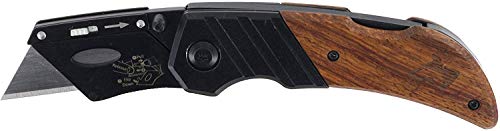 Husky 97211 Wood Handle Folding Utility Knife
|
6.5/10 | Buy | ||
 FLISSA Titanium Utility Knife with SK2M Blades
|
6.2/10 | Buy | ||
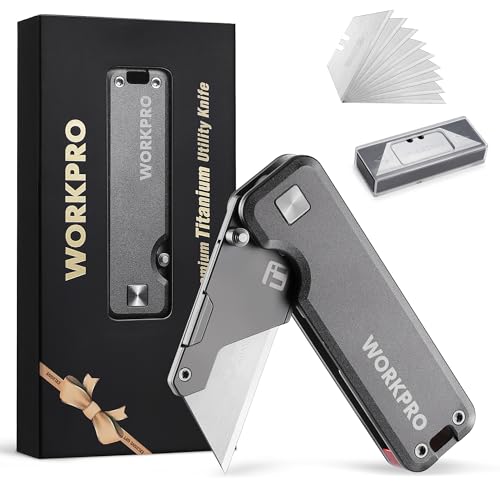 WORKPRO Titanium Utility Knife with Quick-Change Blades
|
6.1/10 | Buy |
Milwaukee FASTBACK 4" Folding Utility Knife
A compact 5-in-1 utility knife combining a partially serrated stainless steel blade with integrated screwdriver bits and bottle opener. Designed for tradespeople and DIY users who need multiple tools in one pocket-sized package.
Pros
- Multiple built-in tools eliminate need for separate pocket items
- Stainless steel blade with partial serration handles cutting and detail work
- Wire belt clip designed to reduce pocket tearing during regular use
- Reversible double-ended screwdriver bit system increases versatility
Cons
- No verified buyer reviews available to assess real-world durability and performance
- Compact size may limit cutting leverage compared to full-sized utility knives
- Multi-function design means each tool is simplified rather than specialized
DeWalt Retractable Utility Knife
DeWalt's retractable utility knife is a straightforward tool for general cutting tasks. The compact design and established DeWalt brand reputation make it a solid choice for DIY users and professionals who need reliable blade control.
Pros
- Retractable blade design for safety when not in use
- DeWalt brand reliability and durability reputation
- Lightweight at 0.44 pounds for extended hand use
- Multi-color option available
Cons
- No detailed specifications provided on blade type or locking mechanism
- Zero verified customer reviews to assess real-world performance
- Limited product information prevents full feature assessment
DeWalt Atomic Compact Folding Utility Knife
DeWalt's Atomic series delivers a compact utility knife with one-handed push-and-flip operation and a secure blade lock designed to minimize accidental releases. The 30% smaller footprint makes it ideal for tight workspaces, though the lack of verified buyer feedback limits real-world performance insights.
Pros
- Smooth one-handed operation with push-and-flip mechanism
- Significantly more compact than standard utility knives, fitting easily in pockets or tool belts
- Secure blade lock and quick-change lever minimize safety risks
- Fast blade replacement without tools required
Cons
- No verified buyer reviews available to confirm real-world durability and performance
- Limited information on blade compatibility or replacement blade availability
- Compact size may feel cramped for users with larger hands during extended use
Klein Tools 44307 Flickblade 4-Inch Folding Utility Knife
A compact utility knife designed for daily carry with dual locking blade positions and tool-free blade swaps. The 4-inch closed size fits easily in a pocket, making it practical for professionals and DIY users who need quick access to a sharp blade.
Pros
- Pocket-friendly dimensions at 4 inches closed, 6 inches open
- Fast tool-free blade replacement system
- Two locking angle options accommodate different cutting tasks
- Steel belt clip securely fastens to pocket or belt
- Smooth side button operation for easy folding and opening
Cons
- No verified buyer reviews available to assess real-world durability claims
- Orange color may be less discreet for certain work environments
- Lightweight design (0.25 lbs) may feel less substantial to some users
Fiskars Pro Retractable Folding Utility Knife
A full-metal folding box cutter with Fiskars' CarbonMax blade that lasts up to 24 times longer than standard blades. The dual-lock safety system and one-handed design make it reliable for jobsite work, though blade replacement isn't covered under warranty.
Pros
- Extended blade life reduces replacement frequency and total cost of ownership
- Full-metal body and dual-lock mechanism provide durability and secure handling
- Lightweight at 0.39 pounds with folding design ideal for tool belts and EDC
- One-handed operation speeds up cutting tasks in tight spaces or while holding materials
Cons
- Limited lifetime warranty explicitly excludes blade replacement, a consumable part
- No customer reviews available to validate real-world performance and longevity claims
- Dual-lock system adds complexity compared to simpler utility knife designs
WORKPRO 2-in-1 Folding Utility Knife with Quick-Change
A dual-purpose folding knife that converts between utility and pocket configurations, featuring a quick-change blade system and liner lock for secure operation. Best suited for users who need a compact, multipurpose cutting tool for cardboard, boxes, and general outdoor tasks.
Pros
- 2-in-1 design converts between utility and pocket knife formats for versatility
- Quick-change blade mechanism allows safe, tool-free blade swaps
- Liner lock secures blade firmly during use to prevent slipping
- Includes 10 extra SK5 blades and works with standard utility blades
- Lightweight and compact with belt clip for convenient carry
Cons
- No verified buyer reviews available to assess real-world durability and performance
- Limited information on blade steel quality beyond SK5 specification
- 8-inch length may feel bulky in a pocket for extended wear despite the lightweight design
REXBETI 2-Pack Utility Knife with 18 Blades
A practical two-knife set combining retractable and folding designs with SK5 steel blades and onboard blade storage. Well-suited for frequent cutters in home, office, and warehouse settings who want a reliable backup knife and ample blade supply.
Pros
- Generous blade supply reduces frequent repurchasing for regular users
- Combination of retractable and folding designs covers different cutting scenarios
- Built-in blade storage keeps spare blades accessible on the knife itself
- Quick-change mechanism speeds up blade swaps during repetitive work
- Ergonomic rubber grip provides stability for both light and heavy-duty tasks
Cons
- No verified customer reviews available to validate durability claims or real-world performance
- Heavy marketing language around blade sharpness ('5X sharper') not independently confirmed
- Two-knife set may be unnecessary for users who prefer a single multipurpose tool
Husky 97211 Wood Handle Folding Utility Knife
A budget-friendly folding utility knife with a wooden handle and steel accents, designed for comfort and everyday carry. Comes with one disposable reversible blade and includes a belt clip for secure pocket storage.
Pros
- Ergonomic shaft design minimizes hand fatigue during extended use
- Reversible blade extends usability before replacement needed
- Secure belt clip prevents accidental loss or dropping
- Folding design provides safety when stored
Cons
- No verified buyer reviews available to assess real-world durability and performance
- Only one blade included, additional replacements must be purchased separately
- Limited feedback on blade sharpness retention or cutting effectiveness
FLISSA Titanium Utility Knife with SK2M Blades
A lightweight all-metal folding box cutter built with titanium and CNC precision, designed for cardboard, drywall, carpet, and general utility cutting. Ships with 10 extra double-use SK2M blades that claim 3X longer life than standard alternatives, plus ergonomic matting and gift-ready packaging.
Pros
- Long-lasting SK2M blades reduce frequent replacement needs
- Compact, lightweight design improves portability and comfort during extended use
- Quick-change blade system eliminates friction during tool changes
- Comes with 10 spare blades, providing good immediate value
- Sleek CNC finish and premium packaging make it suitable as a gift
Cons
- No verified buyer reviews yet to confirm real-world durability claims
- 4.4 rating appears to reflect brand/listing metrics rather than actual customer feedback
- Limited information on blade compatibility or availability of replacement packs
WORKPRO Titanium Utility Knife with Quick-Change Blades
A lightweight titanium utility knife with 1.5X extended blade exposure and premium SK2M blades that outlast standard alternatives. Designed for precision cutting across cardboard, drywall, carpet, and leather, with ergonomic construction and 10 replacement blades included.
Pros
- SK2M blades offer significantly longer lifespan than standard utility knife blades
- 1.5X extended blade exposure provides greater cutting efficiency and range
- Lightweight titanium design improves portability without sacrificing strength
- Quick-release mechanism speeds up blade changes
- Includes substantial blade supply with 10 extras for extended use
Cons
- No verified buyer reviews available to confirm real-world performance and durability claims
- Premium pricing positioning may exceed budget utility knife alternatives
- Extended blade exposure could pose increased safety risk if not handled carefully
Utility Knives Buying Guide
Utility knives look deceptively simple, but the details of how a blade deploys, locks, and replaces can completely change how useful a knife is in practice.
The sections below walk through the factors that matter most, so you can match the right design to your actual workflow rather than defaulting to whatever is cheapest on the shelf.
Whether you’re also stocking a dedicated workshop or just need a reliable everyday cutter, these criteria apply broadly.
Blade Deployment Mechanism

The single biggest fork in the utility knife world is how the blade comes out: retractable, folding, or fixed.
Retractable knives slide the blade forward via a thumb slider and are the classic choice for general-purpose use because the blade can be extended only as far as needed and stays protected when not in use.
Folding utility knives, which flip open like a pocket knife, are faster to deploy one-handed and tend to be more comfortable in a pocket. Fixed blades, common in drywall and flooring work, prioritize rigidity but require a sheath.
Among folding designs, pay attention to whether the opening mechanism is a manual nail nick, a thumb stud, or a flip-open lever.
Flip mechanisms like the one on the Milwaukee FASTBACK are dramatically faster for repeated opening and closing on a busy job site. Retractable knives, meanwhile, vary in how smoothly the slider glides and whether it locks at multiple depth positions.
A slider that ratchets into two or three positions gives you more control over blade exposure, especially when cutting thin materials.
Subcompact folding designs, like the Klein Tools FLICKBLADE, are carving out a niche among electricians and tradespeople who need a knife that rides quietly in a shirt pocket or tool bag without bulk.
These compact options sacrifice some grip length but gain portability, making them a reasonable secondary knife even if you own a larger primary cutter.
Blade Locking and Safety
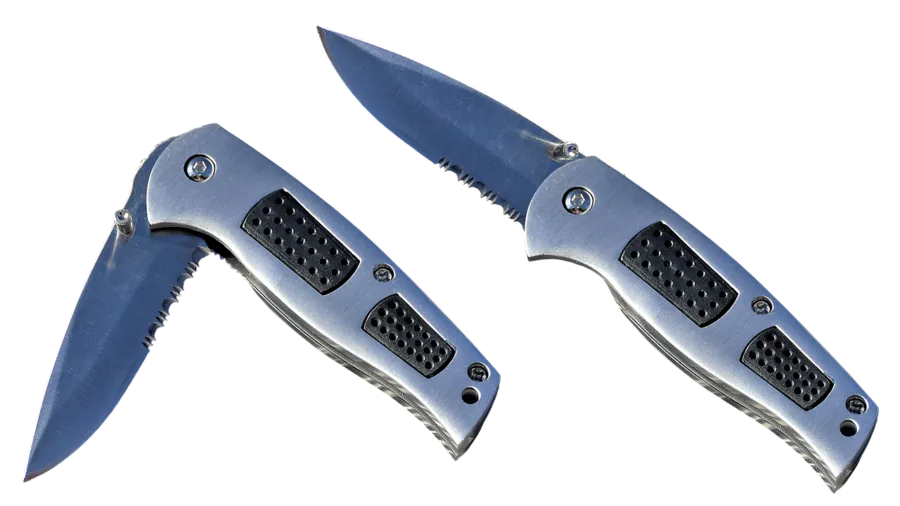
A utility knife that allows the blade to close unexpectedly under load is not just frustrating, it is genuinely dangerous.
Look for a positive lock mechanism that holds the blade open firmly during use and requires a deliberate action to release. Liner locks, lock-back mechanisms, and dual-lock systems each have their advocates in professional circles.
The critical thing is that the lock should not release under lateral pressure or vibration while cutting.
Retractable knives should hold their blade extension position without creeping back during a cut. Cheaper sliders often loosen over time and allow the blade to retract mid-stroke, which ruins cuts and creates a pinch hazard.
Models with a screw-tensioned or spring-detent slider mechanism tend to hold their position more reliably across thousands of cycles.
The Fiskars Pro uses a dual-lock system designed specifically to address this problem, and user feedback consistently points to it as one of the more reliable retractable locks in the mid-range segment.
For anyone using a utility knife in a fast-paced environment, auto-retract or automatic-close features add a meaningful safety margin.
These mechanisms close the blade when grip pressure is released, reducing the chance of an exposed blade sitting on a work surface.
They do add mechanical complexity, so weigh convenience against long-term reliability based on how heavily you intend to use the knife.
Handle Material and Ergonomics
Handle material affects grip security, durability, and weight in ways that become very noticeable after a long workday.
Glass-filled nylon and fiber-reinforced plastic handles are the industry standard for mid-range knives: they are light, impact-resistant, and provide reasonable grip even with work gloves on.
Metal handles, including aluminum alloys and titanium, are increasingly popular in premium folding designs because of their premium feel and resistance to crushing or warping, though they can become slippery when wet without textured inserts.
Wood handles, like the one on the Husky 97211, have a classic appeal and feel warm and grippy in the hand, but they are more susceptible to moisture and splitting over time.
For occasional home use, the feel of a wood handle is perfectly practical. For daily professional use in varied conditions, a textured polymer or metal handle is the more durable long-term choice.
Ergonomics go beyond material. Look for a handle long enough to accommodate a full four-finger grip, which reduces hand fatigue during extended cutting sessions. Contoured handles with finger grooves help maintain consistent hand position.
Belt clips, whether integrated or bolt-on, add real convenience for trades workers who need the knife accessible without digging through a tool bag, much like ensuring your other hand tools are within reach on a well-organized garage workbench.
Blade Change System
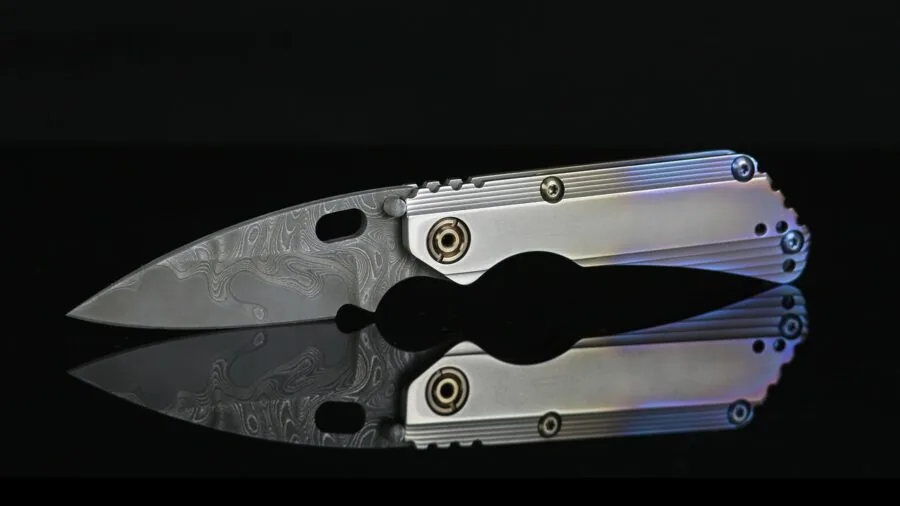
Dull blades are the leading cause of poor cuts and increased hand strain.
A utility knife that makes blade changes fast and tool-free will actually get its blade swapped when it needs to be, rather than when the user finally loses patience.
Quick-change systems that allow blade replacement in a few seconds without any tool are the gold standard for professional use.
Tooled systems, which require a screwdriver to open the body and swap blades, are slower but can be more secure against accidental opening.
Onboard blade storage is a major quality-of-life feature. Having spare blades stored in the handle itself means you are never stranded mid-job with a dull blade and no replacement within reach.
The Milwaukee FASTBACK and REXBETI designs both incorporate blade storage directly into the handle, a feature that buyers consistently call out as one of the most practically useful details.
The REXBETI 2-Pack even includes 18 blades out of the box, which is a genuinely generous blade-to-knife ratio for the price.
Blade compatibility matters too. Most utility knives accept standard trapezoidal blades, which are widely available and inexpensive. Some specialty designs use proprietary blades or thicker stock blades that offer greater durability but can be harder to source in bulk.
If you go through blades quickly, stick with a knife that accepts standard replacement blades to keep ongoing costs manageable.
Build Quality and Durability

Utility knives take a beating. They get dropped on concrete, left in hot trucks, submerged in tool bags, and occasionally used for tasks that are technically outside their design brief.
Build quality determines how gracefully a knife ages under these conditions. Look at how tightly the body halves mate together: excessive play between the two sides of a folding knife body suggests loose tolerances that will only worsen with use.
Pivot screws and blade retention mechanisms should feel snug without binding.
CNC-machined metal bodies represent the premium tier of utility knife construction.
The FLISSA Advanced Titanium and WORKPRO Premium Titanium models in our list are examples of this category: their unibody aluminum or titanium construction eliminates the seam between two halves entirely, resulting in a rigid, rattle-free knife.
These are tools that appeal to buyers who want something that functions as well as it looks, and that holds its value over years of use.
For most trades and home applications, however, high-quality glass-filled nylon with metal internal components delivers the best balance of durability and value.
The DEWALT Atomic and WORKPRO 2-in-1 are good examples of this construction philosophy: they are not trying to be luxury items, but they are built to withstand the realities of daily job site use without failing at inopportune moments.
Matching build quality to your actual use intensity is a more rational approach than always defaulting to the most expensive option, just as you would size up a socket set to match your actual wrenching needs.
Portability and Carry Options

How you carry a utility knife matters almost as much as how it cuts. A knife that lives permanently in a tool bag gets used less often than one that clips to a pocket or belt.
Pocket clips have become nearly standard on folding utility knives in the mid and upper price range, and the best clips grip firmly enough to stay put when you crouch or bend without being so stiff that they damage pocket fabric over time.
Weight is a related concern, particularly for tradespersons who carry a full complement of tools all day. A titanium handle knife is lighter than a comparable steel-body design, which compounds meaningfully when you are already wearing a loaded tool belt.
Compact designs like the Klein Tools FLICKBLADE are designed explicitly for minimal carry weight and clip-ready portability, accepting a slightly smaller handle in exchange for disappearing into a shirt pocket.
For home users who grab a utility knife only occasionally, portability is less critical than for daily professional users.
But even at home, a knife that is easy to locate and quick to deploy encourages safe habits: rather than reaching for a steak knife or struggling with scissors, you naturally grab the right tool.
That is ultimately the best argument for owning a quality utility knife in the first place.
Why You Should Trust Us
ProductFind is an independent review publication. We have no manufacturing relationships and do not sell any of the products we cover.
Every recommendation on this page was developed through our standard research process: we analyze published specifications, synthesize expert review consensus from professional tool publications and trade-focused outlets, and evaluate verified buyer feedback to build a complete picture of each product’s real-world performance.
We do not conduct our own product trials; our evaluations are grounded in research, published data, expert review consensus, and verified buyer feedback.
Each product in this guide was scored using our PF Score system, a consistent 0 to 10 rating scale applied across the same criteria for every knife: blade deployment reliability, locking mechanism security, handle ergonomics, blade change convenience, build quality, and overall value relative to price.
PF Scores allow direct comparison across very different price points and design philosophies. A score of 7.0 or above represents a product we consider a confident recommendation for most buyers in a given use case.
ProductFind may earn a commission when you purchase through links in this article. That affiliate relationship has no bearing on which products are included, how they are ranked, or what PF Score they receive.
Our editorial recommendations are determined by research quality, not by commission rates. We update our recommendations when new products enter the market or when sustained user feedback reveals a meaningful shift in a product’s real-world performance.
Final Thoughts
The ten utility knives in this guide cover a wide spectrum of needs, from a compact subcompact folder for an electrician’s shirt pocket to a premium titanium EDC piece for someone who wants a refined everyday carry alongside their other gear.
Here is how we assign the key honors based on our research and PF Scores:
- Best Overall: Milwaukee FASTBACK Folding Utility Knife earns the top position with the highest PF Score in the group, combining a fast one-hand flip-open mechanism, metal construction, onboard blade storage, and a reputation that holds up across expert reviews and verified professional buyer feedback alike.
- Best Retractable Utility Knife: DEWALT Retractable Utility Knife scores near the top of the list and represents the strongest retractable option here, offering DEWALT’s job site durability in a compact, carry-ready form at a budget-accessible price.
- Best Value for Everyday Use: DEWALT Atomic Compact Series Push and Flip Folding Utility Knife punches well above its price tier, delivering a thoughtful push-and-flip deployment and solid lock-back security for buyers who want DEWALT reliability without spending much at all.
- Best Compact Folding Knife: Klein Tools FLICKBLADE Folding Utility Knife is the standout choice for tradespeople who prioritize minimal carry bulk, with a subcompact profile, dual locking positions, and quick-change carbon steel blades optimized for electrical and light construction work.
- Best for Home and Occasional Use: WORKPRO 2-in-1 Folding Knife/Utility Knife covers a broad range of household tasks with its dual-purpose design, belt clip, and generous blade bundle, making it a smart first utility knife for anyone who does not need a dedicated professional tool.
Whichever option fits your workflow, owning a quality utility knife is one of those practical investments that pays back every time you reach for it. Pair it with a well-stocked workspace and the right supporting hand tools, and routine cutting tasks stop being a chore.
Frequently Asked Questions
What is the difference between a folding and a retractable utility knife?
A folding utility knife opens like a pocket knife, with the blade swinging out from the handle and locking in the open position.
A retractable utility knife keeps the blade inside the handle body and slides it forward via a thumb slider. Folding designs tend to be faster to deploy one-handed and more comfortable in a pocket.
Retractable designs offer adjustable blade extension depth, which is useful when working with thin or delicate materials where you want minimal blade exposure. Both styles accept standard trapezoidal replacement blades.
How often should I change the blade in a utility knife?
More often than most people do. A dull blade requires more force to cut, which increases the risk of the blade slipping off the material and causing an injury.
As a general rule, swap the blade as soon as you notice it dragging, tearing rather than slicing cleanly, or requiring noticeably more effort than usual. For heavy daily use, this can mean changing blades every few hours.
For occasional home use, a single blade can last through many sessions. Blades are inexpensive, especially if you buy in bulk packs, so there is no good reason to push a dull blade past its useful life.
Are utility knives safe to carry in a pocket?
Yes, provided the knife has a secure locking mechanism and, ideally, a pocket clip to keep it stable.
A folding utility knife with a liner lock or lock-back mechanism is safe for pocket carry because the blade cannot open accidentally under normal conditions. Retractable designs with the blade fully retracted are also safe in a pocket.
Avoid carrying any knife with a blade exposed, even partially.
A pocket clip that positions the knife consistently in the pocket is a meaningful safety feature because it prevents the knife from shifting around and potentially opening against pocket seams or other gear.
Can I use a utility knife for precision cutting tasks?
Standard utility knives are designed for general-purpose cutting and are not optimized for fine detail work. The trapezoidal blade is wide and relatively thick compared to craft or hobby knives.
That said, a sharp blade on a quality utility knife can handle clean cuts through cardboard, carpet, vinyl flooring, drywall, foam insulation, and similar materials with good precision if you score carefully.
For intricate cuts in thin materials like paper, leather, or model-making substrates, a purpose-built precision knife with a narrower blade profile is a better choice.
Utility knives shine in the middle ground: materials too tough for scissors, but not requiring the fine control of specialized cutting tools.
What should I look for in a utility knife if I work in construction or trades?
Prioritize fast blade deployment, a secure lock mechanism, onboard blade storage, and a durable handle that can withstand being dropped on hard surfaces. A belt clip or ring is important for quick access without digging through a tool bag.
Tradespersons who use a utility knife repeatedly throughout the day benefit most from one-hand operation, since the other hand is often holding material. The Milwaukee FASTBACK consistently earns high marks from construction professionals for exactly these reasons.
You will also want a design that accepts widely available standard blades, so replacements are never a sourcing problem on a job site.
Is a titanium utility knife worth the premium price?
For most practical cutting tasks, a well-built polymer or glass-filled nylon utility knife performs comparably to a titanium model in terms of cut quality, since the blade is the same regardless of handle material.
Where titanium handles justify the premium is in long-term durability, weight reduction relative to steel, corrosion resistance, and the tactile quality of the tool in hand.
If you use a utility knife daily in demanding conditions and want a tool that will last many years without degrading, a CNC-machined metal design is a reasonable investment.
For occasional home use or budget-focused buyers, a mid-range polymer-handle knife delivers excellent value.
Think of it the same way you would choosing between entry-level and professional-grade hand tools: the right choice depends on how hard and how often you actually use it.
About the author
Steven is a reviewer and writer for ProductFind who specializes in Hand Tools. Steven evaluates products through independent research: specifications, expert review consensus, and verified buyer feedback, and rates each one on the PF Score. Steven focuses on helping readers pick the right hand tool for their needs and budget.