The 9 Best Baby Activity Cubes
From Montessori wooden cubes to electronic learning centers, finding the right baby activity cube depends on age, play style, and safety needs. Here are the top picks.
 By Luke Ryan
Updated July 23, 2026
By Luke Ryan
Updated July 23, 2026

Baby activity cubes pack a surprising amount of developmental value into a single toy.
From shape sorting and bead mazes to electronic lights and sound, these multi-sided play centers are designed to grow alongside your child during the critical first two years.
Pediatric occupational therapists and child development researchers consistently highlight open-ended, multi-sensory toys as key tools for building fine motor skills, cause-and-effect reasoning, and hand-eye coordination.
Whether you are shopping for a first birthday gift or looking for a nursery-room staple that will hold a toddler’s attention for more than five minutes, the range of options out there can feel overwhelming.
At ProductFind, we cut through the noise by analyzing manufacturer specifications, synthesizing expert review consensus from child development specialists and parent testers, and weighing verified buyer feedback across thousands of real purchases.
Our picks span wooden Montessori-style cubes, electronic learning centers from established brands like VTech and LeapFrog, and value-packed sets from WOODMAM, TOOKYLAND, Joyreal, Play22, and TOYVENTIVE. Each pick below represents the strongest option in its category based on our research.
Scroll down to see our full ranked list.
| Award | Product | PF Score About PF ScoreThe PF Score is our own rating from 0 to 10, based on performance, design and build, ease of use, and value. It reflects independent research and is never influenced by manufacturers, retailers, or affiliate commissions. Learn more › | Price | |
|---|---|---|---|---|
| Best Overall |
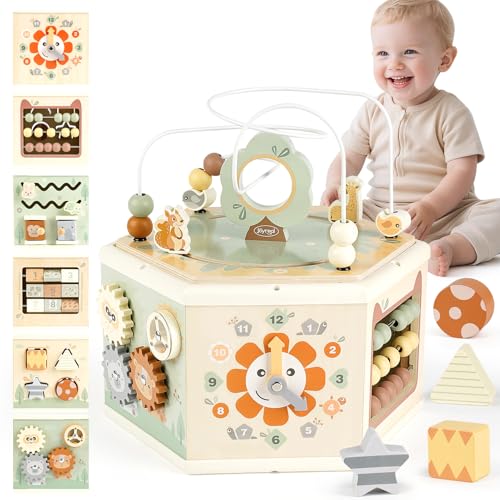 Joyreal 11-in-1 Wooden Activity Cube
|
8.7/10 | Buy | |
| Editor's Pick |
 LeapFrog Touch and Learn Wooden Activity Cube
|
8.6/10 | Buy | |
| Best Value |
 WOODMAM 9-in-1 Farm Activity Cube with Magnetic Trains
|
8.4/10 | Buy | |
| Top Rated |
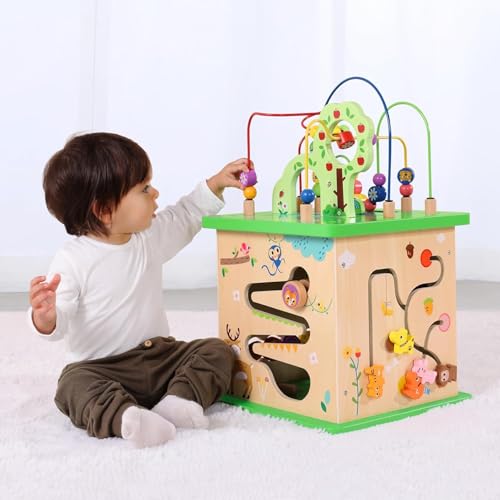 TOOKYLAND 5-in-1 Wooden Activity Cube 23 inches
|
8.1/10 | Buy | |
 WOODMAM 7-in-1 Wooden Activity Cube for Toddlers
|
7.9/10 | Buy | ||
 VTech Sort and Discover Activity Cube, Pink
|
7.8/10 | Buy | ||
 Play22 Wooden Activity Cube 6-in-1
|
7.2/10 | Buy | ||
 Toyventive Wooden Activity Cube for 1-Year-Olds
|
7.1/10 | Buy | ||
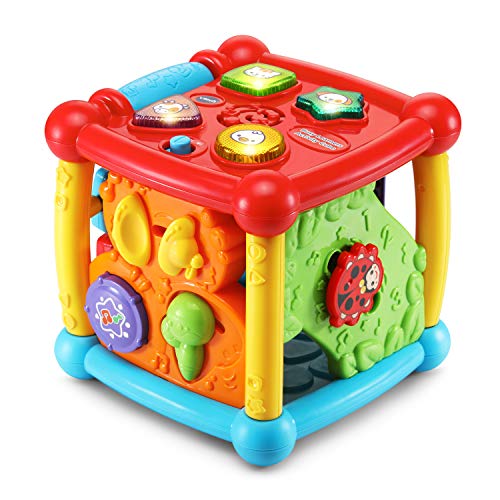 VTech Busy Learners Activity Cube
|
6.5/10 | Buy |
Joyreal 11-in-1 Wooden Activity Cube
A six-sided wooden activity cube combining 11 different learning activities like bead mazes, gears, and shape sorting into one compact toy. Designed for toddlers aged 1-4 with a focus on motor skills and early educational development through screen-free play.
Pros
- Multiple activities on one toy reduces clutter while maximizing engagement
- High-quality solid wood with smooth, polished edges and safe water-based paint coating
- Supports multiple developmental areas including shape recognition, counting, and motor skills
- Compact and space-saving with integrated storage via removable top
- CPC and ASTM F963 certified for safety assurance
Cons
- No verified customer reviews available to assess real-world durability or performance
- Small size (11.3 x 7.72 x 13.07 inches) may limit play for older toddlers approaching age 4
- No information on battery requirements or electronic components, if any activities use them
LeapFrog Touch and Learn Wooden Activity Cube
A five-sided wooden activity cube designed for infants and toddlers, featuring five musical animals that play different instruments and music styles when touched. The cube combines multiple hands-on activities like pushing, sliding, and spinning to develop motor skills across its surfaces.
Pros
- Made from ethically sourced FSC-certified wood
- Diverse tactile activities encourage fine and gross motor development
- Musical element adds engagement across different play styles
- Compact, manageable size for toddler hands
Cons
- Requires 2 AA batteries; included batteries are for demo use only, so ongoing replacement costs apply
- No verified buyer reviews available to assess real-world durability or long-term performance
- Limited information on sound volume levels or battery life expectations
WOODMAM 9-in-1 Farm Activity Cube with Magnetic Trains
This wooden activity cube packs nine games into one compact toy, from shape matching and bead mazes to magnetic train tracks, designed for toddlers 1-2 years old. The farm theme teaches colors, numbers, and animals while supporting fine motor skills through Montessori-aligned play.
Pros
- Versatile play with nine distinct activities keeps toddlers engaged across multiple skill areas
- Sturdy wooden construction with smooth edges and round corners designed for safety
- Compact size at 13.4x14.4 inches with substantial weight prevents easy tipping over
- Storage functionality lets you consolidate accessories and toy pieces into the cube itself
- Supports early learning of numbers, colors, shapes, and animal identification
Cons
- No verified customer reviews available yet to confirm real-world durability or assembly experience
- Nine different activities may overwhelm younger toddlers or require parental guidance to explore fully
- Limited information on magnetic train component quality and whether pieces stay securely attached during play
TOOKYLAND 5-in-1 Wooden Activity Cube 23 inches
A multi-sided wooden activity center designed for toddlers ages 2-3, featuring five different play stations including bead mazes, shape sorters, and animal-themed activities. Made from FSC-certified pine wood with non-toxic paint, it emphasizes motor skill and logic development through hands-on exploration.
Pros
- Five different activity types on one compact structure keeps toddlers engaged longer
- FSC-certified wood and non-toxic materials align with safety standards for young children
- Large size and sturdy build reduce risk of tipping or damage from typical toddler use
- Encourages development of multiple skill sets including logic, motor control, and imagination
Cons
- No verified customer reviews available to confirm real-world durability or assembly difficulty
- 23-inch height and 14.7-pound weight require dedicated floor space and may be challenging to move
- Premium positioning suggests higher price point compared to simpler activity cubes
WOODMAM 7-in-1 Wooden Activity Cube for Toddlers
A compact wooden activity cube combining seven developmental games (xylophone, bead maze, shape sorter, gears, sliding game, clock, stacking board) designed for babies 12-18 months. Built with chunky wooden pieces and water-based paint for safety, it offers screen-free engagement across fine motor skills, color recognition, and logical thinking.
Pros
- Multiple integrated activities prevent boredom and encourage extended play sessions
- Thoughtful safety design with larger chunky blocks and non-toxic materials suitable for oral exploration stage
- Modular layout (removable top, flippable base) maximizes compact storage and travel portability
- Addresses developmental milestones across fine motor, cognitive, and sensory domains
Cons
- Rating of 4.9 stars has zero verified customer reviews, limiting real-world feedback on durability and quality consistency
- Limited color option (green only) may not match all nursery aesthetics or buyer preferences
- No information provided on dimensions of individual activity components or whether activities have difficulty progression
VTech Sort and Discover Activity Cube, Pink
A five-sided activity cube designed for infants and toddlers ages 9 months to 3 years, packed with 75+ songs, sounds, and interactive features including shape sorting, piano keys, and rotating elements. Combines sensory engagement with fine motor skill development across multiple play modes.
Pros
- Multiple activity types encourage exploration and skill development across fine motor, hand-eye coordination, and sensory learning
- Rich audio library with 75+ sounds and phrases keeps engagement varied
- Compact size (9.6 x 9.3 x 8.7 inches) fits in playrooms without taking excessive space
- Batteries included, though replacements recommended for regular use
- Age-appropriate design spans nearly three years of developmental use
Cons
- No verified buyer reviews available to confirm real-world durability and long-term performance
- Requires 2 AA batteries with demo batteries included, adding ongoing operational costs
- Activity cube complexity may overwhelm younger infants at the 9-month entry point
Play22 Wooden Activity Cube 6-in-1
This wooden activity cube bundles six different play modes—bead maze, shape sorter, abacus, sliding shapes, spinning numbers, and stacking cups—into one compact toy. It targets developmental skills like fine motor control, color recognition, and early counting, making it suitable for toddlers around one year and up.
Pros
- Multiple activities reduce boredom and encourage longer play sessions
- Pre-assembled design means no setup required
- Supports early learning of colors, shapes, and numbers through tactile exploration
- Made with non-toxic materials safe for young children
- Removable bead maze adds flexibility to play configuration
Cons
- No verified buyer reviews available to confirm durability or long-term quality
- Limited weight and compact size may make it feel less substantial for the price point
- Some activities (spinning shapes, sliding shapes) lack specific detail on functionality
Toyventive Wooden Activity Cube for 1-Year-Olds
A compact wooden activity cube that combines five interactive play stations, bead maze, shape sorter, and abacus in one piece. Includes stacking cups and board book, making it a complete gift set for toddlers developing fine motor skills and early learning concepts.
Pros
- Five activities in one toy keeps toddlers engaged across multiple developmental skills
- Removable bead maze and compact design make storage and travel convenient
- Comes gift-ready with stacking cups and board book, no need for additional purchases
- Durable wooden construction with child-friendly finishes built to withstand frequent play
- Supports key developmental milestones like color recognition, shape matching, and coordination
Cons
- No verified buyer reviews available to assess real-world durability and longevity claims
- Weight specification appears to contain a data error, making actual portability unclear
- Limited information on whether the bead maze removes easily for independent play
VTech Busy Learners Activity Cube
A compact five-sided activity cube with 14 interactive features designed for infants and toddlers ages 6 months to 3 years. The toy combines tactile play, light-up buttons, motion sensors, and 25 songs to support early learning across colors, shapes, and animal recognition.
Pros
- Multiple learning modes teach animal names, sounds, shapes, and colors
- Motion sensor feature encourages physical development and exploration
- Adjustable volume and auto shut-off prevent overstimulation and battery drain
- Portable size suitable for travel and varied play spaces
- 4.7-star rating reflects positive parent reception
Cons
- No user reviews available to verify real-world durability or satisfaction
- Requires 2 AAA batteries (demo batteries included are limited use only)
- Limited to ages 6 months to 3 years, reducing long-term value
Baby Activity Cubes Buying Guide
Choosing the right activity cube comes down to matching the toy’s features, materials, and size to your child’s current developmental stage and your household’s priorities.
The guide below walks through the factors that matter most, based on what child development experts and experienced parents consistently flag as make-or-break criteria.
Age-Appropriate Activity Count and Complexity
More activities is not automatically better. A cube packed with eleven interactive panels can overstimulate a six-month-old who is just learning to grasp, while a simpler four-panel cube may bore an active eighteen-month-old who has mastered shape sorting.
Most cubes on the market target the twelve-to-thirty-six month window, but the sweet spot of complexity varies.
Look for cubes where each side offers a distinct type of interaction, such as bead mazes for tracking, shape sorters for spatial reasoning, sliding panels for cause-and-effect, and abacus-style beads for early counting.
The Joyreal 11-in-1 and the WOODMAM 9-in-1 Farm-Themed cube are clear examples of high activity counts done thoughtfully, with activities calibrated to early toddler abilities rather than simply stacked for marketing appeal.
If your child is closer to twelve months, prioritize cubes with large bead mazes and chunky shape sorters.
Older toddlers approaching two years benefit from cubes that include number recognition, letter panels, or more fine-motor-demanding features like spinning gears or latching doors.
Pairing an activity cube with simpler sensory toys, like quality baby rattles designed for early grasping, creates a well-rounded play environment that addresses multiple developmental milestones simultaneously.
Materials, Safety Standards, and Finish Quality
Baby toys end up in mouths, thrown across rooms, and chewed on relentlessly, so material integrity is non-negotiable. Wooden cubes should use solid hardwood or high-density MDF with non-toxic, water-based paints or natural bead stains.
Look for ASTM F963 and EN71 certifications, which indicate compliance with US and European toy safety standards respectively.
The bead maze wires on wooden cubes deserve particular scrutiny: thin or poorly secured wires can bend and create pinch points over time.
The Play22 Wooden Activity Cube and the TOOKYLAND 5-in-1 have been noted by verified buyers for their sturdy wire construction and smooth bead movement.
Electronic cubes from VTech and LeapFrog use durable ABS plastic that meets the same ASTM standards.
The trade-off is that plastic cubes tend to have sharper edges if dropped and cracked, while wooden cubes can splinter if the veneer is thin.
Check that all small parts (shape sorter pieces, stacking cups) are sized above the choking-hazard threshold for under-three toys. Corner rounding and absence of sharp protrusions should be visible in product images.
Reading through verified buyer reports often surfaces finish-quality concerns that specs alone will not reveal.
Physical Size and Stability
Activity cube footprint matters more than most parents realize until the toy arrives. A compact cube that tips over every time a baby leans on it defeats the purpose of a stable play station.
The TOOKYLAND 5-in-1 measures approximately 23 inches tall, which positions it at ideal height for a standing twelve-to-eighteen-month-old pulling up to play, but it requires more floor space than tabletop models.
Smaller cubes from VTech and WOODMAM’s 7-in-1 are better suited to high-chair trays, small apartments, or travel situations.
Weight is a secondary consideration: heavier wooden cubes are more stable but harder to move between rooms. If you plan to rotate the cube between a nursery and a living room play area, a lighter model is more practical.
Consider also whether the cube ships assembled or requires significant setup, since several larger wooden models require tool-free peg assembly that can take fifteen to twenty minutes.
Electronic vs. Wooden: Which Type Fits Your Approach?
The debate between screen-free wooden play and electronic learning toys is a real one among developmental specialists.
Electronic cubes from brands like LeapFrog and VTech add auditory reinforcement, which research suggests can strengthen vocabulary acquisition when the sounds are paired with physical actions.
The LeapFrog Touch and Learn Electronic Musical Light-Up cube uses animal themes and responsive lighting to connect touch input with reward feedback, a mechanic that supports cause-and-effect learning.
The downside is battery dependency and eventual obsolescence if firmware or sound chips fail.
Wooden Montessori-style cubes align with the principle that open-ended, self-directed play builds stronger intrinsic motivation. Without electronic prompts, children must generate their own feedback loop, which can deepen engagement for certain temperaments.
Many families find that owning one of each type, perhaps a budget wooden cube alongside a single electronic model, covers both philosophies without overloading the play area.
If you are building out a broader infant learning environment, cloth books for babies and soft baby books for sensory development complement wooden activity cubes well, adding tactile variety without electronic stimulation.
Bonus Accessories and Play Value

Several cubes in this category ship with meaningful bonus accessories that extend play value well beyond the cube itself. The WOODMAM 9-in-1 Farm-Themed cube includes magnetic train cars, and the WOODMAM 7-in-1 ships with a sorting and stacking board.
These additions are not gimmicks: stacking toys are among the most developmentally validated early-childhood activities, building spatial reasoning and patience. The TOYVENTIVE wooden cube bundles a board book and stacking cups, making it a particularly complete first-birthday gift set.
Evaluate whether bonus pieces are well-integrated into the cube’s design or simply loose additions that will be lost within a week.
Shape sorter pieces that store inside the cube, cups that nest inside a dedicated compartment, and train cars that attach magnetically are all signs of thoughtful product design.
Avoid cubes where bonus pieces have no designated home, since loose small parts create both clutter and choking hazard risk as children grow.
Value for Budget and Long-Term Use
Activity cubes span a wide price range. Budget-tier options like the VTech Busy Learners Activity Cube offer a solid entry point for families who want an electronic learning cube without a large upfront investment.
Mid-range wooden cubes from Play22 and TOYVENTIVE deliver significantly more activities and tactile variety at a moderate price.
Premium large-format cubes from TOOKYLAND and WOODMAM command higher prices but offer a play center that remains engaging for two to three years, which can lower the effective cost-per-month of ownership substantially.
Consider also resale value: solid wood cubes in good condition retain resale value on secondhand marketplaces far better than plastic electronic toys.
If you plan to use the cube for multiple children or expect to sell it after your child outgrows it, investing in a higher-quality wooden cube often makes more financial sense than it appears upfront.
As you set up a broader nursery play space, decisions about baby cribs and durable room furnishings follow a similar long-term value logic.
Why You Should Trust Us
ProductFind is an independent review publication. We do not sell products, fulfill orders, or manage warranties.
Every recommendation on this page is the result of structured research: we evaluate each model by analyzing manufacturer specifications, synthesizing expert review consensus from child development and toy safety sources, and weighing verified buyer feedback drawn from documented purchase records.
We do not conduct our own product trials; our evaluations are grounded in research, published data, expert review consensus, and verified buyer feedback.
Each product in this roundup is scored on our 0 to 10 PF Score scale, which reflects consistent criteria applied equally across all models: safety certification, build quality, activity count and developmental appropriateness, bonus value, and overall value for price.
The Joyreal 11-in-1 earned our highest PF Score in this category; the VTech Busy Learners cube earned the lowest, reflecting its narrower feature set rather than any safety or quality defect.
ProductFind may earn a commission when you purchase through links on this page. That affiliate relationship has no influence on our rankings, scores, or product selection. Products are chosen and ranked based on evaluated merit, not commission rates.
We assess each category from the reader’s perspective, balancing real-world utility against price and availability.
Final Thoughts
After researching every model in this roundup against consistent developmental, safety, and value criteria, here are our category-level verdicts. Each award reflects a distinct strength within the baby activity cube category.
- Best Overall: Joyreal Wooden Activity Cube 11-in-1 earns the top spot for packing the most developmentally varied, age-appropriate activities into a single well-built cube, backed by the highest PF Score in this roundup.
- Best Electronic Pick: LeapFrog Touch and Learn Electronic Musical Light-Up Wooden Activity Cube stands out for combining tactile wooden play with responsive audio-visual feedback, making it the strongest choice for families who want electronic reinforcement without sacrificing material quality.
- Best Large-Format Play Center: WOODMAM 9-in-1 Farm-Themed Wooden Play Center delivers the most comprehensive standing play station in this group, with a bonus magnetic train set that meaningfully extends its long-term play value.
- Best Budget Wooden Cube: WOODMAM Wooden 7-in-1 Activity Cube offers an impressive activity-per-dollar ratio at a budget-friendly price, making it an excellent first wooden cube for families not ready to commit to a premium model.
- Best First Birthday Gift Set: TOYVENTIVE Wooden Activity Cube earns this designation for its thoughtfully bundled accessories, including stacking cups and a board book, which make it one of the most complete gift packages in the category.
Whichever model you choose from this list, you are investing in a toy category with strong developmental backing.
Activity cubes are among the few baby toys that remain relevant across multiple growth stages, making them one of the more durable nursery purchases you can make.
For families building out a broader early-learning toy library, consider pairing your activity cube pick with a rotating selection of toy cars for developing motor play as your child moves toward the toddler years.
Frequently Asked Questions
What Age Is an Activity Cube Best For?
Most baby activity cubes are designed for children between six months and three years old, though the optimal engagement window is typically twelve to thirty months.
At six months, babies begin to bat and grasp at moving objects, so bead mazes and simple tactile panels become interesting. By twelve months, shape sorters and cause-and-effect panels (spinning, sliding, pushing) become the primary draw.
Activity counts above seven or eight panels are best suited to children fourteen months and older who have the attention span and dexterity to explore multiple sides of the cube in a single session.
Are Wooden or Plastic Activity Cubes Better?
Both materials have legitimate merits, and the better choice depends on your priorities. Wooden cubes are heavier and more stable, hold up well to rough play, and align with Montessori-style open-ended play principles. They also tend to retain resale value.
Plastic electronic cubes from brands like VTech and LeapFrog add audio-visual reinforcement that can support vocabulary development, and they are generally lighter and easier to wipe clean.
Many families find that owning one of each type, a wooden cube for tactile exploration and an electronic model for language reinforcement, covers both developmental bases without either toy becoming redundant.
How Many Activities Should a Good Activity Cube Have?
There is no universal ideal number, but five to nine distinct activities represent a strong developmental range for most toddlers.
Each activity type should target a different skill: bead mazes for visual tracking and fine motor control, shape sorters for spatial reasoning, abacus beads for early numeracy, sliding or spinning panels for cause-and-effect learning, and tactile textures for sensory exploration.
Cubes with eleven or more activities, like the Joyreal 11-in-1, are excellent for extended engagement but work best when each panel is genuinely distinct rather than a repeated variation of the same mechanic.
Are Activity Cubes Safe for Babies Under One Year?
Most activity cubes carry age recommendations starting at twelve months, though supervised use from around six months is common.
The primary safety consideration for younger babies is choking hazard: shape sorter pieces, removable stacking cups, and loose accessories must be kept out of reach until the child is old enough to use them appropriately.
Always check that the cube carries ASTM F963 certification for the US market. For pre-crawling babies, floor-level bead maze cubes used during supervised tummy time offer appropriate stimulation without the small-parts risk.
Always follow the manufacturer’s specific age guidance printed on the product.
Do Activity Cubes Help With Child Development?
Yes, when chosen appropriately for developmental stage. Child development research consistently links multi-sensory play objects with gains in fine motor skill, hand-eye coordination, spatial reasoning, and early problem-solving.
Shape sorting specifically has been associated with early STEM readiness, while bead mazes support bilateral coordination and visual tracking. Electronic cubes that pair touch input with audio output support early cause-and-effect understanding.
Activity cubes are not a substitute for caregiver interaction, but they are a well-supported addition to a balanced play environment. For further reading on developmentally appropriate infant toys, resources from the American Academy of Pediatrics offer solid evidence-based guidance.
What Is the Difference Between a Standard Activity Cube and a Large Play Center?
Standard activity cubes are tabletop or floor-level toys that a baby can reach while seated.
Large play centers, like the TOOKYLAND 5-in-1 at roughly 23 inches tall, are designed for standing play and function more like a dedicated play station than a portable toy.
Large-format cubes are better for children who are pulling to stand and beginning to walk, since the height encourages upright posture and supported balance practice.
They require more floor space and are less suited to small apartments or frequent room changes. Standard cubes offer more flexibility in placement and are generally easier to incorporate into an existing nursery setup without rearranging furniture.
About the author
Luke is a reviewer and writer for ProductFind who specializes in Baby Toys & Infant Development. Luke evaluates products through independent research: specifications, expert review consensus, and verified buyer feedback, and rates each one on the PF Score. Luke focuses on helping readers pick the right baby toys & infant development for their needs and budget.