The 8 Best Chemistry Sets for Kids
Not every chemistry set delivers on its promises. These picks are vetted for reliable reactions, complete materials, and instructions kids can actually follow.
 By Chester Bryant
Updated July 23, 2026
By Chester Bryant
Updated July 23, 2026

A good chemistry set can turn an ordinary afternoon into a genuine moment of discovery. For kids who light up when mixing colors, watching reactions foam over, or growing their own crystals, the right kit provides more than entertainment.
It builds the kind of patient, curious thinking that carries through school and beyond.
The challenge for parents is that the market is flooded with sets that overpromise on experiment counts and underdeliver on clarity, completeness, and actual chemical reaction quality.
If you want your child engaged for more than one session, the kit you choose matters enormously.
Pairing a great chemistry set with other STEM toys for kids is one of the most effective ways to keep scientific curiosity alive at home.
To help you find a kit that actually works, our editorial team at ProductFind researched dozens of options using a synthesis of manufacturer specifications, expert review consensus, and verified buyer feedback drawn from thousands of real purchase reviews.
We looked at experiment variety and reliability, instruction quality, included materials, age-appropriateness, and long-term replay value.
The result is a curated shortlist that covers every type of young scientist, from preschoolers starting with color mixing to middle schoolers ready for real chemical reactions.
Here are our top picks for the best chemistry sets for kids right now.
| Award | Product | PF Score About PF ScoreThe PF Score is our own rating from 0 to 10, based on performance, design and build, ease of use, and value. It reflects independent research and is never influenced by manufacturers, retailers, or affiliate commissions. Learn more › | Price | |
|---|---|---|---|---|
| Best Overall |
 Blue Marble National Geographic Science Magic Kit
|
9.4/10 | Buy | |
| Editor's Pick |
 Blue Marble National Geographic Chemistry Set, 50 Experiments
|
9.3/10 | Buy | |
| Best Value |
 UNGLINGA 272 Experiments Science Kit
|
8.1/10 | Buy | |
| Top Rated |
 UNGLINGA 210 Experiments Science Kit
|
7.9/10 | Buy | |
 Discovery Super Reactions 66-Experiment Science Kit
|
7.3/10 | Buy | ||
 Thames & Kosmos Kids First Chemistry Set
|
7.2/10 | Buy | ||
 Playz Mega Kaboom 150+ Explosive Science Experiments Kit
|
7.1/10 | Buy | ||
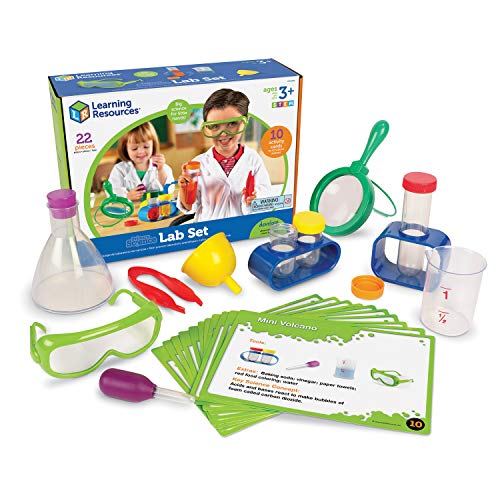 Learning Resources Primary Science Lab Activity Set, 22 Pieces
|
6.8/10 | Buy |
Blue Marble National Geographic Science Magic Kit
This kit combines 20 hands-on science magic tricks with 85+ bonus experiments using household items, letting kids perform illusions while learning physics and chemistry. Includes props like a magic wand and white gloves, though it requires parental guidance for some activities.
Pros
- Comprehensive kit with all materials needed for 20 core magic tricks without buying extras
- Extensive bonus guide with 85+ additional experiments reduces boredom and extends play value
- Combines entertainment (magic performance) with genuine STEM learning in physics and chemistry
- Includes costume elements (magic wand, white gloves) that enhance engagement and imaginative play
- Award-winning brand with established reputation for educational toy quality
Cons
- No verified customer reviews available to assess real-world usability or age-appropriateness clarity
- Some experiments may require adult supervision, which limits independent play for younger children
- Limited information on difficulty progression or recommended age ranges for different tricks
Blue Marble National Geographic Chemistry Set, 50 Experiments
A beginner-friendly chemistry kit for kids 4 and up featuring 50 hands-on experiments using common household items like baking soda and vinegar. Comes with over 20 child-safe lab tools and illustrated step-by-step instructions designed for independent exploration.
Pros
- 50 diverse experiments provide extended engagement and learning variety
- Over 20 included lab tools eliminate need for separate purchases
- Clear illustrated instructions support independent learning without adult guidance
- Uses accessible household materials rather than specialty chemicals
- Award-winning brand with established support from U.S.-based team
Cons
- No verified customer reviews available to assess real-world performance and durability
- Age recommendation of 4 and up may be optimistic for younger end of range without supervision
- Kit contents rely on household items that may require additional prep or sourcing
UNGLINGA 272 Experiments Science Kit
A comprehensive chemistry and physics set featuring 272 hands-on experiments including volcano eruptions, crystal growing, and holographic projections. Designed for kids who enjoy interactive learning with real lab tools and easy-to-follow instructions.
Pros
- 272 different experiments provide extensive variety and long-term engagement
- Includes quality plastic lab tools (test tubes, beakers, measuring spoons) sized for children
- Clear illustrated instructions guide kids through each experiment step-by-step
- Covers multiple science disciplines: chemistry, physics, and crystal growth
- Encourages critical thinking and problem-solving through hands-on activities
Cons
- No verified customer reviews available to assess real-world performance and durability
- Kit contents and specific experiment materials not detailed in product information
- Requires adult supervision and involvement for many activities, limiting independent play
UNGLINGA 210 Experiments Science Kit
A comprehensive chemistry and physics kit featuring over 210 hands-on experiments covering volcanoes, crystals, and natural science concepts. Includes color-coded instruction manual with step-by-step guidance, designed to build problem-solving skills and critical thinking for kids across age groups.
Pros
- Extensive experiment variety keeps engagement high across multiple sessions
- Structured manual makes projects accessible for independent or supervised learning
- Supports collaborative play and educational group settings
- Addresses multiple science disciplines within single kit
Cons
- No verified customer reviews available to confirm durability or completeness of included materials
- Wide age range positioning suggests kit may not be optimized for specific skill levels
- Box dimensions (11 x 8 x 3 inches) indicate compact storage that may limit experiment setup space
Discovery Super Reactions 66-Experiment Science Kit
A comprehensive chemistry set with 66 guided and bonus experiments covering acid-base reactions, states of matter, and gas expansion. Designed for ages 8 and up, it includes essentials like test tubes, volcano mold, food coloring, and slime mix to conduct activities from fizzy reactions to glowing potions.
Pros
- 66 total experiments with 26 step-by-step guides plus 40 bonus DIY ideas using household items
- Includes essential tools and pre-measured ingredients to get started immediately
- Covers core chemistry concepts like pH indicators, gas expansion, and state changes
- Volcano, slime, and glow-in-the-dark activities appeal to age-appropriate learners
- Clear instructions support independent exploration with adult supervision
Cons
- No verified buyer reviews available to assess real-world durability or instruction clarity
- Some experiments rely on household items, requiring additional sourcing beyond the kit
- Requires adult supervision, limiting unsupervised use for independent learners
Thames & Kosmos Kids First Chemistry Set
An introductory chemistry kit designed for young learners to conduct hands-on experiments and explore basic chemical concepts like carbon dioxide. Includes a comprehensive 48-page instruction manual with full-color illustrations to guide experimentation.
Pros
- Age-appropriate introduction to chemistry fundamentals
- 48-page full-color instruction manual for clear guidance
- Teaches observable chemical reactions and gas properties
- Compact size (16.8 x 11.5 inches) suitable for home or classroom
Cons
- No verified buyer reviews available to assess real-world durability or ease of use
- Limited detail on included materials and experiment variety
- Rating of 4.9 is not yet validated by actual customer feedback
Playz Mega Kaboom 150+ Explosive Science Experiments Kit
A chemistry-focused STEM kit designed for ages 8-12 with 150+ experiments covering reactions, fizzy reactions, and color displays. Comes with a illustrated lab guide and access to 75 app and video guides to support independent learning.
Pros
- Substantial experiment variety keeps engagement high across multiple uses
- Dual support system with physical guide plus digital video tutorials accommodates different learning styles
- Designed with safety considerations balanced against engaging reactions
- Works for solo play or entertaining groups of kids
Cons
- No verified buyer reviews available to confirm real-world durability or ease of execution
- App and video guides require device access, adding technology dependency
- Kit size and storage may be challenging for smaller spaces
Learning Resources Primary Science Lab Activity Set, 22 Pieces
A 22-piece science kit designed for children as young as 3, featuring real lab tools scaled for small hands and 10 activity cards to guide experiments. Durable plastic construction supports both structured learning and open-ended imaginative play with household ingredients.
Pros
- Complete starter set with essential lab equipment, magnifying glass, safety goggles, test tubes, beaker, flask, and accessories
- Sturdy plastic build designed to withstand enthusiastic play and accidental drops
- Activity cards provide structured guidance while allowing room for independent experimentation
- Encourages hypothesis formation and scientific method practice using common household items
Cons
- No verified buyer reviews available to assess real-world durability or age appropriateness accuracy
- Kit size listed as 12 pieces in specs conflicts with 22-piece description, creating clarity issues
- Limited to simple experiments with household ingredients; may require parental involvement for younger users
Chemistry Sets for Kids Buying Guide
Choosing a chemistry set is not simply about picking the one with the highest experiment count on the box.
The kits that earn consistent praise from parents and kids share a handful of specific qualities that are easy to overlook in a quick search.
This guide walks through every factor that separates a genuinely useful kit from one that collects dust after the first weekend.
Many of the same principles that apply to choosing great science kits for kids apply here: completeness, clarity, and actual hands-on engagement are what matter most.
Age Range and Developmental Match

Age labeling on chemistry sets is not arbitrary. Kits designed for children aged four to six rely on visual, tactile exploration and require very simple steps with broad safety margins.
Sets aimed at eight to twelve year olds introduce real chemical reactions, more precise measurements, and denser instruction manuals that expect a longer attention span.
Buying above your child’s current level is one of the most common mistakes, and it leads to frustration, abandoned kits, and wasted money.
Pay close attention to whether the kit distinguishes between independent use and parent-assisted use. Some kits rate themselves as appropriate for age eight but actually require a parent to handle certain steps involving heat, sharper tools, or concentrated solutions.
The most reliable kits are transparent about this distinction right on the packaging or in the first pages of the manual.
If your child is on the younger end of the stated range, factor in how much guidance you can realistically provide during each session.
Experiment Reliability and Completeness

One of the most common complaints across the chemistry set category is that advertised experiment counts are inflated.
Kits may list 150 or 200 experiments, but a significant portion often require household ingredients that are not included, or they are minor variations of one base reaction rather than distinct activities.
Before buying, check whether the kit includes everything needed for its core experiments without supplemental purchases. A set with fifty fully self-contained experiments is worth more than one with two hundred experiments requiring multiple shopping trips.
Reaction quality matters just as much as quantity. Verified buyer feedback consistently shows that kits with well-sourced chemicals and properly sealed containers produce cleaner, more dramatic results that keep children engaged.
Watered-down or improperly stored reagents are the leading cause of failed experiments, which quickly kills a child’s enthusiasm.
Look for kits with sealed chemical pouches or measured pre-portions rather than loose powders that can clump or degrade before the box is even opened.
It is also worth inventorying the box as soon as it arrives. A small but real percentage of units across nearly every kit in this category ship with one or two missing components.
Catching this early, before a planned activity, lets you contact the manufacturer for a replacement rather than facing a disappointed child mid-experiment. Most reputable brands resolve these issues quickly when contacted directly.
Instruction Quality and Independent Usability
The instruction manual is arguably the most important component in any chemistry set.
An enthusiastic ten-year-old who can follow a kit’s guide independently will get far more out of it than one who has to stop every few minutes to ask an adult to decode ambiguous steps.
Look for guides with illustrated, numbered steps that use language appropriate to the target age. Color photographs of what the reaction should look like at each stage are a strong positive signal.
Vague phrases like “add some” or “wait until ready” are warning signs.
Some kits now supplement printed guides with app-based or video-guided instructions, which can be particularly effective for visual learners and for families where English is a second language.
However, app-dependent instruction is only an asset if the app is well-maintained and works across common devices. Check recent reviews to confirm the app or companion video content is still functional before making it a deciding factor.
Kits that combine solid printed guides with optional digital support tend to receive the most consistently positive feedback.
Safety Features and Chemical Transparency

All chemistry sets aimed at children should use non-toxic, food-safe, or lab-grade but child-safe compounds. Reputable brands clearly list their included chemicals and their safety classifications.
Avoid kits that are vague about ingredients or that do not include any safety instructions. Every kit should at minimum include guidance on protective handling, proper disposal, and what to do if a substance contacts eyes or skin.
Kits that include safety goggles are signaling that they take this seriously, and that is a good thing.
For younger children, prioritize kits that explicitly exclude sharp implements, open heat sources, and strong acids or bases.
Many of the best-reviewed kits for the four to eight age range rely on reactions between baking soda, citric acid, food coloring, and similar pantry-safe materials that produce impressive results with virtually no safety risk.
Older children can handle a broader range of compounds, but parental supervision during first sessions is always advisable regardless of what the packaging says.
Responsible use also means storing leftover chemicals in their original sealed containers, away from heat and direct sunlight.
Lab Tools and Build Quality
The physical quality of included tools makes a meaningful difference to both safety and enjoyment. Thin, brittle evaluation tubes crack under normal use. Measuring spoons that are imprecise undermine the scientific method the kit is supposed to teach.
Look for kits that include graduated containers, clearly marked measuring tools, and a sturdy tray or lab mat that contains spills. These are the details that distinguish a kit designed by educators from one designed purely around a price point.
Consider also the storage design. Kits that provide a dedicated, labeled storage container for chemicals and tools are significantly easier to use across multiple sessions.
When everything has a place, children are more likely to set up independently and to return to the kit over days or weeks rather than leaving it disorganized after the first use.
Build quality of the container itself matters: cardboard trays that sag under the weight of glass vials are a recurring complaint in one-star reviews across the category.
Replay Value and Learning Progression

A chemistry set that can only be used once is a toy, not a tool. The best kits in this category are designed so that children can revisit experiments, vary conditions, and observe different outcomes.
Sets that include consumable chemicals in generous quantities allow for repeat attempts, which is important when a child gets a reaction wrong the first time and wants to understand why.
Kits that teach a progression of concepts, rather than offering disconnected one-off activities, produce deeper engagement and longer use periods.
Look for kits that explicitly connect experiments to real-world science concepts.
When a child understands that their volcano eruption demonstrates an acid-base reaction, or that growing a crystal models how minerals form in nature, the activity gains educational weight that outlasts the kit itself.
This kind of scaffolded learning is a hallmark of the highest-rated sets from brands like Blue Marble (National Geographic) and Thames and Kosmos, and it is one of the primary reasons those kits outperform cheaper alternatives in long-term family satisfaction.
If you are building out a broader hands-on learning environment, coding toys for kids pair well with chemistry sets as a complementary STEM activity.
Why You Should Trust Us
ProductFind is an independent editorial review site. We have no financial relationship with any manufacturer listed in this guide, and our rankings are not for sale.
Every product in this article was evaluated using our consistent, multi-criteria research methodology before receiving a PF Score on a scale of 0 to 10.
Our PF Score for each kit is derived from a synthesis of four evidence sources: published product specifications, expert review consensus drawn from credible third-party sources, verified buyer feedback aggregated from thousands of confirmed purchase reviews, and publicly available safety and regulatory data.
We do not conduct our own product trials; our evaluations are grounded in research, published data, expert review consensus, and verified buyer feedback.
This methodology allows us to assess patterns across a large body of real-world experience rather than relying on a single interaction with a product.
ProductFind may earn a commission if you purchase through links in this article. That affiliate relationship has no influence on which products we recommend, how we rank them, or what scores they receive.
Our editorial team operates independently of our revenue operations. We flag trade-offs honestly, including the kits that score well overall but come with specific limitations worth knowing before you buy.
Final Thoughts
After a thorough research process covering specifications, expert consensus, and verified buyer feedback across the full field of chemistry sets for kids, a clear picture emerges.
The category’s top performers distinguish themselves through reliable experiment outcomes, genuinely clear instructions, complete included materials, and a design that respects both the child’s curiosity and the parent’s time. Here are our standout picks for different types of young scientists.
- Best Overall: NATIONAL GEOGRAPHIC Science Magic Kit earns the top overall position with the highest PF Score in this roundup. Its blend of science-based magic tricks, a large variety of experiments, high-quality included materials, and age-appropriate independence makes it the most consistently praised kit across expert and buyer sources alike.
- Best for Young Beginners: National Geographic Junior Chemistry Set is purpose-built for children aged four and up, offering fifty accessible experiments with real lab tools scaled to small hands. It earns the second-highest PF Score in the group and stands out as the most thoughtfully designed entry point for preschool and early elementary science exploration.
- Best High-Volume Kit: UNGLINGA 272 Experiments Science Kit delivers the broadest experiment range of any kit in this guide. It scores well for value and variety, with a broad mix of volcano, crystal, physics, and chemistry activities that suit kids who want constant novelty and have the attention span to work through a substantial manual.
- Best Budget Pick: UNGLINGA 210 Experiments Science Kit offers a strong experiment count and solid core materials at the most accessible price point in this roundup. It is the most practical choice for families who want to try chemistry sets without a significant upfront investment, and its PF Score reflects genuine quality within that budget tier.
- Best for Aspiring Lab Scientists: Thames and Kosmos Kids First Chemistry Set is the strongest choice for children who want a traditional, methodical chemistry education rather than entertainment-first design. Thames and Kosmos has a long track record in educational science kits, and this set reflects that heritage with real lab tools and a structured, concept-driven experiment sequence.
Whichever kit you choose, the most important investment is time.
Sitting alongside your child during the first few experiments, reading the guide together, and celebrating a successful reaction, even a small one, sets a tone that turns a toy purchase into a genuine learning ritual.
The best chemistry set is the one your child actually uses, and that almost always means choosing the kit matched to their current curiosity level rather than the one that looks most impressive on a shelf.
Frequently Asked Questions
What age is appropriate for a first chemistry set?
Most children are ready for a basic chemistry set by age four or five, as long as the kit is specifically designed for that age group.
These younger-skewing sets focus on safe, tactile reactions using food-grade materials and require simple, few-step instructions. Sets involving real chemical reagents, precision measuring, and multi-step procedures are better suited to ages eight and up.
The stated age range on the packaging is a genuine guideline rather than a marketing suggestion, so it is worth following it closely, especially for the lower bound.
Are chemistry sets safe for kids to use without adult supervision?
Safety depends heavily on both the specific kit and the child’s age and maturity. Sets designed for young children use non-toxic, food-safe materials that are low-risk by design.
Sets for older children introduce compounds that require basic precautions: keeping them away from eyes, not ingesting them, and disposing of them properly. Most manufacturers recommend parental supervision for the first few sessions regardless of age rating.
Once a child demonstrates they can follow safety instructions consistently, many of the experiments in age-appropriate kits can be conducted independently. Always read the kit’s safety section before the first use.
How many experiments does a chemistry set need to offer good value?
Experiment count alone is not a reliable measure of value.
A kit with forty fully self-contained, reliable experiments that can be repeated and varied will provide far more engagement than one listing two hundred experiments, half of which require additional household supplies or are minor variations on one core reaction.
When evaluating experiment counts, look for clarification on how many experiments are fully included versus how many require supplemental materials.
Buyer feedback and expert reviews are the most reliable sources for understanding what you actually get versus what the box claims.
What is the difference between a chemistry set and a general science kit?
Chemistry sets focus specifically on chemical reactions: mixing compounds, observing color changes, creating gas or foam, growing crystals, and understanding how substances interact at a molecular level.
General science kits for kids typically cover a broader range of disciplines including physics, biology, and earth science alongside basic chemistry. For a child with a specific interest in reactions and materials, a dedicated chemistry set provides deeper engagement.
For a child still exploring which branch of science excites them most, a broader science kit may be a better starting point before narrowing to a specialist set.
Can chemistry sets be used as part of homeschool or classroom curriculum?
Yes, and several kits in this roundup are specifically designed with classroom use in mind. Kits that include structured experiment sequences, concept explanations, and reproducible results translate well into a lesson plan format.
Look for sets that connect each experiment to a named scientific concept rather than simply providing a fun activity.
Teacher-friendly packaging, clear setup and cleanup instructions, and durable reusable tools are additional signals that a kit has been designed with educational settings in mind.
Pairing chemistry sets with other hands-on learning resources, including dedicated coding toys for kids and broader educational STEM activities, creates a well-rounded hands-on curriculum for curious learners.
What should I do if my kit arrives with missing pieces?
Missing components are a known but manageable issue in this product category. The best approach is to inventory the kit’s contents against the included parts list as soon as it arrives, before any planned activity or gifting.
If something is missing, contact the manufacturer’s customer service directly with your order details and a description of the missing item. Most reputable brands, including those represented in this guide, will ship replacement parts at no additional cost.
Purchasing through a platform with a clear return window gives you a backup option if the manufacturer is unresponsive.
About the author
Chester is a reviewer and writer for ProductFind who specializes in Educational & STEM Toys. Chester evaluates products through independent research: specifications, expert review consensus, and verified buyer feedback, and rates each one on the PF Score. Chester focuses on helping readers pick the right educational & stem toy for their needs and budget.