The 12 Best Flash Cards for Kids
From phonics progressions to number recognition, the right flash cards can make a real difference in early learning. Here are the top picks for toddlers and beyond.
 By Chester Bryant
Updated July 23, 2026
By Chester Bryant
Updated July 23, 2026

Flash cards have been a classroom staple for generations, and for good reason: they tap into active recall, one of the most well-supported techniques in learning science for helping children retain new information faster.
Whether a child is just starting to recognize letters, building a sight-word bank, or counting to 100, the right set of flash cards can turn a few minutes of screen-free practice into meaningful progress.
The challenge for parents and educators is that the market is crowded with options ranging from flimsily printed budget packs to thoughtfully sequenced, curriculum-aligned systems, and the differences matter more than the packaging suggests.
If you’re also exploring hands-on learning tools beyond flash cards, pairing them with STEM toys for kids can deepen conceptual understanding across subjects.
To cut through the noise, the ProductFind editorial team researched the full landscape of kids’ flash cards available this year, drawing on published product specifications, expert review consensus from early childhood educators and curriculum specialists, and verified buyer feedback from thousands of confirmed purchases.
The result is a curated list of 12 picks spanning budget-friendly multipacks to premium phonics progressions, each rated on our 0 to 10 PF Score. Scroll down to see our top-ranked flash cards for kids right now.

Quokka 260-Card Flashcard Set for Toddlers
A comprehensive flashcard collection with 260 cards across 16 learning categories designed for ages 1-8. Includes 30 educational games and color-coded organization, making it practical for both parents and educators managing multiple learning topics.
Pros
- Comprehensive scope with 16 learning categories reduces need for multiple product purchases
- Realistic imagery supports visual learning and recognition for young learners
- Color-coding system streamlines organization and activity selection for busy educators
- Bundled educational games provide structured learning beyond basic flashcard use
Cons
- 4.3 rating with zero verified reviews makes it difficult to assess real-world durability and classroom performance
- Wide age range claim (1-8 years) suggests the difficulty progression may not be well-tailored to specific age groups
- No information on card material quality or whether cards are laminated for durability with frequent handling

Learnworx 101 Advanced Flash Cards for Ages 3-5
A 101-card set designed specifically for toddlers ages 3-5, featuring vocabulary beyond basic first words like dolphin, guitar, and microwave. Each card includes fun facts and conversation prompts on the back to encourage learning and cognitive development.
Pros
- 101 double-sided cards with advanced vocabulary tailored for 3-5 year olds, not generic first words
- Large 5x3.7 inch cards with bright, detailed illustrations and clear fonts suitable for young learners
- Interactive reverse side with fun facts and questions to spark conversation between adult and child
- Sturdy box packaging with rounded card corners for safety and easy organization
- Covers diverse topics including animals, foods, vehicles, instruments, and US monuments
Cons
- 4.0 rating with zero verified reviews, making it difficult to assess real-world parent satisfaction
- No information provided about material quality or durability after extended use
- May require significant adult involvement to maximize learning benefit from the reverse-side questions

Learnworx Number Flash Cards 0-100
A comprehensive 101-card set designed for toddlers and preschoolers learning to count and recognize numbers. Features large 5x3.75 inch cards with animal and object illustrations on the reverse, durable construction with rounded corners for easy cleaning.
Pros
- Comprehensive set with 10x more cards than basic 1-10 decks, supporting extended number learning
- Large format with bright colors and detailed illustrations aids number recognition and visual learning
- Toddler-resistant construction with rounded edges and washable material withstands frequent use and spills
- Double-sided design combines numbers with visual representations for multi-sensory learning
Cons
- No verified buyer reviews available to confirm real-world performance and durability claims
- Binding type listed as 'Unknown' suggests potential quality or durability uncertainties
- Limited guidance on structured learning activities beyond general number matching games

Skillmatics Wordables Level 1 Flash Cards, 100 Words
A screen-free vocabulary deck using memory science techniques like visual associations and humor to help kids ages 8+ learn and retain 100 words. Compact double-sided cards make it portable for travel or classroom use.
Pros
- Uses established cognitive techniques like visual memory, word associations, and humor for better retention
- Compact and travel-ready format fits in backpacks for learning anywhere
- Screen-free tactile learning encourages focus and concentration
- Double-sided cards with playful visuals make vocabulary accessible and memorable
- Suitable as a gift for parents, teachers, and students
Cons
- Rated 4.3 stars with zero verified reviews, limiting real-world user feedback on effectiveness
- Level 1 designation suggests limited scope for older or advanced readers
- No information on durability or card material quality from product data

The Bambino Tree Alphabet Flash Cards, Uppercase & Lowercase
Color-coded flash cards designed around the SATPIN system, which introduces letters in five levels by frequency and difficulty. Includes separate uppercase and lowercase cards, thick durable stock, and eight built-in games to support preschool and kindergarten learning.
Pros
- Structured learning progression through the SATPIN system makes letter introduction systematic and digestible
- Durable thick cardstock withstands frequent daily use by young learners
- Multiple game options and teaching methods keep engagement high without requiring supplemental materials
- Separate cards for both cases allow flexible practice from letter matching to word building
Cons
- No verified buyer reviews available to confirm real-world durability or user satisfaction
- Limited information on how effective the SATPIN system is compared to other phonics approaches
- Card size and weight suggest potential storage challenges for families with limited space

The Bambino Tree Phonics Flash Cards, 62-Card Set
A 62-card phonics system organized into 4 difficulty levels and 20 phonogram families, designed to teach reading from kindergarten through second grade. The kit includes 480 words, 120 sentences, and sorting rings for interactive play, making phonetic instruction feel like a game rather than formal instruction.
Pros
- Structured progression from basic CVC words (Level 1) through trigraphs and silent letters (Level 4) aligns with typical phonics curricula
- Large cards (4.8 x 3.6 inches) with bright colors and pictures hold young learners' attention
- Includes multiple learning formats: flashcards, sorting activities, and sentence building reduce monotony
- Portable and self-contained with four sorting rings for organization
- Created with teacher input, addressing classroom-tested phonics sequences
Cons
- No verified customer reviews available to confirm real-world effectiveness or durability
- Four difficulty levels may require significant time commitment to complete the full sequence
- Limited to phonics instruction; does not address comprehension, vocabulary building, or reading fluency beyond sound recognition

Skillmatics 50 Double-Sided Flash Cards for Toddlers
A sturdy, plastic-free flash card set designed for toddlers 18 months to 4 years, covering letters, numbers, shapes, and colors with realistic imagery on thick, durable cards. Includes an activity guide with sorting games and educational activities to support early learning at home or in the classroom.
Pros
- Thick, durable material resists bending and wear from regular toddler handling
- Plastic-free and recyclable construction aligns with eco-conscious parenting
- Compact size (5.4 x 3.5 inches) fits naturally in small hands and storage
- Double-sided cards maximize learning content within a single deck
- Included activity guide provides structured learning games beyond basic flashcard use
Cons
- No verified customer reviews available to assess real-world durability or effectiveness
- Limited to foundational concepts; not suitable for children older than 4 years
- Relies on parent or educator facilitation for guided learning activities

BenBen 125-Card Double-Sided Flashcards for Toddlers
BenBen's flashcard set offers 250 images across 8 learning topics with durable, thick cardboard construction and water-resistant coating. The jumbo 5x3.5 inch cards and large fonts work well for toddlers and group settings, though the lack of verified reviews makes durability claims hard to validate.
Pros
- 250 images on 125 double-sided cards covering 8 foundational topics (alphabet, numbers, colors, animals, shapes, food, objects, outdoors)
- Extra thick, rounded-corner cardboard with BPA-free water-resistant coating resists bending and creasing
- Jumbo size (5x3.5 inches) with large fonts suits small hands and group lessons or homeschooling
- Real photographs rather than illustrations for vocabulary building
- Interactive questions on card reverses add engagement for young learners
Cons
- Zero verified buyer reviews despite 4.5-star rating, so durability and longevity claims cannot be independently confirmed
- Limited to beginner vocabulary topics; may feel redundant for children already past toddler stage
- No information on how interactive questions are structured or their complexity level for different age ranges
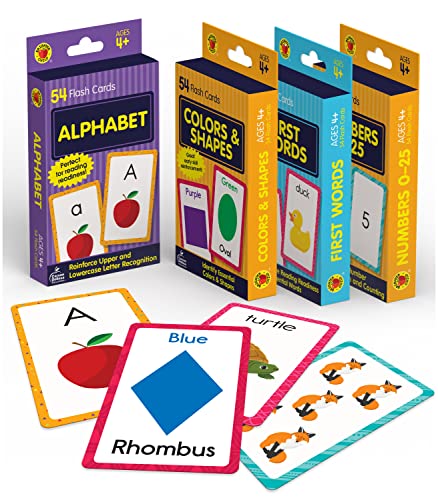
Carson Dellosa 216 Early Learning Flash Cards 4-Pack
A comprehensive flash card bundle covering sight words, alphabet, numbers 0-25, colors, and shapes designed for preschool and kindergarten learners. The set includes 216 total cards with double-sided illustrations and text, plus bonus phonics and math game resource cards.
Pros
- Comprehensive 4-pack bundle with 216 cards covering multiple foundational learning areas
- Double-sided cards with text on one side and illustrations on the other for visual learning reinforcement
- Glossy cardstock finish with rounded edges for durability and easy handling by young children
- Includes 5 bonus resource cards with additional phonics and math game activities
- Established 40+ year track record from Carson Dellosa Education
Cons
- 4.0 rating with zero verified reviews makes it difficult to assess real-world performance and parent satisfaction
- Card size (6.3 x 3.5 inches) may be challenging for very young toddlers under age 3 to manage independently
- No information provided about storage organization or carrying case for keeping 216 cards organized
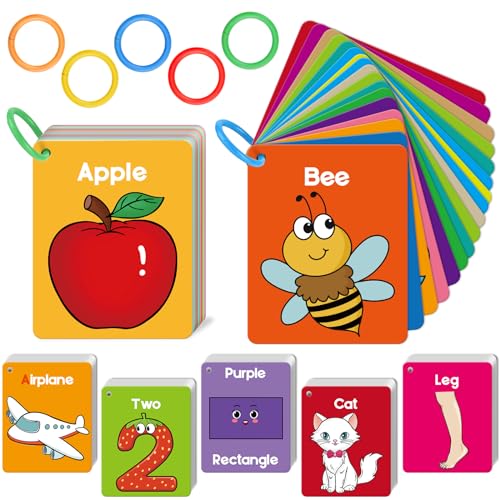
Torlam 60-Card Double-Sided Flashcard Set for Toddlers
A 60-card learning set covering alphabet, numbers, shapes, animals, and foundational vocabulary with vibrant illustrations designed for preschool readiness. The 4x5 inch cards are appropriately sized for small hands, and five included rings help organize cards by category.
Pros
- Comprehensive coverage of early learning topics including alphabet, numbers 1-10, shapes, colors, animals, body parts, and foods
- Large 4x5 inch format with rounded edges suitable for toddler grip and safety
- Double-sided design maximizes learning content per card
- Includes 5 color-coded rings for sorting and organization
- Vibrant, illustrated design intended to engage young learners
Cons
- No verified buyer reviews available to assess durability or actual learning effectiveness
- Card stock quality and thickness not specified, raising questions about long-term wear from frequent handling
- Limited information on whether accompanying rings are durable enough for daily classroom or home use

SpriteGru 50-Piece Double-Sided Flashcards
A comprehensive learning tool featuring 50 double-sided cards covering letters, numbers, animals, foods, shapes, and colors with 110 total words. Designed for toddlers and pre-K learners, the cards use thick, tear-resistant paper with non-toxic ink and come with three organizational rings for easy sorting.
Pros
- Comprehensive content across seven learning categories suitable for early childhood development
- Durable construction with thick paper and PET film resists tearing during frequent use
- Includes organizational rings, making sorting and storage convenient
- Compact size appropriate for toddler handling and portability
- Safe materials with BPA-free, non-toxic ink formulation
Cons
- No customer reviews available to validate real-world durability or parent satisfaction
- 5x4 inch card size may be challenging for children under 18 months with less developed motor control
- Limited information on how vocabulary content aligns with specific age ranges within the 4+ bracket

ZazzyKid 54 Double-Sided Flash Cards for Toddlers
A 54-card learning set covering alphabets, numbers, colors, and shapes designed for ages 2-5. Laminated cards with vibrant pictures and words provide durability for frequent classroom and home use.
Pros
- Comprehensive coverage: 26 alphabet cards plus 10 each of numbers, colors, and 8 shapes
- Durable lamination layer extends card lifespan with frequent handling
- Safe design with smooth edges appropriate for toddlers
- Versatile for multiple learning activities and interactive games
- Compact card size suitable for small hands
Cons
- No verified buyer reviews available to assess real-world durability or user experience
- Limited information on card quality consistency or potential lamination issues
- Rating reflects no customer feedback, so long-term performance is unconfirmed
Flash Cards for Kids Buying Guide
Choosing the right flash cards is less about finding the flashiest box and more about matching the set to your child’s current developmental stage, learning goals, and the way they actually engage with material.
The subsections below break down the criteria our research team weighted most heavily when comparing the options in this roundup.
Age Appropriateness and Developmental Alignment

The single biggest mistake buyers make is purchasing flash cards that are either too advanced or too simple for their child’s current stage.
A toddler working on color and shape recognition has very different needs from a kindergartner building a phonics foundation, and both differ from a first-grader solidifying sight words.
Cards designed with developmental milestones in mind will sequence content logically, introduce concepts at the right complexity, and use imagery scaled to young visual processing.
Look carefully at the stated age range on the packaging and cross-reference it with what your child is actually working on in preschool or early elementary.
Many sets in this roundup, including options from Quokka and learnworx, specify both an age range and a learning stage (pre-K, kindergarten, first grade), which gives you a more reliable guide than age alone.
If your child is between stages, opt for a set that covers the slightly lower level first to build confidence before advancing.
Card Construction and Durability

Young children are hard on materials. Cards that bend, tear, or lose their coating after a few sessions are frustrating for both kids and parents, and they quickly become unusable.
Thickness is the most important physical spec to evaluate: look for cards printed on board stock rather than standard cardstock, ideally with a laminated or coated finish that resists moisture and repeated handling.
Ring binding is another durability factor worth weighing.
Sets that come with metal or heavy-duty plastic rings, like several options from THE BAMBINO TREE and BenBen, stay organized during use and make it easier for small hands to flip through cards without dropping them.
Loose card decks can work well for games and sorting activities, but a bound format is generally more practical for structured daily practice sessions.
Also check card dimensions: larger cards (around 4 by 6 inches) tend to display images and text at a scale that is easier for toddlers to process.
Content Coverage and Curriculum Scope
Some sets focus on a single subject (alphabet recognition, numbers 1 to 100, phonics stages), while others bundle multiple subject areas into one pack.
Single-subject sets typically offer more depth: a dedicated phonics set like THE BAMBINO TREE Phonics Flash Cards covers 20 phonic stages with 62 cards, which is far more comprehensive than a multisubject pack that devotes 10 cards to phonics.
If your child has a specific learning gap, a focused set will address it more systematically.
Multisubject bundles like the Carson Dellosa 216-card four-pack or the Torlam cognitive set are excellent as a starting library when you are unsure of exactly where your child is or want to cover several bases at once.
These are especially useful for parents building a home learning kit alongside coding toys for kids and other educational tools.
The trade-off is that coverage per topic is shallower, so supplement with a dedicated set if a particular skill needs more drilling.
Visual Design and Image Quality

Illustration quality directly affects a young child’s engagement and their ability to connect a word or concept to a real-world referent.
Cards with cluttered backgrounds, overly abstract illustrations, or inconsistent art styles can confuse young learners rather than helping them build associations.
The best sets use clean, high-contrast images where the featured object is immediately recognizable, with a bold printed word beneath it in a legible font sized appropriately for early readers.
Color accuracy matters particularly for sets that teach colors and shapes: a “red” card should display a true, saturated red, not a muddy approximation.
Verified buyer feedback across multiple sets in this roundup repeatedly flagged print quality as a differentiator, with premium options from brands like Quokka and learnworx drawing consistent praise for vibrant, accurate printing, while lower-cost alternatives sometimes received criticism for washed-out or blurry images.
Double-Sided Design and Learning Mechanics
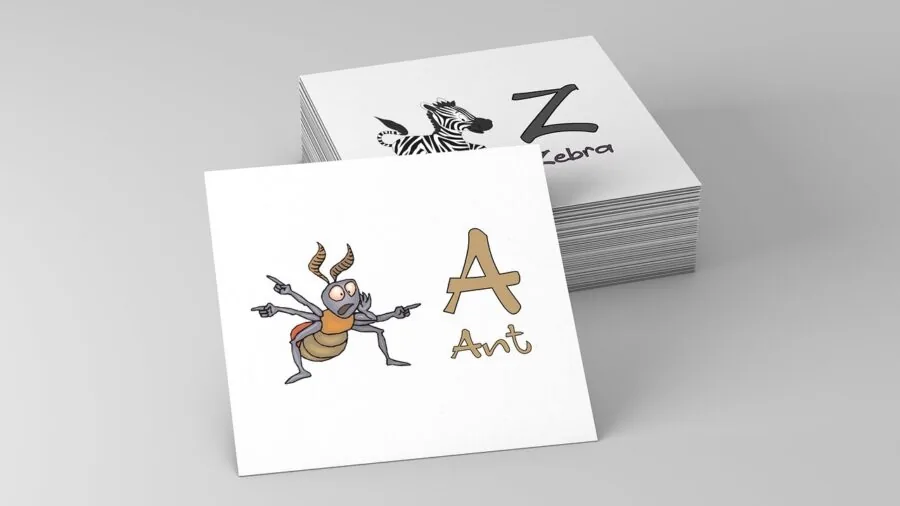
The classic flash card mechanic, a prompt on one side and the answer on the other, is still the most effective format for active recall practice.
For young children, this typically means a picture and word on one side and a supplementary fact, tracing guide, or activity prompt on the reverse.
Double-sided printing maximizes the value of each card and supports multiple types of practice within a single session.
Some sets, like the Skillmatics Wordables vocabulary cards, take this further by integrating a game structure into the card design, which can sustain engagement for longer sessions.
If your child tends to lose interest quickly with straight drill-and-repeat, look for sets that explicitly describe game modes or activity suggestions in the product description.
This aligns with the broader approach to play-based learning found in quality science kits for kids, where exploration and practice are woven together.
Value and Pack Completeness
Price per card is a useful but incomplete metric.
A budget-tier multipack at a low per-unit cost can still be poor value if the cards are too thin to survive a week of use, or if the content coverage is so shallow that the set becomes redundant quickly.
Conversely, a premium single-subject set at a higher total price may deliver better long-term value by covering a subject comprehensively enough to carry a child through an entire school year.
Consider what extras are included: organizational rings, storage bags, and parent instruction cards all add practical value without adding significant cost.
The learnworx Advanced Flash Cards set, for example, packages 101 cards with clear organizational support, making it a more complete kit than comparably priced alternatives that ship as a loose pile.
Whichever budget tier you choose, prioritize construction quality over raw card count, since a smaller set of durable, well-printed cards will outlast and outperform a larger set of flimsy ones.
Why You Should Trust Us
ProductFind is an independent editorial review site. We do not accept payment from brands for rankings, we do not conduct our own product trials; our evaluations are grounded in research, published data, expert review consensus, and verified buyer feedback.
Every product in this roundup was assessed against a consistent set of criteria covering card construction, content quality, developmental alignment, visual design, and overall value.
Each product receives a PF Score on a scale of 0 to 10, reflecting how well it performs across those criteria relative to the other options we analyzed.
For this roundup, our research drew on manufacturer specifications, curriculum alignment notes from early childhood education sources, and thousands of verified purchase reviews on major retail platforms.
We looked for consistent patterns in what parents and educators praised or flagged across multiple reviewers, rather than relying on any single opinion.
We also cross-referenced expert commentary on early literacy and numeracy pedagogy to validate the educational claims made by each product.
ProductFind may earn a commission if you purchase through links in this article. That affiliate relationship does not influence our rankings, scores, or editorial selections in any way. Our recommendations are based solely on the merit of each product as determined by our research process.
Final Thoughts
The flash cards in this roundup span a wide range of learning goals, age groups, and price points, but the standouts share a consistent set of qualities: durable construction, clear and age-appropriate visuals, logical content sequencing, and enough variety to sustain a child’s interest across multiple sessions.
Here are our editorial picks by category, each linked to the full product detail:
- Best Overall: Quokka Flash Cards for Toddlers earns the top PF Score in this roundup through a combination of premium print quality, thoughtful dual age-range design (toddlers and early readers), and strong consensus across verified buyer feedback praising durability and engagement.
- Best for Comprehensive Preschool Coverage: learnworx Advanced Flash Cards for Toddlers 3 to 5 Years impresses with 101 cards covering multiple developmental domains, making it one of the most complete single-purchase options for parents building a full pre-K learning kit.
- Best for Early Math Skills: learnworx Number Flash Cards for Toddlers covers counting from 1 to 100 with a structured, award-recognized approach that expert reviewers consistently highlight as effective for building numerical fluency in the two-to-four age range.
- Best for Phonics and Early Reading: THE BAMBINO TREE Phonics Flash Cards stands out for its 20-stage phonics progression, which mirrors the sequencing used in structured literacy programs and gives children and parents a clear roadmap from simple to complex sounds.
- Best Budget Pick: SpriteGru 50 PCS Kid First Cognitive Flashcards offers seven subject areas on double-sided cards with organizational rings at an accessible price point, making it a practical starting option for families who want broad coverage without a large upfront investment.
Whichever set you choose, consistency of use matters more than the specific product. Even five minutes of daily flash card practice, done with warmth and without pressure, compounds meaningfully over weeks and months of early childhood development.
Frequently Asked Questions
At What Age Should Kids Start Using Flash Cards?
Most early childhood specialists suggest introducing simple flash cards around age two to three, starting with concrete concepts like colors, shapes, and animals where the image directly represents the word.
Alphabet and number recognition cards are typically well-suited from age three onward, while phonics and sight word cards are most effective once a child is approaching kindergarten age, usually around four to five.
The key is keeping sessions short (two to five minutes) and playful at younger ages, gradually building to longer structured practice as the child’s attention span develops.
Are Flash Cards Better Than Educational Apps for Young Children?
Both formats have a place in early learning, but they serve different functions.
Physical flash cards require a child to focus without the distraction of motion, sound effects, or interactive feedback, which strengthens sustained attention and the kind of effortful retrieval that builds durable memory.
They also involve tactile interaction and parent-child conversation, which research consistently links to stronger language development.
Educational apps can complement flash card practice with audio pronunciation and gamified repetition, but most pediatric screen time guidelines recommend minimizing passive screen use for children under five.
Flash cards are a strong default for structured skill-building, particularly for literacy and numeracy foundations.
How Many Flash Cards Should a Child Practice Per Session?
A commonly cited guideline from early childhood educators is to introduce five to ten new cards per session and review previously learned cards alongside them, keeping the total session length under ten minutes for preschool-age children.
This approach, sometimes called spaced repetition, avoids cognitive overload and reinforces retention more effectively than drilling through a full deck at once.
Sets with organizational rings make it easy to physically separate mastered cards from cards still being learned, which helps both children and parents track progress visually.
What Is the Difference Between Sight Word Cards and Phonics Cards?
Phonics cards teach children to decode words by associating letters and letter combinations with the sounds they make, building a systematic framework for reading any word.
Sight word cards (sometimes called high-frequency word cards) focus on words that appear very commonly in early reading material but often do not follow standard phonics rules, such as “the”, “said”, and “was”.
Both approaches are supported by literacy research and work best together: phonics gives children a decoding tool, while sight word memorization speeds up reading fluency by removing the need to sound out the most common words every time.
For a balanced early reading program, look for a set that covers phonics progressions (like THE BAMBINO TREE Phonics Flash Cards) alongside a sight word set such as the Carson Dellosa multipack.
Can Flash Cards Be Used Alongside Other Learning Tools?
Absolutely, and the most effective home learning setups tend to layer several complementary tools. Flash cards build retrieval speed and recognition, while hands-on activities and play reinforce conceptual understanding.
Parents who use flash cards for letter and number recognition often find that pairing them with building or sorting toys helps children apply what they are memorizing in a tangible context.
For families interested in broader educational enrichment, exploring coding toys for kids and other STEM toys can extend learning into areas that flash cards alone do not cover, such as logical thinking, spatial reasoning, and problem-solving.
How Do I Know If a Flash Card Set Is Actually Durable Enough?
The most reliable signals are card thickness (look for terms like “extra thick”, “board stock”, or “laminated”), verified buyer reviews that specifically mention durability after extended use, and the binding method.
Loose card decks are more prone to damage than ring-bound sets because individual cards are easier to bend, tear, or lose.
Among the options in this roundup, sets from BenBen and THE BAMBINO TREE consistently receive positive feedback on construction quality in verified purchase reviews, while the lowest-cost options tend to draw more mixed comments about card thickness.
If longevity is a priority, it is worth spending slightly more on a well-constructed set that will last through months of daily use rather than replacing a cheaper set every few weeks.
About the author
Chester is a reviewer and writer for ProductFind who specializes in Educational & STEM Toys. Chester evaluates products through independent research: specifications, expert review consensus, and verified buyer feedback, and rates each one on the PF Score. Chester focuses on helping readers pick the right educational & stem toy for their needs and budget.