The 11 Best Stacking Toys for Babies
Stacking toys build coordination, spatial thinking, and problem-solving from as early as six months. Here are the most developmental picks across materials, formats, and budgets.
 By Luke Ryan
Updated July 23, 2026
By Luke Ryan
Updated July 23, 2026
Stacking toys are among the most developmentally powerful playthings a baby can have.
From as early as six months, infants begin reaching, grasping, and knocking things over with gleeful intent, and a well-designed stacking toy channels that energy into skills that matter: hand-eye coordination, spatial reasoning, cause-and-effect thinking, and early problem-solving.
Pediatric occupational therapists and child development researchers consistently highlight open-ended manipulative toys, including rings, cups, and blocks, as foundational tools for sensorimotor growth in the first two years of life.
Choosing the right stacking toy is harder than it looks. The market is flooded with options ranging from simple wooden rings to elaborate multi-activity bundles, and not every product that markets itself as “educational” or “Montessori-inspired” delivers on that promise.
At ProductFind, we researched this category by analyzing published product specifications, synthesizing consensus from expert reviewers and child development sources, and weighing verified buyer feedback from thousands of parents.
Whether you want a classic wooden ring stacker, a BPA-free silicone cup set, or a soft block collection safe for young graspers, the picks below represent the strongest options across price points and play stages.
Scroll down for our full ranked list.
| Award | Product | PF Score About PF ScoreThe PF Score is our own rating from 0 to 10, based on performance, design and build, ease of use, and value. It reflects independent research and is never influenced by manufacturers, retailers, or affiliate commissions. Learn more › | Price | |
|---|---|---|---|---|
| Best Overall |
 Mushie Stacking Cups Toy, Small
|
8.6/10 | Buy | |
| Editor's Pick |
 Melissa & Doug Pineapple Soft Stacker, 5-Piece
|
8.3/10 | Buy | |
| Best Value |
 Melissa & Doug Rainbow Stacker Wooden Ring Toy
|
8.2/10 | Buy | |
| Top Rated |
 Mushie Stacking Rings Toy, 8.5 inches
|
8.1/10 | Buy | |
 Moonkie 7-Piece Silicone Stacking Cups
|
7.9/10 | Buy | ||
 Fisher-Price Baby's First Blocks 10-Piece Set
|
8.3/10 | Buy | ||
 Infantino Super Soft Building Blocks 12-Piece Set
|
7.5/10 | Buy | ||
 SpringFlower 22-Piece Montessori Silicone Stacking Set
|
6.8/10 | Buy | ||
 Jyusmile 24-Piece Baby Toy Set for 6-12 Months
|
6.7/10 | Buy | ||
 Vanplay 4-in-1 Montessori Toy Set for Babies 6+ Months
|
6.5/10 | Buy | ||
 Somastung 6-in-1 Montessori Baby Toy Set
|
6.3/10 | Buy |
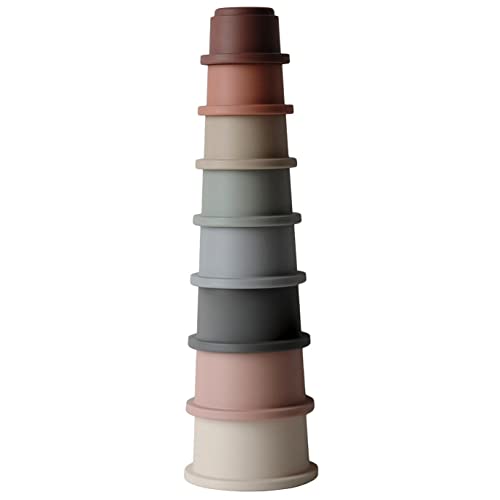
Mushie Stacking Cups Toy, Small
A Danish-made stacking toy designed for infants and toddlers ages 0-4, featuring colorful rings inspired by Copenhagen's iconic round tower. The simple design supports motor skill development and hand-eye coordination starting around six months.
Pros
- Manufactured in Denmark with quality construction
- Compact size (3.25 x 3.25 x 3.5 inches) fits easily in diaper bags and play areas
- Supports developmental milestones like grasping and stacking from six months onward
- Colorful, visually engaging design holds infant attention
- Lightweight at 0.31 pounds for easy handling by small hands
Cons
- No verified buyer reviews available to assess real-world durability or safety feedback
- Limited color customization, only offered in Original colorway
- Small size may be less challenging for older toddlers approaching age 4
Melissa & Doug Pineapple Soft Stacker, 5-Piece
A fabric-covered stacking toy designed for infants 6-12 months with mixed textures, sounds, and a rocking base. Combines multiple sensory elements—crinkles, squeaks, and tactile rings—to support fine motor and problem-solving skill development.
Pros
- Multi-sensory design combines rattle, crinkle leaves, squeezable rings, and textured elements in one toy
- Soft, fabric-covered construction safe for teething and sensitive infant play
- Supports developmental milestones through stacking, sorting, and problem-solving activities
- Compact dimensions and light weight make it portable for travel
- Trusted Melissa & Doug brand known for quality infant toys
Cons
- No verified buyer reviews available to assess long-term durability or real-world satisfaction
- Rocking base stability not detailed—may tip with aggressive play or uneven surfaces
- Limited to 6-12 month age range, reducing extended play value as child grows
Melissa & Doug Rainbow Stacker Wooden Ring Toy
A classic wooden stacking toy with 7 brightly colored rings on a rocking base designed for toddlers 18 months to 3 years. Builds fine motor skills and color recognition through simple, screen-free play with smooth, child-safe materials.
Pros
- Smooth wooden pieces designed specifically for small hands to grip and manipulate
- Encourages developmental milestones including shape, color, and size recognition
- Rocking wooden base adds movement element beyond standard stacking toys
- Made from durable, child-safe materials built for repeated play
Cons
- No customer reviews available to verify real-world durability or age appropriateness
- Limited to basic stacking functionality without additional interactive features
- Rocking base may limit stability for younger toddlers still developing balance
Mushie Stacking Rings Toy, 8.5 inches
A BPA and phthalate-free stacking toy designed to support motor skill development starting around six months. The rustic color palette fits Danish Hygge aesthetics while the simple ring design encourages grasping and organization practice.
Pros
- Safe material composition verified as BPA and phthalate-free
- Supports developmental milestones in organization and fine motor skills
- Aesthetic design integrates into modern parenting spaces without looking like typical plastic toys
- Compact size at 8.5 inches tall fits easily in diaper bags or toy rotation
Cons
- No verified buyer reviews available to confirm durability or real-world performance
- Care instructions prohibit soaking, which may limit deep cleaning options
- Limited color options beyond the Rustic finish shown
Moonkie 7-Piece Silicone Stacking Cups
Food-grade silicone stacking cups designed for babies 6+ months with textured surfaces for teething and tactile learning. Seven colorful cups feature unique patterns and water-play holes, supporting motor skill development and sensory exploration.
Pros
- 100% food-grade silicone with no fillers or odors makes it genuinely safe for oral exploration
- Rich texture variety across cups supports both teething relief and sensory development
- Multi-functional design works for stacking, teething, water play, and bath time
- Seven distinct colors and patterns hold infant visual interest
- Lightweight and appropriately sized for small hands to grasp
Cons
- No verified buyer reviews available to confirm real-world durability or longevity claims
- Limited information on stackability ease or whether cups stay together during play
- Relatively narrow age range focus (6+ months) may limit extended use as child grows
Fisher-Price Baby's First Blocks 10-Piece Set
A straightforward shape-sorter toy with 10 colorful blocks designed for infants 6 months and up. Combines stacking, sorting, and fine motor skill development in one compact bucket with a carry handle for portable play.
Pros
- All blocks store inside the bucket, reducing clutter and keeping pieces together
- Easy-carry handle makes it convenient for travel or moving between rooms
- Introduces foundational concepts like colors, shapes, and problem-solving early on
- Supports fine motor skill development through sorting and stacking activities
- Compact dimensions (5.12 x 4.92 x 8.27 inches) fit easily in bags or small spaces
Cons
- No verified buyer reviews available to assess real-world durability or play value
- Limited to 10 blocks, which may feel modest compared to larger building or stacking sets
- Shape-sorter lid functionality and ease of use not detailed in specifications
Infantino Super Soft Building Blocks 12-Piece Set
A soft, squeezable block set designed for babies learning to stack and grasp. Made from BPA-free material with three size varieties to support early motor skill development and imaginative play.
Pros
- Safe soft material reduces injury risk from drops and impacts
- Multiple block sizes provide developmental progression and varied play options
- Lightweight and proportioned for small hands to grip and stack independently
Cons
- No verified customer reviews available to assess real-world durability or longevity
- Limited to stacking and squeezing play, lacks additional features like sounds or textures
- Soft material may be less durable for teething or heavy chewing compared to firm alternatives
SpringFlower 22-Piece Montessori Silicone Stacking Set
A food-grade silicone toy set combining stacking blocks, teething rings, and sensory balls designed for infants 0-18 months. The multicolor pieces are washable, squeaky, and double as bath toys, supporting early motor skills and sensory development.
Pros
- Food-grade silicone construction is durable and safe for mouthing
- Versatile 3-in-1 toy serves multiple developmental needs and doubles as bath toy
- Easy maintenance with simple warm water cleaning
- Embossed educational elements encourage shape and number recognition
- Portable storage bag makes it convenient for travel or gifting
Cons
- No verified buyer reviews yet to confirm real-world durability claims
- Limited to medium size, which may not suit all hand sizes as baby grows
- Squeaking feature may not appeal to all parents or home environments
Jyusmile 24-Piece Baby Toy Set for 6-12 Months
This 24-piece Montessori-style toy set combines stacking blocks, sensory balls, and teething rings designed for babies 6-12 months and up. It covers multiple developmental areas including fine motor skills and color recognition, though the set has no verified buyer reviews to assess real-world durability.
Pros
- Comprehensive 24-piece bundle addresses multiple play styles and developmental needs in one purchase
- Soft, durable materials with BPA-free certification designed for safe teething
- Structured to teach colors, shapes, numbers, and early math concepts
- Portable storage bag included for travel
Cons
- No verified customer reviews available to confirm durability or actual developmental benefits
- Care instructions are detailed and somewhat involved, requiring high-temperature water washing and air-drying
- Higher piece count may lead to managing or losing small components over time
Vanplay 4-in-1 Montessori Toy Set for Babies 6+ Months
A versatile four-piece set combining shape sorting, stacking rings, stacking cups, and sensory balls designed for babies 6-12 months. Made from BPA-free silicone with neutral tones, it supports fine motor skills, sensory exploration, and teething relief while doubling as a portable storage solution.
Pros
- Four toys in one set covers multiple developmental areas: sorting, stacking, sensory play, and teething
- BPA-free silicone material is soft, safe for chewing, and easy to clean
- Neutral color palette and gender-neutral design works for any nursery or gift occasion
- Includes storage bucket for organization and portability for travel or outings
- Varied colors, shapes, and textures encourage sensory exploration and hand-eye coordination
Cons
- No verified buyer reviews available to confirm real-world durability or ease of use with babies
- Generic dimensions listed do not clarify actual size of individual pieces, making it difficult to assess grip suitability
- Limited information on teething relief effectiveness compared to dedicated teething toys
Somastung 6-in-1 Montessori Baby Toy Set
A multi-activity toy set combining stacking blocks, rings, cups, and sensory elements designed for babies 6-18 months. Made from food-grade silicone and ABS with BPA-free certification, it targets color recognition, fine motor skills, and hand-eye coordination through varied textures and interactive pieces.
Pros
- Multiple activity types in one set encourages varied sensory exploration and learning
- Materials meet stringent safety certifications with no harmful chemicals
- Suction cup spinner toy versatile for travel, bath, or dining table use
- Embossed animals, shapes, and numbers on blocks aid educational development
- Compact packaging makes it suitable as a gift for various occasions
Cons
- No verified customer reviews available to assess real-world durability or user satisfaction
- Suction cup spinner effectiveness depends on surface smoothness, may not stick well to textured areas
- Multiple small pieces and components increase choking risk for younger infants or those who mouth indiscriminately
Stacking Toys for Babies Buying Guide
Picking a stacking toy that your baby will actually engage with, and grow with, comes down to a handful of concrete factors.
The guidance below draws on developmental benchmarks, material safety standards, and the real-world observations of parents who have used these products with infants at various stages.
Pair this with our ranked picks above and you will have a clear picture of what to prioritize for your child’s age and temperament.
If you are building out a broader play collection, baby rattles and sensory books are natural companions to stacking play at this age.
Age-Appropriateness and Developmental Stage
Not all stacking toys suit all ages, and buying too complex a toy too early leads to frustration rather than engagement.
Classic ring stackers, like the Melissa and Doug Rainbow Stacker, are typically designed for ages two and up and require the motor control to thread a ring onto a post.
Stacking cups, on the other hand, can be introduced as early as six months because babies can bash, nest, and mouth them without needing fine motor precision.
Soft blocks from brands like Infantino and Jyusmile are engineered specifically for babies who are still in the mouthing phase and may not yet sit unsupported.
Look at the manufacturer’s stated age range as a starting point, but also consider your baby’s current milestones.
A seven-month-old who is sitting independently will get far more from a cup set than one who is still working on head control.
Multi-piece bundles marketed as covering “0 to 18 months” often include components best reserved for later stages, so read the component breakdown rather than relying on the age range printed on the box.
Material Safety and Build Quality
Because babies mouth everything, material safety is non-negotiable. Look for BPA-free designations on plastic and silicone pieces, and confirm that paints or finishes on wooden toys are non-toxic and meet ASTM F963 or EN71 standards.
Silicone toys, like the mushie Stacking Cups Made in Denmark, are particularly popular because food-grade silicone is inherently free of BPA, phthalates, and PVC, and its soft texture is gentle on emerging teeth.
The mushie brand’s Denmark manufacturing origin is a meaningful quality signal given Europe’s stricter consumer product chemical regulations.
Build quality also determines longevity. Wooden pieces should have smooth, splinter-free edges and tight-fitting paint that does not flake with normal chewing. Plastic components should feel sturdy rather than hollow or brittle.
Soft fabric blocks, like those in the Infantino Super Soft set, should have reinforced seams and washable covers, since laundry cycles are a constant reality with infant toys.
A toy that survives the first year of play intact is far better value than a cheaper option that cracks or fades after a month.
Open-Ended Play Value
The best stacking toys grow with your child by supporting multiple types of play rather than a single scripted interaction.
Stacking cups are a textbook example: babies can nest them, stack them, fill them with water, sort small objects into them, and use them as imaginative props as they approach toddlerhood.
This open-ended quality is a core principle of Montessori-informed toy design, and it is part of why simple cup and ring formats have remained developmental staples for decades despite constant novelty in the toy market.
Compare this to highly themed or electronic stacking sets, which tend to direct play toward a single correct outcome. For babies in the sensorimotor stage, toys that reward experimentation regardless of how the child uses them produce richer learning experiences.
When evaluating bundles that include stacking blocks, teething rings, and sensory balls together, ask whether each component can be used independently and meaningfully, or whether it is mostly filler added to justify a higher price point.
Pairing open-ended stacking play with soft baby books is a simple way to build a varied but developmentally coherent play environment.
Piece Count and Choking Hazard Risk
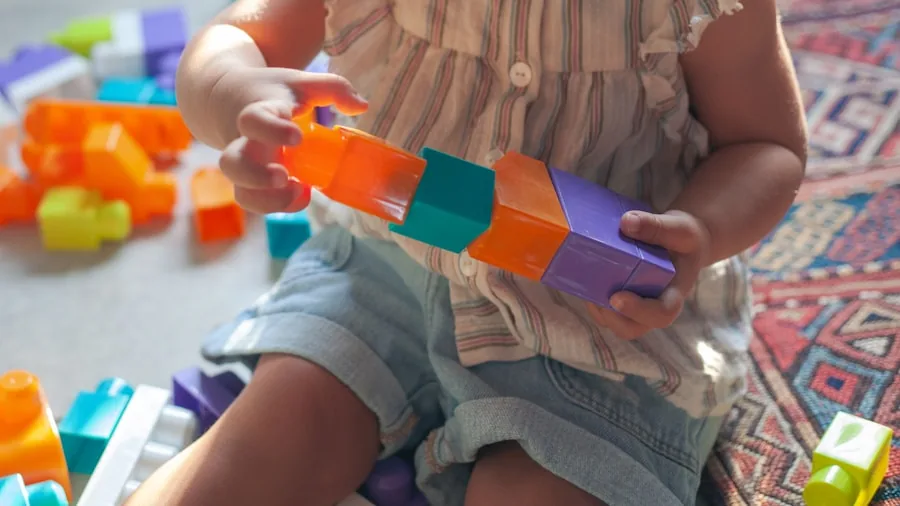
More pieces are not always better, especially for younger babies.
The American Academy of Pediatrics recommends keeping small parts away from children under three, and while most reputable stacking toy brands design pieces that exceed the small-parts cylinder evaluation for their stated age range, piece count still matters for supervision logistics.
A 22-piece bundle spread across a floor creates many more opportunities for a curious crawler to get hold of a component intended for an older sibling.
For babies six to twelve months, a set of six to ten large-format cups or rings is usually ideal. This is enough variety to sustain interest without overwhelming parent or child.
As babies move into the twelve to eighteen month range and their mobility and grip strengthen, larger sets with smaller components become more appropriate.
Always supervise stacking play regardless of stated age range, particularly during the early months when mouthing behavior is at its peak.
If you stock your nursery with a variety of sensory items, a dedicated spot for cloth books for babies alongside stacking toys keeps the play area organized and age-appropriate.
Ease of Cleaning

Infant toys get dirty fast.
Silicone and hard plastic stacking cups can typically be rinsed, wiped down with baby-safe sanitizing wipes, or even placed on the top rack of a dishwasher, which is a significant convenience advantage over fabric or painted wooden pieces.
The mushie cups and the Moonkie silicone set are both praised by parents specifically for how easy they are to clean after bathtime or mealtime doubling as water play tools.
Wooden stackers require more care. Water exposure can warp untreated wood and cause painted surfaces to peel, so spot-cleaning with a damp cloth is usually the safest approach.
Fabric blocks like the Infantino Super Soft set should have machine-washable covers; check the care label before purchasing if this matters to you.
For households where quick turnaround between play sessions is important, silicone and smooth plastic options will always have the edge over wood or fabric in maintenance terms.
Value and Bundle Composition

The stacking toy category spans a wide price range, from budget-friendly single-format options to premium multi-activity bundles marketed as complete developmental kits.
Budget picks like the Fisher-Price Baby’s First Blocks deliver a focused, proven play experience without the overhead of bundled components you may not need.
Mid-range silicone cup sets from mushie and Moonkie add sensory texture and dual-use bath play value that justify their slightly higher price for many parents.
Higher-priced bundles from brands like Somastung and Vanplay pack six or more activity types into a single box, which can look compelling on paper.
In practice, verified buyer feedback reveals that these bundles are frequently purchased as gift sets where variety signals generosity, but individual component quality sometimes falls below what a dedicated single-format toy delivers.
If you are shopping for your own child rather than as a gift, weigh whether you are paying for additional quality or simply additional quantity.
Checking how individual components score in standalone reviews is a useful sanity check before committing to a large bundle at a premium price.
Why You Should Trust Us
ProductFind is an independent review platform built on the same principles as the best editorial product journalism: transparent methodology, consistent scoring criteria, and no commercial pressure on rankings.
Every product in this article was assessed using our structured research process, which draws on manufacturer-published specifications, expert review consensus from child development and parenting sources, and verified buyer feedback aggregated from confirmed purchasers.
We do not conduct our own product trials; our evaluations are grounded in research, published data, expert review consensus, and verified buyer feedback.
Each product receives a PF Score on a 0 to 10 scale, calculated by applying a consistent set of weighted criteria, including safety certifications, material quality, developmental appropriateness, ease of use, and value.
These scores allow you to compare products within a category on a level playing field rather than relying on star ratings that vary by platform and review pool.
ProductFind may earn a commission when you purchase through links in this article. That affiliate relationship has no bearing on which products appear here, how they are ranked, or what PF Score they receive.
Our editorial process is entirely separate from our commercial operations, and no brand can pay to improve its placement or score.
We recommend only what our research supports, and we update our picks as new products enter the market and existing ones change in quality or availability.
Final Thoughts
After researching the full field of stacking toys available for babies and infants, a clear hierarchy emerges. The picks below represent the strongest options at each position in our ranked list, each earning a distinct distinction based on what it does best.
- Best Overall: mushie Stacking Cups Toy (Made in Denmark) earns the top spot for its combination of food-grade silicone construction, European manufacturing standards, dual-use bath and floor play versatility, and the strongest overall score in our evaluation. It is the stacking toy we would recommend first to most parents shopping for a baby between six and eighteen months.
- Best Wooden Stacker: Melissa and Doug Rainbow Stacker is the definitive ring stacker for toddlers ready to graduate from cups and soft blocks. Its non-toxic paint, smooth hardwood finish, and color-matching challenge make it a developmental step-up toy that has earned its long-standing reputation in the category.
- Best for Shape Sorting: Fisher-Price Baby’s First Blocks stands out as the most accessible introduction to shape recognition alongside stacking, with a chunky bucket design that rewards early problem-solving and is nearly indestructible under normal play conditions.
- Best Soft Stacker: Melissa and Doug Multi-Sensory Pineapple Soft Stacker is the strongest pick for newborns and young infants who are not yet ready for hard materials. Its multi-texture rings, gentle rattle elements, and high-contrast visual design make it genuinely engaging from the earliest weeks of life.
- Best Budget Pick: Moonkie Stacking Cups Toy delivers BPA-free silicone construction, a seven-piece format, and teething-safe softness at a price that makes it easy to recommend as a starter set or a bath toy addition without financial hesitation.
Whatever your budget or your baby’s current stage, the right stacking toy is one that matches your child’s motor development, survives the mouthing and throwing that is inevitable at this age, and stays engaging long enough to deliver real developmental return.
The picks above cover every meaningful point on that spectrum.
Frequently Asked Questions
At what age can a baby start using stacking toys?
Most babies can begin interacting meaningfully with large stacking cups or soft blocks from around six months, once they have enough grip strength and can sit with some support.
At this stage, the play is mostly exploratory: grasping, mouthing, and knocking pieces over. True intentional stacking, where a baby deliberately places one piece on top of another, typically emerges between nine and fifteen months as fine motor control develops.
Classic ring stackers with a central post are generally best introduced around eighteen months to two years, when children can manage the threading motion. Always check the manufacturer’s age guidance and your own baby’s individual developmental pace.
Are silicone stacking cups safe for babies who are teething?
Food-grade silicone stacking cups, like those from mushie and Moonkie, are considered safe for teething babies. Food-grade silicone is free of BPA, phthalates, PVC, and other chemicals of concern, and its soft, flexible texture is gentle on sensitive gums.
It does not splinter, crack, or shed material under normal mouthing. That said, always inspect silicone pieces periodically for signs of tearing or puncture, since a damaged piece can present a different risk profile.
Silicone toys pair naturally with teething-stage play, and many parents keep a set in the refrigerator for added soothing effect, though check individual product guidance before doing so.
What is the difference between a stacking cup set and a ring stacker?
Stacking cups are open cylinders of graduated sizes that babies can nest inside each other, stack vertically, use as scoops, or fill with water during bath play.
They reward open-ended exploration and can be used productively by babies as young as six months.
Ring stackers consist of a central post and a series of rings, usually color-coded by size, that must be threaded onto the post in descending order.
This format requires more precise motor control and a nascent understanding of size ordering, making it better suited to toddlers from around eighteen months onward. Both formats offer strong developmental value, but they target different skill sets and different stages.
Many parents find it useful to own both, introducing cups early and transitioning to a ring stacker as their child’s abilities grow. Alongside stacking play, rotating in infant rattles helps sustain sensory engagement across the first year.
How many pieces should a stacking toy set have for a young baby?
For babies in the six to twelve month range, a set of six to eight pieces is typically ideal. This is enough variety to hold attention and introduce size comparison concepts without overwhelming the child or creating supervision challenges.
Very large sets marketed for this age group often include components that are developmentally premature, and keeping the play space manageable also reduces the risk of a young baby accessing a small part intended for older play.
As your child approaches toddlerhood, graduating to a larger set with more nuanced size gradations becomes appropriate and engaging.
Quality matters more than quantity at every stage, and a well-made six-cup silicone set will outperform a cheaply constructed twenty-two-piece bundle for most families with babies under one year.
Can stacking toys double as bath toys?
Silicone and hard plastic stacking cup sets are excellent bath toys. They can be used for scooping, pouring, and floating, which extends their play value well beyond the living room floor.
Parents who use mushie or Moonkie cups in the bath consistently report this dual-use benefit as one of the most practical advantages of the silicone format.
Wooden ring stackers and fabric blocks should be kept out of the bath entirely, as water exposure can warp wood, compromise painted finishes, and cause fabric to grow mildew if not dried thoroughly.
If bath play is a priority for your household, opt for a silicone or food-safe hard plastic set as your core stacking toy, and keep wooden formats for dry play only.
For more ideas on building a sensory-rich routine for your baby, exploring baby lotions suited for sensitive skin alongside calming bathtime play can make the wind-down routine more cohesive.
Do Montessori-branded stacking toys perform better than traditional ones?
“Montessori” is not a protected trademark, which means any toy can be labeled Montessori-inspired regardless of whether its design reflects core Montessori principles.
Genuine Montessori-aligned stacking toys tend to emphasize natural materials, single-purpose simplicity, realistic proportions, and child-led discovery without electronic prompts or scripted outcomes.
Products that claim Montessori credentials while also including flashing lights, sound effects, or ten bundled accessories are generally using the label as a marketing shorthand rather than a design philosophy.
In our research, the strongest-performing stacking toys, whether or not they carry a Montessori label, share those same core traits: quality materials, appropriate scale for small hands, open-ended play potential, and durability.
When evaluating any Montessori-branded bundle, focus on the individual components rather than the label, and cross-reference with verified buyer feedback to see whether parents report genuine sustained engagement or early abandonment after novelty wears off.
About the author
Luke is a reviewer and writer for ProductFind who specializes in Baby Toys & Infant Development. Luke evaluates products through independent research: specifications, expert review consensus, and verified buyer feedback, and rates each one on the PF Score. Luke focuses on helping readers pick the right baby toys & infant development for their needs and budget.