The 10 Best First Building Blocks
From soft squeeze cubes for infants to magnetic tile systems for preschoolers, these are the first building blocks worth buying, ranked by research, safety, and developmental value.
 By Luke Ryan
Updated July 23, 2026
By Luke Ryan
Updated July 23, 2026

Choosing the right building blocks for a young child is one of the most consequential early toy decisions a parent or caregiver can make.
Research consistently shows that open-ended construction play supports fine motor development, spatial reasoning, problem-solving, and early STEM foundations, benefits that extend well into school age.
Yet the market is flooded with options ranging from soft foam cubes for infants to magnetic tile sets suited for older kids, and the quality gap between products is significant.
Picking the wrong set can mean frustrated toddlers, safety concerns, or toys that collect dust after a single afternoon.
This guide cuts through the noise.
The ProductFind editorial team researched the most widely available first building blocks across categories, stacking blocks, magnetic tiles, wooden construction sets, and sensory foam cubes, synthesizing manufacturer specifications, expert review consensus, and verified buyer feedback to surface the options genuinely worth buying.
If you want to complement early block play with other sensory and developmental toys, our roundup of baby rattles for every stage and budget and our guide to cloth books for babies and newborns cover the adjacent territory.
Scroll down for our top picks, ranked by PF Score.
| Award | Product | PF Score About PF ScoreThe PF Score is our own rating from 0 to 10, based on performance, design and build, ease of use, and value. It reflects independent research and is never influenced by manufacturers, retailers, or affiliate commissions. Learn more › | Price | |
|---|---|---|---|---|
| Best Overall |
 Gemmicc 136-Piece Magnetic Tiles Building Set
|
7.9/10 | Buy | |
| Editor's Pick |
 Jasonwell 100-Piece Magnetic Tiles Building Set
|
8.3/10 | Buy | |
| Best Value |
 SSAWER 100-Piece Magnetic Building Blocks Set
|
8.2/10 | Buy | |
| Top Rated |
 Onshine Large Wooden Blocks 64-Piece Set
|
8.1/10 | Buy | |
 Weilim 3-in-1 Wooden Montessori Toy for Toddlers
|
7.9/10 | Buy | ||
 Mega Bloks First Builders Activity Table with 29 Pieces
|
7.8/10 | Buy | ||
 LOGBAY 177-Piece Building Blocks Set with Baseplate
|
7.6/10 | Buy | ||
 Infantino Super Soft Building Blocks 12-Piece Set
|
7.5/10 | Buy | ||
 B. toys One Two Squeeze Soft Blocks 10-Pack
|
7.2/10 | Buy | ||
 PEBIRA Wooden Sorting Puzzle, 20-Piece Montessori Toy
|
6.4/10 | Buy |
Gemmicc 136-Piece Magnetic Tiles Building Set
A comprehensive magnetic tile system with 136 pieces including two cars and an instruction booklet, designed for kids ages 3-9. The set features strong magnets for building larger structures and emphasizes safety with non-toxic ABS plastic and rounded corners.
Pros
- Large piece count offers substantial building variety without filler blocks
- Stronger magnetism compared to standard sets allows for more ambitious constructions
- Quality control emphasis with ultrasonic welding reduces defect risk
- Supports multiple learning areas including fine motor skills and spatial reasoning
- Includes bonus cars and idea book to jumpstart creative play
Cons
- No verified customer reviews available to assess real-world durability or magnetic strength claims
- Limited documentation about specific age-appropriateness boundaries within the 3-9 year range
- Storage and organization method not mentioned for managing 136+ pieces
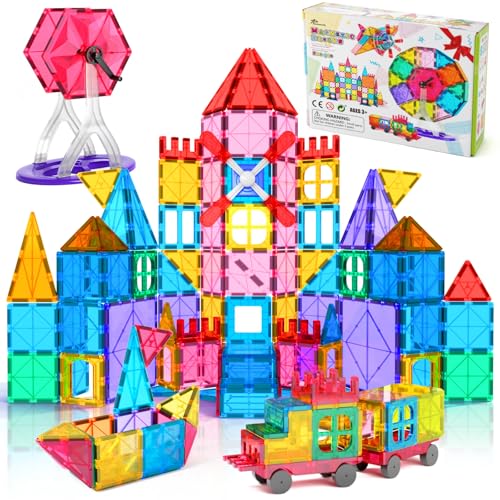
Jasonwell 100-Piece Magnetic Tiles Building Set
A 100-piece magnetic building block set with larger magnets designed for creative construction play in children ages 3 and up. Features various tile shapes to build structures like Ferris wheels, animals, and houses, with an included idea booklet for guidance.
Pros
- Strong magnetic connection due to larger magnets, makes structures stable and easier to hold
- Diverse tile shapes encourage multiple building possibilities and creative play
- Safe construction with rounded edges and non-toxic materials suitable for young children
- Includes reference booklet to guide building projects and inspire ideas
Cons
- No verified buyer reviews available to assess real-world durability or performance
- Individual tile size listed as 0.39 inches may feel small for very young toddlers under 3
- Set lacks battery-powered or electronic features beyond basic magnetic construction
SSAWER 100-Piece Magnetic Building Blocks Set
A 100-piece magnetic tile set with 33 distinct designs and an included storybook for structured or open-ended building. Made from durable ABS plastic with 8 magnetic contact points per cube, it's designed for ages 3-12 and meets US toy safety standards.
Pros
- Large set with 100 pieces and 33 different block designs for varied building options
- Includes creative storybook with step-by-step building patterns and illustrated guides
- 8 magnetic contact points per cube for stronger magnetic connection
- US toy standard certified and safety test approved
- Promotes STEM learning and fine motor skill development through screen-free play
Cons
- No verified buyer reviews available to confirm real-world durability or magnetic strength
- Cube dimensions (0.79 inches) may be slightly small for very young toddlers under age 3
- Limited information about material finish quality or whether blocks retain magnetism over extended use
Onshine Large Wooden Blocks 64-Piece Set
A 64-piece wooden block set designed for toddlers ages 1-3, featuring varied shapes made from New Zealand pine with a storage box included. Emphasizes screen-free, open-ended play for creativity and motor skill development.
Pros
- Multiple block shapes (cylinder, arch, cube, triangle, etc.) enable diverse construction possibilities
- Natural, unpainted wood material with confirmed safety compliance for toddler use
- Includes dedicated storage box, addressing common organization challenges
- Large blocks are appropriately sized for toddler hands to grasp and manipulate
- Screen-free play supports developmental skill building
Cons
- No verified customer reviews available to validate real-world durability or playability claims
- Limited information on wood finish maintenance or care instructions
- 4.9 rating appears unverified, lacking substantive buyer feedback to assess consistency
Weilim 3-in-1 Wooden Montessori Toy for Toddlers
This all-in-one wooden toy combines a hammering xylophone, car ramp racer, and shape sorter to develop fine motor skills and hand-eye coordination in children 12 months and up. Built from natural wood with non-toxic finishes and safety-tested materials, it consolidates three separate toys into one educational set.
Pros
- Multiple activity stations keep toddlers engaged longer with varied play options
- Consolidated design saves space and money compared to buying three separate toys
- Safety certifications and smooth wood construction provide parent confidence
- Develops multiple developmental skills simultaneously: motor, cognitive, and sensory
Cons
- No verified buyer reviews available to confirm real-world durability and long-term engagement claims
- Compact size may limit play space for some activities, particularly the car ramp racer
- Wooden construction requires careful cleaning and maintenance to preserve paint finish
Mega Bloks First Builders Activity Table with 29 Pieces
A portable building table designed for toddlers ages 1 and up, featuring 29 large blocks, a rolling car, and integrated tabletop track for imaginative play. The foldable design and built-in storage make it convenient for small spaces, and blocks are compatible with other Mega Bloks sets for expanded building options.
Pros
- Portable with foldable legs and built-in storage for easy transport and cleanup
- Includes integrated tabletop track and rolling car for varied play scenarios
- Large blocks designed to develop fine motor skills and creativity in toddlers
- Compatible with other Mega Bloks sets for expanded building possibilities
- Substantial piece count (29 items) provides good value for open-ended play
Cons
- No verified buyer reviews available to assess real-world durability or parent satisfaction
- Table dimensions (18 inches height) may be low for older toddlers approaching preschool age
- Limited information on ease of cleaning or material durability over extended use
LOGBAY 177-Piece Building Blocks Set with Baseplate
A mid-size brick system for ages 3+ that bridges the gap between bulky toddler blocks and tiny micro bricks, offering 177 pieces including square, rectangle, and car base elements. The included green baseplate supports stable structure building and creative display, making it suitable for home, daycare, or classroom environments.
Pros
- Comprehensive 177-piece set with varied brick types (95 square, 20 rectangle, 10 large rectangle, 10 car bases) for diverse building possibilities
- Includes sturdy 10-inch green baseplate for stable, displayable creations
- Mid-size scale (smallest brick 2.5 x 2.5 x 2 cm) balances ease of handling with detailed building potential
- Targets color recognition, spatial thinking, and motor skill development through hands-on play
- Compatible with similar building block systems for expanded building options
Cons
- No existing verified buyer reviews available to assess real-world durability or quality consistency
- Mid-size scale requires careful verification against comparison images before purchase to ensure compatibility with child's age and ability
- Green baseplate is the only base option included, limiting customization for multiple simultaneous builds
Infantino Super Soft Building Blocks 12-Piece Set
A soft, squeezable block set designed for babies learning to stack and grasp. Made from BPA-free material with three size varieties to support early motor skill development and imaginative play.
Pros
- Safe soft material reduces injury risk from drops and impacts
- Multiple block sizes provide developmental progression and varied play options
- Lightweight and proportioned for small hands to grip and stack independently
Cons
- No verified customer reviews available to assess real-world durability or longevity
- Limited to stacking and squeezing play, lacks additional features like sounds or textures
- Soft material may be less durable for teething or heavy chewing compared to firm alternatives
B. toys One Two Squeeze Soft Blocks 10-Pack
Soft, squeezable building blocks designed for babies 6 months and up, featuring numbers, animals, shapes, and embossed textures to support sensory and motor skill development. Comes with a reusable recycled fabric bag for portable play.
Pros
- Soft, squeezable construction safe for teething babies
- Multiple learning elements in one toy set: numbers, animals, shapes
- Includes eco-friendly recycled fabric storage bag
- Lightweight and easy for small hands to grasp
- Textured surfaces provide varied sensory experiences
Cons
- No verified customer reviews available to assess real-world durability
- Limited age range: designed specifically for 6 months and up, not suitable for younger infants
- Single pack size may feel limited for some families with multiple children
PEBIRA Wooden Sorting Puzzle, 20-Piece Montessori Toy
A wooden shape and color sorter with 20 pieces designed for toddlers aged 1-3 to learn shapes, colors, and numbers through hands-on play. Made from non-toxic wood with smooth edges and bright colors, it's compact enough for travel and works as an educational gift option.
Pros
- Multiple sorting methods (shape, color, number) extend play value and learning applications
- Portable design makes it practical for travel or on-the-go learning
- Non-toxic materials and smooth edges prioritize toddler safety
- Bright, engaging colors and geometric designs appeal to young children
Cons
- No verified buyer reviews available to assess real-world durability or usability feedback
- Limited to basic shape and color recognition, may have shorter engagement span for older toddlers (3+)
- Compact size could be challenging for very young children under 18 months to manipulate
First Building Blocks Buying Guide
The categories in this roundup span a wide developmental range, from soft squeeze blocks safe for infants to magnetic construction systems designed for children aged three and up.
Before choosing, it helps to be clear about the child’s current age and skill level, the environment where the toy will be used, and whether the goal is sensory exploration, fine motor practice, or imaginative open-ended construction.
The factors below are the criteria our team weighted most heavily during evaluation.
Age Appropriateness and Safety
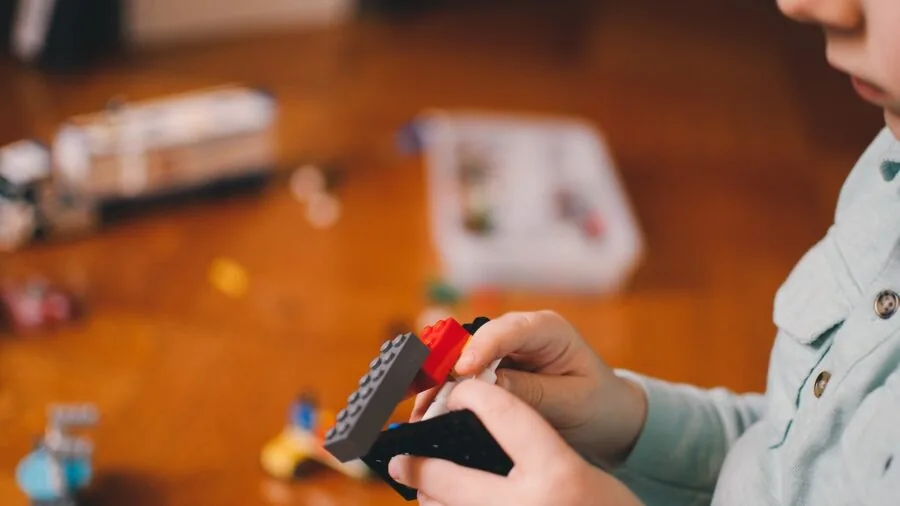
Age ratings on building block packaging exist for good reason.
Soft fabric or foam blocks, like the squeeze-style sets designed for babies under eighteen months, are built without small parts, sharp edges, or rigid components that could pose a choking hazard.
Once a child is mobile and developing a pincer grasp, larger rigid blocks in wood or plastic become appropriate, but piece size still matters.
The general rule endorsed by pediatric safety organizations is that any component small enough to fit through a toilet paper roll is a choking risk for children under three.
Magnetic tile sets deserve particular attention here. The magnets inside quality sets are fully encased and meet ASTM F963 safety standards, but cheaper sets have been recalled for loose magnets.
When evaluating the magnetic options in this guide, we cross-referenced verified buyer reports and brand disclosures regarding magnet encasement. Parents should always inspect magnetic sets periodically for cracked tiles.
If you are also considering soft baby books alongside these toys, many of the same sensory-safety principles apply.
Material safety labels to look for include BPA-Free certification on plastic sets, non-toxic paint disclosure on wooden sets, and CPSC or EN71 compliance for imports. Sets lacking these disclosures were ranked lower in our evaluation regardless of other attributes.
Piece Count, Set Completeness, and Value

Piece count alone is not a reliable quality indicator, but it does shape the scope of what a child can build. A ten-piece soft block set is the right scale for an infant who is learning to grasp and stack.
A sixty-four-piece wooden set introduces variety in shape and size that supports more complex structures for toddlers aged one to three. Magnetic tile systems with one hundred or more pieces open up genuine architectural creativity for preschoolers and beyond.
Value calculation should account for durability. A large wooden set with a storage box, like the Onshine sixty-four-piece option, spreads its cost across years of use rather than months.
Conversely, a very inexpensive sorting and stacking set may serve well as a supplementary toy or gift without being a household centerpiece. We evaluated price-to-longevity ratio as part of each product’s overall PF Score assessment.
Construction Type and Play Style
The products in this guide fall into four broad construction types: soft squeeze blocks for infant sensory play, traditional stacking and sorting blocks for toddler fine motor development, interlocking large-format plastic bricks compatible with popular brick-building systems, and magnetic tiles for spatial and STEM-oriented play.
Each type engages different developmental skills and suits different age windows.
Soft blocks from brands like B. toys and Infantino are best suited for babies and young toddlers who benefit from tactile feedback and are still learning cause and effect.
Wooden sets from brands like Onshine encourage open-ended stacking and early engineering instincts. Magnetic tiles from Jasonwell, SSAWER, and Gemmicc invite older toddlers and early schoolers to explore geometry and gravity in three dimensions.
Large interlocking brick sets from LOGBAY and the MEGA BLOKS build-and-learn table introduce a format that bridges the gap between toddler and preschool play.
Consider which play style matches the child’s current developmental stage, and whether a multi-function toy like the Weilim Montessori hammering and ramp set would better suit a child who thrives on sensorimotor challenges.
Portability, Storage, and Setup
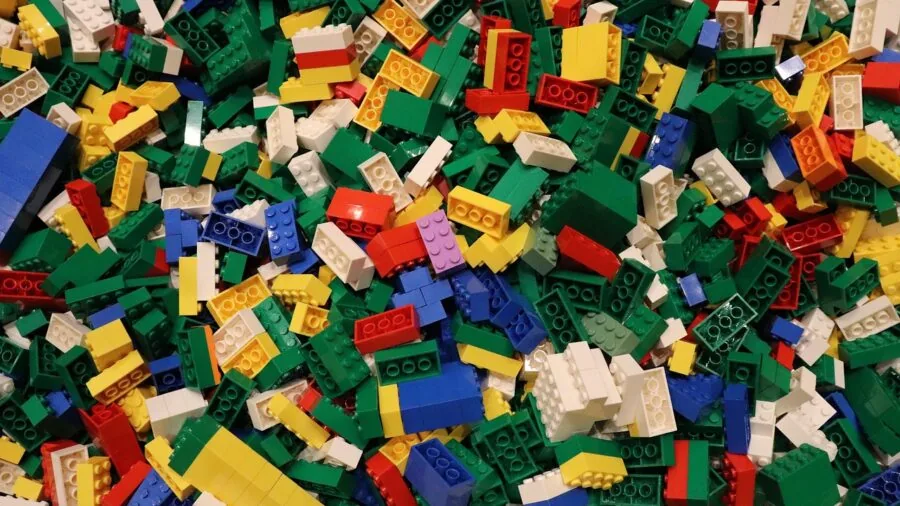
Building block sets are notoriously hard to keep organized.
Sets that include a dedicated storage solution, a mesh bag, a wooden box, or an integrated play table, consistently earn higher marks from verified buyers who cite cleanup friction as a major daily frustration.
The MEGA BLOKS build-and-learn table solves this by making the storage surface the play surface itself. The Onshine large wooden set includes a wooden storage box, which verified buyers call one of its standout practical features.
Portability matters for families who travel or rotate toys between rooms. Magnetic tile sets in zip-close pouches and soft block sets in mesh bags score well here. Large brick sets and play tables are stationary investments.
If your household also uses structured developmental tools like a WiFi baby monitor to keep an eye on independent play sessions, a self-contained set with a table or storage box means the child can play safely without constant supervision of piece scatter.
Educational Value and Skill Development

Not all building blocks develop the same skills. Sorting and stacking toys with color-coded shapes, like the PEBIRA Montessori set, explicitly target color recognition, shape discrimination, and hand-eye coordination.
These are foundational cognitive skills that early childhood educators consistently recommend for children aged one to three. Montessori-aligned toys in particular are designed to be self-correcting, meaning a child discovers the right fit through exploration rather than instruction.
Magnetic tiles develop spatial visualization and early physics intuition. Children learn about symmetry, balance, and magnetic polarity through direct manipulation.
Research from early childhood learning journals suggests that magnetic construction play is associated with stronger spatial reasoning scores in later academic assessment.
For parents building a broader developmental toy ecosystem, pairing building blocks with coloring books for kids supports complementary fine motor and creative skill-building on days when block play takes a back seat.
Compatibility and Expandability
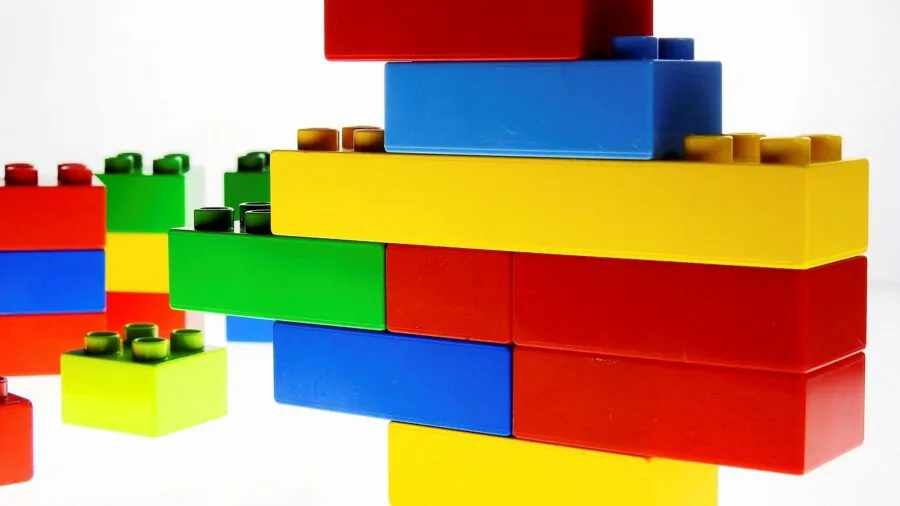
Some building systems are designed to be expandable. Interlocking brick sets that follow compatible stud-and-tube geometry can be combined with other sets over time, increasing play complexity as a child grows.
The LOGBAY large brick set explicitly notes compatibility, which means parents can invest in expansion packs rather than replacing the entire system. MEGA BLOKS pieces are similarly designed for inter-compatibility across the brand’s range.
Magnetic tile brands vary in cross-brand compatibility. Some tiles from different manufacturers share a standard tile size and will connect with each other; others use proprietary connector geometries that only work within the brand’s ecosystem.
Buyers who plan to grow a magnetic tile collection over time should confirm compatibility before mixing brands. This is one area where verified buyer feedback from parents who own multiple sets proved particularly useful in our research process.
Why You Should Trust Us
ProductFind is an independent editorial platform.
Every product in this guide was evaluated using a consistent, structured research methodology: we analyzed manufacturer specifications, cross-referenced expert review consensus from child development specialists and parenting publications, and weighted verified buyer feedback heavily, particularly from caregivers who reported on long-term durability, safety incidents, and developmental impact after extended use.
We do not conduct our own product trials; our evaluations are grounded in research, published data, expert review consensus, and verified buyer feedback.
Each product receives a PF Score on a scale of zero to ten. This score reflects a weighted composite of safety compliance, construction quality, educational value, buyer satisfaction trends, and price-to-value ratio. Products are ranked strictly by PF Score.
Affiliate transparency: ProductFind may earn a commission when you purchase through a link in this article. That commercial relationship has no bearing on which products are selected, how they are ranked, or what PF Score they receive.
Our editorial decisions are independent of advertiser or retail relationships.
Final Thoughts
The first building blocks a child plays with can shape years of play habits and developmental milestones. After thorough research and scoring across categories, here are our standout picks from this roundup:
- Best Overall: Jasonwell 100pcs Magnetic Tiles Building Blocks Set earns the top PF Score in this roundup. Its large piece count, verified safety compliance, strong educational STEM value, and consistent buyer satisfaction across age groups make it the most versatile and well-rounded choice for families looking for a first magnetic construction set.
- Best Budget Pick: PEBIRA Montessori Sorting and Stacking Toys delivers genuine Montessori-aligned learning value at a budget-friendly price point, making it an ideal supplementary gift or a first developmental toy for toddlers aged one to three.
- Best for Infants and Young Toddlers: B. toys One Two Squeeze Soft Building Blocks is the safest and most sensory-appropriate option in this roundup for babies who are still in the grasping and mouthing stage, with a BPA-free soft construction that parents and caregivers consistently praise.
- Best Wooden Set: Onshine Large Wooden Blocks for Toddlers stands out for its generous sixty-four-piece count, included wooden storage box, and durable construction that verified buyers report holding up across multiple children and years of use.
- Best Play Table Format: MEGA BLOKS First Builders Build and Learn Table is the strongest pick for caregivers who want a dedicated play station that doubles as storage, keeping pieces corralled and encouraging independent play for toddlers who are ready for interlocking brick formats.
Whatever a child’s age or developmental stage, the best first building blocks are the ones that meet them where they are, challenge them just enough, and hold up to the enthusiasm of daily play.
If you are building out a broader early learning environment, soft baby books for every stage pair naturally with block play as part of a tactile, hands-on learning routine.
Frequently Asked Questions
What age are building blocks appropriate for?
The right type of building block depends heavily on age. Soft squeeze blocks are appropriate from around six months, when babies begin grasping objects intentionally. Large rigid stacking blocks suit toddlers from twelve to eighteen months onward.
Magnetic tiles and interlocking bricks are generally recommended for children aged three and older, once the risk of mouthing small parts has decreased.
Always check the manufacturer’s age recommendation and confirm that piece sizes meet safety standards for the child’s age.
Are magnetic tile building blocks safe for toddlers?
Quality magnetic tile sets from reputable brands are designed with fully encased magnets that meet ASTM F963 and similar safety standards.
However, they are generally recommended for ages three and up because of piece size and the small-parts risk for younger children. Parents should inspect tiles regularly for cracking or delamination, which can expose the magnetic components.
Sets from established brands with documented safety certifications, like those featured in this guide, have strong verified buyer records with minimal safety-related complaints.
How many pieces should a first building block set have?
For infants and young toddlers, smaller sets of ten to twenty pieces are actually preferable because they are less overwhelming and easier to manage.
As children grow into the toddler and preschool years, larger sets of sixty or more pieces allow for more complex and rewarding construction experiences.
Magnetic tile sets of one hundred pieces or more are well-suited for children aged four and up who are ready for sustained building sessions.
The key is matching set complexity to the child’s current attention span and motor development, not simply buying the largest set available.
What is the difference between Montessori building toys and standard blocks?
Montessori-aligned building toys are designed around the principle of self-directed discovery. They typically feature self-correcting mechanisms, such as shapes that only fit into matching slots, which allow children to learn through trial and error without adult instruction.
Standard blocks are open-ended with no single correct answer, which encourages creative and imaginative play. Both approaches have strong developmental research support.
The PEBIRA sorting set in this roundup exemplifies the Montessori approach, while the wooden Onshine set and magnetic tile options represent open-ended construction. Many developmental experts recommend exposure to both types across the toddler years.
Do building blocks from different brands work together?
For interlocking brick-format toys, compatibility depends on whether the brand follows standard stud-and-tube geometry. Many sets marketed as “compatible style” will connect with DUPLO-format pieces, though build quality and stud tolerance vary. LOGBAY explicitly notes compatibility in its product description.
For magnetic tiles, compatibility between brands is inconsistent. Some share standard tile dimensions and edge magnet placement; others use proprietary formats.
If expanding a collection over time matters to you, confirm cross-brand compatibility through verified buyer reports before purchasing additional sets.
How do I clean and maintain building blocks?
Soft fabric and foam blocks can typically be hand-washed or surface-wiped with a mild soap solution.
Wooden blocks should be wiped clean with a damp cloth and dried immediately to prevent warping; avoid submerging them in water or using harsh chemical cleaners on painted surfaces.
Plastic and magnetic tile sets can generally be wiped with a diluted disinfectant or damp cloth. Never place magnetic tiles in dishwashers or washing machines, as heat and water can compromise the encasement around the magnetic components.
Storing blocks in a dedicated box or bag, as provided with sets like the Onshine wooden set, significantly reduces surface contamination between play sessions.
About the author
Luke is a reviewer and writer for ProductFind who specializes in Baby Toys & Infant Development. Luke evaluates products through independent research: specifications, expert review consensus, and verified buyer feedback, and rates each one on the PF Score. Luke focuses on helping readers pick the right baby toys & infant development for their needs and budget.