The 12 Best Shape Sorters
Shape sorters build spatial reasoning, fine motor skills, and color recognition from infancy through preschool. Our picks cover every budget, material, and developmental stage.
 By Luke Ryan
Updated July 23, 2026
By Luke Ryan
Updated July 23, 2026

Shape sorters might look like simple toys, but they punch well above their weight when it comes to early childhood development.
From the moment a toddler tries to wedge a star through a square hole, they are quietly building spatial reasoning, fine motor control, hand-eye coordination, and early problem-solving skills.
Choosing the right one matters more than most parents expect: the wrong size, complexity level, or material can quickly turn an engaging challenge into a frustrating dead end.
Whether you are shopping for a newborn shower gift, a first birthday present, or a Montessori-aligned addition to a play space, there is a meaningful difference between a shape sorter your child will return to for years and one that collects dust after a week.
Pairing a great shape sorter with other sensory staples like well-designed baby rattles can make a real difference in how confidently an infant explores the world around them.
At ProductFind, we researched the shape sorter category by analyzing manufacturer specifications, synthesizing expert review consensus from child development and toy specialists, and weighing verified buyer feedback across thousands of confirmed purchases.
Every product in this guide earned a PF Score on our 0 to 10 scale, reflecting durability, developmental fit, ease of use, value, and safety.
The result is a curated list covering everything from budget-friendly starter sets to premium wooden and Montessori-inspired options, giving you a clear shortcut to the picks most worth your money in 2026. Read on for our top recommendations.
| Award | Product | PF Score About PF ScoreThe PF Score is our own rating from 0 to 10, based on performance, design and build, ease of use, and value. It reflects independent research and is never influenced by manufacturers, retailers, or affiliate commissions. Learn more › | Price | |
|---|---|---|---|---|
| Best Overall |
 Melissa & Doug Match and Roll Shape Sorter
|
8.4/10 | Buy | |
| Editor's Pick |
 Fisher-Price Baby's First Blocks 10-Piece Set
|
8.3/10 | Buy | |
| Best Value |
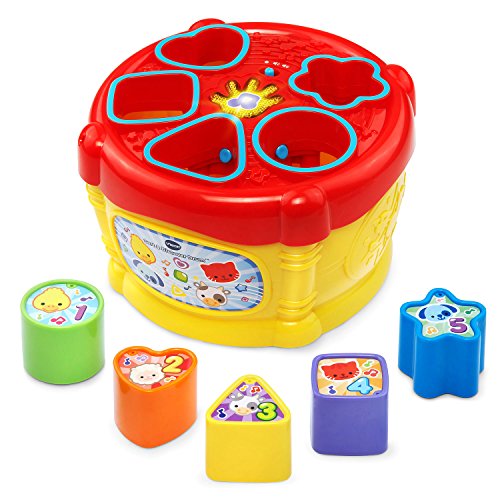 VTech Sort and Discover Drum
|
8.2/10 | Buy | |
| Top Rated |
 Fisher-Price Baby's First Blocks & Rock-a-Stack Combo
|
8.1/10 | Buy | |
 LiKee Shape Sorter Cube for Toddlers 12+ Months
|
8.0/10 | Buy | ||
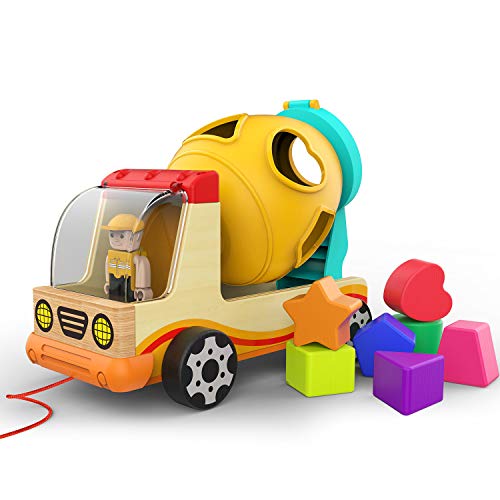 Top Bright Wooden Shape Sorter Truck
|
7.5/10 | Buy | ||
 mushie Shape Sorting Box, 12 Shapes
|
7.3/10 | Buy | ||
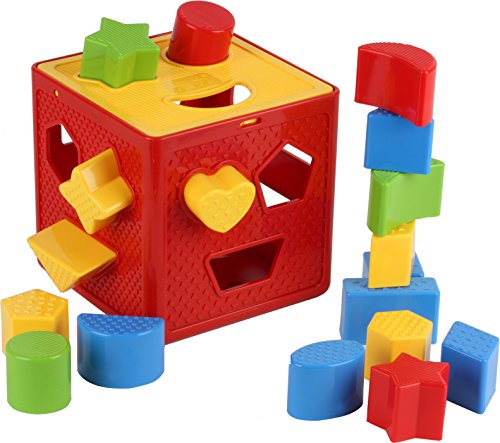 Play22 Shape Sorter Activity Cube with 18 Blocks
|
7.1/10 | Buy | ||
 Playkidiz Bus Shape Sorter, 16 Shapes
|
7.0/10 | Buy | ||
 Sassy Sushi Sorter 7-Piece Set
|
6.9/10 | Buy | ||
 Battat Stacking Cups Shape Sorter, 10-Cup Set
|
6.8/10 | Buy | ||
 Tupperware Shape-O Sorter Toy for Babies 12M+
|
6.2/10 | Buy |
Melissa & Doug Match and Roll Shape Sorter
A wooden shape-sorting toy designed for infants and toddlers 12 months and up, featuring six classic shapes in bright colors. Emphasizes skill-building through color and shape recognition, sorting, and fine motor development without screens.
Pros
- Durable wooden construction with child-safe materials
- Teaches multiple developmental skills: shape recognition, color identification, sorting, and manual dexterity
- Bright, engaging multicolor design appropriate for early learners
- Lightweight and portable at just over 1 pound
- Established brand with 30+ years in early childhood toys
Cons
- No customer reviews available to assess real-world performance or durability over time
- Limited variety in shape types may reduce long-term play value as child develops
- Size specification listed as '200 Count' appears inconsistent with a single shape-sorter toy, raising clarity concerns
Fisher-Price Baby's First Blocks 10-Piece Set
A straightforward shape-sorter toy with 10 colorful blocks designed for infants 6 months and up. Combines stacking, sorting, and fine motor skill development in one compact bucket with a carry handle for portable play.
Pros
- All blocks store inside the bucket, reducing clutter and keeping pieces together
- Easy-carry handle makes it convenient for travel or moving between rooms
- Introduces foundational concepts like colors, shapes, and problem-solving early on
- Supports fine motor skill development through sorting and stacking activities
- Compact dimensions (5.12 x 4.92 x 8.27 inches) fit easily in bags or small spaces
Cons
- No verified buyer reviews available to assess real-world durability or play value
- Limited to 10 blocks, which may feel modest compared to larger building or stacking sets
- Shape-sorter lid functionality and ease of use not detailed in specifications
VTech Sort and Discover Drum
A shape-sorting drum toy for infants and toddlers that combines motor skill development with music and light play. The toy recognizes shapes to teach animals, numbers, and shapes, while tapping produces drum sounds to encourage interactive play.
Pros
- Shape recognition feature adds educational value beyond basic sorting
- Multiple play modes: sorting, dumping, tapping, and light display keep engagement varied
- Portable size and lightweight design make it travel-friendly
- Designed for extended age range from infants through early toddlerhood
Cons
- No user reviews available yet to validate real-world durability and long-term performance
- Requires ongoing battery replacement for regular use despite demo batteries being included
- Limited information on whether sound and light features are adjustable for volume or brightness
Fisher-Price Baby's First Blocks & Rock-a-Stack Combo
A two-in-one bundle pairing Fisher-Price's classic Rock-a-Stack toy with Baby's First Blocks for early developmental play. Both toys target hand-eye coordination and problem-solving from 6 months onward, making this set a comprehensive intro to stacking and sorting activities.
Pros
- Complete bundle offers two distinct play patterns, stacking rings and shape sorting, in one purchase
- Includes storage bucket for blocks, simplifying cleanup and organization
- Designed specifically for 6+ month development stage with focus on motor skills and coordination
- Colorful, multicolor design appeals to babies and encourages visual engagement
- Lightweight and compact dimensions make it portable and space-efficient
Cons
- No customer reviews available to validate real-world durability or user satisfaction
- Limited to babies 6 months and older, so younger infants cannot use these toys
- No information on material composition or safety certifications beyond the Fisher-Price brand reputation
LiKee Shape Sorter Cube for Toddlers 12+ Months
A compact Montessori-style shape sorter cube designed for babies 12 months and up, featuring textured blocks and adjustable difficulty levels with double and single bands. Combines fine motor skill development with sensory exploration through varied textures on the blocks.
Pros
- Adjustable difficulty with double bands on one side and single bands on four others for progressive learning
- Multiple textures on blocks encourage tactile exploration and sensory development
- Supports shape recognition and early logic skills as babies grow into sorting activities
- Compact 5x5x5 inch size makes it portable and suitable for travel
- Designed specifically for the 12+ months developmental stage
Cons
- No verified customer reviews available to confirm real-world durability or actual engagement levels
- Limited information on material composition and safety certifications
- Unclear if included toys inside the cube are sufficiently varied to maintain long-term interest
Top Bright Wooden Shape Sorter Truck
A wooden and plastic hybrid shape sorter designed for toddlers ages 2+, featuring multiple shapes that fit into a truck with mixing bucket action. The toy emphasizes parent-child play and sensory learning through shapes, colors, and sounds.
Pros
- Polished edges and washable paint prioritize child safety and comfort
- Interactive sound feedback and role-play truck design increase engagement
- Multiple shapes and bright colors support early learning objectives
- Encourages extended independent play sessions according to description
Cons
- No verified buyer reviews available to validate durability or assembly experience
- Limited information on how many shapes are included or material breakdown
- The 4.8 rating appears placeholder with zero actual customer feedback
mushie Shape Sorting Box, 12 Shapes
A Denmark-made sorting toy with 12 soft-colored shapes designed to support cognitive and motor skill development from 10 months onward. The set uses safe, BPA-free materials and encourages hands-on learning through shape recognition play.
Pros
- Made in Denmark with certified safe materials, BPA, PVC, and phthalate-free
- Supports multiple developmental areas including fine motor skills, language, and STEM reasoning
- 12 distinct shapes encourage problem-solving and cognitive engagement
- Compact 5.6-inch cube design, easy to store and transport
- Soft color palette suitable for early learners
Cons
- No verified buyer reviews available to assess real-world durability or usability
- Limited information on shape difficulty progression for different age ranges within 10+ months
- Price positioning not disclosed, making value comparison difficult
Play22 Shape Sorter Activity Cube with 18 Blocks
A multicolor shape-sorting cube designed to develop fine motor skills and shape recognition in toddlers through hands-on play. The set includes 18 easy-to-grip blocks in 5 different shapes, plus a multi-activity cube with mazes and counting features.
Pros
- Comprehensive learning toy combining shape sorting with multi-activity cube play
- Safe, BPA-free materials appropriate for younger age groups
- Encourages development of fine motor skills and cognitive abilities through interactive play
- Medium size with compact dimensions makes it portable for travel or storage
Cons
- No verified buyer reviews available to assess real-world durability or user satisfaction
- Product description contains grammatical errors and unclear phrasing that raise quality concerns
- Limited information on age range recommendation or specific activity details beyond general claims
Playkidiz Bus Shape Sorter, 16 Shapes
A compact push-along bus that combines shape sorting with storage, designed for toddlers 1-3 years old. Includes 16 colorful shapes matching 16 slots, supporting early learning of colors, shapes, and logic skills.
Pros
- Multiple learning objectives in one toy: colors, shapes, logic, and motor skills
- Portable design with handle makes it suitable for travel and storage
- 16 shapes provide good variety without overwhelming younger toddlers
- Durable construction described as built to withstand active play
Cons
- No verified customer reviews available to validate actual durability and quality claims
- Limited information on shape difficulty progression or if all shapes are equally intuitive for 1-year-olds
- Storage capacity unclear once all shapes are removed during play
Sassy Sushi Sorter 7-Piece Set
A color-coded sorting toy that combines tactile exploration with a playful sushi theme. Six soft, squishy pieces fit into a matching box, making it suitable for babies learning shape and color recognition.
Pros
- Tactile variety with textures on multiple surfaces encourages sensory development
- Soft, squishable pieces are safe for babies to mouth and explore
- Color-coded design helps teach matching and shape recognition
Cons
- No verified buyer reviews available to validate real-world durability
- Limited to six sushi pieces, which may offer less variety than larger sorting sets
- Small box size (7 x 4.5 x 6 inches) may limit play options for older toddlers
Battat Stacking Cups Shape Sorter, 10-Cup Set
A colorful nesting and stacking toy designed for toddlers 18 months and up, combining basic learning (colors, shapes, gravity) with portable storage. The set includes 10 cups, 8 shape-matching pieces, and a sorter lid for multi-way play.
Pros
- 10-piece cup set offers extended stacking and nesting play without quick boredom
- Shape sorter lid adds a second learning activity beyond basic stacking
- Bright colors grab toddler attention and support early color recognition
- Compact storage bucket with handle makes cleanup and portability straightforward
- Made from worry-free materials appropriate for mouthing-age toddlers
Cons
- No verified buyer reviews available, so real-world durability and fit consistency cannot be confirmed
- Single color option (blue) limits customization for different preferences or nurseries
- Small shape pieces (8 included) present choking risk if supervision lapses, requiring constant parental oversight
Tupperware Shape-O Sorter Toy for Babies 12M+
A classic shape-sorting toy designed for babies and toddlers ages 12 months and up. The BPA-free design promotes motor skills and problem-solving through hands-on shape matching, available in cheerful colors like Aquamarine, Spa Blue, and Juicy Peach.
Pros
- BPA-free construction meets safety standards for infant toys
- Encourages motor development and cognitive problem-solving skills
- Available in multiple appealing color options
- From trusted Tupperware brand with established toy manufacturing history
- Designed specifically for 12-month-old developmental stage
Cons
- No verified customer reviews available to confirm real-world durability
- Limited product description details on included shapes and features
- Medium size may not suit all storage spaces or play environments
Shape Sorters Buying Guide
Not every shape sorter suits every child or home.
The picks above cover a wide range of ages, price points, and developmental goals, but understanding what actually separates a great sorter from a forgettable one will help you match the right product to your child’s current stage.
Below are the six criteria ProductFind weighted most heavily when evaluating this category.
Age Appropriateness and Developmental Stage

Shape sorters span a surprisingly wide developmental range. A six-month-old needs oversized, chunky pieces they can grasp with a full fist and a container lid with just two or three large openings.
By contrast, a three-year-old benefits from eight to twelve distinct shapes that genuinely challenge spatial rotation and visual discrimination.
Buying above or below your child’s current stage is one of the most common mistakes: a toy that is too easy loses attention within minutes, while one that is too complex produces frustration rather than learning.
Most manufacturers provide a minimum age, but treat it as a floor, not a guarantee of fit. Look at the number of shapes included and how different they actually are from one another.
A set where a circle, oval, and hexagon all share similar proportions offers a more nuanced challenge than three obviously distinct geometric forms.
As your child develops, many of the classic sets in this guide double as stacking or nesting toys, extending their useful life well past the sorting phase.
This type of multi-stage play value is one reason we score developmental longevity as a distinct dimension in our evaluations.
Material and Build Quality

The material question in shape sorters comes down to two main camps: plastic and wood. High-quality ABS plastic sorters from brands like Fisher-Price and VTech are lightweight, easy to wipe clean, and can incorporate electronic features like sounds and lights.
Solid hardwood sorters from brands like Melissa & Doug and TOP BRIGHT offer a tactile weight and natural finish that many parents prefer for screen-free, Montessori-style play.
Neither is categorically better; the right choice depends on your priorities around sensory feedback, durability, and screen-free play values.
Regardless of material, inspect tolerances carefully. Shapes should slot through their matching openings with a satisfying but not overly tight fit. If pieces require adult-level force, toddlers will give up quickly.
Equally, shapes that rattle loosely in their slots fail to deliver the rewarding “click” of successful matching that reinforces the learning loop.
Look for smooth edges and a non-toxic finish, particularly on wooden sets, since toddlers will inevitably mouth the pieces.
This matters just as much as the quality standards you would apply to soft baby books or any other toy in regular contact with a young child’s mouth and hands.
Number and Variety of Shapes
The shape count in a sorter is not simply a matter of more-is-better.
A set with six to eight meaningfully distinct shapes, where each piece demands a different rotational approach, teaches more than an eighteen-piece set where half the shapes share the same basic silhouette.
For children under eighteen months, four to six shapes is often the developmental sweet spot. Preschoolers approaching age three can handle ten to twelve or more without losing the thread of the activity.
Variety in color is equally important. High-contrast, saturated hues help younger children begin to associate color names with objects before they can reliably sort by form.
Sets that pair each shape with a consistent, distinct color reinforce two concepts simultaneously, doubling the educational return on each play session.
The Play22 cube included in this guide, for example, offers eighteen shapes across a full color spectrum, making it one of the more comprehensive options at its price tier.
Ease of Reset and Storage

One practical reality that buying guides rarely address: how easy is it to retrieve the pieces after your child has dropped them all inside?
Some sorters open only via a small lid that requires adult assistance every time, which disrupts independent play and increases caregiver burden.
Others feature a hinged door, a fully removable lid, or a snap-release base that lets toddlers reset the activity themselves. This seemingly minor design detail has an outsized impact on how often a toy actually gets used.
Storage also matters from a tidiness standpoint. Shape sorter pieces are small enough to scatter across a room in seconds.
Sets where all pieces nest inside the main container, like the Fisher-Price Baby’s First Blocks bucket, score well on this practical dimension because cleanup is genuinely fast.
If you are furnishing a nursery or playroom and storage is top of mind, it is worth considering how your sorter fits into a broader organizational setup, much the same way you would think about where cloth books for babies and other soft toys will be kept.
Electronic vs. Non-Electronic Features

Electronic shape sorters, led in this category by VTech’s Sort and Discover Drum, add a layer of multi-sensory feedback through sounds, lights, and voiced phrases.
Research into early learning toys consistently shows that immediate auditory feedback strengthens the cause-and-effect learning loop, particularly for children between twelve and twenty-four months who are still building the cognitive link between action and consequence.
For this age group, a sorter that says the shape’s name aloud when a piece drops through can accelerate vocabulary acquisition alongside spatial skills.
That said, electronic features come with real trade-offs: batteries to replace, volume levels that may grate on caregivers, and a reliance on external stimulation that some developmental frameworks, including Montessori, deliberately avoid.
Non-electronic wooden sorters place the focus entirely on the child’s own cognitive work and tend to hold up better to the rough handling toddlers dish out. Neither approach is universally superior.
If your household already leans toward screen-free play and you pair the sorter with other non-electronic sensory options, a premium wooden set may serve you better in the long run.
Value and Price Tier
Shape sorters span a wide price range, from budget-friendly plastic sets to premium wooden options that carry a significantly higher price tag. The good news is that price does not map neatly onto educational value.
Several budget-tier options in this guide, including the Fisher-Price Baby’s First Blocks and the Battat Stacking Cups, score well on core developmental criteria and represent exceptional value for families watching spending.
Meanwhile, premium picks like the mushie Shape Sorting Box and the Tupperware Shape-O justify their higher cost primarily through materials, design aesthetics, and brand heritage rather than a meaningfully superior developmental outcome.
Think about the role this toy will play in your child’s overall play environment. If a shape sorter is the centerpiece of early toy rotation, investing in a durable, long-lasting wooden set makes sense.
If it is one of many developmental tools alongside quality baby bottles, rattles, and soft books, a mid-range or budget option that gets the developmental job done is entirely defensible.
ProductFind weighted value-for-money as a meaningful component of every PF Score in this guide, so higher-priced picks only ranked well when the premium was genuinely justified by performance and build.
Why You Should Trust Us
ProductFind is an independent editorial publication. We have no manufacturing relationships, no sponsored placements, and no brand partnerships that influence which products appear in our recommendations.
Every shape sorter in this guide was evaluated using our consistent, research-driven framework: we analyze published specifications, synthesize expert review consensus from child development specialists and toy industry reviewers, and weigh verified buyer feedback drawn from confirmed purchases across major retail platforms.
We do not conduct our own product trials; our evaluations are grounded in research, published data, expert review consensus, and verified buyer feedback.
Each product receives a PF Score on a 0 to 10 scale. For shape sorters, that score reflects five weighted dimensions: developmental appropriateness, material and build quality, design usability (including reset ease and storage), value for price, and overall safety profile.
Products with higher PF Scores consistently outperformed the field on the criteria that matter most to parents and caregivers, not simply on brand recognition or popularity.
We update our research periodically to reflect new verified buyer data and product revisions, so the rankings you see reflect our current best understanding of the competitive landscape.
ProductFind may earn a commission if you purchase a product through a link on this page. That affiliate relationship has no bearing on our scores, rankings, or editorial selections. Products are ranked on merit.
We are not able to assist with purchases, returns, or warranty claims; for those matters, please contact the retailer or manufacturer directly.
Final Thoughts
After synthesizing specifications, expert review consensus, and verified buyer feedback across all twelve picks in this guide, a few clear standouts emerge.
The field is strong at every price tier, and parents have genuinely good options whether they are shopping on a tight budget or willing to invest in a premium heirloom-quality set.
Here are the awards we would assign based on our PF Score rankings:
- Best Overall: Melissa & Doug Match and Roll Shape Sorter earns the top spot with the highest PF Score in this guide. Its twelve smooth hardwood shapes, satisfying roll-and-match mechanism, and durable construction make it the most well-rounded pick for toddlers aged two and up who are ready for a genuine cognitive challenge.
- Best Budget Pick: Fisher-Price Baby’s First Blocks delivers outstanding developmental value at a budget-friendly price point. With ten chunky, colorful blocks and a bucket that doubles as a stacking toy, it is one of the most accessible and caregiver-approved entry points in the entire category.
- Best Electronic Shape Sorter: VTech Sort and Discover Drum stands out among electronic options for its engaging combination of lights, animal-themed sounds, and voiced shape names. Verified buyers consistently praise its ability to hold attention across extended play sessions, and it scores well for its developmental feedback loop.
- Best for Montessori-Inspired Play: LiKee Montessori Shape Sorter Cube offers a thoughtfully designed multi-sensory experience aligned with self-directed learning principles. Its tactile variety and screen-free approach make it a strong fit for families pursuing Montessori-aligned early childhood environments.
- Best Combo Set: Fisher-Price Baby’s First Blocks & Rock-a-Stack Toy Set bundles two proven developmental classics into a single purchase, giving caregivers a shape sorter and a stacking ring toy that together cover a broader range of fine motor and coordination milestones than either product would alone.
Whatever your budget or developmental priority, the shape sorters in this guide represent the strongest options currently available based on our research.
If you are building out a broader early learning environment, a quality shape sorter pairs naturally with other foundational sensory toys.
Consider adding baby rattles built for every stage to round out fine motor development in the months before shape sorting becomes a focus.
Frequently Asked Questions
What Age Is Right for a Shape Sorter?
Most shape sorters are designed for children starting around six months old, though the actual sorting activity typically clicks into place between twelve and eighteen months.
At six months, babies benefit from mouthing and handling the chunky pieces; intentional matching usually emerges closer to the one-year mark.
Simpler sets with two or three large openings suit younger infants, while sorters with eight or more distinct shapes challenge toddlers up to age three or four.
Keep in mind that age ranges on packaging reflect safety minimums around choking hazard size, not precise developmental readiness.
Observe your child: if they are consistently frustrated rather than engaged, step down in complexity for a month or two and return to the more challenging set later.
The best shape sorters, as reflected in our top picks, are designed to remain useful across multiple developmental phases rather than becoming obsolete once the sorting skill is mastered.
Are Wooden or Plastic Shape Sorters Better?
Neither material is universally superior. Wooden shape sorters, like the Melissa & Doug and TOP BRIGHT options in this guide, offer a natural tactile weight, a clean aesthetic, and durability that withstands years of rough play.
They are the default choice for Montessori-aligned households and those prioritizing screen-free, open-ended play. High-quality ABS plastic sorters are lighter, easier to sanitize, and can incorporate electronic features that some children find more motivating.
The practical decision usually comes down to your home’s play philosophy, your child’s sensory preferences, and your tolerance for battery replacement. Both materials are safe when sourced from reputable brands using non-toxic finishes and paints.
If you are torn, consider how the sorter fits into your broader toy ecosystem alongside other early learning staples.
How Many Shapes Should a Shape Sorter Have?
For infants and young toddlers under eighteen months, three to six shapes is usually the right range. This allows meaningful success moments without overwhelming a developing spatial mind.
For toddlers between eighteen months and three years, eight to twelve shapes introduces a more satisfying challenge as their rotational spatial skills mature.
Sets with more than twelve shapes are better suited to preschool-age children who are ready for fine distinctions between similar forms.
More important than raw count is how distinct the shapes genuinely are from one another. A well-designed six-shape set where every piece requires a different approach teaches more than a fifteen-shape set where half the pieces share similar proportions.
Prioritize genuine variety over quantity when comparing options.
Are Shape Sorters with Sounds and Lights Worth It?
Electronic shape sorters provide immediate auditory and visual feedback that can strengthen the cause-and-effect learning loop for children between twelve and twenty-four months.
Research on early learning toys suggests that hearing a shape’s name spoken aloud at the moment of successful insertion can accelerate both vocabulary development and shape recognition.
For children who respond strongly to sensory stimulation, electronic sorters like the VTech Sort and Discover Drum genuinely add developmental value.
The trade-off is that electronic features introduce batteries, potential volume annoyance, and a dependence on external reward that some developmental frameworks deliberately avoid.
If your household is oriented toward Montessori or Waldorf approaches to play, a non-electronic wooden sorter will better align with those values.
If your child is highly motivated by sound and light feedback and you want a toy that keeps engagement high during independent play, the electronic investment is justified.
Both categories appear in our top picks because both serve real needs for different families.
What Safety Standards Should a Shape Sorter Meet?
Any shape sorter sold in the United States for children under three should comply with ASTM F963, the standard Consumer Product Safety Commission toy safety specification.
For wooden toys, look for non-toxic, water-based paint or lacquer finishes rather than solvent-based coatings.
All pieces should be large enough to fail the standard small-parts choke evaluation (a cylinder approximately 1.25 inches in diameter and 2.25 inches long) if the toy is marketed for children under three.
For electronic models, check that the battery compartment requires a tool or has a secure screw closure that a toddler cannot open unassisted. Button batteries pose a serious ingestion hazard and should never be accessible to young children.
All twelve picks in this guide come from established brands with documented safety compliance, but it is always worth verifying the current safety status directly with the manufacturer if you are purchasing for a very young infant.
As with any developmental toy, from cloth books to rattles, always supervise play and inspect pieces regularly for damage or wear.
How Do Shape Sorters Compare to Other Early Learning Toys?
Shape sorters occupy a unique developmental niche because they simultaneously target fine motor skills, spatial reasoning, color recognition, and problem-solving in a single activity.
Compared to simpler sensory toys like rattles, which primarily build auditory awareness and grip strength, shape sorters introduce a cognitive planning element: the child must mentally rotate a shape, hypothesize the correct opening, and execute a precise motor movement.
That multi-layered challenge makes them one of the highest-return educational toys for the one-to-three age range.
They complement rather than replace other developmental staples. A well-rounded early play environment might include a shape sorter alongside sensory books, stacking rings, and push-pull toys, each targeting slightly different skill clusters.
If you are thinking about the broader picture of infant development tools, our coverage of soft baby books for every stage is a useful companion resource for building out a complete sensory and cognitive toy rotation.
About the author
Luke is a reviewer and writer for ProductFind who specializes in Baby Toys & Infant Development. Luke evaluates products through independent research: specifications, expert review consensus, and verified buyer feedback, and rates each one on the PF Score. Luke focuses on helping readers pick the right baby toys & infant development for their needs and budget.