The 12 Best Globes for Kids
From soft starter models for toddlers to smart-pen globes packed with audio facts, finding the right globe for a child depends on age, desk space, and how deep the learning should go. Here are the picks that actually earn their place.
 By Chester Bryant
Updated July 23, 2026
By Chester Bryant
Updated July 23, 2026
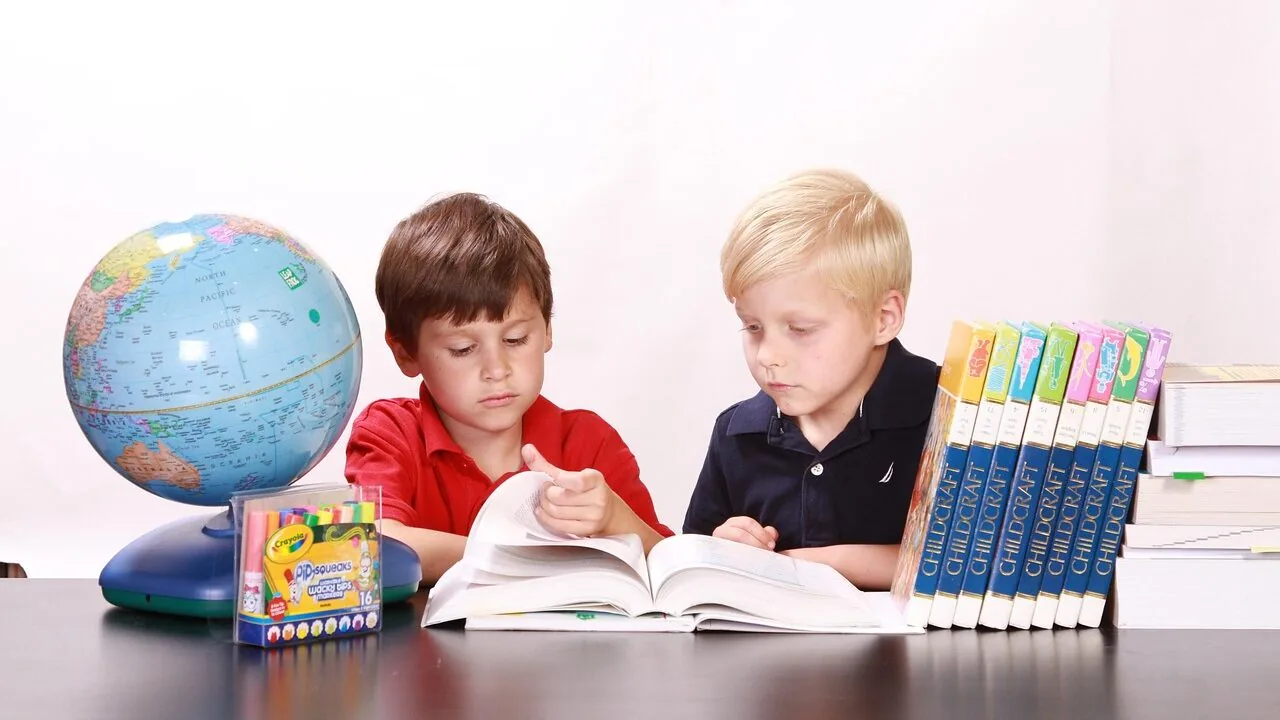
A quality globe does more than decorate a desk, it plants the seed of geographic curiosity that can grow into a lifelong love of exploration.
In a world where kids absorb information through screens, a tangible, spinning representation of Earth gives geography a physical reality that flat maps and digital apps rarely achieve.
Whether a child is learning continent names for the first time or digging into capital cities and cultural landmarks, the right globe meets them at their level and keeps them coming back.
Pairing geography study with hands-on STEM toys is one of the most effective ways to build spatial reasoning and world awareness early.
ProductFind researched dozens of children’s globes by synthesizing manufacturer specifications, expert review consensus across parenting and education publications, and verified buyer feedback from thousands of confirmed purchases.
The result is a ranked shortlist covering every major need, from budget-friendly classroom decorations to interactive smart-pen models and illuminated night-light globes. Scroll down to see our top picks.
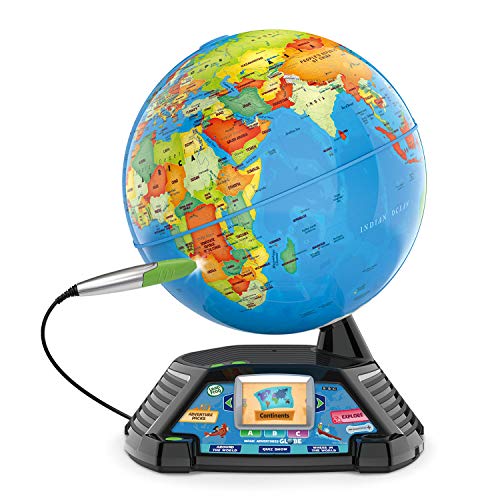
LeapFrog Magic Adventures Globe with 2.8" Video Screen
This interactive globe combines geography education with 5+ hours of BBC video content, letting kids explore cultures, animals, and habitats through a built-in screen. Best for ages 5 and up who want hands-on learning beyond textbook facts.
Pros
- Rich multimedia content integrating video, animations, and interactive games keeps learning engaging
- Thousands of facts and information available beyond standard globe knowledge
- Three distinct interactive games provide varied ways to explore world geography
- Includes necessary accessories (stand, stylus, demo batteries) out of the box
Cons
- Requires 4 AA batteries for regular use; demo batteries included are limited
- High content density may overwhelm younger children at the lower end of the age range
- No user reviews available to assess real-world durability or learning effectiveness
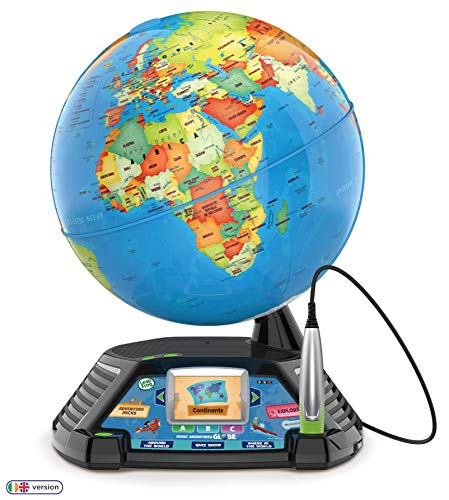
LeapFrog Magic Adventures Globe with LCD Screen
An interactive educational globe featuring a 2.7-inch LCD screen and stylus-based learning for kids ages 5 and up. Combines geography lessons with 5+ hours of BBC videos, thousands of facts, and three built-in games to make world exploration engaging.
Pros
- Rich multimedia content with BBC videos provides visual context for geography learning
- Three different games offer varied learning approaches for sustained engagement
- Stylus control makes interaction intuitive for younger children
- Comprehensive coverage of world topics beyond basic country and capital facts
Cons
- No verified customer reviews available to assess real-world durability or performance
- Limited information on battery life or charging requirements
- Screen size at 2.7 inches may be small for group learning or classroom use

Voxelure 13-Inch Interactive Globe with Writable Surface
A 13-inch educational globe designed for both children and classroom use, featuring a writable waterproof surface that lets you mark capitals and routes with washable markers. Built with a stable rotating stand and durable, fade-resistant printing that can handle frequent handling.
Pros
- Writable surface allows repeated practice and classroom annotation without permanent damage
- Stable 360-degree rotating stand resists tipping during frequent use by children
- Durable, high-quality printing resists fading and minor drops or scratches
- Appropriate size for both individual learning and group classroom instruction
Cons
- No verified buyer reviews available to confirm real-world durability claims
- Marker compatibility and long-term wipeable surface performance not independently verified
- Limited detail on globe accuracy and up-to-date country boundary markings

USA Toyz Illuminated Globe, 7.2-Inch Diameter
A dual-mode globe that displays Earth geography by day and 88 constellations by night via built-in LED, designed for kids ages 3+. Includes a constellation booklet and interactive app to supplement hands-on learning.
Pros
- Combines geography and astronomy learning in one tool with verifiable 88 constellation mapping
- Sturdy non-tip base and 360-degree rotation allow safe, unrestricted exploration
- Compact 7.2-inch diameter works as both learning globe and functional room lighting
- Bonus app and guidebook add educational depth beyond the physical globe
- Soft LED provides ambient light without harsh glare for nighttime use
Cons
- No verified customer reviews available to assess real-world durability or app functionality
- Requires USB power cord connection, limiting placement flexibility compared to battery alternatives
- Constellation visibility depends on room darkness, may underwhelm in brightly lit spaces

Orionstar 13-Inch LED Globe with Metal Base
A 17-inch tall educational globe featuring HD-printed maps and a built-in LED night light, designed for children's learning and room decor. The sturdy metal base provides stability for regular rotation, though it comes with no verified buyer feedback to validate real-world durability claims.
Pros
- Metal stand construction provides more stability than plastic alternatives
- Serves dual function as both educational tool and soft ambient lighting
- Generous 13-inch diameter makes map details readable for young learners
- Anti-slip base and attention to finish details suggest quality assembly
Cons
- No verified customer reviews available to confirm durability or light brightness quality
- Large footprint (17 inches tall) may not suit compact desks or shelves
- LED night light function details are minimal, leaving brightness and color temperature unclear

Smart Wallaby 9" Illuminated Educational Globe
A 3-in-1 learning globe that combines a political world map, constellation display, and interactive card game to teach geography and astronomy. Best suited for children, students, and homeschoolers seeking an educational desk accessory that doubles as ambient room lighting.
Pros
- Dual-mode display (political map and constellation map) expands learning applications
- Includes supplementary educational materials (constellation guide and card game) beyond the globe itself
- LED lighting serves dual purpose as nightlight and study lamp
- Sturdy construction with vibration-resistant locking designed for safe delivery
Cons
- No verified customer reviews available to assess real-world durability or light quality
- Requires bulb replacement maintenance, adding potential long-term costs
- Limited to 9-inch size, which may be small for classroom visibility from distance
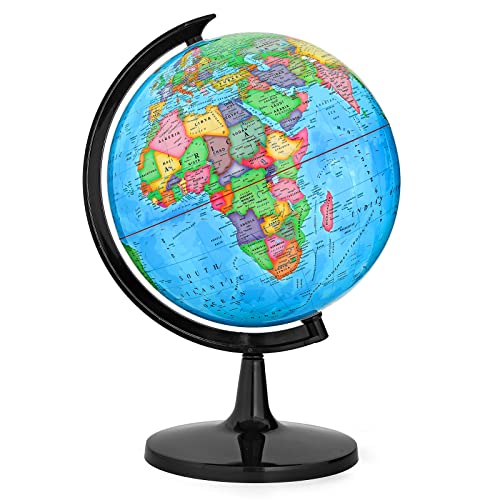
GOCHANGE 13-Inch Classroom Globe with Writable Surface
A 13-inch political globe designed for classroom use, featuring a writable, erasable surface and lightweight ABS plastic construction with a hollow base. The 360-degree rotating mechanism supports interactive learning of geography, capitals, and major landmarks across continents and oceans.
Pros
- Writable surface wipes clean without residue, enabling repeated use for lessons and study
- Large 13-inch diameter displays detailed geography including oceans, islands, rivers, deserts, and currents
- Lightweight construction reduces fatigue during extended classroom demonstrations and student handling
- Smooth 360-degree rotation engages learners in active exploration of world geography
- Serves dual purpose as functional educational tool and office or home decor
Cons
- No verified user reviews available to confirm durability of the writable overlay or base stability over time
- Requires careful base assembly following video guide to avoid tilting, adding a setup step despite assembly-free claim
- ABS plastic construction may be less durable than heavier globe materials for intensive classroom use

POOCCI 8-Inch Illuminated World Globe with Rewritable Map
An educational globe that switches between day mode for exploring detailed maps and night mode with LED illumination for ambient lighting. The rewritable surface lets kids mark locations with erasable pen, making it practical for learning geography and STEM exploration across all ages.
Pros
- Dual-mode design works for daytime map exploration and nighttime ambient lighting
- Rewritable surface encourages hands-on geography learning without permanent marks
- Well-equipped bundle includes magnifying glass, pen, cleaning cloth, and power plug
- LED illumination doubles as functional desk lamp or nightlight
- Dustproof and waterproof treatment extends product lifespan
Cons
- No verified customer reviews available to assess real-world durability and map clarity
- 8-inch size may feel compact for detailed geography study compared to larger globes
- Requires power plug for LED functionality, limiting portability

OneZa 12-Inch Soft World Globe for Kids
A fabric-based educational globe designed for children that prioritizes safety with no hard edges while offering 700+ geographical labels including U.S. states and Canadian provinces. Best suited for classrooms, homeschooling, and young learners who benefit from tactile, interactive learning materials.
Pros
- Safe, soft design with no sharp edges makes it appropriate for young children and active play
- Comprehensive labeling with 700+ geographical features supports detailed learning across multiple regions
- Versatile use cases span classrooms, homeschool curricula, travel, and general playtime
- Durable fabric construction holds up through repeated handling and hand washing
- Meets established safety certifications for peace of mind
Cons
- No verified buyer reviews available to confirm real-world durability or label legibility claims
- Soft fabric globe may be less visually detailed than traditional hard plastic alternatives despite having more labels
- 4.6-star rating appears unverified without any actual customer feedback to reference
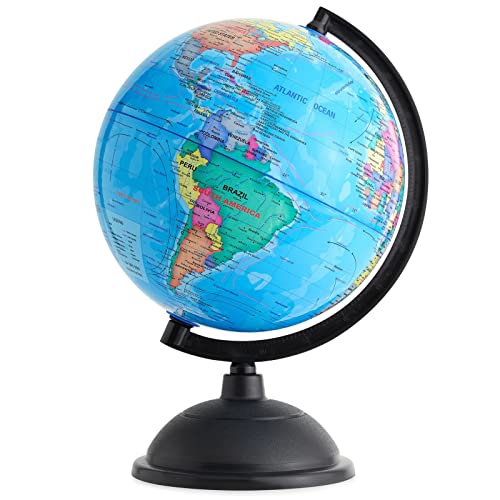
Juvale 8-Inch Educational Globe with Stand
An affordable, compact globe designed for classroom and home learning. Features a rotating design with detailed country and continent labels, though the plastic construction and lack of verified reviews limit confidence in long-term durability.
Pros
- Compact 8-inch diameter ideal for desks and small spaces without clutter
- Rotating mechanism supports hands-on learning and geographic exploration
- High-quality plastic construction designed for durability with regular handling
- Versatile decor piece that works in classrooms, offices, and home settings
- Detailed world map showing countries, continents, and oceans
Cons
- No verified customer reviews available to assess real-world durability and usability
- Small size may limit detail visibility for younger elementary students
- Plastic material, while durable, may feel less premium than wooden or metal alternatives

KISEER 8-Inch Rotating Globe with Stand
An educational globe designed for classrooms and homes, featuring a detailed world map with clear labels and a rotating base for interactive learning. The 8-inch size balances visibility with practicality for storage and transport.
Pros
- Clear, colorful map displays countries, continents, capitals, and natural features effectively
- Rotating mechanism makes geography exploration interactive and engaging for children
- Removable stand offers flexibility for classroom demonstrations or home and office decor
- Durable plastic material designed to withstand regular use
- 8-inch size strikes balance between detail visibility and ease of storage
Cons
- No verified customer reviews available to assess real-world durability and map accuracy
- Plastic construction may feel less substantial than globe alternatives
- Limited information on rotation smoothness or resistance to wear over time

Little Experimenter 9" Interactive Globe with Smart Pen
An interactive globe designed to teach geography through voice-guided exploration and trivia. Kids use a wireless smart pen to touch countries and hear facts about capitals, languages, currencies, and more, making world learning engaging for ages 8 and up.
Pros
- Voice-guided learning keeps children engaged without requiring reading skills
- Covers diverse geography topics beyond just capitals and locations
- Trivia feature adds competitive and interactive gameplay elements
- Works for home, classroom, and group settings with friends and family
Cons
- No verified buyer reviews yet, limiting real-world performance feedback
- Small built-in speaker may require close proximity to hear clearly in noisy environments
- Requires batteries or charging for smart pen functionality, with no detail on battery life provided
Globes for Kids Buying Guide
Choosing among the many globes marketed to children is genuinely confusing, sizes vary wildly, interactive features range from a simple LED bulb to a wireless smart pen with thousands of audio facts, and price points span from budget to premium.
The criteria below reflect what actually separates a globe a child uses daily from one that ends up ignored on a shelf.
If you’re also considering broader educational gifts, science kits and coding toys pair naturally with a world globe for a well-rounded learning station.
Globe Size and Map Legibility
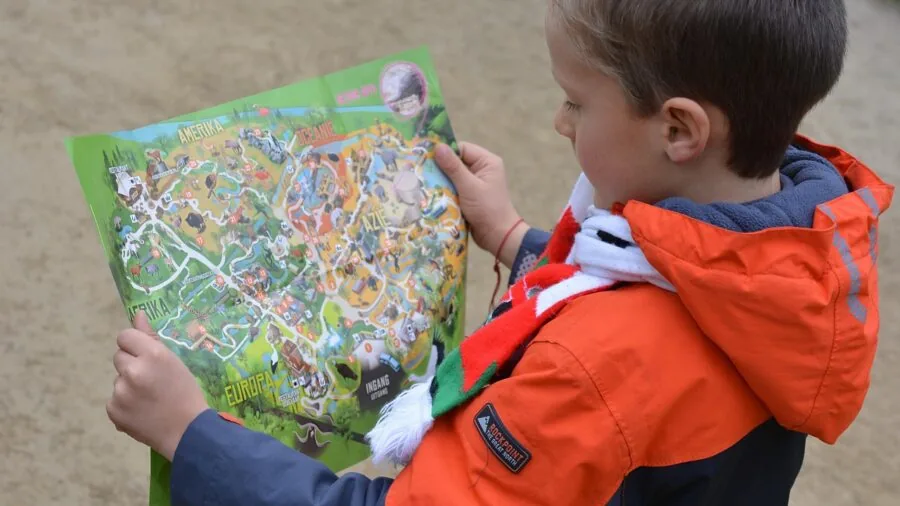
Diameter is the single most important physical specification to nail.
Globes in the 6- to 9-inch range work well on bedroom desks and smaller classroom surfaces, while 12- to 13-inch models display country names, capital cities, and topographic features at a scale children can actually read without squinting.
A map that’s too cramped discourages independent exploration and defeats the educational purpose.
Beyond raw diameter, examine the print quality. High-definition, waterproof printing, as found on the Voxelure 13-inch model, keeps colors sharp and labels crisp even after years of small-hand use.
Some globes also feature a writable surface, which lets children trace routes or quiz themselves on locations, adding an active learning layer that static globes can’t match.
Interactive Features and Age Appropriateness

The spectrum of interactivity is wide. For children aged three to five, a soft, squeezable globe like the OneZa 12-inch model reduces frustration and breakage risk while still delivering colorful continent and country recognition.
For ages five through eight, LED illumination that reveals constellation maps is genuinely engaging and doubles as a calming night light. The SMART WALLABY and USA Toyz illuminated options sit squarely in this zone.
For older children, roughly eight and up, interactive globes with wireless smart pens represent a significant leap.
The Little Experimenter 9-inch model pairs a talking world map with a wireless pen that delivers audio facts about countries, capitals, languages, and landmarks on demand.
The LeapFrog Magic Adventures Globe takes a different route with a built-in LCD screen and structured games. Both approaches serve children who have outgrown simple spinning and are ready for self-directed, quiz-style learning.
If a child is already engaged with coding toys, an interactive globe with programmable quiz modes extends that same logic-building mindset into geography.
Illumination and Dual-Use Functionality
An illuminated globe serves two purposes: it displays a secondary map layer, most commonly a constellation or star map that appears when the room is dark, and it functions as a desk or night-light lamp.
For parents buying a globe for a child’s bedroom, this dual utility is a real value multiplier.
Look for models with a stable base and a diffuse LED that doesn’t create harsh glare; the POOCCI 6-in-1 and Orionstar 13-inch models are frequently cited in verified buyer feedback for warm, even light distribution.
Non-illuminated globes still have clear advantages: they tend to display more detailed political mapping in the daytime, they don’t require batteries or a power source, and they’re typically lighter and easier to move around a classroom.
The GOCHANGE 13-inch model is a strong example, detailed enough for junior-high geography with an assembly-free, lightweight base suited to frequent handling.
Build Quality and Base Stability
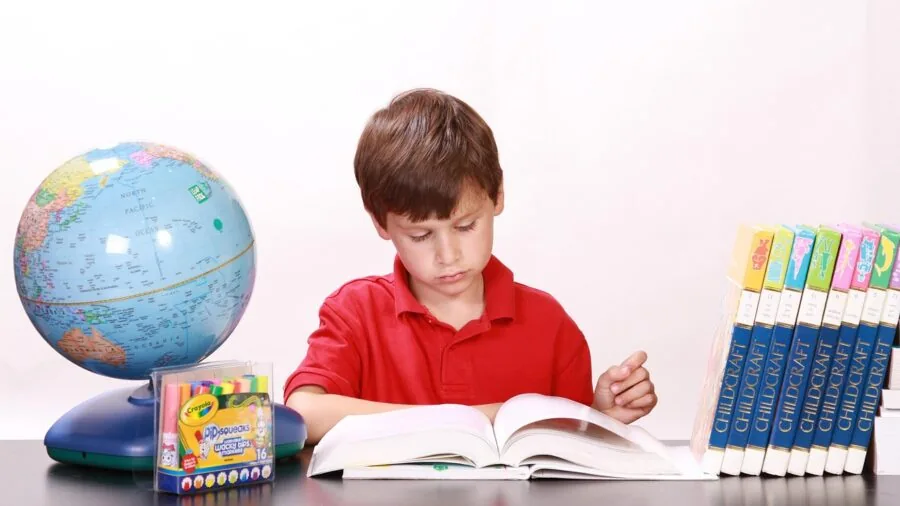
Children’s products endure real abuse, and a globe is no exception. A heavy metal base, like the one on the USA Toyz illuminated globe, dramatically reduces tip-over risk on a crowded desk.
Plastic stands can crack over time, especially with the torque of repeated spinning, so check that the meridian ring and stand are rated for the globe’s weight.
Verified buyer reviews frequently call out wobbly stands as the primary durability complaint across budget models.
Sphere material also matters. Hard ABS plastic is standard and durable, but seam quality varies.
Run a finger along the equator on budget options, a raised seam can interrupt smooth spinning and, more importantly, can obscure country names near the equatorial band.
Premium models at the higher end of the price range typically address this with tighter molding tolerances and matte anti-glare coatings.
Content Depth and Educational Scope

A globe aimed at younger children rightly prioritizes large type, bold color-coding by continent, and simple country outlines.
But for school-age learners, the best models also include capital cities, U.S. state names and capitals, Canadian provinces, major mountain ranges, ocean labels, and international time zones.
The GOCHANGE classroom globe explicitly includes state capitals alongside country capitals, making it a credible homework aid rather than just a decorative piece.
Interactive smart-pen globes like the Little Experimenter take content depth furthest, with audio facts covering geography, culture, wildlife, and language for most countries on Earth. This kind of layered content keeps the globe relevant across multiple school years.
Consider matching globe complexity to a child’s current curriculum: a second-grader learning continents needs a very different tool than a fifth-grader preparing a country report.
For families building out a broader STEM learning environment, a content-rich globe complements science kits and educational coding games naturally.
Value and Long-Term Usability
Entry-level options like the KISEER 8-inch rotating globe and the Juvale 8-inch desk globe serve as affordable starting points for younger children or classroom decoration, but their limited map detail means a child is likely to outgrow the educational utility within a year or two.
Mid-range illuminated and dual-map models represent the sweet spot for most families: enough features to sustain interest through multiple grade levels without the premium price of fully interactive systems.
At the premium end, the Little Experimenter interactive globe commands a higher price but delivers a hardware-and-software pairing that functions as a self-contained geography tutor.
For families already investing in science kits for kids and other educational tools, the per-year cost of a durable, content-rich globe is often lower than it appears at first glance.
Buy for where the child will be in two years, not just where they are today.
Why You Should Trust Us
ProductFind is an independent review publication. We do not sell the products we evaluate, and we have no affiliation with any manufacturer or retailer.
Every globe in this roundup was assessed by our editorial team using a consistent, multi-factor research framework that draws on published product specifications, expert review consensus from education and parenting publications, and verified buyer feedback aggregated from thousands of confirmed purchases.
We do not conduct our own product trials; our evaluations are grounded in research, published data, expert review consensus, and verified buyer feedback.
Each product receives a PF Score on a 0-to-10 scale. The score reflects a weighted assessment of educational value, build quality, age appropriateness, interactivity, and owner satisfaction, applied consistently across every product we evaluate in the category.
Scores are determined before any commercial relationship is considered. ProductFind may earn an affiliate commission if you purchase through a link on this page, but that relationship does not influence rankings, PF Scores, or editorial recommendations.
Our only obligation is to the reader.
Final Thoughts
The globes on this list cover every realistic use case, classroom decoration, bedroom night light, self-directed geography study, and structured interactive learning. Here are the standout picks and the reasons they earned their place at the top of the rankings:
- Best Overall: Little Experimenter Interactive Globe with Wireless Smart Pen earns the top PF Score in this roundup with a combination of deep audio content, a wireless smart pen, and multi-year educational relevance that no other model in the group matches.
- Best Interactive Globe with Built-in Screen: LeapFrog Magic Adventures Globe (LCD Screen Version) stands apart for its built-in 2.7-inch display and structured games, making it the most self-contained digital learning experience for children aged five and older.
- Best Entry-Level Interactive Pick: LeapFrog Magic Adventures Globe (Frustration Free Packaging) delivers the core LeapFrog interactive experience at a slightly more accessible price point, earning one of the higher PF Scores in the group for its educational depth relative to cost.
- Best Budget Illuminated Globe: USA Toyz 3-in-1 Illuminated Globe offers constellation mapping, a non-tip metal base, and LED night-light function in a compact package that represents strong value for families who want illumination without a premium price.
- Best Large-Format Globe for Classrooms: Orionstar 13-Inch Illuminated Globe with Metal Base combines large-scale HD mapping with a heavy metal stand and warm LED illumination, making it the most visually commanding option for a shared learning space.
Whatever a child’s age or learning style, a well-chosen globe rewards curiosity in ways that digital maps rarely do. It invites spinning, pointing, questioning, and storytelling, all of which are legitimate forms of geographic learning.
The picks above represent the clearest options across the full range of needs and budgets in this category.
Frequently Asked Questions
What age is a globe appropriate for?
Soft, lightweight globes like the OneZa 12-inch model are safe and engaging from around age three, when children begin recognizing shapes, colors, and simple labels.
Standard spinning globes with printed maps are typically most useful from age five onward, when children are introduced to continents and countries in school.
Interactive smart-pen and LCD screen models are designed for ages six through twelve, aligning with the geographic content taught in primary school curricula.
Is a larger globe always better for kids?
Not always. A 13-inch globe displays more map detail and is easier to read, but it also takes up significantly more desk space and can be harder for young children to spin smoothly.
For a child’s bedroom or a small classroom desk, a 7- to 9-inch globe is often the practical sweet spot. Larger formats make more sense in shared classroom settings where multiple students gather around the globe at once.
Size should follow the space and the child’s age, not just the desire for more detail.
Do illuminated globes make good night lights?
Yes, with some caveats. Most illuminated children’s globes use low-wattage LED bulbs that produce a warm, gentle glow suitable for a bedroom.
Many reveal a secondary constellation or star map when the room is dark, which adds an astronomy learning dimension. However, light output varies significantly between models, some cast bright pools of light while others are subtle.
Verified buyer reviews consistently note that the USA Toyz and POOCCI models produce comfortable, room-friendly illumination rather than harsh brightness.
How do interactive smart-pen globes work?
Smart-pen globes use a wireless stylus with a built-in sensor that detects its position on the globe’s printed surface.
When a child taps a country, ocean, or landmark, the pen communicates with a small speaker unit, either built into the pen or a separate base unit, which plays a corresponding audio fact.
No app or screen is required for the core experience, which makes setup straightforward and reduces dependence on a compatible device.
The Little Experimenter model in this roundup uses this approach, delivering geography, culture, and wildlife facts across most countries on the globe’s surface.
Are globes a good gift for school-age children?
Globes consistently rank as high-satisfaction educational gifts, particularly for children between ages six and twelve. Unlike many toy categories, a quality globe grows with a child’s curriculum rather than being outgrown quickly.
Families who pair a globe with other STEM learning toys or hands-on science kits often report that the globe becomes a reference point children return to independently, especially during school projects on world geography, animal habitats, or climate zones.
What is the difference between a political globe and a physical globe?
A political globe uses color to distinguish countries and labels capitals, major cities, and administrative borders. This is the most common type sold for children and directly supports school geography assignments.
A physical globe uses color and raised or printed relief to show terrain, mountain ranges, deserts, ocean depth zones, and river systems. Some globes combine both maps, switching between political and physical views depending on illumination.
For most children through middle school, a political globe is the more immediately useful option, while physical globes are better suited to earth science study.
About the author
Chester is a reviewer and writer for ProductFind who specializes in Educational & STEM Toys. Chester evaluates products through independent research: specifications, expert review consensus, and verified buyer feedback, and rates each one on the PF Score. Chester focuses on helping readers pick the right educational & stem toy for their needs and budget.