The 12 Best Alphabet Learning Toys
Alphabet toys work best when they feel like play, not drills. We researched top picks across wooden puzzles, magnetic sets, flash cards, and electronic phonics formats to help you find the right fit for your child's age and learning style.
 By Chester Bryant
Updated July 23, 2026
By Chester Bryant
Updated July 23, 2026
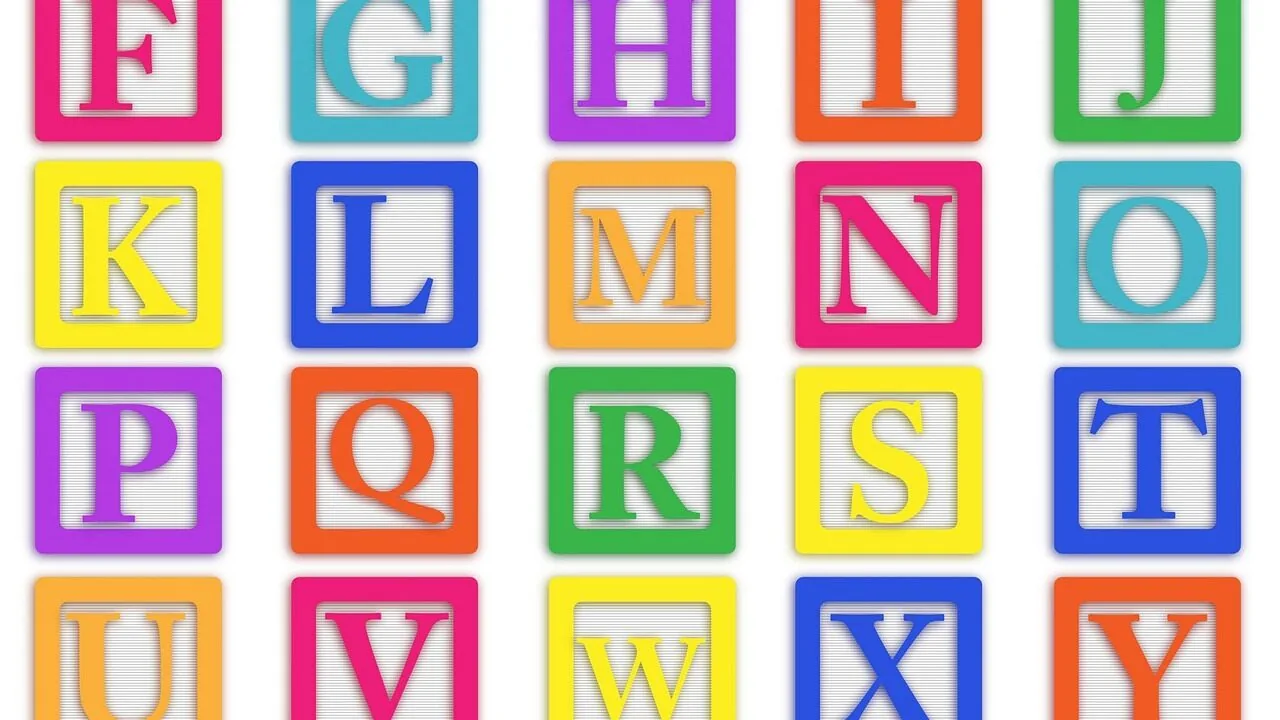
Learning the alphabet is one of the most important early milestones a young child can reach, and the way it happens matters just as much as the fact that it happens.
Children who discover letters through play, tactile exploration, and sensory engagement build stronger phonics foundations than those who memorize by rote.
The right alphabet learning toy turns an abstract set of squiggles into something a toddler genuinely wants to pick up, sort, match, and talk about.
Whether you have a curious two-year-old just starting to recognize shapes or a preschooler ready to connect letters to sounds, there is a format, a toy type, and a learning style that fits.
At ProductFind, we researched this category by analyzing published specifications, synthesizing expert review consensus from early childhood educators and literacy specialists, and combing through verified buyer feedback from families who have used these products with real kids.
We looked at everything from Montessori-style wooden puzzles and magnetic letter sets to electronic phonics toys and pop-sensory formats, covering a wide price range so every family can find a strong option.
The picks below represent our top-ranked alphabet learning toys based on that research.

Learning Resources Mini ABC Pops - 26 Letter Set
A hands-on alphabet learning tool featuring 26 popsicle-shaped pieces with uppercase and lowercase letters plus matching pictures. Combines letter recognition, fine motor development, and imaginative play in one compact set.
Pros
- Multiple learning pathways in one toy, alphabet recognition plus color and vocabulary building
- Strengthens hand-eye coordination and fine motor skills through pop-and-sort mechanics
- Classroom-grade durability designed for frequent use
- Compact storage container keeps all pieces organized
- Transitions easily from structured learning to imaginative play
Cons
- No verified buyer reviews available to assess real-world durability or age-appropriateness clarity
- 52-piece set may present choking hazard for very young toddlers, requires parental supervision
- Limited to alphabet learning focus without expanding to other early literacy skills like sight words

Gojmzo Alphabet Flash Cards with Wooden Blocks
A comprehensive learning set combining 26 letter cards, 10 number cards, and 40 wooden blocks in one storage box designed for preschoolers ages 3-5. The colorful illustrations and mix of flashcards with manipulatives support alphabet recognition, number learning, and fine motor skill development through play-based activities.
Pros
- All-in-one set combines visual flashcards with tactile wooden blocks for multi-sensory learning
- Includes dedicated storage box that encourages children to develop organization habits
- Colorful design and playful illustrations engage young learners across multiple skill areas
- Made from premium wood materials suitable for toddler use
Cons
- No verified buyer reviews available to assess real-world durability or long-term use
- Medium size may limit visibility of card details during group activities or from a distance
- Combination format means some children may outgrow certain components (flashcards vs. blocks) at different rates

LeapFrog Spin and Sing Alphabet Zoo
This interactive learning toy introduces letters A-Z alongside animal names and sounds through three distinct play modes. Spin, push, and slide mechanics build motor skills while musical responses and lights keep toddlers engaged during alphabet exploration.
Pros
- Multiple play modes keep learning fresh and reduce boredom
- Hands-on spin, push, and slide mechanics encourage physical engagement
- Combines letter, animal, and music learning in one toy
- Playful audio and light feedback reinforces learning outcomes
- Reasonable size and weight for home and portable use
Cons
- No verified buyer reviews available to confirm durability and long-term performance
- Limited information on battery requirements and operational costs
- Single color option (blue) may not suit all aesthetic preferences

LeapFrog Fridge Phonics Magnetic Letter Set
Interactive magnetic letter tiles that teach the alphabet through songs and phonics, with a tile reader that speaks letter names, sounds, and vocabulary words. Designed for toddlers learning early literacy skills with tactile, fine motor engagement.
Pros
- Multi-sensory learning combines visual, auditory, and tactile engagement for alphabet mastery
- Double-press vocabulary feature builds context beyond letter names and sounds
- Lightweight and portable for play on refrigerators or other magnetic surfaces
- Reinforces foundational reading skills through repetition and song-based learning
Cons
- No user reviews available to assess real-world durability or parent satisfaction
- Requires tile reader device separate from letters, adding to parts that could be lost
- Limited to alphabet instruction without extended phonics or reading content

Joyreal 26-Can Alphabet Learning Set with 245 Flash Cards
This 271-piece alphabet kit pairs cardboard sorting cans with uppercase, lowercase, and photo cards to build letter recognition and early vocabulary skills. Best suited for preschool classrooms and homeschool settings where tactile, matching-based learning fits the curriculum.
Pros
- Large quantity of materials supports extended learning activities without repetition
- Tactile sorting and matching format engages kinesthetic learners effectively
- Clear labeling on can lids reinforces letter identification during play
- Versatile for individual, small group, or full classroom instruction
Cons
- Cardboard cans may degrade with frequent use or moisture exposure over time
- No verified buyer reviews available to confirm durability and real-world performance
- Requires organization and storage space for 26 separate cans and card decks

Learning Resources Alphabet Acorns 78-Piece Set
This alphabet learning set combines letter recognition with fine motor practice through twist-open acorns that hide matching toy surprises inside. The 78-piece collection supports early literacy and hands-on engagement for preschoolers, though it requires adult guidance for full educational value.
Pros
- Multisensory learning approach pairs uppercase and lowercase letters with hidden objects for discovery-based play
- Builds fine motor skills through opening, closing, and manipulating small acorn pieces
- Sturdy plastic construction withstands repeated use in group settings
- Flexible gameplay supports letter matching, sorting, sequencing, and word building activities
- No batteries required, completely screen-free learning tool
Cons
- Small pieces pose choking hazard for very young toddlers under close supervision
- Requires adult setup and direction to maximize educational benefits, not independent play toy
- 78 pieces can be difficult to organize and store without dedicated container

Scuwtocn Wooden Magnetic Alphabet Maze Puzzle
A Montessori-style letter learning toy that combines a magnetic maze game with alphabet recognition for preschoolers. Kids match car-shaped letter blocks to parking spaces, building fine motor skills and letter knowledge through hands-on play.
Pros
- Strong magnetic pen performs reliably even when board is tilted or vertical
- Durable natural wood materials with safety-focused design features
- Gamified learning approach makes letter practice engaging rather than rote
- Compact and portable for on-the-go learning
Cons
- No verified buyer reviews available to confirm real-world durability and longevity
- Magnetic pen and blocks require vertical orientation for optimal performance, limiting flexibility in play positions
- Limited to English alphabet learning only
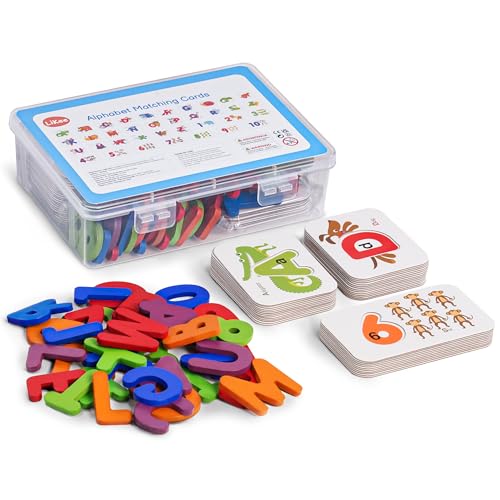
LiKee Alphabet Flash Cards with Wooden Blocks 36 Cards
A Montessori-style learning set combining 36 alphabet and number cards with 37 wooden pieces designed for toddlers ages 3 and up. Kids match wooden blocks to illustrated cards featuring letter-object associations and counting exercises, building letter recognition, color skills, and hand-eye coordination while staying entertained.
Pros
- Large wooden pieces safe for toddlers, designed to prevent accidental swallowing
- Engaging illustrations connect letters to objects (F for Fox) and numbers to visual counting aids
- Develops multiple skills simultaneously: alphabet, numbers, colors, hand-eye coordination, and problem-solving
- Includes storage box to encourage tidying habits and keep pieces organized
- Complete set with 36 cards and 37 wood pieces ready to use out of box
Cons
- No verified buyer reviews available to confirm durability or accuracy of product quality claims
- Card and block dimensions appear standard but lack detailed guidance on age-appropriateness confirmation
- Limited information on wood type, finish safety certifications, or paint/coating specifications
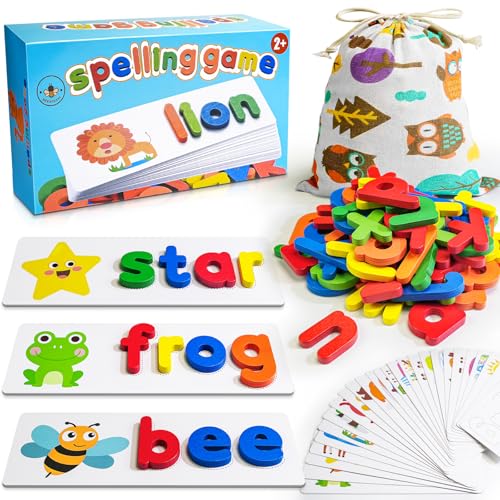
Beestech Wooden Alphabet Learning Set, 28 Flash Cards + 52 Letters
A hands-on letter matching system combining wooden blocks with illustrated flash cards designed for preschoolers ages 3-5. Kids place wooden letters onto cards to build recognition and spelling skills, with durable wood construction and convenient storage included.
Pros
- Durable wooden letters with no sharp corners, safe for young toddlers
- Complete package with storage bag and gift-ready presentation
- Tangible matching activity engages kinesthetic learners effectively
- Compact card size (3" x 5") easy for small hands to handle
Cons
- No verified buyer reviews available to assess real-world durability or educational effectiveness
- Limited information on how engaging the card designs are for extended play sessions
- Wooden letter blocks may require occasional cleaning due to handling by multiple children

USATDD 26-Piece Alphabet Popsicle Matching Toy
Interactive alphabet learning set with 26 letter-themed popsicles and animals for uppercase/lowercase recognition and fine motor skill development. Comes with a reusable storage bucket, designed for toddlers and preschoolers.
Pros
- Combines multiple learning activities in one set: letter recognition, animal matching, color sorting, and vocabulary building
- Lightweight and appropriately sized for small hands, supporting hands-on exploration
- Durable plastic material with convenient storage bucket keeps play area organized and makes transport easy
- Versatile gift option for holidays, birthdays, and classroom environments
Cons
- No verified customer reviews available to assess real-world durability and engagement over time
- Limited information on whether popsicle lids are easy enough for very young toddlers to operate independently
- Single color set with animal designs may not appeal to all children's preferences

Just Smarty Interactive Alphabet Wall Chart, Blue
An interactive wall chart that teaches ABCs and 123s through songs, touch features, and visual learning. Best suited for toddlers and children needing speech therapy or sensory engagement, with batteries included for immediate use.
Pros
- Combines visual, auditory, and tactile learning modes for multiple learning styles
- Batteries included eliminates setup friction for parents
- Versatile application across typical development and special learning needs
- Compact wall-mounted format keeps play areas organized
- Music-based learning reinforces letter and number recognition through rhythm
Cons
- No verified customer reviews available to assess real-world durability or battery life
- Limited information on interactive range, volume control, or sound quality specifications
- Requires wall mounting, not portable for travel or flexible placement options

Chuckle & Roar Pop It ABC Keyboard
A compact pop-and-learn keyboard that combines tactile silicone keys with letter recognition and spelling games for toddlers. The optical card reader guides letter learning across three modes, though it lacks independent user reviews to validate long-term durability claims.
Pros
- Three play modes grow with child development from toddler to preschool age
- Soft silicone keys designed specifically for sensory play and motor skill building
- Optical reader technology adds interactive element to letter and spelling recognition
- Compact 9.75 x 5 inch size makes it genuinely portable for travel
Cons
- No verified buyer reviews available to assess real-world durability or user satisfaction
- Limited age range specified (2+) despite title marketing toward 1-3 year-olds, suggesting unclear suitability for younger toddlers
- Optical card reader dependency means lost or damaged cards could limit functionality
Alphabet Learning Toys Buying Guide
Choosing the right alphabet learning toy is not just about picking something colorful and letter-shaped. The format, materials, learning approach, and age fit all determine whether a toy ends up being used daily or ignored on a shelf.
This guide walks through the criteria that matter most, so you can match a toy to your child’s current stage and your household’s needs.
For families also building a broader early learning environment, pairing these picks with quality STEM toys for kids can create a well-rounded foundation for school readiness.
Age Appropriateness and Developmental Stage

Alphabet toys are not one-size-fits-all, and age ranges printed on packaging are a starting point, not a guarantee.
A child who is 18 months old benefits most from large, chunky letters with tactile texture rather than small matching pieces with choking hazard potential.
At two to three years, simple letter recognition and sound association become the focus, making magnetic letter sets and electronic phonics toys particularly effective.
By four to five years, children are typically ready for uppercase-to-lowercase matching, early word building, and fine motor activities that reinforce pencil grip.
Pay attention to the fine print on piece count and size. Products marketed as Montessori-style often include multiple small manipulatives that require adult supervision for younger toddlers.
If you are shopping for a child under three, prioritize sets with larger individual pieces and straightforward single-step interactions. For older preschoolers, complexity in the form of sorting, matching, and sequencing activities keeps engagement high as letter knowledge grows.
It also helps to think about where your child currently sits on the learning curve.
A child who already recognizes most uppercase letters will be bored by a toy designed purely for first exposure but will thrive with a set that introduces lowercase pairing or phonics sounds.
Choosing a toy that is slightly ahead of your child’s current skill level, while still accessible, is a reliable way to sustain motivation.
Learning Format and Sensory Engagement
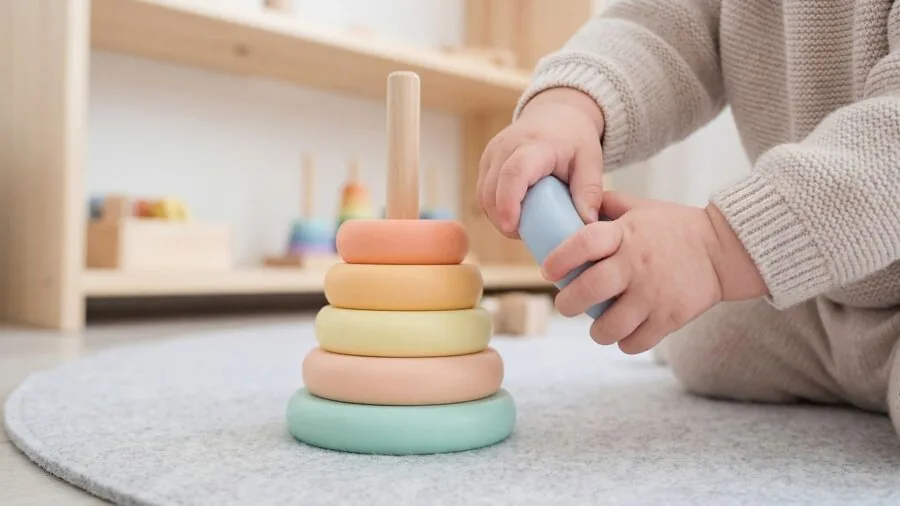
Alphabet toys fall into a handful of distinct learning formats, and each one suits a different type of learner.
Tactile formats such as wooden puzzles, Montessori matching sets, and pop-style fidget toys engage children who learn best through touch and physical manipulation. These are particularly valuable for fine motor development alongside letter recognition.
Electronic formats like fridge phonics sets and interactive charts engage auditory learners by pairing letter names with sounds, songs, and spoken words.
Flash card and sorting sets bridge visual and logical learning by asking children to make connections between pictures, letters, and categories.
Multisensory toys that combine two or more of these approaches tend to hold attention longer and produce stronger letter retention.
A toy that lets a child feel the letter shape, hear its name and sound, and then match it to a picture creates multiple memory pathways at once.
Look for products that explicitly describe uppercase-to-lowercase matching, phonics sound output, or picture-to-letter association as core features rather than incidental extras.
Consider how your child typically plays.
Some children engage better with open-ended toys that can become an ice cream shop, a soup kitchen, or a pretend classroom, which is a design strength that toys like the Learning Resources Mini ABC Pops leverage well.
Others respond better to structured activities with clear rules, which is where flash card matching games and sorting sets with defined correct answers shine. The best pick for your household is the format your child will actually reach for.
Material Quality and Durability
Alphabet learning toys take significant physical punishment. They get dropped, chewed, thrown, and jammed into bins repeatedly. Material quality is not a luxury consideration; it directly affects how long a toy stays functional and whether it remains safe over time.
Wooden toys with smooth sanded finishes and non-toxic paints hold up well to daily handling and are a strong choice for households that value longevity.
Look for certifications such as ASTM F963 or EN71 compliance, which indicate the product has met established safety standards for children’s toys.
For plastic toys, the quality of the printing and the thickness of the components matter. Thin plastic letters with printed surfaces tend to show wear quickly, especially with heavy use.
Electronic toys introduce additional durability questions around battery compartment security and speaker quality over time.
Verified buyer feedback is especially useful here because long-term durability is something that only emerges after months of real household use, not from a product listing alone.
Storage design also plays an underappreciated role in durability.
Sets with dedicated storage boxes, pouches, or interlocking containers are far less likely to result in lost pieces, which is the most common reason parents report a multi-piece learning set becoming unusable.
A toy that arrives with 36 pieces and no organized storage will inevitably become a partial set within weeks in most households.
Phonics and Letter-Sound Connection

Letter recognition and phonics awareness are related but distinct skills, and the best alphabet toys address both.
A child who can name every letter of the alphabet but has no sense of the sounds those letters make is not yet ready to decode words.
Toys that incorporate phonics, meaning they produce or prompt letter sounds rather than only letter names, give children a meaningful head start on early reading.
Electronic toys like the LeapFrog Spin and Sing Alphabet Zoo and the LeapFrog Fridge Phonics set are specifically designed around this sound-to-letter connection.
For non-electronic formats, phonics engagement depends on how the toy is designed to be used.
Flash card sets that pair each letter with a clearly identifiable picture of a word beginning with that sound are doing phonics work even without a speaker.
The Gojmzo Alphabet Flash Cards, for example, pair wooden letter blocks with illustrated cards specifically to prompt that sound-symbol association.
Look for picture cues that feature unambiguous objects: an apple for A is excellent, an “X-ray” for X is less useful for a three-year-old.
Uppercase and lowercase pairing is another layer worth evaluating. Children encounter both forms in the real world from a very early age, but most early alphabet toys focus exclusively on uppercase.
Sets that incorporate lowercase matching, such as the Learning Resources Alphabet Acorns, provide a more complete phonics foundation and reduce the confusion many children experience when they first see a lowercase letter in a book.
Fine Motor Skill Integration
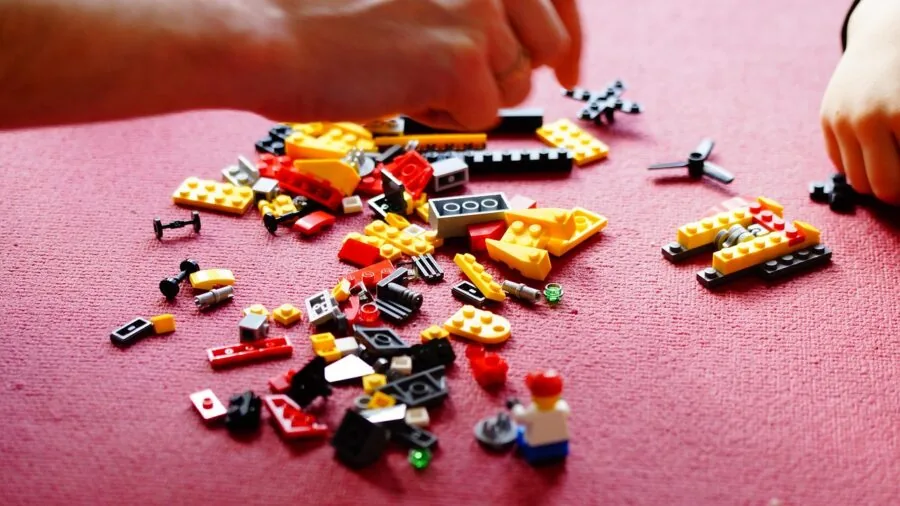
The physical act of manipulating alphabet toys does double duty: it reinforces letter learning while simultaneously building the hand strength and coordination that will later support writing.
Toys that require pinching, pressing, sorting, or threading engage the fine motor muscles in ways that passive screen-based learning cannot replicate.
This is one of the core arguments for physical alphabet toys over purely digital alternatives, and it is why early childhood educators consistently recommend hands-on manipulatives for this age group.
The same principle applies when choosing coding toys for kids, where physical interaction produces deeper engagement than screen-only formats.
Look for toys that require deliberate hand action as part of the learning loop. Pop-style toys like the Learning Resources Mini ABC Pops engage the pincer grip naturally. Puzzle-format toys require spatial reasoning alongside letter recognition.
Magnetic maze toys combine letter tracing with directed bead movement. Each of these interactions builds hand-eye coordination and finger strength that transfers directly to early writing readiness.
Fine motor integration is especially relevant for children in preschool settings where occupational therapists or speech therapists may already be involved in supporting development.
Several products in this roundup, including the Learning Resources Alphabet Acorns and the Scuwtocn Wooden Magnetic Alphabet Maze, are specifically noted in verified buyer feedback from parents of children receiving developmental support as being recommended by therapists.
That kind of real-world professional endorsement carries meaningful weight in our assessment.
Value and Longevity
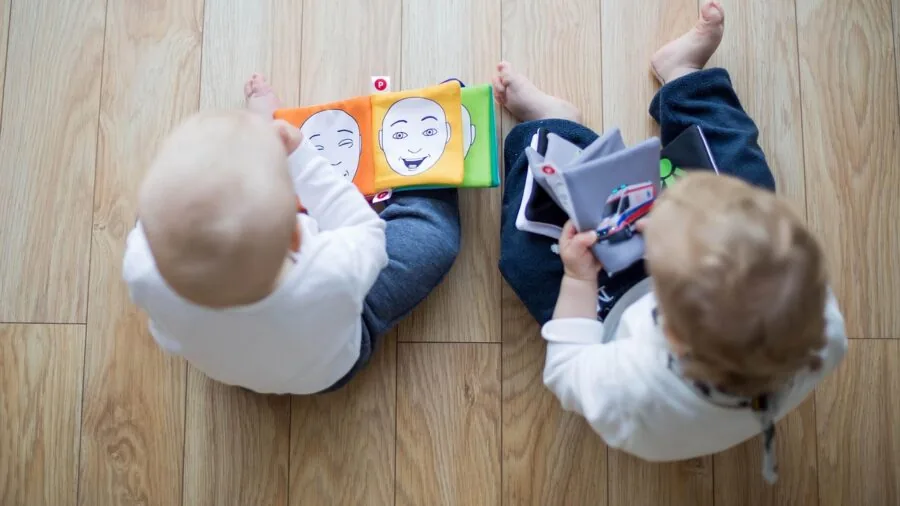
Alphabet toys span a wide range of price points, from budget-friendly flash card sets to more substantial electronic learning systems.
Price alone is a poor guide to value because some of the most highly rated products in this category are among the most affordable, while some premium-priced options underdeliver on engagement or durability.
The more useful question is how long a toy will hold a child’s interest and whether it can grow with the child’s skill level.
Multi-mode toys that offer different levels of difficulty or types of play extend their useful lifespan significantly.
The Chuckle and Roar Pop It ABC and Spelling Keyboard, for instance, is designed with multiple grow-with-me modes that keep it relevant across different stages of early literacy development.
Similarly, the Joyreal Alphabet Soup Sorters pair physical letter manipulation with an extensive flash card set, effectively building two types of learning value into a single purchase.
Consider how a toy fits alongside other early learning resources in your home. A magnetic letter set that goes on the refrigerator gets daily incidental exposure without requiring a dedicated play session.
An electronic toy that needs batteries and a quiet space is a different kind of investment. Neither is inherently superior, but matching the format to your household’s rhythms determines how much value you actually extract from a purchase.
Families building out a complete early learning space may also find science kits for kids a natural complement once letter and number foundations are in place.
Why You Should Trust Us
ProductFind operates as an independent editorial review platform.
Every product in this roundup was evaluated using a consistent, structured research methodology: we analyzed published product specifications, synthesized expert review consensus from early childhood education specialists and literacy development sources, and examined verified buyer feedback from families who have used these toys with children across a range of ages and developmental stages.
We do not conduct our own product trials; our evaluations are grounded in research, published data, expert review consensus, and verified buyer feedback.
Each product is scored using our PF Score system on a scale of 0 to 10.
The PF Score reflects a composite assessment across the criteria most relevant to the category: age appropriateness, learning format effectiveness, material quality and safety, phonics and letter-sound design, fine motor integration, and overall value.
Scores are assigned consistently across all products so that comparisons between items are meaningful. The ranking order in this article reflects PF Score from highest to lowest.
ProductFind may earn a commission if you purchase through links in this article. That affiliate relationship has no influence on our scores, rankings, or editorial selections.
Products are included or excluded based entirely on how they perform against our evaluation criteria. We never accept payment for placement, and our recommendations would be the same whether or not affiliate links existed.
Our goal is straightforward: give you the clearest, most useful information available so you can make a confident choice for your child.
Final Thoughts
After evaluating the full range of alphabet learning toys in this roundup, a few standouts earned clear danh hiệu distinctions based on their PF Scores and the specific strengths that set them apart. Here are our top designations:
- Best Overall: Chuckle and Roar Pop It ABC and Spelling Keyboard earns the top spot with the highest PF Score in this roundup, combining soft silicone sensory keys, light-up letter guidance, and multiple grow-with-me learning modes into one compact, travel-friendly package that appeals to toddlers at different stages of alphabet awareness.
- Best Multisensory Flash Card Set: Gojmzo Alphabet Flash Cards delivers exceptional value at a budget-friendly price point, pairing tactile wooden letter blocks with vibrantly illustrated cards and a built-in storage box, earning one of the highest PF Scores in the flash card category.
- Best Pop and Play Pick: Learning Resources Mini ABC Pops stands out for its ability to bridge structured letter learning and open-ended imaginative play, with an upper-to-lowercase design and fine motor engagement that consistently earns strong praise from early childhood educators and verified buyers alike.
- Best Electronic Alphabet Toy: LeapFrog Spin and Sing Alphabet Zoo leads the electronic category with three distinct play modes, animated LED colors, and phonics-forward sound design that makes letter-sound connections feel genuinely fun rather than instructional.
- Best Budget Magnetic Pick: LeapFrog Fridge Phonics Magnetic Letter Set remains a household staple for good reason: its interactive tile reader gives children immediate audio feedback on every letter they insert, making incidental refrigerator learning one of the most consistent alphabet reinforcement tools available at a mid-range price.
Whatever your child’s current stage, the best alphabet learning toy is the one they will actually engage with repeatedly.
Prioritize format fit, age appropriateness, and material quality, and let the PF Scores in this roundup guide you toward the options that deliver on all three.
For families continuing to build a rich early learning environment at home, exploring baby gates for stairs and doorways alongside lightweight strollers for everyday use can help create a safe, exploration-friendly space that grows with your child.
Frequently Asked Questions
What Age Should a Child Start Using Alphabet Learning Toys?
Most children begin to show interest in letters between 18 months and two years, though formal letter recognition typically develops between ages two and four.
Large, simple alphabet toys with minimal small parts are appropriate from around 18 months, while matching games, flash cards, and electronic phonics sets generally suit children aged three and up.
Every child develops at a different pace, so following your child’s curiosity is a more reliable guide than strictly adhering to age labels on packaging.
Are Wooden Alphabet Toys Better Than Plastic Ones?
Neither material is categorically superior; the right choice depends on your priorities. Wooden toys with non-toxic finishes tend to be more durable, have a satisfying tactile weight that children respond well to, and are often more environmentally sustainable.
Plastic toys can incorporate electronic components, bright colors, and audio features that wooden versions cannot. Many top-rated alphabet sets combine both, using wooden letter pieces alongside printed card components.
Focus on safety certifications and verified buyer feedback on durability rather than defaulting to either material purely on principle.
How Many Pieces Is Too Many for a Toddler Alphabet Set?
For children under three, sets with more than 30 to 40 pieces become difficult to manage and increase the risk of lost components and choking hazards.
For children aged three and up, sets with 50 to 100 pieces are manageable provided they come with organized storage. The Gojmzo and LiKee flash card sets, for example, include dozens of pieces but also provide storage solutions that make cleanup practical.
A high piece count is only an advantage if the organization system makes it sustainable for daily use.
Do Electronic Alphabet Toys Actually Help Children Learn Letters Faster?
Electronic alphabet toys can be highly effective when they are designed around active child interaction rather than passive listening.
Toys that require a child to select a letter, insert it, or press a button to hear its sound produce better learning outcomes than those that simply play through the alphabet on a loop.
The LeapFrog Fridge Phonics set is a well-documented example of this principle: the child must physically pick up and insert each letter tile to receive audio feedback, which creates an active learning loop.
That said, electronic toys work best as one component of a broader alphabet learning environment that also includes tactile and visual formats.
Can Alphabet Toys Support Children with Developmental Delays or Speech Therapy Needs?
Yes, and several products in this roundup are specifically noted by verified buyers as being recommended by occupational therapists and speech therapists.
The Learning Resources Alphabet Acorns, for instance, is listed in its product description as suitable for speech therapy materials and has strong feedback from parents in therapeutic contexts.
The tactile, manipulative nature of Montessori-style alphabet toys aligns well with approaches used in developmental therapy.
Always consult with your child’s therapist before introducing new learning materials, as they can provide guidance on which formats and interaction types are most appropriate for your child’s specific needs.
What Is the Difference Between Letter Recognition and Phonics Awareness?
Letter recognition is the ability to identify and name each letter of the alphabet by its visual shape.
Phonics awareness is the understanding that each letter (or letter combination) represents a specific sound, and that sounds can be blended together to form words.
Both skills are essential for early reading, but they develop in sequence: letter recognition typically comes first, followed by phonics awareness.
The best alphabet learning toys address both, either by incorporating sound output for each letter or by pairing each letter with a picture of a word that begins with its sound.
Toys that focus only on naming letters without connecting them to sounds will require supplemental phonics support as your child advances toward reading.
About the author
Chester is a reviewer and writer for ProductFind who specializes in Educational & STEM Toys. Chester evaluates products through independent research: specifications, expert review consensus, and verified buyer feedback, and rates each one on the PF Score. Chester focuses on helping readers pick the right educational & stem toy for their needs and budget.