The 10 Best Interactive Learning Books
From touch-and-sound boards to talking pen systems, interactive learning books vary widely in quality. Here are the picks that genuinely hold a child's attention and support early language development.
 By Chester Bryant
Updated July 23, 2026
By Chester Bryant
Updated July 23, 2026

Interactive learning books sit at the crossroads of play and education, and choosing the right one can meaningfully shape a young child’s early relationship with language, numbers, and curiosity.
The market is crowded with everything from simple touch-and-sound boards to sophisticated talking pen systems covering hundreds of vocabulary themes, which makes narrowing down the field genuinely useful work for parents, grandparents, and educators alike.
Whether you are shopping for a toddler just beginning to point at pictures or a kindergartener ready to tackle phonics, the format and features of an interactive book matter far more than the price tag alone.
At ProductFind, we researched and evaluated each title in this roundup through a systematic process: analyzing published specifications, synthesizing consensus from early-childhood education experts and specialist reviewers, and weighing verified buyer feedback across thousands of purchase records.
Every pick earned a PF Score on our 0-to-10 scale.
If you want a quick shortcut, scroll straight to our ranked picks below, then return to the buying guide for the criteria that matter most when shopping for interactive learning books in 2026.
| Award | Product | PF Score About PF ScoreThe PF Score is our own rating from 0 to 10, based on performance, design and build, ease of use, and value. It reflects independent research and is never influenced by manufacturers, retailers, or affiliate commissions. Learn more › | Price | |
|---|---|---|---|---|
| Best Overall |
 Timetome 500 Words Sound Book for Ages 3-8
|
8.6/10 | Buy | |
| Editor's Pick |
 KOKODI Interactive Reading Pen Set for Ages 2-6
|
8.4/10 | Buy | |
| Best Value |
 Arnbz My First English Words Sound Book, 470+ Words
|
8.1/10 | Buy | |
| Top Rated |
 LeapFrog Touch and Learn Dinosaur Book
|
7.9/10 | Buy | |
 LeapFrog 100 Words and Animals Interactive Book Set
|
7.8/10 | Buy | ||
 ZeenKind First English Words Sound Book
|
7.6/10 | Buy | ||
 LeapFrog Prep for Preschool Activity Book
|
7.4/10 | Buy | ||
 Chuckle & Roar Pop It! Book: Colors
|
7.2/10 | Buy | ||
 Twin Cities Speech Therapy Imitation Book Board Book
|
6.8/10 | Buy | ||
 Huijing Montessori Busy Book with 15 Learning Themes
|
6.2/10 | Buy |
Timetome 500 Words Sound Book for Ages 3-8
Touch-activated learning book with 500 core words across 23 themes, designed for independent exploration without screens. Structured progression from letters to practical usage suits early learners through early elementary ages.
Pros
- Comprehensive word selection structured from foundational letters through real-world application, supporting meaningful vocabulary building rather than rote memorization
- Independent-use design with child-friendly interface encourages autonomous learning and reduces need for constant adult guidance
- Covers broad age range (3-8) with age-appropriate progression, making it a longer-term educational investment
- Multi-sensory approach combines visual, auditory, and tactile elements to reinforce retention
- Completely screen-free alternative to digital learning tools
Cons
- No verified buyer reviews available to assess real-world reliability or long-term durability
- Requires flat surface placement for optimal touch sensitivity, limiting portability despite compact dimensions
- Setup troubleshooting mentioned in description suggests potential audio sync issues that may require manual page button activation
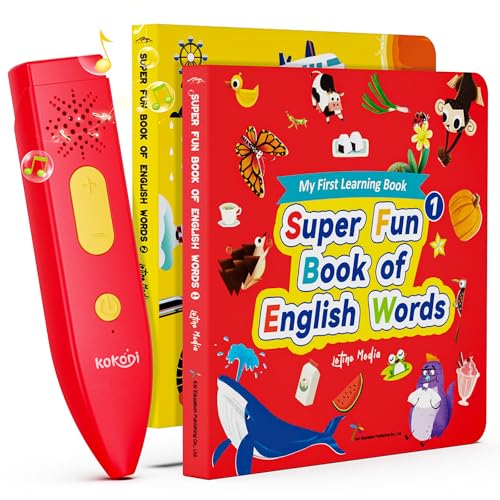
KOKODI Interactive Reading Pen Set for Ages 2-6
A tap-to-read learning pen system with two books featuring 450+ words, 300+ sound effects, and 500+ interactive games designed for early literacy and speech development. Best suited for toddlers who benefit from audio-guided learning and parents seeking screen-time alternatives.
Pros
- Extensive content library with 450+ words, 300+ sound effects, and interactive activities keep children engaged across multiple learning themes
- Independent use capability for ages 2-6 allows parents flexibility while children learn autonomously
- Parent recording feature personalizes learning and strengthens parent-child connection
- Durable, child-safe construction with eco-friendly ink and tear-resistant pages suitable for young hands
Cons
- Requires 2 AAA batteries not included in the package
- Effectiveness depends on accurate pen positioning within 120-degree angle range and single-tap precision, risking audio delays or skipped words with improper use
- No verified customer reviews available to confirm real-world durability and performance consistency
Arnbz My First English Words Sound Book, 470+ Words
An interactive touch-and-play learning book with 470+ sounds across 21 categories, designed for toddlers ages 2-5 to build early vocabulary through phonics. Features high-contrast visuals, durable construction, and native English pronunciation for screen-free learning.
Pros
- Comprehensive vocabulary content with 470+ words across diverse themes like animals, fruits, and toys
- Durable, kid-friendly design with tear-resistant materials and rounded edges for toddler safety
- Battery-powered and portable, suitable for home, car, or plane travel
- Native speaker pronunciation supports proper phonics and speech development
Cons
- No reviews available to verify real-world performance or durability claims
- Requires 3 AA batteries, which are not included
- Limited to ages 2-5, with narrower appeal as children progress beyond early vocabulary stages
LeapFrog Touch and Learn Dinosaur Book
An interactive dinosaur book designed for toddlers ages 2 and up, featuring 14 touch-activated pages with educational content about prehistoric creatures. Combines learning modes with songs and a find-it game to keep young children engaged.
Pros
- Multiple learning modes (exploration and Find-It game) provide varied engagement
- Age-appropriate content for toddlers with pronunciation guidance for difficult dinosaur names
- Compact and portable format suitable for travel
- Musical elements add entertainment value to learning
Cons
- Requires 2 AA batteries for regular use; demo batteries included are limited
- No user reviews available to assess real-world durability or long-term engagement
- Educational content limited to 14 pages, which may provide limited replay value for extended periods
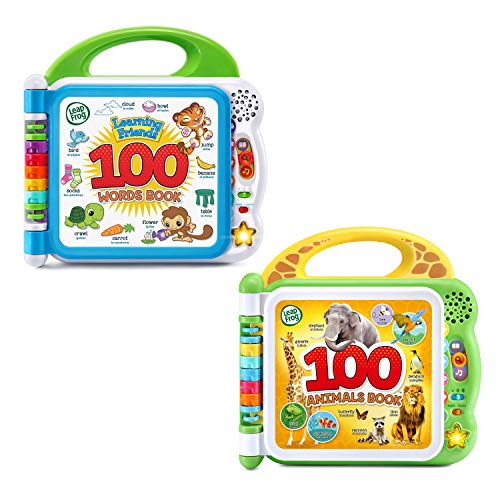
LeapFrog 100 Words and Animals Interactive Book Set
A bilingual touch-and-learn book duo designed for toddlers 18+ months, offering six double-sided pages per book with interactive vocabulary, animal facts, and sound effects in English and Spanish. Each book features three play modes to keep engagement varied, though the experience depends entirely on fresh batteries.
Pros
- Fully bilingual content in English and Spanish with songs and vocabulary across both languages
- Two books covering 12 different habitats plus 12 word categories, providing diverse learning topics
- Multiple play modes per page, Read Aloud, Sound Effects, and Fun Facts, adds replay value
- Touch-sensitive design requires no buttons or complex controls for small hands
- Batteries included in the package, though replacements needed for regular use
Cons
- No verified buyer reviews available to assess real-world durability and battery longevity
- Requires 4 AA batteries per book and batteries drain quickly with regular use, making it costly to maintain
- No information on audio quality or whether content holds up to repeated listening by toddlers
ZeenKind First English Words Sound Book
An interactive talking book designed for preschoolers ages 3+ that teaches 300 English words across 13 topics through touch-activated audio and simple learning activities. Best suited for parents seeking a structured, screen-free vocabulary tool with songs and pronunciation guidance.
Pros
- 300 English words across 13 educational topics including animals, transportation, and body parts
- Easy-to-use touch buttons with real voice audio for pronunciation practice
- Includes nursery rhymes and engaging audio activities for entertainment during travel or play
- Lightweight and compact design (9.84 x 12.2 x 0.71 inches) for portability
- 30-day return policy demonstrates confidence in product quality
Cons
- No verified buyer reviews available to validate real-world performance and durability
- Limited to audio-based learning without visual flashcard or spelling reinforcement details
- Activity descriptions lack specifics on complexity levels and progression for different age ranges within the 3+ bracket
LeapFrog Prep for Preschool Activity Book
An interactive learning book designed for ages 3+ that combines touch-sensitive pages with erasable marker activities to teach counting, letters, shapes, and phonics. Best suited for preschoolers who benefit from hands-on, screen-free learning activities.
Pros
- Replayable activities keep content fresh without replacement costs
- Erasable pen system eliminates need for workbook refills
- Covers multiple learning domains: phonics, counting, shapes, and writing skills
- Encourages creative drawing with the Dress for the Weather activity
Cons
- Requires 2 AA batteries regularly, with included batteries intended for demo only
- No verified customer reviews available to assess real-world durability or engagement level
- Limited to two-dimensional learning without additional sensory features
Chuckle & Roar Pop It! Book: Colors
A bilingual sensory activity book combining pop-it tactile play with color and language learning for toddlers ages 1-4. Features durable plastic construction, dual English/Spanish modes, and screen-free engagement for fine motor skill development.
Pros
- Combines tactile pop-it engagement with structured color learning in two languages
- Robust plastic construction designed to withstand enthusiastic toddler play
- Encourages developmental skills like fine motor control and language acquisition without screens
- Includes Quiet Mode for flexible play environments
Cons
- No verified customer reviews available yet to confirm real-world durability claims
- Limited product information on specific gameplay mechanics and how modes differ
- Small size may feel brief for some users despite educational focus
Twin Cities Speech Therapy Imitation Book Board Book
A small interactive board book designed by a speech therapist to support early language development in toddlers ages 0-4. Features imitation-based activities aimed at children with language delays or late talking concerns.
Pros
- Created by a speech therapist with professional language development expertise
- Specifically designed for late talkers and language delay support
- Durable board book format suitable for toddler handling
- Compact size (6.5 x 6.5 inches) makes it portable and easy for small hands
- Targets multiple language learning pathways through interactive imitation activities
Cons
- No verified buyer reviews available to assess real-world effectiveness or parent satisfaction
- Limited information on specific activities and educational methods used
- Small format may limit visual content compared to standard picture books
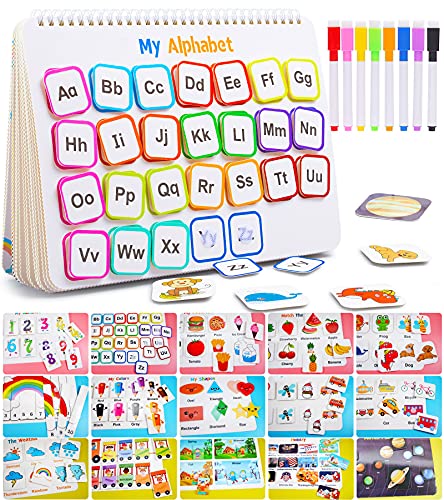
Huijing Montessori Busy Book with 15 Learning Themes
A Montessori-inspired activity book for preschoolers covering 15 educational themes from numbers to planets, plus 14 blank pages for drawing and writing. Includes 8 colored pens and CPC safety certification, designed for independent learning and fine motor skill development in children 3 years and up.
Pros
- Comprehensive curriculum with 15 distinct themes covering core preschool concepts
- Multi-skill development addressing fine motor, problem-solving, logic, and communication
- Includes drawing and writing pages plus colored pens for creative expression
- CPC certified with rounded edges and high-quality safe materials
- Keeps children engaged independently, allowing parents quiet time
Cons
- No verified buyer reviews available to assess real-world durability or parent satisfaction
- Velcro attachments require manual assembly before use
- Limited information on binding quality and how well pages withstand repeated use
Interactive Learning Books Buying Guide
Interactive learning books span a wide range of formats, technologies, and pedagogical approaches. The five criteria below reflect the factors that consistently separate books children return to again and again from those that sit unused after the first afternoon.
If you are also exploring hands-on educational play beyond books, our roundup of STEM toys for kids covers complementary options that pair well with book-based learning.
Age Range and Developmental Appropriateness

The single most important filter when shopping for an interactive learning book is whether it matches the child’s current developmental stage rather than the age printed on the box.
A book marketed for ages two to five, for example, can feel overwhelming to a 24-month-old who is still building basic vocabulary, while an advanced five-year-old may find the same book underwhelming within weeks.
Look for books that grow with the child: multi-mode designs that offer a simpler listening experience for younger users and a more challenging quiz or phonics mode for older ones extend the useful lifespan considerably.
Speech-therapist-authored content, such as the approach taken in the Imitation Book from Twin Cities Speech Therapy Publishing, signals that the material has been sequenced with real developmental milestones in mind rather than simply compiled by marketing teams.
Books designed explicitly for children with autism or sensory processing differences, including options from KOKODI and Huijing, incorporate pacing and stimulus variety that can benefit neurotypical learners as well.
Matching the book to the child’s current communication stage, not just their birthday, is the foundation of a good purchase.
If a child is ready to move beyond books into structured digital play, coding toys offer a natural next step that reinforces logical thinking built through early literacy.
Vocabulary Coverage and Theme Breadth

Sound books differentiate themselves sharply on the number of words and themes they cover.
Entry-level options may cover one or two domains, such as animals and colors, while more comprehensive systems pack in 21 or more thematic categories spanning food, transportation, body parts, emotions, and nature.
A higher word count matters less if the audio quality is poor or the organization is confusing, but breadth of vocabulary is strongly correlated with sustained engagement over months rather than weeks.
The Timetome 500 Words Sound Book and the Arnbz My First English Words Sound Book are both examples of high-coverage systems that organize hundreds of words across clearly delineated themes, making it easy for a caregiver to guide a child to a relevant section rather than scrolling aimlessly.
By contrast, the LeapFrog 100 Words and 100 Animals set trades breadth for depth, pairing a curated core vocabulary with a dedicated animal companion volume, which suits families who prefer a more focused, sequential approach.
Consider how your child’s caregiver or teacher will actually use the book day-to-day when evaluating whether broad or deep coverage serves you better.
Audio Quality and Interaction Technology
The quality of audio output is the make-or-break factor in talking books. Tinny or distorted speakers that clip at higher volumes frustrate children and caregivers alike, and low-quality pronunciation recordings can inadvertently model incorrect speech patterns.
When expert reviewers and verified buyers consistently flag audio as a weakness, it matters regardless of how impressive the word count or theme list looks on the packaging.
Technology type also shapes the interaction experience. Capacitive touch pages, as used in some LeapFrog systems, are more reliable and durable than pressure-sensitive points that can wear out or become unresponsive over time.
Talking pen systems, like the KOKODI set, allow children to tap any image on a page to hear its pronunciation, which encourages free exploration rather than sequential page-turning.
Each technology has trade-offs: built-in speaker books are ready to use immediately, while pen-based systems require the pen to be charged and matched to the correct book set, adding a small setup step that some families find inconvenient.
Parents shopping alongside these books often pair them with a video baby monitor to keep an eye on independent reading sessions in the nursery, a practical combination for families with very young children.
Durability and Build Quality
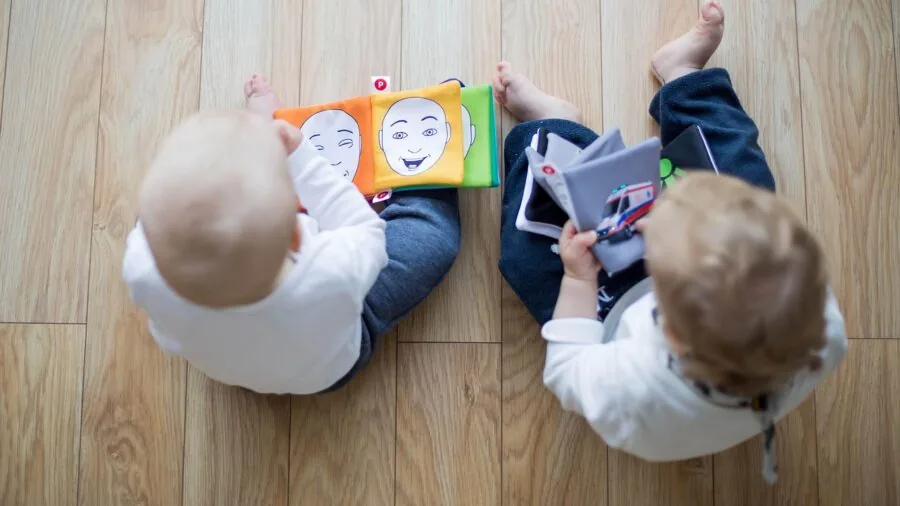
Interactive learning books for toddlers take serious physical abuse. Pages get bent, buttons get mashed repeatedly, and the books regularly end up on the floor.
Board book construction with reinforced page corners is the baseline expectation for anything marketed to children under three.
Electronic components introduce additional failure points: battery compartments that require tools to open are safer from a child-access standpoint but frustrating when fresh batteries are urgently needed, while USB-rechargeable designs eliminate disposable battery cost but add a charging dependency.
Verified buyer reviews are the most reliable signal for durability because they reflect months of real-world use rather than a brief initial impression.
In our research, books from LeapFrog consistently scored well on longevity from verified purchasers, a reputation built across many product generations.
Newer entrants such as Timetome and Arnbz have accumulated positive feedback on build quality, though their track records are shorter.
When durability is a top priority, leaning toward established brands with large review samples reduces the risk of a premature failure.
Language and Accessibility Features

Bilingual functionality has become an increasingly important criterion as more families raise children in multilingual environments. Books that offer both English and Spanish content, such as the Chuckle and Roar Pop It!
Colors book, support dual-language acquisition without requiring a separate purchase. Talking pen systems from ZeenKind and KOKODI extend their value by covering foundational English vocabulary in a structured way that works well for children learning English as an additional language.
Quiet mode is a feature worth checking on any talking book intended for use in shared spaces, libraries, or while a younger sibling sleeps.
The Chuckle and Roar book explicitly offers a quiet mode alongside its standard audio output, a small detail that proves surprisingly significant in daily family life.
For children who are sensitive to sudden sounds or who use these books as part of an occupational therapy program, volume control and adjustable interaction pacing are not luxuries but genuine accessibility requirements.
Families who find these features valuable often explore broader science kits for kids with similarly structured, step-by-step educational formats.
Value and Long-Term Engagement

Interactive books span a wide price band, from budget-friendly activity binders to premium talking pen sets that include multiple book volumes.
Budget options like the Huijing Montessori Busy Book deliver strong hands-on activity value at an accessible price point, making them well-suited to families who want high-volume tactile practice without a significant upfront investment.
Mid-range picks such as the LeapFrog Prep for Preschool Activity Book or the Arnbz sound book offer a balance of technology, content depth, and proven engagement that represents strong everyday value.
Premium systems like the KOKODI Talking Pen Books set justify their higher price through the expandability of the pen platform: additional book packs can be purchased separately, meaning the core investment in the pen extends to new content as the child’s vocabulary grows.
When evaluating value, consider the total cost over a two-year window rather than the sticker price of the initial kit.
A book that costs more upfront but holds a child’s interest through two developmental stages often works out to be more economical than a cheaper option that is outgrown in three months.
For families building a broader educational toolkit, pairing these books with well-reviewed early coding toys can reinforce the same pattern-recognition and sequencing skills developed through phonics and vocabulary work.
Why You Should Trust Us
ProductFind is an independent review publication. Our editorial team earns no income from the products we recommend and does not accept payment to influence rankings or scoring.
We do not conduct our own product trials; our evaluations are grounded in research, published data, expert review consensus, and verified buyer feedback.
Each product in this roundup was assessed against a consistent set of criteria and assigned a PF Score on our 0-to-10 scale, where higher scores reflect a stronger overall combination of performance, reliability, value, and user satisfaction signals across multiple independent sources.
For this category, our research drew on published specifications from manufacturers, analysis of verified purchase reviews across thousands of individual buyer accounts, and synthesis of assessments from early-childhood educators and specialist product reviewers.
We weighted long-term engagement, audio quality, developmental appropriateness, and durability most heavily, as these are the criteria that verified buyers and early-education specialists consistently identify as the difference between a book that becomes a household staple and one that collects dust.
ProductFind may receive an affiliate commission if you purchase through one of our links. This relationship has no bearing on our rankings, scores, or product selection; our editorial decisions are made independently of commercial considerations.
Final Thoughts
The interactive learning books in this roundup cover a wide range of formats, budgets, and developmental targets, so the right choice depends heavily on the specific child you are shopping for.
Here are our standout picks by category, each reflecting the PF Score earned through our research process.
- Best Overall: Timetome 500 Words Sound Book. With the highest PF Score in the roundup, this touch-and-sound book earns its top position through exceptional vocabulary breadth, clear audio output across 23 themed categories, and strong verified buyer satisfaction from families with children ages three through eight.
- Best Talking Pen System: KOKODI Talking Pen Books Set. The pen-based format encourages free, self-directed exploration rather than linear page-turning, and the set’s suitability for children with sensory processing needs makes it one of the most versatile picks in the group, backed by a high PF Score.
- Best for Phonics and Word Building: Arnbz My First English Words Sound Book. Covering more than 470 words across 21 themes with a structured press-to-learn phonics mode, this book earns high marks from verified buyers and expert reviewers who value systematic early language instruction.
- Best LeapFrog Pick: LeapFrog Touch and Learn Dinosaur Book. LeapFrog’s established reputation for durable electronics and developmentally sound content shines in this dinosaur-themed touch book, which earned the highest PF Score among the LeapFrog options in this roundup.
- Best Budget Activity Book: Huijing Montessori Preschool Learning Activities Busy Book. For families who want hands-on, screen-free learning at an accessible price point, this activity binder delivers strong tactile practice in tracing, coloring, and fine motor skills, making it a practical first purchase for toddlers and children in early intervention programs.
No single book is right for every child, and the most effective early learning environments typically combine multiple formats: a broad-vocabulary sound book for daily vocabulary exposure, a structured phonics or activity workbook for skill practice, and open-ended play with STEM toys that translate early language skills into curiosity-driven exploration.
Use our ranked list and buying guide together to find the combination that fits your child’s current developmental stage, your household’s tolerance for electronic noise, and your budget.
Frequently Asked Questions
What Age Should a Child Start Using Interactive Learning Books?
Most interactive sound and touch books are designed for children from around 12 to 18 months onward, when children begin pointing at images and responding to named objects. Board book formats with large, durable pages are safest for this age.
Talking pen systems are typically better suited for children aged two and up, since they require the child to hold and direct the pen deliberately.
The Imitation Book from Twin Cities Speech Therapy Publishing is specifically authored for ages zero to four, making it one of the earliest-appropriate options in this roundup.
If you are shopping for a slightly older child who is ready for structured pre-reading activities, the STEM toys guide covers options that build on the foundational numeracy and pattern skills developed through interactive books.
Are Interactive Learning Books Actually Effective for Language Development?
Research in early childhood education consistently supports shared reading, including interactive book reading, as one of the highest-impact activities for vocabulary acquisition and pre-literacy development.
The interactive element, whether touch-and-sound feedback or caregiver prompting, tends to increase engagement duration and active word processing compared to passive listening.
Books with clear, accurately recorded audio are most effective; books where the audio is unclear or mispronounced can introduce confusion that caregivers then have to correct.
It is worth noting that interactive books work best as a complement to live caregiver interaction, not a replacement.
Using a talking book together with a child, pausing to ask questions and extend vocabulary, produces stronger outcomes than leaving a child to use the book independently for extended periods.
Can These Books Help Children with Autism or Sensory Processing Differences?
Several books in this roundup are explicitly designed or frequently recommended for children with autism spectrum disorder or sensory processing differences.
The KOKODI Talking Pen Books set and the Huijing Montessori Busy Book are both marketed with autism learning in mind, and verified buyers in these categories report strong positive outcomes, particularly for children who benefit from predictable audio feedback and low-pressure, self-paced exploration.
The Imitation Book from Twin Cities Speech Therapy Publishing was authored by a speech therapist specifically to support early communication development, making it a clinically informed choice for families working with speech-language professionals.
Always consult your child’s occupational therapist or speech-language pathologist when selecting materials for therapeutic use, as individual sensory profiles vary significantly and a book that works well for one child may not suit another.
How Do Talking Pen Books Compare to Built-In Speaker Books?
Built-in speaker books, like the Timetome 500 Words book or the ZeenKind First English Words book, are self-contained and ready to use immediately with no additional accessories. They tend to be more portable and simpler to introduce to very young children.
Their limitation is that the content is fixed: once a child has mastered the vocabulary, the book offers little new challenge without purchasing a different title.
Talking pen systems like the KOKODI set require the pen to be charged and correctly matched to compatible books, which adds a small setup complexity.
The payoff is expandability: the same pen works across multiple book volumes, so the system grows with the child.
Pen systems also allow children to interact with any image on the page in any order, encouraging more exploratory and self-directed learning behavior.
For families committed to a longer-term interactive reading program, a pen system typically offers better total value over a multi-year horizon.
For families who want something working immediately with minimal friction, a built-in speaker book is the more practical starting point.
Do Interactive Learning Books Work for Bilingual Households?
Bilingual support varies significantly across these products. The Chuckle and Roar Pop It! Colors book is explicitly bilingual in English and Spanish, making it a natural fit for Spanish-English households or dual-language preschool programs.
The ZeenKind First English Words book and the Arnbz and Timetome sound books focus on English vocabulary, which makes them effective for English-language acquisition but less useful for families who want active support for a second language.
If bilingual development is a primary goal, pair a bilingual interactive book with caregiver-led reading in the home language and look for talking pen systems that may offer language-toggle features in their companion apps or expanded book sets.
Language acquisition at this age is also strongly supported by physical play and exploration alongside book learning, so pairing books with hands-on science kits that label materials in both languages can reinforce vocabulary in context.
How Do I Know When My Child Has Outgrown an Interactive Learning Book?
A child has typically outgrown an interactive learning book when they stop initiating use, answer every audio prompt before the book finishes playing it, or begin to use the book in physically destructive ways out of boredom rather than curiosity.
These are reliable behavioral signals that the content no longer presents sufficient novelty or challenge. At this point, look for books with a higher vocabulary count, a phonics or quiz mode, or a different format altogether.
Transitioning outgrown books to younger siblings, daycare centers, or local library donation programs is a practical way to extend their useful life.
For children ready to move beyond pre-reading vocabulary into structured learning play, coding toys designed for kids and activity-based STEM learning sets offer age-appropriate next steps that continue building the logical and language skills introduced by interactive books.
About the author
Chester is a reviewer and writer for ProductFind who specializes in Educational & STEM Toys. Chester evaluates products through independent research: specifications, expert review consensus, and verified buyer feedback, and rates each one on the PF Score. Chester focuses on helping readers pick the right educational & stem toy for their needs and budget.