The 9 Best Pulse Oximeters
Accurate SpO2 readings matter, whether you are managing a lung condition, recovering from illness, or training at altitude. Our research covers accuracy, perfusion index, display quality, and value across nine fingertip oximeters.
 By Edna Rhodes
Updated July 23, 2026
By Edna Rhodes
Updated July 23, 2026
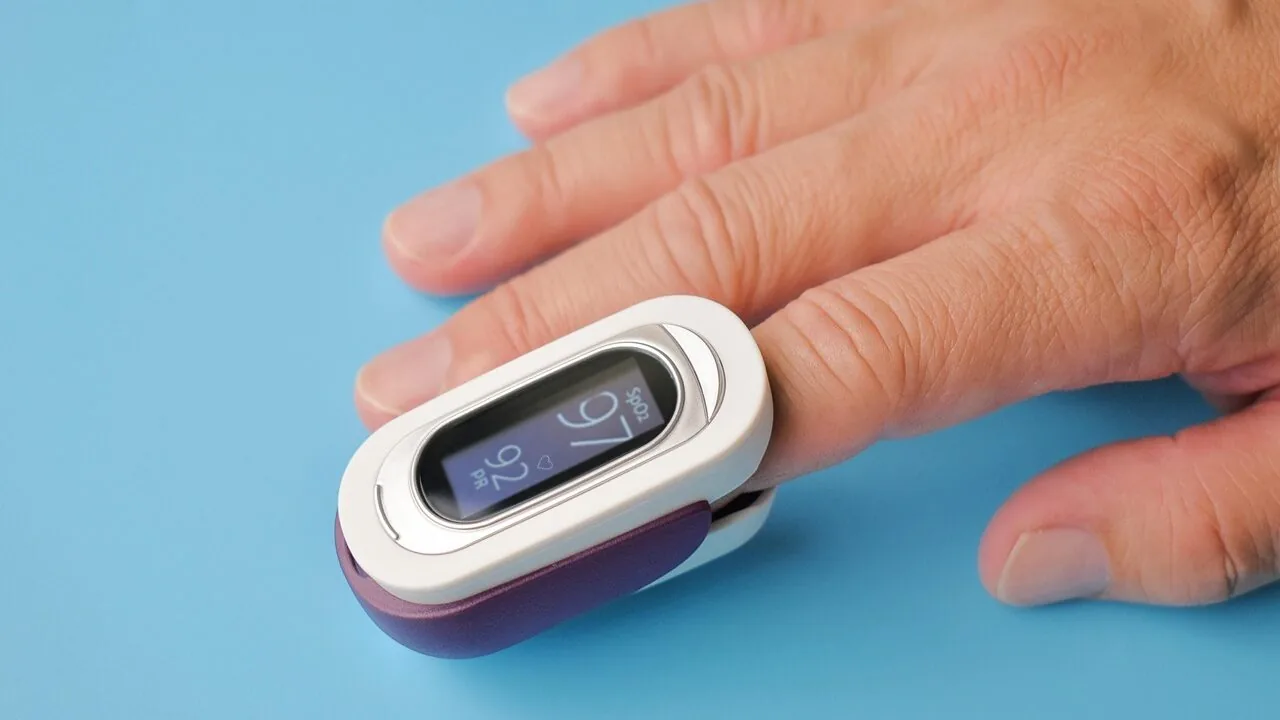
A pulse oximeter is one of the most practical health devices you can own.
Whether you are managing a chronic respiratory condition, monitoring recovery after illness, tracking fitness performance at altitude, or simply keeping tabs on a family member’s oxygen levels at home, a reliable fingertip pulse oximeter gives you fast, meaningful data without a clinic visit.
Blood oxygen saturation (SpO2) and pulse rate readings that once required hospital equipment are now available in a compact, battery-powered clip that fits in a shirt pocket.
The market has expanded dramatically, with options ranging from stripped-down budget models to Bluetooth-connected monitors with perfusion index tracking and companion apps.
Finding an accurate, easy-to-read model among hundreds of listings can feel overwhelming, especially when the stakes involve your health or that of a loved one.
ProductFind researched this category by synthesizing published specifications, expert review consensus across multiple sources, and verified buyer feedback from thousands of confirmed purchasers.
The result is a ranked list of nine fingertip pulse oximeters that span a range of budgets and use cases, from no-frills everyday monitoring to feature-rich models suited for athletes and clinicians. Read on to see our top picks.
| Award | Product | PF Score About PF ScoreThe PF Score is our own rating from 0 to 10, based on performance, design and build, ease of use, and value. It reflects independent research and is never influenced by manufacturers, retailers, or affiliate commissions. Learn more › | Price | |
|---|---|---|---|---|
| Best Overall |
 Innovo iP900AP Fingertip Pulse Oximeter
|
9.1/10 | Buy | |
| Editor's Pick |
 Zacurate 500 Series Fingertip Pulse Oximeter
|
8.2/10 | Buy | |
| Best Value |
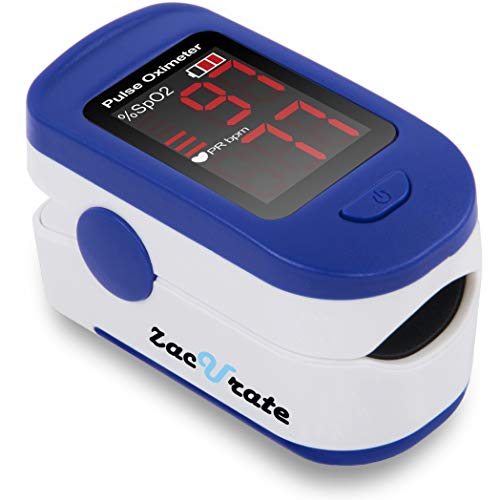 Zacurate 500BL Fingertip Pulse Oximeter
|
8.1/10 | Buy | |
| Top Rated |
 Zacurate 500E-B Wireless Bluetooth Pulse Oximeter
|
7.4/10 | Buy | |
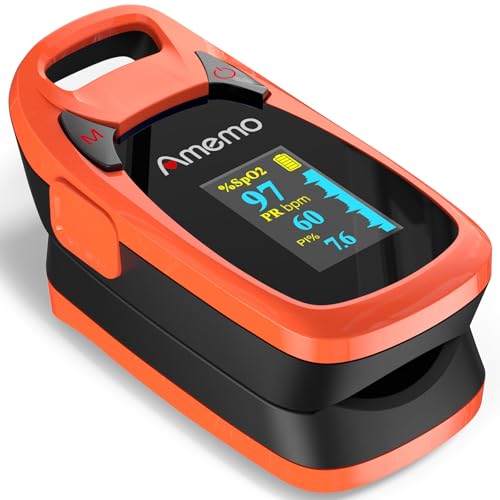 Amemo Fingertip Pulse Oximeter with OLED Display
|
7.3/10 | Buy | ||
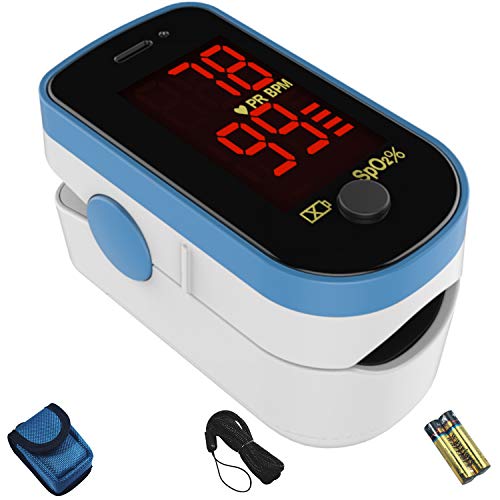 CHOICEMMED Fingertip Pulse Oximeter with LED Display
|
7.2/10 | Buy | ||
 Mibest OLED Finger Pulse Oximeter
|
7.0/10 | Buy | ||
 Mibest OLED Finger Pulse Oximeter
|
7.0/10 | Buy | ||
 HealthTree Fingertip Pulse Oximeter with OLED Display
|
6.5/10 | Buy |
Innovo iP900AP Fingertip Pulse Oximeter
A premium fingertip pulse oximeter designed for accurate SpO2 and heart rate monitoring across various activities, from high-altitude sports to home health tracking. Features plethysmograph and perfusion index technology for reliable readings even at low blood perfusion, plus auditory alarms and adjustable display brightness.
Pros
- Clinically validated performance against competing pulse oximeters
- Works reliably at low perfusion levels where many oximeters struggle
- Comes fully equipped with batteries and lanyard out of the box
- Dual measurement confirmation via plethysmograph and perfusion index reduces uncertainty
- Auditory feedback and adjustable brightness enhance usability across conditions
Cons
- No customer reviews available to assess real-world reliability and user satisfaction
- Requires remaining still during measurement, limiting convenience for active monitoring
- Premium positioning suggests higher cost relative to basic pulse oximeters
Zacurate 500 Series Fingertip Pulse Oximeter
A compact LED pulse oximeter that reads SpO2 levels up to 100% and displays results within 10 seconds, designed for athletes and health-conscious users monitoring oxygen saturation. Comes ready to use with batteries, silicone cover, and lanyard included.
Pros
- Displays complete SpO2 values up to 100%, unlike many competitors limited to 99%
- Quick results in 10 seconds with clear LED display orientation
- Includes all essentials: batteries, protective silicone cover, and lanyard for immediate use
- Accommodates wide range of finger sizes with spring-loaded chamber
- Includes 12-month warranty with USA-based technical support
Cons
- No verified buyer reviews available to confirm real-world accuracy and reliability claims
- Limited to ages 12 and above, not suitable for younger children
- LED display may be harder to read in bright sunlight compared to digital screens
Zacurate 500BL Fingertip Pulse Oximeter
A compact fingertip pulse oximeter that measures blood oxygen saturation and pulse rate in 10 seconds with a large LED display. Designed for sports enthusiasts and health-conscious users who need quick, portable SpO2 monitoring.
Pros
- Fast measurement time makes it convenient for frequent checks
- Accommodates various finger sizes with adjustable spring chamber
- Includes batteries, so no additional purchase needed to get started
- Lightweight and portable for athletes and travelers
- Includes manufacturer warranty and domestic support
Cons
- No verified buyer reviews available to assess real-world reliability and accuracy claims
- Requires hand to remain still during measurement, which may be challenging during activity
- Limited to ages 12 and above, not suitable for younger children
Zacurate 500E-B Wireless Bluetooth Pulse Oximeter
A portable fingertip pulse oximeter with Bluetooth connectivity and a companion app for tracking SpO2, heart rate, and respiratory data across multiple users. Built for active use and travel rather than continuous overnight monitoring, it offers six display orientations and comes with a solid 18-month warranty.
Pros
- Smart app tracks multiple users and stores historical data over time
- Patented multi-directional OLED display adapts for patient or caregiver viewing
- Reliable performance even during low blood perfusion situations
- Generous 18-month warranty backed by manufacturer
- Lightweight and portable design suited for sports, travel, and aviation use
Cons
- Not designed for continuous overnight monitoring, limiting utility for sleep apnea or medical surveillance
- No user reviews available to verify real-world accuracy and app reliability
- Requires smartphone with iOS or Android for full feature access and data storage
Amemo Fingertip Pulse Oximeter with OLED Display
A compact pulse oximeter with a larger 1.2-inch OLED screen and medical-grade Japanese sensor designed for continuous monitoring during exercise or sleep. Features customizable alarms for blood oxygen and heart rate, plus a durable spring-clip design that stays in place.
Pros
- Medical-grade sensor and high-speed processor claim accuracy comparable to hospital equipment
- Larger 1.2-inch OLED display with higher brightness than standard 0.9-inch screens, easier to read for elderly users
- Spring-clip design with silicone padding allows stable, continuous monitoring without hand-holding
- Customizable alarm thresholds for abnormal blood oxygen and heart rate with single-button setup
- Fast measurement results in as little as 3 seconds, displays SpO2, pulse rate, waveform, and battery level
Cons
- No verified customer reviews available to confirm real-world accuracy claims or durability assertions
- Limited information on battery life and frequency of battery replacement needs
- Claims of industrial-grade durability rely on manufacturer demonstrations rather than independent verification
CHOICEMMED Fingertip Pulse Oximeter with LED Display
A portable SpO2 monitor designed for sports enthusiasts and travelers who need quick oxygen saturation spot-checks. One-button operation delivers readings in about 10 seconds, with 40 hours of battery life and a compact form factor that fits easily in bags or pockets.
Pros
- Complete kit included: oximeter, case, lanyard, and batteries ready to use immediately
- Extended battery life up to 40 hours reduces need for frequent replacements
- Simple one-button design makes it accessible for all users
- Ideal for athletes and outdoor enthusiasts monitoring oxygen levels during activities
- Bright LED display provides clear, easy-to-read results
Cons
- Not intended for medical use, limiting reliability for clinical or diagnostic purposes
- No customer reviews available to assess real-world durability or accuracy consistency
- May not fit all finger sizes comfortably given the compact fingertip sensor design
Mibest OLED Finger Pulse Oximeter
A portable finger pulse oximeter with OLED display designed for sports and altitude activities rather than clinical use. Features 10-second readings, adjustable brightness, and comes ready to use with protective case and batteries included.
Pros
- Fast readings in 10 seconds with large OLED display
- Versatile display options (6 modes, rotatable viewing) for different preferences
- Complete out-of-box package with protective accessories and batteries
- Lightweight and portable at 0.18 pounds with included carrying pouch
Cons
- Explicitly designed for sports and aviation use only, not approved for medical diagnosis
- No verified buyer reviews available to assess real-world reliability and accuracy
- Limited to spot-check monitoring rather than continuous medical-grade functionality
Mibest OLED Finger Pulse Oximeter
A portable fingertip oximeter with dual-color OLED display and fast readings, designed for sports and outdoor enthusiasts rather than clinical use. Comes ready to use with batteries, case, and lanyard included.
Pros
- Large, clear OLED screen displays all vital readings at once
- Truly portable with pocket-friendly size and included accessories
- Multiple display modes and brightness levels accommodate different lighting
- Quick measurement results make it practical for quick spot-checks during activity
Cons
- Explicitly not intended for medical or clinical use, limiting applications
- No reviews available yet to verify real-world accuracy or durability
- Requires AAA batteries, which will need eventual replacement
HealthTree Fingertip Pulse Oximeter with OLED Display
A compact, one-button pulse oximeter that displays SpO2, heart rate, and pulse strength via OLED screen. Designed for everyday wellness monitoring at home, during workouts, or outdoor activities, and arrives ready to use with batteries and lanyard included.
Pros
- Bright, easy-to-read display shows SpO2, pulse rate, and signal strength simultaneously
- Lightweight and compact form factor ideal for travel and outdoor activities
- Includes all necessary accessories, batteries, and lanyard out of the box
- Simple one-button operation requires no learning curve
Cons
- No verified buyer reviews available to assess real-world accuracy and reliability
- Limited information on battery life duration between replacements
- Gray color option only, no alternative color choices available
Pulse Oximeters Buying Guide
Choosing the right pulse oximeter comes down to more than picking the cheapest option or the one with the most features. Accuracy, display readability, battery life, and build quality all matter, and different use cases call for different priorities.
The subsections below walk through every criterion you should weigh before buying, so you can match a model to your actual needs rather than marketing copy.
Measurement Accuracy and Low-Perfusion Performance

Accuracy is the single most important criterion for any pulse oximeter. For general home monitoring, a device should read SpO2 within plus or minus two percentage points of a clinical reference under normal conditions.
Where models diverge significantly is at low perfusion states, meaning situations where blood flow to the fingertips is reduced due to cold hands, poor circulation, movement, or dark nail polish.
A device that performs well in a warm office but drifts badly when a patient is cold or anxious provides false reassurance.
Look for models that explicitly list a perfusion index (PI) reading. The PI is a ratio of pulsatile to non-pulsatile blood flow, displayed as a percentage.
A low PI (below 1%) warns you that the reading may be unreliable, prompting you to reposition the finger or warm your hand before trusting the SpO2 number. Models that omit PI leave you guessing about signal quality.
Expert review consensus consistently ranks PI display as a meaningful differentiator between consumer and near-clinical grade devices.
Alarm functionality adds another layer of safety. A configurable alarm that sounds when SpO2 drops below a set threshold (typically 90 to 94 percent) is valuable for overnight monitoring or use by caregivers watching a sleeping patient.
Not every model offers this, so if continuous passive monitoring is a priority, filter your shortlist accordingly.
Display Quality and Orientation Options
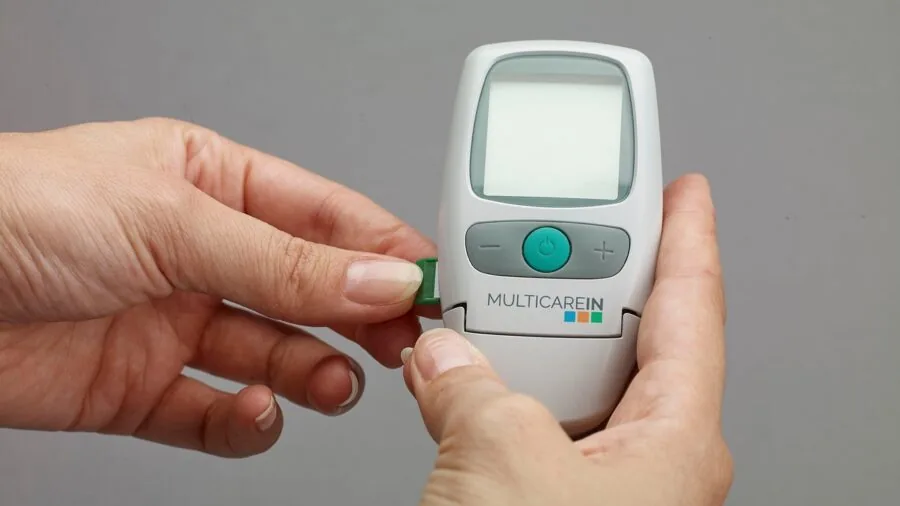
The display must be legible at a glance, under variable lighting, and ideally from multiple angles.
OLED screens offer significantly better contrast and visibility in bright ambient light than older LED segment displays.
Numbers should be large enough to read without squinting, and brightness should be adjustable or automatically adapt to ambient conditions so the screen does not blind you in a dark room at night.
Orientation flexibility is underrated. Many oximeters allow the display to rotate through two or four positions so you can read it comfortably whether your arm is resting on a surface or raised.
This matters more than it sounds when the device is on your non-dominant hand or when an elderly user has limited wrist mobility. Models that lock into a single display orientation can be frustrating in practice.
A plethysmograph waveform, the live visualization of each pulse beat displayed as a moving graph or bar, is a useful secondary indicator. It shows not only that the device is detecting a signal but also the regularity of your heartbeat.
Some buyers find the waveform reassuring; others find it superfluous.
Either way, its presence does not add meaningful cost to mid-range models, so it is worth having.
Fit, Comfort, and Finger Size Compatibility
A spring-loaded finger clip must apply enough pressure for consistent optical contact without causing discomfort during a one to two minute reading session.
Devices with weak springs can shift and produce erratic readings; those with overly stiff springs are uncomfortable for users with sensitive fingers or arthritis.
Most consumer fingertip oximeters accommodate fingers from roughly 10 mm to 25 mm in diameter, covering the majority of adults. However, fitting children, users with very large fingers, or people with significant edema can be a challenge.
Verify the stated finger size range if you are buying for someone outside the typical adult range.
Weight and size affect portability. A lightweight unit that slips into a pocket or attaches to a lanyard (many models include one) is far more likely to be used consistently.
If the oximeter lives in a drawer and gets retrieved only when something feels wrong, you lose the baseline comparison data that makes monitoring meaningful.
A carrying case, which several models on this list include, protects the sensor window and extends the device’s useful life.
Connectivity, App Integration, and Data Logging

Basic oximeters display readings in real time and store nothing.
That is perfectly adequate for a quick spot-check. But if your goal is trending SpO2 over time, tracking recovery from illness, or sharing data with a physician, you need a model with Bluetooth connectivity and a companion app.
App-connected models let you log readings with timestamps, visualize trends over days or weeks, and export data as a PDF or spreadsheet for clinical review.
Evaluate the app as critically as the hardware. Verified buyer feedback frequently cites app stability, operating system compatibility, and ease of pairing as common pain points with Bluetooth oximeters.
An oximeter with a great hardware sensor but a buggy or abandoned app delivers a frustrating experience. If Bluetooth logging is important to you, check recent app store reviews alongside the hardware ratings before committing.
For most casual home users, a non-connected model is simpler, cheaper, and more reliable day to day.
People who already use a smartwatch for continuous heart rate tracking may find that a basic non-connected oximeter fills the SpO2 gap adequately.
Battery Life and Power Management
Most fingertip pulse oximeters run on two AAA batteries.
Battery life varies widely: budget models may drain a fresh set in under 20 hours of cumulative use, while more efficient designs can stretch past 30 to 40 hours.
For a device used in brief daily spot-checks, even modest battery life translates to months of real-world use. For continuous overnight monitoring or caregiver settings where the device is on for extended periods, battery efficiency matters considerably more.
Auto-off timers are a useful power-saving feature. Most models shut off after 5 to 10 seconds without a detected pulse, which prevents battery drain from accidental activation. Some higher-end models allow you to configure the auto-off delay.
It is worth confirming that a model includes this feature, particularly if you plan to use it near curious children or keep it in a bag where accidental power-on is plausible.
Value and Use-Case Fit

Pulse oximeters span a wide price range, from budget-friendly basic models to full-featured clinical-adjacent devices.
For occasional home spot-checking by a healthy individual, a budget-tier model with a clear display and solid accuracy under normal conditions is entirely sufficient.
For users managing COPD, sleep apnea, heart conditions, or high-altitude activities, a mid-range or premium model with PI display, alarm functionality, and a plethysmograph delivers meaningfully better utility.
Consider total cost of ownership. A no-frills model that chews through batteries rapidly or requires frequent replacement may cost more over two years than a slightly pricier model with better efficiency.
Similarly, an inexpensive device that reads inaccurately under the exact conditions you face (cold hands, low perfusion, dark nail polish) is not actually a bargain.
Matching the device’s capability to your realistic monitoring scenario is the smartest way to get value, regardless of the sticker price.
Why You Should Trust Us
ProductFind is an independent review publication. We do not sell the products we evaluate, and we have no relationship with manufacturers that influences our rankings.
Every pulse oximeter on this list was assessed using a consistent, multi-factor framework that translates into a PF Score on a scale of 0 to 10.
Higher scores reflect stronger performance across the criteria that matter most in this category: measurement accuracy and low-perfusion reliability, display quality and readability, build quality, battery performance, connectivity and data features, and overall value relative to price.
We do not conduct our own product trials; our evaluations are grounded in research, published data, expert review consensus, and verified buyer feedback.
We analyze manufacturer-published specifications, cross-reference findings from multiple expert sources, and weigh patterns in verified purchaser reviews to surface real-world strengths and limitations that spec sheets alone do not reveal.
This approach lets us evaluate a broad range of products consistently and flag issues like app instability, battery drain, or low-perfusion inaccuracy that only emerge across hundreds of user experiences.
ProductFind may earn a commission if you purchase through a link in this article. That affiliate relationship does not influence our rankings, PF Scores, or product selection in any way.
Products are ranked on the merits of our research, not on commission rates.
Our editorial process is designed to surface the most useful recommendations for real buyers, not to maximize revenue.
Final Thoughts
After comprehensive research across specifications, expert consensus, and verified buyer feedback, the nine models above represent the strongest fingertip pulse oximeters available across a range of budgets and use cases.
Here is how we would categorize the standout picks.
- Best Overall: Innovo Deluxe iP900AP earns the top PF Score in this roundup with a combination of medical-adjacent accuracy, configurable SpO2 alarm, plethysmograph waveform, and perfusion index display. It is the most complete feature set we found among consumer fingertip models, making it the right choice for users who demand reliable data under varied conditions.
- Best Value: Zacurate 500 Series (Royal Black) delivers a strong PF Score at a price that makes it accessible to almost anyone. It consistently ranks among the best-selling pulse oximeters with thousands of verified positive reviews, clear readings, and dependable accuracy for everyday home monitoring.
- Best Budget Pick: Zacurate 500BL is the most affordable model on the list that still scores well. It strips away extras in favor of simplicity, making it ideal as a backup device, a gift for a family member, or a first oximeter for someone who just wants a quick spot-check capability.
- Best for Bluetooth Tracking: Zacurate 500E-B Wireless Bluetooth is the go-to pick for users who want app-connected logging, trend visualization, and SpO2 data they can share with a healthcare provider. Its companion app adds context that a standalone display cannot.
- Best for OLED Display Clarity: Amemo Fingertip Pulse Oximeter stands out for its large OLED screen and plethysmograph, making readings easy to interpret at a glance even in bright conditions. It is a solid pick for users who prioritize display legibility above all else.
Whether you are choosing a basic model for occasional wellness checks or a feature-rich monitor for ongoing health management, the options above cover the full spectrum of practical needs. Pair your oximeter with a consistent monitoring habit for the most meaningful results.
Frequently Asked Questions
How accurate are consumer fingertip pulse oximeters compared to hospital equipment?
Most quality consumer fingertip oximeters achieve SpO2 accuracy within plus or minus two to three percentage points of a clinical reference device under normal conditions. That margin is considered acceptable for general home monitoring.
However, accuracy can degrade with cold or poor circulation in the fingertips, excessive movement, dark nail polish, or very dark skin tones, where some optical sensors underperform.
If you need clinical precision, consult a healthcare provider who can use a dedicated medical-grade device. For home trending and early warning use, a well-rated consumer model is generally reliable.
What is a normal SpO2 reading?
For healthy adults breathing ambient air at sea level, a normal blood oxygen saturation reading is typically between 95 and 100 percent. Readings between 91 and 94 percent are considered borderline and warrant attention, especially if they persist or are accompanied by symptoms.
A sustained reading below 90 percent is generally considered clinically significant and merits prompt medical evaluation. Keep in mind that individual baselines vary, and altitude, lung conditions, and certain medications can all affect typical ranges for a given person.
Do I need a pulse oximeter with Bluetooth and an app?
For most casual home users, a non-connected model is simpler, more reliable, and less expensive.
Bluetooth connectivity becomes valuable when you need to log readings over time, track trends during recovery from illness or surgery, or share data with a physician.
If you use a wearable device that already captures heart rate continuously, a standalone non-connected oximeter may cover the remaining gap without any additional app complexity.
Assess your actual monitoring goals before paying extra for Bluetooth features you may not use consistently.
What is a perfusion index and why does it matter?
Perfusion index (PI) is a measure of the ratio of pulsatile blood flow to non-pulsatile blood flow in a fingertip, expressed as a percentage. A higher PI indicates strong blood flow and a reliable reading signal.
A low PI (below approximately 1%) means the sensor is struggling to detect a clean pulse, often because hands are cold, circulation is compromised, or the finger is not properly positioned.
Oximeters that display PI let you verify that an SpO2 reading is trustworthy before acting on it. Models that omit PI leave you without this important quality indicator.
How long do batteries last in a typical fingertip pulse oximeter?
Battery life depends heavily on usage patterns and the model’s power efficiency.
For typical spot-check use, meaning a few one to two minute readings per day, a set of AAA batteries in a quality oximeter can last several weeks to a few months. Continuous monitoring scenarios drain batteries much faster.
Most models include an auto-off feature that shuts the device down after a short period without a detected pulse, which significantly extends battery life in daily use.
Check whether the model you are considering includes batteries in the box, as several options on this list do.
Can I use a pulse oximeter on a child?
Standard adult fingertip oximeters are generally not suitable for young children because the finger clip is sized for adult fingers and will not make proper optical contact with a smaller digit, leading to unreliable or no readings.
Pediatric pulse oximeters exist and use differently sized probes appropriate for small fingers. If you need to monitor a child’s oxygen levels, consult your pediatrician about the right device and appropriate normal ranges for that child’s age and baseline health.
The models reviewed in this article are designed and sized for adult use.
About the author
Edna is a reviewer and writer for ProductFind who specializes in Health Monitoring & Wellness Devices. Edna evaluates products through independent research: specifications, expert review consensus, and verified buyer feedback, and rates each one on the PF Score. Edna focuses on helping readers pick the right health monitoring & wellness device for their needs and budget.