The 8 Best Board Games for Families
Family game night should bring everyone together, not end in arguments over rules. These eight picks balance age accessibility, fast setup, and genuine replay value for mixed-age households.
 By Manuel Davidson
Updated July 23, 2026
By Manuel Davidson
Updated July 23, 2026
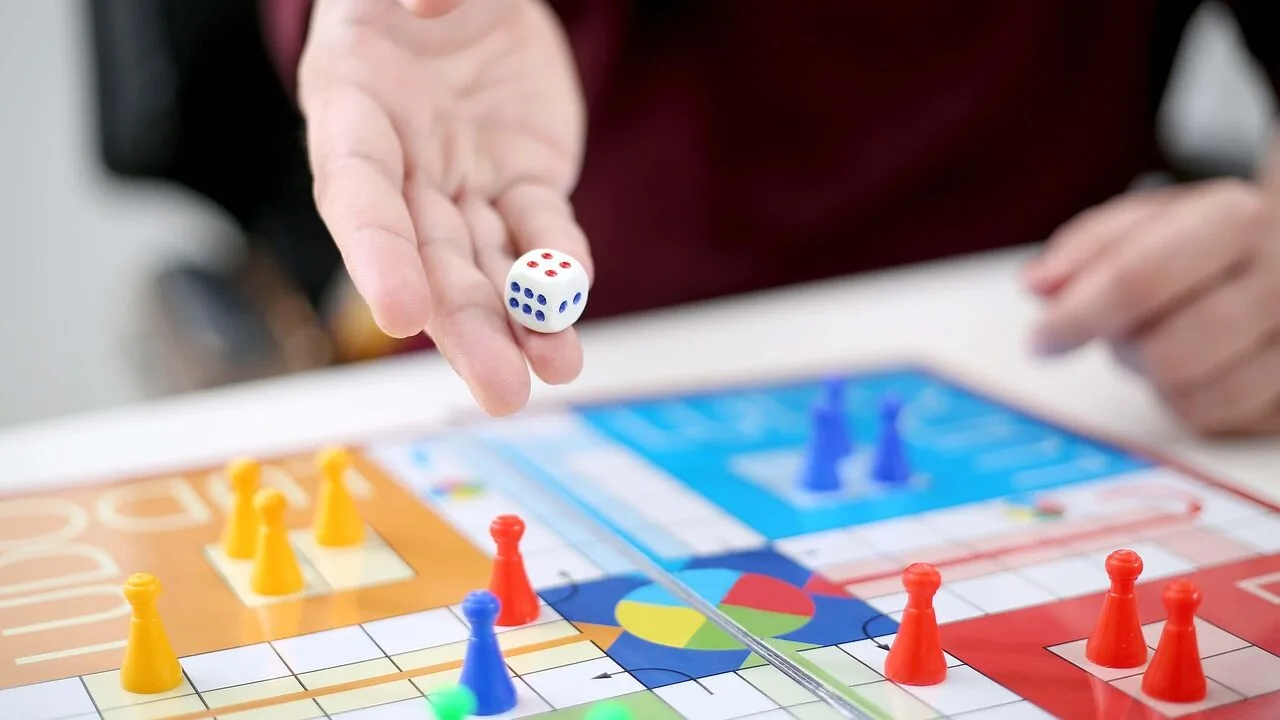
Family game night is one of the simplest ways to pull everyone off their screens and into the same room, but picking the right game can feel surprisingly overwhelming.
Walk into any toy aisle or scroll through Amazon and you will find hundreds of options spanning trivia, strategy, word association, deduction, and pure luck.
The wrong pick can mean confused kids, bored adults, or a box that gets played once and forgotten. The right pick becomes a tradition your family returns to for years.
To help you cut through the noise, the ProductFind team researched dozens of the most popular and critically praised family board games by synthesizing product specifications, expert review consensus across gaming publications, and verified buyer feedback from thousands of confirmed purchasers.
Our eight picks below range from a vibrant color-guessing game perfect for large groups to a fast-playing classic dice game that fits in a backpack. Scroll through our ranked top picks to find the right fit for your family.
| Award | Product | PF Score About PF ScoreThe PF Score is our own rating from 0 to 10, based on performance, design and build, ease of use, and value. It reflects independent research and is never influenced by manufacturers, retailers, or affiliate commissions. Learn more › | Price | |
|---|---|---|---|---|
| Best Overall |
 USAOPOLY Hues and Cues Color Guessing Board Game
|
7.3/10 | Buy | |
| Editor's Pick |
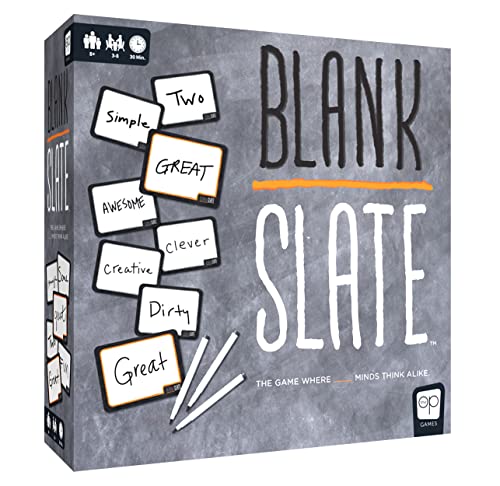 USAOPOLY Blank Slate Word Association Game, 3-8 Players
|
6.8/10 | Buy | |
| Best Value |
 What Do You Meme Family Edition Card Game
|
7.3/10 | Buy | |
| Top Rated |
 Mattel Games UNO Card Game, Color Blind Accessible
|
8.4/10 | Buy | |
 Big Potato Chameleon Social Deduction Game
|
8.2/10 | Buy | ||
 Yahtzee Classic Dice Game for 2+ Players
|
5.9/10 | Buy | ||
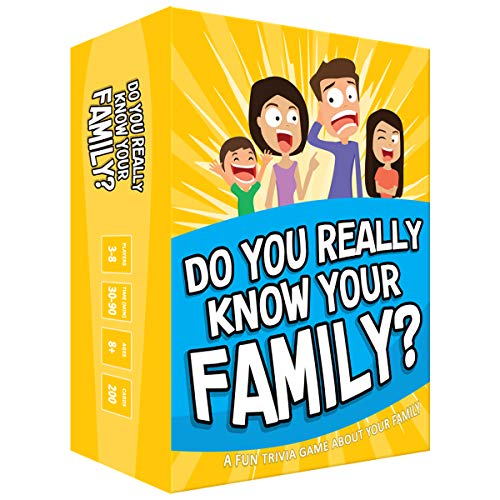 Do You Really Know Your Family Card Game
|
7.2/10 | Buy | ||
 The Uzzle 3.0 Block Puzzle Game, 100 Puzzles
|
6.2/10 | Buy |
USAOPOLY Hues and Cues Color Guessing Board Game
A color-based party game where players give one or two-word clues to guide teammates toward specific hues from a board of 480 color squares. Works for 3-10 players ages 8 and up with straightforward rules that encourage creative thinking and quick rounds.
Pros
- Large player count range (3-10) makes it flexible for different group sizes
- No two games are the same thanks to the extensive color palette
- Easy to learn mechanics keep setup and teaching time minimal
- Creative clue system fosters engaging team interaction
Cons
- No verified buyer reviews yet to confirm real-world gameplay experience
- Requires color perception and vocabulary skill, which may disadvantage younger players at the lower age range
USAOPOLY Blank Slate Word Association Game, 3-8 Players
A word association party game where players write single words to complete phrases and score by matching others' answers without hints. Quick to learn and play in 20-35 minutes, making it accessible for family game nights with ages 8 and up.
Pros
- Supports large groups and small gatherings with flexible 3-8 player count
- Dry-erase slates and substantial card deck enable repeated play without wear concerns
- Fast gameplay respects time constraints for busy families
- Prediction-based mechanics reward reading others' thinking patterns rather than knowledge
Cons
- No verified buyer reviews available to assess real-world durability or gameplay satisfaction
- Thin box profile may indicate minimal storage solution if cards become damaged
- Requires dry-erase markers not included in the box
What Do You Meme Family Edition Card Game
A family-friendly meme card game featuring 300 caption cards and 108 photo cards designed for ages 8 and up. Players compete to match captions with photos while a rotating judge picks the funniest combinations, making it suitable for game nights, parties, and family gatherings with 3 or more players.
Pros
- Large card collection provides substantial replay value with many possible combinations
- Age-inclusive design allows mixed-age family play from kids to adults
- Rotating judge mechanic encourages players to adapt humor to different personalities
- Compact medium-sized box makes it portable for travel and gatherings
- Award recognition suggests quality gameplay and appeal
Cons
- No verified buyer reviews available yet to assess real-world experience and durability
- Humor-dependent gameplay means enjoyment heavily relies on player group compatibility
- Requires minimum 3 players, limiting options for two-person play
Mattel Games UNO Card Game, Color Blind Accessible
The classic UNO card game featuring graphic symbols on each card to make it accessible for players with color blindness. Supports 2-10 players ages 7 and up, includes three blank customizable Wild Cards for house rules, and comes in a compact portable format ideal for family game nights and travel.
Pros
- Inclusive design with graphic symbols ensures all players, including those with color blindness, can identify cards without relying on color alone
- Customizable blank cards add replayability and let groups create their own rule variations
- Wide player range (2-10) and age accessibility make it suitable for multiple group sizes and mixed-age gatherings
- Lightweight and compact packaging fits easily in bags for travel
Cons
- No user reviews available to verify real-world durability or card quality
- Requires external tracking method or scorepad for keeping score to 500
- Standard deck size may be difficult to manage for very young players or those with dexterity issues
Big Potato Chameleon Social Deduction Game
A bluffing party game where one player secretly doesn't know the word everyone else does, and must be caught before escaping. Quick setup and 15-minute gameplay make it accessible for mixed-age groups, with multiple award recognition supporting its design quality.
Pros
- Fast-paced gameplay keeps energy high and sessions replayable
- Works across wide player range without complex rule overhead
- Hidden role mechanic creates genuine tension and laughter
- Proven award credentials indicate solid design fundamentals
Cons
- No user reviews available to confirm real-world player experience
- Limited to 8 players maximum, restricting larger group gatherings
- Social deduction relies heavily on player engagement, which varies by group dynamics
Yahtzee Classic Dice Game for 2+ Players
Yahtzee is a fast-paced dice game that combines luck and strategy, playable by 2 or more players ages 8+. Players roll dice to build combinations like straights, full houses, and five-of-a-kind for the highest score, making it a straightforward pick for family game nights.
Pros
- Simple rules and quick gameplay make it accessible for kids and adults alike
- Strategic depth balances chance with decision-making about when to push for higher rolls
- Works with any number of players (2+), adapting to different group sizes
- Compact size makes it portable for travel or casual gatherings
- Classic format appeals as a gift option for families
Cons
- No reviews available to assess real-world durability or component quality
- Limited gameplay variety compared to modern strategy board games
- Relies heavily on dice rolls, so outcomes can feel random regardless of player skill
Do You Really Know Your Family Card Game
A conversation-focused card game designed for families with kids 8 and up, featuring trivia questions and silly challenges to spark laughter and reveal what family members actually know about each other. Simple rules make it accessible for mixed-age groups during game nights.
Pros
- Balances knowledge-testing questions with silly performance challenges to keep engagement varied
- Explicitly designed for families with kids as young as 8, making it genuinely inclusive
- Low learning curve means faster game starts with less explanation needed
- Encourages genuine interaction and discovery about family members
Cons
- No customer reviews available yet to verify entertainment value and replay longevity
- Specific challenge and question variety not detailed, making it unclear if content sustains multiple playthroughs
- Physical card size and component quality not documented in available specifications
The Uzzle 3.0 Block Puzzle Game, 100 Puzzles
A pattern-matching race game where players compete to solve puzzles by flipping and merging blocks across four difficulty levels. Designed for ages 4 and up, it supports 1-4 players and emphasizes quick thinking and visual pattern recognition.
Pros
- Wide age range compatibility from young children to adults with tiered difficulty levels
- Quick learning curve makes it accessible to new players
- Pattern-matching gameplay engages observation skills and hand-eye coordination
- Compact size (8 x 8 x 4 inches) works for travel or smaller spaces
- High customer base of 150,000+ suggests reliable product popularity
Cons
- No verified buyer reviews available to assess durability or real-world gameplay experience
- Multiplayer appeal may be limited since simultaneous play for 4 players requires competitive space and attention
- Limited to 4 players without purchasing additional game sets
Best Board Games for Families Buying Guide
Choosing a family board game is not just about finding something that looks fun on the box. The best games balance accessibility for the youngest players with just enough depth to keep adults genuinely engaged.
Below are the six criteria that shaped our research and should shape your decision too.
Age Range and Accessibility
The single most important filter is the age floor. A game rated 8 and up can still vary wildly in practice.
Some 8+ games rely on reading, abstract reasoning, or bluffing skills that younger children will find frustrating, while others use color, pictures, or dice in ways that even a six-year-old can follow.
Always look beyond the printed age label and ask whether the core mechanic requires literacy or complex turn sequencing.
For mixed-age households, games built around visual or color cues tend to close the gap between adults and kids most gracefully. The same principle applies to games that rely on physical or intuitive input rather than vocabulary.
If your group spans a wide age range, prioritize mechanics that do not require players to read aloud under pressure or calculate scores in their heads.
Player Count and Group Dynamics

Most family games advertise a minimum of two players but truly shine with three or more. Pay close attention to the upper player count.
A game capped at four players creates a problem the moment a friend or extra family member shows up.
Games that scale well to six, eight, or even ten players give you far more flexibility for holiday gatherings or birthday parties.
Also consider whether the game is competitive or cooperative. Cooperative play, where everyone works toward the same goal, has a meaningful social benefit: it reduces sibling rivalry and prevents the sting of one child always losing to an older sibling.
Expert reviewers consistently note this when evaluating games for younger audiences. If your household tends toward heated competition, a cooperative or team-based format can keep the evening light and collaborative rather than argumentative.
Setup Time and Rule Complexity
A game that takes 20 minutes to set up and explain will get played far less than one you can open and start in five minutes.
For regular family nights, prioritize games where the rulebook fits on one side of a single sheet or where the mechanics are explained by the first two rounds of play.
The best family games have a low floor for entry and a high ceiling for replay.
Card-based games tend to win here because there is no board setup, no sorting tokens, and no assembling components. Dice games score similarly well.
Games that require spatial setup or hidden roles can still be accessible, but budget an extra five to ten minutes the first session for everyone to understand the phase structure.
Verified buyer feedback across dozens of family game reviews consistently flags long setup as the primary reason a game collects dust after the first play.
Replayability and Variety

A family board game represents a very different value proposition than a single-player video game. You are paying for hundreds of evenings of entertainment, so replayability matters enormously.
Games with random decks, shuffled card draws, or open-ended creative prompts generate a different experience every session.
Word association and clue-giving games in particular tend to feel fresh each time because the answers depend entirely on the players in the room.
Games with a finite number of scenario cards or a short campaign path will eventually feel repetitive. This is not always a dealbreaker, but it is worth noting if your family plays multiple nights per week.
Look at the total card count and whether the publisher offers expansion packs if the core set runs dry.
Component Quality and Durability
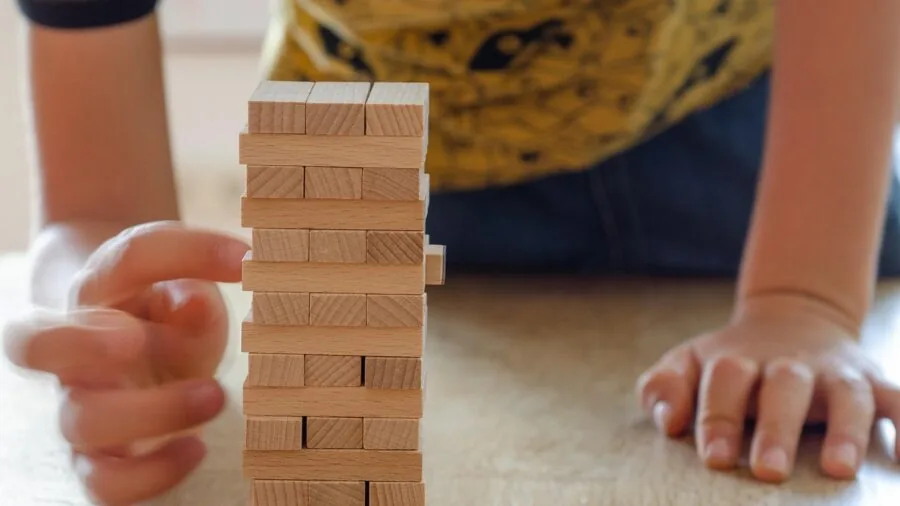
Family games take physical punishment. Cards get bent, tokens get lost, and dice get chewed by the dog. Thick cardstock, linen-finish cards, and molded plastic components survive a family much better than thin paper cards or lightweight cardboard.
When reading verified buyer reviews, pay attention to comments about card stock weight and whether the box insert organizes components well enough to prevent pieces from mixing together between sessions.
Component quality also affects the perceived value of the game. A premium-feeling set of cards or a well-printed game board makes the experience feel more special and encourages kids to treat it with care.
Budget-friendly games can still have durable components, but it pays to check recent buyer feedback for any reports of cards warping or ink fading after a few plays.
Thematic Appeal and Engagement
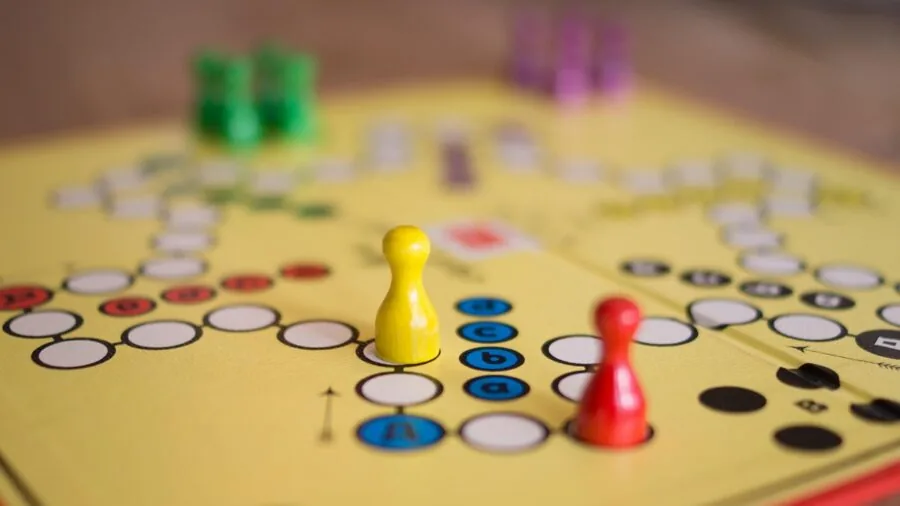
Theme is the hook that gets reluctant family members to the table. A game about color perception, internet memes, family trivia, or social deduction tells you immediately whether it fits your household culture.
Games with contemporary or pop-culture themes tend to excite tweens and teens more than abstract strategy titles. Games built around conversation or family memories tend to resonate for parents and grandparents.
The most successful family games find a theme broad enough that every generation feels included rather than pandered to.
Theme also affects longevity. A game tied too closely to a specific cultural moment can date quickly, while a timeless mechanic wrapped in a flexible theme stays relevant year after year.
When evaluating theme, ask whether your family would still enjoy the premise five years from now, or whether the appeal is tied to a trend that may fade.
Pairing a game night with other living room activities, comfortable outdoor seating for porch sessions, or quality audio for background music can all elevate the experience around the table.
Why You Should Trust Us
ProductFind is an independent review publication. We do not sell products, manage orders, or handle returns. Every recommendation on this page is the result of structured research, not promotional relationships with manufacturers.
Each product in this roundup was evaluated against a consistent set of criteria including age accessibility, player count scalability, rule complexity, replayability, component quality, and thematic appeal.
We assess products by synthesizing manufacturer specifications, expert review consensus from established gaming and parenting publications, and verified buyer feedback drawn from thousands of confirmed purchasers.
We do not conduct our own product trials; our evaluations are grounded in research, published data, expert review consensus, and verified buyer feedback.
Every product receives a PF Score on a 0 to 10 scale reflecting how well it performs across all criteria relative to comparable products in the category.
ProductFind may earn a commission if you purchase through a link on this page. That affiliate relationship has no influence on our rankings, PF Scores, or product selection. Products are ordered by research-backed merit, not by commission rate or brand relationship.
Final Thoughts
After evaluating all eight games across every criterion in our buying guide, here is how we would summarize the standout picks for different family needs.
- Best Overall: HUES and CUES earns the top spot with the highest PF Score in this roundup. Its color-perception mechanic works intuitively for all ages, scales beautifully to groups of up to ten players, and generates genuinely different conversations every session. Expert reviewers and buyers alike praise how quickly new players get up to speed.
- Best for Word Game Lovers: BLANK SLATE by USAOPOLY consistently delivers laugh-out-loud moments around the table. Its word-association format is easy to explain in under two minutes and rewards creative thinkers without punishing younger players. Families who enjoy games where personality shines through will return to this one repeatedly.
- Best Quick-Play Pick: Mattel Games UNO remains one of the most accessible card games on the market. Setup takes seconds, the rules are already known by most players, and the customizable deck adds a fresh twist to the classic format. It is a reliable choice when you need something everyone can jump into immediately.
- Best for Teens and Tweens: WHAT DO YOU MEME? Family Edition bridges the gap between younger kids and older teens by leaning into humor and pop-culture visual cards. Its Nappa Award recognition reflects genuine cross-generational appeal, and the 300-card caption deck keeps the game feeling fresh across many sessions.
- Best for Families Who Love a Mystery: The Chameleon from Big Potato introduces social deduction in a format that is lighter and faster than most hidden-role games. It works especially well for families with older kids and adults who enjoy reading the room and debating their reasoning out loud.
Whatever your family’s preferred pace or play style, the games on this list represent the strongest options available at a range of price points.
A well-chosen game is one of the most cost-effective investments in family time you can make, delivering far more engagement per dollar than most single-use entertainment options.
Frequently Asked Questions
What age is best for starting family board games?
Most family board games are designed for ages 8 and up, which is when children typically develop the attention span, reading ability, and turn-taking patience the games require.
That said, several games on our list use visual or color-based mechanics that work well for children as young as 4. The Uzzle 3.0, for example, is designed specifically for ages 4 and up with its block puzzle format.
The key is matching the core mechanic, not just the printed age label, to your youngest player’s actual skill level.
How many players do family board games typically support?
Most family games support between 3 and 8 players, though individual ranges vary. HUES and CUES supports up to 10 players, making it one of the most flexible picks for large gatherings. BLANK SLATE supports up to 8.
UNO can be played with 2 or more. If you regularly host extended family or larger groups, prioritize games with a higher player cap. For smaller households of 3 or 4, nearly every game on this list works well.
Are cooperative board games better than competitive ones for kids?
It depends on the dynamic in your household, but expert reviewers consistently note that cooperative play reduces the emotional friction that comes with competitive games among siblings of different ages and skill levels.
When everyone wins or loses together, younger kids feel included rather than dominated. Games like Do You Really Know Your Family? lean into shared discovery rather than direct competition, which many parents find creates a warmer, more connected atmosphere.
That said, healthy competition is valuable too, and games like UNO and BLANK SLATE balance competition with enough randomness that anyone can win on a given night.
How long does a typical family board game session take?
Most of the games on this list are designed to be played in 30 to 60 minutes, which fits naturally into a family evening without dragging into bedtime.
Card-based games like UNO and WHAT DO YOU MEME? tend to run on the shorter end depending on player count.
Games like HUES and CUES and BLANK SLATE scale with the number of rounds you choose to play, giving you flexibility to cut a session short or extend it.
The Chameleon plays particularly quickly per round, which makes it easy to fit multiple games into a single sitting.
What is the best family board game for a mixed group of kids and adults?
Games that use universal mechanics like color recognition, visual association, or word completion tend to level the playing field most effectively between children and adults.
HUES and CUES is particularly strong here because perception of color is not a skill that scales strongly with age or education level, meaning a well-calibrated 9-year-old can genuinely challenge an adult.
BLANK SLATE similarly rewards creative thinking over vocabulary breadth. For groups where teens are present alongside younger kids, WHAT DO YOU MEME? Family Edition threads the needle between age groups without feeling forced for either audience.
Planning a relaxed game night also pairs well with other at-home comforts, from a relaxing bath beforehand to great snacks, making the whole evening feel like an event worth looking forward to.
Can family board games help with child development?
Yes, and the research base here is consistent. Games that involve turn-taking build impulse control and patience. Word association and clue-giving games like BLANK SLATE develop vocabulary and lateral thinking. Deduction games like The Chameleon encourage logical reasoning and perspective-taking.
Even classic dice games like Yahtzee reinforce basic probability intuition and arithmetic in a low-pressure context. Beyond cognitive benefits, shared game experiences are one of the most accessible ways to build family communication habits.
The time spent negotiating rules, celebrating wins, and recovering from losses together has social and emotional value that extends well beyond the game itself.
About the author
Manuel is a reviewer and writer for ProductFind who specializes in Board Games & Puzzles for Kids. Manuel evaluates products through independent research: specifications, expert review consensus, and verified buyer feedback, and rates each one on the PF Score. Manuel focuses on helping readers pick the right board games & puzzles for kid for their needs and budget.