The 10 Best Building Engineering Kits
From motorized construction sets to hydraulic arms and engine replicas, these building engineering kits make STEM concepts tangible. Find the right fit for your learner.
 By Chester Bryant
Updated July 23, 2026
By Chester Bryant
Updated July 23, 2026

Building engineering kits occupy a unique space in the STEM toy landscape: they push kids (and adults) beyond passive play into genuine problem-solving, structural thinking, and hands-on making.
Whether a child is assembling a hydraulic robotic arm, wiring up a smart robot car, or piecing together a motorized construction set, these kits build spatial reasoning and mechanical intuition that screen-based learning simply cannot replicate.
Demand for high-quality engineering building sets has grown steadily as parents and educators recognize the long-term value of play that mirrors real-world disciplines like civil, mechanical, and structural engineering.
For anyone interested in expanding a child’s STEM exposure, pairing a great engineering kit with other science kits for kids creates a well-rounded hands-on learning environment.
This guide covers ten of the most compelling building engineering kits currently available, spanning ages five through adult, price points from budget-friendly to premium, and disciplines from structural architecture to robotics and combustion engines.
ProductFind assembled this list through comprehensive research: manufacturer specifications, expert review consensus across engineering-education publications, and verified buyer feedback from confirmed purchasers. Every product carries a PF Score on our 0-to-10 scale so you can compare quality at a glance.
Read on for our ranked top picks, followed by a detailed buying guide to help you match the right kit to your learner.
| Award | Product | PF Score About PF ScoreThe PF Score is our own rating from 0 to 10, based on performance, design and build, ease of use, and value. It reflects independent research and is never influenced by manufacturers, retailers, or affiliate commissions. Learn more › | Price | |
|---|---|---|---|---|
| Best Overall |
 Meccano Super Construction 25-in-1 Motorized Building Set
|
8.5/10 | Buy | |
| Editor's Pick |
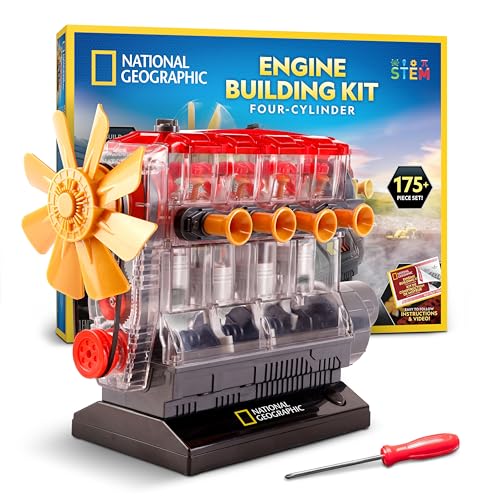 Blue Marble 4-Cylinder Engine Model Kit, 175+ Pieces
|
8.3/10 | Buy | |
| Best Value |
 Thames & Kosmos Architectural Engineering Kit, 26 Models
|
8.2/10 | Buy | |
| Top Rated |
 Thames & Kosmos Structural Engineering: 20 Model Kit
|
8.1/10 | Buy | |
 Nifeliz NF10317 Turbofan Engine Set, 2,216 Pieces
|
7.9/10 | Buy | ||
 ELEGOO UNO R3 Smart Robot Car Kit V4
|
7.8/10 | Buy | ||
 Teach Tech Hydrobot Arm Kit, Hydraulic STEM Robot
|
7.5/10 | Buy | ||
 K'NEX 40 Model Building Set, 141 Pieces
|
7.3/10 | Buy | ||
 Engino Mechanics: Levers & Structures STEM Kit, 16 Models
|
7.2/10 | Buy | ||
 Smartivity DIY Robotic Mechanical Hand STEM Kit
|
6.8/10 | Buy |
Meccano Super Construction 25-in-1 Motorized Building Set
A 638-piece construction set with motorized capabilities and 25 buildable models including a crane with a working 6V motor. Designed for kids 10 and up, it combines hands-on building with STEAM learning principles and includes real tools for assembly.
Pros
- Substantial piece count (638) provides multiple building projects without immediate repetition
- Functional motorized crane adds interactive play element beyond static model building
- Versatile design allows kids to rebuild multiple vehicles or create custom designs from the same set
- Real tools included enhance hands-on learning and building experience
- STEAM alignment appeals to parents seeking educational toy value
Cons
- Only 1 instruction sheet provided for 11 models, leaving 14 models without printed guidance
- No verified buyer reviews available to validate durability or assembly difficulty at the target age
- 4.8 rating appears placeholder given zero actual customer reviews recorded
Blue Marble 4-Cylinder Engine Model Kit, 175+ Pieces
A clear-case engine assembly kit with 175+ pieces that builds into a working motorized model demonstrating piston, valve, and gear mechanics. Designed for kids interested in engineering and mechanics, it includes tools, instructions, and a learning guide for hands-off educational value.
Pros
- Working motorized model makes abstract mechanics tangible and engaging
- Comprehensive kit with all assembly tools and educational materials included
- Clear case allows kids to see pistons, valves, and gears in motion
- Supports STEM learning through hands-on building and mechanics exploration
- Award-winning brand with established support and educational focus
Cons
- Requires 3 AA batteries sold separately for operation
- No verified customer reviews yet to confirm assembly difficulty or durability under repeated use
- 175+ small pieces may be challenging for younger children without adult supervision
Thames & Kosmos Architectural Engineering Kit, 26 Models
This science kit lets kids ages 8 and up design and build 26 architectural models, from basic trusses to scaled replicas of real buildings. The included 44-page manual guides projects while encouraging creative design exploration.
Pros
- Progressive skill building from basic to advanced structural concepts
- Modular design allows compatibility with other Thames & Kosmos kits for extended play
- Award-winning kit with structured guidance plus open-ended creative design challenges
- Teaches real engineering and architectural principles through hands-on model building
Cons
- No verified buyer reviews available to assess durability or assembly difficulty
- Limited information on whether all 26 models appeal equally to different age groups within the 8+ range
- Requires sustained engagement with instruction manual for optimal learning experience
Thames & Kosmos Structural Engineering: 20 Model Kit
This engineering kit lets kids build 20 different bridge and skyscraper models using 285+ interchangeable pieces to learn about force, compression, and tension. Best suited for intermediate builders who want hands-on exploration of structural engineering concepts with a 36-page illustrated guide.
Pros
- 20 different models provide varied learning on structural principles like force, load, compression, and tension
- 285+ interchangeable building pieces enable creative customization beyond the instruction set
- Comprehensive 36-page illustrated manual and assembly guide support independent learning
- Parents' Choice Gold Award recognition signals educator and parent approval
- Compact size (13.1 x 11.6 inches) fits on shelves and in classrooms
Cons
- Intermediate skill level may challenge younger learners without adult guidance
- No user reviews available on this listing to assess durability or long-term engagement
- Relatively light at 1 pound suggests plastic construction, which may feel less robust than metal alternatives
Nifeliz NF10317 Turbofan Engine Set, 2,216 Pieces
A 2,216-piece building set that assembles into a functional turbofan engine with working gears and dual-direction motion mechanics. Designed for adult collectors and mechanical enthusiasts who want a displayable, operational engineering model rather than a static build.
Pros
- Every component engineered for actual motion, not static display only
- Semi-exposed construction allows you to watch gear mechanics and fluid dynamics in action
- Substantial piece count and complex assembly engage serious model builders
- Metallic finish and engineered design create authentic, professional appearance
Cons
- No verified buyer reviews available to assess build difficulty, instruction clarity, or durability
- 4.6 rating lacks detail on potential assembly issues or missing parts problems
- Significant size and weight may require dedicated display space
ELEGOO UNO R3 Smart Robot Car Kit V4
An educational STEM kit designed to teach programming, electronics, and robotics to kids ages 8 and up through hands-on building and coding. The kit includes 24 module parts with obstacle avoidance, line tracing, and mobile app control via Android and iOS.
Pros
- 24 integrated modules covering obstacle avoidance, line tracing, and IR control in one kit
- Standardized XH2.54 connector ports minimize assembly mistakes and frustration
- Dual control options allow progression from remote control to smartphone programming
- Complete tutorial package with visual guides and included code
Cons
- Requires basic electronic knowledge or adult guidance to use effectively, not fully independent for younger children
- No customer reviews available to validate real-world performance and build quality
Teach Tech Hydrobot Arm Kit, Hydraulic STEM Robot
A water-powered robotic arm that teaches mechanical engineering through hands-on assembly, featuring six rotating axes and a gripper controlled by hydraulic levers. Best suited for kids 12+ who enjoy extended building projects and want to understand how hydraulic systems work without needing batteries.
Pros
- No batteries required, powered entirely by water hydraulics
- Six-axis arm with 270-degree rotation offers realistic mechanical complexity
- Gripper can be swapped with suction components for different object-handling tasks
- Detailed instructions designed to build problem-solving and analytical thinking skills
- Genuine multi-hour building experience rather than pre-assembled toy
Cons
- Significant assembly time investment required, not suitable for quick play
- No verified user reviews available to confirm real-world durability or assembly difficulty
- Limited to kids 12+, not accessible for younger STEM learners
K'NEX 40 Model Building Set, 141 Pieces
A construction set with 141 snap-fit pieces designed to build 40 different models, from vehicles to buildings, with moving parts. Best for kids 7 and up who enjoy hands-on engineering and creative assembly.
Pros
- 40 included instruction models provide guided building projects and design inspiration
- Real moving parts let kids create functional toys like cars, windmills, and robots
- Develops STEM skills including spatial reasoning, fine motor control, and basic physics understanding
- Snap-fit pieces connect securely and allow quick reassembly into different creations
- Suitcase-style storage box with handle keeps pieces organized and portable
Cons
- No customer reviews available yet to validate real-world durability and build quality
- 141 pieces may feel limited for extended play once core models are exhausted
- Recommended age 7+ despite packaging claim of 5+ suggests younger children may struggle with complexity
Engino Mechanics: Levers & Structures STEM Kit, 16 Models
A European-made engineering kit that teaches mechanical advantage and structural principles through 16 buildable models, designed for kids 9 and up. Includes 12 pages of theory, experiments, and a quiz section to reinforce physics concepts without feeling like textbook work.
Pros
- Teaches practical physics principles through construction rather than passive learning
- Includes substantial educational materials (theory, experiments, assessment) beyond just building
- Multiple model options provide extended value and replay potential
- Expert recognition as a quality STEM learning tool
- Premium European manufacturing suggests durability
Cons
- No verified customer reviews available to assess real-world assembly difficulty or durability
- Recommended for ages 9 and up, limiting appeal for younger builders
- Requires engagement with learning materials for full educational value; not a pure play toy
Smartivity DIY Robotic Mechanical Hand STEM Kit
A screen-free engineering kit that guides kids through building a functional mechanical hand using sustainable wood and included parts. Designed for ages 8-14, it combines hands-on construction with STEM learning and comes with lifetime replacement parts.
Pros
- Comprehensive kit with all necessary parts included and lifetime replacement guarantee
- Encourages hands-on learning and reduces screen time while teaching engineering principles
- Constructed from durable, sustainable materials designed for long-term use
- Clear instructions support independent building without adult supervision needed
- Internationally recognized for educational value and safety standards
Cons
- No verified buyer reviews available to confirm real-world durability or ease of assembly
- Limited to a single project design without expandable building options
- Relatively small finished product may not appeal to older teens seeking more complex builds
Building Engineering Kits Buying Guide
Choosing among the many building engineering kits on the market is more nuanced than picking the biggest box or the most colorful packaging.
The kits in this guide range from open-ended construction systems to single-discipline model builds, and the right choice depends on the learner’s age, experience level, learning goals, and budget.
The six criteria below are the ones that matter most when comparing options in this category.
Age Range and Developmental Match
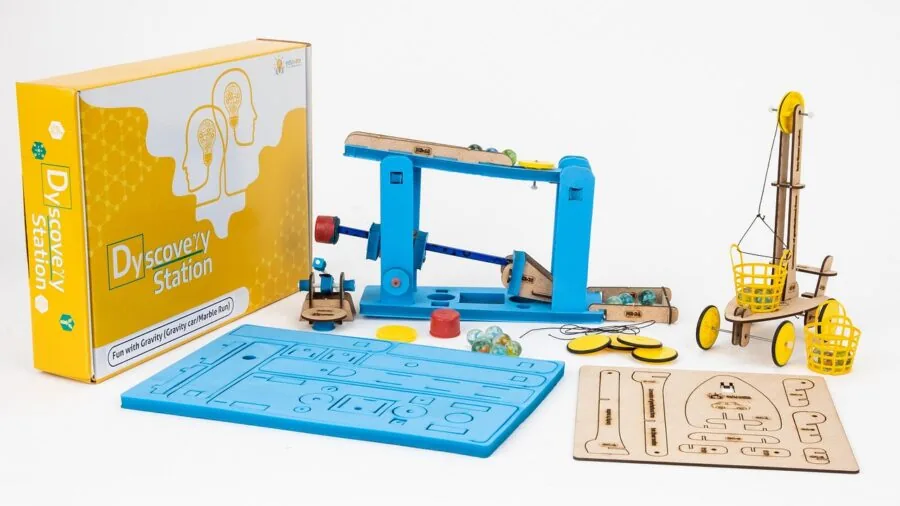
Every kit in this category carries a recommended age, but those ratings describe minimum dexterity and reading comprehension rather than an upper ceiling of engagement.
A set aimed at ages five and up, like the K’NEX 40-model system, uses chunky snap connectors that young children can manage independently, while kits rated for twelve and above, like hydraulic-powered arm builders, assume the child can read multi-step instructions and work with small-diameter tubing.
Matching the kit’s rated age to the actual child’s ability, not just birthday, prevents frustration and abandoned half-finished builds.
For gifting, it is generally safer to skew one age bracket higher than the child’s current age. Engineering kits that are slightly challenging extend playtime and learning value considerably.
Sets rated for nine and up from brands like Engino introduce mechanical principles such as levers and linkages that reward revisiting at ten, eleven, or twelve as the child’s comprehension deepens.
If you are building a broader STEM collection, the best STEM toys for kids guide covers complementary picks across multiple age groups.
Engineering Discipline and Learning Focus

Building engineering kits are not monolithic: some teach structural and civil engineering principles (load, compression, tension, arch design), others focus on mechanical engineering (gears, motors, linkages), and still others dive into electronics and coding.
Thames and Kosmos kits, for example, concentrate heavily on architectural and structural concepts, deliberately teaching vocabulary like cantilevering and pre-stressed concrete through the act of building.
The ELEGOO robot car, by contrast, is fundamentally an electronics and coding kit that happens to require physical assembly. Understanding what discipline a kit emphasizes helps parents align the purchase with a child’s existing interests or school curriculum.
Robotics-oriented kits like the ELEGOO UNO R3 Smart Robot Car naturally complement coding toys for kids, since programming the car’s behavior is often where the deepest learning happens.
If a child is already fluent with block-based coding and wants to step into real C++ or Arduino IDE programming, a robotics engineering kit is an excellent bridge.
Conversely, if the goal is pure spatial and mechanical intuition with no screen required, structural and mechanical kits from Thames and Kosmos or Engino are the stronger fit.
Model Count and Replayability
Some kits are designed to build one impressive display model: the Nifeliz Turbofan Engine and the National Geographic 4-Cylinder Engine kit each produce a single highly detailed functional replica that serves as an ongoing display piece.
Others, like the MECCANO Super Construction set and the K’NEX 40-model set, are modular systems intended to be disassembled and rebuilt repeatedly into dozens of different configurations.
Neither approach is inherently superior, but the right choice depends on how the learner engages with toys.
Children who love collecting and displaying completed projects tend to thrive with single-model kits, while builders who prefer ongoing creative exploration get more long-term value from multi-model systems.
Multi-model kits generally offer stronger value per dollar over time because the same parts yield months of different builds.
The MECCANO 25-in-1 motorized set, the premium pick in this guide, includes 638 parts and a motor to enable a wide range of motorized constructions.
The Thames and Kosmos Architectural Engineering kit covers 26 distinct structural model types, which means a curious builder can spend weeks working through every design without running out of new challenges.
Instruction Quality and Build Scaffolding

Instruction booklets are one of the most underappreciated variables in this category.
A well-sequenced, clearly illustrated guide transforms a pile of parts into an achievable build that teaches along the way. Poorly produced instructions, on the other hand, are the single most common reason verified buyers report abandoning a kit midway through.
When evaluating kits, ProductFind pays close attention to whether expert reviewers and buyers specifically praise the instruction clarity, because this strongly predicts how successfully a child completes the build with minimal adult intervention.
Kits like the National Geographic 4-Cylinder Engine include a dedicated learning guide that contextualizes the build within real automotive engineering, adding substantial educational depth beyond step-by-step assembly.
The Smartivity DIY Robotic Mechanical Hand similarly uses illustrated instructions calibrated for independent builders in the eight-to-fourteen age range.
For adults tackling advanced collector-grade models like the Nifeliz Turbofan Engine, instruction quality matters even more because the part count and build complexity demand precise sequencing over many sessions.
Build Materials and Durability

The physical materials in an engineering kit affect both the quality of the finished model and how many rebuild cycles the parts survive.
Metal construction systems like MECCANO use real steel strips and bolts, which produces sturdy structures that feel authentically industrial and survive years of disassembly and reassembly without connector fatigue.
Plastic snap-fit systems like K’NEX are lighter and safer for younger children but may develop looser connections after many build-and-rebuild cycles.
Laser-cut wooden kits like those from Smartivity produce clean, precise fits when new, though the cardboard-and-wood components in budget-tier kits can suffer if exposed to humidity.
For kits involving hydraulics or electronics, pay attention to the quality of tubing, syringes, wiring, and circuit components.
The Teach Tech Hydrobot Arm uses medical-grade-style plastic syringes and color-coded tubing that withstand repeated pressurization without cracking, a durability detail that expert reviewers consistently highlight.
For advanced collector models aimed at adults, the quality of the transparent casing and gear tolerances determines whether moving parts operate smoothly after assembly, which directly affects satisfaction with a display piece that cost a premium.
Value Relative to Price Tier
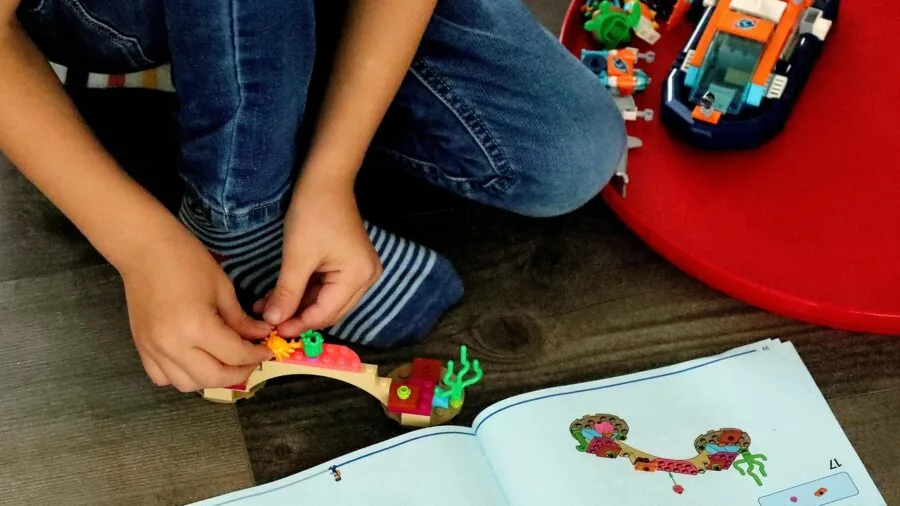
Building engineering kits span a wide price range in this guide, from budget-friendly entry sets through mid-range educational kits to premium motorized and collector-grade models.
The key question is not absolute price but value delivered per dollar: how many builds does the kit enable, how rich is the educational content, and how long will a child stay engaged before the kit loses its novelty?
Expert review consensus consistently finds that mid-range kits from established STEM brands punch well above their cost in educational depth, while the cheapest kits often disappoint on instruction quality and part durability.
Premium-tier kits are worth the investment when the learner has demonstrated sustained interest in engineering play, because the step-up in part count, material quality, and model complexity keeps engagement high for many more months.
For families still exploring whether a child enjoys this style of learning, a mid-range structural or mechanical kit is a lower-risk entry point.
Regardless of tier, always cross-reference verified buyer reviews for the specific age group you are buying for, since a kit that earns strong scores among adult collectors may frustrate a ten-year-old working independently.
Why You Should Trust Us
ProductFind is an independent review publication. We do not accept manufacturer samples in exchange for favorable coverage, and our rankings are determined entirely by our editorial team.
Every product in this guide was assessed using ProductFind’s structured research methodology: we analyze manufacturer specifications, cross-reference expert review consensus from engineering-education publications and STEM-focused media, and weight verified buyer feedback from confirmed purchasers heavily in our scoring.
We do not conduct our own product trials; our evaluations are grounded in research, published data, expert review consensus, and verified buyer feedback.
Each product in this guide carries a PF Score on a 0-to-10 scale, calculated from a consistent set of criteria including age-appropriateness, instruction quality, build material durability, educational depth, replayability, and overall buyer satisfaction.
The score allows direct comparison across very different kit types and price tiers. ProductFind may earn an affiliate commission if you purchase through a link in this article.
That relationship does not influence rankings, scores, or product selection in any way. Our picks are made before any affiliate consideration, and no manufacturer can pay to appear in or improve their position in a ProductFind guide.
Final Thoughts
The building engineering kits in this guide cover a genuinely wide spectrum of learners, from a five-year-old discovering how rods and connectors form stable shapes to an adult enthusiast assembling a 2,216-piece turbofan engine replica.
After comprehensive research and scoring, here are the standout picks by category:
- Best Overall: MECCANO Super Construction 25-in-1 Motorized Building Set earns the top PF Score in this guide thanks to its 638 real-steel parts, included motor, 25 distinct motorized model designs, and the kind of open-ended engineering creativity that sustains engagement well beyond a single afternoon. It is the kit that most closely mirrors what a real mechanical engineer does.
- Best for Structural and Architectural Learning: Thames and Kosmos Architectural Engineering stands out for its curriculum-quality instruction booklet and 26 model builds covering arches, trusses, shells, and folded-plate structures. It earned a Parents’ Choice Gold Award and consistently draws praise from educators for its vocabulary and conceptual depth.
- Best for Bridges and Skyscrapers: Thames and Kosmos Structural Engineering: Bridges and Skyscrapers is the ideal pick for kids fascinated by infrastructure. Its 20 model builds teach force, load, compression, and tension in a progressive sequence that builds genuine structural intuition.
- Best Engine Model Kit: National Geographic 4-Cylinder Engine Building Kit earns its high PF Score by combining a transparent, fully functional working model with a detailed learning guide that contextualizes every moving part within real automotive engineering. It is an outstanding gift for mechanically curious kids and teens.
- Best Budget Pick: Smartivity DIY Robotic Mechanical Hand delivers a satisfying and educational build at an accessible price point, with clear illustrated instructions and a result that genuinely demonstrates mechanical principles through a wearable, functional model.
No single kit is right for every learner, but the diversity in this list means there is a strong match for nearly every age, interest, and budget.
Whether you are buying for a young builder just discovering construction play or a teen ready for serious robotics or collector-grade model making, the picks above represent the highest-confidence choices based on our research. Expanding the collection further?
Pairing any engineering kit with cooperative board games for kids rounds out a well-balanced mix of analytical play styles.
Frequently Asked Questions
What age is appropriate for building engineering kits?
Building engineering kits are available for children as young as five, though the complexity and learning depth increase significantly for kits rated eight and up.
Simple snap-connector systems like K’NEX work well for early elementary ages, while hydraulic, electronic, and motorized kits are best suited to children ten and older who can follow multi-step instructions independently.
Adult collector models like the Nifeliz Turbofan Engine are designed for teens and adults with patience for longer, more intricate builds.
Are building engineering kits good for school projects?
Yes, many kits in this category align well with middle and high school science and technology curricula.
Structural engineering kits from Thames and Kosmos, for example, directly address concepts like compression, tension, and load distribution that appear in physics and design-technology courses.
Robotics kits like the ELEGOO robot car introduce Arduino programming and sensor integration that complement computer science coursework. Always check the kit’s stated learning objectives against the specific curriculum requirements before purchasing for a school assignment.
Do children need adult supervision to complete these kits?
It depends on the kit and the child’s age and experience. Kits rated for ages five through eight generally benefit from an adult building alongside, both for safety and to help with reading instructions.
Kits rated for ten and above with well-produced instruction booklets are often designed for independent completion, though a supportive adult nearby can turn the build into a valuable shared experience.
Electronic and coding kits like the ELEGOO robot car may require adult guidance for the programming steps, particularly for younger builders new to the Arduino environment.
How do building engineering kits compare to general construction toy sets?
General construction toys (traditional plastic brick systems, for example) emphasize creative free-building and imaginative play.
Building engineering kits are more structured: they teach specific mechanical, structural, or electronic principles through guided model builds and include instructional content explaining why the design works.
The trade-off is that engineering kits tend to be less open-endedly creative than free-build toy systems, but they deliver substantially more measurable STEM learning. The two categories complement each other well in a balanced toy collection.
What is the difference between a mechanical engineering kit and a structural engineering kit?
Structural engineering kits focus on how buildings, bridges, and frameworks resist forces like gravity, wind load, and vibration. They teach concepts like arches, trusses, tension cables, and compression members.
Mechanical engineering kits focus on how machines work: gears, levers, motors, hydraulics, linkages, and power transmission. Some kits, like the MECCANO motorized set, blend both disciplines.
Choosing between them comes down to whether the child is more fascinated by buildings and bridges or by machines and moving parts.
Can building engineering kits help with coding skills too?
Several kits in this category include a programming component. The ELEGOO UNO R3 Smart Robot Car is the clearest example: after assembling the physical car, builders program its behavior using the Arduino IDE, introducing real variables, loops, and sensor logic.
This is one of the most effective entry points into text-based programming for kids who learn better through physical projects than abstract software tutorials.
For families interested in developing both building and programming skills together, pairing a robotics engineering kit with dedicated coding toys for kids creates a powerful complementary learning path.
About the author
Chester is a reviewer and writer for ProductFind who specializes in Educational & STEM Toys. Chester evaluates products through independent research: specifications, expert review consensus, and verified buyer feedback, and rates each one on the PF Score. Chester focuses on helping readers pick the right educational & stem toy for their needs and budget.