The 8 Best Compression Socks
Swollen ankles, achy calves, and leg fatigue are problems compression socks are built to solve. Here are the picks that actually work, matched by use case.
 By Clifford Baker
Updated July 23, 2026
By Clifford Baker
Updated July 23, 2026

Compression socks have earned a permanent place in everyday wellness, far beyond the hospital ward or post-surgery recovery room.
Athletes chasing faster muscle recovery, nurses surviving 12-hour shifts, frequent flyers dreading swollen ankles, and anyone who logs long hours on their feet have all discovered that graduated compression is one of the most practical, low-cost tools available for keeping legs feeling fresh.
The challenge is that the market is crowded with options across a wide spectrum of quality, and packaging claims rarely tell the whole story.
This guide draws on a synthesis of published clinical context, expert review consensus, and verified buyer feedback from thousands of confirmed purchasers to identify the compression socks that genuinely deliver on their promises.
ProductFind researchers evaluated each option against consistent criteria, covering compression accuracy, material quality, sizing reliability, breathability, and use-case fit, so you can match the right pair to your specific situation.
If you want to go straight to the ranked picks, the full list is just below.
| Award | Product | PF Score About PF ScoreThe PF Score is our own rating from 0 to 10, based on performance, design and build, ease of use, and value. It reflects independent research and is never influenced by manufacturers, retailers, or affiliate commissions. Learn more › | Price | |
|---|---|---|---|---|
| Best Overall |
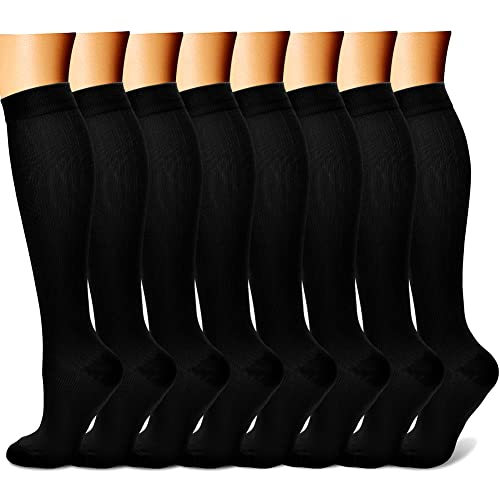 CHARMKING 15-20 mmHg Compression Socks (8 Pairs)
|
7.8/10 | Buy | |
| Editor's Pick |
 Copper Fit Energy Compression Socks 3 Pack S/M
|
7.2/10 | Buy | |
| Best Value |
 Musesox Compression Socks 15-20mmHg Knee High 3-Pair
|
6.9/10 | Buy | |
| Top Rated |
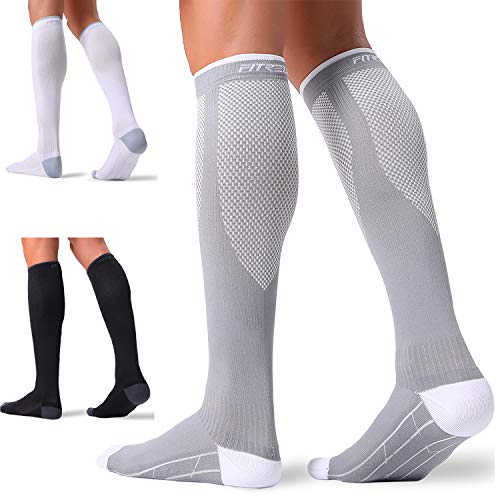 FITRELL 20-30mmHg Compression Socks 3-Pack
|
6.8/10 | Buy | |
 PULIOU 20-30 mmHg Compression Socks for Travel
|
6.6/10 | Buy | ||
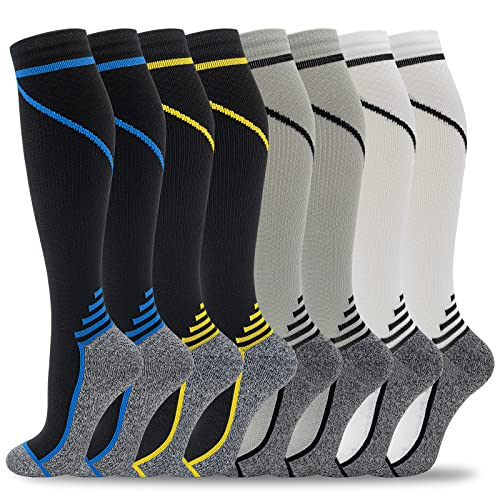 fenglaoda 20-30 mmHg Compression Socks, 8-Pair Set
|
6.5/10 | Buy | ||
 BLITZU Calf Compression Sleeves L-XL
|
5.5/10 | Buy | ||
 ACTINPUT Copper Compression Socks 15-20 mmHg, 4-Pair
|
5.2/10 | Buy |
CHARMKING 15-20 mmHg Compression Socks (8 Pairs)
Eight-pair compression sock set designed for circulation support and extended wear comfort, featuring graduated 15-20 mmHg compression and upgraded nylon blend. Suitable for athletes, healthcare workers, and anyone spending long hours on their feet.
Pros
- Bulk eight-pack offers value for frequent wearers or gift-giving
- Upgraded nylon composition delivers improved durability compared to standard blends
- Graduated compression with targeted zones provides varying support levels
- High-quality stitching and easy-to-wear design despite compression rating
- Breathable performance fabric prevents heat buildup
Cons
- No verified customer reviews available to confirm real-world performance claims
- Limited sizing options (only S/M listed) may not accommodate all calf widths effectively
- Generic marketing language about benefits lacks specific medical or athletic endorsements
Copper Fit Energy Compression Socks 3 Pack S/M
Graduated compression socks (10-20 mmHg) designed for circulation support and leg fatigue relief across athletes, travelers, and everyday wearers. Features easy-on design, arch and Achilles support, plus moisture-wicking fabric for all-day comfort.
Pros
- Hassle-free easy on/easy off design eliminates friction during donning and doffing
- Graduated compression rating meets medical device standards for therapeutic benefit
- Targeted compression bands provide localized support to high-stress areas (arch, ankle)
- Moisture-wicking and vented construction supports extended wear throughout the day
- Versatile for multiple use cases: athletics, travel, occupational wear, everyday comfort
Cons
- No verified customer reviews available to assess real-world durability or fit consistency
- 3-pack limited to single size (S/M only), requires purchasing multiple packs for different sizes
- Compression level (10-20 mmHg) is mild; users needing higher therapeutic compression should verify suitability
Musesox Compression Socks 15-20mmHg Knee High 3-Pair
Graduated compression socks designed for nurses, travelers, and active individuals seeking fatigue reduction and recovery support. Features moisture-wicking fabric, anatomical L/R foot labels, and seamless toe construction across three versatile colors.
Pros
- Graduated compression targets ankles to reduce fatigue during prolonged standing or walking
- Moisture-wicking fabric with mesh panels keeps feet dry and cool
- Thoughtful anatomical design with L/R foot labels, seamless toe, and 3D heel support
- Machine washable and maintains elasticity through multiple washes
- Three-pair value in neutral colors suited for various activities and professions
Cons
- No verified buyer reviews available to confirm real-world performance and durability claims
- Compression socks noted to feel noticeably tighter than regular socks, which may require adjustment period
- Size selection requires precise calf measurement, with borderline fits requiring upsize consideration
FITRELL 20-30mmHg Compression Socks 3-Pack
A versatile compression sock set designed for both men and women, featuring graduated 20-30mmHg compression across five zones to support circulation and muscle recovery. Multiple applications from running to travel make it practical for active lifestyles and occupational wear.
Pros
- Graduated compression targets multiple foot and leg zones, addressing circulation, plantar fascia support, and Achilles relief
- Moisture-wicking fabric with mesh panels helps keep feet dry during extended wear
- Padded sole and seamless toe design minimize discomfort from friction and impact
- Three-pack offering provides color variety for different occasions and laundry rotation
- Designed unisex for both men and women across a range of activities
Cons
- No verified buyer reviews available to assess real-world durability and compression effectiveness
- Sizing depends on calf measurement, which may require measurement tools for accurate fit
- 20-30mmHg compression level is moderate; users needing higher compression may need alternative products
PULIOU 20-30 mmHg Compression Socks for Travel
Lightweight compression socks designed for everyday circulation support during travel, work, and active routines. The breathable polyamide blend and graduated 20-30 mmHg compression aim to reduce leg fatigue and swelling, making them practical for long flights and standing jobs.
Pros
- Graduated compression targets circulation support without excessive stiffness
- Breathable 80% polyamide construction stays cooler than traditional compression socks
- Accommodates wider calves with stretchy design for easier on-off compared to rigid alternatives
- Practical multipurpose design suits various activities from air travel to daily standing jobs
- Reasonably priced two-pair pack offers good value
Cons
- 4.8-star rating based on zero verified reviews, so real-world performance feedback is unavailable
- 20-30 mmHg is mild-to-moderate compression; those needing stronger support may need a higher grade
- Limited sizing guidance beyond calf measurements may require trial to find optimal fit
fenglaoda 20-30 mmHg Compression Socks, 8-Pair Set
A multi-pack compression sock option designed for medical, athletic, and travel use, featuring 20-30 mmHg graduated compression with reinforced heel and toe areas. Best suited for people who need consistent leg support throughout the day without breaking the bank.
Pros
- Comes in 8-pair bundle with multiple color options, reducing per-pair cost
- 20-30 mmHg compression level addresses common circulation and swelling issues from prolonged standing or running
- Non-slip ribbing and arch support help keep socks in place during activity
- Machine washable and breathable fabric maintains comfort without sacrificing mobility
- Available in two size ranges to fit different foot and calf measurements
Cons
- No verified customer reviews available to confirm real-world durability or fit accuracy
- Size selection requires measuring calf and foot beforehand, with limited size options (only S/M and L/XL)
- Thickened heel and toe construction may feel bulky inside certain shoe types
BLITZU Calf Compression Sleeves L-XL
Graduated compression sleeves designed to reduce swelling, improve circulation, and support recovery for runners, athletes, and those managing varicose veins or shin splints. Features breathable fabric and patented kinesiology strips for all-day comfort.
Pros
- Graduated compression technology specifically targets swelling and circulation issues related to varicose veins
- Patented kinesiology strips provide structural support and may accelerate muscle recovery
- Breathable material allows comfortable all-day wear without overheating
- Versatile application across multiple use cases: athletic recovery, nursing, pregnancy, and medical support
- Footless design offers flexibility for various footwear and activity types
Cons
- No verified buyer reviews available to assess real-world durability or fit accuracy
- Sizing requires manual measurement and chart reference, with limited guidance on whether to prioritize comfort or compression intensity
- Kinesiology strip effectiveness relies on manufacturer claims not independently verified by consumer feedback
ACTINPUT Copper Compression Socks 15-20 mmHg, 4-Pair
Everyday compression socks with moderate 15-20 mmHg support and nylon-based breathable fabric, designed for nurses, travelers, and desk workers. Available in five size options including wider calf fits, with a knee-high unisex design suitable for daily wear and extended standing.
Pros
- Moderate compression level appropriate for daily wear without discomfort
- Extended size range (S/M through 4XL) including wider calf options
- Breathable construction allows natural movement during active routines
- Knee-high design provides substantial leg coverage
- Four-pair quantity improves value per sock
Cons
- Zero verified customer reviews available to validate comfort and durability claims
- Nylon-based fabric durability and wash longevity not specified
- Copper infusion benefits not detailed in product specifications
Compression Socks Buying Guide
Choosing the right compression socks means matching a specific product to your body, your daily routine, and the circulatory or performance goal you have in mind.
The criteria below are the same framework our research team used to evaluate every pick in this guide.
Understanding them takes only a few minutes and will help you avoid the most common sizing mistakes and ensure you get the benefit you are actually looking for.
Compression Level and Graduated Pressure

Compression is measured in millimeters of mercury (mmHg), and the range you select should match your intended use. Mild compression in the 8 to 15 mmHg range suits casual everyday wear and light travel days.
The 15 to 20 mmHg range is the most widely sold category and serves nurses, pregnant women, long-haul travelers, and runners looking for post-workout recovery. It is firm enough to produce a real circulatory benefit without requiring a medical prescription.
Medical-grade 20 to 30 mmHg socks are appropriate for more pronounced venous insufficiency, post-surgical recovery, or moderate edema. Anyone managing a serious circulatory condition should consult a physician before moving into this range.
Everything above 30 mmHg falls into a prescription-only category and is outside the scope of this guide. All eight picks here use graduated compression, meaning the squeeze is tightest at the ankle and decreases progressively toward the calf or knee.
That is the clinically validated design that actually assists venous return. Uniform-pressure flat-knit socks do not produce the same effect, so always verify the product description before purchasing.
If you are managing an underlying cardiovascular concern alongside your compression routine, pairing these socks with a reliable blood pressure monitor for home use gives you a more complete picture of how your circulation is responding day to day.
Sizing and Fit Accuracy
Poor sizing is the single most common complaint across verified buyer feedback for every compression sock brand on the market.
A sock that runs too small cuts off circulation rather than supporting it; one that is too large pools around the ankle and delivers no graduated benefit.
Most reputable brands size by calf circumference and shoe size together, and you should always measure your calf at its widest point and compare that figure against the brand’s own chart rather than defaulting to a generic S/M/L/XL label.
Sizing conventions vary meaningfully between brands like CHARMKING, FITRELL, and musesox, so brand-switching without re-measuring is a reliable path to a misfitting pair. Wide-calf shoppers should look specifically for products that call out wide-calf compatibility in the listing.
CHARMKING explicitly addresses this in its product description and earns consistently strong ratings from that demographic as a result.
If you land between sizes, lean toward the larger option for all-day comfort wear and the smaller option when you need firmer pressure for athletic activity or recovery.
Material Composition and Breathability
Most budget-to-mid-range compression socks use a blend of nylon and spandex, or elastane, which provides the stretch and elastic recovery needed to maintain consistent pressure through a full shift or long-haul flight.
Some brands incorporate copper-infused fibers, as seen with ACTINPUT and Copper Fit, marketing them for antimicrobial properties and odor control.
The evidence for copper’s direct circulatory benefit is limited, but the odor-reduction claim has reasonable support in verified buyer feedback for extended-wear scenarios, particularly among healthcare workers and travelers.
For warm-weather use or high-output activities like cycling or trail running, look for listings that specifically mention moisture-wicking construction. PULIOU’s cooling-focused design addresses exactly this gap.
Breathability matters as much in compression socks during long activity sessions as it does in other extended-wear products, and overheating inside a poorly ventilated sock undermines comfort well before the pressure level becomes an issue.
If fatigue and muscle soreness are your primary concerns alongside circulation, you might also find value in pairing compression socks with a quality TENS unit for drug-free pain relief after demanding shifts or workouts.
Footless Sleeve vs. Full Sock
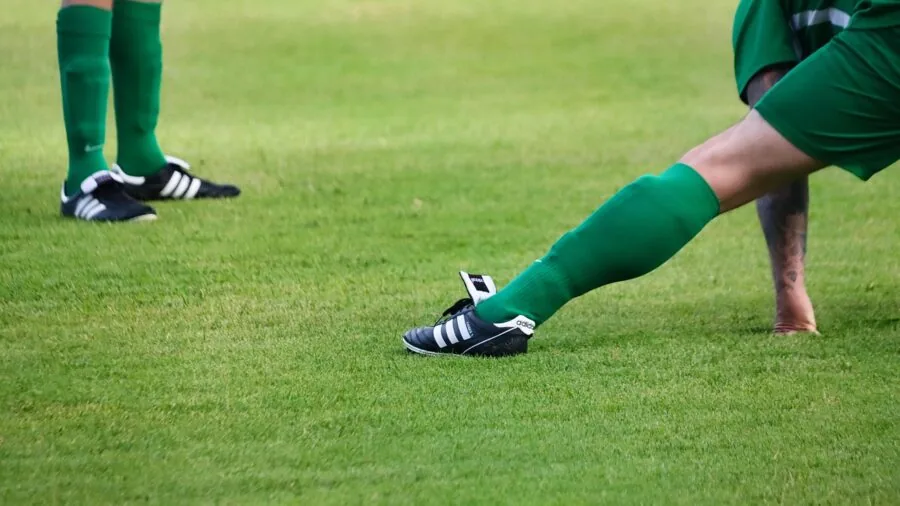
Footless calf sleeves, like the BLITZU option in this guide, are a distinct product category from full compression socks and deserve a clear explanation before you buy.
Sleeves are easier to pull on and take off, compatible with any footwear including open-toed sandals, and well suited when the primary concern is shin splint relief or calf muscle fatigue during running.
They do not apply graduated compression to the foot or ankle, which matters significantly for anyone managing foot edema, plantar fasciitis, or varicose veins near the ankle.
Full knee-high compression socks address both the ankle and calf simultaneously, making them the stronger choice for travel, prolonged standing, varicose vein management, and most medical-support applications.
For pure calf recovery during or after runs, a sleeve can perform just as well and is often more convenient to integrate into a training routine. The decision comes down to where in the leg you need the pressure applied.
Value Per Pair and Pack Sizing
Compression socks wear out faster than regular socks because the elastic fibers that generate pressure degrade with repeated washing and wearing. Most manufacturers and podiatrists suggest replacing compression socks every three to six months for daily wearers.
This makes cost per pair a genuinely important factor rather than a secondary consideration. Buying in multipacks is the standard strategy across all the options in this guide, and it is the right one.
Packs of three, four, or eight pairs reduce the per-pair cost substantially and ensure you always have a clean, structurally intact pair ready to go.
The CHARMKING eight-pair bundle and the fenglaoda eight-pair set represent the strongest value propositions in this list for high-frequency wearers who go through pairs quickly.
Smaller packs like Copper Fit Energy’s three-pack make more sense for occasional travelers or buyers trying compression socks for the first time before committing to a larger purchase.
Rotating pairs also extends the life of the elastic fibers, since they have more time to recover their shape between wears.
Use-Case Specificity

Not every compression sock is designed for every situation, and marketing language often obscures the actual product design. Socks positioned for running tend to feature reinforced heels and toes with thicker cushioning at high-impact zones.
Nursing and medical socks prioritize all-day comfort, intuitive donning, and durability through daily laundering cycles. Travel socks lean on thin, low-profile constructions that fit inside dress shoes or loafers without creating pressure points during hours of sitting.
Recovery socks for athletic use gravitate toward the 20 to 30 mmHg range to assist in flushing metabolic waste from muscles after hard efforts.
Cross-referencing the intended use stated in a product listing against your actual activity prevents mismatched purchases. musesox, for example, positions its 15 to 20 mmHg design specifically for nurses and travelers, which aligns directly with the verified buyer feedback praising all-day comfort without over-squeezing.
FITRELL’s firmer 20 to 30 mmHg rating shifts it more solidly into the athletic recovery and medical-support tier.
Pairing good circulation habits with broader wellness practices, including quality heating pads for back pain and everyday relief and other recovery tools, can meaningfully improve how your body feels after demanding days.
Why You Should Trust Us
ProductFind is an independent review publication. Every product in this guide was assessed using the PF Score system, a 0 to 10 scale built on consistent, repeatable criteria applied the same way across every category we cover.
For compression socks, those criteria include compression accuracy relative to the stated mmHg range, material and construction quality, sizing reliability based on aggregated fit feedback, breathability and wearability for the intended use case, and overall value relative to alternatives in the same price tier.
We do not conduct our own product trials; our evaluations are grounded in research, published data, expert review consensus, and verified buyer feedback.
Our researchers analyzed manufacturer specifications, synthesized feedback from verified purchasers across major retail platforms, and cross-referenced expert commentary from medical and sports performance sources to arrive at each PF Score.
When expert consensus and buyer feedback diverge, we note the discrepancy rather than smoothing it over. We also track how brands respond to recurring complaints over time and update scores accordingly.
This research-first approach powers everything from our assessments of pulse oximeters for home health monitoring to recovery and support wear like the socks in this guide.
ProductFind may earn a commission when you purchase through links in this article. That affiliate relationship does not influence rankings, PF Scores, or which products appear in our guides.
Every selection is made on the merits of the research, not on commission rates. We do not sell products, handle orders, or manage returns; for any of those needs, contact the retailer or manufacturer directly.
Final Thoughts
The right compression sock depends on a combination of compression level, fit accuracy, material construction, and the specific context in which you plan to wear it.
The picks in this guide span that full range, from lightweight 15 to 20 mmHg everyday options to firmer 20 to 30 mmHg socks suited to athletic recovery and medical support.
Below are our editorial verdicts, organized by use-case fit and anchored to PF Score.
- Best Overall: CHARMKING Compression Socks for Women and Men (8 Pairs) earns the top PF Score in this group by combining genuine wide-calf sizing, consistent graduated compression at 15 to 20 mmHg, and exceptional multipack value, making it the most broadly useful option for nurses, travelers, and everyday wearers alike.
- Best for Occasional Wear and Travel: Copper Fit Energy Compression Socks 3 Pack scores strongly for its brand credibility, low-profile design, and ease of use for short-term travel or moderate daily activity, making it a sensible entry point for buyers who want a trusted name without committing to a large bundle.
- Best for Nurses and All-Day Comfort: musesox Compression Socks for Women and Men (3 Pairs) draws consistent endorsement from verified healthcare worker buyers for its comfortable fit through long shifts, with a 15 to 20 mmHg level that provides meaningful support without over-squeezing by end of shift.
- Best for Athletic Recovery and Medical Support: FITRELL Compression Socks for Women and Men (3 Pairs) delivers a firm 20 to 30 mmHg graduated compression across a reliable size range, with verified buyer feedback consistently crediting reduced post-run soreness and minimized travel-related swelling.
- Best for Warm Weather and High-Output Activities: PULIOU Cooling Compression Socks for Women and Men (2 Pairs) stands out in the lineup for its breathable, cooling-focused construction at 20 to 30 mmHg, making it the practical pick for summer running, cycling, or travel in hot climates where most compression socks become uncomfortably warm.
For anyone managing health conditions alongside a compression routine, combining these socks with other home wellness tools rounds out a practical daily regimen. Wrist blood pressure monitors are a convenient complement for tracking cardiovascular trends at home, while body fat scales can help you monitor the broader metabolic picture alongside leg health.
A good night’s rest also accelerates recovery, and sleep masks paired with white noise machines are among the simplest upgrades for sleep quality after physically demanding days.
Frequently Asked Questions
How long should you wear compression socks each day?
Most people wear compression socks for the duration of the activity or situation that prompted their use, whether that is an eight-hour nursing shift, a long-haul flight, or a recovery window after a hard run.
For travel and occupational use, wearing them from the start of your day until you can elevate your legs at home is a reasonable general approach.
People managing chronic venous conditions may wear them nearly all waking hours under physician guidance.
The key rule is to remove them before sleeping. Lying down eliminates the gravitational challenge that compression is specifically designed to counteract, so overnight wear provides no additional benefit for most users and can become uncomfortable.
If you rely on other recovery tools alongside compression, a quality TENS unit for pain relief can be a useful addition to your evening wind-down routine.
Do compression socks actually help with swelling on flights?
Yes. There is meaningful clinical support for this use case.
Prolonged sitting reduces venous return in the lower legs, and graduated compression has been shown in multiple published studies to reduce the incidence of flight-related deep vein thrombosis and the subjective sensation of leg heaviness during and after long flights.
A 15 to 20 mmHg sock is generally sufficient for healthy travelers.
Higher-risk passengers, including those with a prior clotting history or significant venous insufficiency, should consult a physician about appropriate compression levels before flying.
If you track cardiovascular indicators at home, wrist blood pressure monitors are a practical portable option for monitoring before and after long travel days.
Can you wash compression socks in a regular washing machine?
Most of the socks in this guide are machine washable, but a cold, gentle cycle and air drying will significantly extend their lifespan compared to hot washes or machine drying.
Heat degrades the elastic fibers responsible for generating compression, so even socks labeled dryer-safe will maintain their pressure longer when air dried flat.
Washing them after each wear is fine and actually recommended for hygiene, particularly for people wearing them through long shifts or workouts.
What is the difference between compression socks and compression sleeves?
Compression sleeves, like the BLITZU option in this guide, cover only the calf and lower leg, leaving the foot entirely exposed.
This makes them easier to slip on over running shoes or wear with sandals and open-toed footwear, and they are a popular choice for shin splint relief and calf-specific muscle support during running or cycling.
Full compression socks extend from the foot through the calf, applying graduated pressure to both the ankle and foot.
For foot edema, varicose veins near the ankle, or plantar fasciitis, a full sock is the more effective choice.
For pure calf fatigue during activity when foot compression is not a priority, a sleeve can perform equally well and is often more convenient to incorporate into a training routine.
Are compression socks safe for people with diabetes?
This question is best answered by a physician or podiatrist. Diabetes can affect peripheral circulation and nerve sensation in ways that make standard compression levels unsuitable or potentially harmful for certain individuals.
Diabetic-specific compression socks with lower, non-binding pressure profiles do exist, but medical guidance is essential before any person with diabetes adopts a compression regimen. Do not rely solely on over-the-counter product descriptions for this decision.
For general wellness monitoring at home, a pulse oximeter can help track peripheral oxygenation, and keeping pill organizers on hand supports consistent medication adherence alongside any new health routine.
How often should compression socks be replaced?
The elastic fibers that create compression degrade over time with repeated washing and wearing. Most manufacturers and podiatrists suggest replacing compression socks every three to six months for daily wearers.
A practical way to check whether a sock has lost its effectiveness is to lay it flat: if it no longer snaps back firmly to its original shape after being stretched, the compression benefit is meaningfully reduced and the sock should be retired.
Buying in multipacks, as most of the options in this guide offer, is the most practical strategy for rotating pairs and staying within a replacement schedule without breaking the budget.
Keeping a small rotation also means each pair gets adequate rest between wears, which slows elastic fiber degradation over time.
For other health-adjacent products that benefit from regular replacement cycles, digital thermometers and similar home wellness devices are worth reviewing periodically to ensure accuracy.
About the author
Clifford is a reviewer and writer for ProductFind who specializes in Running Gear. Clifford evaluates products through independent research: specifications, expert review consensus, and verified buyer feedback, and rates each one on the PF Score. Clifford focuses on helping readers pick the right running gear for their needs and budget.