The 9 Best Diagnostic Code Readers
Not sure what that warning light means? The right OBD2 scanner puts factory-level fault data in your hands. We researched nine top options to help you choose confidently.
 By Jimmy Rhodes
Updated July 23, 2026
By Jimmy Rhodes
Updated July 23, 2026

A check engine light can send anyone into a spiral of anxiety, but it does not have to.
Diagnostic code readers give drivers and DIY mechanics direct access to the same fault data a shop technician sees on day one, letting you understand exactly what is wrong before you spend a dollar on repairs.
Whether you drive a compact sedan, a pickup truck, or a full-size SUV, every vehicle sold in the United States since 1996 is required to support the OBD2 standard, meaning a single reader can work across virtually your entire household’s garage.
The difference between a frustrating guessing game and a confident repair decision often comes down to having the right tool in your glove box.
At ProductFind, we researched the market thoroughly, drawing on published specifications, expert review consensus from the automotive community, and verified buyer feedback from thousands of confirmed purchasers.
The result is a focused list of the best diagnostic code readers available today, ranging from a no-frills budget pick under twenty dollars to a professional-grade multi-system scanner with advanced reset functions.
Scroll down to see our ranked top picks, each scored on the ProductFind 0 to 10 PF Score scale.
| Award | Product | PF Score About PF ScoreThe PF Score is our own rating from 0 to 10, based on performance, design and build, ease of use, and value. It reflects independent research and is never influenced by manufacturers, retailers, or affiliate commissions. Learn more › | Price | |
|---|---|---|---|---|
| Best Overall |
 TOPDON AD600S OBD2 Scanner with 9 Reset Services
|
8.9/10 | Buy | |
| Editor's Pick |
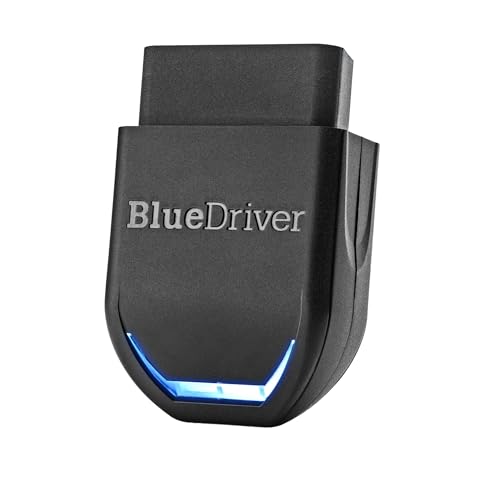 BlueDriver Pro Next-Gen OBD2 Scanner
|
8.7/10 | Buy | |
| Best Value |
 Innova 5210 OBD2 Scanner with Battery Tester
|
8.6/10 | Buy | |
| Top Rated |
 FOXWELL NT301 Plus OBD2 Scanner with Battery Tester
|
8.4/10 | Buy | |
 FOXWELL NT301 OBD2 Code Reader with Live Data
|
7.8/10 | Buy | ||
 ANCEL AD410 OBD2 Code Reader
|
7.5/10 | Buy | ||
 FOXWELL NT201 OBD2 Code Reader
|
7.2/10 | Buy | ||
 MOTOPOWER MP69033 OBD2 Code Reader
|
6.2/10 | Buy | ||
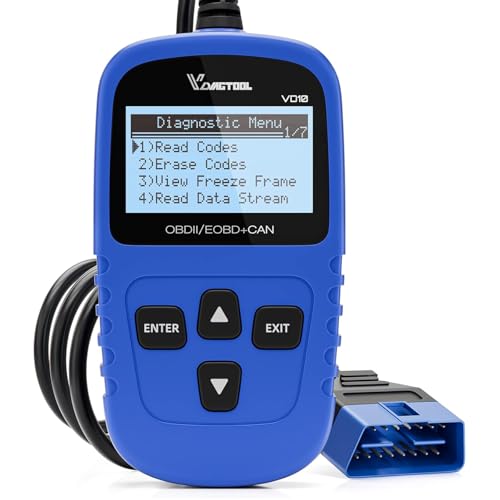 VDIAGTOOL VD10 OBD2 Code Reader Scanner
|
5.8/10 | Buy |
TOPDON AD600S OBD2 Scanner with 9 Reset Services
A mid-range diagnostic scanner for DIYers and home mechanics that reads codes across four systems (engine, ABS, SRS, transmission) and performs nine reset functions including oil, brake, TPMS, and injector coding. Best suited for owners of vehicles from 1996 onward across 90+ brands who need routine maintenance diagnostics without paying for dealer visits.
Pros
- 9 reset services including injector coding, oil, brake, TPMS, DPF, ABS bleeding, and SAS/BMS reset
- Works on vehicles from 1996 and later across 90+ vehicle brands with OBD2/EOBD/JOBD and CAN-FD protocol support
- 5-inch color touchscreen with Android 11.0 offers faster operation than button-based readers, with one-click Wi-Fi updates and no subscription fees
- Auto VIN identification and DTC lookup library reduce manual input and research time
- Live data display in multiple formats (text and 4-in-1 merged waveform graph) with report save and sharing options
Cons
- Auto VIN feature doesn't work on all vehicles, requiring manual VIN entry in some cases
- Does not work with 5G vehicles, limiting future compatibility
- No customer reviews available to validate real-world reliability or performance claims
BlueDriver Pro Next-Gen OBD2 Scanner
A wireless Bluetooth diagnostic tool that reads and clears codes across eight major vehicle systems (engine, ABS, SRS, TPMS, transmission) without subscription fees. Covers gas vehicles from 1996 onward and delivers VIN-matched repair reports with real-time data monitoring via smartphone.
Pros
- Eliminates recurring subscription costs common with competitor diagnostic tools
- Comprehensive code coverage across multiple vehicle systems beyond standard check engine diagnostics
- VIN-specific repair guidance reduces guesswork and unnecessary repair shop visits
- Broad vehicle compatibility across major manufacturers (GM, Ford, Honda, Toyota, BMW, Mercedes-Benz, and others)
- Wireless design removes cable clutter while maintaining professional-grade diagnostics
Cons
- No user reviews available to assess real-world reliability and ease of use
- Limited to vehicles 1996 and newer; incompatible with older classic cars
- Diesel truck coverage restricted to select light-duty models (F-250, RAM 2500, Silverado, Sierra only)
Innova 5210 OBD2 Scanner with Battery Tester
A dual-function diagnostic tool that reads and clears engine codes while also testing battery and alternator health. Works on most US, Asian, and European vehicles from 1996 onward, with free access to ASE-verified repair guidance through the RepairSolutions2 app.
Pros
- Two tools in one: OBD2 scanner plus battery tester reduces need for separate equipment
- No subscription fees, with verified repair solutions available through free app
- Covers broad range of vehicles (US, Asian, and European makes from 1996+)
- Live data and drive cycle readiness features simplify emissions compliance
- Compact size at 5.99 x 2.99 x 0.99 inches makes it portable for home or shop use
Cons
- Feature coverage varies by vehicle make, model, and year; requires pre-purchase verification using Innova's coverage checker
- Emission readiness monitors reset after battery disconnect or code clearing and require a complete drive cycle to repopulate, which may feel like a limitation for some users
- No user reviews currently available to assess real-world reliability and ease of use
FOXWELL NT301 Plus OBD2 Scanner with Battery Tester
A 2-in-1 diagnostic tool that combines OBD2 code reading with 12V battery testing in one compact device. The larger 2.8-inch color display and built-in DTC library make it accessible for DIYers and car owners who want to diagnose issues before visiting a shop.
Pros
- Eliminates need for two separate tools, saving money and space
- Plain-English code explanations help DIYers understand issues without shop visit
- Battery testing prevents unexpected no-start situations before road trips
- No subscription or app required, works via standard OBD2 port
- Live data and recording features support deeper diagnostics
Cons
- No built-in battery and lacks load testing capability for comprehensive battery analysis
- Incompatible with pre-1996 vehicles and certain European brands (Fiat, Alfa Romeo, Peugeot, Citroen)
- Does not support advanced diagnostics like ABS, transmission, airbag codes, or key programming
- Windows-only for updates, no Mac or iOS compatibility
FOXWELL NT301 OBD2 Code Reader with Live Data
A straightforward diagnostic scanner for DIY mechanics that reads fault codes, clears check engine lights, and displays live sensor data on a 2.8-inch color screen. Compatible with most 1996+ US vehicles and some European/Asian models, though it's limited to basic OBD2 functions without advanced system access.
Pros
- Comprehensive fault code reading and clearing for most 1996+ gasoline vehicles
- Live data graphing helps identify sensor trends and performance issues in real time
- Built-in emissions readiness checker with visual and audio feedback for smog test prep
- Compact, durable design requires no charging or initial setup
- Supports multiple OBD2 protocols (KWP2000, J1850 VPW/PWM, ISO9141, CAN)
Cons
- Does not access ABS, SRS, EPB, or A/C system diagnostics, limiting its scope to engine-only issues
- No bidirectional control or advanced reset functions like professional-grade scanners offer
- Compatibility varies significantly by vehicle year, make, model, and VIN, requiring pre-purchase verification
ANCEL AD410 OBD2 Code Reader
A straightforward OBD2 scanner for reading and clearing engine fault codes on 1996+ vehicles. No app, no Bluetooth needed—just plug into your OBD2 port and view real-time engine data on the 2.4-inch color display. Practical for DIY diagnostics and understanding check engine lights before visiting a mechanic.
Pros
- Wide vehicle compatibility covers most 1996+ U.S. OBD2 cars and many 2000+ European/Asian models
- Real-time engine parameters help spot abnormal patterns and verify repairs
- Simple plug-and-play operation with clear on-screen definitions
- Compact design (9 x 6.3 x 1.6 inches) and lightweight (0.66 lbs) for portability
Cons
- Engine and emission codes only; does not support ABS, SRS, transmission, bidirectional control, or service resets
- Limited to OBD2 standard diagnostics, not suitable for advanced vehicle system scanning
- No verified buyer reviews available to confirm real-world performance and durability
FOXWELL NT201 OBD2 Code Reader
A straightforward diagnostic scanner for DIY car owners that reads and clears check engine lights, monitors live engine data, and checks emissions readiness on vehicles from 1996 onward. Plug-and-play operation with no subscriptions makes it practical for anyone wanting to skip repair shop diagnostic fees.
Pros
- Simple plug-and-play operation designed for non-technical users
- Covers virtually all U.S. gasoline vehicles from 1996 onward
- Live data and oxygen sensor diagnostics help identify performance issues before they worsen
- Emissions readiness check with visual indicators streamlines smog test prep
- One-time purchase with lifetime updates eliminates ongoing costs
Cons
- Not compatible with electric vehicles, heavy-duty trucks, or non-engine systems like ABS and airbags
- Limited to engine and emissions diagnostics only, lacks advanced transmission or module scanning
- No verified buyer reviews yet to assess real-world reliability or long-term durability
MOTOPOWER MP69033 OBD2 Code Reader
A straightforward OBD2 diagnostic scanner that reads and clears engine fault codes on vehicles from 1996 onward. Operates via the car's power supply, features a 2.8-inch LCD display, and supports 9 OBD protocols across multiple languages, making it practical for DIY engine diagnostics.
Pros
- Comprehensive engine diagnostics covering most common OBD2 functions
- Universal compatibility across major vehicle protocols and regions
- No ongoing power requirements, powered through OBD2 connector
- Clear display with adjustable contrast for visibility
- User-friendly button layout for quick VIN and code queries
Cons
- Does not read or clear ABS, airbag, or oil service codes
- No customer reviews available to verify real-world performance and reliability
- Limited to OBD2 systems only, incompatible with non-OBD2 vehicle systems
VDIAGTOOL VD10 OBD2 Code Reader Scanner
A plug-and-play diagnostic scanner that reads and clears engine fault codes, retrieves live sensor data, and checks emissions readiness on 1996+ vehicles. Straightforward interface makes it accessible for DIY car owners without requiring software or internet lookups.
Pros
- Plug-and-play operation requires no software installation or computer connectivity
- Comprehensive feature set includes live data, freeze frame, and emissions readiness checks
- Built-in code database eliminates need for online searches during diagnosis
- Broad vehicle compatibility across all major OBDII protocols and global markets
- 5-year warranty coverage and multi-language support (6 languages)
Cons
- 2-line LCD display is basic compared to modern touchscreen scan tools, limiting data visibility
- No verified buyer reviews available to assess real-world reliability and user experience
- Limited to read-only functions for many Asian and EU vehicles depending on model year cutoffs
Diagnostic Code Readers Buying Guide
Choosing the right OBD2 scanner is not simply a matter of picking the cheapest one on the shelf. Protocol support, display quality, and the depth of system coverage all vary dramatically across price points.
The sections below walk through every criterion that matters, so you can match a reader to your actual needs rather than paying for features you will never use, or skimping on ones you will regret missing.
OBD2 Protocol Coverage and Vehicle Compatibility
The OBD2 standard encompasses five underlying communication protocols: ISO 9141-2, KWP2000, SAE J1850 PWM, SAE J1850 VPW, and CAN (Controller Area Network).
Virtually all vehicles manufactured after 2008 use CAN exclusively, but older vehicles from 1996 onward may rely on one of the earlier protocols.
Any scanner you consider should explicitly list support for all five if you own or work on a mix of vehicle ages.
More recently, a newer variant called CAN-FD (CAN Flexible Data-rate) has appeared on late-model vehicles from General Motors and a growing number of European brands; readers like the TOPDON AD600S already support it, which matters if you plan to use the tool for years to come.
Beyond the protocol layer, check whether the scanner is confirmed to work on your specific vehicle year, make, and model. Manufacturers typically publish a vehicle compatibility list or offer a lookup tool on their website.
Trucks and vans that exceed a certain GVWR threshold may use the HD OBD standard rather than light-duty OBD2, so confirm compatibility before purchasing if you own a heavy-duty commercial vehicle.
For everyday passenger cars and light trucks since 1996, the tools on our list cover the vast majority of scenarios without issue.
If you also work on shop equipment or power tools alongside your vehicle maintenance, a solid set of floor jacks rounds out a capable home garage.
Single-System vs. Multi-System Diagnostics
Entry-level readers typically access only the engine control module, which is the system responsible for emissions-related fault codes that trigger the check engine light.
This is sufficient for diagnosing the most common issues: misfires, oxygen sensor failures, catalytic converter efficiency codes, and evaporative emission leaks.
If your sole goal is to read and clear engine codes before an emissions inspection, a basic engine-only reader does the job without overspending.
However, modern vehicles have anywhere from a dozen to over a hundred control modules governing ABS, airbag and SRS systems, transmission, climate control, TPMS, and more.
A multi-system scanner can pull fault codes from all of these modules, giving you a far more complete picture of vehicle health.
If you have ever had a mystery warning light that was not the check engine light, a single-system scanner would have left you completely in the dark.
Mid-range options like the FOXWELL NT301 Plus and the Innova 5210 strike a practical balance, offering ABS and SRS coverage alongside engine diagnostics at a price point that suits a serious DIYer.
Keeping a capable scanner on hand pairs naturally with other essential roadside tools; a reliable set of jump starters and a good portable car battery charger round out a complete emergency kit.
Live Data and Freeze Frame Functionality
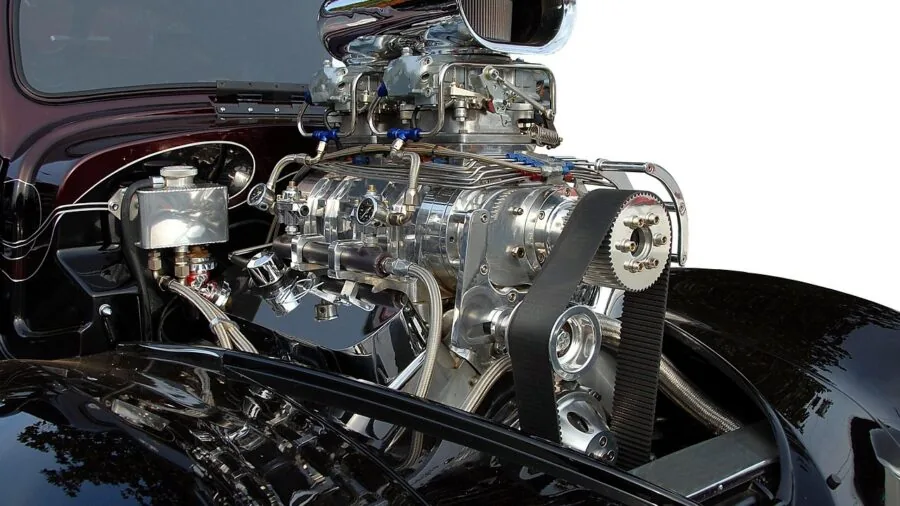
Reading a stored fault code tells you what broke; live data tells you why.
A scanner that streams real-time parameter IDs (PIDs) from the vehicle’s sensors lets you watch coolant temperature, fuel trim values, O2 sensor voltage, and hundreds of other readings as the engine runs.
This is how a skilled mechanic distinguishes between a faulty sensor and an underlying mechanical problem that triggered the sensor. If you plan to use your scanner for actual diagnosis rather than simply clearing codes, prioritize live data support.
Freeze frame data is a complementary feature that captures a snapshot of sensor values at the exact moment a fault was detected. Think of it as a photograph of engine conditions during the incident.
Together, live data and freeze frame dramatically narrow the diagnostic search space and reduce the number of parts you replace unnecessarily. Most readers above the absolute entry level include both; verify they are present before purchasing a budget model.
Service Reset Functions
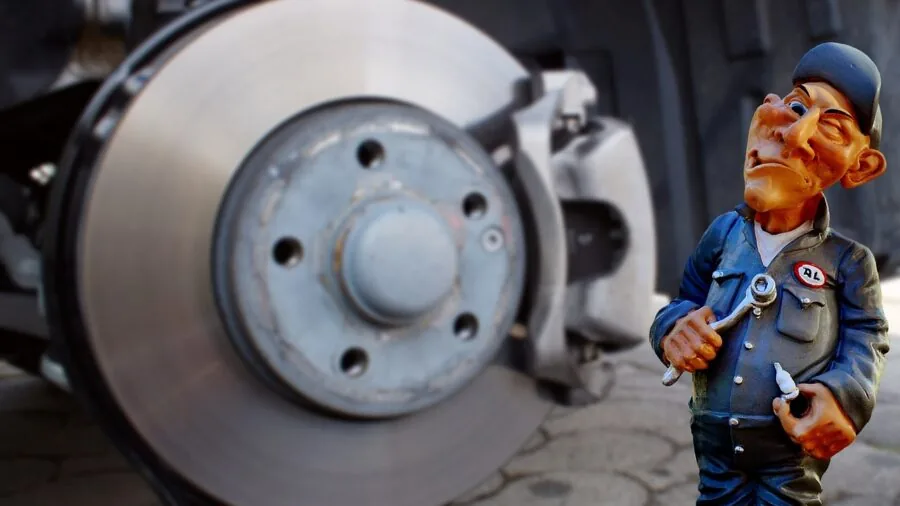
Beyond reading and clearing codes, many mid-range and advanced scanners now include bi-directional or reset functions that were once available only through dealer-level equipment.
Common resets include oil service interval reset, battery management system (BMS) reset after a battery replacement, electronic parking brake (EPB) retraction for rear brake pad changes, diesel particulate filter (DPF) regeneration, throttle body adaptation, and steering angle sensor (SAS) calibration after an alignment.
Each of these tasks would otherwise require a return trip to a shop or dealer.
The TOPDON AD600S leads this category on our list, offering nine distinct reset services, which explains its position at the top of our rankings.
If you perform your own oil changes, brake jobs, or battery swaps, even a single relevant reset function can pay for a more expensive scanner within one or two uses.
Prioritize the resets that match your actual maintenance habits rather than paying for every possible function you will never need.
Display, Interface, and Connectivity
Wired standalone readers typically feature a built-in screen ranging from a simple one-line LCD to a larger color display.
A color screen with a graphical interface makes live data graphs far more readable and speeds up navigation considerably.
If you are crouching under a dashboard or working alone without a helper to relay information, a larger, backlit display is not a luxury, it is a practical necessity.
Buttons versus touchscreen is largely personal preference, though physical buttons tend to be more reliable in cold or greasy workshop conditions.
Bluetooth-based scanners like the BlueDriver Pro Next Gen represent a different design philosophy entirely.
Instead of a built-in screen, they pair with a smartphone or tablet running a companion app, offloading the display and processing work to the device you already carry.
This approach unlocks a much richer interface, cloud-based repair reports, and easy sharing of diagnostic data. The trade-off is dependence on a charged phone and occasional Bluetooth pairing friction.
For technicians who already manage their workflow through a mobile device, Bluetooth connectivity is a genuine upgrade.
For those who prefer a self-contained tool that works instantly without a phone, a wired reader with its own display remains the more reliable choice.
Budget vs. Professional-Grade: Matching the Tool to the User
Entry-level readers in the budget tier, such as the VDIAGTOOL VD10 and the MOTOPOWER MP69033, are well suited to drivers who only want to know what a warning light means and whether it is safe to drive to a shop.
They read generic OBD2 codes, display freeze frame data, and check I/M readiness for emissions evaluation. Expectations should be calibrated accordingly: no advanced system coverage, no live data graphing, and no reset functions.
Mid-range scanners from FOXWELL, ANCEL, and Innova hit the sweet spot for the serious DIY mechanic.
They add ABS and SRS diagnostics, live data streaming, battery health checks, and select service resets, all at a price that makes economic sense when set against a single avoided shop diagnostic fee.
Professional-grade tools like the TOPDON AD600S and BlueDriver Pro Next Gen push further into multi-system territory with coverage for dozens of vehicle systems, enhanced manufacturer-specific codes, and comprehensive repair guidance.
These are the right choice for small independent shops, fleet managers, or enthusiasts who work on multiple vehicles regularly.
At any budget level, pairing a quality scanner with a reliable portable battery charger ensures you can run full diagnostics without draining a weak battery mid-session.
Why You Should Trust Us
ProductFind is an independent review publication. We do not sell the products we cover, and we have no affiliation with any manufacturer or retailer on this list.
Every scanner in our ranking was evaluated using a consistent, structured research methodology: we analyzed published product specifications, drew on expert review consensus from established automotive and technology publications, and incorporated verified buyer feedback from confirmed purchasers across major retail platforms.
We do not conduct our own product trials; our evaluations are grounded in research, published data, expert review consensus, and verified buyer feedback.
Each product is assigned a PF Score on a scale of 0 to 10.
The score reflects a weighted composite of factors including protocol compatibility and vehicle coverage breadth, diagnostic depth (engine-only vs. multi-system), quality of live data and freeze frame features, available service reset functions, display and interface usability, software update policy, and the overall pattern of long-term owner satisfaction.
Products are ranked in descending order of PF Score, so the tool at the top of the list earned the highest overall rating across all criteria.
ProductFind may earn a commission when you purchase through links on this page. This affiliate relationship has no bearing whatsoever on how we rank, score, or select products.
Our recommendations are determined solely by research quality and editorial judgment, not by commission rates or promotional arrangements with any brand.
Final Thoughts
After evaluating nine diagnostic code readers across a wide range of price points and feature sets, a few clear winners emerged for different types of users. Here is how we assign our editorial designations, each tied directly to the PF Score each product earned:
- Best Overall: TOPDON AD600S OBD2 Diagnostic Scanner earned the highest PF Score on our list thanks to its unmatched combination of multi-system coverage, nine service resets, CAN-FD protocol support, and free lifetime software updates. It is the most versatile tool here and the one most likely to remain relevant as vehicle technology advances.
- Best Bluetooth Scanner: BlueDriver Pro Next Gen OBD2 Scanner stands out as the top wireless option, pairing seamlessly with both iPhone and Android to deliver diagnostics for over 8,000 issues across ABS, SRS, and TPMS systems. Its app-driven repair reports are genuinely useful for first-time DIYers who need guidance beyond a raw fault code.
- Best Mid-Range All-Rounder: Innova 5210 OBD2 Scanner is the pick for drivers who want ABS and SRS coverage, a built-in battery tester, and Bluetooth connectivity with a reputable repair app, without stepping up to a professional-grade price. It earns a strong PF Score and covers most scenarios a home mechanic will realistically encounter.
- Best for Battery and Engine Combined: FOXWELL NT301 Plus 2-in-1 OBD2 Scanner doubles as a 12V battery health analyzer alongside its full OBD2 engine diagnostics capability. It is the logical choice for anyone who wants one tool to handle both check engine diagnosis and pre-winter battery checks.
- Best Budget Pick: VDIAGTOOL VD10 OBD2 Scanner keeps the price in the genuinely affordable tier while still covering the core tasks: reading and clearing engine fault codes, checking I/M readiness, and displaying freeze frame data. It is an honest, no-frills option for drivers who simply want to know if a warning light is a five-minute fix or a serious problem.
Whatever your budget or mechanical skill level, investing in a diagnostic code reader pays for itself quickly.
Understanding your vehicle’s fault data before walking into a repair shop is one of the most straightforward ways to avoid unnecessary charges and make informed decisions about your car’s maintenance.
Frequently Asked Questions
Do OBD2 scanners work on all cars?
Any gasoline-powered vehicle sold in the United States since 1996 is required by law to support the OBD2 standard, so compatibility is rarely an issue for modern passenger cars and light trucks.
Diesel vehicles became OBD2-compliant somewhat later, and heavy-duty commercial vehicles above a certain weight threshold may use a different standard.
Most scanners on our list explicitly list compatibility with all OBD2 vehicles from 1996 onward, which covers the overwhelming majority of vehicles on the road today.
Is it safe to clear fault codes without fixing the underlying problem?
Clearing a code will turn off the check engine light, but if the underlying fault has not been repaired, the code will return after a short drive cycle, typically within fifty to one hundred miles.
Clearing codes without a repair is generally acceptable when you want to verify that a repair actually resolved the issue, or when you suspect the code was triggered by a temporary event such as a loose fuel cap.
It is not a substitute for diagnosis or repair, and for safety-critical systems such as ABS and airbags, clearing codes without addressing the fault is not advisable.
What is the difference between generic OBD2 codes and manufacturer-specific codes?
Generic OBD2 codes, also called SAE codes, are standardized across all makes and models. They cover the most common powertrain faults that affect emissions systems.
Manufacturer-specific or enhanced codes go deeper into proprietary systems and can include faults that only appear in one brand’s diagnostic database.
Budget scanners typically read only generic codes, while mid-range and professional tools like the TOPDON AD600S and BlueDriver Pro Next Gen also retrieve enhanced manufacturer codes, giving you a more complete picture of what is actually happening in the vehicle.
Can a diagnostic scanner tell me exactly what part needs to be replaced?
A fault code narrows down the system or circuit where a problem has been detected, but it does not always identify the specific failed component.
For example, a P0420 catalyst efficiency code could point to a worn catalytic converter, a faulty oxygen sensor, or even an exhaust leak affecting sensor readings.
Advanced scanners that provide repair reports, like the BlueDriver Pro Next Gen, go further by cross-referencing the code with common verified fixes for your specific vehicle, which significantly reduces the guesswork.
For straightforward faults, a code combined with a quick search of vehicle-specific forums is often enough to identify the correct repair with confidence.
Do I need to pay for software updates, and how long do manufacturers support their scanners?
Update policies vary significantly between brands. Some scanners, including the TOPDON AD600S, offer free lifetime software updates, ensuring compatibility with new vehicle models and communication protocols well into the future.
Others include a limited period of free updates followed by an annual subscription, while budget tools typically receive no updates at all.
If you plan to use the scanner for more than a couple of years or across multiple new vehicle purchases, the update policy is worth investigating before you buy.
A scanner that cannot be updated quickly becomes obsolete as manufacturers introduce new modules and protocols.
Are Bluetooth OBD2 adapters as reliable as wired standalone readers?
Reputable Bluetooth scanners like the BlueDriver Pro Next Gen perform on par with quality wired readers for diagnostic accuracy, but they introduce a dependency on your smartphone and an app ecosystem.
If the companion app is discontinued or requires a subscription to unlock full functionality, the hardware becomes limited.
When evaluating any wireless OBD2 tool, check the developer’s track record for app support, look at long-term user reviews noting app stability, and confirm there is no ongoing subscription required for core diagnostic features.
For straightforward, always-ready diagnostics that require no phone, a wired reader with a built-in display remains the more self-contained choice.
About the author
Jimmy is a reviewer and writer for ProductFind who specializes in Auto Tools & Garage Equipment. Jimmy evaluates products through independent research: specifications, expert review consensus, and verified buyer feedback, and rates each one on the PF Score. Jimmy focuses on helping readers pick the right auto tools & garage equipment for their needs and budget.