The 11 Best Electric Guitars
From beginner kits to confident mid-range solid bodies, choosing the right electric guitar means balancing playability, hardware quality, and tonal versatility. Here are the top-rated picks across every skill level.
 By Alexis Watson
Updated July 23, 2026
By Alexis Watson
Updated July 23, 2026
Electric guitars remain one of the most versatile and rewarding instruments you can pick up, whether you’re a first-time player budgeting carefully or an experienced guitarist chasing a more refined tone.
The market spans everything from starter packs designed to get you playing the same day to mid-range solid bodies that professional session musicians are happy to gig with.
Sorting through the noise of specs, brand reputation, and online hype takes real time, which is exactly why we’ve done that work for you.
Our team at ProductFind researched this category by analyzing manufacturer specifications, synthesizing consensus from expert reviewers, and combing through verified buyer feedback across hundreds of purchases.
Every model in this list was evaluated against consistent criteria, including playability, hardware quality, tonal versatility, and value for the target skill level.
The result is a ranked list of the best electric guitars you can buy right now, covering options from beginner-friendly kits to confident mid-range picks. Read on for our top recommendations below.
| Award | Product | PF Score About PF ScoreThe PF Score is our own rating from 0 to 10, based on performance, design and build, ease of use, and value. It reflects independent research and is never influenced by manufacturers, retailers, or affiliate commissions. Learn more › | Price | |
|---|---|---|---|---|
| Best Overall |
 PRS SE Custom 24 Lake Blue 24-Fret
|
8.4/10 | Buy | |
| Editor's Pick |
 Yamaha Revstar RSS02T Semi-Hollow Electric Guitar
|
8.3/10 | Buy | |
| Best Value |
 Fender Squier Debut Stratocaster Electric Guitar Kit
|
8.1/10 | Buy | |
| Top Rated |
 Squier Affinity Stratocaster HSS Electric Guitar Pack
|
7.9/10 | Buy | |
 Yamaha Pacifica PAC12 Electric Guitar
|
7.8/10 | Buy | ||
 Fender Custom Telecaster FMT HH Humbucker Electric Guitar
|
7.6/10 | Buy | ||
 Epiphone SG Special Electric Guitar
|
7.2/10 | Buy | ||
 Ibanez GRX70QA Solid Body Electric Guitar
|
6.8/10 | Buy | ||
 Ibanez GIO GRGR221PA Electric Guitar
|
6.5/10 | Buy | ||
 Yamaha APX600 Thin Body Acoustic-Electric Guitar
|
6.1/10 | Buy | ||
 Yamaha PAC112VM Solid Body Electric Guitar
|
9.9/10 | Buy |
PRS SE Custom 24 Lake Blue 24-Fret
The SE Custom 24 brings PRS's design philosophy to a more accessible price point with a maple top veneer, flame maple headstock, and dual humbuckers. Well-suited for players seeking versatile tone and playability without the flagship price tag.
Pros
- Maple top and headstock veneer add visual appeal and tonal characteristics
- 24-fret access enables higher register playability
- Coil-tap versatility expands tonal options beyond standard humbucker voicing
- Comes with gig bag, eliminating need for separate case purchase
- Accessible entry point to PRS quality and design
Cons
- No verified buyer reviews available to assess real-world reliability or QC consistency
- SE series positions it as entry-level relative to PRS core line, which some players may perceive as compromise
- Limited tone shaping beyond the 3-way blade switch and coil-tap
Yamaha Revstar RSS02T Semi-Hollow Electric Guitar
The Revstar RSS02T combines a chambered maple and mahogany body with P90-style pickups for warm, articulate tone suited to blues, jazz, and rock. It's a solid mid-range option for players seeking vintage character in a modern platform, though the lack of customer reviews limits real-world perspective.
Pros
- Chambered body construction reduces weight while enhancing resonance and sustain
- Carbon-reinforced 3-piece mahogany neck provides stability and durability
- P90-style pickups deliver warm, punchy tone with natural breakup
- Includes deluxe gig bag for protection and portability
- Compact 24.75-inch scale makes it approachable for various hand sizes
Cons
- No verified customer reviews available to assess real-world reliability or playability
- Limited information on electronics quality, hardware, or tuning stability specifics
- P90 pickups may lack the versatility of dual humbucker setups for heavier genres
Fender Squier Debut Stratocaster Electric Guitar Kit
A complete starter bundle pairing Fender's entry-level Squier Stratocaster with a 10G practice amp, gig bag, and accessories. Includes 30 days of Fender Play lessons and backed by Fender's 75-year reputation, making it a straightforward choice for absolute beginners across all ages.
Pros
- All-in-one kit eliminates need to buy amp and accessories separately
- Free lesson access through Fender Play removes friction for beginners learning song-based fundamentals
- Lightweight body and thin neck designed specifically for beginner comfort and playability
- Three signature colors available including Black, Dakota Red, and 2-Tone Sunburst
- Fender brand credibility and 2-year warranty provide purchase confidence
Cons
- 10G amp is entry-level and may feel limiting if progressing quickly
- No user reviews currently available to validate real-world durability or learning curve
- Squier line represents budget tier, so build quality and electronics are not professional-grade
Squier Affinity Stratocaster HSS Electric Guitar Pack
A complete beginner-friendly guitar bundle from Fender's budget Squier line, pairing a lightweight Stratocaster with amp, cable, strap, and three months of Fender Play lessons. The HSS pickup setup and slim neck profile suit players seeking comfort and versatile tone without breaking the bank.
Pros
- Complete package eliminates need for separate purchases of amp, cable, and strap
- Slim C-shaped neck and lightweight poplar body reduce fatigue for new players
- HSS pickup configuration offers flexibility in tone options beyond standard single-coils
- Includes Fender Play subscription to jumpstart learning
- Two-year warranty provides peace of mind on build quality
Cons
- Description contains error mentioning bass guitar despite this being an electric guitar
- No verified buyer reviews available to assess real-world reliability or user satisfaction
- Frontman 15G amp is entry-level and may require upgrade as player progresses
Yamaha Pacifica PAC12 Electric Guitar
The Pacifica PAC12 is a solid body electric guitar built with an agathis body and maple bolt-on neck, offering a classic tremolo system for dynamic playing. It's a straightforward option for beginners or casual players seeking a recognizable brand at an accessible price point.
Pros
- Maple bolt-on neck provides stability and sustain
- Sonokeling fingerboard offers durability
- 5-position switch allows tonal versatility
- Vintage tremolo system for expressive playing
- Established Yamaha brand reputation for quality
Cons
- No verified buyer reviews available to assess real-world performance
- Agathis body is an entry-level wood choice compared to premium alternatives
- Limited information on electronics quality and output specifications
Fender Custom Telecaster FMT HH Humbucker Electric Guitar
A Telecaster variant equipped with Seymour Duncan humbuckers and a coil tap switch for tonal versatility. The nato body with flame maple top and set mahogany neck target players seeking a classic single-cutaway platform with modern pickup options.
Pros
- Seymour Duncan '59/Pearly Gates humbuckers deliver established tonal range
- Coil tap switch adds sonic flexibility without extra controls
- Set neck construction provides stability and resonance
- Carved flame maple top offers visual appeal
- Includes 2-year warranty coverage
Cons
- No verified buyer reviews available to assess real-world performance
- Limited control scheme with only master volume and tone knobs
- Specifications list appears incomplete, lacking standard guitar measurements like scale length and pickup details
Epiphone SG Special Electric Guitar
An affordable solid body electric guitar that delivers classic SG tone and styling with Epiphone Humbuckers and a comfortable SlimTaper D neck. Well-suited for beginners and intermediate players seeking an iconic SG design without premium pricing.
Pros
- Classic SG aesthetic with proven solid body design
- Epiphone Humbuckers deliver full, resonant tone suitable for rock and blues
- LockTone bridge maintains tuning stability
- SlimTaper D neck profile offers familiar comfort for players transitioning from Fender-style guitars
Cons
- No user reviews available to validate real-world performance and durability
- Entry-level components may limit tone range compared to higher-tier models
- Cherry finish requires regular maintenance to preserve appearance
Ibanez GRX70QA Solid Body Electric Guitar
The GRX70QA combines Ibanez's signature fast, slim maple neck with a quilted maple top and high-output Infinity R pickups, making it a solid entry-level choice for players seeking playability and visual appeal. The emerald burst finish adds distinctive character without premium pricing.
Pros
- Slim neck profile reduces finger strain for intermediate learners
- Quilted maple top offers visual distinction in its price category
- High-output pickups deliver adequate volume and clarity for practice and small venues
Cons
- No user reviews available yet to verify real-world reliability
- GIO series positioning suggests components may not match higher-end Ibanez lines
- Limited specification details on hardware, electronics, or playability refinements
Ibanez GIO GRGR221PA Electric Guitar
Entry-level solid body electric with dual humbucking pickups and purpleheart fingerboard. Designed for beginners and budget-conscious players seeking Ibanez quality at an accessible price point.
Pros
- Dual humbucking pickups deliver clear, powerful sound for the price
- Purpleheart fingerboard is harder and more durable than standard rosewood
- Full-size format works for most players without compromise
- Distinctive Aqua Burst finish sets it apart from basic starter guitars
Cons
- No verified buyer reviews available to validate real-world performance
- Weight specification lists only 1 pound, which seems inconsistent for a full electric guitar and warrants clarification
- Limited information on electronics quality and hardware components
Yamaha APX600 Thin Body Acoustic-Electric Guitar
Yamaha's APX600 combines a thin cutaway body with stage-ready electronics for players seeking comfort and amplified versatility. The 25-inch scale and narrower string spacing make it particularly suited to those with smaller frames or anyone prioritizing playability.
Pros
- Thin cutaway design reduces neck strain and improves upper fret access
- Shorter 25-inch scale accommodates players with smaller hands
- Built-in stage-focused pickup system ready for live performance
- Enhanced bass response from scalloped bracing pattern
Cons
- No verified buyer reviews available to assess real-world durability or tone quality
- Thin body design may produce less volume in unplugged settings compared to standard dreadnoughts
- Stage pickup system requires amplifier setup for full benefit
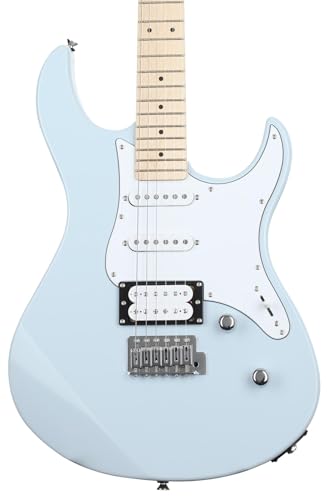
Yamaha PAC112VM Solid Body Electric Guitar
A right-handed solid body electric with Alnico V pickups and a bolt-on maple neck, built for players seeking warm, clear tones across versatile pickup configurations. The Ice Blue finish and alder body construction target intermediate players at an accessible price point.
Pros
- Alnico V pickups provide warm, articulate tone suitable for multiple genres
- S/S/H pickup layout offers tonal versatility from single-coil to humbucker sounds
- Maple neck and fretboard construction ensures durability and consistent playability
- Relatively lightweight build reduces fatigue during long practice sessions
Cons
- No verified customer reviews available to assess real-world reliability or build quality consistency
- Limited specification transparency on electronics, hardware quality, and fret finishing details
Electric Guitars Buying Guide
Choosing the right electric guitar comes down to more than just how it looks hanging on a wall. Body style, pickup configuration, neck profile, and included hardware all interact in ways that significantly affect playability and long-term satisfaction.
Whether you’re buying your first instrument or upgrading from a starter axe, understanding these core factors will help you spend wisely and avoid common regrets. The guide below covers the criteria our evaluations weight most heavily across all skill levels.
Body Style and Construction

Solid body guitars are by far the most common category in this roundup, and for good reason.
They resist feedback at high volumes, sustain notes cleanly, and suit a wide range of genres from rock and blues to pop and metal.
Mahogany bodies tend to produce a warmer, fatter tone, while alder and basswood lean brighter and more articulate. These tonal differences are subtle on a beginner instrument but become more pronounced as your ear develops and your amplifier quality improves.
Semi-hollow and acoustic-electric designs like the Yamaha APX600 introduce natural resonance and a distinctly different playing feel. They’re worth considering if you plan to practice unplugged regularly or want a guitar that pulls double duty for lighter acoustic styles.
Just know that they can feed back more easily at loud stage volumes compared to a fully solid body. For most beginners and intermediate players, a solid body is the safest and most versatile starting point.
If you’re drawn to acoustic playing alongside electric, it’s worth exploring acoustic-electric crossover options as part of a broader musical kit, similar to how audio enthusiasts pair instruments with quality Bluetooth speakers for casual practice listening.
Pickups and Tonal Versatility

Pickups are the engine of an electric guitar’s tone, and the choice between single-coil and humbucker designs is one of the first real decisions you’ll face.
Single-coils, popularized by Fender’s Stratocaster and Telecaster designs, are bright, crisp, and articulate, but they can pick up electrical interference (hum) in environments with fluorescent lighting or certain electronics nearby.
Humbuckers, introduced by Gibson, use a dual-coil design that cancels that noise and produces a thicker, warmer, more saturated sound.
Many mid-range guitars now feature coil-tap or coil-split switching, which lets a humbucker approximate single-coil tones at the flick of a switch.
The Fender Custom Telecaster FMT HH in this list uses Seymour Duncan humbuckers with coil-tap functionality, giving players significantly expanded tonal range from a single guitar. For beginners, a simple two-humbucker or three-single-coil layout is easier to understand and maintain.
Pickup quality is also where budget guitars often cut corners most noticeably, making an upgrade swap one of the most cost-effective improvements you can make later on.
Neck Profile and Playability
The neck is where your fretting hand spends all its time, so it pays to think carefully about profile shape, scale length, and nut width.
Thinner C-shaped necks are generally easier for beginners and players with smaller hands, while chunkier U-shaped profiles suit players who prefer a more substantial grip.
Scale length affects string tension: longer scale guitars (such as most Fender-style instruments at 25.5 inches) feel slightly tighter and brighter, while shorter scale guitars (Gibson-style at 24.75 inches) feel looser and can be easier to bend notes on.
Action, the height of the strings above the fretboard, is one of the most practically important setup variables.
Factory setups on budget guitars are notoriously inconsistent, and a professional setup at a local guitar shop (typically a modest, budget-friendly cost) can transform a frustrating instrument into a comfortable one.
When assessing guitars at this price range, our research consistently found that buyer satisfaction scores improve significantly when players invest in even a basic setup after purchase.
Playability is never purely about the guitar itself; it’s about the guitar as properly adjusted.
Hardware Quality and Tuning Stability

Tuning stability is one of the most common complaint categories in verified buyer reviews for guitars at the budget end of the spectrum.
Cheap tuning machines can slip, and a poorly cut nut causes strings to bind and detune unpredictably, especially after bends.
Look for guitars that specify die-cast or sealed tuning machines, as these hold their position far more reliably than open-gear alternatives found on very inexpensive instruments.
The bridge is equally important. Fixed bridges (hardtail) are simpler to maintain and inherently more stable in tune, while tremolo systems (vibrato bridges) add expressive capability but require more setup knowledge to keep in tune reliably.
For beginners, a hardtail or vintage-style synchronized tremolo (like those found on most Stratocaster-style guitars) is a sensible choice. Locking tremolo systems add complexity and maintenance overhead that most new players are better off deferring.
Attention to hardware quality is also why a higher-end starter pack, such as the Squier Affinity Stratocaster Pack, often represents better long-term value than a cheaper bundle with inferior tuners.
Beginner Kits vs. Standalone Guitars

Guitar starter kits bundle the instrument with an amplifier, cable, strap, picks, and sometimes a gig bag.
For someone who truly owns nothing, a quality kit removes the decision paralysis of sourcing compatible gear separately, and the bundled amplifier is engineered to pair well with the included guitar’s output level.
The Fender Squier Debut Series Stratocaster Kit and Squier Affinity Stratocaster Pack in this lineup are strong examples: their bundled components are chosen cohesively rather than thrown together to hit a price point.
However, if you already own an amplifier or plan to invest in a better one soon, buying a standalone guitar gives you more freedom to allocate your budget where it matters most.
A mid-range standalone guitar at a given price will almost always outperform the guitar component of a same-price bundle, since bundles spread cost across multiple items. Consider your current gear inventory honestly before deciding.
Making smart gear decisions has a lot in common with other category purchases where bundled value matters, similar to how gaming controllers are sometimes sold as platform bundles but benefit from separate evaluation on their own merits.
Value for Skill Level
One of the most consistent findings in our research is that overspending at the beginner stage rarely accelerates progress meaningfully, while underspending on a guitar with poor intonation or high action can actively discourage practice.
The sweet spot for first-time buyers tends to be a well-regarded mid-budget option from a trusted manufacturer such as Yamaha, Squier, or Epiphone, where quality control is strong enough that the guitar won’t fight you while you’re developing technique.
Intermediate players who have graduated from their first instrument, however, will notice real differences in hardware, fretwork finish, and electronics as they move into the mid-range and above.
The Yamaha Revstar Standard and the PRS SE Custom 24 in this list sit at price tiers where build quality, tonal nuance, and long-term playability all take a noticeable step up.
Matching the guitar to your actual current skill level, rather than aspirational gear lust, is the most reliable path to long-term satisfaction.
Just as investing in the right tools is important across hobbies, from golf clubs suited to your level to quality studio accessories, the same principle applies to instruments.
Why You Should Trust Us
ProductFind is an independent review publication. We do not sell the products we evaluate, and we have no commercial relationship with any manufacturer listed in this article. Our editorial process is built on research rather than relationships.
Every product in this roundup was assessed by analyzing publicly available manufacturer specifications, synthesizing expert review consensus from multiple qualified sources, and examining verified buyer feedback patterns across a substantial volume of purchase reviews.
We do not conduct our own product trials; our evaluations are grounded in research, published data, expert review consensus, and verified buyer feedback.
Each product is scored on our PF Score system, a 0 to 10 scale that applies consistent, category-specific criteria to every model we evaluate.
For electric guitars, those criteria include playability and setup quality out of the box, pickup and hardware quality relative to price, tonal versatility, build consistency across production runs, and value for the intended skill level.
Products are ranked by PF Score in the list above, meaning the top-ranked model is the one that performed best across all criteria in aggregate, not simply the most expensive or most widely marketed option.
ProductFind may earn an affiliate commission if you purchase through a link in this article. That commercial relationship has no effect on our scores, rankings, or editorial decisions.
Products are included because they merit inclusion; they are not ranked by commission rate or advertiser preference. We are committed to maintaining editorial independence as the foundation of our readers’ trust.
Final Thoughts
This lineup covers a wide spectrum of players, from first-timers who need everything in one box to intermediate guitarists ready for an instrument with genuine pro-level DNA. After weighing PF Scores, verified buyer feedback, and expert consensus, here are the standout designations from this roundup:
- Best Overall: Yamaha PAC112VM Electric Guitar Ice Blue earns the top PF Score in the entire lineup. The PAC112V series has been praised by expert reviewers and working musicians alike for punching well above its price tier in hardware quality, finish consistency, and playability out of the box. It’s the single strongest recommendation for a player at any stage who wants a reliable, versatile solid body that will stay relevant as their skills grow.
- Best Mid-Range Pick: PRS SE Custom 24 Exclusive, Lake Blue earns the second-highest PF Score in this group and represents a significant quality step-up for intermediate players. PRS SE instruments are consistently cited by expert reviewers for their fretwork precision, consistent intonation, and hum-canceling capabilities. The included gigbag adds immediate practical value.
- Best for Intermediate Upgrade: Yamaha Revstar Standard RSS02T brings a distinctive aesthetic and chambered body design that produces a semi-hollow resonance in a stage-friendly package. Expert reviewers highlight its dry switch circuit as a genuinely useful tonal tool, and buyer feedback consistently praises its feel and finish quality for the price tier.
- Best Starter Kit: Squier Affinity Series Stratocaster Pack scores strongly among kit options for the coherence of its bundle and the reputation Squier’s Affinity Series carries among guitar educators and first-year players. It gives beginners the complete setup they need without sacrificing the playability of the core instrument.
- Best Budget Standalone: Yamaha Pacifica Series PAC12 Electric Guitar is a reliable entry point for players who already own an amplifier and want a standalone instrument with Yamaha’s quality control reputation behind it. Verified buyers consistently note its out-of-box setup quality as better than expected at this price level.
Whichever model fits your current situation, the most important thing is simply to have a well-set-up instrument that makes daily practice feel rewarding rather than frustrating.
The guitars in this list, particularly the top-scoring Yamaha and PRS options, represent the clearest paths to that outcome at their respective price tiers.
Frequently Asked Questions
What is the best electric guitar for a complete beginner?
For a complete beginner, a solid body guitar from an established manufacturer like Yamaha, Squier (Fender’s budget line), or Epiphone offers the best balance of reliability and value.
The Yamaha PAC112VM and the Squier Affinity Stratocaster Pack both score highly in our research for beginners specifically. If you own no gear at all, a reputable starter kit simplifies the process considerably.
If you already have an amplifier, budget toward a better standalone guitar rather than a bundle.
Do I need an amplifier to play electric guitar?
Technically you can pluck the strings of an electric guitar unplugged, but the output is very quiet and the experience doesn’t represent the instrument accurately. An amplifier is effectively a required accessory for electric guitar.
Starter kits like the Fender Squier Debut Series Stratocaster Kit include a practice amplifier precisely to solve this problem. If you’re buying a standalone guitar, budget for at least a small practice amp as part of your initial spend.
Modern options like USB audio interfaces connected to a laptop are also viable for silent practice and recording.
What is the difference between single-coil and humbucker pickups?
Single-coil pickups produce a bright, clear, articulate tone associated with classic Stratocaster and Telecaster sounds. They are prone to picking up electromagnetic interference as an audible hum in some environments.
Humbucker pickups use two coils wired together to cancel that interference, producing a warmer, thicker, higher-output tone associated with classic rock and jazz. Neither is universally better; they suit different genres and playing styles.
Some guitars, like the Fender Custom Telecaster FMT HH in this lineup, include coil-tap switching so one guitar can access both tonal territories.
How much should I spend on my first electric guitar?
Our research consistently shows that the budget range covering established mid-tier instruments from Yamaha, Squier, and Epiphone represents the most reliable quality-to-price ratio for first-time buyers.
Spending significantly below that range often means compromised hardware and setup quality that can undermine the learning experience. Spending significantly above it at the beginner stage rarely translates to faster progress.
As with many gear-adjacent hobbies, overspending early is a common mistake; matching your spend to your current level is almost always the wiser approach.
Is an acoustic-electric guitar a good alternative to a standard electric guitar?
Acoustic-electric guitars like the Yamaha APX600 in this lineup offer the flexibility of playing unplugged at low volume and plugging in when amplification is needed.
They suit players who genuinely want to play both acoustic and electric styles, particularly singer-songwriters or players in small acoustic ensembles.
However, they do not replicate the tone or feel of a solid body electric, and they are not a substitute for players specifically interested in rock, blues, or heavier styles.
Think of them as a distinct instrument category that overlaps with electric guitar rather than a direct replacement.
Quality matters in music accessories generally; just as you’d want reliable audio output for playback, the electronics in an acoustic-electric need to be trustworthy for live performance.
What accessories do I need when buying an electric guitar?
Beyond an amplifier, the core accessories for any electric guitarist are a cable (instrument cable, not a speaker cable), a strap, picks in a range of thicknesses to find your preference, a clip-on or headstock tuner, and a spare set of strings.
A gig bag or hard case is important if you’ll transport the guitar. Many starter kits include most of these items, which is a significant part of their value proposition.
If you’re building a setup piece by piece, prioritize a reliable tuner and a quality cable first, as these directly affect the playing experience from day one.
About the author
Alexis is a reviewer and writer for ProductFind who specializes in Musical Instruments & Accessories. Alexis evaluates products through independent research: specifications, expert review consensus, and verified buyer feedback, and rates each one on the PF Score. Alexis focuses on helping readers pick the right musical instruments & accessorie for their needs and budget.