The 12 Best Guitar Tuners
Clip-on, pedal, or automatic? Our research-backed roundup covers the most accurate and reliable guitar tuners across every format, instrument type, and price point.
 By Alexis Watson
Updated July 23, 2026
By Alexis Watson
Updated July 23, 2026

A good guitar tuner is one of those tools that quietly shapes every practice session and performance.
Whether you play acoustic fingerstyle at home, gig with an electric band on weekends, or dabble on ukulele and bass, being in tune is non-negotiable.
The market has expanded well beyond the old chromatic needle tuner sitting on a music store counter.
Today you can choose from compact clip-on tuners that clamp to the headstock in seconds, pedal tuners built for pedalboards, rechargeable models that never need a battery swap, and even fully automatic motorized tuners that wind your strings for you.
Pairing the right tuner with a quality instrument makes an audible difference from the very first note you play.
At ProductFind, we evaluated each model in this roundup through comprehensive research: manufacturer specifications, expert review consensus from guitar-focused publications, and verified buyer feedback across thousands of confirmed purchases.
Our goal is to cut through the marketing noise and give you a practical, honest shortlist no matter your budget or playing style.
Whether you want the most accurate clip-on under twenty dollars or a hands-free automatic tuner that works across multiple instruments, the picks below reflect the strongest options across every category. Scroll down to see our full ranked list.
| Award | Product | PF Score About PF ScoreThe PF Score is our own rating from 0 to 10, based on performance, design and build, ease of use, and value. It reflects independent research and is never influenced by manufacturers, retailers, or affiliate commissions. Learn more › | Price | |
|---|---|---|---|---|
| Best Overall |
 Roadie 4 Automatic Guitar Tuner
|
9.1/10 | Buy | |
| Editor's Pick |
 Fender FCT-2 Clip-On Tuner, Multi-Instrument
|
8.5/10 | Buy | |
| Best Value |
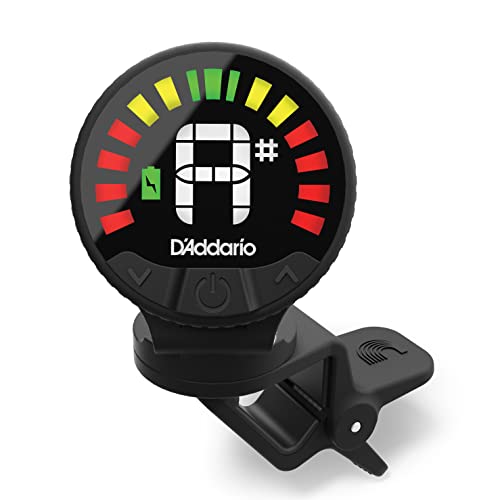 D'Addario Nexxus 360 Rechargeable Guitar Tuner
|
8.4/10 | Buy | |
| Top Rated |
 Snark SN5X Clip-On Tuner
|
8.3/10 | Buy | |
 Fender Flash 2.0 Rechargeable Clip-On Guitar Tuner
|
8.2/10 | Buy | ||
 Snark ST-2 Chromatic Tuner
|
8.1/10 | Buy | ||
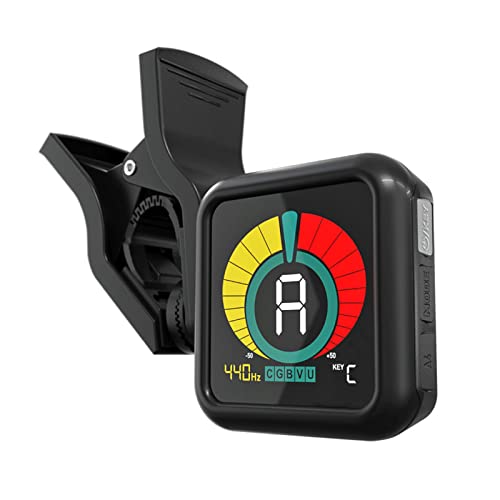 KLIQ UberTuner Clip-On Chromatic Tuner
|
7.9/10 | Buy | ||
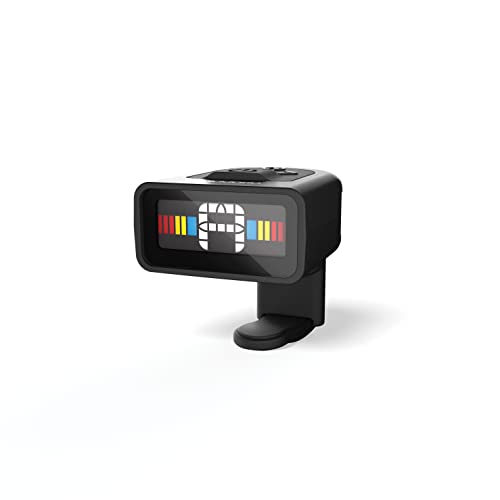 D'Addario NS Micro Clip-On Tuner
|
7.8/10 | Buy | ||
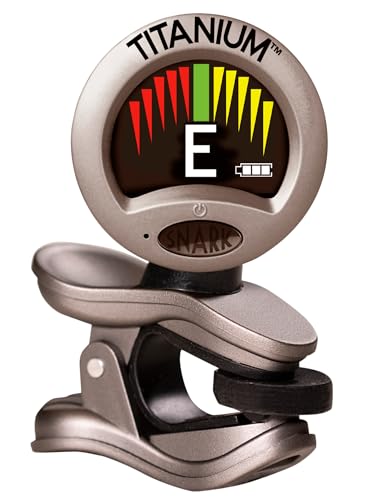 SNARK ST-8 Titanium Rechargeable Guitar Tuner
|
7.5/10 | Buy | ||
 Donner DT-1 Chromatic Guitar Tuner Pedal
|
7.2/10 | Buy | ||
 LEKATO Rechargeable Guitar Tuner Clip
|
6.8/10 | Buy | ||
 Planet Waves Auto-Trim 6-Inline Tuning Machines
|
2.1/10 | Buy |
Roadie 4 Automatic Guitar Tuner
An automatic tuner that handles electric, acoustic, and ukuleles with vibration detection and motorized string winding. Includes 150+ tuning options, a built-in metronome, and Bluetooth app connectivity for customization.
Pros
- Fast tuning speed and high-precision accuracy suitable for stage use
- Versatile instrument compatibility across guitars, ukuleles, mandolins, and more
- Integrated motorized winder eliminates need for separate tool
- Extensive customization through app and on-device controls
- Long battery life between charges
Cons
- Not compatible with bass guitars, which require separate Roadie Bass model
- No user reviews available to verify real-world performance claims
- Larger size and weight may be less portable than some handheld tuners
Fender FCT-2 Clip-On Tuner, Multi-Instrument
A versatile clip-on tuner that handles guitar, bass, ukulele, violin, and chromatic modes with vibration sensing for reliable tuning in any environment. Its color LCD needle display provides clear visual feedback, and the dual-hinge clip fits naturally on most headstocks without fuss.
Pros
- Vibration sensing eliminates tuning errors from background noise, useful for gigging musicians
- Single device covers five instrument types, eliminating need for multiple tuners
- LCD needle display responds quickly and clearly for fast, intuitive tuning adjustments
- Adjustable clip fits different headstock sizes and shapes with smooth dual-hinge mechanism
- Compact, lightweight build minimizes visual distraction during performance
Cons
- No user reviews available yet to verify real-world durability or long-term battery life
- Color LCD display may have visibility challenges in extremely bright sunlight
- Limited to B0-B7 range, which may not accommodate some specialty or extended-range instruments
D'Addario Nexxus 360 Rechargeable Guitar Tuner
A rechargeable clip-on tuner designed for both acoustic and electric guitars, offering 24 hours of battery life per charge and a 360-degree rotating display for flexible viewing angles. The bright LED screen and strong clamp deliver reliable tuning across various lighting conditions.
Pros
- Rechargeable design eliminates need for battery replacements
- 360-degree rotating screen and bright display accommodate different playing positions and lighting
- Accurate tuning with wide calibration range and adjustable settings
- Sturdy clamp grip prevents slipping during use
Cons
- No verified user reviews available to assess real-world durability or performance consistency
- Requires USB charging access, which may be inconvenient for players without nearby power sources during practice
Snark SN5X Clip-On Tuner
A compact clip-on tuner designed for guitar, bass, and violin with a 360-degree rotating display that adapts to any player orientation. The Stay Put clip mounting system works on either the front or back of the headstock, making it versatile for different instrument types and playing styles.
Pros
- 360-degree rotating display works for both right and left-handed players
- Compatible with acoustic, electric, and bass guitars plus violin
- Stays securely in place with Stay Put clip design
- Compact size (1.8 x 1.8 x 3.5 inches) doesn't obstruct playing
- Can mount on front or back of headstock for flexibility
Cons
- No customer reviews available to verify real-world reliability and battery life
- Limited information on tuning accuracy and response speed
- Display visibility in bright outdoor conditions not documented
Fender Flash 2.0 Rechargeable Clip-On Guitar Tuner
A rechargeable clip-on tuner designed for guitar, bass, and other stringed instruments with 20-hour battery life and multiple tuning modes including alternate tunings. Works across guitars, bass, ukulele, violin, and chromatic modes for players who need versatility without frequent charging.
Pros
- Extended 20-hour battery life reduces need for frequent recharging
- Supports multiple instruments and tuning modes beyond standard guitar tuning
- Includes rechargeable battery and micro USB cable in the box
- Compact size makes it portable for players on the go
Cons
- No verified user reviews available to assess real-world accuracy or reliability
- Clip-on design may have durability concerns over extended use, though not specified in available data
- Auto shut-off at 10 minutes requires reactivation during practice sessions
Snark ST-2 Chromatic Tuner
A rechargeable clip-on tuner designed for musicians who need accuracy across multiple instruments. The 360-degree rotating display and dual sensor options (microphone and vibration) make it versatile for both quiet practice and loud stage environments.
Pros
- Dual tuning sensors adapt to different playing environments without switching devices
- Rechargeable design reduces waste and long-term maintenance costs
- High-resolution rotating display ensures visibility from any angle during performance
- Extended frequency range supports diverse instruments beyond standard guitar
- Secure clip mechanism prevents slipping during active use
Cons
- No verified customer reviews available to assess real-world reliability
- Vibration sensor effectiveness depends on instrument type and may vary
- Small size could be challenging for users with limited dexterity
KLIQ UberTuner Clip-On Chromatic Tuner
A vibration-based clip tuner that handles acoustic, electric, bass, and ukulele with professional-grade accuracy in noisy environments. Its 360-degree adjustable display and padded clip make it practical for stage, studio, and home use without requiring a microphone.
Pros
- Accurate to within 1 cent with professional-grade piezo sensor for consistent tuning
- Works reliably in loud rehearsals and live performance settings without microphone interference
- Rotatable display accommodates both right and left-handed players on any headstock position
- Multi-instrument support with specific tuning modes reduces need for multiple tuners
- Durable construction designed for regular gigging use
Cons
- No customer reviews available to verify real-world reliability claims
- Requires CR2032 battery replacement, with no indication of typical battery life duration
- Limited to instruments with vibration transmission to the headstock, may not work effectively on some acoustic designs
D'Addario NS Micro Clip-On Tuner
A compact, discreet clip-on tuner designed to stay hidden on your headstock while you play. Uses vibration sensing for accurate tuning across guitars, basses, and other stringed instruments, with a tri-color backlit display and 360-degree positioning for easy viewing.
Pros
- Discrete design won't distract audiences during performance
- Versatile across multiple instrument types and headstock sizes
- Accurate piezo transducer unaffected by background noise
- Lightweight and portable enough to keep on multiple instruments
Cons
- No user reviews available yet to verify real-world performance
- Requires CR2032 battery replacement when depleted
- Small display may be difficult to read in very bright lighting
SNARK ST-8 Titanium Rechargeable Guitar Tuner
A clip-on tuner designed for guitarists who want durability and visibility on stage or in noisy environments. The titanium and rubber housing reduces ambient noise interference, while the rechargeable battery eliminates constant battery replacements.
Pros
- Titanium and rubber construction minimizes room noise pickup for more accurate readings
- Super bright display ensures visibility in bright venues and outdoor settings
- Rechargeable battery with included USB cable reduces ongoing battery costs
- Compact dimensions make it portable and easy to attach to headstock
Cons
- No user reviews available to verify real-world performance or durability claims
- Rechargeable design means downtime if battery depletes during sessions without access to charging
- Limited information on battery life duration between charges
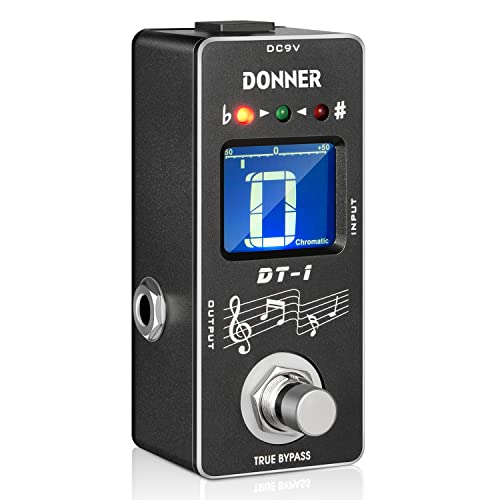
Donner DT-1 Chromatic Guitar Tuner Pedal
A compact pedalboard-friendly tuner with wide frequency range (A0-C8) and strobe mode accuracy to 1 cent. Its dual tuning and bypass modes let you mute output while tuning without signal loss, making it practical for live performance and studio use.
Pros
- ±1 cent accuracy in strobe mode delivers reliable tuning across wide frequency range suitable for 6-string and bass instruments
- Dual mode operation allows silent tuning without cutting amplifier signal, eliminating distracting muting between songs
- Stage-visible LED display with color and brightness calibrated for outdoor and large venue visibility
- True bypass design maintains audio quality when tuner is inactive
Cons
- Power adapter not included, requires separate purchase
- No onboard battery compartment option for portable power
LEKATO Rechargeable Guitar Tuner Clip
A compact clip-on tuner with 5 tuning modes (guitar, bass, ukulele, violin, chromatic) and a bright LCD display that rotates 360 degrees for flexible viewing. Built for beginners and hobbyists seeking accurate tuning across multiple string instruments.
Pros
- Rechargeable battery eliminates constant battery replacement costs
- Multiple tuning modes and alternate guitar tunings expand instrument compatibility
- 360-degree rotational clip provides flexible positioning on any headstock
- Sensitive piezo sensor with built-in buzzer pickup reduces interference
- Auto power-off after 5 minutes conserves battery life
Cons
- No verified buyer reviews available to assess real-world reliability or accuracy consistency
- LCD display brightness may vary under different lighting conditions despite 'super bright' claim
- Compact size could make buttons difficult to access for users with larger hands
Planet Waves Auto-Trim 6-Inline Tuning Machines
D'Addario's Planet Waves tuning machines combine automatic string trimming with precision engineering, making setup faster and cleaner for players who prioritize ease of maintenance. The 18:1 gearing ratio delivers smooth, stable tuning suited to demanding applications like tremolo systems.
Pros
- Automatic string trimming eliminates need for manual cutting post-installation
- Individual string clamps reduce multiple wraps, speeding up restringing
- 18:1 gearing ratio provides fine tuning control with minimal string slippage
- 6 in-line configuration suits standard electric guitar headstocks
- Gold finish offers visual consistency with premium hardware
Cons
- No verified buyer reviews available to assess real-world durability or user experience
- Automatic trimming feature requires user familiarity with correct operating technique
- Compatibility limited to 6-inline headstock layouts only
Guitar Tuners Buying Guide
Choosing among the many guitar tuner types can be genuinely confusing when you are standing in front of a wall of options or scrolling through product listings.
The sections below break down every meaningful factor so you can match the right tuner to the way you actually play, whether you are a beginner with one acoustic guitar or a working musician juggling multiple instruments every night.
Tuner Type: Clip-On, Pedal, or Automatic

The biggest decision is which format suits your setup.
Clip-on tuners attach directly to the headstock and read vibration rather than audio signal, which means they work in noisy environments like rehearsal rooms or loud stage settings without picking up ambient sound from other instruments.
They are versatile enough for acoustic guitars, electrics, basses, ukuleles, violins, and banjos.
If you often play multiple instruments, a clip-on that covers chromatic tuning across a wide range of pitches is a smarter long-term buy than one locked to standard guitar tuning.
Pedal tuners are the right call for electric guitarists and bassists who already run a pedalboard. They sit inline in the signal chain, mute output while you tune, and typically feature large, high-contrast displays readable from across a dim stage.
They require a power source, either a battery or a standard power supply, so plan accordingly when building your board.
If you are new to electric guitar, pairing your pedalboard setup with a capable electric guitar and a reliable inline tuner is one of the most impactful upgrades you can make.
Automatic motorized tuners represent the newest category. Models like the Roadie 4 physically turn your tuning pegs to reach pitch without you touching the headstock.
They are especially useful for players with hand mobility limitations, for rapid retuning between alternate tunings on stage, or simply for anyone who wants a completely hands-free workflow.
The tradeoff is a higher price point and the need to charge the device, but for serious gigging musicians the convenience can be well worth it.
Tuning Accuracy and Response Speed

Accuracy is measured in cents, with one cent equal to one hundredth of a semitone.
Most quality clip-on tuners claim accuracy within plus or minus one cent, but real-world performance depends on build quality, sensor sensitivity, and how well the display update rate keeps pace with your plucking.
A sluggish tuner that lags behind the string’s vibration is frustrating mid-song and can cause you to over-tune or under-tune before the needle settles. Look for models that reviewers consistently describe as fast and decisive rather than nervous or jittery.
Strobe mode, available on select clip-on and pedal tuners, offers the highest level of precision and is the format preferred by luthiers for intonation work.
For everyday practice and gigging, standard chromatic mode at plus or minus one cent is more than sufficient. What matters most for stage use is how quickly the display locks onto a note and how confidently it holds the reading.
A tuner that hesitates or flickers will slow you down between songs and introduce doubt about whether your instrument is actually in tune.
Display Quality and Stage Visibility
A tuner’s display needs to be legible in the full range of environments where you will use it: bright daylight at an outdoor festival, dim bar lighting, and everything in between.
Backlit LCD and LED displays are standard, but contrast, brightness level, and viewing angle vary significantly between models.
Some clip-on tuners feature a rotating display head so you can position the screen at the angle most comfortable for your playing position, whether you sit or stand.
The Snark SN5X and Snark ST-2, for instance, are noted by players for their bright, colour-coded displays that make it immediately obvious when a string is sharp, flat, or in tune.
For pedal tuners, a large numeric or LED bar display is essentially mandatory for reliable stage use. The Donner DT-1 is frequently praised for combining an easy-to-read pitch indicator with a compact footprint that does not dominate a small pedalboard.
If you play mostly at home and indoors, a smaller or dimmer display may be perfectly adequate, but do not underestimate visibility as soon as you move your instrument to a different environment.
Battery Life and Rechargeable Options

Traditional clip-on tuners run on coin cell batteries, which are inexpensive and widely available, but can die at inconvenient moments. Verified buyers frequently note that replacing a CR2032 in the dark backstage is not fun.
Rechargeable clip-on tuners, such as the D’Addario Nexxus 360 and the Snark ST-8 Titanium, solve this problem by charging via USB.
The Nexxus 360 in particular is cited by expert reviewers for delivering around twenty-four hours of tuning time per charge, making battery anxiety effectively a non-issue for most gigging schedules.
If you prefer a conventional battery-powered model, choose one that uses a common, easy-to-find battery size. Always carry a spare in your gig bag.
Pedal tuners are powered by your board’s power supply or a standard nine-volt adapter, so battery management is less of a concern there.
The Roadie 4 automatic tuner is rechargeable via USB, and its motor-driven operation means the battery drain rate is higher per tuning session than a passive clip-on, but the device is designed for repeated daily charges without performance degradation.
Instrument Compatibility and Chromatic Range

If you play only standard-tuned guitar, almost any chromatic tuner covers you. But many musicians also play bass, ukulele, violin, mandolin, or banjo, and those instruments require different pitch ranges.
Confirm that any tuner you consider explicitly supports the instruments you own.
The Fender FCT-2 and D’Addario Micro Headstock Tuner both advertise multi-instrument compatibility, and verified buyers who use them across guitar, bass, and ukulele confirm that detection is reliable across those ranges without needing to fiddle with manual transposition settings.
If you are investing in an acoustic guitar alongside your tuner, a chromatic clip-on that handles multiple instruments future-proofs your toolkit nicely.
Players who regularly use alternate tunings like drop D, open G, or DADGAD benefit from a tuner with a broad chromatic range and, ideally, a custom tuning memory feature.
The Roadie 4 handles this at a premium level, storing a large library of alternate tunings and automatically winding to each target pitch on command.
For players on a tighter budget, any chromatic tuner technically gets you to alternate tunings with a little more manual attention, but the convenience gap is real.
Build Quality and Clip Grip

A clip-on tuner that wobbles on the headstock or slips under vibration produces unreliable readings and risks falling off and damaging a finish.
Expert reviewers and verified buyers consistently flag clip tension as a make-or-break detail, particularly for thin or tapered headstocks common on certain acoustic and classical guitars. Models with rubber-padded jaws grip the headstock without scratching the finish.
The Snark lineup is consistently praised for a secure, confident clip that stays put through aggressive strumming, while some budget alternatives receive complaints about loosening over time.
Overall build materials matter for longevity, especially if your tuner lives in a gig bag and gets jostled regularly. Heavier plastic construction and a rotating head mechanism that pivots smoothly without feeling loose are good indicators of a durable unit.
Read long-term ownership reviews, not just first-week impressions, to get a realistic picture of how a tuner holds up after months of regular use.
Why You Should Trust Us
ProductFind is an independent review publication. We do not sell instruments, accessories, or gear, and we have no relationship with manufacturers that influences what we recommend.
Every product in this roundup was assessed through a structured research process: we analyzed published specifications, evaluated expert review consensus from guitar-focused publications and musician communities, and reviewed verified buyer feedback across thousands of confirmed purchases.
We do not conduct our own product trials; our evaluations are grounded in research, published data, expert review consensus, and verified buyer feedback.
Each product receives a PF Score on a zero to ten scale based on a consistent set of criteria that includes tuning accuracy, display quality, build reliability, battery performance, instrument compatibility, and overall value relative to price.
The PF Score is calculated independently of commercial relationships. ProductFind may earn a commission when you purchase through links in this article, but that affiliate arrangement has no bearing on any product’s ranking, score, or inclusion in this list.
Our recommendations reflect research quality, not commission rates.
Final Thoughts
The guitar tuner market covers a wide range of needs and budgets, from affordable clip-ons that disappear into a gig bag to motorized automatic tuners that transform your whole pre-show workflow.
After evaluating all twelve models in this roundup, here are the standout picks by use case:
- Best Overall: Roadie 4 Automatic Guitar and Ukulele Tuner earns the top PF Score in this roundup by combining fully automatic motorized tuning, a broad alternate-tuning library, and multi-instrument support into a device that genuinely changes the way players approach tuning before a set.
- Best Clip-On for Most Players: Fender FCT-2 Professional Clip-On Tuner delivers excellent accuracy, a clear display, and reliable multi-instrument compatibility at an approachable price, making it the clip-on we would recommend to the broadest range of guitarists.
- Best Rechargeable Clip-On: D’Addario Nexxus 360 Rechargeable Guitar Tuner stands out for its full 360-degree rotating display, long battery life per charge, and the reliability that has made D’Addario a trusted name in guitar accessories.
- Best Budget Pick: KLIQ UberTuner Clip-On Guitar Tuner punches well above its modest price with a secure clip, a bright readable display, and consistent accuracy that verified buyers praise across acoustic and electric guitars alike.
- Best Pedal Tuner for Pedalboards: Donner DT-1 Chromatic Guitar Tuner Pedal offers true bypass, a clear pitch indicator, and solid build quality at a price that suits players building their first pedalboard without a large accessories budget.
If you are building out your full guitar setup, it is worth pairing a great tuner with the right instrument.
Our coverage of acoustic guitars for every player and budget and electric guitars for every player and budget covers the instrument side in the same research-driven depth you will find in this guide.
The right tuner keeps your playing honest; the right guitar gives you something worth playing in tune.
Frequently Asked Questions
What is the difference between a chromatic tuner and a guitar-specific tuner?
A guitar-specific tuner recognizes only the standard pitches of guitar strings, typically E, A, D, G, B, and high E, and will not detect notes outside that range.
A chromatic tuner detects every semitone across a full musical range, making it compatible with bass, ukulele, violin, mandolin, and any alternate tuning you want to use on guitar.
For most players, a chromatic tuner is the smarter buy because it adapts to however your instrument or tuning needs evolve over time.
Are rechargeable clip-on tuners better than battery-powered ones?
For players who gig regularly, rechargeable models eliminate the risk of a dead battery mid-session. They tend to cost a little more upfront, but the long-term convenience is significant.
Battery-powered models using common coin cells are perfectly reliable for home practice and occasional gigging, provided you keep a spare battery in your case.
Verified buyers of rechargeable models like the D’Addario Nexxus 360 and the Snark ST-8 Titanium consistently rate the no-battery-swap experience as a meaningful quality-of-life upgrade.
Can a clip-on tuner damage my guitar’s headstock or finish?
A well-designed clip-on tuner with rubber-padded jaws will not scratch or dent a guitar’s finish under normal use. The risk comes from tuners with bare plastic or overly tight clips, especially on thinly finished or vintage instruments.
Check that the model you are considering has padded contact points, and avoid leaving any clip-on clamped to the headstock for extended periods if you are concerned about pressure marks, particularly on softer lacquer finishes.
Most expert reviewers flag this detail in their assessments, and it is one of the criteria ProductFind weighted in our evaluations.
Is a pedal tuner worth it if I already own a clip-on?
For electric guitarists who use a pedalboard, a pedal tuner adds an important practical benefit: it silently mutes the output to the amplifier while you tune, so the audience hears nothing during tuning breaks.
A clip-on works for the task acoustically but does not mute your amp signal.
If you play exclusively acoustic or at home, a quality clip-on like the Fender FCT-2 or Snark SN5X covers all your needs without additional expense or pedalboard real estate.
How accurate do guitar tuners need to be for live performance?
For live performance, tuning accuracy within plus or minus one cent is the standard that expert reviewers and professional musicians cite as the threshold for reliably in-tune playing.
Most quality clip-on and pedal tuners in this roundup meet or exceed that benchmark. What matters equally is response speed: a tuner that reads accurately but settles slowly will cause you to second-guess your tuning under stage pressure.
Look for models praised specifically for fast, decisive locking rather than just raw accuracy figures in the manufacturer specifications.
Do automatic tuners like the Roadie 4 work with all guitar types?
Automatic motorized tuners work by physically engaging the tuning peg and rotating it to reach the target pitch. They are compatible with the vast majority of standard tuning machine designs on acoustic, electric, and bass guitars, as well as ukuleles.
Locking tuners, some classical guitar pegs, and non-standard headstock designs may require compatibility checks before purchase.
The manufacturer’s compatibility guide for the Roadie 4 covers supported peg types in detail, and verified buyers generally confirm broad compatibility across common guitar brands and configurations.
About the author
Alexis is a reviewer and writer for ProductFind who specializes in Musical Instruments & Accessories. Alexis evaluates products through independent research: specifications, expert review consensus, and verified buyer feedback, and rates each one on the PF Score. Alexis focuses on helping readers pick the right musical instruments & accessorie for their needs and budget.