The 11 Best Engine Hoists
Lifting an engine safely starts with choosing the right shop crane. Our research covers capacity, hydraulic quality, and portability across top-rated models for home mechanics and professional shops alike.
 By Dave Robinson
Updated July 23, 2026
By Dave Robinson
Updated July 23, 2026

Pulling an engine without the right equipment is a recipe for injury, damaged components, and wasted hours.
A quality engine hoist, sometimes called a cherry picker or shop crane, gives you the mechanical advantage to safely lift and maneuver powerplants ranging from compact four-cylinders to heavy-duty truck engines, making what would otherwise be a two-person struggle into a manageable solo job.
Whether you are a weekend wrench-turner tackling your first engine swap or a professional tech who needs a reliable daily driver in the shop, the right hoist pays for itself the first time it saves you from a pinched back or a cracked engine block.
To help you cut through the noise, the ProductFind team researched the current market by synthesizing manufacturer specifications, expert review consensus from the automotive and garage-tools community, and verified buyer feedback from confirmed purchasers.
We assessed each model against a consistent set of criteria and scored it on our 0 to 10 PF Score scale, with results ranging across capacity ratings, hydraulic systems, portability, and long-term build quality.
Brands represented in this roundup include SVETAKUA, SierraSquad, VEVOR, ExploreHorizon, GarveeTech, MilleLoom, VISRACK, EliteEdge, DEXSO, and XZMHXDXH, giving you a solid cross-section of what the market offers in 2026. Scroll down to see our full ranked list of top picks.
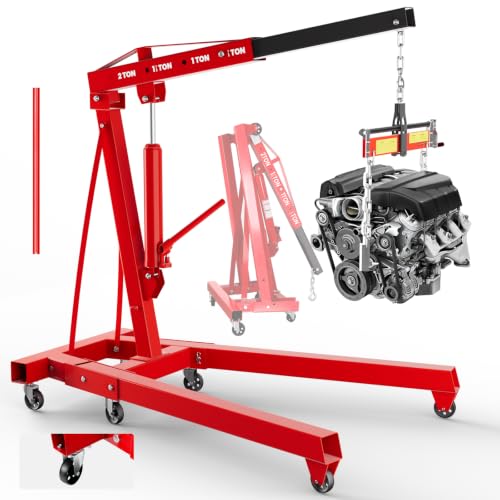
SVETAKUA 7000 lbs Engine Hoist with 2-in-1 Leveler
A dual-purpose engine crane combining a 7000 lbs hoist with an integrated 2500 lbs leveler in one foldable unit. Built from alloy steel with a 9-ton hydraulic pump, it's designed for shop mechanics and DIY users needing stable, adjustable lifting across multiple load modes.
Pros
- Integrated leveler saves space and cost versus buying separate equipment
- Heavy-duty alloy steel construction with load-tested stability
- Multi-speed boom adjustment and dual-lock outriggers reduce tipping risk
- Compact folded footprint fits tight garage and workshop spaces
- Wide height range (114 inches max) and adjustable boom accommodate diverse vehicle repairs
Cons
- No verified customer reviews available to assess real-world durability and ease of use
- 123-pound weight may require assistance for manual repositioning despite swivel casters
- 4.5 rating with zero reviews limits confidence in performance claims

Generic 5000 LBS Engine Hoist with 8-Ton Hydraulic Ram
A heavy-duty shop crane rated for 5000 lbs capacity, built from alloy steel with a 114-inch maximum lift height and 8-ton hydraulic ram. Designed for workshop and garage use to lift and support engines, transmissions, and other automotive components during repair and assembly.
Pros
- 5000 lbs load capacity handles most engine types including V8 and inline 6-cylinder engines
- 8-ton hydraulic ram with four adjustable pressure settings for versatile lifting needs
- Lifts up to 114 inches high with precise height control via 28-inch crank
- Heavy-duty alloy steel construction rated for durability in professional workshop settings
- Includes detailed assembly instructions with pictures, text, and video guidance
Cons
- No verified buyer reviews available to validate real-world performance and reliability
- Weighs 117 pounds and measures 62 x 38 x 65 inches, requiring significant workshop space and setup effort
- Assembly complexity may be time-consuming despite instructional support provided
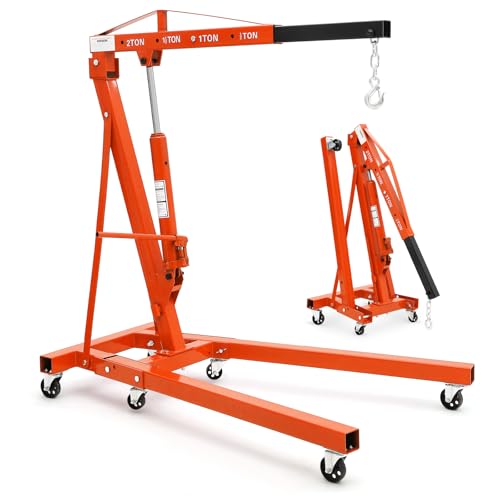
SierraSquad 2-Ton Engine Hoist with Telescoping Boom
A 4400-pound capacity hydraulic engine hoist designed for automotive shops and garage use, featuring a folding design that collapses to 24 inches wide for storage. The cherry picker includes adjustable boom positions, 360-degree swivel casters, and a corrosion-resistant finish for workshop durability.
Pros
- 4400-pound lifting capacity with industrial-grade steel construction and anti-rust powder coating
- Compact storage design folds down to 24 inches wide, practical for space-limited workshops
- Four adjustable boom positions (0.5T-2T) and telescopic legs accommodate various engine sizes and tight spaces
- Six heavy-duty steel wheels with 360-degree swivel casters and locking mechanism for stable transport
- Includes hitch and storage stand for complete setup
Cons
- No verified customer reviews available to assess real-world reliability or user satisfaction
- Weighs 110 pounds, requiring assistance to move despite the foldable design
- Dimensions of 64.2 x 40.2 x 58.3 inches may still require substantial floor space when not folded

ExploreHorizon 2-Ton Engine Hoist with 6 Casters
A 2-ton hydraulic engine hoist designed for auto shops, farms, and industrial settings. Features a 6-wheel base for stability, foldable design for storage, and heavy-duty steel construction rated for 10+ years of use.
Pros
- High weight capacity handles truck engines, boat motors, and heavy farm equipment
- Folding design saves significant space when not in use
- Heavy-duty construction with corrosion-resistant paint for durability
- 6-wheel base provides better stability than standard 4-wheel hoists
- Dual locking swivel casters enable precise positioning and mobility
Cons
- No verified buyer reviews available to validate real-world performance claims
- 119-pound weight means manual setup and repositioning requires effort
- Dimensions of 64 x 40 x 58 inches still occupy significant space when deployed

VEVOR 2-Ton Hydraulic Engine Hoist with Leveler
A 2-in-1 engine hoist and leveler combo that combines a 4400-lb main crane with a 1500-lb leveling tool in one foldable unit. Designed for auto shops and DIY mechanics who need to handle engine work without buying separate equipment.
Pros
- Combines engine hoist and leveler in one tool, reducing equipment clutter
- Robust 4400-lb capacity suits most engine removal tasks
- Swivel casters and ergonomic handle minimize physical strain during use
- Foldable design makes it practical for small workshop storage
- Dual-function leveler allows precision adjustments for engine stability
Cons
- No verified buyer reviews available to confirm real-world durability or ease of setup
- 157-lb weight means it still requires significant space even when folded
- Large footprint (64 x 40 x 58 inches unfolded) may limit maneuverability in cramped bays

GarveeTech 2-Ton Folding Engine Hoist with Leveler
A 2-ton hydraulic engine crane designed for auto repair shops and workshops, featuring a folding design for compact storage and a precision leveler for engine positioning. The unit combines lifting capacity up to 4000 lbs with adjustable load settings and mobile casters for workshop flexibility.
Pros
- Dual functionality combines main hoist and separate engine leveler in one tool
- Corrosion-resistant carbon steel construction rated for indoor and outdoor use
- Six casters provide mobility, reducing setup and repositioning effort
- Folding frame minimizes footprint when not in use
Cons
- No verified customer reviews available to assess real-world reliability or long-term durability
- 4.6 rating appears based on zero reviews, limiting confidence in performance claims
- Weighs 141 lbs, which may require assistance for manual repositioning despite casters

MilleLoom 2-Ton Engine Hoist with Lever Stabilizer
A heavy-duty hydraulic engine lift rated for 4400 lbs capacity, designed for automotive shops and industrial garages. Features adjustable boom settings, 360-degree swivel wheels, and a foldable frame for storage.
Pros
- Heavy-gauge steel build with CE certification ensures durability and safety compliance
- Four adjustable boom positions (0.5T, 1T, 1.5T, 2T) accommodate varying load requirements
- Six swivel wheels enable effortless maneuverability in tight workshop spaces
- Rust-resistant powder coating requires minimal maintenance for indoor or outdoor use
- Compact when folded, helping conserve valuable garage real estate
Cons
- No verified customer reviews available yet to confirm real-world performance or reliability
- Weighs 145+ pounds, making solo setup or repositioning demanding without assistance
- Foldable design may introduce slight play or instability compared to fixed-frame models

DEXSO 2-Ton Hydraulic Engine Hoist, 4400 lbs
A 2-in-1 hydraulic engine crane and leveling tool combining lifting capacity up to 4400 pounds with adjustable boom positions and foldable design. Targets DIY mechanics and workshop professionals seeking space-efficient heavy equipment handling.
Pros
- Combines two tools in one unit, reducing equipment investment and workshop clutter
- Four adjustable boom positions provide precision control across various motor sizes
- Foldable design saves storage space when not in use
- Heavy-duty steel build with 8-ton pump supports substantial weight capacity
Cons
- No verified customer reviews available to confirm real-world durability and performance reliability
- Weighs 130 pounds, making solo transport and setup challenging without assistance
- Requires adequate workspace for outrigger extension during operation

VISRACK 2-Ton Folding Engine Hoist with 6 Caster Wheels
A hydraulic engine hoist rated for 2 tons with four adjustable lifting positions and a folding design for compact storage. Built from high-strength steel with rust-resistant coating, it suits automotive shops and serious DIY mechanics who need reliable vertical lifting for engines and heavy drivetrain components.
Pros
- Heavy-duty steel construction with CE certification ensures durability and safe operation across different engine sizes
- Six swiveling wheels provide excellent maneuverability, reducing setup time in tight workshop spaces
- Folding design makes storage and transport practical for both permanent shops and mobile operations
- Rust-resistant powder coating eliminates concerns about corrosion with outdoor storage or humid environments
- Versatile lifting capacity and four adjustable positions accommodate various repair and assembly tasks
Cons
- No verified buyer reviews available to assess real-world reliability or long-term durability claims
- Hydraulic maintenance requirements and potential fluid leaks not addressed in product specifications
- Manual operation and setup process may require strength and mechanical knowledge for initial assembly and positioning

EliteEdge 2-Ton Folding Engine Hoist with 6 Casters
A 4400-pound capacity hydraulic engine hoist designed for garages and repair shops, featuring four adjustable boom positions and foldable construction for compact storage. The 360-degree swivel casters enable smooth mobility in tight workshop spaces.
Pros
- Multiple boom adjustments allow load balancing at different heights and distances
- Foldable frame simplifies storage and transport between job sites
- Six-caster setup with four 360-degree swivels enhances maneuverability in confined spaces
- Hydraulic system provides smooth, controlled operation with reduced hand fatigue
Cons
- No customer reviews available to verify real-world durability and ease of use
- Relatively heavy at 133.6 pounds, which may complicate manual repositioning despite wheels
- No leveler included, which could require additional setup in uneven workshop areas
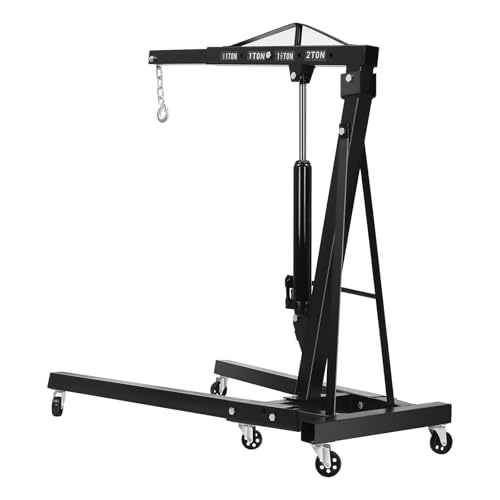
XZMHXDXH 2-Ton Foldable Engine Hoist with 6 Wheels
A heavy-duty hydraulic engine crane designed for garage and workshop use, featuring a 4400 lbs capacity, adjustable four-position boom, and maximum lift height of 6.89 feet. The foldable design and six universal wheels make it suitable for moving engines around tight spaces, though it's a budget-tier option with no verified buyer feedback yet.
Pros
- Compact foldable design saves garage space when not in use
- Four adjustable lifting positions accommodate different engine sizes and weight distributions
- Six wheels with universal movement provide flexibility for repositioning in workshops
- Thick carbon steel construction with argon arc welding offers durability for regular shop use
- Maximum lift height of 6.89 feet suits most garage lifting applications
Cons
- No verified customer reviews available to validate real-world performance claims
- Heavy-duty nature may limit portability despite foldable design
- Adjustable four-position boom system requires manual reconfiguration between different lift capacities
Engine Hoists Buying Guide
Buying an engine hoist is not as simple as picking the cheapest option with the highest advertised capacity number.
The right hoist for your garage depends on the engines you plan to move, the space you have to work in, and how often you plan to use it.
The sections below walk through the six criteria that matter most, based on how real buyers and professional reviewers consistently separate the good from the frustrating.
Weight Capacity and Boom Positions

The rated capacity of an engine hoist is the single most important safety specification on the label, but it requires careful reading.
Most hoists advertise their maximum capacity at the shortest boom setting, typically around 2,500 to 3,000 lbs at close range, and that number drops significantly as you extend the boom outward.
A hoist rated at 2 tons at the closest boom position may only handle around 1,000 lbs at full extension.
Always cross-reference the capacity chart on the hoist itself with the actual weight of the engine you intend to lift, adding a safety margin for chains, brackets, and load levelers.
Multiple boom positions, typically four settings, give you flexibility to dial in the right combination of reach and load capacity for each job.
Models with a fixed single-position boom are far less versatile and can force you into awkward angles in tight engine bays.
Look for clearly labeled boom position load charts printed directly on the boom arm, not just in the manual, so you can reference them quickly while working.
Pairing a hoist with the right work gloves and proper chain rigging is equally important for safe operation under load.
Pay attention to how the boom extension is secured. Locking pins are generally more reliable under heavy dynamic load than simple bolt-through designs, and they are faster to adjust when you need to reposition quickly.
Buyers with higher-capacity engines, such as big-block V8s or diesel truck motors, should specifically look for hoists rated at 3 tons or higher with a robust hydraulic ram to match.
Hydraulic Ram Quality and Lift Height
The hydraulic ram is the heart of the cherry picker. Ram capacity is measured separately from overall hoist capacity and is often stated in tons on the pump body itself.
A ram rated at 8 tons driving a 2-ton hoist frame provides ample hydraulic force for smooth, controlled lifting.
Cheaper hydraulic cylinders tend to drift under load, meaning the engine slowly drops while you are trying to position it, which is both dangerous and maddening.
Verified buyers consistently flag hydraulic drift as the top complaint in negative reviews, so prioritize models with documented slow-drift or no-drift performance.
Maximum lift height determines whether you can pull an engine fully clear of the engine bay and swing it over to an engine stand.
Most full-size hoists in this category reach between 6.5 and 7.5 feet at maximum height, which clears the hood line of most passenger vehicles and light trucks.
If you regularly work on lifted trucks or large SUVs, prioritize models with maximum lift heights toward the top end of that range.
Also check the minimum height at the hook, since getting the chain attached at low angles in a deep engine bay requires the boom to lower sufficiently.
Frame Construction and Steel Gauge
All the hoists in this roundup are built from steel, but not all steel construction is equal.
Tube wall thickness, weld quality, and the gauge of the base legs determine whether a hoist flexes and creaks under load or stays rigid. Square tube legs with thicker walls distribute stress more evenly than thin round tube alternatives.
Look for welded gussets at the critical stress points where the boom meets the mast and where the mast meets the base frame.
Powder-coated finishes resist rust in typical garage environments, though any scratched surface in a damp shop should be touched up promptly.
Frame weight is a proxy for steel gauge. A hoist that weighs significantly less than comparable models at the same rated capacity may be using thinner-gauge steel throughout.
This matters most over the long term as repeated heavy use causes fatigue in low-gauge welds.
Setting up a sturdy workbench nearby where you can stage bolts and accessories while the engine is suspended reduces unnecessary time keeping the hoist under load, which is good practice regardless of build quality.
Caster Wheels and Maneuverability
Six caster wheels is the current standard for full-size folding engine hoists, and for good reason.
Six contact points distribute the load more evenly on uneven concrete floors and reduce the leverage that could tip the hoist when moving a heavy engine sideways.
Four-caster designs are generally lighter and cheaper but offer noticeably less stability when the boom is extended and loaded.
All six wheels should swivel fully and lock independently so you can hold the hoist in position while connecting or disconnecting the engine.
Wheel diameter matters for rolling over expansion joints, drain grates, and the lip between a driveway and garage floor.
Larger-diameter casters, typically three inches or more, roll over obstacles more smoothly than tiny two-inch wheels that tend to catch and skip.
Solid rubber wheels are quieter and gentler on finished garage floors than hard polyurethane, though both are acceptable on raw concrete.
If your shop has a rolling shop stool and other wheeled equipment sharing the same floor, keeping traffic lanes clear while the hoist is under load is a genuine safety consideration.
Foldability and Storage Footprint
A folding design is essentially non-negotiable for home and small-shop use. When folded, a good hoist should collapse to a fraction of its working footprint and stand upright or lay flat against a wall without risking tip-over.
Check that the folding mechanism uses positively locking pins or bolts rather than friction-only designs that can shift if bumped.
Buyers in apartments or small detached garages particularly value compact folded dimensions, since storing a non-folding hoist would consume space reserved for the vehicle itself.
Some models include storage stands that hold the folded hoist upright on casters, which is a genuinely useful feature that prevents the hoist from tipping onto other equipment or the vehicle. Assembly out of the box is a related concern.
Most hoists arrive partially disassembled and require bolting together the base legs, mast, and boom. User reviews consistently rate assembly time between 30 and 90 minutes depending on hardware quality and instruction clarity, so factor that into your weekend project timeline.
A well-organized tool chest stocked with the right wrenches and sockets nearby will make that first assembly session much smoother.
Load Leveler Compatibility
An engine load leveler is a separate accessory that attaches between the hoist hook and the engine, allowing you to tilt the engine as you lift and maneuver it.
Without a leveler, many engine swaps require a second person to manually tilt and guide the block past frame rails, oil pans, and intake manifolds. With a leveler, a single mechanic can finesse the angle from a standing position.
Some hoists in this category include a leveler in the box while others treat it as an add-on purchase.
When evaluating leveler compatibility, check the hook dimensions and weight rating of the hoist hook. A leveler loaded to its rated capacity should not exceed the rated hook capacity of the hoist.
Many buyers are surprised to discover that their hoist’s hook is the weakest link in the chain, rated lower than both the ram and the frame. Confirm the hook is forged steel rather than cast, especially for loads above 1,500 lbs.
If you regularly perform complete drivetrain removals, budget for a quality leveler upfront rather than discovering you need one mid-job.
Why You Should Trust Us
ProductFind is an independent review publication. We do not sell products, fulfill orders, or handle returns. Every recommendation you see on this page is the result of our structured research and evaluation process, not a commercial relationship with any brand or retailer.
For this roundup, our editorial team assessed each engine hoist by synthesizing publicly available manufacturer specifications, expert review consensus from automotive and garage-tool publications, and verified buyer feedback from confirmed purchasers on major retail platforms.
We evaluated each model against a consistent set of criteria covering capacity accuracy, hydraulic performance, frame construction, maneuverability, storage convenience, and accessory compatibility, then scored it on our 0 to 10 PF Score scale.
We do not conduct our own product trials; our evaluations are grounded in research, published data, expert review consensus, and verified buyer feedback.
Transparency note: ProductFind may earn a commission when you purchase through links on this page. That affiliate relationship has no influence on our scores, rankings, or which products are included. Our rankings are determined entirely by evaluation quality, not commission rates.
Final Thoughts
After evaluating the full field of engine hoists in this roundup, a clear picture emerges: the right pick depends on your capacity needs, available storage space, and budget. Here are the standout performers worth anchoring your decision around.
- Best Overall: SVETAKUA 7000 LBS Engine Hoist with Leveler earns the top overall spot with the highest PF Score in this roundup, combining a 3-ton frame, 9-ton hydraulic pump, and an included leveler into a package that addresses nearly every need a serious home mechanic or light-commercial shop could have.
- Best Value for the Capacity: 5000 LBS Heavy Duty Alloy Steel Hydraulic Cherry Picker stands out for delivering a high-capacity, alloy-steel build at a budget-friendly price point, earning one of the strongest PF Scores in the group for buyers who want maximum lift without overspending.
- Best for Compact Garage Use: SierraSquad 2-Ton Folding Engine Hoist Cherry Picker scores well for its combination of practical 2-ton capacity, telescoping boom, included hitch and storage stand, and a price that makes it one of the most accessible quality options in the roundup.
- Best Mid-Range Pick: ExploreHorizon 2-Ton Shop Crane with Lever hits a confident middle ground with its lever-actuated hydraulic system, six steel casters, and proven compatibility with transmissions, boat motors, and farm equipment alongside automotive engines.
- Best Budget Entry Point: XZMHXDXH 2 Ton Foldable Cherry Picker is the most affordable option in the lineup and earns its place for buyers who need a capable 4,400 lb-rated hoist on a tight budget, with the understanding that its lower PF Score reflects trade-offs in long-term build robustness compared to the premium picks above.
Whichever model fits your needs, pairing your new hoist with a quality tape measure to verify boom height clearance before your first lift is a simple step that prevents costly mistakes.
A well-equipped garage makes every job safer and faster, and an engine hoist is one of the highest-leverage tools you can add to that space.
Frequently Asked Questions
What size engine hoist do I need for a standard car engine?
Most passenger car engines fall between 300 and 600 lbs for four- and six-cylinder motors, with heavier V8s and diesel blocks reaching 700 lbs or more without accessories attached.
A 2-ton (4,400 lb) hoist is the standard choice for home garages handling typical automotive work, as it provides a comfortable safety margin even when engine accessories, chains, and a load leveler add weight to the lift.
If you regularly work on large-displacement truck engines or cast-iron diesel blocks, a 3-ton rated hoist is the more appropriate starting point.
Do I need a load leveler in addition to the hoist?
For straightforward vertical lifts on engines with a centered mount point, a leveler is optional.
In practice, most real-world engine removals involve angled clearances where the block must tilt forward, backward, or sideways to clear the firewall, radiator support, or frame rails.
A load leveler makes those maneuvers manageable for a single mechanic rather than requiring a helper. Several hoists in this roundup include a leveler in the box, which is worth factoring into your cost comparison.
If your chosen hoist does not include one, budget for the accessory separately before your first job.
How long does assembly typically take?
Most folding engine hoists in this category arrive in a partially disassembled flat-pack configuration and require bolting together the base legs, vertical mast, boom arm, and hydraulic cylinder. Buyers with basic mechanical familiarity consistently report assembly times between 30 and 90 minutes.
Having a socket set, a torque wrench, and a floor-level workspace ready before you open the box makes the process considerably smoother. Instructions vary in quality between brands, so reading through them completely before picking up a wrench prevents backtracking.
Can an engine hoist be used for purposes other than engine removal?
Yes, within its rated capacity a shop crane is a versatile general lifting tool.
Common secondary uses include pulling transmissions and transfer cases, lifting heavy equipment onto workbenches, loading and unloading cargo from truck beds, and repositioning heavy machinery in a workshop.
Always observe the boom-position capacity chart for the specific load being lifted, since off-center or awkwardly rigged loads create leverage that can exceed the rated capacity at the hook even if the overall weight appears within limit.
If you use it for heavy lifting tasks beyond automotive work, check that your rigging hardware, including chains and hooks, is rated appropriately as well.
What should I look for in the floor surface when using an engine hoist?
Engine hoists are designed for use on firm, level concrete or compacted surfaces. Soft ground, cracked or uneven concrete, and sloped floors introduce tipping risk when the hoist is loaded and moving.
Before lifting, inspect the floor under all six casters for cracks, oil patches, or gravel that could cause a wheel to slip or drop suddenly.
Lock the casters as soon as the engine is off the mounts and before you begin lateral movement.
In shops where floor conditions are inconsistent, laying steel or heavy plywood sheets under the hoist travel path provides a firmer, more predictable rolling surface and significantly reduces accident risk during the most critical phase of the lift.
About the author
Dave is a reviewer and writer for ProductFind who specializes in Workshop & Shop Equipment. Dave evaluates products through independent research: specifications, expert review consensus, and verified buyer feedback, and rates each one on the PF Score. Dave focuses on helping readers pick the right workshop & shop equipment for their needs and budget.