The 8 Best Fall Protection Harnesses
Falls cause roughly a third of all construction fatalities. These harnesses cover every need, from all-aluminum pro systems to budget kits, all OSHA and ANSI compliant.
 By Gilbert Phillips
Updated July 23, 2026
By Gilbert Phillips
Updated July 23, 2026
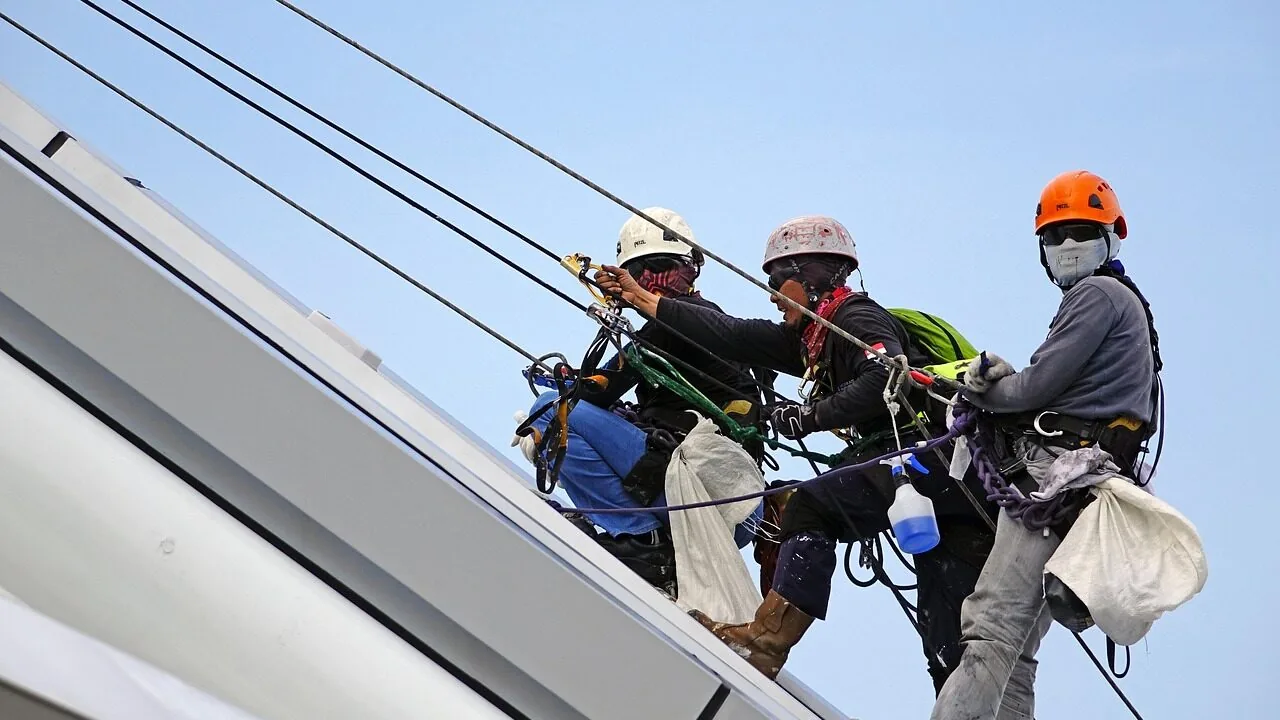
Falls remain the leading cause of workplace fatalities in construction, accounting for roughly one-third of all on-the-job deaths according to OSHA data.
Whether you work on rooftops, scaffolding, utility poles, or elevated platforms, a full body fall protection harness is not optional equipment. It is the last line of defense between a slip and a catastrophic injury.
Choosing the wrong harness, one that fits poorly, lacks proper certification, or fails under load, can cost far more than the few minutes saved skipping fit checks.
This guide covers the fall protection harnesses worth buying in 2026, with picks spanning professional construction, budget-conscious DIYers, and premium all-day-wear applications.
ProductFind assembled this list through comprehensive research: analyzing published specifications, synthesizing expert review consensus across the industry, and weighing verified buyer feedback from confirmed purchasers. Every model here meets OSHA and ANSI Z359 compliance requirements at minimum.
If you need reliable safety goggles or face shields to round out your personal protective equipment kit, we have dedicated guides for those as well. Here are our top picks.
| Award | Product | PF Score About PF ScoreThe PF Score is our own rating from 0 to 10, based on performance, design and build, ease of use, and value. It reflects independent research and is never influenced by manufacturers, retailers, or affiliate commissions. Learn more › | Price | |
|---|---|---|---|---|
| Best Overall |
 3M Protecta Medium-Large Full Body Harness
|
8.7/10 | Buy | |
| Editor's Pick |
 Frontline Fall Protection 250CTB Elite Harness M/L
|
8.4/10 | Buy | |
| Best Value |
 Frontline 110CTB Lite Full Body Harness, Aluminum
|
8.3/10 | Buy | |
| Top Rated |
 Malta Dynamics Razorback Elite MAXX Full Body Safety Harness
|
8.2/10 | Buy | |
 Malta Dynamics Warthog Comfort MAXX Full Body Harness
|
8.1/10 | Buy | ||
 Guardian 21035 Cyclone Construction Harness XL
|
7.2/10 | Buy | ||
 TT TRSMIMA Full Body Safety Harness with 6ft Lanyard
|
5.3/10 | Buy | ||
 TT TRSMIMA Full Body Safety Harness with Lanyard
|
5.1/10 | Buy |
3M Protecta Medium-Large Full Body Harness
Industrial-grade fall protection harness designed for positioning and restraint work. Features Easy-Link web adapter, auto-resetting lanyard keeper, and impact indicator to meet OSHA compliance requirements.
Pros
- Purpose-built for industrial positioning and restraint applications
- Integrated impact indicator alerts user to lanyard impact events
- Auto-resetting lanyard keeper reduces tangling hazards
- US manufactured product meeting occupational safety standards
Cons
- No customer reviews available to assess real-world durability and comfort
- Restricted to industrial and occupational use only, not suitable for general consumers
- Limited size options (Medium-Large only) may not fit all body types
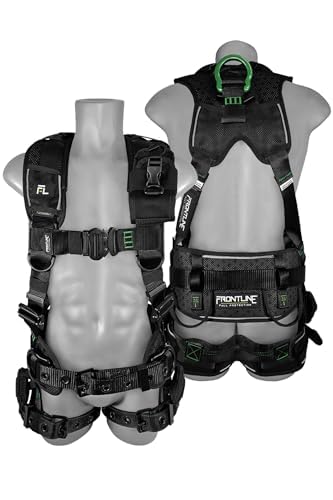
Frontline Fall Protection 250CTB Elite Harness M/L
A full-body construction harness designed for all-day comfort with perforated mesh pads, aluminum hardware, and reflective trim for visibility. Meets ANSI/OSHA standards and accommodates users up to 310 lbs, making it suitable for construction and high-work environments.
Pros
- Mesh-covered perforated pads provide superior airflow and all-day comfort during extended wear
- Aluminum hardware and quick-connect buckles enable fast donning and adjustment without compromising fit
- Vertical back d-ring with dual SRL attachment options (web loop plus d-ring) adds operational flexibility
- High visibility reflective trim and safety-green stitching support workplace safety and inspection compliance
- Exceeds ANSI/OSHA requirements and backed by third-party lab certification
Cons
- No verified buyer reviews available to assess real-world durability and user experience
- Removable components (leg pads, cell phone holder) may be prone to loss or damage during job transitions
- Size range limited to M/L, which may not accommodate all body types or fit requirements
Frontline 110CTB Lite Full Body Harness, Aluminum
An all-aluminum fall protection harness designed for workers who need lightweight gear without sacrificing safety compliance. Features moisture-wicking pads, trauma straps, and OSHA/ANSI certification, making it suitable for construction and industrial settings where comfort and durability matter.
Pros
- All-aluminum construction keeps total weight minimal, reducing user fatigue during extended wear
- Integrated suspension trauma straps prevent complications from prolonged suspension after a fall
- Moisture-wicking shoulder, back, and waist pads improve breathability and comfort in warm conditions
- Quick-connect buckles and tongue closures enable fast adjustments without fumbling
- Dual lanyard keepers and tool tethering loops minimize tripping hazards while organizing gear
Cons
- No verified buyer reviews available to assess real-world durability or fit consistency across body types
- Size range is limited to Medium-Large, which may not accommodate very small or large frames
- Premium pricing typical for aluminum fall protection gear may be a barrier for budget-conscious operations
Malta Dynamics Razorback Elite MAXX Full Body Safety Harness
A full body fall protection harness built for construction and tower climbing work, featuring multiple attachment points, rescue handles, and padded comfort zones. Meets OSHA and ANSI standards and supports users from 130-310lbs, making it suitable for varied worksites.
Pros
- Meets multiple safety compliance standards for construction and industrial use
- Integrated rescue handles reduce response time in fall arrest situations
- Padded construction balances safety with all-day comfort and breathability
- Durable aluminum hardware and nylon/polyester materials for longevity
- Multiple D-ring placement allows flexibility in anchor point selection
Cons
- No verified user reviews available to assess real-world durability and fit consistency
- Size range (Small-Medium) may be limiting for very small or larger body types
- Lumbar support belt and comfort features cannot be evaluated without direct wear experience
Malta Dynamics Warthog Comfort MAXX Full Body Harness
A full body fall protection harness designed for construction and roofing work, featuring removable lumbar support, side D-rings, and breathable padding. Meets OSHA and ANSI standards for workers between 130-310 lbs, with capacity rated up to 420 lbs under OSHA guidelines.
Pros
- Exceeds ANSI capacity limits based on laboratory certification
- Removable components allow workers to customize fit and comfort level
- Impact indicator provides clear evidence of harness involvement in falls
- Multiple adjustment points including quick-connect buckles for efficient fitting
- Designed for both men and women across the L-XL size range
Cons
- No verified customer reviews available to assess real-world durability or comfort feedback
- Weight of 6.1 pounds may contribute to fatigue during extended overhead work
- Removable belt and D-rings add complexity to setup compared to fixed-component harnesses
Guardian 21035 Cyclone Construction Harness XL
A mid-range fall protection harness designed for construction workers needing all-day comfort and compliance. The lightweight design with breathable shoulder padding and supportive waist pad makes it practical for extended wear on job sites.
Pros
- Breathable shoulder padding reduces fatigue during extended wear
- Spring-loaded torso adjustment speeds up fitting without tools
- Supportive waist pad option enhances comfort and weight distribution
- Dual lanyard keepers prevent tripping hazards from unused straps
- Meets OSHA and ANSI safety standards for job site compliance
Cons
- No verified buyer reviews available to confirm real-world durability or fit accuracy
- Waist pad support is optional rather than integrated, requiring separate purchase
- Limited color/size options shown, may have availability constraints for different body types
TT TRSMIMA Full Body Safety Harness with 6ft Lanyard
ANSI-compliant full body harness designed for construction and roofing work, featuring steel D-rings, tongue buckle adjustment, and an integrated 6ft shock-absorbing lanyard. Fits users 130-310 lbs with waist sizes 30.7-55.3 inches.
Pros
- Integrated lanyard combines fall arrest and shock absorption in one system, reducing bulk and tripping hazards
- Steel D-ring construction with dual hip rings provides versatile positioning and equipment attachment
- Wide sizing range accommodates 130-310 lb users with adjustable waist and leg straps
- Heavy-duty snap hooks rated for 5000 lb tensile strength ensure reliable performance
Cons
- No verified buyer reviews available to assess real-world durability and comfort during extended wear
- 6ft lanyard may be limiting for certain high-rise applications requiring longer reach
- Tongue buckle adjustment requires proper fitting knowledge to ensure secure positioning
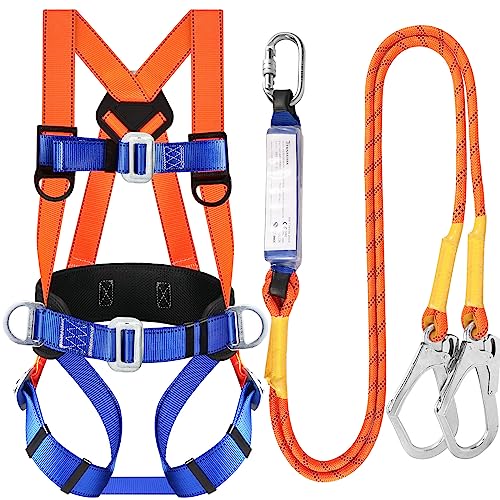
TT TRSMIMA Full Body Safety Harness with Lanyard
Construction-focused fall protection kit meeting ANSI/ASSE Z359.11-2014 standards, built with ergonomic waist padding and adjustable 4-point fit for workers 130-310 lbs. Includes 2m shock-absorbing lanyard and side D-rings for work positioning.
Pros
- Premium breathable mesh padding with wide support belt for extended comfort during long shifts
- Multiple attachment points and D-rings enable flexible work positioning and tool storage
- Meets rigorous international safety standards and OSHA compliance requirements
- Comes ready-to-use with lanyard included, compatible with additional lanyard types
Cons
- No verified buyer reviews available, limiting real-world performance feedback
- Sizing limited to medium-large body types; not suitable for smaller frames or rock climbing/hiking applications
- Zero product ratings on record despite claimed 4.8 rating
Fall Protection Harnesses Buying Guide
Picking the right fall protection harness requires more than grabbing the cheapest option that says “OSHA compliant” on the label.
Fit, hardware quality, D-ring placement, padding design, and certification specifics all affect whether a harness actually protects you the way it should.
The sections below walk through each critical factor so you can match a harness to your actual work environment and body type.
Certification Standards: OSHA, ANSI, and What They Actually Mean
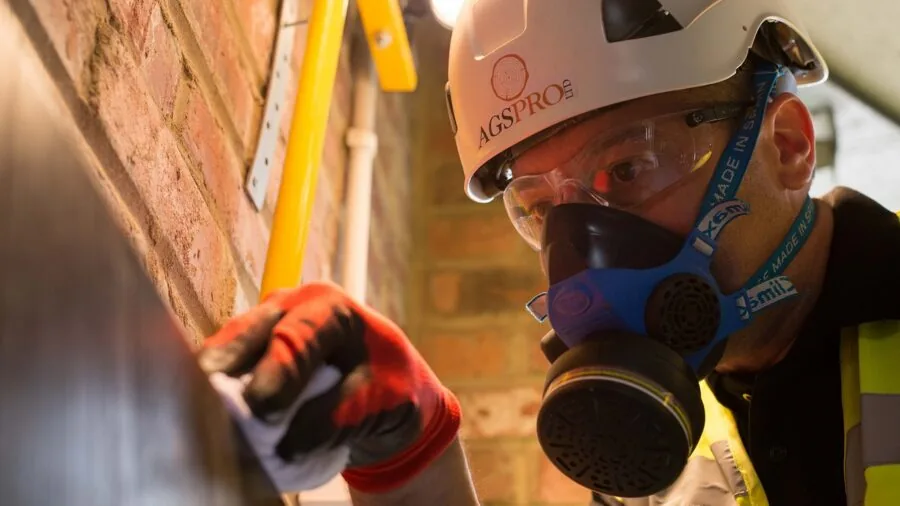
Every harness sold for occupational use in the United States must comply with OSHA 1926.502 (construction) or 1910.140 (general industry), and ideally meets ANSI Z359.11 for full body harnesses.
ANSI Z359 goes further than the basic OSHA baseline, specifying things like minimum breaking strength of 5,000 lbs for hardware, gate strength on snap hooks, and performance under dynamic load.
When a brand claims only “OSHA compliant” without referencing ANSI, that is a flag worth noting.
Third-party certification adds another layer of confidence. Brands like 3M, FRONTLINE FALL PROTECTION, Guardian Fall Protection, and Malta Dynamics submit their products to accredited evaluation bodies for independent verification.
Look for ISO/IEC-accredited lab certification on the product label or spec sheet, not just a self-declared compliance statement. CSA certification matters if you work in Canada or on cross-border job sites.
Inspect labels carefully. Every compliant harness must display the manufacturer name, model number, date of manufacture, and applicable standards. A harness with a worn or missing label should be removed from service immediately, regardless of apparent physical condition.
Pair your harness with quality safety glasses and other certified PPE to build a complete head-to-toe protection system on the job site.
Fit and Adjustability
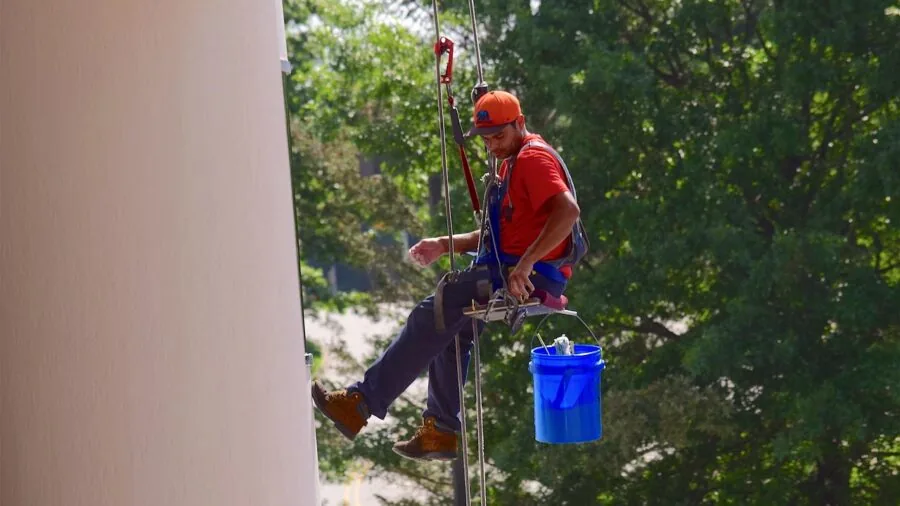
A harness that does not fit correctly is nearly as dangerous as no harness at all. During a fall arrest event, arrest forces can reach 1,800 lbs or more on the body.
Those forces must distribute across the sternum, shoulders, hips, and thighs, not concentrate on any single strap.
A properly fitted harness has the back D-ring positioned between the shoulder blades, leg straps snug but allowing a flat-hand clearance, and chest straps sitting mid-chest.
Most professional harnesses offer 5-point adjustability: shoulders, chest, waist, and both leg loops.
Vertical torso adjusters, like those on the 3M Protecta line, let workers customize shoulder strap length for their exact torso height rather than relying on a generic S/M/L sizing that rarely accounts for long or short torsos.
Quick-connect or tongue-buckle leg straps speed up donning and doffing, which matters when you are putting on and removing a harness multiple times across a shift.
When buying online, always cross-reference the manufacturer sizing chart against your actual chest, waist, and weight measurements. Weight capacity ratings on harnesses typically top out at 310 lbs, though some heavy-duty models extend beyond that. Exceeding the rated capacity is a non-negotiable safety violation.
D-Ring Configuration and Connection Points
The dorsal (back) D-ring is the primary fall arrest connection point on any full body harness. It must be positioned between the shoulder blades so that, in a fall, the body hangs upright and arrest forces distribute correctly.
Some applications, particularly positioning work on poles or towers, require sternal (front chest) D-rings that allow a worker to face the anchor while maintaining hands-free positioning.
Side D-rings, present on construction-oriented harnesses like the Guardian Cyclone and both Malta Dynamics models in this guide, allow workers to attach positioning lanyards that limit movement on a structure rather than arrest a free fall.
This is common for ironworkers, scaffold erectors, and window washers who need lateral restriction in addition to fall arrest capability. Side D-rings are not rated for fall arrest on their own; they are positioning-only attachment points.
Rescue-rated harnesses add built-in rescue handles, typically sewn webbing loops at the shoulders, that allow a second person to extract an incapacitated worker from a confined space or elevated position.
The Malta Dynamics Razorback Elite MAXX includes these handles, making it appropriate for sites with confined space rescue protocols.
Padding, Comfort, and All-Day Wearability

Comfort is not a luxury feature in fall protection. Workers who find a harness uncomfortable tend to remove it during breaks and fail to re-don it before resuming elevated work. Lumbar and hip padding reduces fatigue during extended positioning work.
Shoulder and back padding absorbs pressure from tool-loaded lanyards that pull downward on the harness. Perforated or moisture-wicking pad materials matter in warm climates or summer months when heat stress compounds physical fatigue.
The FRONTLINE FALL PROTECTION Elite 250CTB uses perforated padding with moisture-wicking construction, while the Malta Dynamics Warthog Comfort MAXX features a removable lumbar belt and padding system workers can swap out for cleaning.
Removable padding also extends the life of a harness by allowing the padding components to be replaced without retiring the full assembly.
Suspension trauma straps (also called post-fall suspension straps or stirrups) deserve special mention.
OSHA requires that every fall protection program account for suspension trauma, a potentially fatal condition that develops when a worker hangs motionless in a harness after a fall arrest.
Straps that deploy from the harness leg loops allow the suspended worker to stand in the straps and maintain blood circulation while awaiting rescue.
The 3M Protecta, FRONTLINE 110CTB, FRONTLINE 250CTB, and Malta Dynamics Razorback Elite all include these straps as standard equipment.
Hardware Quality and Buckle Systems
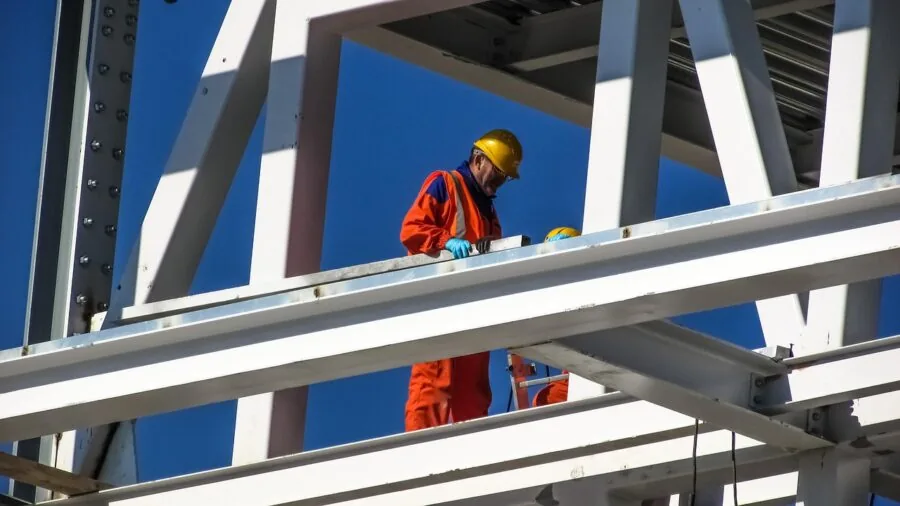
Buckles and snap hooks take constant abuse on a job site: dropped on concrete, exposed to rain, UV, and corrosive materials. Aluminum hardware offers a significant weight advantage over steel while maintaining the required 5,000 lb breaking strength for ANSI-rated components.
The FRONTLINE 110CTB Combat Lite and 250CTB Elite both use all-aluminum hardware throughout, which makes a measurable difference on long shifts where every gram of carried weight adds up.
Buckle type affects both ease of use and retention under load. Duo-Lok and auto-locking buckle systems connect with one-handed operation and resist accidental release far better than standard friction buckles.
Quick-connect chest and leg buckles reduce donning time and eliminate the fumbling that causes workers to skip adjustments when re-donning after a break. Tongue buckles, used on the budget TRSMIMA models, are functional but require more deliberate adjustment effort.
Always inspect all metal hardware for cracking, deformation, corrosion, or gate malfunction before every use. A snap hook with a sticky or misaligned gate must be removed from service. No amount of web integrity compensates for a failed connector.
Inspection, Maintenance, and Retirement Criteria
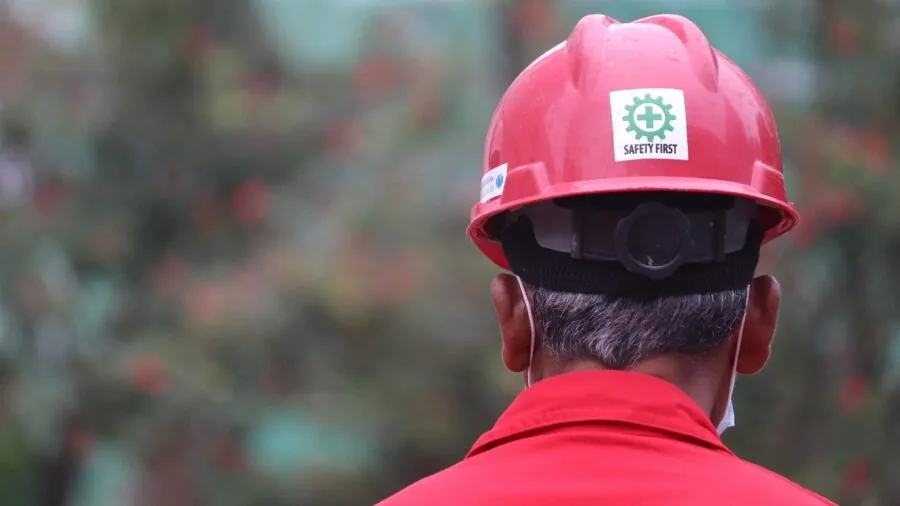
ANSI Z359 and OSHA both require that harnesses be inspected before each use by the worker and at least annually by a competent person.
Pre-use inspection covers webbing (cuts, abrasion, chemical damage, heat damage, UV degradation), stitching (broken threads, pulled seams), hardware (distortion, corrosion, gate function), labels (legibility), and impact indicators (deployment status).
An impact indicator that has deployed, typically a red or orange tab visible at the dorsal D-ring, means the harness has arrested a fall and must be immediately removed from service.
Retirement is mandatory after any fall arrest event, regardless of apparent condition. Internal webbing damage from dynamic loading is invisible to external inspection.
Most manufacturers also specify a maximum service life of five to ten years from the date of manufacture, regardless of condition, though actual service life depends heavily on use frequency and storage conditions.
Store harnesses hanging or laid flat in a cool, dry area away from direct sunlight, chemicals, and heat sources.
Keeping your entire PPE inventory organized and current on inspection cycles is part of a complete safety program. Just as you track harness retirement dates, tracking replacement schedules for protective eyewear and other consumable safety gear reduces gaps in protection across your team.
Why You Should Trust Us
ProductFind is an independent review publication. We do not sell products, manage warranties, or represent any manufacturer. Every recommendation on this page reflects our editorial judgment, not commercial relationships.
Each harness in this guide was evaluated using our structured research methodology.
We analyze published manufacturer specifications, synthesize expert review consensus from established industry and occupational safety sources, review verified buyer feedback from confirmed purchasers, and cross-reference publicly available compliance and certification data.
We do not conduct our own product trials; our evaluations are grounded in research, published data, expert review consensus, and verified buyer feedback.
Every product receives a PF Score on a 0 to 10 scale, assessed against a consistent set of criteria applied identically across all models in a category.
For fall protection harnesses, those criteria include certification rigor, hardware quality, adjustability range, comfort design, D-ring configuration, and overall value relative to the competition. Products are ranked by PF Score, with the highest-scoring option appearing first in the list above.
Transparency on affiliate relationships: ProductFind may earn a commission when you purchase through links on this page. That affiliate relationship has no bearing on which products are included, how they are ranked, or what scores they receive.
Our editorial positions are determined independently. We include affiliate disclosures because we believe readers deserve to know how a publication is funded, not because it changes what we recommend.
Final Thoughts
The fall protection harness market spans a wide range from budget kits aimed at occasional rooftop work to premium all-aluminum professional systems built for all-day use across demanding job sites.
After evaluating every model in this guide against consistent criteria, here is how our top picks break down by application and need.
- Best Overall: 3M Protecta Medium-Large Comfort Construction Style Full Body Positioning Harness earns the top spot with the highest PF Score in this group, combining hybrid padding, an auto-resetting lanyard keeper, Easy-Link web adapter, and impact indicator into a cohesive system designed for demanding construction environments.
- Best for Heavy Jobsite Use: FRONTLINE FALL PROTECTION 250CTB Elite Construction Harness stands out for its perforated padding, full aluminum hardware, reflective trim for low-light visibility, and suspension trauma straps, a strong combination for workers spending full shifts at height.
- Best Lightweight Option: Frontline 110CTB Combat Lite Full Body Harness delivers all-aluminum hardware in a trimmed-down package that reduces fatigue without sacrificing OSHA and ANSI compliance, making it the right call for workers who prioritize carry weight above all else.
- Best for Rescue-Ready Sites: Malta Dynamics Razorback Elite MAXX adds built-in rescue handles and a sewn-in lumbar support belt to a fully compliant fall arrest system, earning its place on any site with confined space or elevated rescue protocols.
- Best Value for Professionals: Malta Dynamics Warthog Comfort MAXX offers a removable lumbar belt, side D-rings, and impact indicator at a mid-range price that makes professional-grade comfort accessible without the premium price tag of top-tier models.
Workers who need only occasional elevated work on home projects may find the budget TRSMIMA options serviceable for low-frequency use, but the professional picks above represent meaningfully better hardware, fit systems, and long-term durability for anyone putting in regular hours at height.
Investing in a well-fitted, properly certified harness from a reputable brand is one of the clearest returns on safety spending available on any job site.
Frequently Asked Questions
What Is the Difference Between a Fall Arrest Harness and a Positioning Harness?
A fall arrest harness is designed to stop a worker who has entered a free fall, distributing the arrest forces across the body to prevent injury.
A positioning harness (or system) keeps a worker in a supported, hands-free working position at height, typically leaning back against a structure with both hands free to work.
Many harnesses in this guide, including the Guardian Cyclone and Malta Dynamics models, support both functions through separate D-ring configurations: the dorsal D-ring for fall arrest and side D-rings for positioning.
Always verify which D-rings are rated for which application before connecting your lanyard.
How Often Does a Fall Protection Harness Need to Be Replaced?
Mandatory retirement is required immediately after any fall arrest event, regardless of visual condition. Beyond event-based retirement, most manufacturers specify a maximum service life between five and ten years from the manufacture date printed on the label.
Harnesses used in harsh conditions (chemical exposure, heavy UV, high abrasion environments) may degrade faster and require earlier retirement.
Always follow the specific manufacturer guidance for the model you own, and remove any harness from service the moment an impact indicator deploys or a formal inspection reveals webbing damage, broken stitching, or deformed hardware.
What Are Suspension Trauma Straps and Are They Required?
Suspension trauma straps, also called post-fall suspension stirrups, are deployable loops attached to the leg straps of a harness that allow a worker suspended after a fall arrest to stand upright and keep blood circulating.
Orthostatic intolerance (suspension trauma) can become life-threatening within minutes of hanging motionless in a harness. OSHA does not mandate suspension trauma straps by name, but it does require that every fall protection program address rescue after a fall arrest.
Many safety programs treat suspension trauma straps as a practical requirement. The 3M Protecta, both FRONTLINE models, and the Malta Dynamics Razorback Elite in this guide include them as standard features.
Can I Use a Fall Protection Harness for Both Construction and Rescue Applications?
Standard construction harnesses are designed and rated for fall arrest, not active rescue. Rescue-rated harnesses meet additional standards for load-bearing capacity during extraction operations and typically include reinforced shoulder handles rated for vertical lifting of a full body load.
The Malta Dynamics Razorback Elite MAXX in this guide includes built-in rescue handles appropriate for emergency extraction by a second worker.
If your site operations include confined space entry or rescue response duties, verify that your harness is explicitly rated for rescue functions, not just fall arrest, before using it in that capacity.
Do Fall Protection Harnesses Work in Cold Weather or While Wearing Bulky Clothing?
Yes, but fit adjustments are critical. Workers wearing heavy insulated workwear or layered cold-weather gear will typically need to size up or use a harness with extended adjustment range to achieve a proper fit over the added bulk.
The key is that the harness must still fit snugly against the outermost layer of clothing, with no slack that would allow excessive free fall distance before the webbing loads.
Re-fit and re-inspect your harness every time you change what you are wearing underneath it. Some workers keep a second harness sized for winter layering specifically to avoid this problem.
A quality beanie and appropriate cold-weather gear can keep you warm without forcing uncomfortable compromises in harness fit if you choose your clothing layers carefully before donning.
What Is the Weight Limit on Most Fall Protection Harnesses?
The standard weight capacity for most ANSI-rated full body harnesses is 310 lbs, which includes the worker’s body weight plus any tools, equipment, or PPE being worn.
Some manufacturers offer heavy-duty or high-capacity harnesses rated for higher limits, typically up to 400 lbs or more. Exceeding the rated weight capacity is a serious safety violation that can result in hardware failure during a fall event.
Always check the rated capacity on the label before purchasing and factor in the weight of all gear you carry at height, not just your body weight alone.
About the author
Gilbert is a reviewer and writer for ProductFind who specializes in Safety Equipment. Gilbert evaluates products through independent research: specifications, expert review consensus, and verified buyer feedback, and rates each one on the PF Score. Gilbert focuses on helping readers pick the right safety equipment for their needs and budget.