The 12 Best Fiber Supplements
Getting enough fiber daily is harder than it looks. We researched psyllium, prebiotic powders, and gummies to find the options that actually deliver for digestive health, regularity, and gut support.
 By Patsy Dunn
Updated July 23, 2026
By Patsy Dunn
Updated July 23, 2026

Most adults fall well short of the recommended daily fiber intake, yet getting enough of this nutrient makes a meaningful difference for digestive regularity, blood sugar balance, cholesterol management, and even long-term gut microbiome health.
Whole foods are always the first line of defense, but for people who genuinely struggle to hit their targets through diet alone, a well-chosen fiber supplement can bridge the gap without complicated routines.
Brands like Metamucil, Benefiber, NOW Foods, Physician’s CHOICE, and Sunergetic each take different approaches, from classic psyllium husk capsules to modern prebiotic powder blends and chewable gummies, so there is a real decision to make before adding one to your cart.
At ProductFind, we researched and compared the leading fiber supplements available today by synthesizing published specifications, expert review consensus from registered dietitians and nutritionists, and verified buyer feedback from confirmed purchasers.
Just as we do with multivitamins and other daily supplements, we assessed each option against consistent criteria and scored it using our 0 to 10 PF Score system.
The picks below represent the most defensible choices across form factor, fiber type, ingredient transparency, and value for 2026.

Metamucil Fiber Gummies with Probiotics, 90 Count
Sugar-free fiber gummies combining 5g of prebiotic plant-based fiber with 1 billion CFUs of probiotics per serving to support digestive health and occasional bloating relief. A convenient chewable alternative from the trusted Metamucil brand for adults seeking daily fiber intake.
Pros
- Combines fiber with probiotics in one convenient gummy format
- No sugar added appeals to those monitoring sugar intake
- Comes from an established, trusted fiber supplement brand
- Delivers substantial 5g fiber per serving toward daily fiber goals
Cons
- No customer reviews available to evaluate real-world experience and palatability
- Gummy format may be less cost-effective per serving compared to traditional fiber powders
- Prebiotic blend specifics and probiotic strain details not disclosed in product data

Benefiber Prebiotic Fiber Gummies 81-Count
Plant-based prebiotic fiber gummies formulated to support digestive health and fill fiber gaps, particularly suited for those on GLP-1 medications. Made with inulin and natural fruit flavors in an easy-to-take gummy format.
Pros
- Plant-based prebiotic ingredient supports digestive wellness
- Eligibility for HSA, FSA, and Medicare Advantage OTC coverage reduces out-of-pocket costs
- Natural flavors and colors appeal to those seeking cleaner ingredient lists
- Gummy format makes fiber supplementation palatable and easy to consume
Cons
- No verified buyer reviews available to assess real-world effectiveness and taste satisfaction
- 81-count bottle size may not clearly indicate daily serving recommendations or month supply
- Inulin can cause digestive bloating or gas in some individuals when first introduced

Benefiber Daily Prebiotic Fiber Powder, 8.7 oz
An unflavored prebiotic fiber supplement made from wheat dextrin that dissolves clear into beverages and food without grit or taste. Designed to support digestive health and GLP-1 protocols by nourishing beneficial gut bacteria.
Pros
- Mixes cleanly into non-carbonated drinks and food without affecting taste or texture
- Formulated to align with GLP-1 dietary approaches for satiety support
- Supports digestive health by feeding beneficial gut bacteria
- Eligible for health savings and flexible spending accounts
Cons
- No customer reviews available to verify real-world performance or digestive effects
- Unflavored format limits mixing options to non-carbonated beverages only
- Single pack size with no bulk options listed
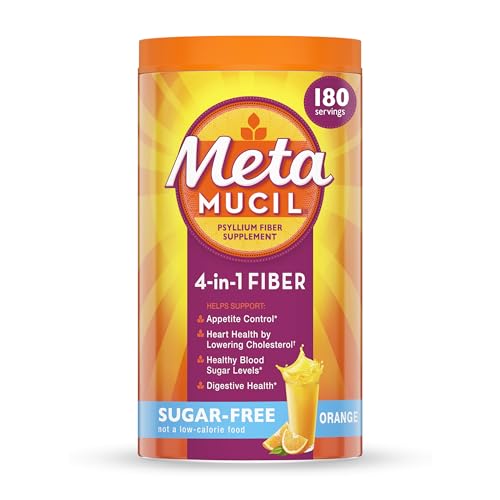
Metamucil 4-in-1 Psyllium Husk Fiber Powder, 180 Teaspoons
A sugar-free psyllium fiber supplement claiming four health benefits in one daily powder. The brand carries over 90 years of doctor recommendations, though the product lacks verified customer reviews to validate its digestive and appetite-control claims.
Pros
- Single product addresses multiple health goals rather than requiring separate supplements
- Doctor-recommended brand with 90+ year track record builds credibility
- Sugar-free formula suitable for various dietary needs
- Orange flavor makes daily powder consumption more palatable than unflavored alternatives
Cons
- Zero verified customer reviews on record, making real-world effectiveness difficult to assess
- Psyllium fiber supplements commonly cause bloating and digestive adjustment in new users, not mentioned in marketing
- Requires daily mixing and consumption as powder, less convenient than capsule alternatives

Metamucil Psyllium Husk Fiber Capsules, 300 Count
A two-ingredient psyllium fiber supplement designed to support digestive regularity and heart health. Best suited for those seeking a convenient capsule format with doctor-recommended formulation trusted for over 90 years.
Pros
- Minimal ingredient list with just psyllium husk and one other component
- Addresses multiple health areas: regularity, blood sugar, and cholesterol management
- Capsule format eliminates the need for mixing or powder preparation
- Well-established brand with decades of consumer trust
Cons
- No verified customer reviews available to assess real-world effectiveness and tolerability
- Capsule format requires swallowing multiple pills compared to powder alternatives
- Higher cost per serving compared to bulk powder versions of psyllium fiber

Physician's Choice Easy Mix Fiber Powder, 7.1oz
A unflavored, sugar-free prebiotic fiber powder designed to support GLP-1 regimens and general digestive health. Dissolves smoothly without grit or clumping, making it practical for daily use in beverages.
Pros
- Smooth texture that won't turn into sludge like psyllium husk alternatives
- Easy mixing in any beverage with minimal effort
- Supports probiotic effectiveness and gut health
- Third-party tested for transparency on safety and potency
- No artificial ingredients or added sugar
Cons
- No flavoring means taste neutrality may require mixing into flavored beverages
- No verified buyer reviews available yet to assess real-world satisfaction
- Relatively small 7.1oz package size may require frequent reordering

NOW Foods Psyllium Husk 500mg Capsules, 200 Count
NOW Foods offers psyllium fiber in convenient veg capsule form, delivering 500mg per dose to support digestive regularity. Certified non-GMO, gluten-free, and keto-friendly, it appeals to those seeking a simple way to increase daily fiber intake without dietary restrictions.
Pros
- Multiple certifications including Non-GMO, Kosher, Vegan, and Keto Friendly reduce compatibility concerns
- Capsule format eliminates the need to mix powder, offering convenience for on-the-go use
- GMP-certified manufacturing with documented quality testing protocols
- Addresses documented fiber gap in typical American diet with straightforward dosing
Cons
- No verified customer reviews available to assess real-world effectiveness or tolerability
- Capsule format may require multiple pills per dose depending on individual fiber needs
- Limited information on recommended daily intake or stacking with other fiber sources
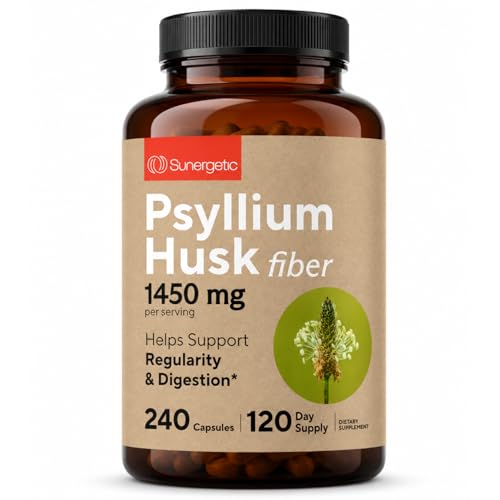
Sunergetic Psyllium Husk 1450mg, 240 Capsules
Capsule-based psyllium fiber supplement designed for digestive regularity and intestinal health without the need to mix powder. Manufactured in a GMP-certified facility with a high rating, though it carries the standard limitations of fiber supplements requiring adequate water intake.
Pros
- Convenient capsule format eliminates mixing hassle compared to psyllium powder products
- Manufactured in GMP-certified facility with FDA registration for quality assurance
- Contains meaningful 1450mg dose of psyllium husk per capsule
- Supports digestive health and regularity when used with adequate water
Cons
- No verified customer reviews available to assess real-world effectiveness or user experience
- Requires consistent water intake to function properly, which some users find inconvenient
- Capsule format may be less cost-effective per serving compared to powder alternatives

Micro Ingredients Organic Triple Fiber Powder, 2lb
A three-in-one fiber blend combining chicory root inulin, acacia fiber, and psyllium husks in unflavored powder form. Designed for digestive support and gut health with no added flavors, soy, dairy, or gluten.
Pros
- Combines three complementary fiber types in one product for comprehensive digestive support
- Certified organic and undergoes third-party testing to verify safety and purity
- Large 2-pound container offers good value for regular fiber supplementation
- Unflavored design allows easy incorporation into any beverage without taste interference
- Clear allergen transparency with no soy, dairy, gluten, or tree nuts
Cons
- Requires immediate consumption after mixing to prevent clumping, adding inconvenience for on-the-go use
- Product has no verified customer reviews despite 4.8 rating, limiting real-world usage insights
- Unflavored format may be unpalatable for users who prefer flavored fiber supplements

NOW Foods Psyllium Husk Caps 500mg, 500 Veg Capsules
Convenient capsule form of soluble fiber for digestive regularity, backed by NOW Foods' GMP-certified manufacturing and multiple third-party certifications. Best for those seeking an easy way to boost daily fiber intake without powder prep.
Pros
- Multiple certifications (Non-GMO, Kosher, Vegan) reduce allergen concerns
- Capsule format eliminates mixing and water needed with powder forms
- GMP A-rated manufacturing ensures consistent quality and testing standards
- Addresses gap in typical American fiber intake with convenient daily use
- Long shelf life with 500 capsules per container
Cons
- No verified customer reviews available to assess real-world effectiveness
- Capsules require adequate water intake to work properly, as with all psyllium
- Higher per-serving cost compared to bulk powder alternatives
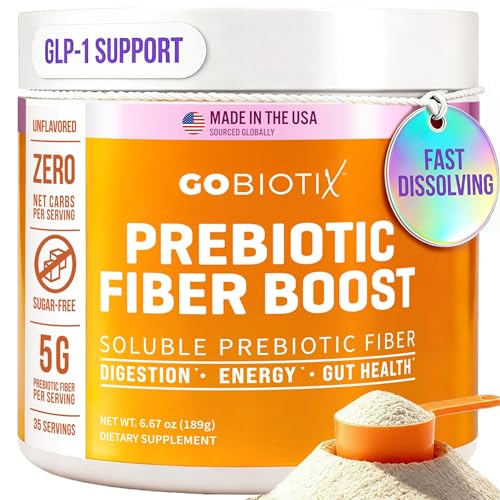
GOBIOTIX Prebiotic Fiber Powder, 35 Servings
A psyllium husk-free fiber supplement designed for smooth mixing into beverages and compatible with keto and vegan diets. Made with organic, plant-based ingredients in a GMP-certified facility with no added sugars or artificial additives.
Pros
- Smooth, clump-free mixing unlike traditional psyllium husk powders
- Clean ingredient list with organic and sprouted components
- Versatile unflavored formula works across multiple dietary approaches
- Manufactured to quality standards in certified US facility
Cons
- No verified customer reviews available to assess real-world performance
- Unflavored may require mixing into flavored beverages to mask taste
- Limited information on specific fiber type or prebiotic strains used

Pure for Men Stay Ready Fiber 120 Capsules
A plant-based fiber supplement featuring psyllium husk, chia seeds, flaxseeds, and aloe vera designed to support digestive regularity and cleanliness. The formula claims 88% more fiber per capsule than competitors and comes in vegan capsule form requiring consistent hydration for best results.
Pros
- Clean ingredient list with recognized digestive support components like psyllium husk and aloe vera
- Vegan capsule format appeals to plant-based diet followers
- High fiber concentration per capsule claims efficiency advantage
- Includes omega-3 and antioxidant sources beyond basic fiber
Cons
- Requires substantial water intake (16oz minimum per dose) to work properly, which may be inconvenient for some users
- No verified customer reviews available to confirm claimed benefits and fiber superiority claims
- Recommended dosing of 6 capsules daily means supply lasts only 20 days, potentially increasing ongoing costs
Fiber Supplements Buying Guide
Choosing among the many fiber supplements on the market requires understanding more than just the gram count on the label.
The type of fiber, how it interacts with your digestive system, the delivery format, and any added ingredients all shape whether a supplement actually works for your specific goals.
The sections below break down what genuinely matters so you can match a product to your needs rather than just picking whatever ranks highest on a search result.
Soluble vs. Insoluble Fiber: Which Type Do You Actually Need?

Fiber is not a single ingredient. Soluble fiber dissolves in water and forms a gel that slows digestion, which helps moderate blood sugar spikes and supports healthy cholesterol levels.
Psyllium husk, the active ingredient in Metamucil and several NOW Foods products, is predominantly soluble and has the strongest clinical evidence base of any supplemental fiber.
Wheat dextrin (the base of Benefiber) and inulin-type prebiotics are also predominantly soluble and dissolve completely in liquid without thickening it, making them easier to mix into coffee or water undetected.
Insoluble fiber speeds transit time through the colon and adds bulk to stool, which is what most people think of when they imagine a fiber supplement “working.” Many powders blend both types.
Micro Ingredients Organic Triple Fiber Powder, for example, layers multiple fiber sources to cover both roles. If your primary concern is cholesterol or blood sugar, lean toward soluble-dominant products.
If you are dealing with sluggish digestion and infrequent bowel movements, a blend or an insoluble-rich option may be more practical.
When in doubt, a registered dietitian can help you decide, just as they might weigh in on vitamin D supplements for someone with absorption concerns.
Prebiotic Function and Gut Microbiome Support

A growing body of research distinguishes between fiber supplements that simply add bulk and those that actively feed beneficial gut bacteria.
Prebiotic fibers, particularly those based on wheat dextrin (Benefiber), chicory root inulin, or partially hydrolyzed guar gum, ferment in the colon and selectively stimulate the growth of health-promoting bacteria such as Bifidobacterium and Lactobacillus species.
The GLP-1 labeling that now appears on Benefiber and Metamucil products references emerging research suggesting that gut fermentation of certain fibers may support the body’s own GLP-1 hormone production, which plays a role in satiety and blood sugar regulation, though the FDA has not evaluated these claims.
Products like GOBIOTIX Fiber Supplement Powder and Physician’s CHOICE Easy Mix Fiber lean into the prebiotic angle with blends that prioritize fermentability and minimal processing.
If gut microbiome diversity is your primary motivation rather than raw fiber volume, these formulations are worth a closer look.
That said, the strongest third-party evidence still sits behind psyllium and wheat dextrin for most gut health outcomes, so newer blends should be evaluated with appropriate skepticism about marketing language.
Form Factor: Powder, Capsule, or Gummy?
The delivery format has a bigger impact on adherence than most buyers anticipate.
Powders like Metamucil 4-in-1 or Benefiber allow you to dial in your exact serving size and can be stirred into water, juice, or smoothies, but they require preparation and some powders (particularly psyllium-based) thicken quickly and must be consumed immediately after mixing.
Capsules from NOW Foods or Sunergetic eliminate the mixing step and are convenient for travel, though you need to take multiple capsules to reach a meaningful fiber dose, and each capsule contains far less fiber than a full powder serving.
Gummies are the fastest-growing format, with Benefiber Prebiotic Fiber Gummies and Metamucil Fiber Gummies for Adults both scoring well in verified buyer feedback for palatability and consistency of daily use.
The tradeoff is that gummies typically deliver lower fiber per serving than powders and may include added sweeteners or flavoring agents that are not ideal for everyone.
If you have struggled to maintain a supplement habit with pills or powders in the past, the gummy format’s appeal to consistency is a legitimate practical argument, not just marketing.
Ingredient Transparency and Third-Party Certification

Fiber supplements are dietary supplements, which means they are not subject to the same pre-market approval process as pharmaceuticals.
Third-party certifications from organizations like NSF International, USP, or the Non-GMO Project offer meaningful reassurance that what is on the label is in the product at the stated dose without common contaminants.
NOW Foods holds Non-GMO Project Verified status for its psyllium husk capsules, which is a verifiable differentiator from generic psyllium products that lack independent oversight.
Checking for these credentials matters whether you are buying fiber or evaluating something like vitamin C supplements.
Also examine the “other ingredients” section of any label.
Artificial sweeteners such as aspartame and sucralose appear in some flavored psyllium products and may cause digestive discomfort in sensitive individuals, creating an ironic situation where the supplement intended to help digestion becomes a source of irritation.
Sugar-free does not automatically mean additive-free. Benefiber Daily Prebiotic Fiber Powder (unflavored) and NOW Foods psyllium capsules are among the cleanest label options in this review group for buyers who want to minimize additives.
Dosing, Titration, and Digestive Tolerance

Perhaps the most underappreciated buying consideration is how you introduce a fiber supplement rather than which one you choose. Adding a large amount of fiber abruptly is a common cause of bloating, cramping, and gas, even with well-tolerated products.
Expert consensus across registered dietitian sources consistently recommends starting at half the labeled serving for at least one to two weeks, drinking significantly more water than usual, and increasing gradually only if your digestive system tolerates the initial dose.
This is especially true for psyllium-based products, which have a pronounced gelling effect and draw water into the colon.
Products marketed specifically for sensitive stomachs, such as Physician’s CHOICE Easy Mix Fiber, prioritize mixability and gentle fermentation over maximum fiber density per serving, which can make the titration process easier.
If you have a diagnosed gastrointestinal condition such as irritable bowel syndrome or inflammatory bowel disease, check with your healthcare provider before starting any fiber supplement, as fiber type and dose recommendations vary significantly depending on the condition and its current status.
Value and Cost Per Serving

Sticker price is a poor indicator of value for fiber supplements because serving counts, fiber grams per serving, and product concentration vary widely.
The most useful comparison is cost per gram of active fiber, which you can calculate by dividing the price by the total fiber grams in the container.
On that basis, NOW Foods Psyllium Husk Caps in the 200-capsule size typically represents strong budget value, while Metamucil and Benefiber sit in the mid-range and charge a premium that reflects brand recognition, third-party validation, and flavoring quality rather than dramatically higher fiber content.
Gummies are consistently the most expensive fiber delivery format on a per-gram-of-fiber basis due to the added manufacturing complexity.
If budget is a significant factor and you can tolerate a powder or capsule, those formats will almost always deliver more fiber per dollar.
Subscription pricing from direct-to-consumer brands like Pure for Men and GOBIOTIX can close the gap somewhat, but it locks you into a recurring commitment before you know whether the product suits you.
Just as with grain-free dog foods or other nutrition-adjacent products, the cheapest option is not always the best overall value when ingredient quality and adherence are factored in.
Why You Should Trust Us
ProductFind is an independent editorial site built on research-driven reviews. We do not conduct our own product trials; our evaluations are grounded in research, published data, expert review consensus, and verified buyer feedback.
For every fiber supplement in this roundup, we analyzed the published specifications and label ingredients, cross-referenced expert consensus from registered dietitians and nutritionists in the published literature and professional health media, and reviewed patterns in verified buyer feedback from confirmed purchasers to understand real-world tolerance and adherence outcomes.
Each product received a PF Score on a 0 to 10 scale based on consistent criteria applied equally across the category, with no score inflated or deflated based on brand size or advertising relationships.
ProductFind may earn an affiliate commission when you purchase through links on this page. That commercial relationship has no influence over which products we include, how we rank them, or what PF Score they receive.
Our editorial recommendations are determined by research quality and merit, not by commission rate or advertiser status.
We apply the same standard here that we bring to every category we cover, whether that means evaluating daily multivitamins or assessing digestive health supplements. If a product does not hold up to scrutiny, it does not make the list.
Final Thoughts
The fiber supplement landscape is genuinely crowded, but a few products stand out clearly when you apply consistent criteria across fiber type, ingredient quality, form factor, and value.
Here are our top designations from this review group, each linked to the relevant product above for easy reference:
- Best Overall: Metamucil Fiber Gummies for Adults with Probiotics earned the top PF Score in this group by combining a prebiotic plant-based fiber blend with probiotic support, a no-sugar-added formulation, and strong verified buyer satisfaction for taste and bloating relief in one convenient gummy format.
- Best Prebiotic Gummy: Benefiber Prebiotic Fiber Supplement Gummies rank as the most consistently praised gummy in the group for people who want a dedicated prebiotic fiber in a format they will actually use every day, without the artificial additives found in some competing gummies.
- Best Unflavored Powder: Benefiber Daily Prebiotic Fiber Supplement Powder is the go-to choice for buyers who want to add fiber invisibly to hot or cold beverages, with a clean label, zero grit, and well-documented prebiotic benefit from wheat dextrin as the sole active ingredient.
- Best Classic Psyllium Powder: Metamucil 4-in-1 Psyllium Husk Fiber Supplement remains the benchmark for anyone primarily targeting digestive regularity and cholesterol support, backed by decades of clinical use and a well-understood efficacy profile.
- Best Budget Capsule: NOW Foods Psyllium Husk Caps 500 mg, 200 Veg Capsules delivers Non-GMO Project Verified psyllium in a no-frills capsule at a price point that makes daily supplementation accessible without compromising on ingredient integrity.
No single fiber supplement is right for every person.
If you are currently taking any medications that affect blood sugar, cholesterol, or gut motility, speak with your healthcare provider before adding a fiber supplement, since soluble fiber can alter the absorption rate of certain drugs.
For most otherwise healthy adults, starting with one of the Metamucil or Benefiber products in this list and titrating up slowly is a low-risk, evidence-backed approach to closing the fiber gap in a typical Western diet.
Frequently Asked Questions
How Much Fiber Do I Need Per Day, and Can a Supplement Cover All of It?
General dietary guidelines recommend around 25 grams per day for adult women and 38 grams per day for adult men, though most Americans consume closer to 15 grams daily.
A fiber supplement can meaningfully close that gap but is rarely designed to replace dietary fiber entirely. A full serving of Metamucil 4-in-1 powder provides around 3 grams of soluble fiber, while gummy formats typically deliver 2 to 4 grams per serving.
Prioritizing fiber-rich whole foods like legumes, oats, and vegetables alongside a supplement produces better overall health outcomes than relying on supplementation alone.
Is Psyllium Husk the Same as Benefiber?
No. Psyllium husk (the active ingredient in Metamucil and NOW Foods products) and wheat dextrin (the active ingredient in Benefiber) are different fiber sources with different properties.
Psyllium is a thickening, gel-forming fiber that works well for regularity and cholesterol; it does change the texture of liquid when mixed into it.
Wheat dextrin is a clear, nearly tasteless prebiotic that dissolves completely without thickening, making it easier to add to any beverage.
Both are backed by solid research; the better choice depends on your primary goal and your tolerance for texture changes in drinks.
Can I Take a Fiber Supplement Every Day Long-Term?
Yes, for most healthy adults, daily fiber supplementation at recommended doses is considered safe for long-term use. Unlike stimulant laxatives, fiber supplements do not create physiological dependency.
The main cautions are ensuring adequate water intake (fiber draws water into the digestive tract), timing supplements away from medications that could be affected by slower absorption, and watching for signs of persistent bloating or discomfort, which may signal a need to adjust the dose or switch fiber types.
People with esophageal or intestinal narrowing should consult a physician before using psyllium-based products specifically.
Are Fiber Gummies as Effective as Powder or Capsules?
Fiber gummies contain the same active fiber ingredients found in powders and capsules, and the fiber itself functions identically once ingested.
The practical difference is dose: most gummies deliver 2 to 4 grams of fiber per serving, while a full scoop of powder can deliver 3 to 7 grams. For someone only needing a modest daily top-up, a gummy is entirely adequate.
For someone with higher fiber needs or specific cholesterol management goals requiring higher daily doses, powder or capsules are more practical.
The Benefiber and Metamucil gummies in this group score well precisely because the fiber ingredient quality matches their powder counterparts.
What Is the Difference Between a Fiber Supplement and a Prebiotic Supplement?
All prebiotic supplements contain a form of fiber, but not all fiber supplements are meaningfully prebiotic. A prebiotic fiber must selectively feed beneficial gut bacteria rather than simply adding bulk or drawing water into the colon.
Wheat dextrin (Benefiber) and certain inulin-type fibers are strongly prebiotic. Psyllium husk is primarily a bulking and gelling fiber with more modest prebiotic activity.
Products marketed as “prebiotic fiber supplements,” such as GOBIOTIX Fiber Supplement Powder with Prebiotics, tend to use fermentable fiber blends designed to maximize that microbiome benefit.
If gut diversity is your primary goal, verify that the product specifies fermentable or prebiotic fiber rather than relying on general fiber claims.
This distinction is similar to understanding the difference between types of nutrients when evaluating vitamin D supplements for immune versus bone health purposes.
Do Fiber Supplements Interact With Medications?
Soluble fiber, particularly psyllium, can slow the absorption of certain medications when taken at the same time. Drugs most commonly affected include blood thinners like warfarin, diabetes medications including metformin and insulin, cholesterol-lowering statins, and some antidepressants.
The standard guidance from pharmacists and physicians is to take fiber supplements at least two hours before or after any prescription medication. Wheat dextrin-based products like Benefiber have a lower interaction risk profile than psyllium, but caution still applies.
Always disclose fiber supplementation to your prescribing physician if you are on any chronic medication, and double-check with a pharmacist if you are unsure.
About the author
Patsy is a reviewer and writer for ProductFind who specializes in Vitamins & Supplements. Patsy evaluates products through independent research: specifications, expert review consensus, and verified buyer feedback, and rates each one on the PF Score. Patsy focuses on helping readers pick the right vitamins & supplement for their needs and budget.