The 9 Best Kids Scooters
From wobbly first rides to confident daily scooting, the right kids scooter depends on age, wheel count, and fit. Our research-backed picks cover every stage.
 By Susan Lewis
Updated July 23, 2026
By Susan Lewis
Updated July 23, 2026
A great kids scooter is one of the most rewarding outdoor purchases you can make. It builds balance, coordination, and confidence, gets children moving without screens, and holds up to the kind of daily punishment only kids can deliver.
The challenge is that the market is flooded with options spanning wildly different age ranges, wheel counts, weight limits, and price points, making it genuinely hard to know where to start.
Whether you’re shopping for a toddler’s very first ride or looking to upgrade a pre-teen who has outgrown their starter model, the right choice depends on a surprisingly specific set of factors.
At ProductFind, we cut through the noise with synthetic research: we analyze manufacturer specifications, cross-reference expert review consensus from respected cycling and parenting publications, and weigh verified buyer feedback from thousands of confirmed purchasers.
Every model in this guide has been rated on our 0 to 10 PF Score, so you can compare across age groups and budgets at a glance.
Our picks span entry-level to premium, covering lean-to-steer three-wheelers for little riders and full-size two-wheelers for kids approaching their teens. Read on for our ranked top picks below.
| Award | Product | PF Score About PF ScoreThe PF Score is our own rating from 0 to 10, based on performance, design and build, ease of use, and value. It reflects independent research and is never influenced by manufacturers, retailers, or affiliate commissions. Learn more › | Price | |
|---|---|---|---|---|
| Best Overall |
 Micro Maxi LED Kids Scooter Ages 5-12
|
9.2/10 | Buy | |
| Editor's Pick |
 Razor A Kick Scooter for Kids Ages 5+
|
7.8/10 | Buy | |
| Best Value |
 Retrospec Chipmunk Plus 3-Wheel Kids Scooter
|
7.2/10 | Buy | |
| Top Rated |
 Gotrax KS1 3-Wheel Kids Scooter with LED Wheels
|
7.1/10 | Buy | |
 Jetson Jupiter Kick Scooter with LED Lights
|
6.8/10 | Buy | ||
 Aero Mobility A5 Big Wheel Scooter with Light-Up Wheels
|
6.9/10 | Buy | ||
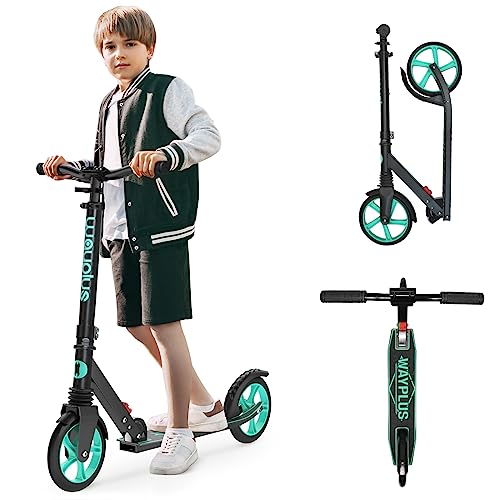 WAYPLUS Aquas 8-Inch Foldable Kick Scooter
|
6.5/10 | Buy | ||
 ZIFFY Kids Scooter with 20-Mode LED Wheels
|
6.4/10 | Buy | ||
 TONBUX Light-Up Kick Scooter for Kids 5-12
|
6.3/10 | Buy |
Micro Maxi LED Kids Scooter Ages 5-12
A three-wheel lean-to-steer scooter built for kids 5-12 that emphasizes stability and balance development. Motion-activated LED wheels light up while riding, with an adjustable bar that grows with your child through multiple years of use.
Pros
- Three-wheel design delivers greater stability for younger or newer riders building confidence
- Adjustable bar means one scooter works across multiple growth years, good long-term value
- LED wheels activate by motion, eliminating battery replacements while adding visibility
- Durable materials (aluminum bar, polyurethane deck) and 2-year warranty signal quality construction
- Lean-to-steer mechanism naturally teaches balance and coordination without training wheels
Cons
- No verified buyer reviews available yet to assess real-world durability or performance consistency
- Three-wheel design may feel less maneuverable than two-wheel scooters for kids seeking tricks or advanced riding
- Fixed to one size, so fit and comfort depend entirely on the adjustable bar range for individual children
Razor A Kick Scooter for Kids Ages 5+
A lightweight aluminum scooter built for durability with a foldable design that makes storage and transport convenient. Adjustable handlebars and a rear-fender brake make it accessible for growing kids, though the lack of verified buyer feedback limits confidence in real-world performance.
Pros
- Lightweight aluminum frame balances durability with portability at 4.62 pounds
- Original folding mechanism enables quick storage and transport between rides
- Adjustable handlebars accommodate different rider heights
- Rear-fender brake provides basic stopping control
- Compact dimensions suited for kids ages 5 and up
Cons
- No verified buyer reviews available to assess actual performance or durability claims
- Rear-fender brake may require practice for younger riders to operate safely
- Limited information on wheel quality and ride comfort beyond material specification
Retrospec Chipmunk Plus 3-Wheel Kids Scooter
A stability-focused kick scooter for young riders ages 3+, featuring LED-lit wheels, an adjustable folding seat, and lean-to-steer design that grows with your child. The three-wheel setup and no-slip deck prioritize control over speed, making it suited for beginners learning balance and coordination.
Pros
- Three-wheel configuration provides excellent stability for beginners
- Adjustable seat and handlebar grow with child through multiple height settings
- LED wheels add safety during low-light riding conditions
- Easy-to-use rear brake gives young riders stopping control
- No-slip deck and PU wheels designed to handle uneven pavement
Cons
- No verified customer reviews available to validate real-world durability or performance claims
- Seat weight limit of 55 lbs is significantly lower than the scooter's 130 lb capacity, limiting seated use for older kids
- Three-wheel design may feel less natural as children progress to standard two-wheel scooters
Gotrax KS1 3-Wheel Kids Scooter with LED Wheels
A lightweight three-wheeled scooter designed for children ages 2-8, featuring glowing LED wheels and adjustable handlebars that grow with your child. The lean-to-steer design helps develop balance, while ABEC-7 bearings and a wide anti-slip deck prioritize stability and safety.
Pros
- Three adjustable handlebar heights extend usability as kids grow taller
- Exceptionally light weight and compact design simplifies storage and transport
- LED wheels add safety visibility while maintaining visual appeal for young riders
- Lean-to-steer steering helps children develop core balance and body awareness
- Stable three-wheel platform suitable for beginner riders
Cons
- No verified customer reviews available, limiting real-world feedback on durability and performance
- Limited to children ages 2-8 and 100 lbs, with a relatively short age range
- Three-wheel design may not transition smoothly to traditional two-wheel scooters
Jetson Jupiter Kick Scooter with LED Lights
The Jetson Jupiter is a beginner-friendly kick scooter designed for kids ages 5 and up, featuring over 100 LED lights across the deck, stem, and wheels for visibility and fun. Its adjustable handlebar grows with riders up to 132 lbs, while the lightweight 6-pound frame and simple folding design make it easy to carry and store.
Pros
- 100+ LED lights on deck, stem, and wheels enhance visibility and add visual appeal
- Adjustable handlebar (24.6 to 33.3 inches) accommodates growing children
- Lightweight at 6 pounds with tool-free folding for portability
- Low deck design and 4-inch shock-absorbing wheels provide stable, smooth rides
- Rear foot brake enables quick, controlled stops
Cons
- No verified user reviews available to assess real-world durability or long-term performance
- Weight limit of 132 lbs may be restrictive for larger riders or teenagers
- LED light battery life and maintenance requirements not specified in product data
Aero Mobility A5 Big Wheel Scooter with Light-Up Wheels
A kids scooter designed for ages 6-12 with 7-inch wheels, built-in shock absorption, and motion-activated LED lights that illuminate while riding. The frame folds in one second and the handlebar adjusts to three heights, making it grow-friendly for children over several years.
Pros
- 7-inch big wheels with shock absorption deliver smooth rides on varied surfaces
- Motion-activated light-up wheels add visibility and appeal for kids
- One-second fold and carrying strap make storage and transport practical
- Three-height adjustable handlebar accommodates growth from age 6 to 12
- No assembly required, ready to ride straight out of box
Cons
- Rating of 4.6 stars is based on zero verified reviews, so real-world reliability remains unconfirmed
- Weight of 11 pounds may be heavy for younger children in the 6-8 age range to carry
- Designed for kids up to age 12, limiting longevity as a teen option
WAYPLUS Aquas 8-Inch Foldable Kick Scooter
A height-adjustable scooter designed for kids and teens but suitable for riders up to 240 lbs, featuring ABEC9 bearings, 8-inch wheels, and quick-fold portability. The extra-wide deck and adjustable handlebar (31-37 inches) make it adaptable across ages, though no verified buyer reviews are available yet to confirm real-world durability.
Pros
- Height-adjustable design makes it genuinely shareable between parents and children rather than a single-age product
- Foldable construction with carrying strap increases practicality for school commutes or storage
- ABEC9 bearings and suspension system target smooth performance across varied terrain
- Emphasis on safety features including double-layer handle lock and heat-treated brakes
- Lightweight at 9 pounds compared to typical adult scooters
Cons
- No verified buyer reviews available despite 4.8 rating, limiting insight into actual performance and durability claims
- 8-inch wheels are on the smaller side, which may limit effectiveness on rough or uneven surfaces despite suspension claims
- Maximum 240 lb weight capacity restricts use for heavier teens and adults despite marketing for all three groups
ZIFFY Kids Scooter with 20-Mode LED Wheels
A lightweight scooter for ages 3-8 featuring 20 dynamic LED light modes, 4-level adjustable handlebars, and a lean-to-steer design that grows with your child. The extra-wide deck and rubberized grips prioritize stability and control for developing riders.
Pros
- LED light display with extended side strips adds both fun and safety during low-light riding
- Adjustable handlebar heights mean this scooter works for years as kids grow
- Compact and portable with no assembly needed, making it convenient for travel
- Wide, anti-slip surface provides confident footing for beginners
- Solid 110 lb capacity accommodates most children in the 3-8 age range
Cons
- No verified buyer reviews yet to confirm real-world durability or LED longevity
- Limited to ages 3-8, so older or larger kids will outgrow it before reaching the 110 lb weight limit
- LED battery life and charging details not specified in product description
TONBUX Light-Up Kick Scooter for Kids 5-12
A foldable kick scooter featuring illuminated wheels, deck, and handlebar with seven customizable light modes for enhanced visibility and safety. Designed for children ages 5-12 with four adjustable height settings and a 100kg weight capacity, making it suitable as kids grow.
Pros
- Eye-catching LED design improves visibility in low-light conditions and adds appeal for kids
- Four height adjustments accommodate different ages and allow the scooter to grow with children
- Extremely lightweight and foldable, making it easy to carry and store
- Sturdy aluminum frame with non-slip surfaces and responsive braking for safe riding
Cons
- Requires three AA batteries for light operation, which are not included
- No verified buyer reviews available to confirm real-world durability and performance
- Light brightness compliance stated but actual battery life duration not specified
Kids Scooters Buying Guide
Buying a scooter for a child is not as simple as picking the flashiest color. Age appropriateness, wheel configuration, deck size, adjustability, and build quality all play significant roles in how safe, enjoyable, and long-lasting the experience will be.
Use the criteria below to match any model to your child’s current stage and where they’re headed next.
If you’re also considering broader active-play gear, pairing a scooter with a solid balance bike can give younger children two complementary tools for building outdoor confidence.
Age Range and Wheel Configuration
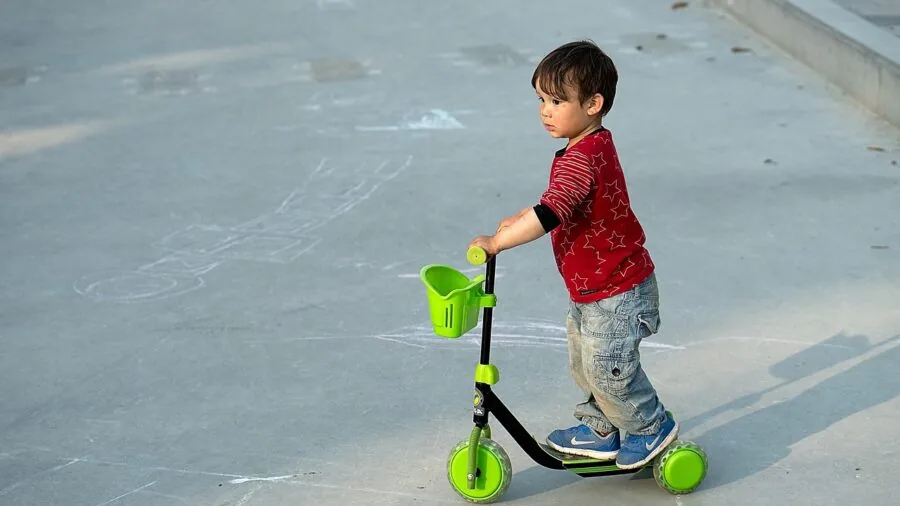
The single most important filter when shopping for kids scooters is the rider’s age and developmental stage. Three-wheel models, which use a lean-to-steer mechanism rather than handlebar twisting, are designed for children roughly ages two to eight.
That wide, stable platform lets a child push off without worrying about tipping, which means younger riders build confidence faster.
Two-wheel scooters, by contrast, demand more active balance and are suited to children aged five and up who already have baseline coordination from riding bikes or similar equipment.
Age ranges printed on packaging are conservative guides, not hard rules. A confident four-year-old with prior balance bike experience may handle a two-wheeler comfortably, while a cautious seven-year-old might genuinely prefer the stability of a three-wheel platform for another season.
Look at the manufacturer’s weight limit alongside the age suggestion, because that limit is ultimately the hard safety boundary. Models in this guide accommodate riders from around 40 lbs up to 220 lbs, so there’s a genuine fit for every stage.
Deck Size, Width, and Non-Slip Surface

The deck is where your child’s feet live for the entire ride, and its dimensions affect both comfort and control. A wider deck gives more foot real estate, which is especially valuable for younger riders still developing their stance.
A narrower deck on a two-wheeler allows more dynamic weight shifts for older riders who want to carve turns or pick up speed.
Regardless of width, a textured, non-slip surface is non-negotiable: smooth plastic becomes dangerously slick in light moisture or on dusty sidewalks.
Deck height from the ground matters more than many parents realize. A lower deck makes it easier for small legs to push off, reducing fatigue on longer rides.
Most quality models keep the deck at or below four inches from the ground. If your child is on the younger side, prioritize a wide, low deck with generous grip tape or rubberized texturing over a narrower performance-oriented platform.
Handlebar Adjustability and Fit
Children grow fast. A scooter with a fixed handlebar height will be perfectly sized for about one season before it becomes awkward to ride.
Multiple height settings allow the same scooter to span two, three, or even four years of growth without any uncomfortable stooped posture or over-reaching.
Most of our picks offer three or four height positions that can be adjusted without tools or with a simple push of a quick-release button.
The correct handlebar height sits roughly at the rider’s hip to waist level when they’re standing naturally on the deck. Too low forces a hunch that strains the back during longer rides; too high reduces steering control and leverage.
When evaluating a model, count the number of height positions and check the range from lowest to highest, because the span between positions can vary significantly between budget and premium options.
This single factor often separates scooters that last two years from those that get replaced after one season. Kids who grow into confident riders often graduate to dedicated bikes once they outgrow their scooter’s top setting.
Wheel Size, Material, and Ride Quality

Wheel diameter directly determines how well a scooter handles real-world pavement.
Smaller wheels (around three inches) are common on entry-level toddler models and work fine on smooth surfaces, but they transfer every crack and pebble straight to the rider’s feet and hands.
Larger wheels (six inches and above) roll over imperfections more smoothly and maintain momentum better between kicks, which means less effort for the child and a noticeably more comfortable ride.
Wheel material is equally important. Polyurethane (PU) wheels offer a noticeably smoother, quieter roll than hard plastic and last significantly longer. Some premium models add LED light-up wheels, which are a genuine motivational draw for kids reluctant to ride.
Bearing quality, often rated on the ABEC scale, determines how freely the wheels spin: higher-rated bearings mean less friction, more glide from each kick, and longer bearing lifespan.
Budget scooters rarely specify bearing grade; mid-range and premium models often call out ABEC-5 or ABEC-9 ratings as a differentiator worth noting.
Folding Mechanism and Portability
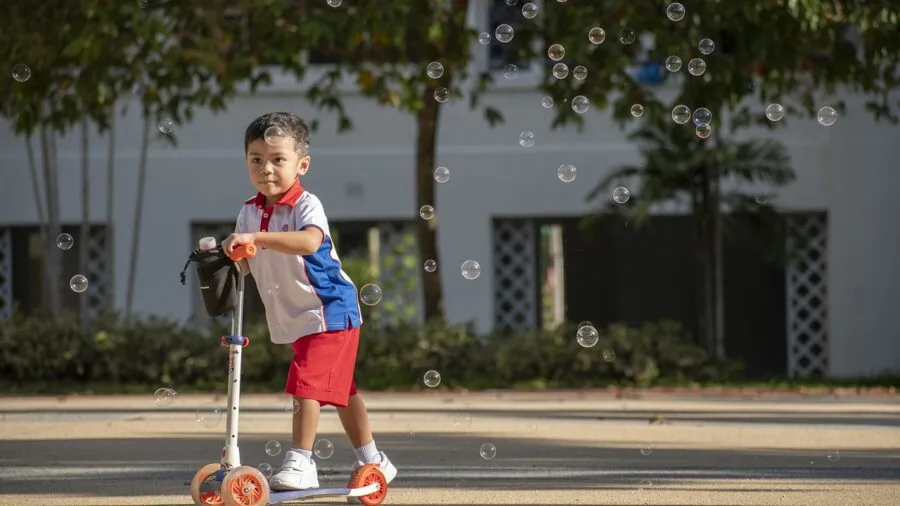
School runs, park trips, and family outings mean a scooter will frequently need to be carried, stored in a trunk, or tucked under a stroller.
A reliable folding mechanism transforms a scooter from a curbside headache into a genuinely grab-and-go accessory. Look for mechanisms that fold with one hand and lock securely in both the open and closed positions.
A scooter that wobbles at the fold point when unfolded creates an unpredictable ride and represents a real safety concern.
Weight matters here too. Aluminum-frame scooters are the sweet spot: lighter than steel, sturdier than plastic, and resistant to rust from rain exposure.
Most folding scooters in our guide weigh between five and ten pounds, which is light enough for a school-age child to carry on their own for short distances, and easy enough for a parent to manage the rest of the time.
Brake Type and Stopping Reliability

Kids scooters almost universally use a rear fender brake: the rider presses down on a fender mounted over the back wheel to create friction and slow down.
This design is intuitive, requires no hand strength, and is easy for young children to learn. Quality matters, though.
A soft plastic fender that flexes under pressure provides weak braking; a stiffer, more robust fender delivers predictable, controlled stopping even on slight downhill grades.
Older kids who scoot at higher speeds will benefit from a tighter fender with more surface contact on the wheel.
Some premium models aimed at taller riders supplement the fender brake with a hand-actuated brake lever, giving that extra stopping authority when carrying more momentum.
For toddlers and young beginners, the standard rear fender is perfectly appropriate and teaches natural braking instincts that carry over well to pedal bikes and other riding gear later on.
Why You Should Trust Us
ProductFind is an independent review publication. We do not accept payment to feature or rank products, and manufacturers have no input into our editorial decisions.
Every scooter in this guide was rated using our 0 to 10 PF Score, a consistent scoring framework applied across specifications, performance reputation, build quality, age-appropriateness, and long-term value.
We do not conduct our own product trials; our evaluations are grounded in research, published data, expert review consensus, and verified buyer feedback.
Our research process for this guide included analyzing detailed specifications from manufacturer sources, cross-referencing assessment patterns from multiple independent cycling and parenting-focused publications, and synthesizing patterns from verified purchaser reviews across a large buyer sample.
When expert consensus and buyer feedback aligned strongly on a model’s strengths or weaknesses, those signals carried significant weight in the final PF Score.
Where they diverged, we investigated further to understand whether the discrepancy reflected differing use cases or genuine reliability concerns.
ProductFind may earn a commission if you purchase through links in this article. That affiliate relationship has no effect on which products are included, how they are ranked, or what scores they receive.
Our only goal is to give you the most useful, honest guidance possible so you can choose confidently for your child.
Final Thoughts
The kids scooter market spans a wide range of quality, and the right pick genuinely depends on your child’s age, size, riding environment, and how much use the scooter will see.
The models in this guide represent the clearest standouts across those variables, from first-ride stability to smooth high-mileage performance for older riders. Here’s how we’d summarize the best options by role:
- Best Overall: Micro Kickboard Maxi LED Kids Scooter. The highest PF Score in this group reflects a combination of premium Swiss engineering, smooth lean-to-steer handling, motion-activated LED wheels, and a weight rating that accommodates a wide age span from five through twelve. It earns its price for families who want a scooter that lasts through multiple growth stages without compromise.
- Best Value Two-Wheeler: Razor A Model Kick Scooter. Among two-wheel models, this aluminum-frame classic delivers reliable everyday performance at a budget-friendly price point. Its foldable, adjustable design and proven durability make it a dependable pick for kids aged five and up who are ready to move beyond a three-wheeler.
- Best Three-Wheeler for Beginners: Retrospec Chipmunk Plus Kids’ Kick Scooter. The foldable seat, LED lights, and height-adjustable bars give younger riders a feature-rich, confidence-building entry point. It earns its place as the strongest mid-range three-wheel option for children aged three and up.
- Best Budget Three-Wheeler: Gotrax KS1 Kids Kick Scooter. A widened non-slip deck, lean-to-steer design, and LED wheels at an accessible price make this a sensible first scooter for toddlers and early-elementary riders who need stability without a large upfront investment.
- Best for Older Kids and Big-Wheel Performance: AERO MOBILITY Big Wheel Kick Scooter. Designed specifically for riders aged eight through twelve and into the teen years, its larger wheels and more generous platform bridge the gap between a child’s scooter and a more capable ride without stepping into adult territory.
Whichever model fits your child’s stage best, a good scooter rewards consistent outdoor time and builds physical skills that carry over into every other active pursuit, from riding pedal bikes to learning new balance-based sports.
Keep the rider’s current size and the terrain they’ll be scooting on at the front of your decision, and you’ll land on a pick they’ll genuinely use.
Frequently Asked Questions
What Age Is Appropriate for a Kids Scooter?
Most three-wheel scooters are appropriate from around age two, provided the child can stand independently and follow simple instructions. Two-wheel scooters are generally better suited to children five and older, though developmental readiness matters more than a specific birthday.
Children who have experience on a balance bike often transition to two-wheel scooters earlier and more smoothly than those who haven’t.
How Do I Know What Size Scooter My Child Needs?
The key measurement is handlebar height relative to your child’s hip or waist when they’re standing naturally on the deck. A handlebar set too low causes a stoop that fatigues the back; too high reduces steering control.
Most models in this guide offer multiple height adjustments, so check the range from lowest to highest setting against your child’s current height and how much growing room you want to build in.
Weight limits are the hard safety boundary and must be respected regardless of age.
Are LED Light-Up Wheels Just a Gimmick?
Not entirely. LED wheels serve a real motivational function: children who might otherwise resist riding are frequently more eager to scoot when the wheels light up with motion.
Models like the Micro Kickboard Maxi LED use motion-activated LEDs embedded in quality PU wheels, so the lights don’t compromise ride quality. On cheaper models, light-up wheels are sometimes built into harder plastic wheels that sacrifice smoothness for flash.
When evaluating an LED model, check whether the wheels are PU or hard plastic before assuming the visual appeal comes without a ride-quality trade-off.
Is a Three-Wheel or Two-Wheel Scooter Better for a First-Time Rider?
For children under five, a three-wheel lean-to-steer design is almost always the better starting point. The wider base eliminates the need to actively balance, letting the child focus entirely on pushing, steering, and stopping.
Once those skills are internalized, typically by age five to seven depending on the child, the transition to a two-wheeler feels natural rather than daunting.
Think of the three-wheel phase as the scooter equivalent of using a balance bike before a pedal bike.
What Safety Gear Should My Child Wear While Scooting?
A properly fitted helmet is essential for every ride, regardless of the child’s age or experience level. Knee and elbow pads are strongly recommended for beginners and younger children who are still developing their instinct for braking and turning.
Even experienced child riders benefit from wrist guards, since outstretched hands are a natural instinct when falling and wrist injuries are among the most common scooter-related issues.
Check that all protective gear meets current safety certification standards for your region and replace any item that has absorbed a hard impact.
How Do I Maintain a Kids Scooter to Keep It Riding Well?
Regular maintenance is simple and goes a long way. Wipe down the deck and frame periodically to remove dirt and grit that can work into moving parts. Check wheel tightness before each ride and re-tighten any loose bolts.
Inspect the rear brake fender for wear; a fender that no longer makes firm contact with the wheel should be replaced.
Occasionally apply a small amount of appropriate lubricant to the folding joint and any pivot points to keep the mechanism smooth and prevent rust at connection points.
Store the scooter in a dry location to protect aluminum frame joints and wheel bearings from moisture over time.
About the author
Susan is a reviewer and writer for ProductFind who specializes in Outdoor & Active Play. Susan evaluates products through independent research: specifications, expert review consensus, and verified buyer feedback, and rates each one on the PF Score. Susan focuses on helping readers pick the right outdoor & active play for their needs and budget.