The 11 Best Microscopes for Kids
Magnification numbers on the box only tell part of the story. Our research covers optics, durability, kit contents, and real-world usability to help you find a kids' microscope that actually gets used.
 By Chester Bryant
Updated July 23, 2026
By Chester Bryant
Updated July 23, 2026
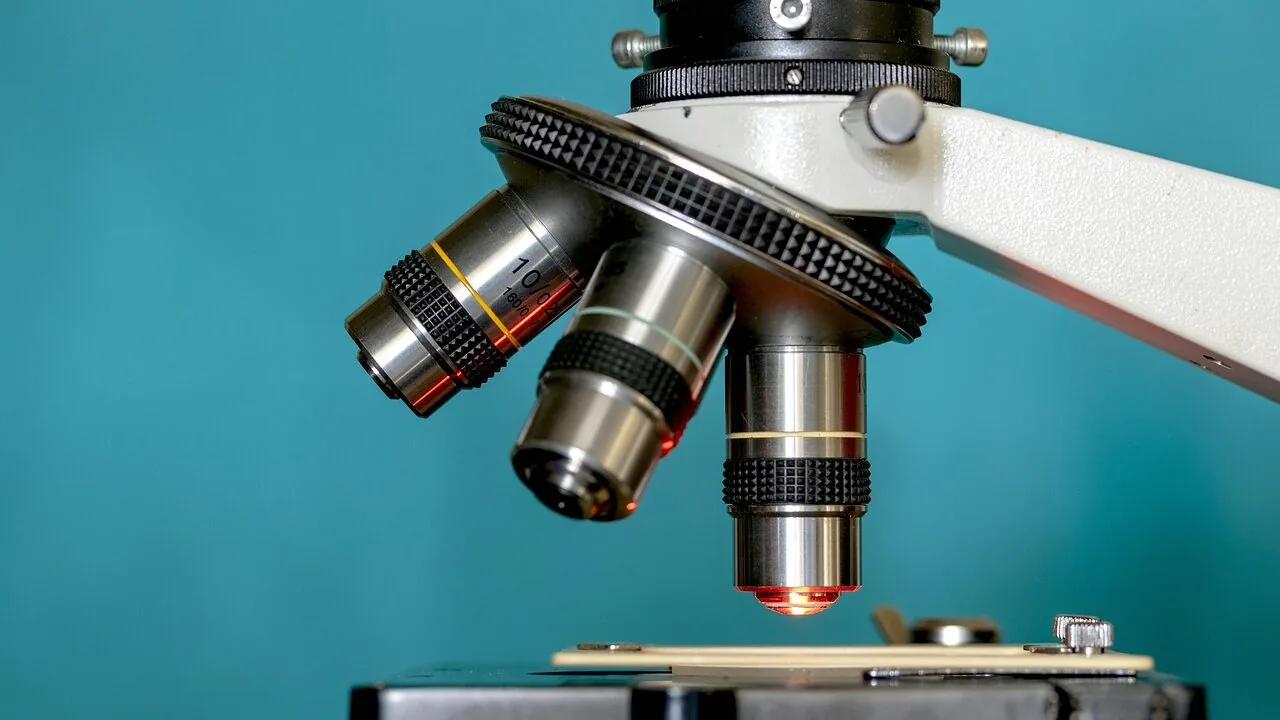
A good microscope can turn an ordinary afternoon into a genuine scientific adventure.
For kids, the moment a familiar object like a strand of hair or a drop of pond water transforms into something alien and extraordinary under a lens is often what sparks a lasting love of science.
The market, however, is crowded with everything from flimsy plastic toys to surprisingly capable optical instruments, and knowing which models actually deliver on their promises is harder than it looks.
This guide covers the full spectrum, from budget-friendly handheld digital scopes to full compound microscopes with professional-grade optics, across a range of ages and learning levels.
Our team at ProductFind researched dozens of models by analyzing published specifications, synthesizing expert review consensus, and combing through verified buyer feedback to surface the picks most likely to hold a child’s attention and survive years of enthusiastic use.
Pair this guide with our broader look at science kits for kids if you want to build out a complete home lab. Scroll down for our ranked top picks.

AmScope 40X-1000X Beginner Microscope Kit
Entry-level compound microscope with dual LED illumination for both transparent slides and opaque specimens, paired with a complete accessory kit and educational book. Designed for kids and students starting their microscopy journey.
Pros
- Five magnification levels cover basic to detailed specimen observation
- Top and bottom LED lighting accommodates both slide and opaque subject viewing
- Includes comprehensive accessories and instructional book for immediate use
- Metal frame construction provides stability during focus adjustments
- Portable size suitable for classroom or home learning
Cons
- No verified customer reviews available to assess real-world durability and image quality
- Monocular design limits depth perception compared to binocular microscopes
- Limited information on optical clarity and glass quality specifications

Blue Marble National Geographic Dual LED Kids Microscope 50pc Kit
A dual-light microscope kit designed for kids 8-12 that switches between lower LED for slide viewing and upper LED for 3D object examination. Includes 20x and 50x magnification lenses, 10 prepared slides, blank slides, and 50+ accessories for both exploration and hands-on specimen creation.
Pros
- Dual lighting system accommodates both biological specimens and 3D objects without purchasing separate equipment
- Comprehensive 50+ accessory set allows kids to both observe prepared slides and create their own samples
- Award-recognized brand with documented educational focus and customer support
- Optical glass lenses provide decent magnification range for beginner exploration
Cons
- No verified buyer reviews available to assess real-world durability or ease of use
- Limited magnification (50x) compared to intermediate microscopes, restricting detailed specimen observation
- Designed specifically for ages 8-12, so may lack depth for older hobbyists or younger learners

PalliPartners Compound Binocular Microscope 40X-2000X
A dual-LED compound microscope designed for students, professionals, and hobbyists seeking magnification range from 40X to 2000X. Features binocular optics with adjustable eyepieces, mechanical stage, and separate incident/transmitted lighting for both opaque and transparent specimens.
Pros
- Wide magnification range and dual eyepiece options accommodate various specimen types and viewing preferences
- Separate incident and transmitted LED systems with independent brightness controls eliminate need for light source switching
- Mechanical stage with scale markings enables precise location tracking across specimens
- Ergonomic binocular design with 45-degree inclination and adjustable interpupillary distance reduces fatigue during extended use
- Mobile phone compatibility allows documentation and sharing of microscopic observations
Cons
- No verified buyer reviews available to assess real-world durability and optical performance consistency
- Compact dimensions suggest potential stability concerns for heavier specimens or extended laboratory use
- Mobile phone camera compatibility depends on user-provided adapter, not included in kit details

ZOVVTRON 100-2000X Compound Microscope with LED
A versatile compound microscope offering 100-2000X magnification with dual LED illumination and precision focus system, suitable for students, educators, and amateur naturalists. Comes bundled with 52 accessories including prepared slides and carrying case, though it lacks professional-grade build quality.
Pros
- Wide magnification range covers cell structures to bacteria observation for educational purposes
- Includes comprehensive starter kit with slides and phone adapter, eliminating need for separate purchases
- Dual illumination system accommodates both transparent biological samples and opaque specimens
- Lightweight and portable design with protective case encourages field study and home exploration
Cons
- Plastic construction prioritizes durability over professional laboratory-grade materials
- No verified buyer reviews available to assess real-world optical clarity and long-term reliability
- Entry-level specifications mean optical performance may not match dedicated professional microscopes for advanced research
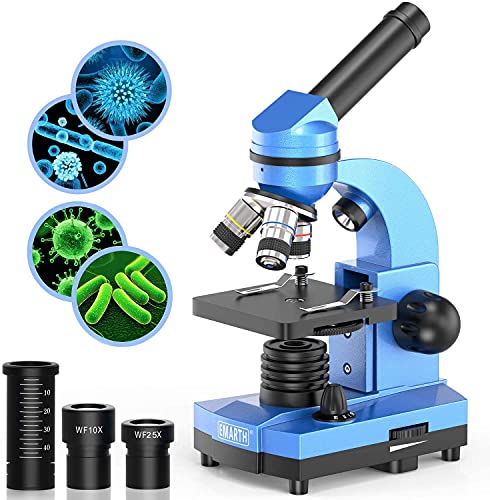
Emarth 40X-1000X Compound Microscope with 52-Piece Kit
A full-featured compound microscope designed for young students and beginners rather than toys, complete with 52 educational accessories including prepared slides and color filters. Dual illumination and smooth focusing make it suitable for genuine classroom and home science exploration.
Pros
- Complete kit eliminates need for separate purchases of slides and accessories
- Dual illumination system accommodates different specimen types
- Real compound microscope construction suitable for actual science learning, not a toy
- Built-in color filters and smooth focus mechanism support beginner-friendly operation
- Metal construction and rotatable head provide durability and viewing comfort
Cons
- Batteries not included, requiring separate purchase for illumination
- No verified buyer reviews available to assess real-world reliability
- High magnification range (up to 1000X) may require practice to use effectively at maximum levels

MatataStudio MX2-AS 1600X Digital Microscope
A 2-in-1 handheld and stand microscope with a 4.3-inch 1080P screen, designed for students ages 5-18 and adults. Offers 100X to 1600X magnification, USB-C and WiFi connectivity, and includes prepared slides and accessories for immediate use.
Pros
- Versatile magnification range and continuous zoom suitable for both young learners and adults
- Long battery life enables extended outdoor exploration sessions
- Dual lighting modes and multiple connectivity options support various observation needs and group learning
- Comprehensive accessory kit with prepared slides and instruction manual enables immediate use without additional purchases
Cons
- No verified user reviews available to assess real-world reliability and performance consistency
- Digital magnification at highest levels may exhibit reduced image clarity compared to optical alternatives
- Screen size and portability may be limiting factors for detailed specimen analysis requiring larger displays

JECONE 40X-2500X Compound Microscope with Dual Illumination
A versatile compound microscope designed for students and hobbyists, offering six magnification levels from 40X to 2500X with dual LED lighting for both transparent and opaque specimens. Includes a complete accessory kit with prepared slides, color filters, and phone holder for documentation.
Pros
- Wide magnification range covers basic to advanced specimen observation
- Dual illumination accommodates both transparent slides and opaque objects
- Includes prepared specimens and accessories to start immediately
- Color filter wheel eliminates need for slide staining
- Rotating eyepieces and phone holder enhance usability and documentation
Cons
- No verified buyer reviews available to confirm real-world performance and durability
- Optical quality at highest magnification levels (2500X) not independently verified
- Compact dimensions may limit comfortable use for extended observation periods

BEAVERLAB Finder 4.0" Handheld Microscope 1600X
A compact handheld microscope with a 4-inch display and 100X-1600X magnification range, designed for kids to explore specimens on the go. Features 1080P video capture, adjustable LED lighting, and built-in WiFi connectivity to share findings directly from the device.
Pros
- Wide magnification range accommodates beginner and intermediate observation needs
- Integrated WiFi sharing eliminates transfer steps, enabling quick social media posting
- 8-level adjustable lighting reduces strain and improves specimen visibility
- Compact pocket-sized form factor encourages independent outdoor exploration
Cons
- No verified buyer reviews available to confirm real-world image quality and durability
- Maximum 1600X magnification may have optical limitations compared to traditional lab microscopes
- 4-inch display, while portable, offers limited screen real estate for detailed analysis

Odatay 4K Digital Microscope 200-1000X Magnification
A compact handheld microscope designed for kids ages 5-12, offering 200-1000X magnification with 4K video capture and a 2.4-inch display. Comes fully loaded with accessories including a 32GB card, prepared slides, and protective case, making it ready for immediate exploration.
Pros
- Comprehensive starter kit eliminates need for separate purchases of cards, slides, or storage
- Wide magnification range allows both long-distance exploration and microscopic detail work
- Genuinely portable with minimal weight and practical carrying options for young explorers
- 4K recording enables capturing and reviewing discoveries rather than just viewing
Cons
- No verified user reviews available to validate real-world performance and durability claims
- 2.4-inch screen is relatively small for detailed examination, especially for younger children
- Educational value depends heavily on parental guidance, as product targets ages 3-12 with significant capability variation

Mileonaim 61-Piece Kids Microscope Kit, 1200X Magnification
A comprehensive beginner microscope set with 100X to 1200X magnification, 12 prepared slides, and 32 blank slides for hands-on specimen creation. Built for ages 6-12 with a portable carrying case, though it lacks verified user feedback to confirm durability and optical quality.
Pros
- Comprehensive 61-piece set eliminates need to buy accessories separately
- Combination of pre-prepared and blank slides encourages both observation and hands-on experimentation
- Compact carrying case makes it genuinely portable for multiple locations
- LED illumination helps students view specimens clearly at higher magnifications
- Durable construction marketed toward extended use by curious learners
Cons
- No verified buyer reviews available to validate optical clarity, build quality, or longevity claims
- LED light quality and battery type not specified in product data
- Magnification range (up to 1200X) may produce unclear images without proper lighting or technique

Uarzt 58-Piece Kids Microscope Kit, 100X-1200X Magnification
A complete beginner microscope set for children ages 5-12 that includes 13 prepared specimens, 31 blank slides, and lab tools to start exploring immediately. The metal body construction and LED light support magnifications from 100X to 1200X, designed specifically for hands-on STEM learning at home or in classrooms.
Pros
- All-in-one kit removes guesswork about what accessories are needed for starting observations
- Sturdy metal body resists typical wear from young learners
- Wide magnification range (100X-1200X) grows with skill level
- Includes both prepared and blank slides for flexibility in what can be observed
- Climate Pledge Friendly certification indicates environmentally responsible manufacturing
Cons
- Requires 2 AA batteries not included in the box
- No verified buyer reviews available to assess real-world durability or optical clarity
- Dimensions and weight not fully specified, limiting assessment of portability and classroom storage
Microscopes for Kids Buying Guide
Choosing the right microscope for a child involves more than picking the highest magnification number on the box. Age, intended use, portability needs, and long-term educational value all factor in.
The sections below walk through each of the criteria our research team weighted most heavily when evaluating these models.
Optical Type: Compound vs. Digital
The first fork in the road is choosing between a traditional optical compound microscope and a digital microscope that displays images on a built-in screen or connected device. Compound microscopes use glass optics and eyepieces to produce real-time magnified images.
They teach the fundamentals of microscopy in the same way professional scientists learn it, and glass optics tend to produce sharper, more accurate color rendition than budget digital sensors.
Digital microscopes, by contrast, eliminate the need to align an eye perfectly with a small eyepiece, which makes them far more accessible for younger children and kids who wear glasses.
They also allow groups to view the same image simultaneously, which is excellent for classroom or family use. Many digital models capture photos and video, letting kids document their discoveries over time.
The trade-off is that entry-level digital sensors can produce softer images with washed-out color, particularly at maximum zoom.
Assess your child’s age, patience, and whether they are more likely to use the microscope solo or collaboratively before deciding between these two approaches.
For children interested in more advanced STEM exploration, pairing a quality microscope with hands-on STEM toys can deepen the learning experience considerably.
Magnification Range and Actual Usable Power

Marketing materials routinely lead with the maximum magnification figure, but that number is often misleading. On compound microscopes, 400x is sufficient to view individual plant cells clearly; 1000x is useful for bacteria and requires immersion oil, which adds complexity.
For most kids aged 6 to 14, a practical range of 40x to 400x will cover the vast majority of interesting specimens without demanding advanced technique.
On digital microscopes, advertised magnification figures combine optical and digital zoom and can be inflated relative to what a compound scope would call the same number.
A model that claims 1600x digitally may deliver image quality equivalent to 200x on a quality optical instrument. Focus on the clarity and contrast of sample images from verified buyers rather than the headline magnification figure when comparing digital models.
Look for reviews that mention sharpness at mid-range zoom settings, since this is where most kids will spend the majority of their time.
Build Quality and Durability
A microscope for a child needs to withstand the occasional knock, enthusiastic adjustment, and the reality that small hands are not always gentle. The frame material matters enormously here.
All-plastic frames, common in budget models, can flex and wobble, making precise focusing frustrating. A metal or die-cast body, even on a modest budget, provides the rigidity needed for stable specimen viewing.
Check whether the focusing rack and pinion mechanism feels smooth and controlled rather than loose or jerky, as sloppy focus mechanisms are the single most common complaint in verified buyer reviews across this category.
Eyepiece and objective lens quality is the other durability consideration that affects performance. Coated glass objectives hold up better over time and produce noticeably better contrast than uncoated acrylic lenses.
If a product listing does not specify glass optics, assume plastic, which is particularly common at the lowest price points in this category.
For a child who plans to use a microscope regularly, the additional investment in glass optics pays dividends in years of reliable use.
Lighting System

LED illumination has largely replaced older incandescent bulb systems in kids’ microscopes, and this is a genuine improvement. LEDs run cool, last for tens of thousands of hours, and provide consistent white light that renders specimen colors accurately.
Look for models with adjustable brightness, since some prepared slides and transparent specimens need gentler illumination while others benefit from maximum intensity.
Diaphragm or iris controls, which regulate how much light passes through the stage, give additional flexibility and teach kids a key principle of microscopy technique.
Some compound microscopes also include a top-illumination LED for viewing opaque specimens like coins, rocks, or insects without prepared slides. This dual-lighting capability significantly expands the range of objects a child can examine and keeps engagement levels high between slide-preparation sessions.
Included Accessories and Kit Contents

An empty microscope sitting on a desk with no specimens to examine goes unused.
The best kits for kids include a meaningful assortment of prepared slides, blank slides, cover slips, specimen containers, tweezers, and ideally a dropper for wet mount preparation.
Prepared slides let a child get started immediately with reliably good results; blank slides teach the process of making their own mounts, which is where the real scientific education begins.
Some kits include educational booklets or access to digital learning resources, which meaningfully extend the microscope’s educational lifespan.
A carrying case is a practical bonus that encourages kids to bring the microscope to school, a friend’s house, or outdoors for field work.
Evaluate the accessory list carefully and prioritize kits that include enough consumables to sustain several weeks of independent exploration without requiring an immediate accessory reorder.
Families building a broader educational toolkit may also want to explore coding toys for kids as a complementary activity that develops similar analytical thinking skills.
Age Appropriateness and Ease of Setup

A microscope that requires an adult’s help every time it is used will quickly lose a child’s interest. For children aged 5 to 8, handheld digital microscopes with large screens and minimal setup are typically the most successful option.
The single-button or dial operation removes barriers and lets the child focus on discovery rather than technique.
For ages 8 to 12, a basic compound microscope with a rotating nosepiece and a simple coarse-fine focus system introduces real scientific discipline while remaining manageable without constant supervision.
Older kids and teenagers benefit from more capable instruments that introduce mechanical stages, higher optical quality, and binocular viewing heads.
These features start to overlap with entry-level adult microscopes and provide a natural progression path as a child’s skills and curiosity deepen.
Always check the manufacturer’s recommended age range, then cross-reference with verified buyer feedback from parents whose children are in the same age bracket, since real-world usability often differs from the stated range in either direction.
Why You Should Trust Us
ProductFind is an independent review publication with no brand partnerships that influence editorial decisions.
Every product in this guide was evaluated by our research team using a consistent multi-factor methodology: we analyze manufacturer-published specifications, synthesize consensus from expert reviewers across the optics and education sectors, and weight verified buyer feedback from confirmed purchasers who have used these products with real children over extended periods.
Each model receives a PF Score on a scale of 0 to 10 that reflects its overall performance across optical quality, build durability, ease of use, kit value, and age appropriateness relative to its price tier.
We do not conduct our own product trials; our evaluations are grounded in research, published data, expert review consensus, and verified buyer feedback.
This approach allows us to cover a broader range of products more rigorously than any single reviewer could manage with physical samples alone, and it means our assessments reflect the collective experience of hundreds of buyers rather than a single use session.
ProductFind may earn an affiliate commission when you purchase through links on this page. That relationship has no bearing on which products we include, how we rank them, or what PF Score they receive.
Our rankings are determined solely by research quality and the criteria described above, not by commission rates. We are not affiliated with any of the brands listed, and we do not provide purchase support, warranty assistance, or returns handling.
For any post-purchase needs, contact the retailer or manufacturer directly.
Final Thoughts
The microscopes in this guide span a wide range of capability and budget, and the right choice depends almost entirely on how old your child is, how independently they will use it, and how serious their interest in science is likely to become.
Here is a quick summary of our top picks by use case, each linked to its full product card above.
- Best Overall: AmScope 40X-1000X Beginners Microscope Kit earns the top spot with the highest PF Score in this group, combining glass optics, a comprehensive accessory kit, and a proven educational framework that has made it the most consistently recommended compound starter scope across expert and verified buyer sources alike.
- Best for Young Scientists Ages 8 to 12: National Geographic Dual LED Kids Microscope balances dual LED illumination, an impressive slide collection, and National Geographic’s trusted educational brand to deliver an exceptional kit experience for the elementary-school age group.
- Best Upgrade for Serious Young Researchers: PalliPartners Compound Binocular Microscope introduces true binocular viewing and 2000x magnification in a package that bridges the gap between a children’s toy and a proper laboratory instrument, making it ideal for dedicated middle-school scientists.
- Best Budget Compound Scope: Emarth 40X-1000X Compound Microscope delivers a respectable optical experience and a generous accessory bundle at a price point that makes it an easy first microscope purchase without a large commitment.
- Best Portable Digital Option: BEAVERLAB Finder Handheld Digital Microscope is the standout choice for younger children and outdoor exploration, offering a screen-forward experience that removes the eyepiece frustration entirely and works equally well in the backyard or the classroom.
Whichever model you choose, the most important factor is getting it into a child’s hands and pointing them at something interesting.
A strand of carpet fiber, a drop of tap water, or a piece of a leaf are all you need to start. The curiosity takes over from there.
Frequently Asked Questions
What age is appropriate for a first microscope?
Most children aged 5 and older can enjoy a handheld digital microscope with a built-in screen, since these require minimal setup and no eyepiece alignment.
Traditional compound microscopes with rotating objectives and fine-focus controls are typically better suited to ages 8 and up, when kids have the patience and fine motor skills to prepare slides and adjust optics independently.
Expert consensus and verified buyer feedback consistently place the 8 to 12 age range as the sweet spot for compound microscope engagement.
How much magnification does a child actually need?
For most school-age children, a magnification range of 40x to 400x covers nearly every interesting specimen they are likely to encounter, including plant cells, insect body parts, fabric fibers, and common microorganisms.
Magnifications above 400x require careful technique and, on compound scopes, often immersion oil, which adds complexity that can frustrate young users.
Higher numbers on the box do not automatically translate to better or more educational viewing experiences at the beginner level.
Are glass optics worth the extra cost for a kids’ microscope?
Yes, in most cases. Glass objectives produce noticeably sharper images with better color accuracy and edge clarity than acrylic or plastic lenses. They also hold up better over time without scratching or clouding.
For a child who will use the microscope regularly over several years, glass optics represent a meaningful quality improvement that keeps engagement high.
For a casual gift where usage frequency is uncertain, a quality plastic-lens kit at a lower price point is a perfectly reasonable starting point.
Can a kids’ microscope double as a homeschool science tool?
Absolutely. Several models in this guide, particularly the AmScope and National Geographic kits, are widely used in homeschool curricula because they include structured slide sets, educational booklets, and enough optical performance to support formal biology lessons.
A compound microscope that covers cell biology, microorganism observation, and basic histology can serve as a practical lab component for years of science coursework.
Families running structured homeschool programs should also look at broader science activity kits that complement microscopy with chemistry and physics experiments.
What is the difference between a compound microscope and a stereo microscope for kids?
A compound microscope uses transmitted light through thin, often transparent specimens mounted on slides, and is capable of the high magnifications needed to see cells and microorganisms.
A stereo microscope uses reflected light at lower magnifications (typically 7x to 45x) to view larger, three-dimensional objects like insects, rocks, coins, and flowers in their natural state without any preparation.
For most children, the higher magnification and the drama of seeing invisible structures for the first time makes a compound microscope the more engaging first choice.
A stereo microscope is a better fit for kids interested in entomology, geology, or detailed craft work.
What specimens can kids examine without a prepared slide kit?
Quite a lot. Common household specimens include human hair, pet fur, fabric threads, salt and sugar crystals, grains of sand, soil particles, pollen from flowers, and thin cross-sections of leaves or onion skin.
For wet mounts, a drop of pond water is a classic source of live microorganisms that never fails to astonish.
These free specimens are often more motivating for children than commercial prepared slides because the child collected them personally, which adds a layer of ownership and scientific curiosity to the activity.
About the author
Chester is a reviewer and writer for ProductFind who specializes in Educational & STEM Toys. Chester evaluates products through independent research: specifications, expert review consensus, and verified buyer feedback, and rates each one on the PF Score. Chester focuses on helping readers pick the right educational & stem toy for their needs and budget.