The 9 Best Open-Ear Headphones
Open-ear headphones let you stay aware of your surroundings without sacrificing your soundtrack. Here are the top-rated picks across bone conduction, clip-on, and earhook styles.
 By Pat Shelton
Updated July 23, 2026
By Pat Shelton
Updated July 23, 2026

Open-ear headphones have moved from a niche cycling accessory to one of the most versatile audio categories on the market.
Unlike traditional earbuds that seal the ear canal, open-ear designs let ambient sound flow freely, so you can hear traffic, a colleague calling your name, or your surroundings without yanking anything out of your ears.
Whether you prefer bone conduction, clip-on earbuds, or earhook-style wireless buds, the category now spans price points from budget-friendly to premium, with options from brands like SHOKZ, Soundcore, Nothing, and JLab all competing for a spot in your gym bag or morning commute kit.
At ProductFind, we researched this field by analyzing published specifications, synthesizing expert review consensus across dozens of independent sources, and reviewing verified buyer feedback to surface the options that consistently earn high marks for comfort, sound quality, and real-world wearability.
If you are also weighing traditional in-ear options, our guide to wireless earbuds covers the broader earbud landscape. Our ranked picks are listed below, sorted by PF Score from highest to lowest.
| Award | Product | PF Score About PF ScoreThe PF Score is our own rating from 0 to 10, based on performance, design and build, ease of use, and value. It reflects independent research and is never influenced by manufacturers, retailers, or affiliate commissions. Learn more › | Price | |
|---|---|---|---|---|
| Best Overall |
 Aftershokz OpenRun Pro 2 Bone Conduction Headphones
|
8.7/10 | Buy | |
| Editor's Pick |
 Nothing Ear Open Bluetooth Earbuds with AI Calls
|
8.4/10 | Buy | |
| Best Value |
 SHOKZ OpenRun Pro Bone Conduction Headphones
|
8.7/10 | Buy | |
| Top Rated |
 Soundcore V30i by Anker Open Ear Earbuds, Open Ear Headphones True Wireless
|
7.8/10 | Buy | |
 JLab JBuds Open Wireless Headphones
|
7.6/10 | Buy | ||
 Soundcore C50i Open-Ear Earbuds with FlexiClip
|
6.3/10 | Buy | ||
 Yistao Gen 2 Bone Conduction Headphones, 60H Battery
|
6.2/10 | Buy | ||
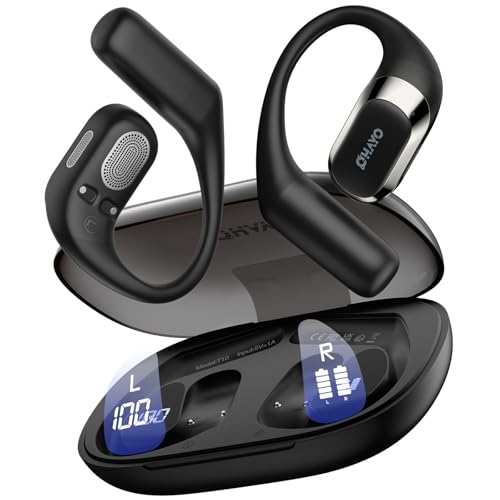 OHAYO T10 Open-Ear Headphones, 40H Battery
|
5.8/10 | Buy | ||
 CoolJumper Clip-On Open-Ear Earbuds, Bluetooth 6.1, 50H Battery
|
5.5/10 | Buy |
Aftershokz OpenRun Pro 2 Bone Conduction Headphones
Open-ear wireless headphones combining bone conduction and air conduction technology for dual-driver audio and environmental awareness during workouts. Built for runners and athletes seeking secure fit without ear canal insertion, with wind-resistant mics and customizable EQ modes.
Pros
- Secure, stable fit designed specifically for high-movement activities like running and cycling
- Maintains environmental awareness without removing ears from audio, useful for outdoor safety
- Effective wind and noise filtering for clear calls at speeds up to 15 mph
- Customizable audio through dedicated EQ modes and app controls
- Lightweight design at 0.067 pounds minimizes fatigue during extended workouts
Cons
- No verified buyer reviews available to assess real-world durability or sound quality consistency
- Open-ear design means audio leaks to surrounding environment, limiting privacy
- Bone conduction technology may not appeal to users accustomed to traditional in-ear bass response
Nothing Ear Open Bluetooth Earbuds with AI Calls
Open-ear design prioritizes ambient awareness and all-day comfort with an ergonomic hook fit, 30-hour battery life, and dual-mic AI noise reduction for calls. Best suited for active users and those who need situational awareness, though the open design trades traditional sound isolation for social listening.
Pros
- Exceptional battery endurance at 30 hours combined playtime
- Open-ear design ideal for runners, cyclists, and commuters who need environmental awareness
- Strong call quality with AI noise reduction trained on 28 million samples
- Seamless dual-device switching via multipoint Bluetooth 5.3
- Lightweight and ergonomic with adjustable 50-degree tilted hooks
Cons
- Open design means minimal sound isolation and potential audio leakage in quiet environments
- No verified buyer reviews available to assess real-world performance and durability
- ChatGPT features limited to Nothing and CMF phone ecosystem compatibility
SHOKZ OpenRun Pro Bone Conduction Headphones
Open-ear bone conduction headphones designed for runners and athletes who want audio without blocking ambient sound. Built on SHOKZ's 9th generation technology with a titanium frame, these deliver 10 hours of battery life and secure fit for active use.
Pros
- Open-ear design eliminates in-ear discomfort and lets you hear traffic, people, and surroundings
- Stable wraparound frame stays in place during intense exercise
- 10-hour battery life covers most training regimens without daily charging
- Premium sound with powerful bass via bone conduction technology
- 5-minute quick charge provides emergency 1.5 hours of use
Cons
- No verified buyer reviews available to assess real-world durability and comfort consistency
- Bone conduction technology may not suit users preferring traditional enclosed audio quality
- Premium positioning may be a consideration for budget-conscious buyers
Soundcore V30i by Anker Open Ear Earbuds, Open Ear Headphones True Wireless
JLab JBuds Open Wireless Headphones
Open-ear headphones designed for all-day comfort with 24+ hours of battery life and dual drivers for spacious sound. Best for users prioritizing breathability and extended wear over noise isolation.
Pros
- Exceptional battery life supports full workday plus personal time without recharge
- Open-back design prevents heat buildup during extended wear, ideal for 8-hour sessions
- Dual driver architecture delivers layered, room-filling soundstage
- Multipoint Bluetooth and Google Fast Pair enable seamless switching between devices
- Included JLab app provides EQ customization and noise-isolating mic controls
Cons
- Open-ear design offers no passive noise isolation, limiting use in loud environments or for focus-demanding tasks
- No active noise cancellation despite app-based mic features
- Rating reflects zero verified buyer reviews, so real-world durability and sound quality remain unvalidated
Soundcore C50i Open-Ear Earbuds with FlexiClip
These clip-on earbuds deliver open-ear comfort without blocking your ear canal, making them ideal for runners and gym-goers who need situational awareness. The 12mm drivers provide solid bass and the FlexiClip design adapts to different ear shapes for stable all-day wear.
Pros
- Secure fit during intense workouts without in-ear insertion
- Extended battery life with 8 hours per charge plus 20-hour case reserve
- Lightweight and stable design minimizes slipping during running
- AI call filtering useful for outdoor work calls and commutes
- IP55 rating handles sweat and wet conditions reliably
Cons
- No verified user reviews available yet to assess real-world durability
- Open-ear design may not suit users seeking passive noise isolation
- Limited color options (only Black listed)
Yistao Gen 2 Bone Conduction Headphones, 60H Battery
Yistao's second-generation open-ear headphones deliver upgraded bone conduction tech with 30% louder output and Bluetooth 6.0 for faster pairing. The liquid silicone design reduces pressure by 40% and IP68 rating handles sweat and rain, making them solid for runners and fitness enthusiasts seeking extended battery life.
Pros
- Exceptional battery life allows multi-day use without charging
- Dual EQ modes optimize audio for different content types
- Upgraded materials improve comfort during extended wear
- IP68 protection ensures durability for active users
- Faster Bluetooth 6.0 connectivity speeds up pairing
Cons
- No verified buyer reviews yet to validate real-world performance claims
- Bone conduction audio quality depends on fit, which may vary by user anatomy
- Limited color option at launch (Obsidian only)
OHAYO T10 Open-Ear Headphones, 40H Battery
Lightweight open-ear design keeps you aware of surroundings while delivering quad-speaker audio through 15mm drivers. Built for active use with IPX6 waterproofing, Bluetooth 5.4, and touch controls, though the lack of verified buyer reviews means real-world performance data is limited.
Pros
- Extremely lightweight at 8 grams per earbud, rated for 10+ hours continuous wear without discomfort
- Exceptional battery life with 40 total hours between earbud charge and case
- Open-ear design reduces ear canal friction by 80% compared to in-ear models and keeps you aware of surroundings
- IPX6 waterproofing rigorously tested for 100+ hours of active use
- Bluetooth 5.4 connectivity with ergonomic hooks for secure fit during workouts
Cons
- No verified buyer reviews available, so real-world performance and durability claims cannot be independently validated
- Open-ear audio delivery may not suit users wanting sound isolation or private listening
- Touch control interface described generically without details on responsiveness or accidental activation risk
CoolJumper Clip-On Open-Ear Earbuds, Bluetooth 6.1, 50H Battery
These clip-on open-ear headphones bypass traditional in-ear designs with an ergonomic structure that rests on your ear without canal insertion, making them ideal for all-day wear and glasses wearers. With Bluetooth 6.1, 50-hour total battery life, and a focus on ambient awareness, they suit users who want audio without isolation.
Pros
- Exceptional comfort for extended wear; no ear canal insertion eliminates fatigue common with traditional in-ears
- Authentic ambient awareness design lets you hear surroundings while listening, ideal for commuting and outdoor activity
- Strong battery performance with 50-hour total capacity and digital display on charging case
- Reliable Bluetooth 6.1 connection with optimized call clarity in noisy environments
Cons
- No verified user reviews yet to validate real-world comfort and audio quality claims
- Open-ear design means sound leaks to nearby people, limiting privacy in shared spaces
- 5-6 hour single charge may require frequent case access on longer outings
Open-Ear Headphones Buying Guide
Choosing the right pair of open-ear headphones comes down to more than just brand recognition. The category encompasses bone conduction bands, clip-on earbuds, and earhook-style buds, each with different tradeoffs in sound delivery, comfort over long wear, and weather resistance.
The subsections below break down the criteria that matter most, so you can match a specific design to your actual use case rather than buying on spec sheets alone.
If you are curious how open-ear options compare to fully enclosed designs, our roundup of over-ear headphones and our coverage of noise cancelling headphones offer useful contrast points.
Open-Ear Design Type: Bone Conduction vs. Air Conduction

The most important fork in the road is whether you want bone conduction or air conduction.
Bone conduction headphones, like the SHOKZ OpenRun Pro series, use transducers pressed against the cheekbones to send vibrations directly to the cochlea, bypassing the ear canal entirely.
This makes them a strong choice for swimmers, trail runners, or anyone who finds in-ear buds uncomfortable for extended periods.
The tradeoff is that bass reproduction is inherently limited by the physics of vibration-based delivery, and sound leakage at higher volumes can be noticeable.
Air conduction open-ear designs, including clip-on and earhook styles from brands like Soundcore, Nothing, and JLab, place small speakers near the ear canal without sealing it.
These typically deliver fuller, more natural sound with better low-end presence than bone conduction alternatives, because the driver moves air the same way a traditional speaker does.
If audio quality is your priority and you simply want situational awareness rather than a fully sealed fit, an air conduction open-ear design will usually sound more satisfying.
Consider your primary activity and how much you care about audio fidelity relative to wearing security before committing to either camp.
Fit and Wearing Security

Open-ear headphones stay on your ears using one of three main mechanisms: a behind-the-neck band (common with bone conduction), an earhook that wraps around the outer ear, or a clip that grips the ear’s outer ridge.
Each approach has a different stability profile under movement. Behind-the-neck bands like those on the SHOKZ lineup are extremely secure for vigorous running and cycling because the band anchors the transducers against your face.
Earhook designs, such as those used by Nothing and JLab, are lighter and less obtrusive for casual daily wear but may shift during high-intensity interval training.
Clip-on designs like the Soundcore C50i attach without any earhook loop, which appeals to users who dislike anything wrapping around the ear. However, they can feel less secure during sudden directional changes or intense cardio.
When reading buyer feedback, look specifically for comments from users who share your activity type rather than averaging all reviews together. A pair that gets five stars from commuters may get mixed marks from ultra-marathon runners, and vice versa.
Fit comfort over multi-hour sessions is a separate question from fit security during a thirty-minute workout, so weight both factors according to your daily routine.
Water and Sweat Resistance
IP ratings determine how well a pair of open-ear headphones survives the conditions you put it through. An IPX4 rating handles sweat and light rain, which is adequate for most gym sessions and outdoor walks.
IPX6 adds resistance to powerful water jets and is a better choice for cyclists caught in unexpected downpours or athletes with heavy sweat output.
IP68, seen on the Yistao Gen 2, adds full submersion protection, which is particularly relevant if you swim or want maximum peace of mind in wet environments.
It is worth noting that IP ratings are measured under controlled laboratory conditions, and real-world durability also depends on build quality and how well the brand seals internal seams.
Expert consensus consistently points out that a lower IP rating from a reputable brand with quality control processes often holds up better in practice than a higher claimed rating from an unknown manufacturer.
Always cross-reference the IP rating with independent durability assessments and verified buyer feedback before concluding a pair will survive your specific conditions.
Battery Life and Charging

Battery life expectations vary significantly across open-ear headphone types. Bone conduction bands typically deliver somewhere between eight and twelve hours of continuous playback, which covers most training blocks and daily commutes.
Air conduction earhook and clip-on models have more interior volume for larger batteries, and several options in this guide claim well over twenty-four hours of playback on a single charge, with charging cases adding additional top-ups between sessions.
The CoolJumper clip-on model, for instance, claims up to fifty hours of total battery with its case, which suits travelers or users who regularly forget to charge their gear.
Pay attention to quick-charge features, as these are frequently more useful than raw maximum battery figures. A pair that offers five minutes of charging for an hour of playback is practically valuable for anyone with an unpredictable schedule.
Also confirm whether the charging case itself charges via USB-C, since older proprietary connectors or micro-USB ports add cable clutter.
Open-ear headphones destined for outdoor use pair naturally with other portable gear, and having a single cable standard simplifies your kit alongside items like waterproof Bluetooth speakers that share the same connector.
Audio Quality and Sound Signature

Open-ear headphones operate with an inherent acoustic disadvantage compared to sealed in-ear monitors: ambient noise competes directly with the music. As a result, driver size and tuning philosophy matter more here than in closed-back designs.
Larger drivers generally move more air, producing more audible bass even in noisy environments.
Models like the JLab JBuds Open use relatively large open-ear drivers paired with app-based EQ, allowing users to boost frequencies that would otherwise be masked by surrounding sound.
Expert consensus notes that bone conduction headphones sacrifice bass extension and absolute volume ceiling in exchange for their unique wearing form factor. If you care deeply about low-frequency reproduction, an air conduction open-ear design will serve you better.
Conversely, if you want the most minimal, anatomically unobtrusive form factor and can accept a slightly thinner sound signature, bone conduction remains the benchmark for wearing comfort at high activity levels.
Consider pairing your open-ear headphones with a portable Bluetooth speaker for stationary listening when audio quality takes priority over wearability.
Call Quality, Connectivity, and App Support

Because open-ear headphones are frequently used in active outdoor settings, microphone quality for calls matters more than it might for studio or home office headphones. Look for models with dedicated noise-filtering microphones or AI-enhanced call processing.
The Nothing Ear (open) explicitly touts its Clear Voice Technology for AI-assisted calls, which expert reviewers note makes a meaningful difference in windy outdoor environments.
Multipoint connection, which lets you pair simultaneously to a phone and a laptop, is increasingly standard at mid-range price points and above.
App support is a secondary but useful differentiator. Companion apps from Soundcore and JLab allow EQ customization, control remapping, and firmware updates, which can meaningfully improve the experience over time.
Bluetooth version also matters: newer Bluetooth 5.3 and 5.4 implementations offer lower latency and more stable connections in crowded RF environments like gyms and transit stations, compared with older Bluetooth 5.0 implementations.
For users who also game, note that open-ear designs are typically not optimized for gaming latency; a dedicated set of gaming headsets will serve competitive use cases far better.
Why You Should Trust Us
ProductFind is an independent review publication with no brand partnerships that influence editorial rankings. Every product in this guide has been assigned a PF Score on a 0 to 10 scale, reflecting a consistent evaluation framework applied uniformly across the category.
We do not conduct our own product trials; our evaluations are grounded in research, published data, expert review consensus, and verified buyer feedback.
Our research process for open-ear headphones included analyzing manufacturer-published specifications, synthesizing expert review consensus from multiple independent audio publications, and reviewing verified buyer feedback across retail platforms to identify recurring real-world strengths and weaknesses for each model.
ProductFind may earn an affiliate commission when you purchase through links in this article. That commercial relationship has no bearing on which products appear, how they are ranked, or what PF Score they receive.
Rankings reflect research-based merit, not affiliate rate. If a product earns a high score, it is because the evidence supports it; if it scores lower, we say so plainly, even when the commission potential might favor otherwise.
We believe transparent methodology is the foundation of genuinely useful buying advice.
Final Thoughts
The open-ear headphone market in 2026 offers a genuinely strong range of options across budgets and use cases.
Whether you are a daily runner who needs a secure bone conduction band or a commuter who wants comfortable clip-on earbuds for all-day wear, there is a well-supported choice in this lineup.
Here are our editorial picks by use case, each earned through PF Score research:
- Best Overall: SHOKZ OpenRun Pro 2 earns the top overall position with the highest PF Score in this group, combining premium bone conduction performance, a smart noise-filtering microphone, and a reflective safety strip into a well-rounded package that leads the field across nearly every research metric.
- Best for Style and Versatility: Nothing Ear (open) stands out for its distinctive design, multipoint Bluetooth connectivity, AI-assisted call clarity, and ChatGPT integration, making it the strongest pick for users who want open-ear awareness without sacrificing everyday usability.
- Best Bone Conduction Value: SHOKZ OpenRun Pro delivers the proven SHOKZ bone conduction experience with premium deep bass and long battery life at a more accessible price point than its successor, making it an excellent choice for runners and cyclists who want the brand’s reliability without the flagship premium.
- Best Budget Pick: Soundcore V30i offers genuinely competitive open-ear performance at a budget-friendly price, making it the easiest recommendation for first-time open-ear buyers who want to experience the format without a large financial commitment.
- Best for All-Day Comfort: Soundcore C50i uses a clip-on form factor that many users find the least intrusive design for extended wear, supported by Soundcore’s reliable audio tuning and app ecosystem at a competitive mid-range price.
Whichever direction you go, open-ear headphones represent a meaningful quality-of-life upgrade over sealed buds for anyone who values awareness of their environment.
The best pair is ultimately the one that fits your ear shape, activity level, and audio preferences comfortably enough that you actually wear it every day.
Frequently Asked Questions
Are open-ear headphones safe for outdoor running and cycling?
Yes, and situational awareness is actually the primary reason most runners and cyclists choose them. Because the ear canal remains open, you can hear approaching vehicles, other cyclists, or pedestrians without removing your headphones.
Most reputable models also carry at minimum an IPX4 sweat rating, and several in this guide go significantly higher.
For high-traffic outdoor environments where hearing your surroundings could be a safety matter, open-ear designs are widely considered a safer audio choice than noise-isolating or noise-cancelling in-ear alternatives.
If you are assessing broader outdoor audio options, Bluetooth speakers are another consideration for group outdoor activities where shared audio is preferable.
Do open-ear headphones leak sound to people nearby?
All open-ear designs leak some sound at higher volumes because the driver is not sealed against the ear. Bone conduction models can be particularly noticeable to bystanders at elevated volumes due to the transducer vibrations.
Air conduction open-ear buds with directional drivers tend to leak less than bone conduction at equivalent playback levels, though both will be audible to someone sitting very close to you in a quiet setting.
For shared offices or quiet public transit, keeping the volume moderate significantly reduces how much sound escapes to others nearby.
Can I use open-ear headphones for working from home and video calls?
Absolutely. Several models in this guide specifically emphasize call clarity features. The Nothing Ear (open) includes AI-driven voice processing, and the SHOKZ OpenRun Pro 2 features a smart microphone tuned for vocal pickup.
The open-ear format is actually well-suited to work-from-home use because you can hear doorbell notifications, your household, or a colleague walking in without removing your headphones between calls.
For professional audio recording or studio-quality call monitoring, a dedicated pair of over-ear headphones will provide better isolation and microphone performance, but for everyday calls, open-ear models are more than adequate.
How do bone conduction headphones compare to regular open-ear earbuds for sound quality?
Bone conduction headphones transmit audio through cheekbone vibrations rather than moving air into the ear canal, which means bass reproduction is inherently more limited than with air conduction drivers.
Expert review consensus consistently places air conduction open-ear earbuds ahead of bone conduction models on raw audio quality metrics, including frequency response, bass depth, and stereo imaging.
Bone conduction compensates with an unparalleled wearing form factor that leaves the ear canal completely unoccupied, which matters most to swimmers and those with ear canal sensitivities.
If audio fidelity is your top priority and you simply want ambient awareness, an air conduction open-ear earbud will sound noticeably better than a bone conduction alternative at the same price point.
What is a reasonable price range for quality open-ear headphones?
The open-ear headphone category now spans from genuinely budget-friendly clip-on options to premium bone conduction bands. Budget-tier picks typically cover essential features like Bluetooth connectivity, basic water resistance, and acceptable call quality.
Mid-range models add better battery life, improved driver performance, app support, and EQ customization. Premium options from established audio brands layer in advanced microphone systems, higher IP ratings, proprietary sound technologies, and longer warranty coverage.
In most cases, spending in the mid-range is the sweet spot for users who want a daily driver rather than an occasional-use accessory.
Spending more than necessary rarely yields proportional audio improvements in this category, though premium build quality and comfort refinements can justify the gap for serious athletes.
Do open-ear headphones work well for people who wear glasses or hearing aids?
This is one area where bone conduction headphones have a clear practical advantage.
Since bone conduction bands sit on the cheekbones in front of the ear rather than around it, they do not interfere with glasses temples or hearing aids positioned in or around the ear canal.
Many hearing aid users specifically seek out bone conduction designs because they can use both simultaneously. Earhook-style air conduction open-ear buds can sometimes conflict with thick glasses temples, depending on the shape of the hook.
Clip-on designs are generally the most glasses-friendly air conduction option because they attach to the ear’s outer edge rather than looping around it.
Reading verified buyer feedback from glasses-wearing users is particularly useful when evaluating fit compatibility for a specific model.
About the author
Pat is a reviewer and writer for ProductFind who specializes in Audio & Headphones. Pat evaluates products through independent research: specifications, expert review consensus, and verified buyer feedback, and rates each one on the PF Score. Pat focuses on helping readers pick the right audio & headphone for their needs and budget.