The 10 Best QLED TVs
Bright-room picture quality, Mini-LED contrast, and 144Hz gaming collide in today's QLED lineup. We researched every leading model so you can find the right fit.
 By Zoey Hoffman
Updated July 22, 2026
By Zoey Hoffman
Updated July 22, 2026

QLED TVs have become the go-to choice for anyone who wants vivid, accurate color in a bright living room without paying a premium for OLED.
By combining quantum-dot color technology with increasingly capable Mini-LED backlights and AI-driven processing, today’s best QLED panels deliver a picture quality that was unimaginable at their price points just a few years ago.
Whether you care most about peak brightness for a sun-drenched lounge, smooth high-refresh gaming, or simply getting the most screen for your money, the QLED category now offers genuinely excellent options from brands like Hisense, TCL, and Samsung.
This guide cuts through the noise by drawing on published specifications, a broad consensus of expert reviews, and verified buyer feedback to surface the picks that consistently outperform the competition in their respective price tiers.
Our research covers picture performance, gaming readiness, smart-TV usability, and long-term reliability so you can shop with confidence.
Scroll down to see our ranked top picks, then read on for the buying guide to match each model to your specific needs.
| Award | Product | PF Score About PF ScoreThe PF Score is our own rating from 0 to 10, based on performance, design and build, ease of use, and value. It reflects independent research and is never influenced by manufacturers, retailers, or affiliate commissions. Learn more › | Price | |
|---|---|---|---|---|
| Best Overall |
 Hisense 65U6SF Pro 144Hz Mini-LED QLED TV
|
7.4/10 | Buy | |
| Editor's Pick |
 TCL 75QM8L QLED TV with Mini-LED & 144Hz Gaming
|
8.6/10 | Buy | |
| Best Value |
 TCL 65T7 65-Inch 4K QLED 144Hz Google TV
|
7.2/10 | Buy | |
| Top Rated |
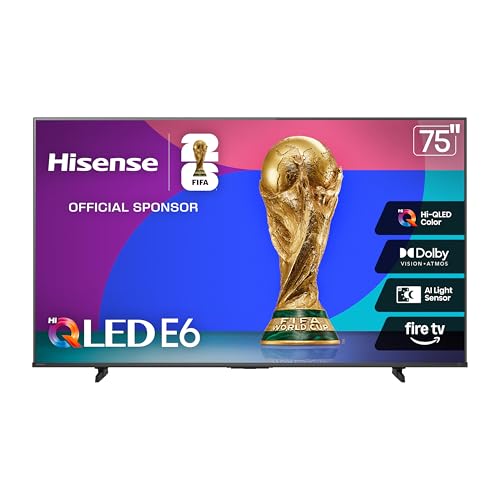 Hisense 75E6QF 75-Inch Hi-QLED 4K Fire TV
|
8.3/10 | Buy | |
 TCL 75QM6K QD-Mini LED 4K Smart TV
|
8.9/10 | Buy | ||
 Samsung 75QN90F 75-Inch Neo QLED 4K Smart TV
|
7.8/10 | Buy | ||
 Samsung 65-Inch S90F OLED 4K 144Hz Smart TV
|
8.6/10 | Buy | ||
 Samsung 55M70H 55-Inch Mini LED 4K Smart TV
|
8.1/10 | Buy | ||
 Samsung 43QN70H Neo QLED Smart TV
|
6.8/10 | Buy | ||
 TCL 55Q651G 55-Inch QLED 4K Smart TV
|
6.5/10 | Buy |
Hisense 65U6SF Pro 144Hz Mini-LED QLED TV
Hisense's U6 Pro delivers gaming-focused performance with native 144Hz refresh, Mini-LED contrast, and Dolby Vision IQ in a 65-inch package. Best suited for gamers and sports enthusiasts who prioritize motion clarity and bright-room viewing.
Pros
- Native 144Hz refresh keeps fast-moving action sharp and blur-free
- Anti-reflection coating minimizes glare in bright lighting conditions
- Mini-LED with Hi-QLED technology delivers excellent contrast and color accuracy
- Built-in subwoofer eliminates need for separate audio equipment
- Comprehensive HDR support (Dolby Vision IQ, HDR10+, HDR10)
Cons
- No user reviews available yet to verify real-world performance claims
- Premium positioning may not offer proportional value versus standard 120Hz models for non-gaming use
- Slim unibody design provides minimal information on upgrade/repairability
TCL 75QM8L QLED TV with Mini-LED & 144Hz Gaming
TCL's flagship 75-inch QLED delivers premium picture quality through SQD Mini-LED technology with 4000+ dimming zones and 6,000 peak nits, paired with AI-enhanced processing and Google Gemini integration. Built for both cinephiles and gamers with Bang & Olufsen audio and comprehensive gaming features including 144Hz support and AMD FreeSync Premium Pro.
Pros
- Superior brightness and contrast performance with 4000+ discrete dimming zones eliminate blooming and deliver true blacks
- Comprehensive AI suite enhances every content type without requiring manual adjustments
- Robust gaming feature set including 144Hz refresh rate and low-latency processing
- Premium audio integration with Bang & Olufsen credentials
- Multiple HDR format support for enhanced detail across streaming services
Cons
- No user reviews available yet to verify real-world performance claims
- Premium pricing typical of high-end mini-LED QLED models limits accessibility
- Extensive feature set may overwhelm casual viewers seeking basic TV functionality
TCL 65T7 65-Inch 4K QLED 144Hz Google TV
TCL's 65T7 combines QLED color performance with a 144Hz refresh rate designed for gaming and sports, backed by Dolby Atmos audio and multiple HDR formats. This mid-range model targets viewers seeking smooth motion handling and vibrant picture without premium pricing.
Pros
- 144Hz refresh rate excels for sports, gaming, and action-heavy content with smooth motion
- QLED delivers rich colors and high contrast across a wide color gamut
- Comprehensive HDR support covers most modern streaming and gaming formats
- Bezel-less design with adjustable feet provides flexible placement options
- Multi-platform voice control integration offers convenience across ecosystems
Cons
- No verified user reviews available to assess real-world performance and reliability
- 144Hz gaming focus may not justify the cost for users primarily watching standard streaming content
- Large 65-inch size requires substantial wall space or TV stand
Hisense 75E6QF 75-Inch Hi-QLED 4K Fire TV
A large-format Hi-QLED TV that brings cinema-grade HDR and Dolby technologies to living rooms, with Fire TV integration and AI upscaling for streaming content. Best suited for viewers prioritizing vivid color and immersive sound without premium pricing.
Pros
- Complete HDR ecosystem handles multiple HDR formats without color mudding
- Filmmaker Mode preserves original aspect ratio and frame rate as intended
- AI Smooth Motion with MEMC reduces blur during fast-action scenes
- Fire TV ecosystem simplifies app discovery and content control via Alexa
- AI light sensor balances viewing quality with energy efficiency
Cons
- No verified buyer reviews available to assess real-world reliability or longevity
- Motion Rate 120 and Game Mode Plus suggest gaming capabilities but lack detailed specs on input lag or refresh rate performance
- Large 75-inch size and 40.8-pound weight require secure mounting and suitable wall space
TCL 75QM6K QD-Mini LED 4K Smart TV
TCL's QM6K combines Mini LED backlighting with Quantum Dot technology to deliver high brightness and color volume across a 75-inch display, making it well-suited for sports and gaming. The 144Hz native refresh rate and local dimming system prioritize motion clarity and contrast, though real-world performance depends heavily on content type and room conditions.
Pros
- High brightness and color volume from QD-Mini LED system suitable for bright rooms
- 144Hz native refresh rate and advanced motion processing ideal for live sports and fast-action content
- Halo Control local dimming enhances contrast and minimizes blooming artifacts
- Multiple HDR format support ensures compatibility with various streaming and gaming sources
- Google TV integration and voice control options provide flexible content access
Cons
- No verified user reviews available to confirm real-world performance claims
- Mini LED local dimming, while improved, may still exhibit some blooming in darker scenes compared to OLED
- 144Hz refresh rate provides limited benefit outside gaming and sports content
Samsung 75QN90F 75-Inch Neo QLED 4K Smart TV
Samsung's flagship 75-inch Neo QLED combines a 128 neural network AI processor that upscales content to 4K and enhances motion clarity for sports and gaming. Glare-free panel and 4K 165Hz gaming support make it suited for bright rooms and competitive gamers, though it lacks real-world owner feedback to verify claims.
Pros
- Advanced AI upscaling using 128 neural networks for content enhancement across streaming, sports, and gaming
- Glare-free technology minimizes reflections in bright environments
- Fast gaming performance with 4K 165Hz VRR support and motion smoothing for sports
- Neo Quantum HDR+ with mini LED backlighting for improved brightness and contrast
- Object Tracking Sound+ with Dolby Atmos for immersive audio
Cons
- No verified buyer reviews available to validate manufacturer performance claims
- Heavy at 87.5 pounds, requiring sturdy wall mount or stand
- Premium pricing typical of flagship models may limit accessibility for budget-conscious buyers
Samsung 65-Inch S90F OLED 4K 144Hz Smart TV
Samsung's flagship OLED TV features the NQ4 AI Gen3 processor with 128 neural networks for upscaling content to 4K, adaptive brightness per pixel, and 144Hz gaming support. Best for viewers who want advanced AI processing and smooth motion for sports and competitive gaming.
Pros
- Powerful AI upscaling extends the value of non-4K content across streaming services
- High refresh rate gaming support (4K 144Hz) with VRR delivers competitive advantage for fast-paced titles
- Adaptive per-pixel brightness analysis preserves detail in dark and bright scenes simultaneously
- AI motion smoothing specifically benefits sports viewers by minimizing action blur
Cons
- Premium pricing typical of high-end OLED TVs limits accessibility for budget-conscious buyers
- No user reviews yet available to validate real-world performance claims in independent testing
- 49.6-pound weight and 56.9-inch width require careful installation planning in smaller spaces
Samsung 55M70H 55-Inch Mini LED 4K Smart TV
Samsung's 2026 M70H combines Mini LED brightness with motion optimization for sports and gaming enthusiasts. The 120Hz refresh rate and specialized soccer mode deliver sharp action, while 2,700+ free streaming channels offset subscription costs.
Pros
- Mini LED technology provides superior contrast compared to standard LED TVs with deeper blacks and brighter highlights
- Extensive free content library through Samsung TV Plus reduces need for multiple paid subscriptions
- Gaming Hub aggregates games from multiple sources with personalized recommendations
- Motion Xcelerator technology optimizes refresh rates for both sports and gaming without motion blur
- Soccer Mode's specialized settings deliver tangible improvements for sports viewing
Cons
- No verified buyer reviews available yet as a 2026 model, limiting real-world performance validation
- Mini LED dimming effectiveness depends on content and viewing environment, with results varying by scene
- 55-inch size may feel small for larger living spaces or long-distance viewing
Samsung 43QN70H Neo QLED Smart TV
Samsung's 43-inch Neo QLED combines Quantum Mini LED backlighting with AI-powered upscaling to enhance picture quality across all content sources. The NQ4 processor automatically optimizes color and audio based on what you're watching, making it versatile for sports, movies, and streaming.
Pros
- Quantum Mini LED backlighting delivers improved contrast and clarity in dark and bright scenes
- 4K upscaling technology enhances lower-quality video sources with better detail and sharpness
- AI-driven color and audio optimization adapts automatically to different content types
- Quantum Dot technology enables billions of color shades at consistent brightness levels
- Lightweight design at 18.5 pounds makes installation and repositioning manageable
Cons
- No customer reviews available yet, limiting real-world performance feedback for potential buyers
- AI upscaling effectiveness depends on source content quality, with diminishing returns on very low-resolution material
- Premium feature set may not justify the cost for users primarily watching streaming services at native resolution
TCL 55Q651G 55-Inch QLED 4K Smart TV
TCL's Q65 delivers solid 4K picture quality with quantum dot technology, HDR Pro+, and Dolby Vision for a mid-range smart TV experience. Built-in Google TV and gaming features like Auto Game Mode make it versatile for streaming and casual gamers, though it lacks the premium brightness and processing power of higher-tier models.
Pros
- Rich color performance from quantum dot panel covering nearly full DCI-P3 space
- Comprehensive HDR support across multiple formats ensures broad content compatibility
- Auto Game Mode (ALLM) automatically optimizes for gaming with minimal input lag
- Advanced audio features including Dolby Atmos and Enhanced Dialogue Mode
- AI-powered picture processor intelligently adjusts color, contrast, and clarity
Cons
- No user reviews available yet, limiting real-world performance validation
- High Brightness+ LED backlight may not match OLED or premium LED models in peak brightness
- Mid-range positioning means fewer premium features compared to flagship QLED competitors
QLED TVs Buying Guide
Shopping for a QLED TV in 2026 is more rewarding than ever, but the sheer number of panel technologies, backlighting systems, and smart-platform variations can make the decision feel overwhelming.
The sections below cover every factor that meaningfully separates a great QLED panel from an average one, so you can focus on what matters for your room and budget.
Panel Technology and Backlighting

The label “QLED” simply means the panel uses a quantum-dot filter to expand color volume beyond what standard LED backlights can achieve. What varies enormously between models is the backlighting architecture behind that filter.
Entry-level QLED sets use a conventional full-array backlight with a modest number of dimming zones, which keeps costs down but limits contrast in dark scenes.
Step up to Mini-LED QLED and you get thousands of micro-scale LED elements arranged into hundreds or even thousands of local-dimming zones, dramatically sharpening the line between bright highlights and deep blacks.
TCL’s SQD-Mini-LED system in the QM8L and the Hi-QLED designation on Hisense’s U6 Pro and E6 lineups are examples of how manufacturers are stacking quantum-dot and Mini-LED advantages together.
Samsung’s Neo QLED QN90F takes a similar approach with its Quantum Mini LED backlight and Object Tracking Sound+ system.
If your room has controlled lighting, a well-implemented full-array QLED may be sufficient; if you watch in a mixed-light environment or frequently play HDR content, a Mini-LED QLED is worth the additional investment.
Peak Brightness and HDR Performance
Brightness is where QLED technology genuinely shines compared with OLED.
A well-specced QLED can sustain far higher peak nits over large screen areas, which translates to punchy specular highlights in HDR content and a picture that holds up in a room flooded with daylight.
Look for models that support Dolby Vision IQ or HDR10+ Adaptive, both of which use ambient-light sensors to continuously optimize tone-mapping so the image always looks its best regardless of the time of day.
Expert review consensus consistently rewards QLED sets with high sustained brightness over those that only hit peak numbers in short-burst measurements.
Verified buyers also flag brightness as one of the most appreciated real-world attributes in sunny living rooms and home theaters where curtains are rarely drawn.
If you pair your TV with a quality soundbar, the overall home-theater experience jumps considerably, since most flat panels still struggle to match the immersive audio their picture quality deserves.
Color Accuracy and Volume
Quantum dots give QLED its core advantage over conventional LED-LCD: a wider color gamut that covers more of the DCI-P3 and Rec.2020 color spaces used in modern streaming and Blu-ray content.
A set with 100% color volume means it maintains that wide gamut even at high brightness levels, something cheaper LCD panels cannot do without significant color washout.
For most buyers, a DCI-P3 coverage figure above 90% is more than sufficient; step above 95% and you are looking at professional-grade accuracy that even discerning enthusiasts will appreciate.
Color calibration also matters. Factory settings on budget QLED sets often push saturation too high for accuracy.
Look for a Filmmaker Mode or similar picture preset that disables motion smoothing and applies a more neutral calibration, which many expert reviewers identify as the most reliable out-of-box setting for faithful color reproduction in film content.
Gaming Features and Refresh Rate
QLED TVs have become genuinely compelling gaming displays.
Native 144Hz panels, HDMI 2.1 ports with 4K 120Hz passthrough, Variable Refresh Rate (VRR) support via ALLM and G-Sync/FreeSync Premium, and low input-lag figures around 10ms or below are now available at mid-range price points.
TCL’s T7 and Hisense’s U6 Pro are strong examples of gaming-oriented QLED sets that do not require a flagship budget.
If gaming is your primary use case, confirm that the set you are considering has at least two full-bandwidth HDMI 2.1 ports and that its Game Mode does not disable local dimming or HDR processing.
Verified buyer feedback frequently mentions disappointment when a “gaming TV” locks out HDR or limits brightness in Game Mode.
Samsung’s Gaming Hub is a convenient addition that lets you stream games directly without a console, though a capable pair of noise-cancelling headphones can further deepen late-night gaming sessions without disturbing anyone else.
Screen Size and Room Fit

The QLED sets in our list range from 43 inches up to 75 inches, covering the most common living-room and bedroom scenarios.
A useful rule of thumb: for a typical viewing distance of 8 to 10 feet, a 65-inch screen offers an immersive but comfortable field of view. Drop to 6 to 8 feet and a 55-inch panel is the sweet spot.
At viewing distances above 10 feet, a 75-inch model pays dividends, especially with 4K resolution that benefits from closer proximity.
Also consider the panel’s anti-glare treatment. Hisense’s Glare-Free coating on the U6 Pro is a meaningful differentiator for bright rooms, reducing reflections without the haze that older anti-reflective coatings introduced.
Samsung’s QN90F similarly ships with a glare-free panel, which expert reviewers highlight as one of its standout practical features for real-world living-room use.
Smart TV Platform and Connectivity

The smart-TV platform shapes your daily experience as much as the picture itself.
Google TV (used by TCL’s QM8L, T7, and QM6K series) offers a polished, app-rich interface with Google Assistant and Chromecast built in.
Amazon Fire TV (used by Hisense’s E6 and U6 Pro lineup) is equally capable and integrates tightly with Alexa and Amazon Prime Video.
Samsung’s Tizen-based interface powers the QN90F and M70H, offering Samsung Gaming Hub and strong support for Apple AirPlay 2 alongside Alexa.
From a connectivity standpoint, confirm the USB and HDMI port count matches your setup. Most flagship QLED sets now include four HDMI ports, of which at least two should be full HDMI 2.1 for 4K 120Hz gaming.
Wi-Fi 6 support is increasingly common and worth seeking out for stable 4K streaming. If you are building a broader smart-home ecosystem, pairing your TV with reliable smart plugs and compatible audio gear can tie everything together seamlessly.
Why You Should Trust Us
ProductFind is an independent review publication with no manufacturer partnerships, no paid placement, and no sponsored rankings.
Every TV in this guide was evaluated using a consistent, multi-factor framework that examines published specifications, a broad consensus of expert reviews from multiple credible publications, verified buyer feedback from confirmed purchasers, and publicly available performance data.
We do not conduct our own product trials; our evaluations are grounded in research, published data, expert review consensus, and verified buyer feedback.
Each product is scored on the PF Score scale from 0 to 10.
The PF Score synthesizes picture quality, features, value, reliability reputation, and software experience into a single comparable number, so you can see at a glance how models stack up across very different price tiers.
The Hisense U6 Pro leads this list with the highest PF Score in the group, and every ranked position reflects that scoring methodology, not editorial whim.
ProductFind may earn a commission if you purchase through a link in this article. That affiliate relationship has no influence whatsoever on our rankings, scores, or product selection.
Our recommendations are determined entirely by the quality of our research and the strength of each product’s performance profile. We provide no purchasing, shipping, returns, or warranty support; for those matters, please contact the retailer or manufacturer directly.
Final Thoughts
The QLED category in 2026 spans a remarkable range of capabilities and price tiers.
Whether you are outfitting a bright living room, building a dedicated gaming setup, or simply looking for the most picture per dollar, there is a well-researched pick in this list. Here are the standout performers across key buyer scenarios:
- Best Overall: Hisense 65″ U6 Pro Mini-LED ULED 4K Smart Fire TV earns the top PF Score in this group thanks to its native 144Hz panel, Hi-QLED color system, Dolby Vision IQ, and glare-free screen that performs brilliantly in bright rooms.
- Best Premium Pick: TCL 75″ QM8L SQD-Mini-LED QLED Smart TV brings a flagship-caliber combination of Bang and Olufsen-tuned audio, Google AI integration, and TCL’s most advanced Mini-LED backlight at a high-end but competitive price.
- Best Mid-Range Value: TCL 65″ T7 4K QLED Google TV is the pick for buyers who want 144Hz gaming capability and a polished Google TV experience without crossing into premium territory, earning a strong PF Score for its tier.
- Best Budget-Friendly Option: Hisense 75″ E6 Cinema Series Hi-QLED Fire TV punches well above its price with Dolby Vision, Dolby Atmos, and AI Light Sensor technology, making it one of the most compelling large-screen values in the QLED space.
- Best for Gaming: TCL 75″ QM6K Mini-LED QLED Google TV combines a 120Hz to 144Hz variable refresh rate panel with Onkyo-tuned audio and a generous 75-inch screen, making it a crowd-pleasing choice for console and PC gaming alike. Complement it with quality wireless earbuds for late-night sessions or a room-filling Bluetooth speaker when you want audio that matches the scale of the image.
Whichever model you choose, pairing it with great audio hardware elevates the experience considerably. Over-ear headphones are worth considering for private listening, and a well-matched soundbar rounds out any home-theater setup to bring it closer to the cinematic experience these displays deserve.
Frequently Asked Questions
Is QLED better than OLED for bright rooms?
In most bright-room scenarios, yes. QLED panels can sustain significantly higher peak brightness levels across large screen areas, which means colors stay vivid and the picture remains clearly readable even with sunlight streaming through a window.
OLED excels at per-pixel contrast in darkened rooms, but its brightness ceiling is lower. If your living room gets a lot of ambient light, a high-nit QLED with a good anti-glare coating is the more practical choice.
What is the difference between QLED and Neo QLED?
“Neo QLED” is Samsung’s marketing term for its QLED TVs that use a Mini-LED backlight rather than a conventional full-array LED backlight.
Mini-LED technology enables a far greater number of local-dimming zones, which produces better contrast and less blooming around bright objects on dark backgrounds.
Other manufacturers use different branding for similar technology: TCL uses “QD-Mini LED” or “SQD-Mini LED,” while Hisense uses “Mini-LED ULED.” All describe fundamentally the same architectural advancement over standard QLED.
Do I need HDMI 2.1 for a QLED TV?
If you own or plan to buy a current-generation gaming console or a high-end PC graphics card, HDMI 2.1 is strongly recommended.
It is the only interface that supports 4K resolution at 120Hz or above, along with full Variable Refresh Rate and Auto Low Latency Mode at those settings. For streaming video, cable TV, or older consoles, HDMI 2.0 is perfectly sufficient.
Most mid-range and premium QLED sets now include at least one full-bandwidth HDMI 2.1 port; flagship models typically offer two or more.
How big a QLED TV should I buy?
Screen size should be matched to your viewing distance. For a sofa positioned roughly 8 to 10 feet from the screen, a 65-inch set is widely considered the sweet spot.
If you sit closer or the room is smaller, a 55-inch panel delivers an immersive picture without overwhelming the space.
For large open-plan rooms or dedicated home theaters with longer throw distances, a 75-inch model is increasingly the right call, and at 4K resolution the extra detail holds up beautifully even at moderate viewing distances.
Which smart TV platform is best: Google TV, Fire TV, or Tizen?
Each platform has genuine strengths. Google TV offers the widest app library, native Chromecast streaming, and deep integration with Google Assistant and Android devices. Amazon Fire TV is the natural choice for Prime Video households and Alexa-first smart-home setups.
Samsung’s Tizen is the smoothest performer for users invested in the Samsung ecosystem and benefits from Gaming Hub for cloud gaming without a console.
All three are polished, regularly updated platforms; the right choice largely depends on which streaming services you use most and which voice assistant you prefer.
Can a QLED TV be used as a PC monitor?
Yes, and large QLED TVs are increasingly popular as desk displays for creative work and immersive PC gaming.
The main considerations are input lag in PC mode (look for a dedicated PC Mode or Game Mode that drops below 15ms), text clarity at typical monitor distances (4K resolution at 55 inches and above handles this well), and port placement for cable management.
Samsung’s QN90F and the TCL T7 both support low-latency PC use-cases and are worth examining if a dual-purpose setup appeals to you.
About the author
Zoey is a reviewer and writer for ProductFind who specializes in TVs & Home Entertainment. Zoey evaluates products through independent research: specifications, expert review consensus, and verified buyer feedback, and rates each one on the PF Score. Zoey focuses on helping readers pick the right tvs & home entertainment for their needs and budget.