The 8 Best TV Stands
Choosing a TV stand means matching size, storage, and style to your actual room. These picks cover every setup from compact bedroom consoles to full entertainment centers.
 By Tanya Wilson
Updated July 23, 2026
By Tanya Wilson
Updated July 23, 2026

A TV stand does far more than hold a screen upright. It anchors your living room layout, organizes the cables and devices that accumulate around any modern entertainment setup, and quietly defines the aesthetic character of the space around it.
Get the choice wrong and you end up with a console that wobbles under a large panel, overwhelms a compact room, or clashes with furniture you already own.
With hundreds of options available spanning minimalist universal leg kits, open-shelf media consoles, and full entertainment centers with integrated power outlets, narrowing the field takes more than a quick star-rating scan.
The ProductFind team researched dozens of TV stands across every price tier, synthesizing published specifications, expert review consensus, and verified buyer feedback to surface the options that genuinely earn their place in a real living room.
Whether you are furnishing a compact bedroom or building out a full home theater setup, the picks below represent the strongest TV stands available right now across different styles, sizes, and budgets.
If you are still weighing a stand against putting the screen on the wall, our coverage of TV wall mounts is worth reading before you commit to either direction.
| Award | Product | PF Score About PF ScoreThe PF Score is our own rating from 0 to 10, based on performance, design and build, ease of use, and value. It reflects independent research and is never influenced by manufacturers, retailers, or affiliate commissions. Learn more › | Price | |
|---|---|---|---|---|
| Best Overall |
 PERLESMITH Universal TV Stand 32-70 inch
|
8.5/10 | Buy | |
| Editor's Pick |
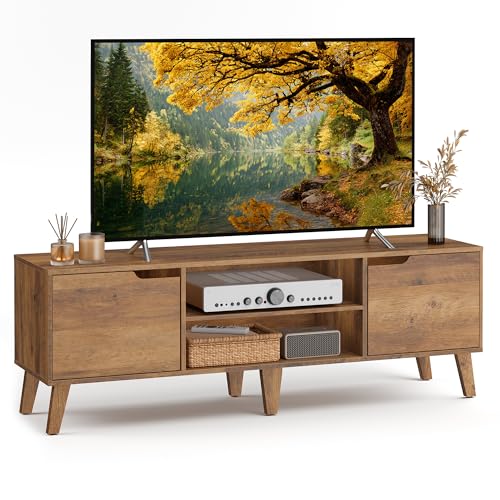 VASAGLE ULTV556K01 58-Inch TV Stand for 65" TVs
|
7.8/10 | Buy | |
| Best Value |
 Faesun 63-Inch TV Stand for 65-70 Inch TVs
|
7.1/10 | Buy | |
| Top Rated |
 HOOBRO BF40DS01 55-Inch TV Stand with Power Outlets
|
7.2/10 | Buy | |
 Furologee 55-Inch TV Stand with Open Storage
|
7.6/10 | Buy | ||
 Perlegear PGFS06 Floor TV Stand, 32-75 inch
|
7.3/10 | Buy | ||
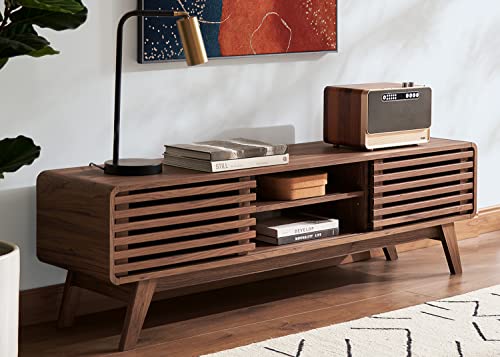 mopio Ensley 59-Inch Mid-Century TV Stand
|
7.4/10 | Buy | ||
 Yaheetech 55-Inch TV Stand with X-Frame
|
6.8/10 | Buy |
PERLESMITH Universal TV Stand 32-70 inch
A height-adjustable tabletop stand designed for larger flat-screen TVs up to 70 inches and 99 lbs, with multiple VESA mounting options and quick 15-minute setup. Best suited for living rooms and bedrooms where a dedicated TV base is preferred over wall mounting.
Pros
- Wide screen size range and weight capacity covers most modern TVs
- Multiple height and angle adjustments for flexible viewing comfort
- Extensive VESA plate compatibility eliminates mounting concerns
- Tempered glass construction adds stability and visual appeal
- Straightforward assembly process with included hardware
Cons
- No customer reviews available to verify real-world performance and durability claims
- Limited information on footprint stability with larger 65-70 inch screens at maximum height
- Requires adequate table or entertainment center surface space due to tabletop design
VASAGLE ULTV556K01 58-Inch TV Stand for 65" TVs
A transitional-style media console with hybrid storage combining 2 enclosed cabinets and 2 open compartments, designed to fit TVs up to 65 inches. The adjustable shelf and 6 cable management holes address practical needs, though it lacks built-in power features common in modern entertainment centers.
Pros
- Flexible storage options with both concealed and open compartments for media, consoles, and accessories
- Practical cable management features and tall clearance for automated cleaning
- Stable construction with adjustable feet to handle uneven surfaces
- Clear assembly instructions with labeled parts for straightforward setup
Cons
- No verified buyer reviews available to assess real-world durability and performance
- No built-in power outlets or cable routing channels, requiring manual management
- Relatively heavy at 43.7 pounds, making repositioning challenging
Faesun 63-Inch TV Stand for 65-70 Inch TVs
A rustic brown entertainment center designed for mid-sized living rooms and bedrooms, featuring curved edges and fabric drawer storage. Built with FSC-certified wood and straightforward assembly, it accommodates TVs up to 70 inches with both open shelving and concealed storage.
Pros
- Supports TVs up to 70 inches with stable 63-inch width footprint
- Combination of open shelves and two fabric drawers for flexible storage options
- Modern curved edge design softens the aesthetic in contemporary interiors
- Made with FSC-certified wood for responsible material sourcing
- Clear assembly instructions with labeled hardware for easy setup
Cons
- No verified customer reviews available to assess real-world durability and build quality
- Relatively shallow 15.7-inch depth may limit device placement or cable management
- Limited color options reported, rustic brown may not suit all decor styles
HOOBRO BF40DS01 55-Inch TV Stand with Power Outlets
Industrial-style entertainment center with built-in power outlets and three-tier storage, designed to accommodate TVs up to 65 inches. Combines rustic brown shelves with a matte black iron frame for flexible room decor, though it lacks reviews to verify real-world durability claims.
Pros
- Built-in power outlets eliminate the need for external extension cords and reduce cable clutter
- Top shelf weight capacity of 130 lb provides solid support for larger flat-screen TVs
- Dual-tone industrial design complements various interior styles without appearing dated
- Ample storage across three tiers accommodates TV components, media, and household items
- Sturdy iron frame construction suggests long-term stability for entertainment setups
Cons
- No verified customer reviews available to confirm durability or assembly difficulty claims
- Lower shelves limited to 22 lb capacity each, restricting storage options for heavier equipment
- Industrial style may not suit minimalist or ultra-modern decor preferences
Furologee 55-Inch TV Stand with Open Storage
A rustic brown media console designed for TVs up to 55 inches, featuring open mesh shelves and a metal frame that blends industrial and farmhouse aesthetics. Best suited for living rooms and bedrooms where you need visible storage for gaming consoles and media equipment without heat buildup concerns.
Pros
- Open shelving allows proper ventilation for heat-sensitive devices like gaming consoles
- Industrial-rustic aesthetic suits multiple decor styles from farmhouse to modern
- Ample storage with labeled accessories and straightforward assembly instructions
- Multi-functional design works as both TV stand and general storage solution
Cons
- No enclosed storage means visible clutter if not organized regularly
- Particleboard construction may not offer the durability of solid wood alternatives
- Currently has no verified buyer reviews to validate real-world performance claims
Perlegear PGFS06 Floor TV Stand, 32-75 inch
A full-featured floor stand for large TVs that combines a sturdy wood base with integrated power outlets and flexible height adjustment. Best suited for living rooms where cable management and viewing comfort matter.
Pros
- Integrated power outlet with multiple AC and USB ports streamlines cable clutter
- Wide height adjustment range and swivel/tilt features suit various room layouts and viewing preferences
- Large wood base provides stability for TVs up to 110 lbs and includes dedicated media shelf
- Compatible with a broad range of TV sizes and VESA patterns from 100x100 to 600x400mm
Cons
- No customer reviews available, making real-world reliability difficult to assess
- Height adjustment requires manual selection among 12 configurations rather than continuous adjustment
- Requires verification of TV size, weight, and VESA pattern before purchase to ensure compatibility
mopio Ensley 59-Inch Mid-Century TV Stand
A walnut mid-century modern TV stand with adjustable shelves and slatted door storage, designed for 55 to 65 inch televisions. Features rounded edges for safety and tapered legs for stability, making it a practical choice for living room entertainment setups.
Pros
- Adjustable shelves let you customize storage layout for different media equipment
- Rounded edges and tapered legs provide both child safety and visual stability
- Slatted door design adds authentic mid-century modern aesthetic
- Fits larger TVs up to 65 inches while maintaining compact 17-inch height
Cons
- No verified buyer reviews available to confirm real-world durability and assembly ease
- Color and dimensions may vary slightly from photos due to lighting and manufacturing tolerances (up to 0.5 inch difference)
- Limited information on material quality and weight capacity for media equipment
Yaheetech 55-Inch TV Stand with X-Frame
A sturdy gray TV console designed for screens up to 65 inches, featuring dual X-frame structures for stability and a two-tier center shelf plus side storage. Best suited for living rooms or offices where both TV mounting and media storage matter.
Pros
- Supports TVs up to 65 inches (88 lb weight capacity) with compact 55-inch length
- Dual X-frame side structures add both visual interest and structural stability
- Ample storage with two-tier central shelf and side compartments for media, consoles, and decor
- Adjustable screw-in feet with center support for leveling on uneven floors
- Versatile vintage-style design works as TV stand, coffee table, or entryway console
Cons
- No customer reviews available to verify real-world durability or assembly difficulty
- Fixed 55-inch width may be tight for larger living room layouts despite 65-inch TV capacity
- Limited color options (gray only based on available specs)
TV Stands Buying Guide
Buying a TV stand involves more variables than most shoppers anticipate.
The dimensions of your TV, the number of devices you own, the height of your seating, the ventilation needs of your components, and the overall aesthetic of the room all shape which stand will actually work for you.
The sections below walk through the criteria that matter most, so you can match a stand to your specific situation rather than simply picking the one with the most reviews.
TV Size Compatibility and Stand Width

The single most important specification to verify before buying is whether the stand is rated for your TV’s size and weight.
Most manufacturers list a maximum screen size in inches alongside a maximum load capacity in pounds or kilograms, and these two numbers are not interchangeable.
A lightweight 65-inch panel may weigh far less than a heavy 55-inch commercial display, so always check both figures against your TV’s actual weight, which is listed in the owner’s manual or on the manufacturer’s website.
Stand width matters just as much as load rating.
The general rule is that the stand should be at least as wide as the TV’s base footprint, and ideally a few inches wider on each side for visual balance and stability.
A 65-inch TV typically needs a stand at least 58 inches wide to look proportional. Narrower consoles can technically support a large screen if the weight rating allows, but the silhouette tends to look top-heavy even when it is structurally sound.
This sizing logic applies equally when pairing a stand with one of the larger panels in our roundup of 65-inch TVs, where base widths vary significantly between brands.
If you are using a universal tabletop stand or replacement leg kit rather than a full console, you also need to confirm VESA compatibility. VESA refers to the standardized bolt-hole pattern on the back of your TV, measured in millimeters.
A kit rated for VESA 400x400mm will not fit a screen with a 600x400mm pattern without an adapter.
Universal leg kits from PERLESMITH and Perlegear, both of which appear in our picks, cover a wide VESA range and are worth considering when original TV legs break or a wider stance is needed for stability.
Storage Configuration and Device Clearance
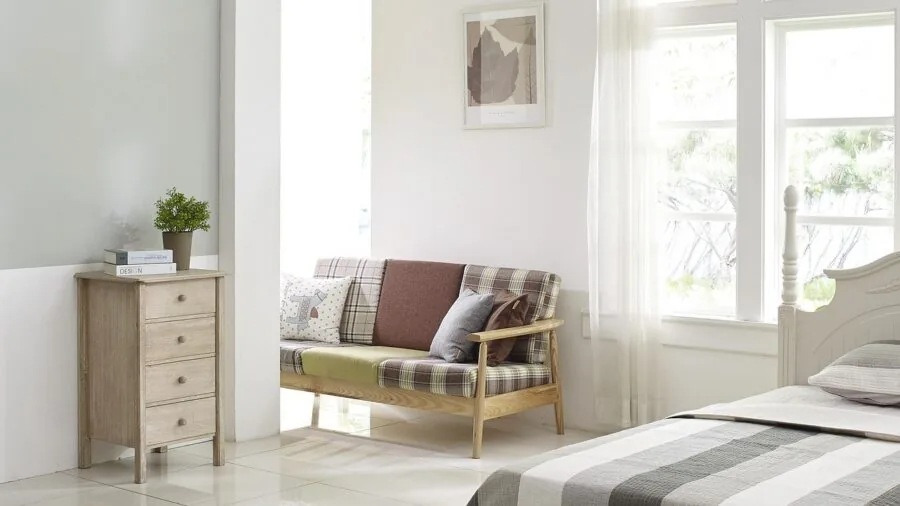
Think about every device that needs to live in or on the stand before you commit to a design.
A streaming stick plugged into an HDMI port takes almost no space, but a game console, a soundbar, a Blu-ray player, a cable box, and a network switch together demand serious shelf real estate.
Open shelves offer maximum airflow and easy access to ports and buttons, while cabinets with doors hide clutter effectively but can trap heat from electronics that run warm.
Drawers work well for remotes, cables, and accessories but are rarely deep enough for full AV components.
Shelf height clearance is a detail that buyers frequently overlook until after assembly. Many game consoles and AV receivers are taller than they appear in product photos.
Measure the height of every device you plan to store and compare it against the interior clearance of each shelf, not just the overall stand height.
Adjustable shelves give you flexibility and are worth prioritizing if your device lineup is likely to change over time.
The VASAGLE 58-inch console in our picks includes an adjustable interior shelf for exactly this reason, making it one of the more practical full-console options in the group.
If your setup includes gaming hardware, ventilation becomes a priority. Active consoles generate substantial heat during extended sessions, and closed cabinets with no rear cutout can cause thermal throttling over time.
Stands with rear cable and airflow channels address this more effectively than those with solid back panels.
Buyers pairing a console stand with one of the top-performing gaming TVs should factor airflow into the storage decision from the start, not as an afterthought.
Viewing Height and Ergonomics

Optimal TV viewing height is generally defined as the center of the screen sitting at eye level when you are seated. For most standard sofas and chairs, that puts the ideal screen center somewhere between 42 and 48 inches from the floor.
The height of the stand plus the height of the TV together determine where the screen center lands, so both measurements matter before you buy.
A low-profile media console that sits 16 inches tall will position a 55-inch TV with its screen center around 43 to 45 inches from the floor, which is comfortable for most seating arrangements.
Floor TV stands and height-adjustable leg kits give you more control over final viewing height, which is particularly useful in rooms where the seating is higher than average or where the stand is placed on a raised platform.
The Perlegear floor stand in our picks is designed specifically for rooms where a tabletop console would position the screen too low for comfortable viewing.
For buyers who want maximum flexibility without any console at all, full motion TV mounts offer tilt, swivel, and height adjustment that no floor-standing console can replicate.
Bedroom setups introduce a different ergonomic equation.
Viewing from a bed typically means a slightly more elevated angle, so a lower stand that works perfectly in front of a sofa may position the screen too low when you are propped against a headboard.
A stand that places the screen center between 36 and 42 inches from the floor usually works well for bed-height viewing.
If you are pairing a stand with a smaller screen for a secondary room, our coverage of small TVs covers the most practical screen sizes for bedrooms and guest rooms.
Cable Management

Every TV stand accumulates cables.
Power cords, HDMI cables, optical audio cables, and USB hubs all converge behind the console, and without a system to manage them, the result is a tangle that is visible from across the room and frustrating to work around.
Look for stands that include cutouts or channels in the back panels for routing cables between shelves, and check whether the stand includes cable clips or ties in the box.
Rear cutouts are far more useful than they sound, and their absence is one of the most common complaints in verified buyer feedback for budget consoles.
Integrated power outlets, a feature found on the HOOBRO console and the Perlegear floor stand in our picks, eliminate the need for a separate power strip and reduce the total cable run significantly.
Shorter, right-angle HDMI cables in particular keep connections tidy when shelf depth is limited.
For setups with multiple devices and complex wiring, a dedicated cable management kit used alongside the stand keeps everything routed cleanly and makes it straightforward to add or remove components later without unpacking the whole setup.
Routing audio through optical audio cables rather than loose adapter chains also reduces visible clutter at the back of the unit considerably, particularly in setups where a soundbar occupies a dedicated shelf below the screen.
Planning the cable run before assembly, rather than after, saves significant time and prevents the need to partially disassemble the console to correct routing mistakes.
Material, Build Quality, and Assembly
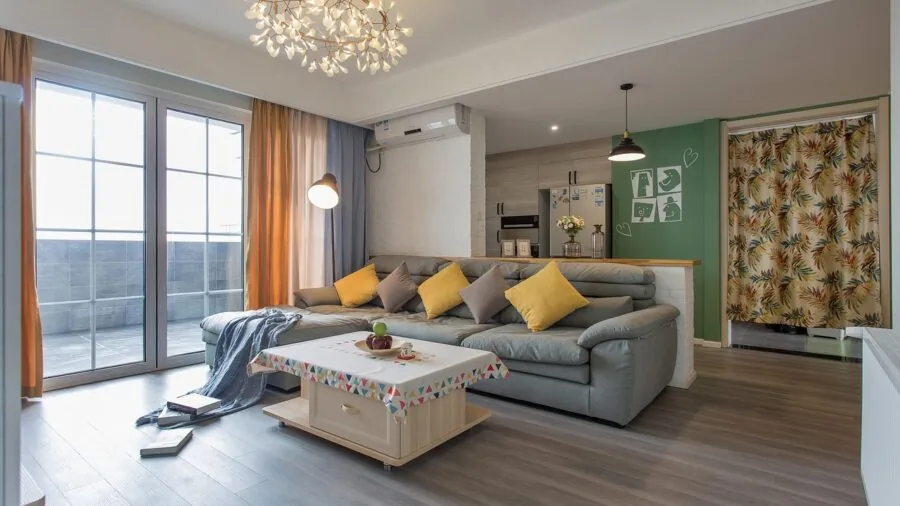
TV stands sold in the budget-to-midrange segment are almost universally made from engineered wood, also called MDF or particleboard, with a laminate or veneer surface finish.
This material is lightweight, cost-effective, and capable of convincing wood-grain aesthetics, but quality varies considerably between manufacturers.
Look for panel thickness of at least 15mm for main horizontal surfaces, metal leg hardware rather than plastic inserts, and cam-lock or bolt fasteners rather than adhesive-only joins at structural corners.
Verified buyer feedback is particularly useful for build quality assessment because it surfaces wobbling, warped panels, and stripped hardware holes within the first few weeks of use, before those issues appear in formal expert reviews.
The main risk with lower-quality engineered wood is not the static weight of the TV but the cumulative wear from opening drawers, adjusting shelves, and moving the unit across rooms.
Six-to-twelve-month buyer feedback is the most reliable signal for long-term durability in this material category, which is why our research methodology weighs sustained buyer feedback alongside expert review consensus.
Assembly complexity is another consideration that spec sheets rarely communicate clearly. Some stands ship in four or five pieces and assemble in under 30 minutes with a single Allen key.
Others arrive in dozens of components and realistically require two people and a full afternoon. Models with pre-drilled holes, numbered hardware packets, and illustrated step-by-step guides consistently receive better assembly feedback than those with ambiguous diagrams and undifferentiated hardware bags.
Reading verified buyer reviews specifically for comments on assembly time and instruction clarity is one of the most reliable ways to predict your own experience before the box arrives.
Style and Room Integration
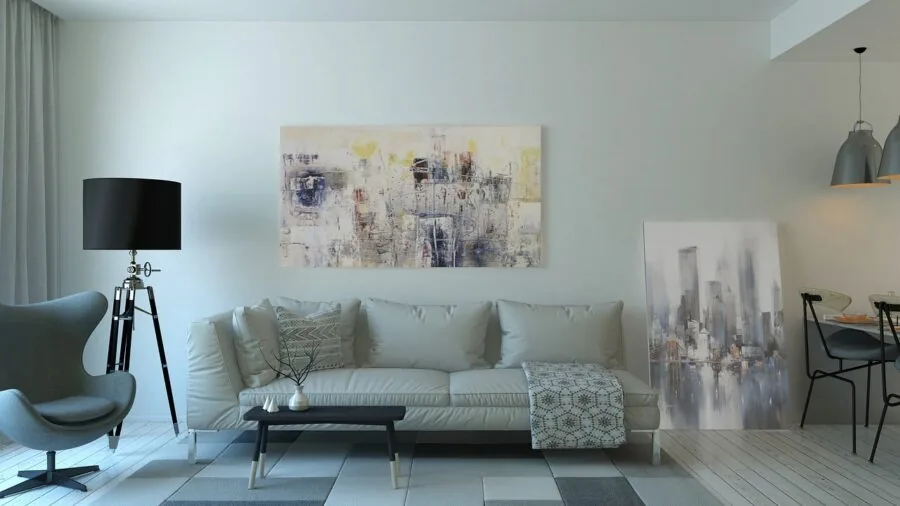
TV stands broadly fall into a handful of aesthetic categories. Rustic farmhouse designs use wood-grain surfaces in warm browns and blacks with industrial metal accents.
Mid-century modern stands feature tapered legs, clean lines, and walnut-toned finishes that work well alongside warm-wood flooring or complementary upholstery. Contemporary consoles lean toward high-gloss white or black finishes with minimal ornamentation.
X-frame designs like the Yaheetech option in our picks prioritize an open, airy silhouette that works well in smaller rooms where a boxy full console would feel heavy and enclosed.
Match the stand’s finish to the dominant tones already present in the room rather than treating it as an isolated purchase.
A rustic brown console looks intentional in a room with warm wood floors but can clash in a space built around cool grays and whites.
The Faesun 63-inch stand takes a distinct approach with curved edge detailing and fabric drawer storage, making it one of the more design-conscious options in the group for buyers who want the console to function as a visual feature rather than recede into the background.
For rooms that also accommodate a projector screen, taking rough measurements of the full wall space before buying prevents the most common sizing conflicts.
Also consider how the stand will interact with adjacent furniture in terms of scale. A 63-inch console next to a compact two-seater sofa can dwarf the seating arrangement even if the TV size is appropriate for the room.
Sketching the rough layout before committing to a purchase prevents the most common sizing mistakes and saves the effort of a return.
Rooms that serve double duty as a media room and a casual viewing space may also benefit from cross-referencing stand dimensions against a media console to understand where the two categories overlap and where they diverge.
Why You Should Trust Us
ProductFind is an independent review publication. We do not sell products, accept free samples in exchange for favorable coverage, or allow brand relationships to influence our recommendations.
Our editorial process is governed by quality standards alone, and any product that does not meet our threshold is excluded regardless of commercial considerations.
Every product in this guide was selected through structured research: we analyze publicly available specifications, assess expert review consensus from across the industry, and incorporate verified buyer feedback to identify consistent patterns in real-world performance and reliability.
Each product is scored using our PF Score system, rated on a scale of 0 to 10.
The score reflects a consistent set of weighted criteria applied uniformly across all products in the category, including build quality, feature set, ease of assembly, value relative to price, and how well the product performs against verified buyer expectations.
We do not conduct our own product trials; our evaluations are grounded in research, published data, expert review consensus, and verified buyer feedback.
This approach lets us cover a broader range of products and price points than any single-location evaluation could, while drawing on a larger pool of real-world usage data than any one reviewer’s experience alone.
ProductFind may earn a commission when you purchase through links in this article. That affiliate relationship has no bearing on which products are included, how they are ranked, or what PF Score they receive. Scores and rankings are determined before any commercial relationships are considered.
Final Thoughts
The eight TV stands in this guide cover a wide range of real-world needs, from compact universal leg replacements to full-featured entertainment consoles with built-in power outlets.
The picks below consistently outperformed alternatives in their respective categories across specifications, expert review consensus, and sustained verified buyer feedback. Here are the standout performers and the roles they fill best.
- Best Overall: PERLESMITH Universal TV Stand Legs earns the top position for its wide TV compatibility, adjustable height options, reliable VESA fitment across a broad range of patterns, and a clean installation experience confirmed by a large pool of verified buyers. It is the most versatile single-unit solution in the lineup and holds the highest PF Score of the group.
- Best Full Entertainment Console: VASAGLE 58-Inch Media Console Table combines generous surface width, an adjustable interior shelf, and a transitional aesthetic that works in both modern and classic living rooms. It ranks among the top-scoring full-console options in the roundup and is a strong choice for buyers who need flexible internal storage alongside a clean exterior.
- Best for Design-Forward Rooms: Faesun 63-Inch TV Stand stands out for its curved edge detailing and fabric drawer storage, making it the most visually distinctive option in the group for buyers who want the console to function as a design element rather than a background fixture.
- Best with Built-In Power: HOOBRO TV Console Table is the pick for setups with multiple devices, thanks to integrated power outlets that reduce cable clutter and eliminate the need for a separate power strip tucked behind the unit.
- Best Budget Pick: Furologee Entertainment Center delivers open-shelf storage and a dedicated soundbar shelf at an accessible price point, making it an easy recommendation for anyone furnishing a bedroom or secondary viewing space without overspending. Its PF Score reflects strong value relative to cost in this tier.
For everything connected to the TV itself, an HDMI switch is worth considering once the stand decision is made and you are ready to route multiple video sources cleanly through a single input.
Households adding a TV antenna to the setup will also want to plan that signal cable route during the initial assembly rather than retrofitting it afterward.
Frequently Asked Questions
How Do I Know If a TV Stand Is Wide Enough for My TV?
The stand should be at least as wide as the TV’s base footprint, and ideally a few inches wider on each side for visual balance and stability.
A 65-inch TV typically has a base that spans 56 to 58 inches, so a console in the 58-to-63-inch range is the right fit.
If the stand is narrower than the base, the TV will overhang the surface and create a stability risk regardless of the weight rating.
Always check the TV’s actual base width in the product specifications rather than estimating from screen size alone.
Two 65-inch TVs from different manufacturers can have dramatically different base widths depending on whether the legs are positioned at the outer edges or closer to center.
This is especially relevant when pairing a new stand with a larger panel such as those covered in our roundup of 75-inch TVs or 85-inch TVs, where base widths vary considerably between brands.
What Is a VESA Pattern and Do I Need to Match It?
VESA is a standardized bolt-hole pattern on the back of your TV, measured in millimeters. It matters when you are using a universal tabletop stand or leg kit that attaches directly to the TV rather than simply sitting beneath it.
If the kit’s VESA range does not include your TV’s pattern, the brackets will not align with the mounting holes and the stand will not attach securely.
Your TV’s VESA pattern is listed in the owner’s manual and usually on the manufacturer’s product page. Common patterns include 200x200mm, 300x300mm, 400x400mm, and 600x400mm.
The same VESA compatibility knowledge applies when shopping for wall-mount brackets, so it is worth noting down once and using across both categories.
Is Engineered Wood Strong Enough for a Large TV?
Yes, when the product is built to a reasonable quality standard.
Engineered wood, whether MDF or particleboard with laminate, is the dominant material in the budget-to-midrange TV stand segment and is entirely capable of supporting large screens when panel thickness and fastener quality are adequate.
Look for panels that are at least 15mm thick, metal cam-lock or bolt fasteners, and reinforced back panels to ensure rigidity once assembled.
The main risk with lower-quality engineered wood is not the static weight of the TV but the cumulative wear from opening drawers, adjusting shelves, and relocating the unit.
Verified buyer feedback over a period of six to twelve months is the most reliable signal for long-term durability in this material category, which is why our research methodology weights sustained buyer feedback alongside expert review consensus when scoring products in this group.
Should I Choose a TV Stand with Closed Cabinets or Open Shelves?
Open shelves provide better airflow for electronics, easier access to devices and ports, and a more open visual aesthetic that works well in smaller rooms.
Closed cabinets hide clutter more effectively and give the console a cleaner look from across the room, but they can trap heat from gaming consoles and AV receivers that generate significant warmth during extended use.
A hybrid design with a mix of open shelves for active devices and closed storage for less-used items tends to work best for most households.
If heat is a concern, ensure there is a gap at the back panel for airflow and consider leaving cabinet doors open or slightly ajar when devices are in active use.
Buyers building a setup around a 4K TV and multiple streaming or gaming components will find open or hybrid configurations significantly more practical over time.
Can I Use a TV Stand in a Bedroom as Well as a Living Room?
Absolutely. Many of the stands in this guide are equally suited to bedrooms.
The key difference is that bedroom placements often call for a lower-profile console because the viewing angle from a bed is typically more elevated than from a sofa.
A stand that positions the screen center between 36 and 42 inches from the floor usually works well for bed-height viewing.
Compact options like the Furologee console are particularly practical for bedroom use given their smaller footprint and accessible price tier.
For bedroom setups that include a streaming device or game console, ensuring the stand has at least one or two open shelves for ventilation and easy controller access makes a meaningful difference in everyday usability.
Households on a tighter budget pairing a stand with a new screen may also find useful picks in our roundup of budget TVs worth reviewing alongside this guide.
What Is the Best Way to Manage Cables Once the Stand Is Assembled?
Start by routing all power cables through the back panel cutouts before connecting any devices, then add signal cables including HDMI, optical, and USB in a second pass.
Use hook-and-loop Velcro ties rather than zip ties so you can adjust the bundle later without cutting anything. Group cables by type and route them along the inside edges of each shelf to keep the center clear and accessible.
Stands with integrated power outlets, such as the HOOBRO console in our picks, reduce the total number of cables in play by eliminating the need for a separate power strip.
For setups with four or more devices, labeling each cable at both ends with small adhesive tags makes future changes dramatically easier.
If the built-in cable management on your chosen stand is limited, a structured solution mounted behind the unit is a low-cost upgrade that makes a visible difference from the front of the room.
About the author
Tanya is a reviewer and writer for ProductFind who specializes in Furniture. Tanya evaluates products through independent research: specifications, expert review consensus, and verified buyer feedback, and rates each one on the PF Score. Tanya focuses on helping readers pick the right furniture for their needs and budget.