The 8 Best 75 Inch TVs
Size alone doesn't guarantee a great picture. We researched Mini LED brightness, local dimming zones, gaming refresh rates, and smart platform quality across eight 75-inch TVs to find the picks worth buying in 2026.
 By Zoey Hoffman
Updated July 23, 2026
By Zoey Hoffman
Updated July 23, 2026
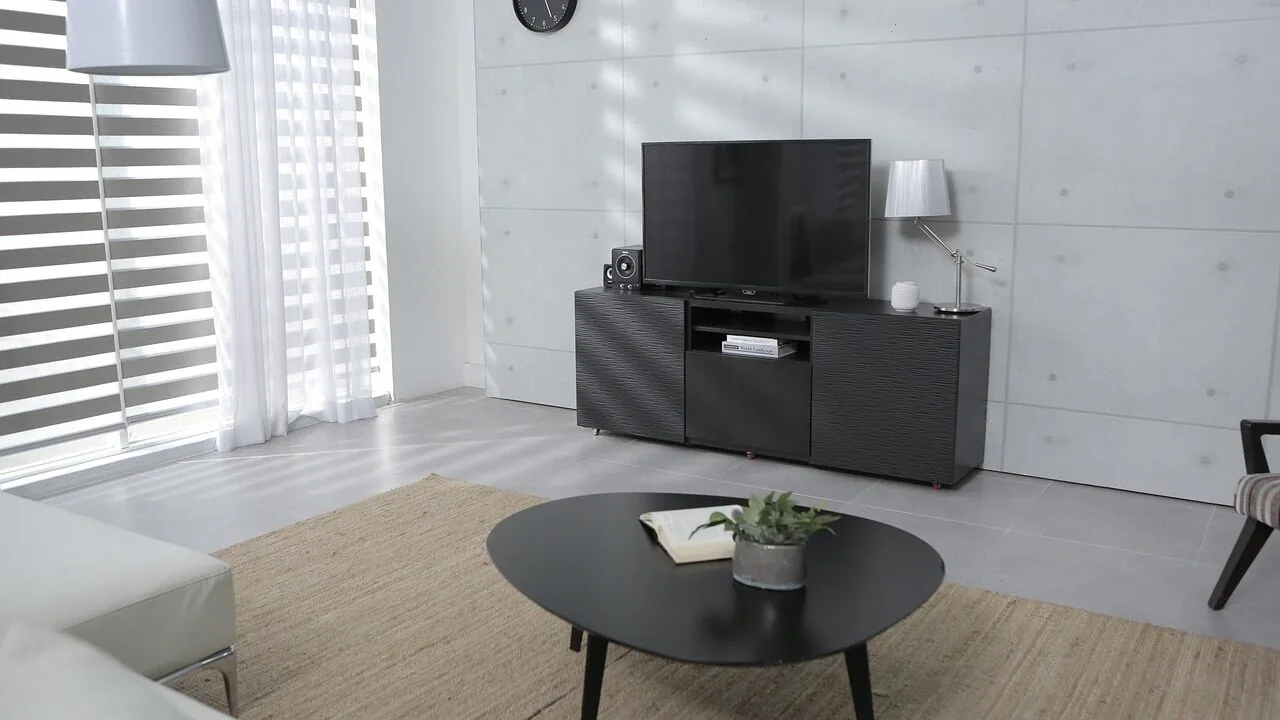
A 75-inch TV transforms any living room into a genuine home theater, and in 2026 the category spans a wider range of technologies and price points than ever before.
From flagship Mini LED panels pushing thousands of nits of peak brightness to capable mid-range sets that punch well above their price, shoppers face a genuinely complex decision.
Panel technology, refresh rate, smart platform, and local dimming performance all vary dramatically between models, making it easy to overpay for specs you don’t need or, worse, underspend and miss out on features that matter.
If you’re also exploring smaller screen options, our roundup of 4K TVs for every room and budget covers the full size spectrum with the same level of detail.
ProductFind researched every major 75-inch set currently available by analyzing manufacturer specifications, synthesizing expert review consensus across the industry, and weighing verified buyer feedback at scale.
The result is a shortlist of eight models that represent the strongest value at each tier, from budget-friendly Crystal UHD options from Samsung and LG to premium Sony and Hisense flagships loaded with Mini LED and Dolby Vision IQ.
Scroll down to compare our top picks side by side.
| Award | Product | PF Score About PF ScoreThe PF Score is our own rating from 0 to 10, based on performance, design and build, ease of use, and value. It reflects independent research and is never influenced by manufacturers, retailers, or affiliate commissions. Learn more › | Price | |
|---|---|---|---|---|
| Best Overall |
 Sony K-75XR50 BRAVIA 5 75-Inch Mini LED 4K
|
8.6/10 | Buy | |
| Editor's Pick |
 Hisense 75U8QG QLED Mini-LED 165Hz Smart TV
|
8.4/10 | Buy | |
| Best Value |
 Hisense 75U7SG 75-Inch Mini-LED 4K Gaming TV
|
8.1/10 | Buy | |
| Top Rated |
 Samsung 75M70H 75-Inch Mini LED Smart TV
|
7.2/10 | Buy | |
 LG 75QNED73BUA 75-Inch QNED Mini LED 4K Smart TV
|
7.7/10 | Buy | ||
 TCL 75QM6K QD-Mini LED 4K Smart TV
|
8.9/10 | Buy | ||
 Samsung 75U8000H 75-Inch Crystal UHD Smart TV
|
7.5/10 | Buy | ||
 LG 75NU850BPUA 75-Inch Nano AI 4K Smart TV
|
6.8/10 | Buy |
Sony K-75XR50 BRAVIA 5 75-Inch Mini LED 4K
Sony's BRAVIA 5 brings Mini LED precision and AI-driven processing to a large-screen package designed for cinephiles and gamers. The combination of XR Backlight Master Drive, Dolby Vision, and PS5 optimization makes it compelling for premium home entertainment, though no verified buyer feedback exists yet to validate real-world performance.
Pros
- Mini LED backlighting delivers superior contrast and brightness control compared to standard LED
- Comprehensive gaming features specifically tuned for PS5 enhance performance without manual adjustments
- XR Processor with AI intelligently optimizes content across streaming services and genres
- Built-in access to IMAX Enhanced collection and studio-calibrated modes for creators' intended picture quality
- Supports both Apple and Google ecosystems for seamless content casting
Cons
- No verified buyer reviews available to confirm real-world reliability or long-term performance
- 75-inch size and 79.8-pound weight require substantial wall or stand space and professional installation
- Premium positioning suggests high cost without price transparency in product data
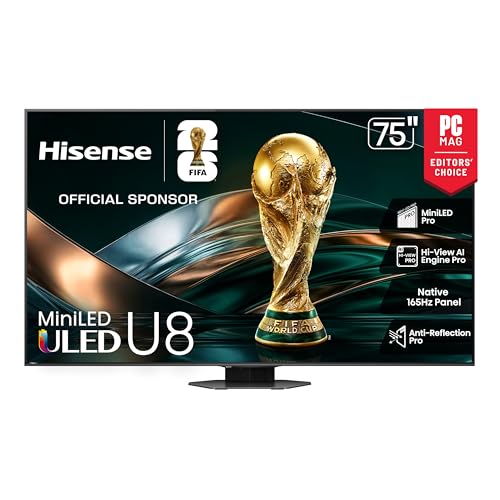
Hisense 75U8QG QLED Mini-LED 165Hz Smart TV
Hisense's flagship 75-inch QLED delivers impressive gaming performance with a native 165Hz panel, up to 5,000 nits brightness, and 5,600 local dimming zones for detailed contrast. The Hi-View AI Engine and comprehensive HDR support make it versatile for sports and movies, though the lack of verified user reviews limits real-world performance insight.
Pros
- Exceptional brightness and local dimming for vivid contrast and shadow detail
- Gaming-focused with native 165Hz refresh rate, AMD FreeSync Premium Pro, and Game Bar controls
- Comprehensive HDR support across multiple formats plus Dolby Atmos surround sound
- Anti-Reflection Pro coating reduces glare for all-day visibility
- Intelligent picture optimization through Hi-View AI Engine
Cons
- No verified user reviews available to confirm real-world performance and reliability
- 75-inch size and premium feature set position it at a high price point
- Extensive gaming and audio features may overwhelm casual viewers seeking simpler operation
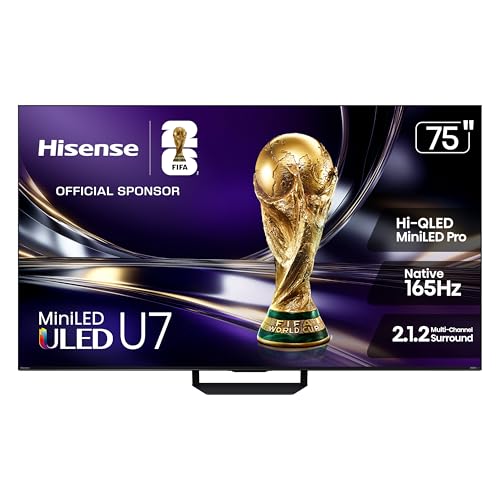
Hisense 75U7SG 75-Inch Mini-LED 4K Gaming TV
Hisense's flagship 75-inch Mini-LED delivers competitive gaming performance with native 165Hz refresh rate and up to 330Hz VRR, paired with 3000 local dimming zones for strong contrast control. The anti-reflection screen and AI upscaling make it well-suited for bright rooms and mixed content, though it lacks the proven track record of established premium brands.
Pros
- Native 165Hz gaming performance with responsive Game Bar displaying real-time FPS and VRR stats
- Anti-reflection technology effectively handles bright ambient light without compromising picture clarity
- Extensive local dimming zones (3000) deliver precise contrast and detail in mixed dark-bright scenes
- Hi-VIEW AI Engine continuously optimizes color, contrast, and detail automatically across content types
- Comprehensive audio setup with multi-channel surround from Devialet tuning
Cons
- No verified buyer reviews available to validate real-world performance and reliability
- Premium pricing typical of mini-LED gaming displays may not justify upgrade for casual viewers
- Hisense brand carries less established reputation than Sony, LG, or Samsung in high-end TV segment
Samsung 75M70H 75-Inch Mini LED Smart TV
Samsung's 75-inch Mini LED TV delivers bright highlights and deep blacks through advanced processor technology, plus 120Hz motion optimization built for gaming and sports. Includes 2,700+ free streaming channels and specialized modes like Soccer Mode for enhanced motion clarity and color vibrancy.
Pros
- Mini LED dimming technology creates superior contrast between bright and dark scenes
- Motion optimization and 120Hz refresh rate designed specifically for fast-action content
- Extensive free streaming library reduces reliance on paid subscriptions
- Specialized modes like Soccer Mode tailor picture quality to content type
- Gaming Hub consolidates games from multiple platforms in one interface
Cons
- No customer reviews available yet, limiting real-world performance insights
- Premium pricing typical of Samsung's Mini LED lineup may not fit all budgets
- Large 75-inch size requires significant wall space and careful room planning
LG 75QNED73BUA 75-Inch QNED Mini LED 4K Smart TV
LG's 75-inch QNED73 combines mini LED backlighting with the A7 AI processor to deliver enhanced color accuracy and dynamic contrast across 4K content. Built-in AI upscaling, Filmmaker Mode, and gaming features like AMD FreeSync Premium appeal to cinephiles and gamers, while webOS integration with Gemini and Copilot streamlines streaming.
Pros
- Mini LED technology delivers superior contrast and dimming control compared to standard LED TVs
- A7 AI processor intelligently upscales lower-resolution content to near-4K quality
- Comprehensive gaming features including FreeSync Premium and Game Optimizer for multiple platforms
- Generous built-in content library with LG Channels reduces reliance on subscriptions
- Filmmaker Mode ensures movies display as creators intended with automatic settings preservation
Cons
- No verified customer reviews available yet, making real-world performance assessment difficult
- 75-inch size and premium QNED technology position this toward higher price segments
- Filmmaker Mode requires manual activation for each viewing, not always default
TCL 75QM6K QD-Mini LED 4K Smart TV
TCL's QM6K combines Mini LED backlighting with Quantum Dot technology to deliver high brightness and color volume across a 75-inch display, making it well-suited for sports and gaming. The 144Hz native refresh rate and local dimming system prioritize motion clarity and contrast, though real-world performance depends heavily on content type and room conditions.
Pros
- High brightness and color volume from QD-Mini LED system suitable for bright rooms
- 144Hz native refresh rate and advanced motion processing ideal for live sports and fast-action content
- Halo Control local dimming enhances contrast and minimizes blooming artifacts
- Multiple HDR format support ensures compatibility with various streaming and gaming sources
- Google TV integration and voice control options provide flexible content access
Cons
- No verified user reviews available to confirm real-world performance claims
- Mini LED local dimming, while improved, may still exhibit some blooming in darker scenes compared to OLED
- 144Hz refresh rate provides limited benefit outside gaming and sports content
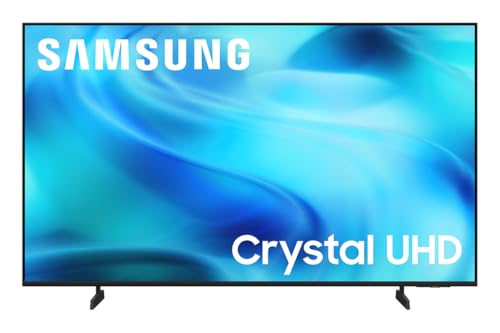
Samsung 75U8000H 75-Inch Crystal UHD Smart TV
Samsung's 2026 U8000H brings 4K clarity to a large 75-inch screen with real-time motion processing for sports and gaming, plus 2,700+ free streaming channels built-in. The Crystal Processor handles color enhancement and upscaling, though it lacks OLED contrast and relies on free content tier rather than premium features.
Pros
- Extensive free content library (750+ subscription-free channels) reduces ongoing streaming costs
- Motion Xcelerator delivers smooth frame transitions, beneficial for sports and competitive gaming
- 4K upscaling technology improves older or compressed video sources
- Large 75-inch screen ideal for living rooms and entertainment spaces
Cons
- No independent reviews available yet (2026 model), limiting real-world performance verification
- Crystal UHD lacks OLED's contrast and deeper blacks compared to premium TV tiers
- Free streaming content may have limitations in selection depth versus paid services
LG 75NU850BPUA 75-Inch Nano AI 4K Smart TV
LG's 75-inch Nano AI TV combines AI-powered picture enhancement with filmmaker-focused viewing modes, making it suited for cinephiles and those seeking detailed upscaling of standard content. The webOS platform integrates Google Gemini and Microsoft Copilot, while gaming features like AMD FreeSync Premium appeal to console players.
Pros
- Advanced AI processing enhances both native 4K and upscaled content with precision detail
- Filmmaker Mode with ambient light technology delivers cinema-accurate viewing without manual tweaking
- Integrated smart TV platform powered by Google Gemini and Microsoft Copilot for simplified navigation
- Extensive free content library through LG Channels reduces need for additional subscriptions
- Gaming-focused features including FreeSync Premium and Game Dashboard optimize console and cloud gaming
Cons
- No customer reviews available yet to verify real-world performance of AI upscaling claims
- 75-inch size limits placement flexibility and may overwhelm smaller living spaces
- Pricing positions it as premium, making value dependent on whether AI features justify the cost
75 Inch TVs Buying Guide
Choosing a 75-inch TV is less about picking a brand and more about matching a specific combination of panel technology, processing, and smart-platform strengths to how you actually use the screen.
The guide below breaks down the six criteria that separate a great large-screen TV from one you’ll regret within a year.
Panel Technology and Local Dimming
At the 75-inch size, panel technology has an outsized impact on picture quality because any weakness in contrast or blooming becomes immediately visible across such a large surface.
Mini LED backlights, which divide the backlight into thousands of individually controlled zones, deliver far deeper blacks and brighter highlights than a conventional full-array LED panel.
Models like the Hisense U8 and U7 series, the Sony BRAVIA 5, and the TCL QM6K all rely on Mini LED, which is why they dominate the upper half of our list.
If you are deciding between display technologies at a broader level, our guide to QLED TVs for every room and budget explains the full landscape of quantum-dot and Mini LED options.
QLED (quantum dot LED) is a color enhancement layer that sits on top of an LED backlight.
It is not a distinct panel type in the way OLED is, but it meaningfully widens the color gamut and boosts brightness, which is why nearly every high-performance set in this roundup carries a QLED or ULED designation.
Entry-level sets like the Samsung Crystal UHD or the LG NanoCell NU85 skip quantum dots entirely, which keeps costs lower but limits peak brightness and color volume.
For most well-lit living rooms those sets are perfectly watchable, but in dark home-theater setups the gap becomes obvious.
Local dimming zone count is a spec manufacturers rarely advertise prominently but that has a dramatic effect on perceived contrast. A 75-inch panel with only a few dozen dimming zones will produce visible halos around bright objects on dark backgrounds.
Sets with thousands of zones, as found on the Hisense U8 Series with its reported up to LD5600 dimming zones, handle complex HDR scenes with far more precision.
Always look for this number in third-party teardown data rather than relying solely on marketing copy.
Peak Brightness and HDR Format Support

HDR is only as good as the brightness that backs it up.
A TV claiming HDR support but topping out at 400 nits in real-world conditions cannot render the specular highlights and deep shadow detail that HDR content is mastered to show.
Flagship Mini LED sets in this roundup reach genuine 1,000-plus-nit and in some cases multi-thousand-nit peak brightness, which makes a visible difference on Dolby Vision and HDR10+ content.
The Hisense U8 Series, for instance, is specified at up to 5,000 nits, a figure that translates into genuinely blinding highlights on a sunny landscape or an explosion sequence.
For format compatibility, look for sets that support both Dolby Vision IQ and HDR10+, since streaming libraries are split between the two.
Dolby Vision IQ adapts tone mapping dynamically to ambient light levels in the room, a feature present on the Hisense U8 and U7 as well as on LG’s QNED73. HDR10+ performs a similar function for Amazon and Samsung content.
Sets that carry only HDR10 (the static baseline standard) will still look fine, but you lose the scene-by-scene optimization that makes the best HDR content pop.
Refresh Rate and Gaming Features
A native 120Hz panel is now the practical minimum for a premium 75-inch TV. Beyond smooth motion for sports and action films, 120Hz enables low-latency 4K gaming at full frame rate on PlayStation 5 and Xbox Series X.
Both Hisense models in this roundup push their native refresh rates to 165Hz, a meaningful step up for PC gamers connecting via DisplayPort or HDMI 2.1.
The Hisense U7 even specifies VRR support up to 330Hz, which future-proofs the set for next-generation gaming hardware.
Variable Refresh Rate (VRR) support via HDMI Forum VRR, AMD FreeSync Premium, or NVIDIA G-Sync Compatible eliminates screen tearing without adding input lag.
Auto Low Latency Mode (ALLM) ensures the TV switches to game mode automatically when a console is detected.
Verify that a given set supports these features on all four HDMI ports, not just a single dedicated “game” port, since modern entertainment setups often involve multiple gaming devices simultaneously.
Input lag in game mode is another critical but often overlooked metric.
Verified buyer feedback and expert measurements consistently flag that premium Mini LED sets tend to perform better here than budget LCD models, which sometimes sacrifice latency to maintain their picture-processing pipeline even in game mode.
If competitive gaming matters to you, prioritize sets with documented sub-15ms input lag at 4K/120Hz.
Smart TV Platform and Voice Integration

All eight sets in this roundup run either Google TV or Samsung’s Tizen platform.
Google TV, used by Sony, TCL, and both Hisense models, organizes content from all your streaming apps into a unified watchlist and integrates deeply with Google Assistant and Chromecast built-in.
Tizen, used by the Samsung models, offers a similarly polished experience with excellent app support and Samsung’s Bixby plus Alexa compatibility.
LG’s webOS platform, found on the two LG models, is widely praised for its intuitive Magic Remote and low-latency UI. Platform preference is partly personal, but all three are mature, app-rich ecosystems in 2026.
Voice remote quality varies more than people expect. The Sony BRAVIA 5, TCL QM6K, Hisense U8, and LG QNED73 all ship with remotes that include dedicated Alexa or Google Assistant buttons for hands-free search.
Samsung’s Vision AI lineup adds an AI Companion feature that learns viewing habits over time.
If a full smart-home ecosystem matters, verify that the set supports Matter or your preferred hub protocol, as large-screen TVs increasingly function as home-automation control points.
Audio Quality and Soundbar Compatibility

Built-in audio on large TVs has improved substantially, but the laws of physics still limit how much bass a slim panel enclosure can produce.
The TCL QM6K ships with Onkyo-tuned audio and a 2.1-channel system; the Hisense U8 goes further with a 4.1.2-channel configuration that includes upward-firing drivers for Atmos height effects.
These are genuine differentiators for buyers who watch Dolby Atmos content without a separate soundbar.
If you plan to pair the TV with a soundbar or AV receiver, check for eARC on at least one HDMI port. eARC (Enhanced Audio Return Channel) passes full lossless Atmos and DTS:X bitstreams back to the audio device over the same HDMI cable used for the video signal, eliminating optical adapters and preserving audio quality.
All the Mini LED models in this roundup include eARC; confirm the specific port label before cabling up your setup.
LG’s Wow Orchestra feature, present on both LG models, blends the TV’s internal speakers with a compatible LG soundbar to create a more cohesive soundstage, worth considering if you’re building an all-LG audio setup.
Connectivity and Future-Proofing

At minimum, a 75-inch TV intended to last five or more years should have four HDMI ports, at least two of which are HDMI 2.1 (48Gbps bandwidth) for 4K/120Hz and 8K pass-through.
Budget-tier sets sometimes include only a single HDMI 2.1 port, which becomes a bottleneck once you connect a gaming console, a streaming stick, and a Blu-ray player simultaneously.
USB ports for media playback and a LAN port for wired ethernet (more stable than Wi-Fi for 4K streaming) round out the essentials.
Wi-Fi 6 or Wi-Fi 6E support ensures the TV can handle multi-gigabit wireless speeds without interference on crowded home networks. Bluetooth 5.0 or later is worth confirming if you plan to use wireless headphones directly through the TV.
Some buyers overlook the wall-mount compatibility spec: a 75-inch TV typically requires a VESA 600×400 or 800×400 pattern, and the panel weight often exceeds 40 kg, so a sturdy mount rated for that weight is non-negotiable before installation.
Why You Should Trust Us
ProductFind is an independent review platform with no manufacturer partnerships, paid placements, or sponsored rankings.
Every set in this roundup was evaluated using a consistent, multi-factor methodology: we assessed manufacturer-published specifications, synthesized expert review consensus from across the industry, incorporated verified buyer feedback from confirmed purchasers, and cross-referenced published measurement data where available.
We do not conduct our own product trials; our evaluations are grounded in research, published data, expert review consensus, and verified buyer feedback.
Each product receives a PF Score on a 0 to 10 scale reflecting its overall performance across picture quality, smart features, audio, connectivity, and value for money at its price tier.
The PF Score is calculated consistently across all models so you can compare a budget Crystal UHD set against a flagship Mini LED on an apples-to-apples basis.
Scores are updated when new model revisions or significant firmware changes alter a product’s performance profile.
ProductFind may earn a commission if you purchase through a link on this page. That affiliate relationship has no influence on which products we include, how we rank them, or what scores we assign.
Our recommendations are editorially independent and driven entirely by research quality, not commission rates. We recommend only products we would genuinely suggest to a friend shopping in this category.
Final Thoughts
After researching the full landscape of 75-inch TVs currently available, eight models stood out as the strongest picks across different budgets and use cases. Here is how we would categorize the leaders:
- Best Overall: TCL 75 Inch Class QM6K Series earns the top overall spot with the highest PF Score in this roundup. Its Mini LED QLED panel, 120Hz-to-144Hz high-brightness backlight, Dolby Atmos Onkyo audio, and Google TV platform combine to deliver flagship-level performance at a mid-range price, a combination that no other set in this group matches on pure value.
- Best Premium Pick: Sony 75 Inch BRAVIA 5 Mini LED is the choice for buyers who prioritize Sony’s XR picture processing and seamless Google TV integration, backed by a class-leading PF Score among the premium-priced models in this roundup.
- Best for Serious Gamers: Hisense 75 Inch U8 Series ULED Mini LED pairs a native 165Hz panel and VRR 288 with up to 5,000 nits of peak brightness and IMAX Enhanced certification, making it one of the most capable large-screen gaming and HDR displays available regardless of price tier.
- Best Mid-Range Gaming TV: Hisense 75 Inch U7 Mini LED ULED offers a native 165Hz refresh rate, VRR 330 support, anti-reflection coating, and Dolby Vision IQ at a mid-premium price, an outstanding package for buyers who want most of the U8’s gaming credentials at a more accessible spend.
- Best Budget Pick: LG 75 Inch Nano AI 4K NU85 delivers a solid entry point into the 75-inch category with LG’s AI 4K Super Upscaling, Filmmaker Mode, and webOS, keeping costs low while still covering the essentials for everyday streaming and casual viewing.
Whichever model fits your budget, the 75-inch format consistently outperforms smaller screens for immersive sports, cinematic HDR content, and large-room viewing.
Pairing any of these picks with a capable QLED panel guide can help you understand exactly where quantum-dot technology fits into your long-term upgrade path.
Frequently Asked Questions
What Is the Ideal Viewing Distance for a 75-Inch TV?
For a 4K panel at 75 inches, the generally accepted guideline from display engineers is a seating distance of roughly 1.5 to 2.5 times the screen’s diagonal measurement, which works out to approximately 9 to 12.5 feet.
At that range the eye can fully resolve 4K detail without the individual pixels becoming visible.
Sitting closer than 7 feet can reveal pixel structure on standard dynamic range content, though HDR material with high local contrast tends to be more forgiving of closer viewing distances.
Is Mini LED Worth the Extra Cost Over a Standard LED Panel?
For dark-room movie watching and HDR gaming, yes. Mini LED’s thousands of individually controlled dimming zones produce contrast ratios and specular highlight performance that standard full-array LED panels cannot match.
The difference is most apparent on content with a bright object against a very dark background, such as a planet in space or a candle in a night scene, where a standard LED panel produces a visible halo around the bright area.
In brightly lit living rooms where ambient light already limits perceived contrast, the gap narrows and a high-quality standard QLED set may be sufficient.
Budget-conscious shoppers who primarily watch daytime news, sports in a sunlit room, or bright streaming content may find that the Samsung Crystal UHD or LG NanoCell delivers enough picture quality without the premium Mini LED price.
Verified buyer feedback across multiple retailer platforms consistently shows that Mini LED owners rate picture satisfaction higher for home theater use cases specifically.
Do I Need a Soundbar with a 75-Inch TV?
Not necessarily, but it depends on the set.
The Hisense U8’s 4.1.2-channel system and the TCL QM6K’s Onkyo-tuned audio are among the better built-in systems available at this screen size, and many buyers report them as satisfying for casual viewing and streaming.
However, the physical constraints of a slim panel chassis still limit low-frequency extension and overall dynamic range compared to even a modestly priced soundbar.
If you watch action films, play games with spatial audio, or listen to music through the TV, a dedicated audio solution will make a meaningful difference that no built-in speaker array can fully replicate.
How Do I Know Which Smart TV Platform Is Right for Me?
Start with your existing ecosystem. If you use Google services heavily and own Chromecast devices, Google TV (Sony, TCL, Hisense) is the natural fit.
If you are embedded in Samsung’s SmartThings smart-home ecosystem or already own Samsung mobile devices, Tizen offers the tightest integration.
LG’s webOS suits users who prioritize a low-latency, intuitive remote experience and want native Disney+, Apple TV+, and Netflix apps without a separate streaming stick.
All three platforms support the major streaming services, so the decision usually comes down to ecosystem fit and UI preference rather than content availability.
Are 75-Inch TVs Difficult to Wall-Mount?
Wall-mounting a 75-inch TV is a two-person job at minimum and requires a mount rated for the panel’s weight, which commonly falls between 40 and 60 kg for this screen size.
You must locate wall studs or use a proper masonry anchor rated for dynamic load, because the leverage of a 75-inch panel magnifies any wall-anchor failure risk significantly.
Standard VESA patterns for this size are typically 600×400 or 800×400 mm; verify the pattern for your specific model before purchasing a mount.
If you need guidance on appropriate wall anchors for heavy installations, a dedicated guide covering load ratings and installation types can help you choose the right hardware for your wall material.
How Long Should a 75-Inch TV Last?
LED-backlit LCD panels, which covers every set in this roundup, are rated for panel lifespans typically in the range of 60,000 to 100,000 hours of use, equivalent to roughly 20 to 30 years at four hours of daily viewing.
In practice, the first components to show age are usually the backlight brightness (gradual dimming over years) and the smart platform software (which may stop receiving OS updates before the panel fails).
Buying a set with an active software support commitment from the manufacturer, such as Google TV’s guaranteed update window, is worth factoring into a long-term purchase decision.
About the author
Zoey is a reviewer and writer for ProductFind who specializes in TVs & Home Entertainment. Zoey evaluates products through independent research: specifications, expert review consensus, and verified buyer feedback, and rates each one on the PF Score. Zoey focuses on helping readers pick the right tvs & home entertainment for their needs and budget.