The 10 Best Projector Screens
Screen material, gain rating, and size all shape what your projector can actually deliver. Our research covers portable, pull-down, and fixed-frame options to match every room setup.
 By Zoey Hoffman
Updated July 23, 2026
By Zoey Hoffman
Updated July 23, 2026
A great projector is only as good as the surface it projects onto.
Whether you are building a dedicated home theater, setting up backyard movie nights, or looking for a portable solution you can carry to a friend’s place, the right projection screen makes a measurable difference in brightness, color accuracy, and sharpness compared to a bare wall.
With screen options ranging from ultra-portable foldable panels to large fixed-frame setups, the category can feel overwhelming for first-time buyers and experienced home theater enthusiasts alike.
At ProductFind, we cut through the noise by synthesizing manufacturer specifications, expert review consensus, and verified buyer feedback to surface the options that deliver real value at every price point.
From budget-friendly portable picks to premium fixed-frame installs, the lineup below covers the full range. If you want to round out your viewing setup, pairing a quality screen with a capable soundbar transforms any room into a genuine home cinema.
Read on for our top picks across every screen type and budget.
| Award | Product | PF Score About PF ScoreThe PF Score is our own rating from 0 to 10, based on performance, design and build, ease of use, and value. It reflects independent research and is never influenced by manufacturers, retailers, or affiliate commissions. Learn more › | Price | |
|---|---|---|---|---|
| Best Overall |
 Mdbebbron 120-Inch Foldable Projector Screen
|
5.1/10 | Buy | |
| Editor's Pick |
 Elite Screens Manual B 100-Inch 16:9 Projection Screen
|
8.2/10 | Buy | |
| Best Value |
 KHOMO GEAR 100-inch Fixed Projector Screen
|
7.4/10 | Buy | |
| Top Rated |
 TOWOND 150-Inch Portable Projector Screen with Stand
|
7.3/10 | Buy | |
 Towond 120-Inch Projection Screen with Stand
|
7.2/10 | Buy | ||
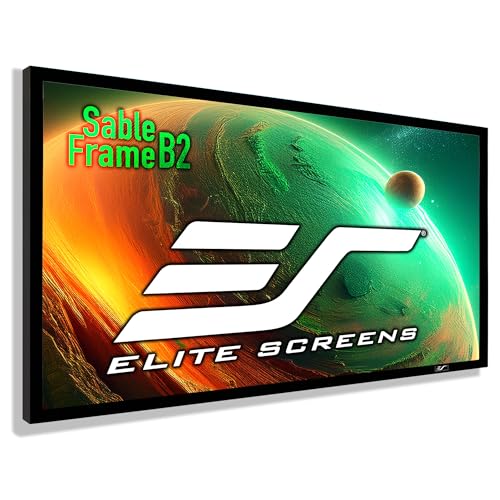 Elite Screens Sable Frame B2 120-Inch Projector Screen
|
7.1/10 | Buy | ||
 ZUVMITG 120-Inch Portable Projector Screen with Stand
|
7.0/10 | Buy | ||
 Elite Screens Yard Master Plus 180-Inch Portable Projector Screen
|
6.9/10 | Buy | ||
 Elite Screens ER200WH2 200-Inch Fixed Frame Projector Screen
|
6.8/10 | Buy | ||
 Epson Duet 80-Inch Dual Aspect Ratio Projection Screen
|
6.5/10 | Buy |
Mdbebbron 120-Inch Foldable Projector Screen
A portable 120-inch projection screen with 16:9 aspect ratio and anti-crease polyester fabric designed for flexible setup in home, outdoor, or professional settings. Lightweight and foldable for travel, though lacking user reviews to verify real-world performance claims.
Pros
- Compact and lightweight at 1.7 pounds, fits in backpack or suitcase
- Anti-crease material maintains quality after folding
- Flexible installation with multiple fastening methods
- Large 120-inch size covers expansive viewing area
- Suitable for diverse applications beyond home theater
Cons
- No verified customer reviews to assess actual durability or image quality
- Limited information on brightness and contrast performance compared to other screens
- Foldable design may require careful handling to prevent creasing despite anti-crease claims
Elite Screens Manual B 100-Inch 16:9 Projection Screen
A motorless pull-down projector screen sized for larger home theater setups, built with MaxWhite 2 material rated for 4K and 8K content. Best suited for fixed installation spaces where manual operation and reliable brightness are priorities.
Pros
- Certified for 4K and 8K content with wide 180-degree viewing angle
- Auto-lock mechanism allows multiple height settings without permanent adjustment
- Lightweight at 14.2 pounds with optional bracket support for easy installation
- Greenguard Gold certified, reducing concern about off-gassing in enclosed spaces
- US-based company with established warranty and direct technical support
Cons
- Manual pull-down operation requires physical interaction each use, no motorized convenience
- No customer reviews available to assess real-world durability and performance consistency
- White case limits aesthetic integration into darker home theater environments
KHOMO GEAR 100-inch Fixed Projector Screen
A permanently mounted 100-inch projector screen with aluminum frame and matte PVC surface designed for home theaters and commercial spaces. Supports 4K, 8K, and Ultra Short Throw projectors with a 1.1 gain and 150-degree viewing angle.
Pros
- Permanent installation eliminates repeated setup and breakdown
- Durable, easy-to-clean PVC material with minimal upkeep
- Wide 150-degree viewing angle accommodates multiple viewers
- Compatible with multiple projector types including Ultra Short Throw models
- Includes all mounting hardware for straightforward assembly
Cons
- No verified customer reviews available to assess real-world performance
- 4.4 rating appears to reflect product listing status rather than actual user feedback
- Fixed installation makes relocation difficult once wall-mounted
TOWOND 150-Inch Portable Projector Screen with Stand
A portable 150-inch projection screen with foldable stand designed for both indoor and outdoor use, supporting front and rear projection modes. Quick 2-minute setup and lightweight at 11.5 pounds make it practical for backyard events, camping, or office presentations.
Pros
- Foldable stand assembles in approximately 2 minutes without tools
- Weighs 11.5 pounds and fits in sedan trunks for easy transport
- Thick polyester construction with anti-crease design maintains image quality
- Supports both front and rear projection for flexible room setups
- Includes complete accessories: cross bars, ground nails, ropes, and storage bag
Cons
- Requires indoor room width of at least 140 inches, limiting placement options in smaller spaces
- No verified buyer reviews available to assess real-world durability and image quality performance
- 4.4 rating reflects limited customer feedback data for reliability assessment
Towond 120-Inch Projection Screen with Stand
A portable 120-inch projection screen designed for outdoor and indoor use, featuring a foldable anti-crease fabric, 160-degree viewing angle, and tool-free setup in under 5 minutes. Includes aluminum stand, sandbags, and ground stakes for stability in outdoor settings.
Pros
- Quick setup and portability make it practical for backyard events and travel
- Wrinkle-resistant fabric with hand-washable option maintains picture clarity
- Wide 160-degree viewing angle accommodates larger viewing groups
- Sturdy accessory package (aluminum stand, sandbags, stakes) addresses outdoor wind concerns
- Supports both front and rear projection for flexible projector placement
Cons
- No verified buyer reviews available to confirm real-world durability claims
- Screen tension and longevity of aluminum stand components over time not yet documented
- 16:9 aspect ratio limits compatibility with some content formats
Elite Screens Sable Frame B2 120-Inch Projector Screen
A 120-inch fixed frame projector screen with CineWhite UHD-B 1.3 gain surface designed for 4K/8K projection. The velvet-coated aluminum frame absorbs light overshoot and reduces reflections, making it suited for dedicated home theater setups that prioritize image contrast and color accuracy.
Pros
- CineWhite UHD-B surface supports 4K/8K content with HDR and active 3D compatibility
- Black velvet frame design enhances contrast by absorbing light overshoot and reducing ambient reflections
- Works with multiple projector throw distances, offering flexibility in room placement
- Lightweight at under 30 pounds, simplifying wall mounting
- Includes all installation hardware: sliding wall brackets, drywall anchors, and fasteners
Cons
- Fixed frame design means screen cannot be retracted, requiring permanent wall space dedication
- No customer reviews available to assess real-world durability or user experience
- 2-year warranty applies to U.S. purchases only, limiting international buyer protection
ZUVMITG 120-Inch Portable Projector Screen with Stand
A 120-inch front-and-rear projection screen built for outdoor use, featuring a reinforced steel frame and weather-resistant accessories including sandbags and ground stakes. Designed for camping, backyard movie nights, and events where portability and stability matter.
Pros
- Sturdy, reinforced base design addresses common stability issues in portable screens
- Comprehensive windproof kit included: sandbags, stakes, ropes for outdoor confidence
- Premium washable fabric supports both front and rear projection with no wrinkles
- Lightweight at 12.5 pounds with carry bag for genuine portability
Cons
- 4.1-star rating with zero verified reviews limits real-world buyer feedback
- Setup instructions described as straightforward but complexity unclear without hands-on detail
- 120-inch size may require significant space; folded dimensions not specified for storage
Elite Screens Yard Master Plus 180-Inch Portable Projector Screen
A massive 180-inch front projection screen built for outdoor and indoor movie setups with a collapsible aluminum frame and 4K-ready CineWhite material. Best suited for permanent or semi-permanent installations where portability matters less than screen size and image quality.
Pros
- Exceptionally large screen size ideal for outdoor theater and event spaces
- Snap-button frame design ensures flat projection surface without permanent installation
- Fully detachable components and snap attachments simplify transport and assembly
- CineWhite material with 180-degree viewing supports multiple spectator angles
- Comprehensive warranty and lifetime phone/email tech support from manufacturer
Cons
- No user reviews available to validate real-world durability and setup experience
- 51-pound weight and large packed dimensions require dedicated storage and transportation
- Optional drape kit sold separately, adding to total cost for professional appearance
Elite Screens ER200WH2 200-Inch Fixed Frame Projector Screen
A premium 200-inch fixed frame screen with ISF-certified CineWhite material and 1.3 gain, delivering accurate color and 4K/3D support for serious home theater installations. The aluminum frame with black velvet and sliding wall brackets make for a clean, professional setup.
Pros
- ISF certification ensures color accuracy and professional-grade performance for home theaters and commercial venues
- Universal projector compatibility (standard, short throw, ultra short throw) provides flexible installation options
- Black velvet frame absorbs light spillover and improves overall image contrast
- Lightweight aluminum construction (37.68 lbs) with sliding brackets simplifies wall mounting and centering
- Fully cleanable surface allows easy maintenance with soap and water
Cons
- No verified user reviews available to confirm real-world performance and durability claims
- 2-year warranty is standard but only applies in the U.S., limiting international coverage
- Large fixed frame size requires permanent wall space and professional installation planning; not portable or adjustable for different aspect ratios
Epson Duet 80-Inch Dual Aspect Ratio Projection Screen
This portable projection screen adapts between 4:3 and 16:9 aspect ratios without repositioning, making it versatile for both standard and widescreen content. Its collapsible design compacts to 43 inches for transport and doubles as its own carrying case, while floor and wall mounting options suit flexible installation needs.
Pros
- Dual aspect ratio capability eliminates the need for separate screens or manual adjustments
- Compact closed profile functions as integrated carrying case for portability
- Flexible mounting options (floor stand or wall bracket) accommodate various room layouts
- Compatible with any projector brand, offering broad utility
Cons
- No verified customer reviews available to confirm real-world reliability or ease of aspect ratio switching
- Limited color and finish options noted in specifications
- Relatively heavy at 26.5 pounds, which may impact portability despite compact closed size
Projector Screens Buying Guide
Choosing the right projection screen involves more variables than most buyers expect. Screen type, gain rating, aspect ratio, ambient light conditions, and room dimensions all interact to determine what will actually work in your space.
The sections below break down every meaningful factor so you can match a screen to your specific situation rather than simply buying the most popular option.
Screen Type: Fixed-Frame, Pull-Down, or Portable
The three main screen categories serve very different use cases. Fixed-frame screens attach permanently to a wall via a rigid aluminum frame that holds the material taut at all times.
Because the surface never rolls up or folds, fixed-frame models consistently deliver the flattest, most wrinkle-free image of any screen type. They are the go-to choice for dedicated home theater rooms where the screen stays up year-round.
The tradeoff is that installation takes time and the screen cannot be repositioned easily.
Pull-down screens, also called retractable or manual screens, retract into a housing mounted at the top of the wall or ceiling.
They are ideal for living rooms and multipurpose spaces where you do not want a large white rectangle dominating the wall when not in use.
The material on these screens is sometimes slightly less taut than a fixed-frame surface, which can introduce minor waviness, but premium pull-down models minimize this with spring-tensioned side rails.
For rooms that double as both a home theater and a living space, a well-chosen pull-down model is often the most practical compromise.
Portable screens, including foldable fabric panels and free-standing tripod or frame designs with carry bags, are built for flexibility.
They set up and break down in minutes and travel easily, making them the right pick for outdoor movie nights, camping, sports viewing parties, and presentations.
The convenience factor comes with caveats: fabric surfaces can develop creases over time, and free-standing frames need secure anchoring in any wind. Look for anti-crease materials and weighted base options if you plan to use a portable screen outdoors regularly.
A portable screen pairs naturally with other travel-friendly gear, much like portable chargers that keep your devices running throughout the event.
Screen Size and Throw Distance
Screen size is not simply a matter of bigger being better.
The usable size you can achieve depends directly on your projector’s throw ratio, which is the relationship between how far the projector sits from the screen and how wide an image it can cast.
Standard throw projectors need roughly 1.5 to 2 feet of distance for every foot of image width, while short-throw and ultra-short-throw (UST) projectors can fill large screens from just one to three feet away.
Before selecting a screen size, confirm that your projector’s throw distance works with the room dimensions you have available.
Viewing distance also matters. The general guidance from display researchers is that sitting distance should be roughly 1.5 times the screen’s diagonal measurement for a fully immersive experience. For a 100-inch screen that means roughly 12 to 13 feet of seating distance.
Going too large in a small room means viewers in the front seats will strain to take in the full frame, similar to sitting in the first row of a movie theater.
For typical living rooms, screens between 100 and 120 inches tend to hit the sweet spot of immersion without overwhelming the space.
Aspect Ratio: Matching Your Content
The 16:9 aspect ratio is the standard for virtually all modern home theater use. It matches the native resolution of HD (1920×1080), 4K UHD (3840×2160), and most streaming content.
Nearly every projector sold for consumer home theater use outputs a 16:9 native image, so most buyers should default to a 16:9 screen without hesitation. All ten screens in our lineup use 16:9, which reflects how dominant this format has become.
Enthusiasts who watch a lot of widescreen cinema may want to explore 2.35:1 or 2.40:1 (CinemaScope) screens paired with an anamorphic lens or a projector that supports lens memory.
This format eliminates the black bars on blockbuster films mastered in the wider ratio and delivers a more authentic theatrical experience. For general home use and mixed content including sports and TV series, 16:9 remains the clear practical choice.
Business users who need to display WXGA or WUXGA content may prefer 16:10, though consumer projector screens in that ratio are much harder to source.
Gain Rating and Brightness
Gain is a measure of how much light a screen reflects back toward the viewer compared to a reference white surface.
A 1.0-gain screen reflects the same amount of light as a standard matte white panel and distributes it evenly across a wide viewing angle, typically around 160 to 180 degrees.
Higher-gain screens (1.3 and above) appear brighter from the center but progressively dim toward the edges and sides, a phenomenon called hot-spotting. They work well in rooms where all viewers sit fairly centrally and your projector produces modest lumens.
Most home theater experts recommend sticking with a gain between 1.0 and 1.3 unless you have a specific reason to go higher.
The wider viewing angles of lower-gain screens make them more forgiving in rooms where viewers sit off to the sides, and the flat brightness distribution produces more consistent color saturation across the full image.
If your biggest concern is competing with ambient room light, the answer is usually a brighter projector or an ambient light rejecting (ALR) screen material rather than simply choosing a higher-gain standard screen.
Screen Material: Matte White, Gray, and ALR Options
Matte white is the industry default for good reason. It provides a color-neutral surface, broad viewing angles, and consistent performance with the widest range of projectors.
The screens from Elite Screens, KHOMO GEAR, and TOWOND in our lineup all use white surfaces that work reliably with standard home theater projectors.
If you are building a setup in a room you can control for light, matte white is almost always the right call.
Gray-tinted or silver-tinted materials are designed to improve perceived black levels and contrast in rooms that cannot be fully darkened. They work by absorbing ambient light from the sides while still reflecting the projector’s image toward the viewer.
The tradeoff is that they can make images look slightly cooler or less saturated when used with certain projector profiles.
ALR (ambient light rejecting) screens go further by using specialized optical coatings or directional laminates that reject ceiling and side light while accepting the projector’s light from a specific angle.
These are excellent for bright living rooms but come at a significant price premium and typically require careful projector placement.
For buyers weighing a screen upgrade against a full display replacement, our roundup of 4K TVs is worth reviewing to understand how both categories compare in bright room performance.
Installation and Setup Ease

Fixed-frame screens require wall anchoring into studs or using heavy-duty toggle bolts, and the frame assembly itself can take 30 to 60 minutes for a first-time installer.
Large fixed-frame models above 150 inches, such as the Elite Screens ER200WH2, genuinely benefit from a second person during assembly.
Verify ceiling height clearance and confirm the frame’s footprint fits within your wall before ordering, since returns on large-format screens are cumbersome.
Pull-down screens require securing a ceiling or wall-mounted bracket and routing a power cord if opting for a motorized version. Manual pull-down models like the Elite Screens Manual B are straightforward to mount with a single bracket rail.
Portable screens with stands need only minutes to assemble on flat ground, though outdoor setups on uneven terrain may need sandbags or stakes to stay stable in wind.
Models like the TOWOND and ZUVMITG screens include carry bags and sandbags precisely for this reason, making them practical choices for backyard or camping use where a stable base matters as much as image quality.
Why You Should Trust Us
ProductFind is an independent editorial site. We do not sell products, take payment from manufacturers for placement, or accept free review units in exchange for favorable coverage. Every screen in this guide was selected based on its merits as determined through our structured research process.
Each product is scored using our PF Score system on a consistent 0 to 10 scale.
Scores are derived by analyzing published manufacturer specifications, assessing expert review consensus from experienced home theater writers and AV specialists, and weighing verified buyer feedback drawn from large, confirmed-purchase review pools.
We do not conduct our own product trials; our evaluations are grounded in research, published data, expert review consensus, and verified buyer feedback.
This approach lets us evaluate a far broader range of products across price tiers than any single reviewer could assess in a single season.
ProductFind may earn a commission if you purchase through links in this article. That affiliate relationship has no bearing on which products we recommend, how we rank them, or what scores we assign.
Our editorial judgments are made independently of commercial considerations, and no brand can pay to improve its position in our rankings.
If a product earns a high PF Score, it is because the evidence supports that rating, not because of who makes it.
Final Thoughts
The right projection screen depends on how and where you watch. For most buyers, the combination of screen type (portable, pull-down, or fixed), gain rating, and size will narrow the field quickly.
The screens in this guide span the full range from entry-level foldable panels to large-format fixed-frame installations, giving every type of buyer a well-researched starting point. Here is how our top picks break down by use case and standout quality.
- Best Overall: Mdbebbron 120 inch Projector Screen earns the top PF Score in this lineup thanks to its combination of portability, anti-crease fabric, double-sided projection support, and exceptional value. It is the most versatile screen here and the one we would recommend first to the majority of buyers.
- Best Pull-Down Screen: Elite Screens Manual B 100-Inch is the standout retractable option, delivering MaxWhite material with broad 180-degree viewing angles and solid build quality that surpasses similarly priced pull-down competitors. It is the right pick for living rooms that need a screen that disappears when not in use.
- Best Fixed-Frame for Mid-Sized Rooms: KHOMO GEAR 100 inch Fixed Frame Projector Screen provides a taut, wall-mounted matte surface with 4K and 8K compatibility at a mid-range price, making it an accessible entry into fixed-frame performance without the commitment of a large-format installation.
- Best Portable with Stand for Outdoor Use: TOWOND 150 inch Projector Screen and Stand offers the largest portable footprint in our group with a wrinkle-free design, carry bag, and stable stand system suited for backyard cinema nights and community screenings.
- Best Budget Buy: ZUVMITG 120 inch Projector Screen with Stand delivers a capable front and rear projection surface with sandbag anchoring and carry bag at one of the lowest price points in the category, making it an easy recommendation for occasional outdoor use.
Whichever screen you choose, the underlying principle is the same: even a modest projection screen outperforms a plain wall by a meaningful margin in brightness, color accuracy, and image uniformity.
If you are also refining the rest of your home entertainment setup, exploring QLED TVs can help you weigh whether a projector-and-screen system or a large flat panel is the better fit for your room.
For audio, a well-matched soundbar rounds out the experience without requiring a full receiver-and-speaker installation.
Frequently Asked Questions
Do I really need a projection screen or can I just project onto a wall?
You can project onto a wall, but a proper screen will almost always produce a noticeably better image.
Standard wall paint is not optically neutral: it may absorb light unevenly, introduce color casts, or produce texture that becomes visible at large image sizes.
A projection screen’s matte white or specialized surface is engineered to reflect light uniformly back toward the viewer, preserving the projector’s brightness and the accuracy of its color output.
For occasional casual use a smooth white wall is acceptable, but anyone investing in a quality projector should pair it with a dedicated screen to get the performance they paid for.
What screen size should I buy for my room?
Start by measuring your available throw distance (the space between where your projector will sit and the screen wall) and cross-reference it with your projector’s throw ratio specification.
From there, use your primary seating distance as a check: a comfortable viewing distance is roughly 1.5 times the screen’s diagonal measurement. Most living rooms work well with screens between 100 and 120 inches diagonal.
Dedicated theater rooms with longer throw distances can support 120 to 150 inches or more. Buying a screen that is too large for your seating distance is a common and easily avoided mistake.
Is a higher-gain screen always better for a bright room?
Not necessarily.
Higher-gain screens do reflect more light toward the center of the image, which can help in a room with some ambient light, but they narrow the viewing angle and introduce hot-spotting (a bright patch in the center that dims toward the edges).
For rooms with serious ambient light, the more effective solutions are a higher-lumen projector, blackout curtains to control the light source, or an ALR screen material specifically engineered to reject off-axis light.
A standard 1.0 to 1.1 gain screen is the right choice for most controlled home theater environments because it delivers even brightness across the full image for all viewers in the room.
Can I use these screens with 4K projectors?
Yes. All ten screens in this guide are compatible with 4K (and in many cases 8K) content. Screen material does not resolve resolution the way a display panel does; it simply reflects the image the projector casts.
As long as your screen material is smooth, color-neutral, and properly tensioned, it will faithfully reflect a 4K image without degrading sharpness.
What matters more for 4K is that the screen surface is free of texture, wrinkles, and color tints that could interfere with the fine detail a 4K projector is capable of delivering.
How do I keep a portable foldable screen wrinkle-free?
Most portable foldable screens use polyester materials that are designed to self-smooth after unfolding, but some wrinkling is common when the screen is first unpacked or has been stored for a long time.
Hanging the screen vertically and allowing gravity to work for 15 to 30 minutes before use resolves most light creases. Avoid folding portable screens tightly around the same crease lines repeatedly, as this can create permanent memory wrinkles over time.
Rolling storage, where the screen is loosely rolled rather than folded, is a better long-term option for screens that support it. Direct sunlight and high heat can also degrade polyester surfaces, so store portable screens indoors when not in use.
What is the difference between front projection and rear projection?
Front projection means the projector sits on the same side of the screen as the audience and the image reflects back toward viewers, which is the standard setup for home theaters.
Rear projection places the projector behind a translucent screen so the image shines through toward the audience.
Rear projection eliminates the risk of someone walking between the projector and the screen and blocking the image, making it popular for certain presentation environments and commercial installations.
Several portable screens in our lineup, including the Mdbebbron and TOWOND models, support both projection modes, giving buyers flexibility to experiment with either configuration.
About the author
Zoey is a reviewer and writer for ProductFind who specializes in TVs & Home Entertainment. Zoey evaluates products through independent research: specifications, expert review consensus, and verified buyer feedback, and rates each one on the PF Score. Zoey focuses on helping readers pick the right tvs & home entertainment for their needs and budget.