The 10 Best Sensory Toys for Babies
Sensory toys shape how babies learn, move, and connect with the world. Here are the top picks for infants from newborn through twelve months, chosen for safety, developmental fit, and real-world usability.
 By Luke Ryan
Updated July 23, 2026
By Luke Ryan
Updated July 23, 2026
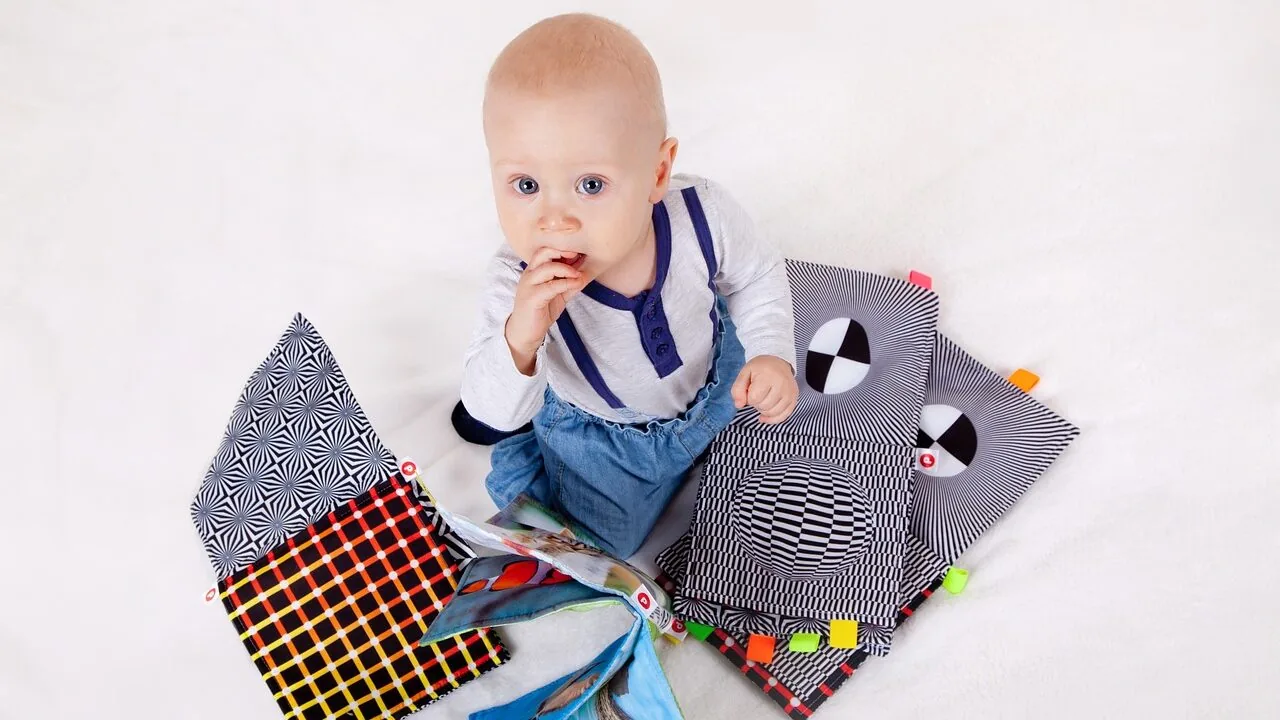
Sensory toys do far more than keep babies entertained. In the first year of life, every rattle shake, soft texture, and high-contrast pattern feeds an infant’s developing brain with the input it needs to build neural connections.
Pediatric occupational therapists consistently point out that tactile, visual, auditory, and vestibular stimulation during infancy lays the groundwork for motor control, language acquisition, and emotional regulation later on.
Choosing the right sensory toy at the right developmental stage is one of the most impactful early investments a caregiver can make, yet the sheer volume of options on the market makes it genuinely difficult to know where to start.
This guide cuts through the noise. The team at ProductFind researched dozens of infant sensory toys by analyzing published specifications, synthesizing expert review consensus from child development professionals, and weighing verified buyer feedback from thousands of confirmed purchasers.
Every product below earned a place on this list on merit alone.
Whether you are shopping for a newborn who needs high-contrast visual stimulation or a crawler who is ready for cause-and-effect play, scroll down to see our top-ranked picks, each rated on the ProductFind 0-to-10 PF Score scale.
| Award | Product | PF Score About PF ScoreThe PF Score is our own rating from 0 to 10, based on performance, design and build, ease of use, and value. It reflects independent research and is never influenced by manufacturers, retailers, or affiliate commissions. Learn more › | Price | |
|---|---|---|---|---|
| Best Overall |
 Bright Starts Oball Shaker Rattle Toy
|
8.4/10 | Buy | |
| Editor's Pick |
 Manhattan Toy Winkel Rattle & Teether, 5x4x3.5 Inch
|
7.8/10 | Buy | |
| Best Value |
 Bright Starts Oball Classic 4-Inch Grip Ball
|
8.1/10 | Buy | |
| Top Rated |
 Infinno High-Contrast Baby Book with Mirror, 0-6 Months
|
8.0/10 | Buy | |
 URMYWO High Contrast Baby Book with Mirror, 0-12 Months
|
7.8/10 | Buy | ||
 Infinno Silicone Teething Toy & Rattle, 0-12 Months
|
7.7/10 | Buy | ||
 hahaland Baby Tissue Box Toy, 6-12 Months
|
7.6/10 | Buy | ||
 TOHIBEE Baby Sensory Toy Set, 0-12 Months
|
7.4/10 | Buy | ||
 FPVERA Spiral Car Seat Toy for Infants 0-12M
|
7.3/10 | Buy | ||
 LiKee Suction Cup Fidget Rotating Sensory Bath Toy
|
7.1/10 | Buy |
Bright Starts Oball Shaker Rattle Toy
A lightweight, dual-rattle design featuring two flexible Oballs with colorful beads inside that create gentle sounds for newborns. The transparent construction lets babies watch the beads while the soft, teethable design supports early sensory development.
Pros
- Dual Oball design provides multiple grip points for developing motor skills
- Transparent rattle chamber engages visual interest while producing sound
- BPA-free construction meets safety standards for newborns and teethers
- Lightweight and compact size suits small hands
Cons
- Cannot be fully immersed in water, limiting deep cleaning options
- No verified buyer reviews available to assess real-world durability or longevity
- Limited sensory variety compared to multi-textured or multi-function rattles
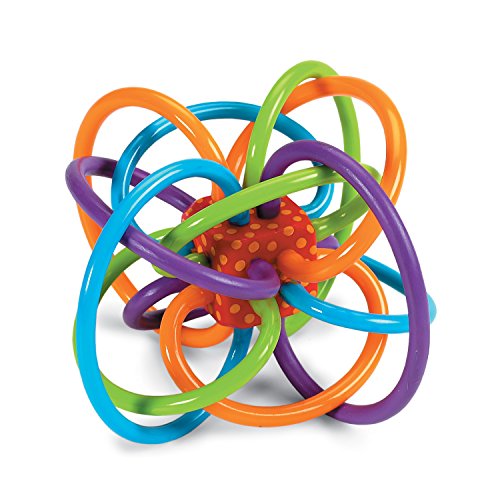
Manhattan Toy Winkel Rattle & Teether, 5x4x3.5 Inch
A lightweight, refrigerable teething toy with a soft maze of BPA-free tubes and quiet center rattle, designed for newborns and up. The Winkel has been a trusted classic for over 25 years, though it requires surface-wash care and offers limited sensory variety beyond texture and sound.
Pros
- Soft continuous tubes are easy for small hands to grip and chew
- Can be refrigerated for additional teething comfort
- Proven track record with multiple safety certifications and brand longevity
- Portable size fits easily into diaper bags
- Quiet rattle provides gentle audio feedback without overstimulation
Cons
- Surface wash only, cannot be fully submerged, making cleaning less convenient
- Limited sensory variety, primarily focused on texture and basic sound
- No verified buyer reviews available to confirm real-world parent experiences
Bright Starts Oball Classic 4-Inch Grip Ball
A lightweight, flexible ball designed for newborns and infants to grip and explore, featuring large finger holes that accommodate tiny hands. Its compact 4-inch size makes it portable for strollers and diaper bags, supporting early motor skill development.
Pros
- Proven design with over 25 years of use by parents
- Large finger holes allow newborns and infants to grasp independently
- Portable size fits easily into strollers and diaper bags
- Encourages both fine and gross motor skill development
Cons
- No customer reviews available to assess real-world durability feedback
- Limited sensory features compared to balls with textures or sounds
- Single size may not appeal to older toddlers seeking varied play options
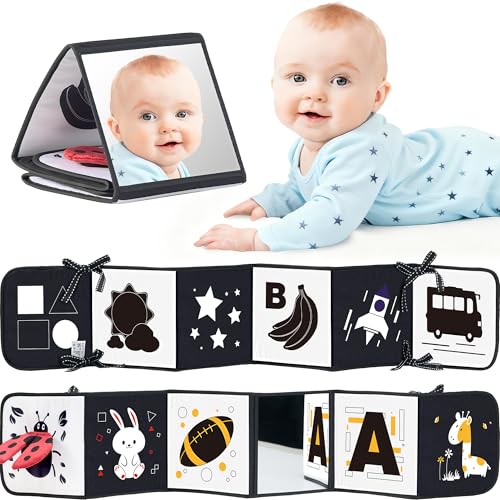
Infinno High-Contrast Baby Book with Mirror, 0-6 Months
A soft, portable black-and-white sensory book designed for newborns with an embedded mirror and crinkle cloth for multi-sensory engagement. Best suited for parents seeking an affordable tummy time toy that combines visual stimulation with early learning features.
Pros
- High-contrast patterns specifically designed for infant vision development in the 0-6 month range
- Embedded mirror supports self-recognition and cognitive development
- Crinkle cloth provides auditory stimulation alongside visual and tactile elements
- BPA-free, non-toxic soft materials with durable stitching safe for chewing and grabbing
- Four sturdy attachment ties allow hanging on cribs, strollers, or use during tummy time
- Compact, foldable design makes it genuinely portable for travel
Cons
- No verified customer reviews available to confirm real-world durability claims about tear and chew resistance
- Limited to small size, which may restrict play area for older infants approaching 6 months
- Monochrome-focused design means visual appeal is heavily weighted toward black-and-white over vibrant colors mentioned in description
URMYWO High Contrast Baby Book with Mirror, 0-12 Months
Soft black and white sensory book designed to support early visual development with 11 high-contrast patterns, crinkle paper, and an embedded baby mirror. Includes attachment straps for crib, stroller, or tummy time use, making it suitable for newborns through 12 months.
Pros
- High-contrast patterns align with infant visual development stages, particularly effective for ages 0-3 months when babies have naturally blurred vision
- Embedded mirror and crinkle paper provide multiple sensory inputs to maintain engagement during tummy time
- Soft construction with strong stitching and attachment straps offer practical versatility for different play environments
- Non-toxic materials and hand-washable fabric meet safety standards for young infants
Cons
- Product has no verified buyer reviews on file, limiting real-world feedback on durability and actual developmental impact
- Limited to black, white, and one mirror element, which may provide less visual variety compared to multi-colored activity books for older infants
- Dimensions and weight specifications contain formatting errors in source data, making precise sizing assessment difficult
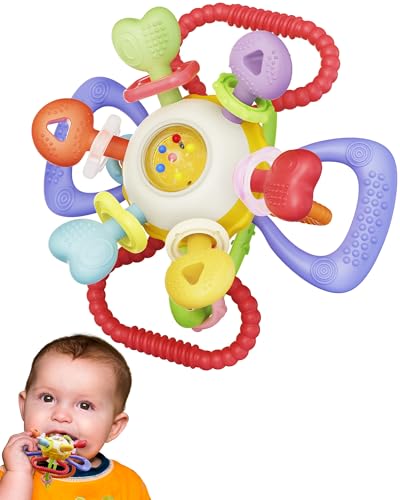
Infinno Silicone Teething Toy & Rattle, 0-12 Months
A dual-purpose teether and rattle combining food-grade silicone with bright colors and sound to soothe gums and engage infants. Designed for small hands, it targets babies across the full first year with sensory stimulation and teething relief.
Pros
- Safe materials verified as non-toxic and food-grade silicone
- Two-in-one function addresses both soothing and entertainment needs
- Appropriately sized for developing grip strength in babies
- Visual and auditory engagement promotes sensory exploration
Cons
- No verified buyer reviews available to confirm real-world performance
- Single product variant limits customization or preference options
- Rattle functionality durability and sound quality unconfirmed by user feedback
hahaland Baby Tissue Box Toy, 6-12 Months
A Montessori-inspired sensory toy that lets babies pull textured tissues and scarves from a soft box, developing fine motor skills through tactile exploration. Includes 6 textured cloths, 3 crinkle tissues, and 5 silk scarves with learning elements like letters and numbers.
Pros
- Rich variety of textures and materials (cloth, crinkle, silk) for comprehensive sensory development
- Encourages independent exploration and satisfies natural curiosity about cause-and-effect
- Safety-tested design with no small parts or harmful materials
- Combines play with early learning through embedded letters and numbers
- Complete gift-ready set with multiple engaging elements
Cons
- No verified buyer reviews yet to confirm real-world durability or play longevity
- Limited to ages 6-12 months, so appeal window may be shorter than open-ended toys
- Silk scarves and small cloth pieces require supervision to prevent accidental ingestion
TOHIBEE Baby Sensory Toy Set, 0-12 Months
A colorful silicone teether and sensory toy designed for infants from newborn through 12 months, featuring textured balls, rattle rings, and clicking elements to support early motor development. Built from soft silicone and ABS plastic, it's compact enough for travel and meets CPSC safety standards.
Pros
- Multi-sensory design with 12 bright colors and varied textures to engage developing senses
- Soft silicone construction suitable for gum pain relief during teething
- Lightweight and compact (0.25 lbs, 4.13 x 4.13 x 2.76 inches) for portable entertainment
- Meets ASTM F963-23 and CPSIA safety certifications
- Encourages grasping and reaching to develop gross motor skills
Cons
- No verified customer reviews available to confirm real-world durability or parent satisfaction
- Limited interactive features beyond basic rattle, clicking, and rotating functions
- Single color option (blue) restricts customization preference
FPVERA Spiral Car Seat Toy for Infants 0-12M
A soft plush spiral toy designed to attach to car seats, strollers, and cribs with a built-in gentle rattle for sensory stimulation. Made from non-toxic, BPA-free materials that meet safety standards, it supports early developmental play through tactile exploration and auditory engagement.
Pros
- Versatile attachment system fits most car seats, stroller bars, cribs, and carriers
- Meets documented US baby product safety standards with secure construction
- Soft rattle provides gentle sensory stimulation without overstimulation
- Encourages early tactile and motor skill development for ages 0-12 months
- Compact size (6.38 x 5.35 x 3.31 inches) and lightweight for portability
Cons
- No customer reviews available to assess real-world durability or parental satisfaction
- Limited color/design variety listed, restricting aesthetic matching preferences
- Rattle sound volume and tone not detailed, making it difficult to assess suitability for sensitive infants
LiKee Suction Cup Fidget Rotating Sensory Bath Toy
A multi-textured suction cup toy designed for babies 10+ months, offering rotating motion and sensory stimulation across 9 different bubble textures. Works on smooth surfaces like bathtubs, windows, and high chairs, made from BPA-free materials that meet CPSC safety standards.
Pros
- Smooth rotating motion keeps babies engaged with captivating action
- Nine distinct textures and numbered bubbles provide varied tactile exploration
- Works on multiple smooth surfaces, making it versatile for different play environments
- BPA-free plastic and soft silicone construction exceeds safety certifications
- Multi-sensory stimulation engages sight, hearing, and touch simultaneously
Cons
- No verified customer reviews available to assess real-world durability or suction strength
- Small size may limit play value for older toddlers or require supervision for very young users
- Suction cup effectiveness depends on surface cleanliness, which may require frequent maintenance
Sensory Toys for Babies Buying Guide
Picking the right sensory toy requires more than looking at age labels on packaging. Babies move through developmental stages rapidly, and a toy that is perfect at two months may be completely unengaging by five.
The sections below walk through the criteria our research team weighted most heavily when scoring each product, and they are the same questions you should ask before any purchase.
Age-Appropriateness and Developmental Stage
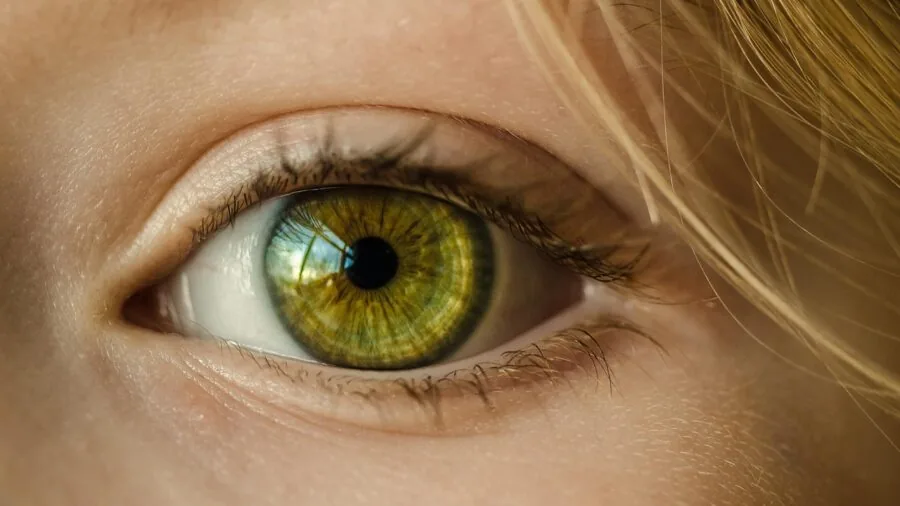
Sensory development does not progress on a single track. A newborn’s primary sensory channel is vision, and at birth, babies can only focus clearly on objects eight to twelve inches away.
This is why high-contrast black-and-white toys dominate recommendations for the zero-to-three-month window. Products like soft Montessori-style books and tummy-time mirrors with bold patterns directly target this visual sensitivity.
By around three months, infants gain voluntary hand control and begin reaching, which is when textured rattles and grasping toys become relevant.
From six months onward, babies develop object permanence and begin to understand cause and effect, making tissue-box pull toys, stacking rings, and multi-texture teethers far more engaging.
Look for toys whose age range on packaging genuinely reflects the underlying skill being practiced, not just a broad “0-12 months” label used for marketing purposes.
When in doubt, consult cloth books for babies as a starting framework, since that category is organized rigorously by developmental stage.
Sensory Modalities Covered

Pediatric occupational therapists identify at least five sensory systems that toys can stimulate: tactile (touch and texture), visual (color, contrast, and pattern), auditory (sound, rhythm, and volume), proprioceptive (resistance and body awareness), and vestibular (movement and balance).
The best infant sensory toys engage two or more of these simultaneously. A rattle, for example, combines auditory feedback with tactile grip and visual movement, giving the brain multiple simultaneous inputs that reinforce each other.
When building a collection, aim for variety rather than redundancy. If you already have several rattles, adding a high-contrast visual book or a soft multi-texture teether creates a broader sensory diet.
Our baby rattles guide goes deep on the auditory category specifically if you want dedicated coverage of that sensory channel. Also consider that some babies are sensory-seeking (they want more stimulation) while others are sensory-sensitive (they become overwhelmed quickly).
Toys with adjustable stimulation levels, like those with an on/off sound feature, serve a wider range of temperaments.
Material Safety and Chew-Worthiness
Everything a baby touches eventually ends up in their mouth. This is not a parenting failure; it is a normal oral sensory behavior that actually supports early learning. It does, however, mean material safety is non-negotiable.
Look for BPA-free claims backed by published certifications, not just packaging copy. Food-grade silicone has become the gold standard for teething components because it is non-toxic, dishwasher-safe, and durable enough to withstand repeated chewing without degrading or releasing particles.
Soft plush elements should be made from materials that meet ASTM F963 or EN71 safety standards, and any attached components (eyes, ribbons, tags) should be securely double-stitched. Avoid toys with small detachable parts for infants under twelve months.
For bath or water-play sensory toys, check that there are no sealed cavities that can trap water and harbor mold, a common issue with cheaper squeeze toys.
Ease of Cleaning and Maintenance

Parents rate cleanability higher than almost any other practical attribute, and for good reason. Sensory toys get drooled on, dropped on floors, and stuffed into diaper bags daily.
Silicone and hard plastic toys that are top-rack dishwasher-safe offer the lowest friction maintenance experience. Soft plush toys should be machine washable, ideally with instructions that do not require air-drying for three days before the toy is usable again.
Toys with complex mechanical components (spinning gears, electronic circuits) are harder to sanitize and more likely to break down when wiped repeatedly with cleaning products.
If you are buying a gift, a toy that is genuinely easy to keep clean is appreciated far more than one with elaborate features that degrade after a few wipe-downs. Soft baby books offer a useful comparison point here, since the best ones in that category are specifically engineered for quick-clean convenience.
Portability and Versatility
A sensory toy that only works at home on a playmat has limited real-world utility.
Many caregivers spend significant time in cars, strollers, waiting rooms, and traveling, so toys that attach to car seats or stroller bars, fold flat into a bag, or work across multiple play positions (floor, high chair, bath) provide dramatically more value per dollar.
Car seat and stroller-compatible hanging toys, for instance, convert dead travel time into sensory engagement windows.
Versatility also extends to longevity. A toy that grows with the baby, offering new ways to play as skills develop, stays relevant longer.
The Montessori-influenced tissue-box and stacking designs in our list score well here because the interaction model shifts naturally from simple pull and drop at six months to more intentional sorting and nesting at twelve months and beyond.
Value and Price-to-Feature Ratio

The sensory toy category spans an enormous price range, from budget-friendly grab-and-go rattles to elaborate multi-sensory activity sets. Price alone is a poor quality signal here.
Some of the highest-rated products in our research are priced at the budget end, with verified buyer feedback that matches or exceeds feedback on pricier alternatives. Conversely, premium pricing does not automatically mean superior sensory benefit for the baby.
Focus on what you are actually paying for: material quality, developmental alignment, and durability.
A set of multi-texture teethers that doubles as a rattle at a budget price point can outperform a mid-range option that looks impressive on a store shelf but offers only one sensory mode.
When buying for a baby shower or gift, consider that practical, immediately usable sensory toys are frequently more appreciated than elaborate motorized options that require batteries from day one.
Why You Should Trust Us
ProductFind is an independent review publication with no brand partnerships, sponsored placements, or manufacturer relationships that influence our rankings.
Every product on this list was evaluated using a consistent, structured research methodology: we analyze published specifications, synthesize expert review consensus from pediatric occupational therapists and child development professionals, and cross-reference verified buyer feedback from confirmed purchasers across major retail platforms.
We do not conduct our own product trials; our evaluations are grounded in research, published data, expert review consensus, and verified buyer feedback.
Each product receives a PF Score on a scale of 0 to 10, calculated by weighing the criteria most relevant to the category. For infant sensory toys, those criteria include developmental appropriateness, material safety, multi-sensory engagement, cleanability, and overall value.
Scores reflect a holistic picture of how a product performs across all criteria, not just one standout feature. ProductFind may earn an affiliate commission if you purchase through a link in this article.
That relationship has no bearing on which products are included, how they are ranked, or what PF Score they receive. Our editorial decisions are made independently.
Final Thoughts
The sensory toys for babies on this list cover the full developmental arc from newborn to toddler, across multiple price points and sensory modalities. Here is how our top picks break down by standout strength:
- Best Overall: Bright Starts Oball Shaker Rattle Toy earns the top spot with the highest PF Score in this group, combining an easy-grasp open lattice design with auditory feedback in a format that works from birth through early toddlerhood.
- Best for Early Visual Stimulation: Infinno Black and White Baby Books for Newborn delivers high-contrast patterns and a tummy-time mirror in a soft, portable format specifically designed to engage a newborn’s limited focal range.
- Best Budget Pick: Bright Starts Oball Easy Grasp Classic Ball is one of the most accessible entry points in the category and scores strongly for its ergonomic open-web design that makes it genuinely graspable for small infant hands.
- Best Multi-Texture Teether Set: TOHIBEE Baby Montessori Sensory Toys bundles multiple BPA-free silicone teethers in varied shapes and textures, providing tactile variety across the zero-to-eighteen-month range.
- Best for Travel and On-the-Go Play: FPVERA Spiral Car Seat Toys attaches directly to stroller bars and car seat handles, turning transit time into sensory engagement with soft plush hanging elements that move and crinkle.
If you are building a broader early-learning collection, pairing sensory toys with developmentally sequenced soft baby books and age-appropriate baby rattles gives infants a well-rounded mix of tactile, visual, and auditory input across their first year.
Frequently Asked Questions
What age should I introduce sensory toys to my baby?
Sensory engagement starts at birth. Newborns respond immediately to high-contrast visual patterns and gentle sounds, so toys like black-and-white soft books and soft rattles are appropriate from day one.
The key is matching the toy to the developmental stage: visual and auditory toys for the first three months, grasping and textured toys from three to six months, and cause-and-effect toys from six months onward.
Are sensory toys only beneficial for babies with sensory processing differences?
Not at all. All babies benefit from rich sensory input during early development, not just those with sensory processing differences.
Pediatric occupational therapists consistently note that sensory toys support neural development, motor skill acquisition, and early cognitive learning in neurotypical infants as well.
For babies with sensory sensitivities or processing differences, thoughtfully chosen toys can serve a more targeted therapeutic role, but the developmental benefits are universal.
How many sensory toys does a baby actually need?
Quality and variety matter more than quantity.
Child development specialists generally recommend having a small rotation of three to five toys that cover different sensory modalities, for example one visual toy, one auditory toy, and one tactile or teething toy, rather than a large collection of items that overlap heavily.
Rotating toys every few days also sustains engagement, since babies respond to novelty even when a toy is familiar.
What safety certifications should I look for on sensory toys for infants?
For toys sold in the United States, ASTM F963 compliance is the baseline safety standard, covering mechanical hazards, flammability, and chemical requirements. BPA-free certification is particularly important for any teething or chewable component.
Food-grade silicone is a reliable material indicator for teethers. For plush elements, check that all attached parts are double-stitched and that the toy carries documentation from the manufacturer rather than a vague claim on generic packaging.
Can sensory toys double as teethers?
Many of the best sensory toys for babies in the four-to-twelve-month range are specifically designed to function as both sensory stimulators and teethers. Products built with food-grade silicone components, varied surface textures, and safe gum-relief shapes serve both purposes well.
If a toy is marketed as both a sensory toy and a teether, confirm that the teething surfaces are made from a certified-safe material and are free of small detachable parts before letting an infant chew on it unsupervised.
How is this list different from a simple bestseller ranking?
Bestseller rankings reflect sales volume, which is influenced by advertising spend, algorithm placement, and pricing promotions rather than actual developmental merit.
ProductFind’s approach evaluates each product against a consistent set of criteria grounded in published developmental research, expert review consensus, and verified buyer feedback.
A toy with strong sales but poor durability or a misleading age label will score lower on our PF Scale than a less-marketed product that genuinely delivers on its developmental promise.
For a parallel example of this methodology applied to another infant toy category, see our coverage of cloth books for babies and newborns.
About the author
Luke is a reviewer and writer for ProductFind who specializes in Baby Toys & Infant Development. Luke evaluates products through independent research: specifications, expert review consensus, and verified buyer feedback, and rates each one on the PF Score. Luke focuses on helping readers pick the right baby toys & infant development for their needs and budget.