The 11 Best Sippy Cups
Spout, straw, or spoutless 360? Picking the right sippy cup shapes your toddler's oral development and your daily mess tolerance. Here are the top picks across every style.
 By Daryl Arnold
Updated July 23, 2026
By Daryl Arnold
Updated July 23, 2026
Choosing the right sippy cup matters more than most parents expect.
The transition from bottle to open cup is a genuine developmental milestone, and the cup your child uses during this window can support or complicate their oral motor development, hydration habits, and mess tolerance for months to come.
With dozens of designs on the market spanning spout cups, straw cups, spoutless 360 rims, and insulated tumblers, it is genuinely difficult to know which one actually delivers on its spill-proof promises and holds up through the dishwasher cycle after cycle.
When you are also juggling baby bottles and the gradual shift away from them, the last thing you need is a cup that leaks all over the diaper bag.
ProductFind researched and evaluated eleven of the most widely recommended sippy cups on the market, drawing on manufacturer specifications, pediatric guidance from the American Academy of Pediatrics, expert review consensus across the parenting category, and verified buyer feedback from thousands of confirmed purchases.
Our focus was on real-world performance criteria: leak resistance, flow rate suitability by age, ease of assembly and cleaning, material safety, and how well each design supports the developmental step from bottle to open cup.
The picks below represent our highest-rated options across different cup types and age ranges, ranked by PF Score.
| Award | Product | PF Score About PF ScoreThe PF Score is our own rating from 0 to 10, based on performance, design and build, ease of use, and value. It reflects independent research and is never influenced by manufacturers, retailers, or affiliate commissions. Learn more › | Price | |
|---|---|---|---|---|
| Best Overall |
 Dr. Brown's Cheers 360 Spoutless Cup, 10 oz
|
8.4/10 | Buy | |
| Editor's Pick |
 Tommee Tippee Sporty Spout 9oz Insulated Sippy Cup, Pack of 2
|
8.3/10 | Buy | |
| Best Value |
 Munchkin Miracle 360 7oz Sippy Cup, 2-Pack
|
8.2/10 | Buy | |
| Top Rated |
 Munchkin Miracle 360 7oz Sippy Cup 2-Pack
|
8.2/10 | Buy | |
 Dr. Brown's Baby's First Straw Cup 9oz
|
7.8/10 | Buy | ||
 Munchkin Any Angle Sippy Cup 7oz, 2-Pack
|
7.5/10 | Buy | ||
 Philips Avent SCF801/21 My Grippy Sippy Cup, 10oz
|
7.3/10 | Buy | ||
 NUK First Choice Large Learner Cup 10oz, 2-Pack
|
7.2/10 | Buy | ||
 NUK Active Sippy Cup 10oz 2-Pack
|
7.1/10 | Buy | ||
 NUK Learner Cup 10oz, Pack of 2
|
7.1/10 | Buy | ||
 NUK Active Sippy Cup 10 oz, 2-Pack
|
7.0/10 | Buy |
Dr. Brown's Cheers 360 Spoutless Cup, 10 oz
A spoutless 360-degree transition cup designed to teach toddlers open-cup drinking skills without the mess. The removable valve and see-through design grow with your child from 9 months onward, making it a practical bridge between sippy cups and regular cups.
Pros
- Truly spoutless 360-degree design allows drinking from any edge without spilling
- Removable silicone valve lets you progress from training cup to open cup as skills improve
- Translucent sides make it easy to monitor liquid levels and refill timing
- Two-pack offers good value for households with multiple children or backup needs
- BPA-free construction and compact size (10 oz) suit travel and daily use
Cons
- No verified customer reviews available to confirm real-world durability or ease of cleaning
- The spoutless design requires more coordination from baby, which may lead to spills during early learning phases
- Limited color options (blue and green animals only) compared to other transition cups on the market
Tommee Tippee Sporty Spout 9oz Insulated Sippy Cup, Pack of 2
This two-pack of insulated toddler cups features a removable two-piece valve designed to minimize spills while allowing free-flow drinking when detached. The double-wall insulation keeps drinks cold, and the bite-resistant spout is built to withstand teething pressure.
Pros
- Removable valve offers flexibility between spill-proof and free-flow drinking modes
- Insulated design encourages hydration by keeping beverages chilled
- Durable spout withstands aggressive teething without damage
- Dishwasher-safe components simplify cleaning and maintenance
- Two-pack provides good value for households with multiple toddlers
Cons
- No verified buyer reviews available to assess real-world durability or effectiveness
- Detachable valve design has more parts to keep track of and clean
- Limited color options (green and red only) may not appeal to all preferences
Munchkin Miracle 360 7oz Sippy Cup, 2-Pack
A spill-proof cup with 360-degree drinking edges designed for babies 6 months and up. The valveless design and automatic sealing appeal to parents seeking simple cleanup, though real-world spill prevention depends on toddler coordination.
Pros
- 360-degree drinking edge allows sipping from any angle without spills
- Valveless, spoutless design is dentist-recommended and easier to clean than traditional sippy cups
- Automatic seal when not in use reduces accidental leaks
- Ergonomic handles sized for small hands
- BPA-free with 7oz capacity suitable for 6-month transition
Cons
- No verified customer reviews to confirm real-world spill-proof claims in daily use
- 7oz size may be limiting for older toddlers who drink more
- Requires child coordination to use 360-degree edge effectively, not foolproof for very young babies
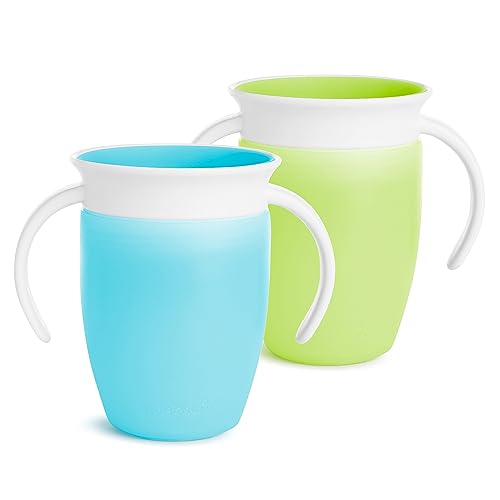
Munchkin Miracle 360 7oz Sippy Cup 2-Pack
A spoutless sippy cup designed to support natural drinking development with a 360-degree rim that seals when not in use. Best for parents seeking mess reduction and an easy transition away from traditional sippy cups for babies 6 months and up.
Pros
- Dentist-recommended spoutless design encourages proper drinking technique without artificial spouts or straws
- Automatic sealing mechanism reduces spills and leaks during storage and transport
- Simple design with no detachable valves means faster, easier cleanup for busy parents
- Two-pack provides backups for daily use and travel without purchasing multiple sets
- Appropriate cup size at 7 ounces matches portion needs for younger toddlers
Cons
- No customer reviews available to verify real-world durability or user experience
- 360-degree drinking edge may still result in some spillage during active exploration by very young drinkers
- Limited color options and fixed sizing offer little customization for households with varied preferences
Dr. Brown's Baby's First Straw Cup 9oz
A transition cup designed to help babies move from bottles to independent drinking with a weighted straw that follows liquid movement. The removable handles and spill-proof lid make it practical for travel, though it currently has no verified buyer feedback to assess real-world performance.
Pros
- Weighted straw technology allows drinking from multiple angles without tipping requirements
- Removable handles and contoured design adapt as baby develops grip strength and coordination
- Spill-proof lid with straw storage offers convenience for on-the-go use
- Built-in measuring marks help parents monitor daily fluid intake
- Soft silicone components prioritize safety during bottle-to-cup transition
Cons
- No verified buyer reviews available to confirm durability or actual ease of use with infants
- Limited product information on cleaning difficulty or straw replacement availability
- Design specifics around lid sealing effectiveness and leak resistance not detailed
Munchkin Any Angle Sippy Cup 7oz, 2-Pack
A weighted-straw sippy cup designed to help toddlers transition from bottles to straws, drinking comfortably at any angle. Features a click-lock seal, easy-grip handles for ages 6 months up, and comes in a practical 2-pack with cleaning brushes.
Pros
- Any-angle drinking reduces frustration for toddlers learning to use straws independently
- Click-lock confirmation prevents accidental spills from loose seals
- Lightweight and portable design suits car seats, strollers, and high chairs
- Dual-cup pack with cleaning brushes offers practical value for households
- Transparent construction enables quick liquid checks without opening
Cons
- No verified buyer reviews available to confirm real-world durability or seal reliability
- 7-ounce capacity may require frequent refills for all-day outings
- Multiple components (lid, straw, handles) increase cleaning complexity compared to simple sippy cups
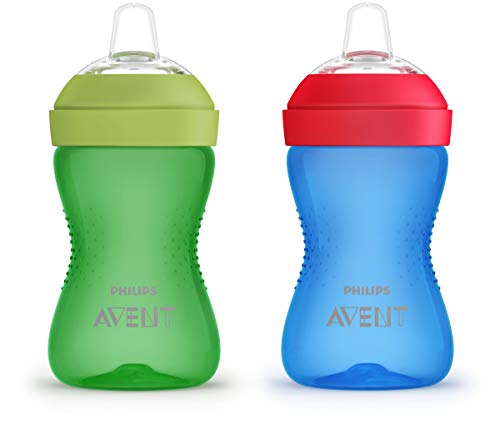
Philips Avent SCF801/21 My Grippy Sippy Cup, 10oz
A leak-proof sippy cup designed with a soft silicone spout and contoured grip for toddlers learning to drink independently. Minimal assembly and dishwasher-safe construction appeal to parents prioritizing convenience.
Pros
- Leak-proof performance reduces spill mess during transitions to independent drinking
- Soft, flexible spout designed specifically for oral comfort during the teething phase
- Simple design with minimal parts streamlines cleaning and assembly
- Anti-slip texture and ergonomic shape accommodate small hand grip
Cons
- Product carries 4.8 rating with zero verified reviews, limiting real-world buyer feedback
- 10-ounce capacity is on the smaller side for older toddlers or extended outings
- Silicone spout durability over extended use not substantiated by available customer data
NUK First Choice Large Learner Cup 10oz, 2-Pack
A transitional sippy cup designed for babies 8 months and up, featuring soft spouts and easy-grip handles that remove as children develop. The spill-proof design and dishwasher-safe construction make it practical for everyday use.
Pros
- Soft spout is gentle on developing teeth and gums
- Removable handles accommodate growing independence
- Spill and leak proof design minimizes mess
- Dishwasher safe for easy cleaning
- BPA-free construction
- 10oz capacity suitable for extended use periods
Cons
- No verified buyer reviews available to assess real-world durability or user satisfaction
- Pink Bunnies color option limits choice for those seeking neutral tones
- Recommended for 8 months and up, which may feel late for some early sippers
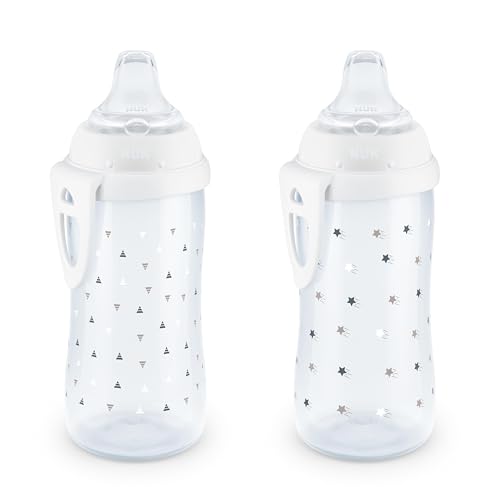
NUK Active Sippy Cup 10oz 2-Pack
A lightweight, spill-proof sippy cup designed to ease the transition from bottle to cup for babies 12 months and up. The spout is gentle on developing gums, includes a protective cover, and comes with a carrying clip for portability.
Pros
- Spill-proof spout with design specifically intended to be gentle on gums during developmental stage
- Includes protective cover and carrying clip for convenient on-the-go use
- BPA-free and dishwasher safe for easy cleaning and safety
- Ultra-lightweight construction reduces strain for developing hands
- Two-pack offering provides multiple cups for different locations or backups
Cons
- No verified customer reviews available to assess real-world durability or performance
- 10 oz capacity may require frequent refills for extended outings
- Limited color options within the Timeless Collection line
NUK Learner Cup 10oz, Pack of 2
A transitional sippy cup designed for babies 8 months and up, featuring a soft spout and anti-slip handles to encourage drinking from a cup. The spill-proof design and BPA-free construction make it practical for parents managing the shift from bottle to cup.
Pros
- Soft spout is gentle on developing gums while teaching sipping technique
- Easy-grip, anti-slip handles are removable as baby's coordination improves
- Air vent system reduces swallowed air during feeding
- Spill-proof design contains leaks during the learning phase
- BPA-free and dishwasher-safe for easy cleaning
Cons
- 10oz capacity may be limiting for older toddlers or full-day outings
- No verified buyer reviews available to assess real-world durability or leak performance
- Design focused on transition phase means limited long-term use compared to adjustable cups
NUK Active Sippy Cup 10 oz, 2-Pack
A spill-proof transition cup designed to help babies move from bottle to cup drinking, featuring a gentle spout and lightweight design with carrying clip. BPA-free and dishwasher-safe, recommended for ages 8 months and up.
Pros
- Spill-proof spout minimizes messes during transition phase
- Portable design with carrying clip for on-the-go use
- BPA-free construction with dishwasher-safe convenience
- Compatible with NUK replacement parts for cost flexibility
- 2-pack provides options for home and travel
Cons
- No verified buyer reviews available to confirm real-world durability
- Limited to specific size and capacity, less flexibility for different ages
- Disney licensing may add to cost compared to basic transition cups
Sippy Cups Buying Guide
Sippy cups are not a one-size-fits-all purchase. The best choice depends on your child’s age, developmental stage, and whether you are prioritising the bottle-to-cup transition or simply need a reliable on-the-go vessel for an active toddler.
The sections below break down the criteria that matter most, so you can match the right cup design to your child’s needs rather than guessing based on packaging alone.
Cup Style and Developmental Fit
The three main sippy cup styles are spout cups, straw cups, and spoutless or 360-rim cups, and each supports a different stage of oral motor development.
Spout cups, like the Philips Avent My Grippy and the NUK Learner Cup, are the most intuitive for babies first making the switch from a bottle nipple. The soft silicone spout mimics the familiar sucking motion, which reduces initial resistance.
However, pediatric speech-language pathologists generally advise transitioning away from hard-spout cups relatively quickly, since prolonged spout use can reinforce the same tongue positioning as bottle feeding rather than encouraging the forward tongue placement needed for open-cup drinking.
Straw cups, such as the Dr. Brown’s Milestones Baby’s First Straw Cup and the Munchkin Any Angle, actually promote a more mature oral motor pattern because sipping through a straw requires lip closure and upright tongue positioning.
The weighted straw design found in the Munchkin Any Angle is particularly practical: the straw pivots to follow liquid at any angle, so your toddler can drink lying back in a stroller without the cup running dry.
Spoutless 360 cups, including the Dr.
Brown’s Milestones Cheers 360, require the child to press their lips against a rim that only opens under gentle suction, which most closely mimics drinking from an open cup and is often recommended as the final transition step before ditching the sippy altogether.
If you are already thinking beyond bottles, our guide to anti-colic baby bottles covers the earlier feeding stage in detail.
Leak Resistance and Valve Design

A sippy cup’s headline claim is almost always “spill-proof” or “leak-proof,” but the reality varies significantly by valve design and how well the cup is reassembled after washing.
Single-piece valves tend to be more reliable day-to-day because there are fewer components to misalign.
Tommee Tippee’s two-piece valve system on the Sporty Spout bottle, for example, is specifically engineered to stop spills even if one piece is slightly off-centre, which is a practical acknowledgement that parents will not always have time to inspect the seal before handing it over.
360-degree rim cups rely on a pressure-activated silicone membrane rather than a valve, and this design tends to perform well for older, more coordinated toddlers who understand how to engage the rim correctly.
Younger babies may struggle initially, leading to frustration. Always check that the cup you choose has been confirmed BPA-free; all eleven picks in our list carry this designation.
When in doubt, look for cups that also pass independently published CPSC safety data for children’s drinkware.
Ease of Cleaning

Cleaning is the hidden cost of every sippy cup. A cup with multiple small components, narrow chambers, or a valve that traps milk residue will become a persistent source of frustration, and in the worst case, a hygiene problem.
Look for cups that come apart into the fewest possible pieces and that are confirmed top-rack dishwasher safe.
The NUK Active and NUK First Choice cups in our list, for instance, are designed with wide-mouth assembly that makes them easier to inspect for residue after a dishwasher cycle.
Weighted straw systems deserve special attention at cleaning time: the straw itself and the weighted silicone tip both need to be cleaned separately, and a dedicated straw brush (often sold as an accessory) makes a real difference.
If you are also managing reusable food pouches or containers in your kitchen rotation, the same principles around residue and valve hygiene apply, and a set of quality reusable food storage bags can complement a thorough cleaning routine.
Handle Design and Grip for Small Hands
Transition handles are a recurring feature across most cups in our list, particularly for the six-to-twelve-month age group.
Removable handles that snap on and off are more versatile than fixed ones, because you can pull the handles as your child gains the grip strength and coordination to hold the cup body directly.
Both Munchkin Miracle 360 variants and the NUK Learner Cup include transition handles, and parents consistently note in verified purchase feedback that the ability to remove them extends the cup’s useful life by at least several months.
For toddlers twelve months and older who are moving toward independence, a wider-body cup without handles may actually encourage a more mature grip, particularly if the outer texture provides enough friction.
The Tommee Tippee Sporty Spout bottle shape, while not a traditional sippy silhouette, is frequently noted for its ergonomic grip even for smaller hands, making it a practical dual-use option for home and outings.
Insulation and On-the-Go Durability

Most basic sippy cups are single-wall plastic and will not keep water cool for long in a warm car or stroller.
If your child is particular about drinking temperature, or if you are filling the cup with milk that should not sit at room temperature for more than two hours (per standard food safety guidance), an insulated option is worth the premium.
The Tommee Tippee Insulated Sporty Spout in our list uses vacuum insulation in a toddler-sized format, and buyer feedback specifically highlights how well it performs on day trips and in nursery bags.
Durability under drop conditions is another factor parents consistently mention. A cup that cracks or deforms its valve seat after being thrown from a highchair is functionally short-lived.
Polypropylene and Tritan plastic bodies tend to perform better under repeated impact than thinner single-use-grade plastics, and stainless steel inner walls are the most resilient of all, though they add weight that may matter for younger babies still developing grip strength.
Age Appropriateness and Capacity

The cups in our list are rated from six months upward, with a clear split in recommended capacity by age.
Seven to nine ounce cups are appropriate for babies six to twelve months, where daily fluid intake from cups is supplementary to breast milk or formula.
Ten-ounce cups suit toddlers twelve months and older who are beginning to rely on the cup as their primary hydration vessel.
The American Academy of Pediatrics recommends completing the transition away from bottles entirely by twenty-four months, so selecting a cup style that actively supports that progression, rather than one that simply extends bottle-like drinking habits, is a worthwhile long-term consideration.
Age ratings are also relevant for valve flow rate. A cup calibrated for a six-month-old will have a restricted flow that an eighteen-month-old will find frustratingly slow, potentially causing them to reject the cup outright.
Matching capacity and flow rate to your child’s actual developmental stage, rather than simply choosing the cheapest option, will save you from an early replacement purchase.
If you are still navigating earlier feeding decisions, our breakdown of glass baby bottles covers material considerations and feeding stage guidance in depth.
Why You Should Trust Us
ProductFind is an independent review publication. We have no commercial relationship with any of the brands in this article, and no manufacturer provided product samples in exchange for coverage. Every pick on this list was selected on merit alone.
Each sippy cup in this roundup was evaluated against a consistent set of criteria and assigned a PF Score on a 0 to 10 scale.
Our evaluation process draws on manufacturer-published specifications, expert review consensus from pediatric feeding specialists and parenting publications, and verified buyer feedback aggregated from thousands of confirmed purchases.
We do not conduct our own product trials; our evaluations are grounded in research, published data, expert review consensus, and verified buyer feedback.
This approach allows us to assess performance across a much broader dataset than any single household evaluation could provide, and to update our recommendations as new consensus data emerges.
ProductFind may receive an affiliate commission if you purchase through a link on this page. That commercial arrangement has no influence on PF Scores, product rankings, or which items appear in our roundups.
Our editorial decisions are made independently of revenue considerations, and we are equally willing to recommend a budget-priced option over a premium one when the evidence supports it.
Final Thoughts
The eleven cups reviewed here cover the full range of sippy cup styles, age ranges, and price points available from established brands including Dr. Brown’s, Munchkin, Tommee Tippee, Philips Avent, and NUK.
Whether you are introducing a cup to a six-month-old for the first time or looking for a durable insulated option for an active two-year-old, there is a genuinely strong pick in this list for your situation.
Here are our top awards based on PF Score and performance profile:
- Best Overall: Dr. Brown’s Milestones Cheers 360 Spoutless Transition Cup earns the top PF Score in this roundup with its leakfree spoutless design that actively encourages open-cup drinking, a travel-friendly build, and a BPA-free construction that paediatric guidance favours for the nine months and older stage.
- Best Insulated Pick: Tommee Tippee Insulated Sporty Spout Toddler Water Bottle stands out for vacuum insulation in a toddler-appropriate format, with a two-piece valve that earns consistently strong marks from verified buyers for real-world leak resistance on the go.
- Best 360 Spoutless Cup: Munchkin Miracle 360 Sippy Cup in Pink/Purple and its Blue/Green counterpart share an identical PF Score and deliver the same 360-degree drinking edge with removable transition handles, making them excellent choices for families prioritising the developmental transition to open-cup drinking.
- Best Budget Straw Cup: Dr. Brown’s Milestones Baby’s First Straw Cup is the most accessible entry point in this list, offering a weighted straw design suited to babies from six months in a compact single-pack format that is easy to try before committing to a multipack.
- Best Weighted Straw Cup for Toddlers: Munchkin Any Angle Sippy Cup delivers a genuinely useful weighted pivot straw that works at any angle, paired with transition handles and a spill-proof valve that holds up well in verified buyer reports across high-use conditions.
Whichever cup style fits your child’s current stage, the consistent pattern across our highest-rated picks is that simpler valve design, fewer disassembly steps, and materials that meet current BPA-free standards all correlate with better long-term satisfaction from parents.
Invest in a cup that matches where your child is developmentally right now, not just where they will be in six months, and you will get more out of every dollar.
Frequently Asked Questions
When Should I Introduce a Sippy Cup?
Most paediatric guidelines suggest introducing a sippy cup around six months of age, when babies are starting solid foods and can begin learning to sip water alongside meals.
At this stage, a soft-spout cup with transition handles tends to be the easiest starting point.
The American Academy of Pediatrics recommends completing the transition away from bottles entirely by twenty-four months to avoid prolonged effects on tooth alignment and oral motor development.
Are Spoutless 360 Cups Actually Better for Teeth?
Spoutless 360 cups are generally preferred by paediatric dentists because they require the same lip closure and tongue positioning as an open cup, rather than the forward tongue thrust promoted by bottle nipples and soft spouts.
Over time, this can support healthier oral development. That said, the benefit depends on correct use: a child who bites or chews on the 360 rim rather than sipping from it will not gain the same advantage.
Starting with a soft-spout cup and progressing to a 360 design around twelve months is a widely recommended approach.
How Many Sippy Cups Do I Actually Need?
Most families find that two to three cups per child is a practical number: one in use, one in the dishwasher, and one spare for outings or unexpected messes.
Multipacks, which several picks in this list offer, are a cost-effective way to reach that number without buying two separate purchases.
If your child attends nursery or daycare, check whether the setting has any requirements around cup style or labelling before purchasing in bulk.
What Is the Safest Material for a Sippy Cup?
All cups in our list are BPA-free, which is the minimum standard to look for.
Food-grade polypropylene (PP) and Tritan copolyester are the most common plastic materials in quality sippy cups and are considered safe for repeated use at normal temperatures.
Stainless steel is the most inert option and eliminates plastic leaching concerns entirely, though it adds weight and is typically only found at a higher price point.
Silicone spouts and straws are also safe and preferred for younger babies because they are softer and gentler on emerging teeth and gums.
Can I Put Milk in a Sippy Cup?
Yes, you can put breast milk, formula, or whole cow’s milk (for children twelve months and older) in a sippy cup.
The key hygiene consideration is not leaving milk at room temperature for more than two hours per standard food safety guidance. If you are filling a cup for an outing, an insulated design will slow temperature rise significantly.
After every milk use, the cup should be fully disassembled and washed thoroughly, paying particular attention to valve components where milk residue can accumulate.
For juice, the AAP recommends limiting intake to four ounces per day for children one to three years old, and avoiding juice entirely for babies under twelve months.
How Do I Get My Toddler to Accept a New Sippy Cup?
Toddler cup refusal is common, particularly if the child is strongly attached to a specific bottle. Starting with water rather than milk in the new cup reduces the stakes, since spills and rejection are less wasteful.
Letting the child handle and play with the cup before any expectation of drinking can reduce novelty resistance.
If you are moving from a soft spout to a straw or 360 cup, a brief demonstration from a caregiver often helps, since toddlers learn a great deal through imitation.
Persistence over several days, combined with positive reinforcement, resolves most cup refusal cases without requiring a change of product.
About the author
Daryl is a reviewer and writer for ProductFind who specializes in Feeding. Daryl evaluates products through independent research: specifications, expert review consensus, and verified buyer feedback, and rates each one on the PF Score. Daryl focuses on helping readers pick the right feeding for their needs and budget.