The 11 Best Telescopes
Aperture, mount type, and optical design make or break a telescope. Our research-backed picks cover refractors, reflectors, and GoTo scopes from beginner to advanced.
 By Darlene Little
Updated July 23, 2026
By Darlene Little
Updated July 23, 2026
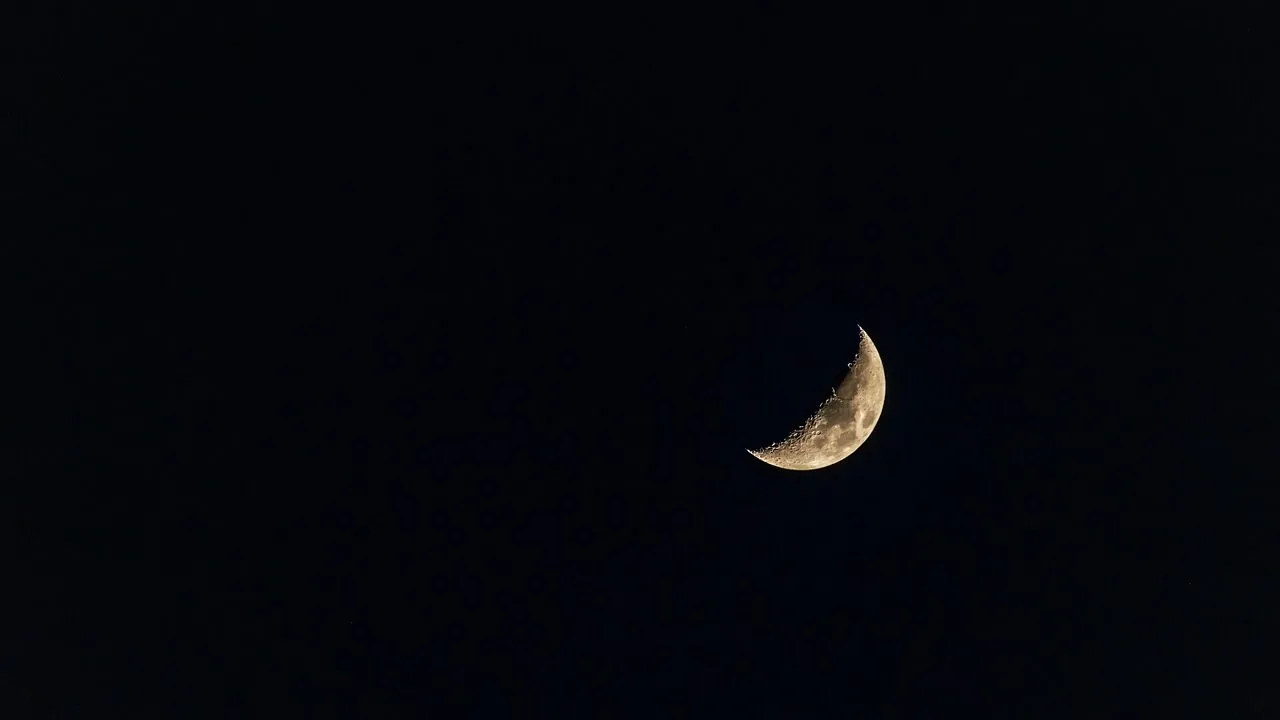
Few hobbies open up the universe the way astronomy does.
Whether you want to trace the craters of the Moon on a clear night, track Jupiter’s moons over a week, or glimpse a distant galaxy for the first time, a good telescope turns a dark sky from a backdrop into a destination.
The challenge is that the market is flooded with options ranging from toy-grade department-store scopes to serious optical instruments, and the spec sheet alone rarely tells you which is which.
Aperture, mount type, and optical design all matter, and getting those three things right for your experience level and observing goals is the difference between a telescope you reach for every clear night and one that collects dust in a closet.
This guide cuts through the noise. Our team at ProductFind researched every model here by synthesizing manufacturer specifications, expert review consensus from multiple astronomy and optics publications, and verified buyer feedback from thousands of confirmed purchases.
We cover refractors, reflectors, and catadioptric designs across a range of budgets and skill levels, from grab-and-go beginner scopes to computerized GoTo instruments from brands like Celestron, Gskyer, Celticbird, Meezaa, Dianfan, and Hugerstar.
If you are ready to pick your first or next telescope, the ranked list below is the best place to start.
| Award | Product | PF Score About PF ScoreThe PF Score is our own rating from 0 to 10, based on performance, design and build, ease of use, and value. It reflects independent research and is never influenced by manufacturers, retailers, or affiliate commissions. Learn more › | Price | |
|---|---|---|---|---|
| Best Overall |
 Celestron StarSense Explorer 150mm Dobsonian Telescope
|
8.6/10 | Buy | |
| Editor's Pick |
 Celestron NexStar 8SE 8-Inch GoTo Telescope
|
8.4/10 | Buy | |
| Best Value |
 Gskyer EQ-130 5.1-Inch Reflector Telescope
|
7.6/10 | Buy | |
| Top Rated |
 Dianfan 150EQ 150mm Reflector Telescope
|
7.4/10 | Buy | |
 MEEZAA 150EQ 150mm Newtonian Reflector Telescope
|
7.3/10 | Buy | ||
 Gskyer 70mm 400mm AZ Refractor Telescope
|
8.2/10 | Buy | ||
 MEEZAA 90mm Refractor Telescope 800mm
|
6.9/10 | Buy | ||
 HUGERSTAR 90mm Refractor Telescope 800mm
|
6.8/10 | Buy | ||
 Celticbird 80mm 900mm Refractor Telescope
|
7.6/10 | Buy | ||
 Dianfan 90mm 800mm Refractor Telescope
|
7.5/10 | Buy | ||
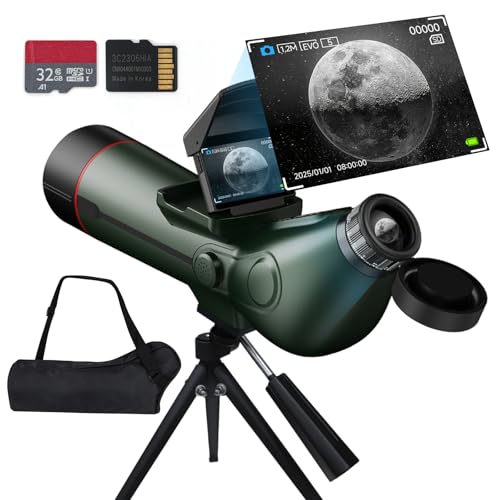 FASHIONARI 80mm Smart Telescope with 4K Camera
|
6.5/10 | Buy |
Celestron StarSense Explorer 150mm Dobsonian Telescope
A beginner-friendly 150mm reflector telescope that uses your smartphone and the StarSense app to identify and locate celestial objects through sky recognition technology. The tabletop Dobsonian mount with manual altazimuth tracking makes setup straightforward, though it requires a compatible phone for its core navigation feature.
Pros
- StarSense app eliminates need for prior astronomy knowledge or star charts
- Portable tabletop design at 25 pounds weighs less than full-size dobsonians
- 150mm aperture captures impressive detail on Moon, planets, and deep-sky objects
- Compatible with both iPhone and Android devices
- Established brand with decades of telescope manufacturing experience
Cons
- Requires a smartphone to use the StarSense feature; manual starhopping not viable if app fails
- Manual altazimuth tracking demands constant small adjustments to keep objects centered
- No motorized mount means higher learning curve for smooth tracking compared to GoTo telescopes
Celestron NexStar 8SE 8-Inch GoTo Telescope
A computerized 8-inch Schmidt-Cassegrain scope with fully automated GoTo tracking and a 40,000-object database, designed for observers ready to move beyond manual navigation. SkyAlign alignment simplifies setup by requiring only three bright stars or planets, making it accessible for both beginners and experienced users.
Pros
- Large 8-inch aperture in a portable package compared to larger Dobsonians
- Automated GoTo eliminates manual star-hopping and reduces setup complexity
- SkyAlign alignment works with any bright celestial objects, not specific named stars
- Comprehensive object database covers deep-sky and solar system targets
- Established brand with US-based customer support since 1960
Cons
- No verified buyer reviews available to confirm real-world performance and reliability
- Premium price point may exceed budget-conscious beginners despite being positioned for them
- Computerized mount adds weight and complexity compared to manual Newtonian alternatives
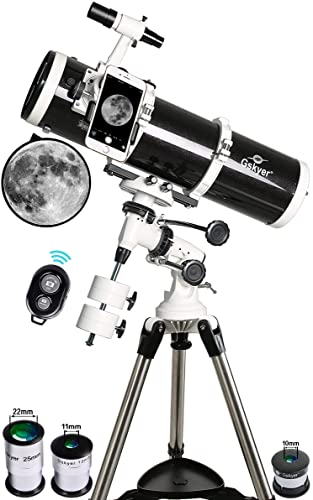
Gskyer EQ-130 5.1-Inch Reflector Telescope
A 5.1-inch reflector telescope designed for beginners and intermediate stargazers, featuring a fast f/5 focal ratio and complete accessory bundle including three eyepieces and a Barlow lens. The included wireless remote control enables smartphone image capture without app installation.
Pros
- All-glass optics with quality coatings deliver enhanced image brightness
- Comes fully equipped with accessories, reducing need for additional purchases
- Bluetooth remote control simplifies astrophotography without app requirements
- Compact design and toothless focusing base suit both beginners and experienced observers
Cons
- No verified buyer reviews available to assess real-world performance and reliability
- 4.4-star rating lacks supporting user feedback to validate claimed quality
- Relatively heavy at 30.1 pounds may require sturdy mounting or transportation considerations
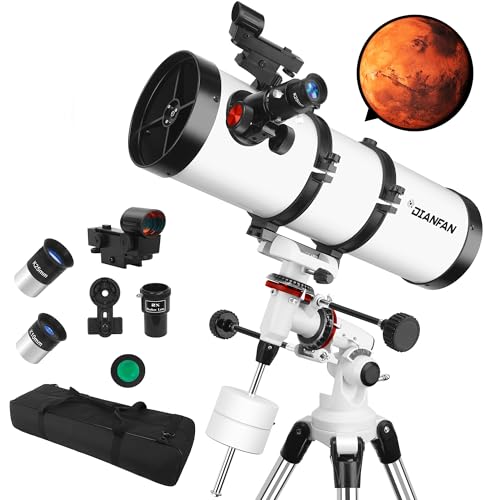
Dianfan 150EQ 150mm Reflector Telescope
A 150mm aperture reflector designed for beginners and experienced stargazers, offering 26x to 130x magnification with a pre-assembled equatorial mount. Comes with dual eyepieces, Barlow lens, phone adapter, and protective carrying bag for portable stargazing.
Pros
- Large 150mm aperture provides excellent light-gathering for detailed lunar and deep-sky observation
- German equatorial mount with intuitive controls suitable for both beginners and experienced users
- Comprehensive accessory kit includes phone adapter, Barlow lens, and protective carrying case
- Relatively quick setup time with pre-assembled mount saves initial assembly frustration
- Stainless steel tripod offers stable support across multiple adjustable heights
Cons
- No verified buyer reviews available to confirm real-world performance and reliability
- Inverted daytime views noted for terrestrial objects may require learning curve for casual users
- Carrying bag weighs 14 kg total, which may be cumbersome for some users despite portability claims
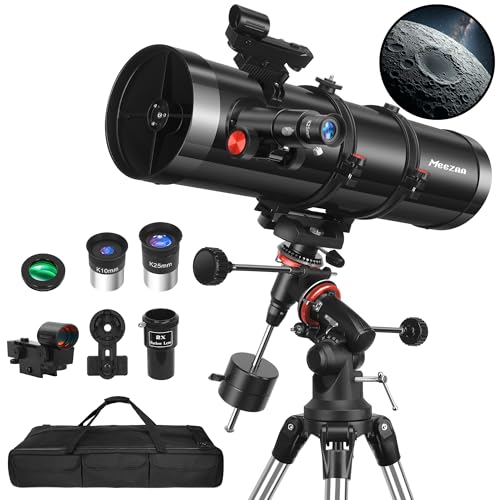
MEEZAA 150EQ 150mm Newtonian Reflector Telescope
A mid-range reflector telescope with a 150mm aperture and equatorial mount, designed for astronomy beginners and casual stargazers. Comes fully equipped with eyepieces, Barlow lens, finderscope, moon filter, and carry bag for complete setup out of the box.
Pros
- Excellent light-gathering capability with 150mm aperture suited for deep-space and lunar observation
- Equatorial mount with precision dials allows accurate tracking of celestial objects across the night sky
- All accessories included, eliminating the need for additional purchases to get started
- Portable design with dedicated carry bag makes transport and storage practical
- No tools required for assembly, reducing setup friction for newcomers
Cons
- No customer reviews available yet, making real-world performance validation difficult
- Equatorial mounts require polar alignment learning curve, not ideal for absolute beginners seeking simplicity
- Reflector telescopes require periodic mirror collimation maintenance to maintain optical performance
Gskyer 70mm 400mm AZ Refractor Telescope
A budget-friendly refractor telescope designed for beginners and kids, featuring 70mm aperture with fully coated optics and a 400mm focal length. Includes adjustable tripod, wireless remote, phone adapter, and carry bag for portable stargazing.
Pros
- Fully coated optics glass with high transmission for clear, protected viewing
- Includes two eyepieces plus 3x Barlow lens to vary magnification options
- Phone adapter and wireless remote allow smartphone astrophotography
- Adjustable aluminum tripod with carry bag for travel and storage
- 5x24 finder scope with crosshairs simplifies object location
Cons
- 70mm aperture limits light gathering compared to larger models, reducing deep-sky performance
- No verified user reviews available to assess real-world reliability and ease of setup
- Entry-level specifications may require additional accessories for advanced observation
MEEZAA 90mm Refractor Telescope 800mm
A 90mm refractor designed for astronomy beginners and casual stargazers, offering 32x to 240x magnification through dual eyepieces and a 3x Barlow lens. The package includes a tripod, phone adapter, and carry bag, making it accessible for backyard observation and outdoor star parties.
Pros
- Substantial 90mm aperture for a beginner-friendly refractor telescope
- Versatile magnification options via included 10mm, 25mm eyepieces and 3x Barlow lens
- Multi-coated optics improve light transmission and image quality
- All-in-one kit with tripod, phone adapter, and carry case for portability
- Fast setup time makes it accessible for casual astronomers
Cons
- No user reviews available to validate build quality and long-term durability claims
- Fixed 90mm/800mm design limits upgrade path if deeper exploration is desired later
- Phone adapter compatibility and image capture quality not detailed in product information
HUGERSTAR 90mm Refractor Telescope 800mm
A 90mm refractor telescope designed for astronomy beginners and casual stargazers, offering 32X to 240X magnification through two eyepieces and a Barlow lens. The fully multi-coated optics and included accessories like phone adapter and moon filter make it a practical entry-level option for lunar and planetary observation.
Pros
- Fully multi-coated lenses deliver good light transmission and image quality
- Wide magnification range via two eyepieces plus 3X Barlow lens covers multiple viewing scenarios
- Tool-free assembly and clear instructions make it accessible to beginners
- Height-adjustable tripod accommodates different observers
- Moon filter and phone adapter add practical utility for casual astronomy
Cons
- No verified user reviews available to confirm real-world optical performance
- 90mm aperture is modest for deep-sky object observation compared to larger professional scopes
- Stainless steel tripod may require stabilization in windy conditions for extended viewing
Celticbird 80mm 900mm Refractor Telescope
An 80mm refractor telescope designed for beginners and casual observers, featuring two interchangeable eyepieces and a phone adapter for capturing lunar and planetary views. Comes fully assembled with a carry bag and adjustable tripod, making it portable for travel and backyard use.
Pros
- Wide aperture and multi-coated optics deliver good light transmission for viewing the moon and bright planets
- Complete beginner-friendly package with all accessories, tripod, and carrying case included
- Adjustable aluminum tripod accommodates both adults and children without additional purchases
- Phone mount enables smartphone documentation of observations
Cons
- No verified buyer reviews available to assess real-world performance or reliability
- Refractor design may require more collimation maintenance than reflector alternatives
- Limited eyepiece options at 20mm and 10mm; upgrading requires separate purchases
Dianfan 90mm 800mm Refractor Telescope
A budget-friendly refractor telescope with a 90mm aperture and 800mm focal length, offering magnification ranges up to 240x through dual eyepieces and a Barlow lens. Best suited for beginners and families exploring stargazing and lunar observation, with a portable stainless steel tripod setup.
Pros
- Generous magnification options via two eyepieces and 3x Barlow lens
- Quick assembly designed for beginner-friendly operation
- Portable with included carry bag and stable tripod
- Fully coated optics with high-transmission coatings for contrast and color
Cons
- No verified buyer reviews available to assess real-world performance and durability
- Relatively heavy at over 10 pounds, which may limit portability for extended travel
- Entry-level optics may show limitations at maximum magnification ranges
FASHIONARI 80mm Smart Telescope with 4K Camera
This refractor telescope combines an 80mm aperture with built-in 4K astrophotography and dual screens for real-time viewing. It's designed for astronomy beginners and enthusiasts looking to capture celestial images without external devices.
Pros
- Integrated 4K camera eliminates need for separate imaging equipment
- Dual viewing options (eyepiece and external screen) provide flexible observation
- Long battery life and customizable auto shut-off preserve power
- Versatile for astronomy, bird watching, and long-distance spotting
- Includes tripod for stable mounting
Cons
- No verified customer reviews available to assess real-world performance and durability
- Dual-screen system adds complexity compared to traditional telescopes
- Specifications show unusual dimension values that may indicate data entry errors
Best Telescopes Buying Guide
Choosing the right telescope comes down to matching the optical design, aperture, and mount to your observing goals and lifestyle.
A scope that works beautifully for a dedicated backyard astronomer might be frustrating for someone who wants to hike to a dark site, and vice versa.
The sections below walk through every major decision point so you can evaluate any telescope on this list, or any model you encounter elsewhere, with confidence.
Optical Design: Refractor, Reflector, or Catadioptric

The three main optical families each have genuine strengths and trade-offs. Refractors use a glass lens at the front of the tube. They are low-maintenance, produce sharp, high-contrast images, and are well-suited to viewing the Moon, planets, and double stars.
Their main limitation is aperture: a high-quality refractor with a large objective lens gets expensive quickly, which is why most refractors on the market top out at 90 mm to 100 mm in the mid-range price tier.
If you prioritize portability and a grab-and-go setup, a refractor is hard to beat.
Reflectors use a concave primary mirror instead of a lens, which makes it far more affordable to build a large aperture instrument.
A 130 mm or 150 mm Newtonian reflector costs significantly less than an equivalent-aperture refractor and gathers more light for deep-sky viewing of nebulae and galaxies.
The trade-off is that mirrors can drift out of alignment (collimation) over time and need periodic adjustment. Catadioptric designs like the Schmidt-Cassegrain combine a mirror and a corrector lens in a compact tube, offering large aperture in a portable package.
They are typically the priciest option but the most versatile for both planetary and deep-sky work.
When reading a listing, match the design to your primary target. Planetary and lunar observers often prefer refractors or long-focal-length catadioptrics.
Deep-sky observers who want to see galaxies and nebulae should prioritize aperture, which usually means a reflector or a larger catadioptric. Casual multi-purpose observers will find mid-sized refractors and Newtonians a good balance.
Aperture: Why It Matters More Than Magnification

If there is one number to focus on when comparing telescopes, it is aperture, stated in millimeters. Aperture is the diameter of the primary lens or mirror, and it determines how much light the telescope collects.
More light means brighter images, finer detail, and the ability to resolve fainter objects. No amount of magnification can compensate for insufficient aperture.
A 150 mm scope will always show more than a 70 mm scope of the same type, regardless of the eyepieces used.
Magnification is a function of focal length divided by eyepiece focal length. Most beginner packages include two eyepieces, typically a low-power (25 mm or 20 mm) and a higher-power (9 mm or 10 mm) unit, plus sometimes a 2x Barlow lens.
The useful upper limit of magnification for any telescope is roughly 50x per inch of aperture under ideal seeing conditions. Pushing beyond that limit produces dim, blurry images rather than more detail.
Treat high-magnification marketing claims skeptically: “525x power” on a 70 mm scope is a red flag, not a selling point.
Mount Type: Altazimuth vs. Equatorial
The mount is as important as the optics. An altazimuth (AZ) mount moves up-down and left-right, which is intuitive for beginners and works well for casual lunar and planetary viewing.
It is the mount you will find on most entry-level refractors and on Dobsonian-style reflectors.
The downside is that tracking an object as Earth rotates requires adjusting two axes simultaneously, which is manageable for visual observing but less practical for astrophotography.
An equatorial (EQ) mount aligns one axis with Earth’s rotational axis. Once polar-aligned, you only need to turn one slow-motion knob to track an object across the sky.
This makes EQ mounts popular with observers who want more precise tracking and is essential for any serious astrophotography beyond snapshots of the Moon. The trade-off is that EQ mounts have a steeper learning curve and are heavier.
Computerized GoTo mounts, like the one on the Celestron NexStar 8SE, automate the tracking entirely and can slew to any of tens of thousands of catalogued objects automatically, which dramatically lowers the barrier to entry for finding faint targets.
For most beginners, a stable altazimuth mount is the right starting point. Stability matters enormously: a wobbly mount makes every object hard to observe and high-magnification viewing nearly impossible. Pay attention to tripod quality and head stiffness, not just optics specs.
Focal Length and Focal Ratio
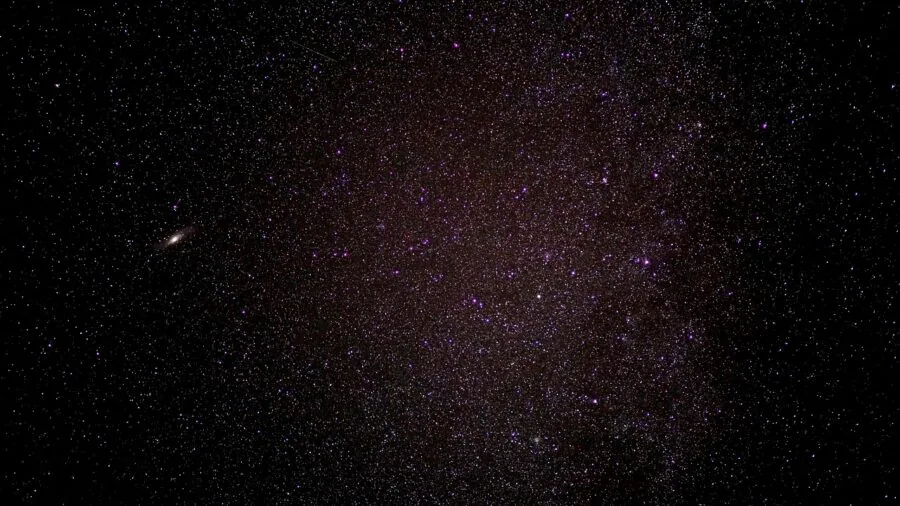
Focal length (usually listed in millimeters) is the distance light travels inside the tube before reaching focus. It determines the magnification you get with any given eyepiece and affects the field of view.
A longer focal length produces higher magnification at a given eyepiece and a narrower field, which suits planetary viewing. A shorter focal length gives a wider field at the same eyepiece, better for sweeping star fields and large nebulae.
Focal ratio (f-number) is focal length divided by aperture. A fast scope (f/5 or lower) covers more sky per eyepiece and is more forgiving for wide-field deep-sky work. A slow scope (f/10 or higher) is better for high-magnification planetary detail.
The 90 mm f/8.9 refractors in this lineup, for example, lean toward moderate magnification planetary and lunar use rather than wide-field deep-sky observation. Understanding this number helps you set realistic expectations for what any scope will show best.
App Integration and Smart Features
A newer category worth understanding is app-enabled telescopes.
The Celestron StarSense Explorer line uses your smartphone’s camera and a dedicated dock to analyze star patterns overhead and tell you exactly where to point the scope to find any object in the database.
This is not the same as a motorized GoTo mount: you still move the telescope manually, but the app guides you step by step.
For beginners who struggle to star-hop their way to fainter targets, this is a genuinely practical solution that gets you observing in minutes rather than hours.
At the other end of the spectrum, purely digital smart telescopes like the Fashionari model in this roundup replace a traditional eyepiece with a camera sensor and a screen, displaying processed astrophotography images rather than raw visual views.
These are easy to share and photograph but represent a fundamentally different experience from visual observing.
They can be a great entry point for astrophotography enthusiasts, though image quality depends heavily on the sensor and processing software rather than optics alone.
Portability, Storage, and Accessories

The best telescope is the one you actually use. A large, heavy scope that requires 30 minutes of setup may stay indoors on cold nights, while a smaller, lighter instrument that sets up in five minutes gets used regularly.
Think honestly about where and how often you plan to observe. If you want to drive to a dark-sky site and carry equipment a short distance, a compact refractor with a carry bag is a practical choice.
If you have a dedicated backyard with a safe storage area, a larger reflector on a sturdy mount makes sense.
Accessories matter more than many buyers realize. Check what eyepieces and Barlow lenses come in the box, whether a red-dot finder is included (essential for beginners), and whether the focuser accepts standard 1.25-inch eyepieces (the most common size).
A phone adapter for lunar photography is a useful addition. Some kits also include a moon filter to reduce glare when viewing a bright full Moon.
Just as you might research backpacking tents for durability and packability before heading into the field, evaluating a telescope’s carry case quality and tripod leg sturdiness will save you headaches later.
Why You Should Trust Us
ProductFind is an independent review publication. We do not manufacture, sell, or distribute any of the products we cover, and we have no commercial relationship with the brands listed here that influences our rankings.
Every telescope in this guide was scored using our PF Score system, a 0 to 10 rating scale applied consistently across specifications analysis, expert review consensus gathered from multiple astronomy and optics publications, and verified buyer feedback from confirmed purchasers.
We do not conduct our own product trials; our evaluations are grounded in research, published data, expert review consensus, and verified buyer feedback.
Each telescope was assessed against the same criteria: optical aperture and design quality, mount stability and ease of use, included accessories and value, build quality relative to price tier, and suitability for the intended audience (beginner, intermediate, or advanced).
Products are ranked by PF Score from highest to lowest, so the model at the top of the list earned that position through merit, not marketing spend.
ProductFind may earn a commission if you purchase through a link in this guide. That commercial arrangement has no bearing on scores, rankings, or which products appear in our roundups.
Final Thoughts
The right telescope depends on who you are as an observer. Whether you want a quick grab-and-go scope for family nights in the backyard or a serious computerized instrument for systematic deep-sky exploration, this lineup covers the full range.
Here are our standout picks by use case, each earning its designation through PF Score and research-based evaluation.
- Best Overall: Celestron StarSense Explorer 150AZ earns the top spot in this roundup for combining a genuinely large 150 mm aperture with the StarSense app-enabled guidance system, making it one of the most accessible and capable telescopes available for beginners and intermediate observers alike.
- Best for Advanced and Experienced Observers: Celestron NexStar 8SE is the premium choice for anyone ready to step into fully automated GoTo astronomy, offering an 8-inch Schmidt-Cassegrain optical tube with access to a database of over 40,000 objects and the build quality to match serious long-term use.
- Best Mid-Range Reflector: Gskyer 130EQ delivers an honest step up in light-gathering power over entry-level refractors on an equatorial mount, making it a practical upgrade for observers ready to track planets and explore brighter deep-sky targets more precisely.
- Best Budget Pick: Gskyer 70mm AZ Refractor is the friendliest entry point in this guide, offering a portable altazimuth setup with a carry bag and phone adapter at an accessible price, ideal for beginners, young astronomers, and anyone wanting to try the hobby before committing to a larger investment.
- Best for Astrophotography Newcomers: Fashionari Smart Digital Telescope takes a different approach entirely, pairing an autofocus refractor with a 4K astrophotography camera and dual screens for a screen-based observing experience that prioritises image capture and sharing over traditional eyepiece viewing.
If you are still deciding between optical designs or mount types, revisit the buying guide sections above.
And if astronomy is part of a broader interest in outdoor and technical gear, you may also find our guides on dive watches and tandem kayaks useful for planning your next adventure under or above the water.
Frequently Asked Questions
What is a good aperture for a beginner telescope?
For a first telescope, 70 mm to 90 mm of aperture is a practical and affordable starting point for viewing the Moon, planets, and bright star clusters.
If your budget stretches to 130 mm or 150 mm, you will be able to see significantly more detail on planets and begin resolving brighter deep-sky objects like the Orion Nebula.
The key is to avoid extremely small apertures (60 mm or below) often found in toy-grade scopes, as they limit what you can realistically observe even under ideal conditions.
Is a refractor or reflector better for beginners?
Both have genuine merit for beginners. Refractors are essentially maintenance-free: you take them out, point them, and observe. They produce sharp images of the Moon and planets and require no collimation.
Reflectors cost less per millimeter of aperture, so you get more light-gathering power for the same money, which matters for dimmer targets.
If you live in a city or suburb and primarily want to observe the Moon and planets, a refractor is a great choice.
If you have access to darker skies and want to explore beyond the solar system, a 130 mm or 150 mm reflector will show you more.
What does GoTo mean on a telescope?
GoTo refers to a motorized computerized mount that can automatically slew (point) the telescope to any target in its onboard database after an initial alignment procedure.
On the Celestron NexStar 8SE, for example, you align on two or three bright stars, enter your location and time, and the mount can then find and track over 40,000 objects automatically.
GoTo is genuinely useful for beginners who have not yet learned to star-hop manually, and it saves experienced observers significant time when observing long lists of objects. The trade-off is cost and complexity compared to manual mounts.
Can I use a telescope for daytime viewing or birdwatching?
Technically yes, but most astronomical telescopes produce an inverted (upside-down) image, which makes terrestrial viewing awkward. You would need an erecting prism to correct the orientation. Refractors are more suitable for daytime use than reflectors.
That said, if your primary interest is birdwatching or wildlife observation, a quality binocular or spotting scope will serve you better than any astronomical telescope.
A dedicated astronomical scope is optimised for faint, stationary targets in the night sky rather than fast-moving subjects in daylight.
How much should I expect to spend on a decent beginner telescope?
A capable beginner telescope that will genuinely show you the Moon’s craters, Saturn’s rings, and Jupiter’s cloud bands typically falls in the budget to mid-range price tier.
Scopes priced below that threshold often have undersized apertures or flimsy mounts that will frustrate rather than inspire. Spending a little more upfront on a stable mount and adequate aperture almost always pays off in enjoyment and longevity.
If budget is a firm constraint, prioritise aperture and mount quality over included accessories, which can be upgraded later.
Do I need to buy additional accessories after purchasing a telescope?
Most beginner telescope kits include enough to get started: typically a low-power and a higher-power eyepiece, a finder scope or red-dot finder, and sometimes a moon filter or Barlow lens.
That said, upgrading to a quality wide-angle eyepiece can noticeably improve your observing experience, and a planisphere or a tablet running a planetarium app like Stellarium is a valuable companion for identifying what you are looking at.
A red-light flashlight is also essential for preserving your night vision while consulting charts. Beyond that, the telescope itself will keep you busy for a long time before you need anything else.
About the author
Darlene is a reviewer and writer for ProductFind who specializes in Outdoor Hobbies & Recreation. Darlene evaluates products through independent research: specifications, expert review consensus, and verified buyer feedback, and rates each one on the PF Score. Darlene focuses on helping readers pick the right outdoor hobbies & recreation for their needs and budget.