The 8 Best Trampolines
Finding a safe, durable trampoline means weighing size, weight capacity, frame quality, and ASTM certification. Our research covers the top picks for kids, adults, and mixed households.
 By Florence Butler
Updated July 23, 2026
By Florence Butler
Updated July 23, 2026

A trampoline is one of the few backyard investments that pays dividends in pure, unfiltered fun for years.
Whether you’re outfitting a yard for energetic kids, looking for a low-impact cardio option for adults, or simply want a centrepiece for weekend gatherings, the right trampoline transforms outdoor space into a destination.
The category has matured considerably, with brands now competing on weight capacity, galvanized steel frames, ASTM-certified safety enclosures, and bounce quality that actually rewards the price premium.
Choosing poorly means wobbly frames, inadequate netting, and a trampoline that looks tired after one summer. Choosing well means a decade of reliable bouncing.
ProductFind researched the current market by analyzing published specifications, synthesizing expert review consensus across the trampoline category, and weighing verified buyer feedback from thousands of confirmed purchases.
We evaluated every model in this list against a consistent set of criteria and scored each on our 0 to 10 PF Score scale.
Options here range from compact 8 ft backyard models to premium-grade rectangular trampolines from brands such as Zupapa, Skywalker Trampolines, JOYBERRI, JELENS, ORCC, ALTLER, and SereneLife.
Scroll down for our top picks, then use the buying guide below to match the right model to your yard, your household, and your priorities.
| Award | Product | PF Score About PF ScoreThe PF Score is our own rating from 0 to 10, based on performance, design and build, ease of use, and value. It reflects independent research and is never influenced by manufacturers, retailers, or affiliate commissions. Learn more › | Price | |
|---|---|---|---|---|
| Best Overall |
 Zupapa 10x17 Rectangle Trampoline 1800LBS Capacity
|
8.7/10 | Buy | |
| Editor's Pick |
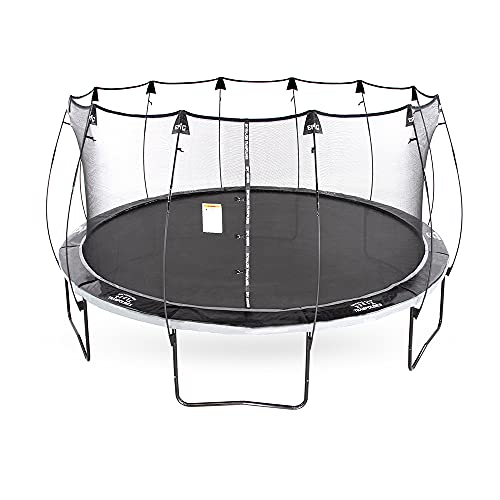 Skywalker 16 Ft Round Trampoline with Enclosure, 1600 lb
|
8.2/10 | Buy | |
| Best Value |
 JoyBerri 10ft Outdoor Trampoline with LED Lights
|
7.8/10 | Buy | |
| Top Rated |
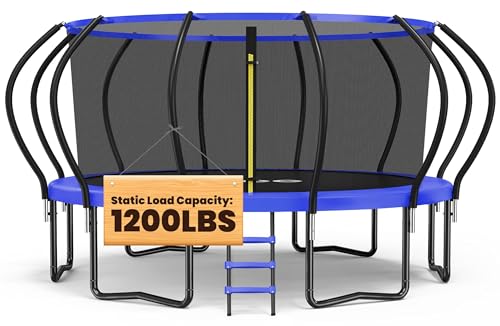 ORCC 14FT Trampoline with Safety Net, 1200LBS Capacity
|
7.4/10 | Buy | |
 SereneLife 8ft Trampoline with Safety Net Enclosure
|
7.2/10 | Buy | ||
 JELENS 12FT Trampoline with Enclosure Net
|
7.1/10 | Buy | ||
 ALTLER 12FT Round Trampoline with Enclosure Net
|
6.8/10 | Buy | ||
 SereneLife 12FT Trampoline with Safety Net
|
6.5/10 | Buy |
Zupapa 10x17 Rectangle Trampoline 1800LBS Capacity
A heavy-duty rectangular trampoline engineered for families seeking serious weight capacity and stability. The patented no-gap safety net design and reinforced steel frame make it suitable for both kids and adults looking for gymnastics-focused bouncing.
Pros
- Exceptional weight capacity with heavy-duty Q195 steel construction outperforms standard specs
- Patented no-gap safety net design reduces injury risk during flips and tricks
- Comprehensive warranty program with 10-year frame guarantee and parts replacement
- Rectangular design with stabilized support system prevents edge sagging
- Safety certifications and ASTM compliance provide verified structural reliability
Cons
- No customer reviews available to verify real-world durability and assembly difficulty claims
- Large footprint (204 x 120 inches) requires significant yard space
- Heavy 340-pound weight makes relocation and setup challenging for single users
Skywalker 16 Ft Round Trampoline with Enclosure, 1600 lb
A large-format trampoline designed for multiple users with a 1600 lb weight capacity and patented no-gap enclosure system. The 12 flex rod support and galvanized steel frame offer durability for outdoor residential use.
Pros
- High weight capacity makes it viable for family group use and adult jumping
- Patented no-gap enclosure system closes safety gaps where nets meet mat
- Dual flex rod support (12 vs typical 6) reduces enclosure impact stress
- Rust-resistant galvanized steel frame rated for outdoor exposure
- Extra-large 16 ft jump surface offers more room than smaller models
Cons
- No verified customer reviews available to validate real-world durability claims
- Large 192 x 192 inch footprint requires substantial yard space and assembly effort
- Premium pricing reflects the larger size and dual enclosure support system
JoyBerri 10ft Outdoor Trampoline with LED Lights
A 10-foot trampoline designed for families, featuring ASTM certification, integrated 16-color LED lighting with remote control, and an optional sprinkler system. The rust-proof steel frame supports up to 450 lbs and includes a safety net, ladder, and ground stakes for year-round outdoor use.
Pros
- ASTM certified safety features including outwardly curved poles reduce collision risk
- Durable rust-proof and weather-resistant construction suitable for year-round outdoor use
- LED lighting system adds nighttime entertainment value with multiple color and mode options
- Solid 450 lb weight capacity accommodates multiple users
- 5-year protection plan provides long-term coverage beyond typical warranties
Cons
- No verified buyer reviews available to assess real-world durability or assembly difficulty
- 10ft size may require significant yard space and could be challenging to install without assistance
- LED lights and sprinkler system require power source and maintenance not detailed in specifications
ORCC 14FT Trampoline with Safety Net, 1200LBS Capacity
A large outdoor trampoline designed with safety certifications (CPSIA, ASTM F381-16) and durable hot-dip galvanized steel construction. The 14-foot model offers curved foam-padded poles, reinforced netting, and 1200LBS static weight capacity, making it suitable for families with multiple users.
Pros
- Certified safety design with multiple protective features including curved poles and 15mm foam padding
- Hot-dip galvanized steel frame offers exceptional rust resistance and long-term durability
- Comprehensive warranty coverage: 2 years on frame, 1 year on springs and mats, 6 months on nets
- Bundle includes ladder, wind stakes, and assembly accessories for immediate use
- Higher bounce performance with heavy-duty stitched waterproof jumping mat
Cons
- Requires 4 or more people to safely move the assembled trampoline, limiting relocation flexibility
- Assembly takes approximately 1.5 hours and requires careful coordination between multiple people
- No existing verified buyer reviews available to assess real-world durability and performance
SereneLife 8ft Trampoline with Safety Net Enclosure
An 8-foot round trampoline designed for kids ages 6 and up, featuring a protective safety net enclosure and weather-resistant construction for year-round backyard use. The 264 lb weight capacity and stable frame design make it a practical option for families with smaller yards seeking safe outdoor play.
Pros
- Safety net enclosure provides contained jumping environment for younger users
- Waterproof, weather-resistant construction built for outdoor year-round use
- Reinforced mat designed for consistent bounce across age groups
- Rugged leg base and balanced frame design prevent rocking and wobbling
- 8ft size accommodates typical residential backyards without requiring excessive space
Cons
- No customer reviews available to verify real-world durability or assembly ease
- 264 lb capacity may be limiting for older teens or multiple simultaneous jumpers
- Lacks premium features like padding or spring covers found on higher-end models
JELENS 12FT Trampoline with Enclosure Net
A mid-size recreational trampoline built with galvanized steel and double-layer mesh enclosure, meeting ASTM safety standards. Best suited for families wanting a durable backyard setup with minimal assembly hassle.
Pros
- ASTM compliance and pumpkin-shaped enclosure design reduce injury risk during jumping
- High-strength galvanized steel with waterproof foam resists rust and weather degradation
- Professional-grade woven mesh jump surface delivers consistent bounce without dead spots
- Comprehensive safety anchoring system handles wind exposure
- Straightforward assembly process with complete hardware package included
Cons
- No verified customer reviews available to validate real-world durability claims
- Product listing lacks specific weight capacity or age range guidance
- Large footprint and assembly effort required for initial setup
ALTLER 12FT Round Trampoline with Enclosure Net
A 12-foot round trampoline engineered for family use with reinforced construction and enhanced weight capacity. Features weather-resistant materials, safety-focused padding, and straightforward assembly, making it suitable for mixed-age backyard play.
Pros
- Reinforced construction supports higher weight loads safely
- Weather-resistant materials designed for outdoor longevity
- Prioritizes user safety with sturdy frames and padded elements
- Simplified assembly reduces setup time and effort
- ASTM approved for compliance with safety standards
Cons
- No verified buyer reviews available to assess real-world durability claims
- 12FT size requires substantial backyard space and may not suit smaller yards
- Installation process simplicity cannot be independently verified without customer feedback
SereneLife 12FT Trampoline with Safety Net
A 12-foot outdoor trampoline built for families, featuring 72 high-tension springs, a 70-inch safety net, and an L-shaped steel frame designed for stability. The ASTM-certified construction and weather-resistant materials make it a reliable option for year-round backyard use, though assembly and space requirements warrant consideration.
Pros
- Exceptional bounce performance from 72 springs and reinforced mat
- Comprehensive safety features including tall netting, padded covers, and secure zippers
- Sturdy L-shaped leg design minimizes instability on various surfaces
- Weather-resistant construction with rust-resistant steel frame
- Relatively quick setup for a 12-foot trampoline
Cons
- No verified customer reviews available to assess real-world durability and user satisfaction
- Large footprint (144 x 144 inches) requires significant backyard space
- Weight capacity of 264 lbs is modest for a recreational trampoline this size
Best Trampolines Buying Guide
Trampolines look straightforward until you start comparing models side by side. Frame gauge, spring count, mat material, enclosure height, and weight rating all interact to determine how a trampoline actually performs and how long it survives outdoor weather.
The subsections below break down each dimension so you can make a confident decision without guesswork.
If you’re also building out your backyard play space, a quality slackline setup pairs naturally alongside a trampoline for yards with open grass or sturdy anchor trees.
Size and Shape: Round vs. Rectangular
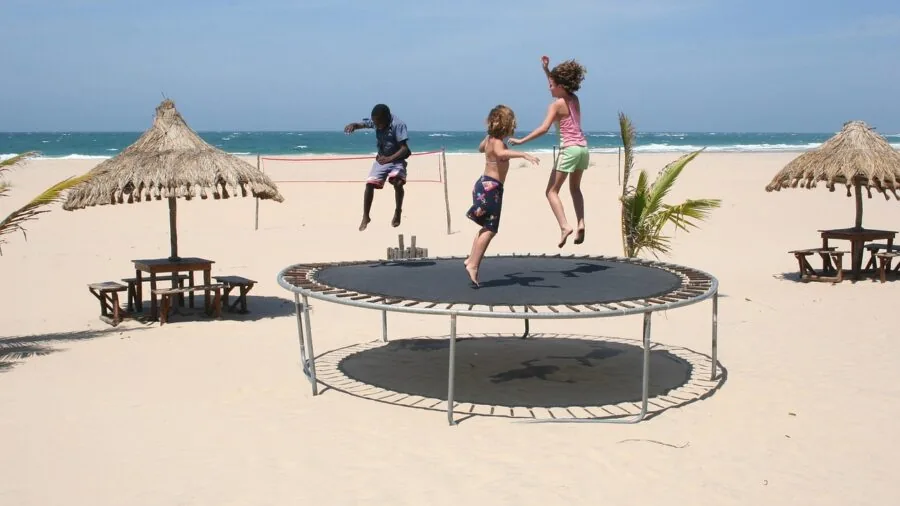
Round trampolines are the most common choice for residential yards because their geometry naturally directs jumpers toward the centre, making them inherently safer for unsupervised recreational use.
They’re available in diameters from 8 ft up to 16 ft, and the size you need depends largely on the age and number of users.
An 8 ft model suits one or two young children bouncing recreationally; a 14 ft to 16 ft model accommodates older kids and adults who want meaningful air time without feeling cramped.
Rectangular trampolines, by contrast, distribute spring tension more evenly across the entire mat surface, which produces a more powerful and consistent bounce at every position. That’s why gyms and competitive gymnasts prefer them.
For backyard use, rectangular models require more yard space and typically carry a higher price tag, but they reward users who want a larger jumping surface or who practise skills with intentional footplacement.
If your space and budget allow, a rectangular model is a meaningful upgrade in bounce quality over an equivalent round footprint.
A practical middle ground is knowing your available yard area before you browse. Measure the intended installation spot, then add at least six feet of clearance on every side as a safety buffer.
If you’re tight on space, an 8 ft or 10 ft round model is far preferable to cramming a 14 ft trampoline into a yard that can barely contain it.
Weight Capacity and Frame Construction

Weight capacity is one of the most misunderstood specs in the category.
Manufacturers list a maximum static load, but real-world bouncing generates dynamic forces that can be three to five times a jumper’s body weight.
A trampoline rated for 300 lbs. may handle a single adult under controlled bouncing, but it shouldn’t be treated as a multi-user platform unless the rating is substantially higher.
For households with multiple children or adults who plan to jump together, look for models rated at 800 lbs. or above. For solo recreational use, ratings around 250 to 400 lbs. are workable.
Frame quality is the single biggest determinant of long-term durability. Look for galvanized or powder-coated steel tubing with a wall thickness of at least 1.5 mm.
Tubular leg designs that spread the load across multiple contact points add stability and resist racking under lateral movement.
Examine whether the legs are W-shaped, T-shaped, or use an L-shaped or U-shaped base; wider leg configurations reduce tipping risk on uneven ground.
Brands that publish exact steel gauge and coating specifications demonstrate greater transparency and tend to back their products with longer warranties.
Don’t overlook the spring count and spring length. More springs and longer spring lengths both contribute to a bouncier, more responsive mat.
Galvanized steel springs resist corrosion better than bare steel equivalents, which matters considerably if your trampoline lives outdoors year-round through rain and humidity.
Safety Enclosure and Net Quality
An enclosure net is not optional for households with children.
A quality net wraps the entire jump surface with no gap at the entry zipper and connects to vertical poles that are padded where they intersect the mat perimeter.
The net material itself should be UV-stabilized polyethylene or polyester mesh that won’t degrade and become brittle after a single season of sunlight exposure. Check whether the net poles are padded along their full length, not merely at the top.
ASTM International publishes safety standards (ASTM F381) for trampoline enclosures, and models certified to this standard have undergone independent review of their enclosure geometry, opening clearance, and structural loading.
Every product in this list carries ASTM certification, which is the baseline we recommend for any family purchase.
Beyond certification, look at net height relative to the mat: taller nets matter more for adults and older children who generate significant air time.
Ladder inclusion is a small but meaningful detail. A proper trampoline ladder lets younger children enter and exit without needing to be lifted, reducing the awkward dismount moments that account for a disproportionate share of trampoline-related injuries.
Ensure the ladder hooks securely and doesn’t shift under load.
Mat Material and Bounce Quality

The jumping mat is the component users interact with most directly, yet it’s often the first part to wear out on budget models.
Look for mats constructed from UV-resistant polypropylene with a tight weave measured in grams per square metre (GSM). Higher GSM values generally indicate a more durable mat that handles repetitive impact without stretching out of shape or developing weak spots.
Most residential mats fall between 90 and 130 GSM; anything below that range is a red flag for longevity.
Bounce quality is subjective but measurable by proxy: spring count per foot of circumference, spring length, and mat tension all factor in.
A trampoline with 96 springs and 7-inch galvanized springs will generally deliver a more responsive, controlled bounce than a model with 72 springs and 5-inch springs of the same diameter, all else equal.
For younger children who weigh less, a bouncier mat is genuinely fun; for adults seeking a workout or practising skills, a firmer, more controlled mat surface is preferable.
Spring pad or spring cover quality also matters.
The padded cover that conceals the springs should be thick enough to prevent pinch injuries if a jumper’s foot slips toward the perimeter, and should resist UV degradation and water absorption that causes mildew.
Weather Resistance and Year-Round Durability

Most backyard trampolines live outdoors permanently, which means weather resistance isn’t a bonus feature: it’s a baseline requirement.
Galvanized steel frames resist rust meaningfully longer than bare or lightly coated alternatives. Powder-coated finishes add a layer of chip and scratch resistance that keeps the frame looking presentable after years of use.
If you live in a region with harsh winters, check whether the manufacturer recommends seasonal disassembly or offers a winter-rated design that handles freeze-thaw cycles.
UV degradation is the silent killer of budget trampolines. Cheap polypropylene mats and enclosure nets become brittle within two to three seasons of direct sun exposure in warm climates. UV-stabilized materials cost more upfront but extend usable life substantially.
Warranties are a reliable proxy signal here: a manufacturer confident in their weather-resistance engineering will offer multi-year coverage on both the frame and the mat. Compare warranty terms across models as part of your evaluation, not as an afterthought.
If you’re furnishing a broader outdoor recreation space, consider that garden décor and outdoor fixtures like bird baths benefit from similar weather-resistance thinking, and the same UV-exposure logic applies to many patio and backyard products.
Assembly, Storage, and Accessories

Trampoline assembly is universally rated as the most tedious part of ownership.
Most models require two adults and two to four hours for initial setup, and complex spring configurations can add significant time.
Check whether the manufacturer includes clear, diagram-based instructions and whether the hardware uses standard wrench sizes rather than proprietary tools.
Some brands include a spring pull tool that makes attaching the final springs dramatically easier; its presence in the box is a sign of thoughtful engineering.
Accessories like LED lighting, basketball hoops, and sprinkler attachments are increasingly common inclusions, particularly in mid-range models. These add genuine fun value for children without significantly raising the price.
However, treat them as bonuses rather than primary selection criteria; a trampoline with mediocre frame quality and an included basketball hoop is a worse buy than a structurally excellent model without extras.
Storage considerations matter if you plan to disassemble seasonally. Dismantled trampolines are large and awkward. Modular designs with fewer unique part types reassemble faster and are less likely to lose critical hardware between seasons.
Keep all bolts, caps, and spring covers in a labelled zip-lock bag during off-season storage.
Why You Should Trust Us
ProductFind is an independent review platform with no manufacturer relationships that influence our rankings.
Every trampoline in this list was evaluated against a consistent set of criteria covering frame construction, safety certification, weight capacity, mat quality, enclosure design, weather resistance, and verified ownership feedback.
We do not conduct our own product trials; our evaluations are grounded in research, published data, expert review consensus, and verified buyer feedback.
Each model receives a PF Score on a 0 to 10 scale, and that score determines the ranking order you see above.
ProductFind may earn a commission when you purchase through links in this article. That affiliate relationship has no influence whatsoever on which products appear, how they are ranked, or what scores they receive.
Our editorial process is structured to prevent commercial considerations from affecting our recommendations. If a product ranks highly, it is because the research and buyer evidence support that ranking, not because of any commercial arrangement.
Final Thoughts
The trampoline market in 2026 offers genuinely excellent options at multiple price tiers, and this list reflects that range without padding it with also-rans.
Here are the standout picks by category, each linking directly to the product so you can review the full specification card above.
- Best Overall: Zupapa 1800LBS Weight Capacity Rectangle Trampoline earns the top position in this roundup with the highest PF Score in the group. Its rectangular design, industry-leading 1800 lb. rated capacity, 10-year quality assurance, and premium bounce surface make it the most capable all-around option for families who want a trampoline that performs as well as it endures.
- Best Large-Diameter Round Trampoline: Skywalker Epic Series 16 Ft Round Trampoline delivers exceptional capacity and a genuinely spacious jump surface in a round format. Its 1600 lb. weight rating and robust enclosure make it a strong choice for multi-user households.
- Best Value with Fun Features: JoyBerri Outdoor Trampoline with LED Lights stands out among mid-range options by bundling LED lighting, a safety net, and a ladder into a well-built, ASTM-certified package at an accessible budget-friendly price point. Kid-friendly outdoor and indoor entertainment products rarely deliver this combination of safety credentials and bonus features at the same tier.
- Best for Budget-Conscious Buyers: ORCC Kids Trampoline offers a 1200 lb. rated capacity across multiple size options, making it a surprisingly capable pick for households that need solid performance without reaching into premium pricing territory.
- Best Compact Option: SereneLife 8 ft Outdoor Trampoline with Safety Net Enclosure is the right pick for smaller yards or younger children just getting started. Its weather-resistant design and stable frame deliver genuine value at the entry price level.
Whichever model fits your yard and budget, prioritize ASTM certification, galvanized steel construction, and a weight rating that exceeds your realistic household use case. A trampoline purchased with those three criteria in mind will reward your family with years of reliable outdoor fun.
Frequently Asked Questions
What size trampoline should I buy for my kids?
For young children bouncing recreationally, an 8 ft to 10 ft round model is typically sufficient and fits most suburban yards without requiring a large footprint.
As children grow older and want more airtime, or if you have multiple children jumping at once, stepping up to a 14 ft or 16 ft model delivers meaningfully more space and a better jumping experience.
Always measure your available yard area and plan for at least six feet of clearance on all sides before committing to a size.
Is ASTM certification really important?
Yes, and it should be treated as a non-negotiable baseline for any family trampoline purchase. ASTM F381 sets minimum requirements for enclosure height, net attachment, structural loading, and opening safety.
Models that carry this certification have been independently reviewed against those standards, giving buyers a meaningful layer of assurance that the enclosure and frame meet defined safety benchmarks. Every trampoline in this list is ASTM-certified.
If you’re considering a model outside this list, verify ASTM certification before purchasing.
Can adults use the same trampoline as kids?
Adults can use most of the trampolines in this list, provided the weight capacity is respected and only one person jumps at a time unless the rating explicitly supports multiple simultaneous users.
Rectangular models like the Zupapa tend to handle adult use better because the spring layout provides more even tension across the mat, reducing the dead-spot effect that makes some round trampolines feel flat under heavier users.
If adults plan to jump regularly, prioritise models with higher weight ratings and longer spring lengths. If you’re interested in other fitness-forward backyard or outdoor recreation options, a well-chosen balance-training slackline complements trampoline use for full-body coordination work.
How long does a backyard trampoline typically last?
Under normal residential use with proper maintenance, a quality trampoline should last between five and ten years.
The mat and spring pad tend to degrade first due to UV exposure and repeated impact; springs and frames in galvanized steel models outlast those components by several years in most climates.
Regularly inspect springs for stretch or corrosion, check net stitching for fraying, and store the trampoline disassembled or under a fitted cover during extended winter periods.
Models that publish multi-year frame warranties, such as the Zupapa with its 10-year quality assurance, signal manufacturer confidence in long-term durability.
Do I need to anchor my trampoline to the ground?
Anchoring is strongly recommended in regions prone to high winds. An unanchored trampoline can become a significant hazard during storms, shifting or becoming airborne under sustained wind loads.
Trampoline anchor kits are widely available as aftermarket accessories and typically use auger-style stakes that screw into the ground and connect to the frame legs via straps or hooks.
If you live in a region with occasional severe weather, treat anchoring as a standard installation step rather than an optional extra. Some models ship with anchor kits included; check the product listing before purchasing a separate kit.
What’s the difference between a spring trampoline and a springless trampoline?
Spring trampolines use steel coil springs to connect the mat to the frame and remain the dominant design in the residential market due to their lower cost and proven performance.
Springless trampolines replace coil springs with flexible composite rods or bungee-style bands positioned beneath the mat, eliminating the exposed spring gaps that account for a portion of trampoline injuries.
Springless designs tend to cost considerably more and are less common at mainstream retail price points.
All models in this list use traditional spring systems with spring-covering pad protection, which is the standard approach among ASTM-certified residential trampolines at current price tiers.
About the author
Florence is a reviewer and writer for ProductFind who specializes in Outdoor Recreation & Backyard Games. Florence evaluates products through independent research: specifications, expert review consensus, and verified buyer feedback, and rates each one on the PF Score. Florence focuses on helping readers pick the right outdoor recreation & backyard game for their needs and budget.