The 11 Best Board Games for Kids
Finding a kids' board game that survives more than one rainy afternoon takes more than picking a familiar brand. Here are the top picks for every age group.
 By Manuel Davidson
Updated July 23, 2026
By Manuel Davidson
Updated July 23, 2026
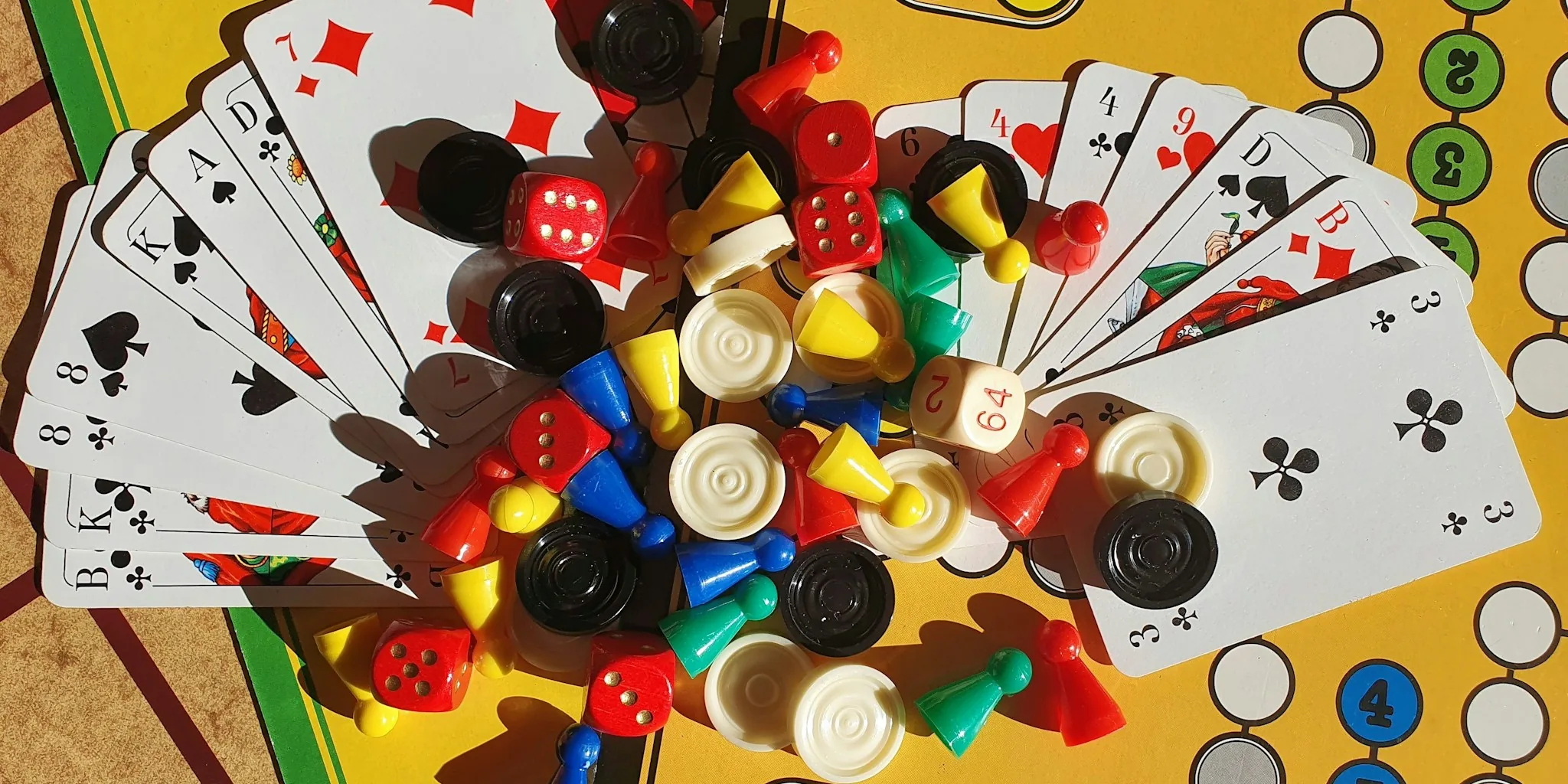
Board games have made a remarkable comeback in family homes, and for good reason. In an era of screens and solo play, sitting around a table together builds problem-solving skills, patience, and genuine laughter that no app can replicate.
Whether you are shopping for a curious six-year-old just learning to take turns or a ten-year-old ready to tackle real strategy, the right game can become a beloved household ritual.
The challenge is cutting through hundreds of options to find titles that actually hold kids’ attention beyond a single Saturday afternoon.
At ProductFind, we researched this category by analyzing product specifications, synthesizing expert review consensus from multiple publications, and weighing verified buyer feedback from thousands of families.
Every pick below has been evaluated against consistent criteria including age-appropriate complexity, replayability, component quality, and how well the game keeps every player engaged.
We also looked at how these games handle the classic problem of sibling rivalry, noting that cooperative board games for kids consistently earn praise for keeping everyone on the same side.
Read on for our top picks across every age group and play style.
| Award | Product | PF Score About PF ScoreThe PF Score is our own rating from 0 to 10, based on performance, design and build, ease of use, and value. It reflects independent research and is never influenced by manufacturers, retailers, or affiliate commissions. Learn more › | Price | |
|---|---|---|---|---|
| Best Overall |
 CATAN Board Game 6th Edition
|
6.6/10 | Buy | |
| Editor's Pick |
 USAOPOLY Hues and Cues Color Guessing Board Game
|
7.3/10 | Buy | |
| Best Value |
 Taco Cat Goat Cheese Pizza Card Game, 2-8 Players
|
7.2/10 | Buy | |
| Top Rated |
 Mattel Games UNO Card Game, Color Blind Accessible
|
8.4/10 | Buy | |
 First to Worst Party Game - Ranking Card Game for Groups
|
7.5/10 | Buy | ||
 Off Topic Runs in The Family Board Game
|
6.9/10 | Buy | ||
 Hasbro Twister Classic Board Game
|
7.2/10 | Buy | ||
 Hasbro Guess Who? Plus with People & Pet Cards
|
7.1/10 | Buy | ||
 Hasbro Sorry! Board Game for Ages 6+
|
6.8/10 | Buy | ||
 Hasbro Trouble Board Game for Kids Ages 5+
|
5.8/10 | Buy | ||
 Hasbro Gaming Candy Land Bluey Edition Board Game
|
6.7/10 | Buy |
CATAN Board Game 6th Edition
The classic strategy board game where players gather resources, build settlements and cities, and compete to reach 10 victory points across a modular hexagonal island. With a variable board layout that changes each game, CATAN delivers genuine replayability for family game nights and strategy-focused groups of 3-4 players.
Pros
- Modular board design ensures no two games play identically, driving genuine replayability
- Accessible rule set for ages 10+ while offering depth for experienced strategy players
- Trading mechanic encourages direct player interaction and negotiation
- Compact storage footprint relative to component count
Cons
- Limited to 3-4 players, excluding larger groups without expansions
- 60-90 minute playtime may feel lengthy for younger players at the lower age range
- No reviews provided to evaluate component durability or quality consistency in this listing
USAOPOLY Hues and Cues Color Guessing Board Game
A color-based party game where players give one or two-word clues to guide teammates toward specific hues from a board of 480 color squares. Works for 3-10 players ages 8 and up with straightforward rules that encourage creative thinking and quick rounds.
Pros
- Large player count range (3-10) makes it flexible for different group sizes
- No two games are the same thanks to the extensive color palette
- Easy to learn mechanics keep setup and teaching time minimal
- Creative clue system fosters engaging team interaction
Cons
- No verified buyer reviews yet to confirm real-world gameplay experience
- Requires color perception and vocabulary skill, which may disadvantage younger players at the lower age range
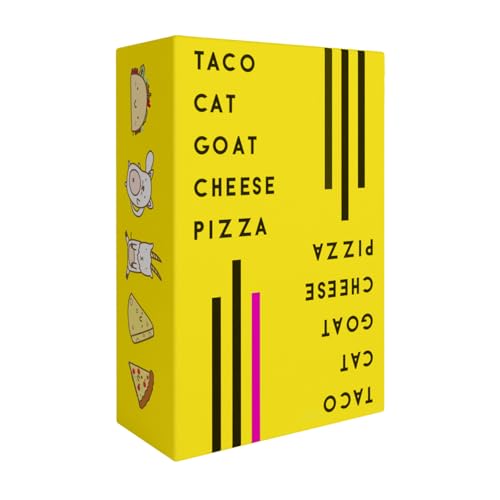
Taco Cat Goat Cheese Pizza Card Game, 2-8 Players
A fast-paced party card game that plays in 10-15 minutes and requires minimal setup. Works for mixed-age groups looking for quick, laugh-out-loud entertainment without complex rules.
Pros
- Quick to learn and teach, minimal rules overhead
- Compact, take-anywhere format for travel or casual gatherings
- Fast game length keeps energy high without commitment
- Broad age appeal for mixed-group entertainment
Cons
- No verified user reviews available to assess long-term durability or play experience details
- Limited replay value may depend on group enjoyment of the core mechanic
- Card-based format durability unclear from specifications alone
Mattel Games UNO Card Game, Color Blind Accessible
The classic UNO card game featuring graphic symbols on each card to make it accessible for players with color blindness. Supports 2-10 players ages 7 and up, includes three blank customizable Wild Cards for house rules, and comes in a compact portable format ideal for family game nights and travel.
Pros
- Inclusive design with graphic symbols ensures all players, including those with color blindness, can identify cards without relying on color alone
- Customizable blank cards add replayability and let groups create their own rule variations
- Wide player range (2-10) and age accessibility make it suitable for multiple group sizes and mixed-age gatherings
- Lightweight and compact packaging fits easily in bags for travel
Cons
- No user reviews available to verify real-world durability or card quality
- Requires external tracking method or scorepad for keeping score to 500
- Standard deck size may be difficult to manage for very young players or those with dexterity issues
First to Worst Party Game - Ranking Card Game for Groups
A collaborative ranking and guessing game where players try to predict how others order everyday topics, from pineapple on pizza to cat videos. Simple mechanics and 300 cards make it accessible for groups aged 8 and up, though the experience hinges entirely on player personalities and group dynamics.
Pros
- No complex rules or components to set up, anyone can start playing immediately
- Large card deck (300 topics) provides substantial replayability for repeat players
- Designed explicitly to spark conversation and reveal how friends think, not just score points
- Works well across age ranges (8+) for family and mixed-generation gatherings
Cons
- Success depends heavily on player group chemistry and willingness to engage; quiet groups may find it less entertaining
- No reviews available yet to verify card quality, durability, or actual gameplay experience from buyers
- Limited to 2+ players, so performance with very small groups (2-3 people) remains unvalidated
Off Topic Runs in The Family Board Game
A compact, travel-friendly party game designed to reveal how well family members know each other through matching answers on 200+ topics. Quick 15-minute rounds and simple rules make it accessible for ages 8 and up, though the lack of verified buyer reviews limits insight into long-term replay value.
Pros
- Compact, lightweight design ideal for travel and gift-giving
- Fast gameplay at 15 minutes per round keeps engagement high
- Simple rule set makes setup and learning quick for all ages
- Screen-free entertainment encourages genuine family interaction
- Over 200 topics provide variety across multiple playthroughs
Cons
- No verified customer reviews available to validate real-world gameplay experience
- Limited to 2-6 players based on matching-answer mechanic, which may restrict group sizes
- Replay longevity unclear without long-term user feedback
Hasbro Twister Classic Board Game
The iconic Hasbro Twister mat game challenges players to contort their bodies without falling over, making it a physical party game for kids age 6 and up and adults. It's best suited for groups of 2-4 players looking for an active indoor or outdoor activity that requires no batteries or screens.
Pros
- Classic gameplay that entertains multiple generations with simple, easy-to-learn rules
- Includes vinyl mat, spinner, and instructions for both individual and team play
- Physical activity game helps kids burn energy indoors on bad weather days
- Compact, lightweight package makes it portable for game nights or parties
- Supports tournament-style play with included hosting tips
Cons
- Limited to 2-4 players, so larger groups need to take turns
- Vinyl mat durability and long-term wear over repeated use not detailed in specs
- Requires sufficient floor space to set up the mat safely
Hasbro Guess Who? Plus with People & Pet Cards
This refreshed take on the classic guessing game lets kids swap between human and pet character sets, keeping the straightforward yes-or-no deduction gameplay intact. It's designed for ages 6+ and plays in minutes, making it a solid pick for quick family game nights or travel.
Pros
- Dual character sets add variety without changing core mechanics
- One-motion setup and convenient fold-up case make it genuinely travel-friendly
- Fast games (5-10 minutes) fit well into busy family schedules
- No batteries or complex rules required
Cons
- Limited to 2 players only, not suitable for larger groups
- No reviews provided to assess real-world durability or longevity of face cards
- Character set variety is still finite, so replayability may diminish after repeated sessions
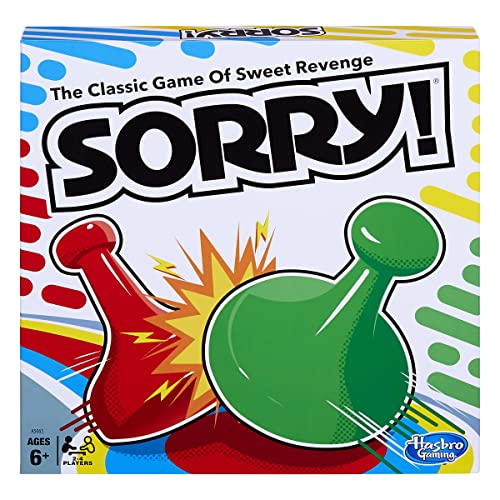
Hasbro Sorry! Board Game for Ages 6+
The classic Sorry! board game returns with familiar slide-and-send-back gameplay that works for families and casual players. It's straightforward fun built on card draws and strategic pawn movement, though the experience hinges entirely on luck and player count.
Pros
- Easy to learn with straightforward turn-based card play
- Sweet revenge mechanic keeps all players engaged throughout
- Works as both nostalgia play for adults and introduction for kids
- Compact and portable for travel or storage
Cons
- Outcome heavily dependent on card luck rather than deep strategy
- No reviews provided to assess real-world durability or component quality
- Limited gameplay depth may not sustain interest for strategy-focused players
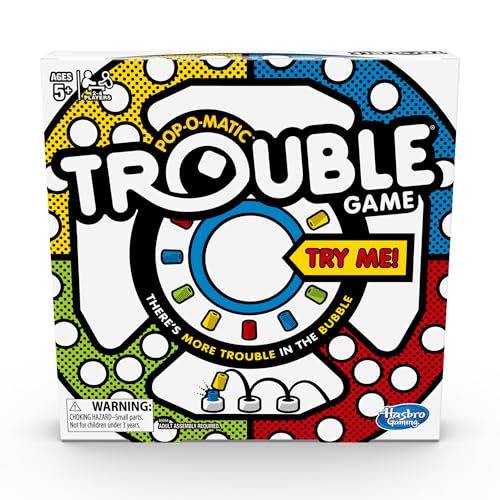
Hasbro Trouble Board Game for Kids Ages 5+
A timeless family board game built around the satisfying Pop-o-Matic bubble die roller mechanic. Best for casual game nights with kids and adults, offering both classic rules and optional Power Up Spaces for added challenge.
Pros
- Familiar, easy-to-learn gameplay appeals to both kids and adults
- Pop-o-Matic mechanism eliminates lost dice and adds tactile fun
- Power Up Spaces option adds replayability for longer engagement
- Affordable, nostalgic choice for family game nights
Cons
- Relies heavily on die rolls, so outcomes can feel random rather than skill-based
- No customer reviews available to validate long-term durability or gameplay balance
- Gameplay may feel repetitive for older kids or adults seeking strategic depth
Hasbro Gaming Candy Land Bluey Edition Board Game
This Bluey-themed take on the classic Candy Land board game brings the beloved animated series to life with six character movers and fan-favorite locations from the show. Designed for ages 3 and up with no reading required, it combines simple color-matching gameplay with interactive elements like dance cards and freeze challenges that encourage physical play and family engagement.
Pros
- Six playable character options give kids choice in representation and encourage repeated play
- No reading mechanic makes it genuinely accessible for early preschoolers and non-readers
- Dance and freeze cards introduce physical activity and unpredictability beyond standard color-matching
- Bluey IP integration feels authentic with recognizable board locations from the show
Cons
- No customer reviews available yet to assess real-world durability or play experience
- Limited to color-matching mechanics, so replay value may plateau for older preschoolers
- Character movers are cardboard only, which may not hold up as well as plastic pieces over extended play
Board Games for Kids Buying Guide
Not every game belongs in every household. A title that thrills a twelve-year-old strategist will frustrate a five-year-old, while a pure luck-based preschool game will bore a third-grader inside of ten minutes.
The six criteria below are the same ones we applied when scoring every pick on our list. Use them as a filter and you will almost certainly land on something your family will return to again and again.
For broader household picks that work from toddlers through grandparents, our roundup of board games for families covers a wider age spread.
Age Range and Complexity

The age recommendation printed on a box is a starting point, not a rule.
What matters more is cognitive load: how many rules does a child need to hold in their head at once, and how long before a new player can make their first meaningful decision?
Games aimed at ages three to five should resolve in under twenty minutes with rules explainable in a single sentence. Games for ages eight and up can introduce layered mechanics, light strategy, and longer sessions of thirty to sixty minutes.
Pay attention to the gap between the minimum and maximum ages listed. A narrower range usually signals a game tuned tightly for one developmental stage.
A wider range, say three to ninety-nine, often means the game leans heavily on luck and simple pattern recognition rather than evolving strategy, which can limit long-term appeal for older kids.
Look for games where a child’s skill can visibly improve with each session.
If you have a mixed-age household, cooperative formats tend to close the skill gap better than competitive ones. When everyone wins or loses together, a younger child can contribute meaningfully without feeling crushed by an older sibling’s advantage.
This is one reason cooperative formats have grown so popular in recent years.
Player Count and Setup Time

A game that officially supports two to six players but only shines at exactly four is a liability for most families.
Check reviews specifically for how the game plays at its minimum player count, since many titles become flat or imbalanced when played with only two people.
Equally important is whether the game supports a five-player session without one person always sitting out.
Setup time is often underrated by parents until about the fourth time they are laying out a forty-piece board while a seven-year-old hovers impatiently.
Games with a setup under five minutes are significantly more likely to hit the table on a regular school-night. Compact card-based formats, like Taco Cat Goat Cheese Pizza and UNO, have almost no setup, which partly explains their evergreen popularity.
Replayability and Variety
A game a child asks to play once is a gift. A game they ask to play every weekend is an investment.
Replayability comes from a few different sources: randomized starting conditions, enough strategic branching that each session feels different, or a social dynamic (like bluffing or color-guessing) that changes based on who is at the table.
HUES and CUES, for example, derives its replayability almost entirely from the unpredictability of how different players describe color, which means no two rounds feel identical.
Strategy-forward games like CATAN reward increasing mastery, so replayability compounds over time as players discover new approaches.
Pure luck games like Candy Land have lower replayability for older players but serve an important purpose for preschoolers who are still learning the concept of taking turns.
Match the replayability type to the age and temperament of your child rather than chasing the highest replay rating in a vacuum.
Component Quality and Durability
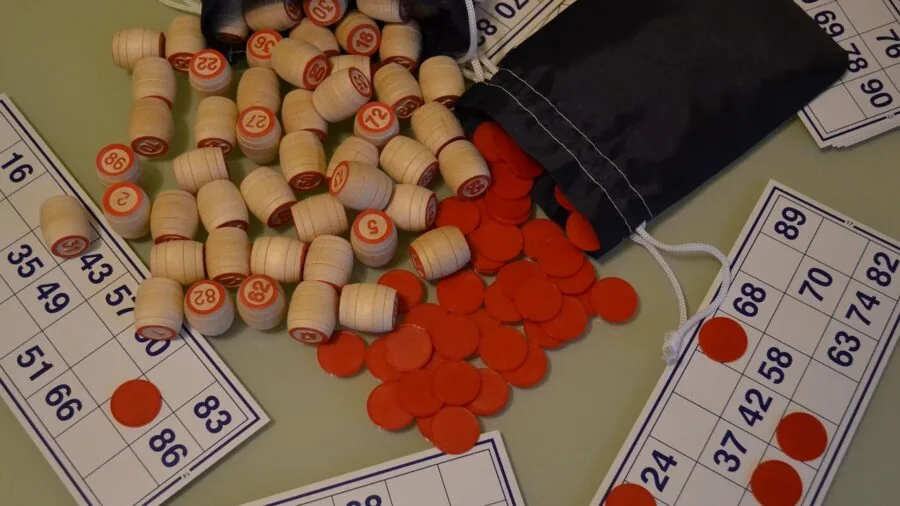
Kids are not gentle with cardboard. Thin tokens, flimsy game boards, and cards without a linen finish will show wear after a handful of plays.
When reviewing buyer feedback, one of the most common complaints across budget-tier games is that pieces warp, tokens crack, or card edges fray quickly.
For games you expect to play dozens of times, heavier cardstock and thicker plastic components are worth prioritizing.
Storage also matters more than most listings admit. Games with many small pieces that do not have dedicated compartments in the box become a twenty-minute search-and-sort exercise before every session. Look at photos of the game’s interior tray before purchasing.
A well-designed insert is a genuine quality-of-life feature, especially for households with younger children who may pull pieces out between play sessions.
Competitive vs. Cooperative Format

This is one of the most consequential decisions you will make when choosing a kids’ board game, yet it rarely appears on the box in plain language.
Competitive games have a single winner, which teaches resilience and graceful losing but can also trigger meltdowns and premature game-ending arguments.
Cooperative games, where all players work together against the game itself, sidestep this entirely and often produce more memorable shared moments.
For families where competitive tension runs high, consider semi-cooperative formats or games with enough built-in randomness that luck softens the sting of losing.
Trouble and Sorry both use dice and card mechanics that give younger players a plausible path to winning against older siblings, which expert reviewers consistently identify as a key reason these classics have lasted decades.
If you want to go deeper on the cooperative side, our coverage of family board games explores more titles that work across a broad skill spectrum.
Educational Value and Skill Development
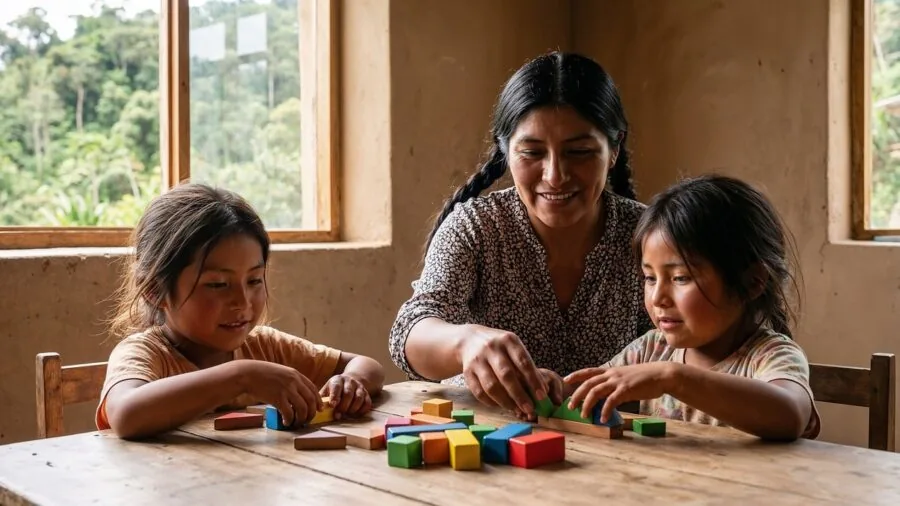
Not every kids’ board game needs to teach something explicitly, but the best ones develop real skills as a byproduct of fun play. Color recognition and turn-taking emerge from preschool classics.
Deductive reasoning and memory sharpen with games like Guess Who?. Social skills, negotiation, and resource management come into play with CATAN, which is why it is frequently recommended by educators for kids aged ten and up.
Games that reward verbal creativity and lateral thinking, like HUES and CUES or Runs in the Family, build communication skills in a low-stakes context.
Word and clue-based games are particularly effective for kids who are reluctant readers, since the verbal format removes the literacy barrier entirely.
When evaluating educational value, prioritize skills that feel like a natural outcome of play rather than games that feel didactic or quiz-like, since children will simply disengage from the latter.
Why You Should Trust Us
ProductFind is an independent review publication. We do not sell products, and we have no involvement in order fulfillment, returns, or warranties. Every recommendation on this page is the result of structured research rather than promotional partnerships.
Each product in this roundup was assessed using our standardized PF Score system, which rates items on a scale of 0 to 10.
Scores are built from four pillars: published product specifications, expert review consensus drawn from multiple independent publications, verified buyer feedback aggregated from confirmed purchasers, and publicly available data on the brand and product line.
We do not conduct our own product trials; our evaluations are grounded in research, published data, expert review consensus, and verified buyer feedback.
When assessing board games for kids specifically, our criteria weighted age-appropriate complexity, replayability, component quality, and player engagement most heavily, since these are the dimensions that verified buyers most consistently cite when explaining why a game became a household staple or ended up on a shelf after one play.
ProductFind may earn a commission if you purchase through links on this page. That affiliate relationship has no influence on scores, rankings, or which products appear in our roundups. Every position in this list reflects research merit alone.
Final Thoughts
After evaluating eleven titles across a wide range of ages, formats, and price points, a few picks stand out with clear distinction.
Whether you are stocking a game shelf for the first time or filling a specific gap in your collection, the awards below reflect the strengths that matter most for real family play sessions.
Games that genuinely grow with kids, hold up to repeated plays, and keep every person at the table engaged are the ones worth your money.
- Best Overall: CATAN Board Game (6th Edition) earns the top position with the highest PF Score in this roundup. Its blend of resource trading, strategic building, and social negotiation makes it genuinely replayable for years, and the 6th Edition refinements make it more accessible than ever for newcomers aged ten and up.
- Best Color and Creative Thinking Game: HUES and CUES is the strongest pick for families who want a game that sparks conversation and creative thinking. Its 480-color grid generates a surprisingly deep experience from a simple premise, and it scales beautifully from three to ten players.
- Best Active Party Game: Hasbro Twister Party Classic remains the gold standard for physical, laugh-out-loud play that works indoors and outdoors. Its enduring popularity across generations is backed by consistently strong buyer sentiment and an extremely low barrier to entry.
- Best Fast Card Game: Taco Cat Goat Cheese Pizza is the easiest recommendation for families who want something playable in ten minutes with zero setup. Expert reviewers and verified buyers alike highlight how well it bridges the gap between kids, teens, and adults at the same table.
- Best for Preschoolers: Hasbro Gaming Candy Land Bluey Edition is the most accessible pick for children aged three and up. The Bluey theme adds fresh appeal to a proven format, and the six-player capacity makes it genuinely useful for larger family groups at the youngest age bracket.
If your household spans a wide age range, pairing a strategy title like CATAN for older kids with a cooperative or luck-based option for younger ones covers almost every situation.
The picks above represent the strongest performers in their respective niches, and any of them will hold up to the kind of repeated, enthusiastic play that defines a genuinely great kids’ board game.
Frequently Asked Questions
What is a good first board game for a child who has never played one before?
For children aged three to five, Candy Land or a similar path-following game with no reading required is the ideal starting point.
The rules reduce to a single action per turn, which lets young children focus entirely on the social experience of playing rather than the mechanics.
For children aged six and up who are ready for a bit more decision-making, Guess Who? or Trouble introduces light strategy and deduction without overwhelming complexity.
Both are widely praised by parents as genuine gateway games that build a child’s confidence at the table before moving on to deeper titles.
Are cooperative board games actually better for younger kids than competitive ones?
Expert reviewers and child development researchers consistently note that cooperative formats reduce conflict and let younger or less experienced players contribute meaningfully without the sting of losing.
When everyone works toward a shared goal, a five-year-old’s contribution matters as much as a ten-year-old’s, which builds confidence rather than frustration. That said, competitive games teach resilience and graceful losing, which are also valuable skills.
A mix of both formats suits most households well. Our coverage of cooperative games for kids and families goes deeper on the best titles in that specific format.
How do I choose a board game that works for kids and adults at the same time?
Look for games where the skill ceiling is high enough to keep adults engaged while the core mechanic is simple enough for children to grasp quickly.
Social deduction games, color-association games like HUES and CUES, and fast card games like Taco Cat Goat Cheese Pizza all have this quality because their outcomes depend on social dynamics and lateral thinking rather than raw knowledge or experience.
Games where adults can hold back slightly without it feeling obvious also tend to get replayed more frequently. Verified buyers with mixed-age households consistently rank these “everyone at the table” formats as the most-played games they own.
At what age is CATAN appropriate for kids?
CATAN is officially rated for ages ten and up, and that recommendation aligns well with the cognitive demands of the game. Players need to manage resources, negotiate trades, plan multi-step building strategies, and adapt to shifting board conditions.
Most expert reviewers consider it an ideal introduction to “hobby” board gaming for tweens, and it is frequently cited as the game that transitions older children from classic family titles into a lifelong interest in tabletop gaming.
For younger siblings in the same household, pairing CATAN nights with a simpler parallel game ensures no one is left out.
What should I look for in a board game that will actually get played more than once?
Replayability comes from three main sources: randomized starting conditions that change each session, a social or creative element that varies based on who is playing, and a skill curve that rewards returning players.
Games with all three, like CATAN or HUES and CUES, tend to become long-term household staples.
Games that rely purely on luck with no room for skill development, while useful for very young children, typically see play frequency drop off as kids age.
Component quality also plays a quiet role in replayability: games that are easy to set up, store cleanly, and do not lose pieces are simply more likely to come off the shelf.
If you are building out a broader collection, family board games and top-rated family night options are worth browsing for complementary titles.
Is it worth buying a premium board game for a young child who might lose interest?
Budget-friendly classics like Sorry, Trouble, and Taco Cat Goat Cheese Pizza carry modest price tags and deliver strong value precisely because they do not require a large commitment.
For younger or first-time players, starting with an affordable pick lets you gauge genuine interest before investing in a higher-priced strategy game.
That said, buyers who invest in well-made mid-range and premium titles frequently report that better component quality and deeper mechanics are exactly what kept their children engaged beyond the initial novelty.
If a child is already enthusiastic about table games, the incremental cost of a more durable, strategically rich title is almost always justified by the increased play frequency it generates over time.
Gifts for active play and outdoor activities can also round out a well-balanced play environment alongside tabletop options.
About the author
Manuel is a reviewer and writer for ProductFind who specializes in Board Games & Puzzles for Kids. Manuel evaluates products through independent research: specifications, expert review consensus, and verified buyer feedback, and rates each one on the PF Score. Manuel focuses on helping readers pick the right board games & puzzles for kid for their needs and budget.