The 9 Best Womens Multivitamins
From gummies to whole-food capsules, finding a women's multivitamin that matches your life stage and nutrient needs makes all the difference. Here are the top picks.
 By Patsy Dunn
Updated July 23, 2026
By Patsy Dunn
Updated July 23, 2026
Choosing the right multivitamin as a woman is more nuanced than grabbing whatever is on sale at the pharmacy.
Women’s nutritional needs shift across life stages, from supporting energy and reproductive health in your 20s and 30s, to prioritizing bone density, heart health, and cognitive function in your 50s and beyond.
With hundreds of formulas on the market, ranging from basic one-a-day tablets to premium whole-food blends, the difference between a genuinely useful supplement and an overpriced gimmick often comes down to a handful of critical factors: bioavailable nutrient forms, appropriate dosages for your life stage, third-party quality verification, and honest ingredient transparency.
If you also take a vitamin D supplement or a dedicated vitamin C supplement, understanding how a multivitamin overlaps with your existing regimen matters more than most brands will admit.
At ProductFind, we researched nine of the most widely recommended women’s multivitamins by analyzing published specifications, synthesizing expert review consensus from registered dietitians and nutrition researchers, and carefully reviewing verified buyer feedback to understand real-world tolerability and results.
Our picks span every price tier and format, from affordable gummies to high-potency softgels and NSF-certified capsules, so there is a strong option no matter your budget or preference. Read on for our top-ranked selections below.
| Award | Product | PF Score About PF ScoreThe PF Score is our own rating from 0 to 10, based on performance, design and build, ease of use, and value. It reflects independent research and is never influenced by manufacturers, retailers, or affiliate commissions. Learn more › | Price | |
|---|---|---|---|---|
| Best Overall |
 OLLY Ultra Strength Women's Multi with Omega-3s
|
8.7/10 | Buy | |
| Editor's Pick |
 OLLY Women's Multivitamin Gummy, 130 Count
|
8.6/10 | Buy | |
| Best Value |
 Centrum Silver Women's 50+ Multivitamin, 280 Count
|
8.3/10 | Buy | |
| Top Rated |
 One A Day Women's Multivitamin, 200 Count
|
7.5/10 | Buy | |
 Nordic Naturals Women's Multivitamin Gummies, 60 Count
|
7.3/10 | Buy | ||
 Garden of Life Women's Once Daily Multivitamin, 60 Tablets
|
7.2/10 | Buy | ||
 Thorne Women's Multi 50+ 180 Capsules
|
7.1/10 | Buy | ||
 Micro Ingredients Methylated Multivitamin for Women, 240 Capsules
|
6.8/10 | Buy | ||
 Nutraharmony 47-in-1 Women's Multivitamin, 90 Capsules
|
6.2/10 | Buy |
OLLY Ultra Strength Women's Multi with Omega-3s
A daily softgel multivitamin formulated for women with omega-3 fatty acids, B12, and immune support nutrients like vitamin C and zinc. The formula is sugar-free, gluten-free, and includes biotin for hair, skin, and nails.
Pros
- Comprehensive formula targeting multiple health areas including brain, heart, immune system, and hair/skin/nails
- Free from sugar and gluten, appealing to those with dietary restrictions
- Includes omega-3 fatty acids, a nutrient often missing in basic multivitamins
- Softgel format is easier to swallow than tablets for many users
Cons
- Requires taking 2 softgels daily with food, which may be less convenient than single-tablet alternatives
- No verified customer reviews available to validate real-world user experience
- High rating (4.7 stars) lacks supporting evidence from actual purchases
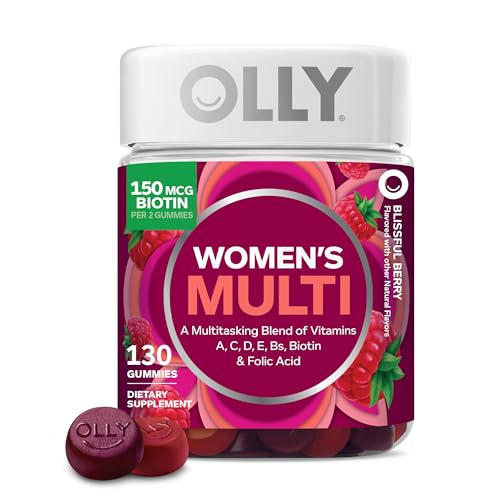
OLLY Women's Multivitamin Gummy, 130 Count
A berry-flavored daily multivitamin gummy designed to support women's overall wellness with B vitamins, antioxidants, and vitamin D for bone health. The formula delivers essential nutrients in a convenient chewable form that requires no water.
Pros
- Contains targeted nutrients for women's health including biotin and folic acid
- Natural berry flavor with no synthetic additives or colors
- Convenient dosing with two gummies daily and no liquid required
- Good value for a 65-day supply in one bottle
- Gluten-free formulation
Cons
- No verified customer reviews available to assess real-world satisfaction or taste experience
- Gummy format may not appeal to those preferring tablets or capsules
- Contains added sugars typical of chewable vitamins
Centrum Silver Women's 50+ Multivitamin, 280 Count
Centrum Silver is a multivitamin formulated specifically for women over 50, featuring vitamin D3, B vitamins, and antioxidants to support memory, cognition, bone health, and immune function. The large 280-count bottle offers a long supply, and the formula is non-GMO and gluten-free.
Pros
- Research-backed formula shown to support memory and cognition in older adults
- Comprehensive nutrient profile addressing multiple health areas relevant to women 50+
- Large 280-count bottle reduces frequent reordering
- Non-GMO and gluten-free certification
Cons
- No verified buyer reviews available to assess real-world experience or tolerability
- Product-specific guidance on serving size or daily dosage not detailed in available data
- May not address all micronutrient needs without supplementary sources
One A Day Women's Multivitamin, 200 Count
A daily multivitamin formulated specifically for women with 17 essential nutrients including iron, biotin, calcium, and B vitamins to support energy, heart health, and immune function. Free from major allergens and backed by over 80 years of brand expertise.
Pros
- Comprehensive nutrient profile designed specifically for women's nutritional needs
- Allergen-free formulation makes it accessible for those with multiple food sensitivities
- Long-established brand with decades of research backing the formula
- Economical 200-count size reduces frequent repurchasing
Cons
- No verified customer reviews available to assess real-world effectiveness or tolerability
- Requires daily adherence with food for optimal absorption
- Does not specify bioavailability or absorption rates of individual nutrients
Nordic Naturals Women's Multivitamin Gummies, 60 Count
Mixed-berry flavored gummies formulated with 12 essential vitamins tailored to women's nutritional needs. Third-party tested, non-GMO, and free from artificial colors and flavors, making them a convenient daily option for filling dietary gaps.
Pros
- Formulated specifically for women's unique nutritional needs rather than one-size-fits-all approach
- Verified third-party testing and strict purity standards surpassing international requirements
- Free from common allergens (gluten, dairy) and artificial additives
- Pleasant mixed-berry taste makes daily supplementation more palatable than pills
Cons
- No verified customer reviews available to confirm real-world satisfaction or effectiveness
- Requires daily consumption as a gummy, which may be less convenient for travel than tablets
- 60 count may represent a shorter supply depending on recommended serving size
Garden of Life Women's Once Daily Multivitamin, 60 Tablets
A whole-food-based daily multivitamin formulated specifically for women, delivering 15 essential vitamins and minerals including iron, biotin, and folate from organic sources. Best suited for women seeking a single-tablet convenience option with certified organic credentials and third-party verification.
Pros
- Whole food-based formula with nutrients from fruits, vegetables, and herbs rather than synthetic isolates
- All certifications in place: organic, non-GMO, gluten-free, vegan, kosher
- One tablet daily eliminates multi-dose complexity
- Includes iron and biotin specifically highlighted for women's health needs
Cons
- No verified customer reviews available to assess real-world efficacy or tolerance
- Single daily format may not suit women requiring specialized nutrient ratios (e.g., higher iron for certain conditions)
- Water extraction method limits bioavailability compared to some advanced delivery systems
Thorne Women's Multi 50+ 180 Capsules
A comprehensive multivitamin formulated specifically for women over 50, featuring bioavailable forms of calcium, magnesium, and vitamins D and K2 for bone and heart health. Third-party certified for purity and potency, backed by Thorne's reputation with professional sports teams and clinical practitioners.
Pros
- Age and gender-specific formula addresses unique nutritional needs of post-menopausal women
- Third-party certification verifies ingredient quality and safety standards
- Multiple bioavailable forms of key nutrients maximize absorption
- Comprehensive formula covering vitamins A, B6, B12, C, D, E, K and minerals
- Established brand reputation with clinical and sports organizations
Cons
- No verified customer reviews available to assess real-world effectiveness or tolerability
- Capsule format may be less convenient than tablet form for some users
- Premium pricing reflects clinical-grade standards, not accessible for all budgets
Micro Ingredients Methylated Multivitamin for Women, 240 Capsules
A comprehensive 32-in-1 women's multivitamin featuring methylated forms of B vitamins, minerals like iron and magnesium, plus a botanical blend with ashwagandha and cranberry. Two capsules daily provide a full four-month supply in a formula free from common allergens.
Pros
- Methylated vitamins provide potentially better absorption compared to standard forms
- Four-month supply reduces frequent reordering
- Free from major allergens and artificial fillers
- Includes both essential minerals and targeted botanical ingredients for women's health
Cons
- No verified customer reviews available to assess real-world tolerability or effectiveness
- Requires two capsules daily, which may be inconvenient for those preferring single-dose options
- High number of ingredients (32) increases risk of interactions with medications or sensitivity for some users
Nutraharmony 47-in-1 Women's Multivitamin, 90 Capsules
A comprehensive daily multivitamin designed for women's wellness, combining 47 nutrients with whole food ingredients, bioavailable mineral forms, and targeted support for energy, digestion, and hair health. The 90-capsule supply delivers a three-month regimen formulated according to NIH dosage guidelines.
Pros
- Broad nutrient profile covers multiple wellness areas in a single daily dose
- Uses bioavailable mineral forms and methylated B12 for improved nutrient uptake
- Includes whole food ingredients alongside synthetic nutrients for added antioxidants
- Dosages aligned with National Institutes of Health recommendations for women
- Three-month supply reduces frequent reordering
Cons
- No verified customer reviews available yet to confirm real-world effectiveness or tolerability
- Single daily capsule may be challenging for those with difficulty swallowing large pills
- Premium positioning may not suit budget-conscious consumers seeking basic multivitamins
Women’s Multivitamins Buying Guide
Navigating the supplement aisle is genuinely overwhelming, and marketing language on labels rarely tells the full story.
The sections below break down exactly what to evaluate before committing to a daily multivitamin, based on the same criteria our research team uses when scoring products for our comprehensive multivitamin roundup.
Nutrient Forms and Bioavailability

Not all vitamins are created equal, and the specific chemical form of each nutrient determines how efficiently your body can actually absorb and use it.
For example, vitamin D3 (cholecalciferol) raises blood levels of the active hormone significantly more effectively than D2 (ergocalciferol), which is why most high-quality formulas specify D3 on the label.
Similarly, methylfolate (5-MTHF) is the bioactive form of folate and is especially important for women who carry the MTHFR gene variant, which impairs conversion of synthetic folic acid into usable folate.
For minerals, look for chelated forms such as magnesium glycinate, zinc bisglycinate, or ferrous bisglycinate for iron.
Chelated minerals are bound to amino acids or organic acids, which dramatically improves absorption and reduces the gastrointestinal discomfort that cheaper mineral salts often cause.
Formulas using magnesium oxide or ferrous sulfate are technically supplying the mineral, but at a fraction of the effective dose your body can actually absorb.
B vitamins deserve special attention. B12 as methylcobalamin is better retained than cyanocobalamin, particularly in older adults whose intrinsic factor production naturally declines. Formulas advertising a “complete B-complex” are worth scrutinizing to confirm they use active, methylated forms rather than cheaper synthetic precursors.
Life Stage and Age-Specific Formulation

A multivitamin designed for a woman in her 20s looks meaningfully different from one formulated for a woman over 50, and using the wrong formula means either undershooting or overshooting key nutrient targets.
Women of reproductive age generally benefit from higher folate levels (at least 400 mcg daily, per CDC guidelines for neural tube defect prevention), adequate iron to compensate for menstrual losses, and iodine for thyroid function.
Brands like Garden of Life and OLLY have built their women’s formulas around this profile.
After menopause, iron requirements drop significantly (the RDA falls from 18 mg to 8 mg), and excess iron from a formula still optimized for younger women can be harmful over time.
Post-50 formulas typically increase vitamin D and calcium support for bone health, add higher B12 to offset declining absorption, and reduce or eliminate iron entirely.
THORNE Women’s Multi 50+ and Centrum Minis Silver Women’s are specifically calibrated for this life stage and reflect these adjusted targets.
Pregnant or trying to conceive? A standard women’s multivitamin is not a substitute for a prenatal. Prenatals supply significantly higher folate, choline, and DHA levels that are critical during fetal development. Always consult a healthcare provider before choosing a supplement during pregnancy or while breastfeeding.
Third-Party evaluation and Quality Certification
Unlike prescription medications, dietary supplements in the United States are not required to undergo FDA approval before they reach shelves. This makes third-party certification one of the most important quality signals a multivitamin can carry.
Certifications from organizations like NSF International, USP (United States Pharmacopeia), or Informed Sport verify that a product contains what its label claims, in the amounts stated, without harmful contaminants like heavy metals or undisclosed ingredients.
THORNE is a standout here: the brand’s manufacturing facilities hold NSF certification and its products are consistently referenced in clinical settings precisely because of this verifiable quality standard.
Garden of Life’s organic certification and non-GMO verification address a different but equally legitimate quality concern for buyers who prioritize clean, whole-food-derived ingredients.
For budget-tier options, look at whether the brand at minimum follows current Good Manufacturing Practices (cGMP) as regulated by the FDA. This is a baseline, not a gold standard, but it is better than no quality oversight at all.
Always check the brand’s website for any available Certificates of Analysis (COA), which document third-party purity and potency results batch by batch.
Format and Tolerability

The most effective multivitamin is the one you will actually take consistently, which makes format a practical consideration rather than a superficial one.
Capsules and softgels typically deliver higher nutrient loads in bioavailable forms and contain fewer added sugars or sweeteners.
Gummies, by contrast, are easier to take for people who struggle with swallowing pills, are generally better tolerated on an empty stomach, and tend to improve compliance among adults who find capsule routines difficult to maintain.
The trade-off with gummies is significant, though.
Sugar content (even if modest per serving) adds up over a year of daily use, and some vitamins like vitamin C and certain B vitamins are difficult to include in gummy form at clinically meaningful doses because of moisture and heat sensitivity.
Gummies also commonly omit iron and calcium in meaningful amounts due to formulation challenges. OLLY Women’s Multivitamin Gummy is one of the best-formulated examples in the category, but buyers looking for comprehensive mineral coverage should cross-reference the label carefully.
Softgels like the OLLY Ultra Strength Women’s Multi offer a middle ground, often delivering omega-3s and fat-soluble vitamins (A, D, E, K) more effectively than gummies because they are oil-based.
Tablets remain the most cost-efficient format and allow for the highest nutrient density per serving, which is why Centrum’s silver tablet line achieves strong value scores despite a more modest ingredient profile.
Key Nutrients to Prioritize

While complete coverage is the goal, certain nutrients deserve special scrutiny on the label of any women’s multivitamin. Vitamin D is one of the most widespread deficiencies in American women, with the NIH estimating that around 35% of adults are deficient.
Look for at least 1,000 IU (25 mcg) of D3 in a women’s formula, though your individual needs depend on sun exposure, geographic latitude, and skin tone.
Pairing a multivitamin with sufficient vitamin D intake is one of the highest-leverage moves you can make for immune, bone, and mood health.
Magnesium is another commonly under-supplied nutrient. Most multivitamins include only a fraction of the 310 to 320 mg daily RDA for adult women because high magnesium doses in a multi can cause GI side effects.
If your formula provides 50 to 100 mg, consider whether a separate magnesium supplement might round out your stack. Iron is essential for pre-menopausal women but should be avoided or minimized by post-menopausal women.
Biotin (vitamin B7) appears in most women’s multivitamins marketed for hair, skin, and nails; evidence for biotin supplementation is strongest for people with actual deficiency, though it is generally safe at supplemental doses.
Ingredient Transparency and Additive Load

Beyond the active nutrient panel, the inactive ingredients in a supplement matter more than most shoppers realize. Common fillers like magnesium stearate and silicon dioxide are generally recognized as safe but add no nutritional value.
More concerning are artificial colors, synthetic preservatives, and high-fructose corn syrup, which occasionally appear in lower-cost tablet and gummy formulations.
Buyers with celiac disease, gluten sensitivity, or soy allergies should verify non-GMO and allergen-free labeling explicitly on each product’s label rather than relying on brand-level claims.
Whole-food-based multivitamins, like those from Garden of Life, derive nutrients from concentrated organic produce and deliver a naturally occurring matrix of cofactors alongside vitamins. This is a different nutritional philosophy from synthetic multivitamins, which use isolated, lab-derived nutrient forms.
Neither approach is universally superior, but whole-food multis tend to be gentler on the stomach and may provide phytonutrients not reflected on the Supplement Facts panel. The trade-off is higher cost and larger serving sizes.
Micro Ingredients and NUTRAHARMONY take a hybrid approach, using synthetic active nutrients in a capsule base designed to minimize fillers and artificial additives.
Why You Should Trust Us
ProductFind is an independent editorial platform.
Our approach to evaluating supplements mirrors the rigor of a structured research review rather than promotional content: we analyze published product specifications, synthesize expert review consensus from registered dietitians, nutritionists, and health researchers, and systematically review verified buyer feedback to understand real-world tolerability, side effects, and sustained compliance.
We do not conduct our own product trials; our evaluations are grounded in research, published data, expert review consensus, and verified buyer feedback.
Every product in this article receives a PF Score on a 0 to 10 scale.
That score reflects our consistent multi-criteria assessment framework, weighing nutrient form quality, dosage appropriateness for the target demographic, third-party certification status, ingredient transparency, format convenience, and overall value relative to price.
Products are ranked by PF Score, with higher scores reflecting a stronger overall profile across all criteria.
No single criterion dominates the score, which means a budget-friendly tablet with strong certification can score competitively with a premium whole-food capsule that lacks third-party verification.
ProductFind may earn an affiliate commission if you purchase through links on this page. That relationship has no influence on our scores, rankings, or which products we include or exclude.
Our editorial team operates independently of our affiliate partnerships, and no brand paid to appear in this article. Our goal is to help you make a more informed purchase decision, not to sell you the highest-margin product.
Final Thoughts
After researching this category in depth, a few standout picks rise to the top for specific types of buyers. Here are our recommended labels by use case, each linked to its Amazon listing for full ingredient details:
- Best Overall: OLLY Ultra Strength Women’s Multi Softgels earns the top PF Score in this group by delivering a broad nutrient spectrum including omega-3s, iron, and fat-soluble vitamins in a highly absorbable softgel format at an accessible price point, making it the most well-rounded daily option for most women.
- Best Gummy Multivitamin: OLLY Women’s Multivitamin Gummy is the most consistently praised chewable in its tier, with verified buyers reporting excellent tolerability and genuine compliance over months of use. It is the right choice for anyone who cannot or does not want to swallow capsules.
- Best for Women 50+: Centrum Minis Silver Women’s Multivitamin is specifically calibrated for post-menopausal nutrient priorities, with strong support for memory, cognition, and bone health in a compact, easy-to-swallow mini tablet at one of the lowest costs per day in this roundup.
- Best Whole-Food Formula: Garden of Life Organics Multivitamin for Women stands out for buyers who prioritize certified organic, non-GMO ingredients derived from real food sources. Its whole-food nutrient matrix is gentler on the stomach than synthetic alternatives and suits vegans fully.
- Best Premium Option for Women 50+: THORNE Women’s Multi 50+ commands a higher price but backs it up with NSF-certified manufacturing, active nutrient forms throughout, and a comprehensive formula covering heart, brain, bone, and immune health priorities that matter most after 50.
Whatever your budget, the single most important factor is consistency. A mid-tier formula you take every day outperforms a premium one that sits in your cabinet.
Start with the pick that best matches your life stage and format preference, and revisit your choice annually as your needs evolve.
For a broader look across all demographics, our full multivitamin guide covers options for men, seniors, and general adults as well.
Frequently Asked Questions
Do women actually need a multivitamin if they eat a balanced diet?
A genuinely well-balanced diet can cover most nutritional bases, but real-world eating habits rarely hit every target consistently.
Women are statistically at higher risk for deficiencies in vitamin D, iron, magnesium, and folate due to dietary patterns, menstruation, and absorption factors.
A high-quality multivitamin acts as a nutritional safety net, not a replacement for whole foods, and is widely recommended by registered dietitians as a reasonable baseline for most women, particularly those with dietary restrictions or high activity levels.
Is it safe to take a women’s multivitamin every day long-term?
For the vast majority of healthy women, daily multivitamin use is safe at the doses provided by standard formulas.
Fat-soluble vitamins (A, D, E, K) accumulate in the body over time, so exceeding the tolerable upper intake levels consistently is the primary risk to avoid. Reputable formulas stay well within safe ranges.
If you also take individual supplements like separate vitamin D or iron, be mindful of total combined intake and consider discussing your full supplement stack with a healthcare provider annually, especially if you have a chronic condition or are on medications.
What is the difference between a women’s multivitamin and a general adult multivitamin?
Women’s formulas are calibrated for female-specific nutrient priorities: higher iron (for pre-menopausal blood loss), adequate folate (for reproductive health), and often added biotin for hair and nail support.
General adult multivitamins typically provide lower iron doses suitable for men, who have no regular menstrual iron loss. Some women’s formulas also include phytoestrogens, cranberry extract, or other botanicals targeting hormonal and urinary tract health.
After menopause, the gap between a women’s-specific formula and a general adult one narrows considerably.
Are gummy multivitamins as effective as capsules or tablets?
Gummies can deliver solid levels of vitamins A, C, D, E, and B vitamins effectively, but they consistently fall short on minerals. Iron and calcium are typically absent or very low in gummy form because of formulation constraints.
The added sugars in most gummies, even at small per-serving amounts, accumulate meaningfully over daily year-round use.
If your primary gaps are vitamins rather than minerals, and you genuinely struggle with pill compliance, a well-formulated gummy like OLLY Women’s is a meaningful upgrade over taking nothing at all.
For comprehensive mineral coverage, a capsule or softgel format is the more complete choice.
Should I take my multivitamin with food?
Yes, in almost every case. Fat-soluble vitamins (A, D, E, K) require dietary fat present in the gut to be properly absorbed, so taking a multivitamin with a meal that includes some fat meaningfully improves their bioavailability.
Taking any multivitamin, particularly one containing iron or B vitamins, on an empty stomach is also a common cause of nausea reported in verified buyer feedback. A small meal or snack is all that is needed.
Softgel formats with oil-based delivery (like the OLLY Ultra Strength softgels) are especially dependent on co-ingestion with fat for optimal absorption of the fat-soluble nutrient fraction.
How do I know if a multivitamin uses high-quality, bioavailable forms of nutrients?
Flip the bottle and read the Supplement Facts panel, specifically the “form” listed in parentheses after each nutrient.
High-quality signals include: vitamin D3 (not D2), methylfolate or 5-MTHF (not just folic acid), methylcobalamin for B12 (not cyanocobalamin), and chelated minerals such as magnesium glycinate or zinc bisglycinate rather than oxide or sulfate forms.
If a label simply lists “magnesium” or “zinc” without specifying the form, assume it is a lower-cost oxide or sulfate.
Brands like THORNE and Micro Ingredients explicitly call out their methylated and chelated forms, which is itself a transparency signal worth considering during your evaluation.
About the author
Patsy is a reviewer and writer for ProductFind who specializes in Vitamins & Supplements. Patsy evaluates products through independent research: specifications, expert review consensus, and verified buyer feedback, and rates each one on the PF Score. Patsy focuses on helping readers pick the right vitamins & supplement for their needs and budget.