The 9 Best Guitar Capos
A poor capo pulls your strings sharp and kills your tone mid-song. These nine picks span every budget and playing style, from precision clutch capos to fast-deploy spring designs.
 By Alexis Watson
Updated July 23, 2026
By Alexis Watson
Updated July 23, 2026

A guitar capo is one of the simplest accessories a player can own, yet choosing the wrong one can quietly sabotage your tone, throw your tuning sharp, or introduce fret buzz at the worst possible moment.
Whether you play fingerstyle on a dreadnought acoustic, chord-mash on a nylon-string classical, or run clean arpeggios on a Telecaster, the right capo lets you shift keys instantly without retuning, opening up chord voicings that would otherwise be impossible.
The market is flooded with options ranging from budget spring clamps to precision-engineered clutch mechanisms, and the difference in performance between a great capo and a mediocre one is immediately audible.
At ProductFind, we researched the guitar capo category thoroughly, analyzing published specifications, synthesizing consensus from experienced players and gear reviewers, and weighing verified buyer feedback across thousands of real-world purchases.
The nine picks below represent the strongest performers across every budget and playing style, each rated with our PF Score system. Read on for our top-ranked recommendations.
| Award | Product | PF Score About PF ScoreThe PF Score is our own rating from 0 to 10, based on performance, design and build, ease of use, and value. It reflects independent research and is never influenced by manufacturers, retailers, or affiliate commissions. Learn more › | Price | |
|---|---|---|---|---|
| Best Overall |
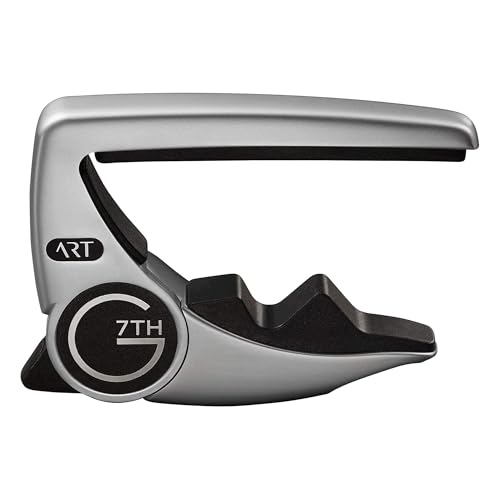 G7th Performance 3 Silver Guitar Capo
|
9.3/10 | Buy | |
| Editor's Pick |
 Shubb C1 Nickel Capo for Steel String Guitar
|
8.4/10 | Buy | |
| Best Value |
 Shubb C1N Standard Acoustic Guitar Capo, Brushed Nickel
|
8.4/10 | Buy | |
| Top Rated |
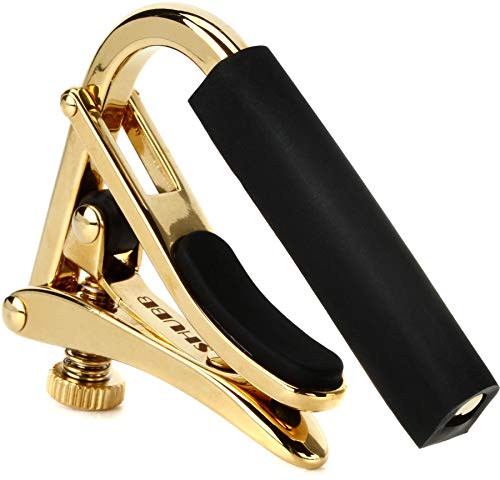 Shubb C1 Steel String Guitar Capo, Gold
|
8.3/10 | Buy | |
 Kyser KG6BA Quick-Change Capo for 6-String Guitar
|
8.2/10 | Buy | ||
 Ernie Ball Axis Dual Radius Capo, Gold Satin
|
8.1/10 | Buy | ||
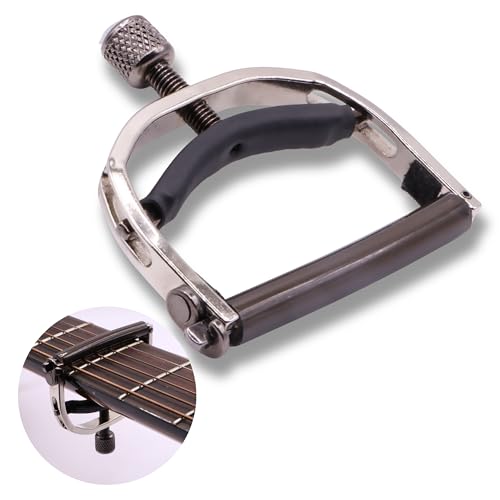 Paige 6-String Acoustic Guitar Capo, USA-Made
|
7.5/10 | Buy | ||
 Salvori SC-01S Blue-Plated Guitar Capo with Picks
|
6.2/10 | Buy | ||
 TANMUS 3-in-1 Guitar Capo with Pick Holder
|
5.8/10 | Buy |
G7th Performance 3 Silver Guitar Capo
A premium capo designed for both acoustic and electric guitars, featuring Adaptive Radius Technology that automatically adjusts to your fingerboard curvature. The squeeze-control mechanism and soft silicone pads make it reliable for frequent repositioning between songs.
Pros
- Mechanical radius adjustment adapts to different guitar neck shapes, eliminating tuning instability
- Intuitive squeeze-release mechanism speeds up mid-set capo changes
- Inert silicone pads protect guitar neck finish from marks and scratches
- Compact 52mm pad design and light weight make it easy to store on headstock
Cons
- No verified customer reviews available to assess real-world durability or long-term performance
- Premium positioning may not justify cost for casual or beginner players who need basic capo functionality
- Limited compatibility information for vintage or non-standard fingerboard radii outside the 7.25-20 inch range
Shubb C1 Nickel Capo for Steel String Guitar
A compact, lightweight capo designed for standard steel string guitars with a chrome finish. Shubb's C1 is built for musicians seeking a straightforward, durable clamping solution without unnecessary bulk.
Pros
- Durable nickel-plated construction designed for long-term use
- Minimal weight reduces fatigue during extended playing sessions
- Standard sizing accommodates most common steel string guitars
- Chrome finish provides corrosion resistance
Cons
- No user reviews available to assess real-world performance and reliability
- Limited feature information provided, specs lack pressure adjustment or material details
- Standard size may not suit guitars with non-standard neck widths
Shubb C1N Standard Acoustic Guitar Capo, Brushed Nickel
A fixed-pressure capo with over 35 years of musician trust behind it. The set-it-and-forget-it design eliminates the need for pressure adjustment between uses, making it straightforward for both beginners and experienced players.
Pros
- No pressure readjustment needed between songs or playing sessions
- Custom rubber grip designed to mimic fingertip pressure for consistent tuning
- Straightforward operation with a simple flip lever mechanism
Cons
- No verified buyer reviews available to confirm real-world performance
- Fixed size design may not suit all guitar neck profiles or unconventional capo applications
- Adjustable alternatives exist for players who need variable pressure control
Shubb C1 Steel String Guitar Capo, Gold
A USA-made capo with titanium finish designed for steel string guitars. Built for durability with a premium feel that resists optical wear over years of use.
Pros
- Durable titanium finish resists visible wear and tarnishing
- Made in the USA with established quality standards
- Lightweight and compact for easy portability
- Premium materials justify longevity claims
Cons
- No verified buyer reviews available to confirm real-world performance
- Limited information on tension adjustment or ease of use
- Higher price point typical of premium capo category
Kyser KG6BA Quick-Change Capo for 6-String Guitar
The original one-handed Quick-Change capo designed for 6-string acoustic guitars, built from lightweight aluminum and steel spring. Its headstock parking feature and lifetime guarantee appeal to players seeking reliable, durable hardware without fuss.
Pros
- One-handed quick-change operation for fast capo switching during play
- Lightweight aluminum construction with steel spring keeps it portable and durable
- Parks on the guitar headstock when not in use, keeping it accessible and organized
- Made in the USA with lifetime warranty backing the product
- Trusted industry standard capo with established reputation among guitarists
Cons
- No verified buyer reviews available to assess real-world user experience and durability claims
- Limited to 6-string acoustic guitars; separate models needed for other guitar types
- Small to 2X-Large size range may require trial to find proper fit for individual instruments
Ernie Ball Axis Dual Radius Capo, Gold Satin
A reversible capo designed to work on both flat and curved fretboards with ergonomic single-handed operation. Built from lightweight aluminum, it aims to deliver buzz-free clamping across electric and acoustic guitars.
Pros
- Reversible design accommodates different fretboard profiles without needing multiple capos
- Ergonomic features enable quick, accurate single-handed operation during performance
- Lightweight aluminum body keeps it portable and easy to manage
- Marketed for buzz-free performance on both electric and acoustic guitars
Cons
- No verified buyer reviews available to confirm real-world performance claims
- Dual radius system may not be as refined as single-profile capos optimized for specific fretboard types
- Limited public feedback on durability or long-term reliability
Paige 6-String Acoustic Guitar Capo, USA-Made
A USA-crafted capo designed for standard acoustic guitars with adjustable tension and replaceable tinted tubing. Built for reliable performance across different neck profiles, though limited placement flexibility on wider fretboards.
Pros
- Controlled tension design prevents buzz and muting issues on acoustic guitars
- Durable replaceable tubing and upgraded clips extend product lifespan
- Felt lining provides protection for fretboard and strings
- Compact, lightweight design allows convenient storage behind the nut
- USA manufacturing appeals to players prioritizing domestic production
Cons
- Limited effectiveness on wider neck profiles beyond the 5th or 6th fret
- No verified buyer reviews available to validate real-world performance claims
- Higher price point compared to basic capo alternatives
Salvori SC-01S Blue-Plated Guitar Capo with Picks
A zinc alloy capo with gradient blue plating that combines durability with multi-function design, including a pick holder and string puller. The industrial-strength spring promises zero fret buzz, making it suitable for acoustic, electric, classical guitars, ukuleles, and other stringed instruments.
Pros
- Solid zinc alloy build eliminates concerns about durability and spring failure
- Silicone cushion protects strings and fretboard from scratches
- 3-in-1 design adds practical utility beyond basic capo function
- Included picks provide immediate value for users
Cons
- No verified customer reviews available to assess real-world performance consistency
- Limited information on spring tension adjustment range or fit across different neck widths
- Heavy-duty zinc construction may feel bulkier compared to lighter aluminum alternatives
TANMUS 3-in-1 Guitar Capo with Pick Holder
A compact metal capo designed for both acoustic and electric guitars, featuring an integrated 360-degree pick holder and pin puller. The lightweight design balances functionality with portability, backed by durable steel springs and silicone pads.
Pros
- All-in-one functionality reduces need for separate accessories
- Durable construction with thick steel springs and quality silicone pads
- Includes carrying pouch and multiple picks for immediate use
- Lightweight design minimizes finger fatigue during extended play
Cons
- No verified buyer reviews available to confirm real-world performance
- Limited information on compatibility with different neck widths
- Pick holder design may not suit players who prefer traditional capo-only tools
Guitar Capos Buying Guide
Buying a capo feels straightforward until you realize that not every design works equally well on every guitar. The neck profile, string radius, tuning sensitivity, and even your performance style all influence which type of capo will serve you best.
The guide below breaks down the six most important factors to consider before you buy, so you can pair the right tool with your instrument and your playing.
If you are also in the market for a new instrument to go with your capo, our roundup of acoustic guitars for every player and budget is a great place to start.
Capo Type and Mechanism

The mechanism a capo uses to clamp the strings is the single biggest factor affecting ease of use and tuning accuracy.
Spring-trigger capos (like the Kyser Quick-Change) are the fastest to deploy and reposition mid-song, which makes them a favorite for live performers who change keys frequently.
The trade-off is that spring tension is fixed, so it can be too aggressive on lower frets and too weak on higher ones, depending on the guitar.
Screw-locking capos (like the Shubb C1 and its siblings) give you precise, repeatable tension control. You set the tension once per guitar and the capo holds tuning remarkably well.
Clutch-style capos, exemplified by the G7th Performance 3, take this a step further with squeeze-activated tension control and adaptive radius technology that conforms to the fingerboard curve on the fly.
For players who demand the least possible tuning disturbance, a clutch or screw mechanism is the better investment.
Toggle and elastic strap capos exist at the budget end of the market and are mostly fine for casual practice.
Budget multi-style options like the TANMUS 3-in-1 pack multiple capo types in one purchase, which is convenient for experimenting, though build quality and tuning stability are not their strong suits.
Fretboard Radius Compatibility
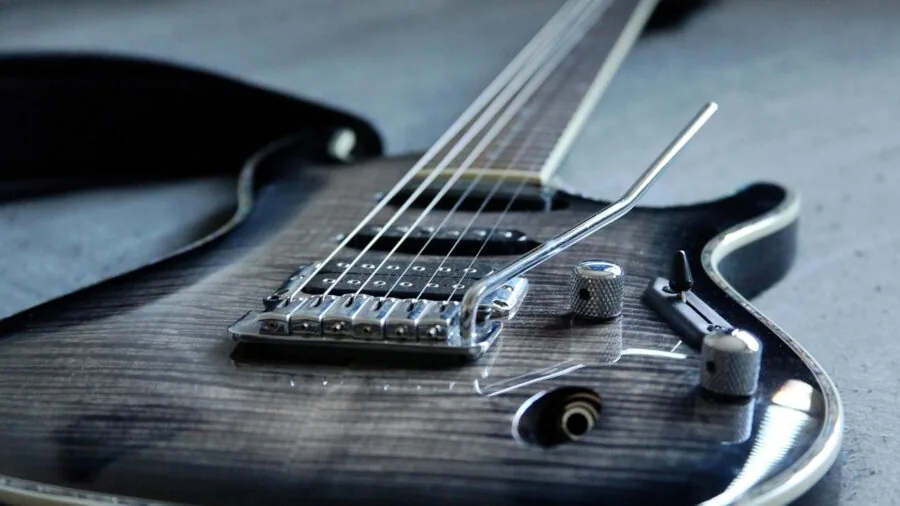
Guitar necks are not flat. The fretboard curves across its width, and that curvature (the radius) varies significantly between instruments. Acoustic dreadnoughts typically use a larger radius like 16 inches, while vintage-style electric guitars can have a much tighter 7.25-inch radius.
A capo with a straight bar will not seat flush on a curved fretboard, leading to uneven string pressure, buzz on the lower strings, and tuning pull on the higher ones.
Many modern capos are designed with a slight curve built into the capo bar to match common radii.
The Ernie Ball Axis stands out here with its reversible dual-radius bar that covers two of the most common fretboard curves in a single unit.
The G7th Performance 3 uses Adaptive Radius Technology to self-adjust, making it one of the most versatile options regardless of what guitar you pick up. Always check the capo’s stated radius compatibility against your guitar’s spec before purchasing.
Tuning Stability
The most common complaint about lesser capos is that they pull the strings sharp when placed on the neck.
This happens when the capo bar pushes the strings slightly forward or sideways as it clamps, stretching them beyond their intended pitch. Excess tension is the primary culprit, and it compounds on lower frets where string tension is already high.
Capos with adjustable tension (screw or clutch types) let you dial in just enough pressure to fret cleanly without over-compressing the strings.
Reviewers across guitar forums and professional publications consistently cite the Shubb C1 series and the G7th Performance 3 as the most tuning-stable capos available.
If you play worship music, jazz, or studio sessions where perfect intonation is non-negotiable, prioritize adjustable tension above all else.
Verified buyers also frequently note that cheaper spring capos require a brief retuning touch-up after every placement. On a casual strum-along this is tolerable; mid-set on a stage, it is not.
A capo that holds tune without adjustment is worth the extra investment for regular performers.
You can pair a reliable capo with a quality instrument for best results, and our guide to electric guitars for every player and budget covers strong options at every price point.
Build Quality and Materials
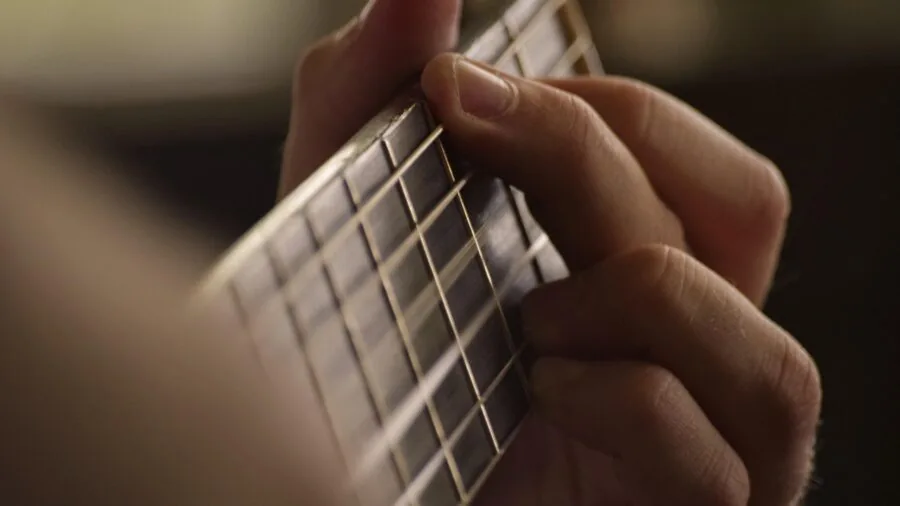
Capos take a lot of physical abuse. They are clipped on and off dozens of times per session, tossed into gig bags, and occasionally dropped on hard floors. Build quality matters more than the price tag might suggest.
Die-cast zinc alloy and aircraft-grade aluminum are the most common materials in mid-range and premium capos. Both are light and durable.
The Paige capo stands out for its ultra-thin, nickel-plated steel construction manufactured in the USA, and it is a favorite among players who prioritize minimal hardware weight on the headstock when parking the capo between songs.
The rubber or silicone pad that contacts the strings is equally important. A pad that is too hard will scratch your finish over time. A pad that is too soft or too thin will not grip evenly, causing buzz.
Premium capos use medical-grade silicone or specially formulated rubber that grips securely without marring the fretboard or strings.
When reading buyer reviews, pay attention specifically to comments about the pad material and whether it has deteriorated after a year or two of use.
Compatibility with Guitar Type

Not all capos work equally well across acoustic, electric, classical, and 12-string guitars.
Steel-string acoustics and electric guitars share broadly similar neck profiles, so most capos marketed as compatible with both will genuinely work on either.
Classical and flamenco guitars have a much wider, flatter neck, and require a capo specifically designed for that geometry. Using a standard acoustic capo on a classical neck will almost certainly cause buzz on the outer strings.
The Shubb lineup is notable for offering model-specific variants. The C1 targets standard steel-string acoustics, while the C2 handles classical guitars and the C3 is designed for 12-string instruments.
The Kyser Quick-Change similarly comes in acoustic and electric variants with different bar curvatures. Always match the capo to your guitar type rather than assuming one size fits all.
Investing in a dedicated quality recording setup to capture your capoed guitar work is another consideration for home studio players.
Ease of Use and Repositioning

How quickly you can move a capo between positions matters enormously in a live setting. Spring-trigger capos win on speed: one hand, one motion, capo moved.
Screw capos require a moment to loosen and re-tighten, which is a minor inconvenience during practice but a real liability on stage.
Clutch mechanisms like the G7th Performance 3 occupy a middle ground, allowing single-handed repositioning once you learn the squeeze-and-slide motion.
Another practical consideration is whether the capo can park on the headstock when not in use. The Kyser Quick-Change’s wide jaw clips comfortably behind the nut on most headstocks, keeping it accessible without needing a pocket or stand.
Players who perform long sets with frequent key changes should factor this into their decision. A capo that parks cleanly on the headstock saves seconds that add up over an entire performance.
Why You Should Trust Us
ProductFind is an independent review publication. We do not sell the products we evaluate, and we are not affiliated with any manufacturer.
Every product in this guide was rated using our PF Score system, a consistent 0 to 10 scale applied across performance, build quality, value, and user satisfaction.
We do not conduct our own product trials; our evaluations are grounded in research, published data, expert review consensus, and verified buyer feedback.
For this guide, we analyzed published specifications for each capo, synthesized assessment consensus from respected gear publications and professional guitarists, and cross-referenced thousands of verified buyer reviews on Amazon and independent retailer platforms.
We weighted tuning stability and build quality most heavily, followed by ease of use, fretboard compatibility, and overall value at the stated price tier. Capos with strong performance across all five dimensions scored highest on our PF Score scale.
ProductFind may earn a commission when you purchase through links in this article. That affiliate relationship has no bearing on which products are included, how they are ranked, or what PF Score they receive.
Our editorial decisions are made independently, and no manufacturer has paid for placement or influenced our assessment. Commissions help fund the research that keeps this site free for readers.
Final Thoughts
The guitar capo market has matured considerably, and there are genuinely excellent options at every price tier in 2026. After synthesizing expert consensus and verified buyer feedback across all nine picks, here is how we assign standout honors:
- Best Overall: G7th Performance 3 Guitar Capo earns the top PF Score in this roundup thanks to its Adaptive Radius Technology, squeeze-controlled tension, and a lifetime warranty that backs up its premium build. It performs flawlessly on both acoustic and electric instruments without requiring any setup.
- Best for Tuning Accuracy: Shubb C1 Nickel Capo and the Shubb C1N Brushed Nickel variant share the highest PF Score outside the G7th, and their screw-lock mechanism delivers the kind of set-and-forget tuning stability that recording musicians and worship players depend on.
- Best for Frequent Repositioning: Kyser Quick-Change Capo is unmatched in one-handed speed and headstock parking convenience, making it the go-to for live performers who move the capo between songs or mid-set.
- Best Mid-Range Value: Ernie Ball Axis Dual Radius Capo offers a reversible dual-radius bar and single-handed operation at a price that sits comfortably in the budget-to-mid range, making it an outstanding value for players who own both acoustic and electric guitars.
- Best Budget Pick: TANMUS 3-in-1 Guitar Capo is the most affordable entry in the lineup. It is a reasonable starting point for beginners or players who just need a capo occasionally, though tuning stability and build longevity are understandably limited at this price tier.
No matter your instrument or budget, there is a capo here that will serve you well.
If you are building out a more complete acoustic setup, pairing your new capo with one of the top-rated acoustic guitars we cover will put you in an excellent position to play in any key, on any stage.
Frequently Asked Questions
What is a guitar capo and why do I need one?
A capo is a clamp that attaches to the guitar neck and presses all strings down across a specific fret, effectively raising the pitch of every open string by a semitone per fret.
It allows you to play in higher keys using familiar open chord shapes without retuning your guitar.
Capos are indispensable for playing songs originally recorded in unusual keys, matching a vocalist’s range, or creating different tonal colors from the same chord shapes.
Will a capo damage my guitar’s neck or finish?
A well-designed capo with a soft silicone or rubber pad will not damage your neck or finish under normal use.
The risk comes from leaving a capo clamped on the guitar for extended periods, particularly with high-tension spring designs, which can indent the finish over time. Always store your guitar with the capo removed.
Premium capos from brands like G7th and Shubb use padding materials specifically selected to protect lacquer and nitro finishes. Lower-quality capos with hard or poorly fitted pads present a higher scratch risk.
Can I use the same capo on an acoustic and an electric guitar?
Many capos are marketed as compatible with both acoustic and electric guitars, but the key variable is fretboard radius. Acoustic guitars generally have a flatter radius while vintage electric guitars can have a much tighter curve.
A capo designed for acoustics may not seat properly on a vintage-radius electric fretboard, causing uneven pressure and buzz on the outer strings.
The Ernie Ball Axis addresses this with a reversible dual-radius bar, and the G7th Performance 3 adapts automatically. If you regularly switch between guitar types, prioritize a capo that explicitly handles both radii.
Players who also use their setup for recording can benefit from quality recording microphones to capture the full tonal benefit of capoed playing.
Why does my guitar go out of tune when I put the capo on?
Tuning shift after placing a capo is usually caused by one of two things: excessive clamping pressure that stretches the strings sideways, or a capo bar that does not match the fretboard radius and applies uneven pressure across the strings.
Spring-trigger capos with fixed tension are the most common offenders because the same spring force that works well on the 5th fret may be overkill on the 2nd.
Switching to an adjustable-tension screw or clutch capo, and setting the tension so it just barely frets cleanly, is the most reliable solution.
Placing the capo as close to the fret as possible (without sitting on top of it) also minimizes tuning disturbance.
Are expensive capos actually worth it compared to budget ones?
For casual home players who use a capo occasionally, a well-built budget capo is entirely adequate. The difference becomes much more apparent for gigging musicians, recording artists, and players with sensitive instruments.
Premium capos offer superior tuning stability, longer pad life, better finish protection, and faster repositioning. The G7th Performance 3, our top-rated pick, carries a lifetime warranty, which effectively means you buy it once.
Compared to the cumulative cost of replacing budget capos and the frustration of retuning mid-performance, the investment in a quality capo is easy to justify for serious players.
What capo type is best for a classical guitar?
Classical guitars have a wider, flatter neck than steel-string acoustics, and the nylon strings require less clamping force to fret cleanly. Using a standard acoustic capo on a classical guitar will almost always result in buzz on the outer strings.
Look for capos specifically designed for classical or nylon-string guitars, such as the Shubb C2, which features a wider bar matched to classical neck dimensions and a lighter clamping mechanism appropriate for nylon strings.
The Paige capo’s ultra-thin, adjustable design also adapts reasonably well to classical necks according to verified buyer reports.
About the author
Alexis is a reviewer and writer for ProductFind who specializes in Musical Instruments & Accessories. Alexis evaluates products through independent research: specifications, expert review consensus, and verified buyer feedback, and rates each one on the PF Score. Alexis focuses on helping readers pick the right musical instruments & accessorie for their needs and budget.