The 8 Best Guitar Pedals
From classic distortion to ambient reverb, the right pedal can redefine your tone. Our research across expert consensus and verified buyers surfaces the most reliable picks for every style.
 By Alexis Watson
Updated July 23, 2026
By Alexis Watson
Updated July 23, 2026
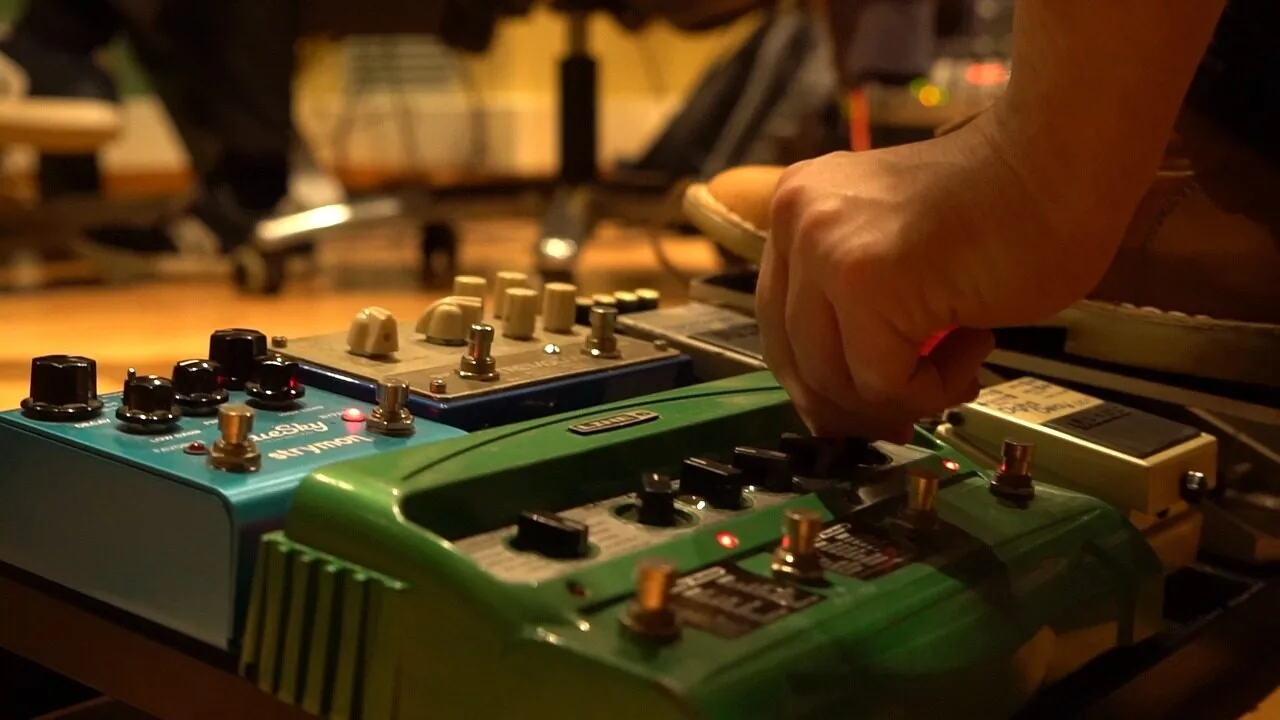
Guitar pedals are among the most transformative tools a guitarist can own. Whether you play blues, rock, ambient, or metal, the right stompbox can shape your tone in ways no amp alone can replicate.
From the warmth of a classic overdrive to the dimension of a lush reverb, pedals let you carve out a sound that is genuinely your own.
The market is enormous, spanning simple single-effect units to feature-packed multi-effects processors, and prices range from deeply affordable to boutique-level investments.
At ProductFind, we cut through the noise by synthesizing specifications, expert review consensus from across the guitar community, and verified buyer feedback to surface the pedals that consistently deliver real value.
Whether you are building your first pedalboard or filling a gap in an existing signal chain, the picks below represent the strongest options across distortion, reverb, looping, wah, and multi-effects categories.
If you are also exploring the instruments themselves, our guides to electric guitars for every budget and acoustic guitars for every player are natural complements to this one. Read on for our top-ranked picks.
| Award | Product | PF Score About PF ScoreThe PF Score is our own rating from 0 to 10, based on performance, design and build, ease of use, and value. It reflects independent research and is never influenced by manufacturers, retailers, or affiliate commissions. Learn more › | Price | |
|---|---|---|---|---|
| Best Overall |
 BOSS RV-6 Reverb Pedal
|
8.6/10 | Buy | |
| Editor's Pick |
 Ibanez Tube Screamer Mini Overdrive Pedal
|
8.4/10 | Buy | |
| Best Value |
 Zoom G1X FOUR Multi-Effects Processor
|
8.3/10 | Buy | |
| Top Rated |
 BOSS DS-1 Distortion Pedal
|
8.2/10 | Buy | |
 Dunlop GCB-95 Crybaby Wah Pedal Bundle
|
8.1/10 | Buy | ||
 BOSS RC-1 Loop Station Pedal
|
7.5/10 | Buy | ||
 Flatsons KMF-1 77-Effect Multi-Effects Pedal
|
6.1/10 | Buy | ||
 Monoprice Indio DS-6 True Bypass Distortion Pedal
|
5.8/10 | Buy |
BOSS RV-6 Reverb Pedal
A compact reverb pedal with eight studio-grade sound modes including Shimmer, Dynamic, and Delay+Reverb for players seeking lush, versatile effects. Simple controls and optional expression pedal input make it straightforward to dial in sophisticated tones, supporting both mono and stereo operation.
Pros
- Eight diverse reverb algorithms cover classic to modern sounds
- Compact footprint makes it easy to fit on any pedalboard
- Expression pedal compatibility adds hands-on control without extra gear
- Stereo operation expands sonic possibilities for larger rigs
Cons
- No buyer reviews available to assess real-world reliability and performance
- Limited information on preset storage or editing capabilities
- Compact size may mean fewer physical knobs for deep sound tweaking
Ibanez Tube Screamer Mini Overdrive Pedal
A compact overdrive pedal featuring drive, level, and tone controls in a green enclosure measuring 6 x 3 x 4 inches. Designed for guitarists seeking classic tube screamer tones in a space-efficient format.
Pros
- Compact dimensions ideal for small pedalboards or practice setups
- Dedicated tone control for shaping overdrive character
- Lightweight and portable design
- Recognizable Tube Screamer circuit in mini format
Cons
- No user reviews available to assess real-world performance and reliability
- Mini pedal format may have limited control accessibility compared to full-size units
- Limited feature set with only three controls
Zoom G1X FOUR Multi-Effects Processor
A compact guitar effects unit with 71 effects, 13 amp models, and a 30-second looper that covers practice, recording, and live performance. Battery-powered design makes it portable, though no user reviews are available yet to assess real-world reliability.
Pros
- Extensive effect library covers clean to high-gain sounds
- Built-in rhythm patterns help maintain timing during practice
- Compact pedal design fits standard pedalboards and travel rigs
- Guitar Lab software expands creative control and patch customization
- Supports both amp and headphone monitoring for flexible setup
Cons
- No verified user reviews available to assess durability and long-term performance
- 30-second looper length may limit complex compositions
- Requires computer software access for advanced patch editing
BOSS DS-1 Distortion Pedal
Since 1978, the DS-1 has been the go-to distortion pedal for guitarists seeking hard-edged attack without losing clarity. Its responsive tone control and booster-friendly design make it equally effective for heavy rhythms and articulate solos across different playing styles.
Pros
- Maintains clarity and definition even at high distortion levels, ideal for complex rhythmic work
- Versatile tone control gives players genuine sound shaping without mud or wash
- Works effectively as both a dedicated distortion unit and a low-gain booster
- Volume-responsive design lets guitarists clean up tones intuitively without tone degradation
Cons
- No user reviews available on this listing to assess real-world reliability or durability
- Compact size means limited controls compared to modern multi-effect distortion units
- Designed primarily for distortion; overdrive players may find alternatives more suited to their needs
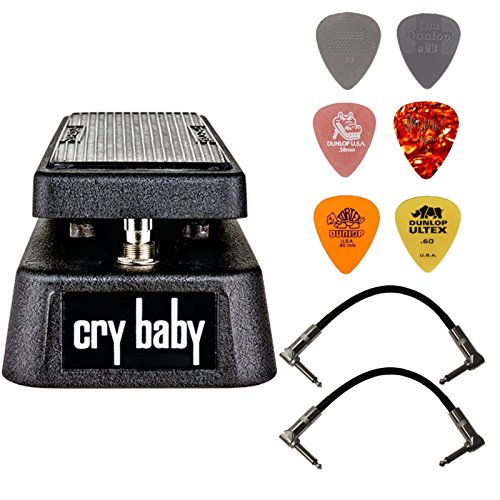
Dunlop GCB-95 Crybaby Wah Pedal Bundle
The classic wah pedal trusted by legendary guitarists from Hendrix to Clapton, built with heavy-duty diecast construction for durability. This bundle adds practical accessories: two patch cables and six picks, making it a solid starting point for players exploring wah effects.
Pros
- Time-tested design with proven track record across multiple generations of players
- Sturdy diecast build designed to withstand years of gigging and practice
- Bundle includes useful accessories that would otherwise require separate purchase
- Hot Potz potentiometer delivers responsive, expressive wah control
Cons
- No user reviews available to assess real-world durability or consistency
- Heavy pedal at 1.04 pounds may add noticeable weight to large pedalboards
- Bundle picks and cables are basic accessories, not premium upgrades
BOSS RC-1 Loop Station Pedal
A compact stompbox looper designed for guitarists, bassists, and keyboard players who want straightforward loop recording and playback. With 12 minutes of record time, undo/redo functions, and stereo capability, it covers the essentials without unnecessary complexity.
Pros
- Simple one-footswitch operation keeps learning curve minimal
- Generous 12-minute record capacity suits both practice and small performances
- Stereo input and output preserve full audio fidelity
- Lightweight and compact footprint reduces pedalboard clutter
Cons
- No product reviews available to assess real-world reliability or user experience
- Limited control options compared to more feature-rich looping pedals
- No information on loop management features like save/load or separate track controls
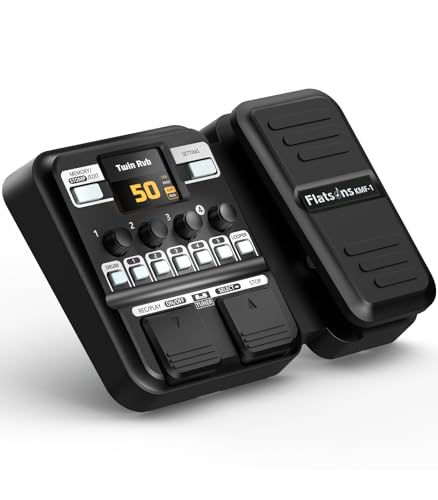
Flatsons KMF-1 77-Effect Multi-Effects Pedal
The KMF-1 brings comprehensive tone-shaping to players at any level with 77 effects, 18 amp models, and 18 cabinet simulators in a floor unit. Its dual-mode operation (Stomp and Edit), built-in tuner, looper, and 42 drum rhythms make it versatile for studio and live use, though it requires careful cab module management to avoid unnatural layering.
Pros
- Extensive effect library and amp/cab selection rivals larger units
- Dual-mode design accommodates both traditional single-pedal workflow and deep editing
- 50 presets and drum rhythms lower the barrier for beginners
- Battery operation (2.5 hours from 6 AA batteries) enables portable use
- Expert technical support and 12-month guarantee included
Cons
- Cabinet simulation module must be manually disabled when using real amps or cabinets to prevent double-cabinet layering artifacts
- No verified user reviews available to confirm real-world reliability and sound quality claims
- Battery-powered operation limited to 2.5 hours, requiring frequent recharging or external power for extended sessions
Monoprice Indio DS-6 True Bypass Distortion Pedal
A full-size vintage distortion pedal that recreates the character of classic 70s-80s units using modern components. True bypass design and durable metal construction make it road-ready, with flexible 9V battery or external power options.
Pros
- True bypass design and metal construction at budget price point typically found only in expensive boutique pedals
- Versatile gain range works at any stage in signal chain
- Flexible power options let you play unplugged or use standard external supply
- Full-size format provides adequate spacing on pedalboards
Cons
- No user reviews available yet to validate real-world tone and durability claims
- Limited control options mentioned in description suggest simpler interface than some modern distortion pedals
- Vintage 70s-80s character may lack the flexibility some players need for modern genres
Guitar Pedals Buying Guide
Choosing the right guitar pedal depends on far more than just the effect type.
Tone character, build quality, signal integrity, and how a pedal interacts with the rest of your rig all factor into whether a unit will serve you for years or end up gathering dust.
The sections below walk through the most important criteria to weigh before committing to any stompbox, from a budget distortion to a flagship multi-effects processor.
Effect Type and Tonal Purpose
The first question is what gap you are trying to fill in your signal chain. Overdrive and distortion pedals add harmonic grit to a clean or lightly breaking-up amp.
Classic units like the Ibanez Tube Screamer lineage push the midrange to cut through a band mix, while harder distortion circuits deliver the compressed, saturated attack associated with rock and metal.
If your amp already has good gain, an overdrive stacked in front of it can tighten the low end and add sustain without sounding artificial.
Reverb and delay pedals add space and dimension. Reverb simulates acoustic environments, from a tight room to a cathedral-scale wash, and is useful in almost every genre.
Delay repeats your signal at set intervals and can range from a subtle slapback to long ambient trails. Wah pedals introduce a frequency-sweep filter controlled by a rocking expression pedal, a staple of funk, blues, and classic rock.
Looper pedals let you record a phrase and play over it live, making them invaluable for solo practice or performance. Multi-effects units combine many of these in one box, which suits players who want versatility without carrying a large pedalboard.
True Bypass vs. Buffered Bypass
Bypass circuitry determines what happens to your signal when a pedal is switched off.
True bypass routes your guitar signal directly to the output with no active circuitry in the path, which preserves the purest tone when the pedal is off.
This matters most if you use many pedals in series, since each buffered pedal introduces a small amount of capacitance that can roll off high frequencies over long cable runs.
Buffered bypass, used extensively by BOSS, keeps an active buffer in-line even when the effect is bypassed. A high-quality buffer actually benefits long signal chains and cable runs by driving the signal cleanly to the amp.
The debate between the two approaches is well documented among guitar technicians, and the honest answer is that both can sound excellent. What matters is the quality of the buffer circuit, not the bypass type alone.
If you are running fewer than five or six pedals on short cable runs, the practical difference is minimal.
Build Quality and Road Durability
Pedals live on floors, get stomped repeatedly, and travel in gig bags. A die-cast metal housing, solid footswitch mechanism, and robust input/output jacks are indicators of long-term reliability.
BOSS compact pedals have a decades-long reputation for surviving touring abuse, which is reflected in their verified buyer feedback. Boutique and budget units vary widely here.
A plastic housing or flimsy jacks can fail after a year of regular use, turning a low-priced buy into a poor-value decision.
Check the footswitch type as well. Mechanical footswitches on true-bypass pedals wear out over many thousands of actuations, though high-quality switches are rated for millions of presses.
Relay-based switching, common on newer digital pedals, tends to be quieter and more durable. For stage use, a heavier and sturdier chassis pays for itself in avoided repairs.
Power Requirements and Pedalboard Compatibility
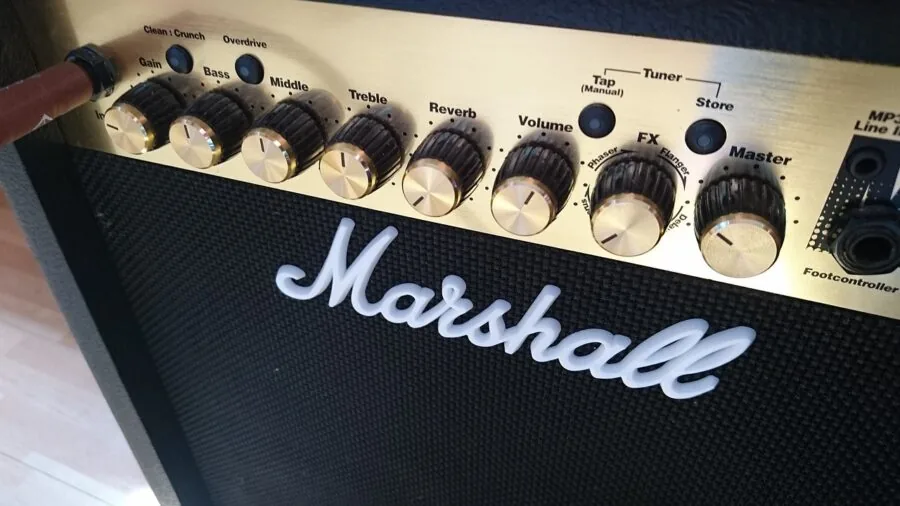
Most modern pedals run on standard 9V DC center-negative power, which makes them compatible with virtually every pedalboard power supply on the market.
Some high-current digital pedals, like multi-effects processors, require 200 mA or more and may need a dedicated isolated output on your power brick.
Always check the manufacturer’s current draw specification before patching a new pedal into an existing power supply, since under-powering a digital unit can cause noise, instability, or damage.
Battery-operated pedals, such as the Zoom G1X FOUR, are convenient for practice away from a power source but less practical for regular pedalboard use where power supplies are already in place.
If portability is a priority, battery capability adds genuine utility. For a fixed home or stage rig, a quality isolated power supply is a worthwhile investment that eliminates ground-loop hum and keeps every pedal running cleanly.
Controls, Presets, and Ease of Use
Analog pedals typically offer a small set of knobs, tone, level, and gain or a variation of those, making them intuitive to dial in quickly on stage.
This simplicity is a strength for players who want a consistent, predictable sound night after night. Digital pedals and multi-effects units offer far more parameter control but come with a steeper learning curve.
A color screen display, as seen on the Flatsons KMF-1, makes navigating dozens of effects and presets considerably faster than menu-diving through a small LED display.
Preset memory is a significant advantage in live contexts. A multi-effects pedal that stores your carefully dialed sounds lets you switch between clean, crunch, lead, and ambient patches in an instant.
Single-effect analog pedals require you to reach down and adjust knobs between songs if you want different settings, which is less practical on a busy stage. Consider how many distinct sounds you actually need in a performance and choose accordingly.
Players who focus on exploring musical instruments broadly often find a single versatile multi-effects unit a more educational starting point than a chain of dedicated stompboxes.
Signal Chain Order and Interaction
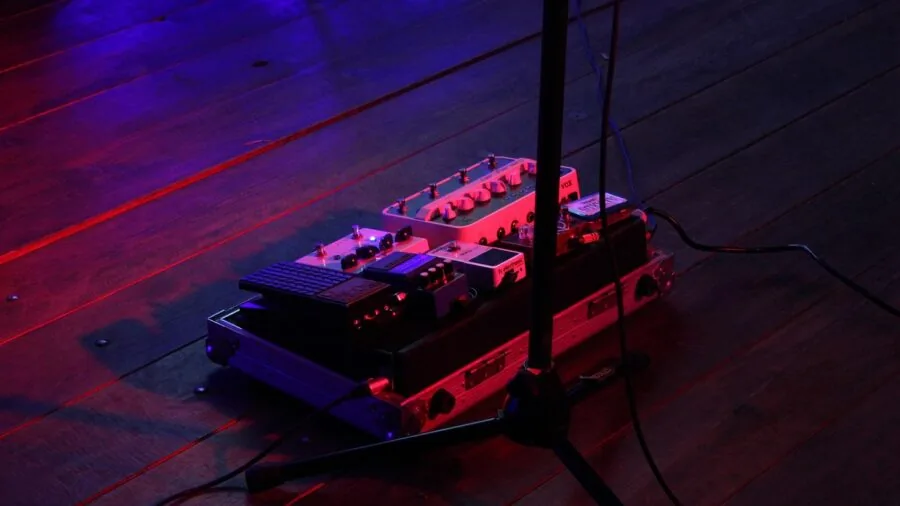
The order in which pedals appear in your signal chain has a profound effect on the resulting tone.
The conventional starting point is: tuner, then dynamics/filter (wah, compressor), then gain-based effects (overdrive, distortion, fuzz), then modulation (chorus, flanger, phaser), then time-based effects (delay, reverb).
Placing a wah after a distortion pedal produces a very different, often more dramatic, swept sound compared to placing it before. Experimentation is part of the process, but understanding the baseline helps you make intentional choices.
The BOSS RC-1 Loop Station works best at or near the end of the chain so that the loop captures your fully processed tone.
The Dunlop Crybaby GCB-95 is traditionally placed first in the chain, before gain stages, to react to the raw dynamics of your picking.
A reverb pedal like the BOSS RV-6 almost always belongs last in the chain, since adding distortion or wah after reverb rarely produces musical results.
Once you understand these principles, building a functional and coherent pedalboard becomes a much more deliberate and satisfying process.
Why You Should Trust Us
ProductFind operates as an independent review publication. We do not accept payment for placement, and no manufacturer has editorial input into our rankings or scores.
Every product in this guide was evaluated using our structured research methodology: we analyze published specifications, assess expert review consensus from established guitar publications and community sources, and incorporate verified buyer feedback from confirmed purchasers.
We do not conduct our own product trials; our evaluations are grounded in research, published data, expert review consensus, and verified buyer feedback.
Each product is assigned a PF Score on a scale of 0 to 10, calculated against a consistent set of criteria applied uniformly across every item in a given category.
For guitar pedals, those criteria include tonal quality and character, build durability, value relative to price tier, ease of use, and how well the unit performs for its intended purpose based on aggregated expert and buyer consensus.
Products are ranked by PF Score, with the highest-scoring option listed first.
ProductFind may earn a commission when you purchase through links in this article. That affiliate relationship has no bearing on which products are included, how they are ranked, or what scores they receive.
Our only editorial objective is to give you the most accurate, useful information available so you can make a confident buying decision.
Final Thoughts
The eight pedals in this guide cover the most important effect categories a guitarist is likely to need, from foundational distortion and overdrive to ambient reverb, expressive wah, and versatile multi-effects processing. Below are the standout awards based on our research and PF Score rankings.
- Best Overall: BOSS RV-6 Reverb Guitar Pedal earns the top position with the highest PF Score in this group. Eight distinct reverb modes, stereo operation, and BOSS’s legendary build quality make it the most well-rounded and broadly useful pedal here, equally at home on a beginner’s first board or a seasoned player’s stage rig.
- Best Overdrive and Distortion Value: Ibanez Tube Screamer Mini Pedal distills one of the most revered overdrive circuits in guitar history into a compact, affordable package. Its midrange push and organic clipping character have made the Tube Screamer lineage a benchmark for blues and rock players across decades, and verified buyer feedback consistently confirms the Mini delivers the classic sound at an accessible price point.
- Best Compact Distortion: BOSS DS-1 Distortion remains one of the most widely used distortion pedals ever made. Its hard-edged attack, smooth sustain, and wide tone range give players remarkable flexibility, and its near-indestructible housing has proven itself on stages and in studios for over four decades.
- Best for Versatility and Practice: Zoom G1X FOUR Guitar Multi-Effects Processor offers over 70 effects, amp modeling, a looper, rhythm section, and a built-in tuner in a battery-powered unit at a mid-range price. For players still exploring their sound or wanting a single-box solution for practice and home recording, it delivers exceptional breadth of capability.
- Best for Live Looping: BOSS RC-1 Loop Station sets the standard for simple, reliable looping. Its 24-segment LED loop indicator gives clear visual feedback during performance, and its straightforward record, overdub, undo, and redo workflow removes any learning curve between you and the music.
If you are still building out your overall musical setup, pairing your pedal rig with well-chosen instruments makes a significant difference. Our roundup of electric guitars worth buying for every budget is a logical next step for anyone assembling a complete rig from scratch.
Frequently Asked Questions
What is the first guitar pedal a beginner should buy?
For most beginners, a versatile multi-effects processor is the most practical first purchase.
Units like the Zoom G1X FOUR let you explore dozens of effect types before committing to individual stompboxes, which helps you identify the sounds and styles you actually gravitate toward.
Once you know what you reach for most often, investing in a dedicated high-quality version of that effect makes much more sense than guessing.
If you prefer single-effect pedals from the start, a solid overdrive or distortion is typically the most universally useful choice, since clean-to-crunch tone shaping defines a large portion of popular guitar music.
An overdrive like the Ibanez Tube Screamer Mini or a distortion like the BOSS DS-1 covers that ground reliably and works with nearly any amp.
Do guitar pedals work with acoustic guitars?
Yes, most guitar pedals work with acoustic-electric guitars that have a pickup and a standard quarter-inch output.
Reverb and delay pedals are particularly popular choices for acoustic players since they add dimension without drastically altering the natural tone of the instrument.
Overdrive and distortion pedals are less commonly used with acoustics but can produce interesting textures in the right context.
Dedicated acoustic preamp pedals also exist specifically for players who need EQ control, anti-feedback, and DI output in a live setting.
For a broader look at acoustic instrument options, our acoustic guitar buyer’s guide covers what to look for in instruments that pair well with effect-based signal chains.
How many pedals do I need on a pedalboard?
There is no universal answer, and many professional guitarists play with fewer than five pedals while others fill large boards with twenty or more. The more useful question is how many distinct tones your music actually requires.
A player who switches between clean and one dirty sound in a band context may only need two or three pedals. A solo ambient guitarist or a session player covering many styles will naturally need more options.
Starting small and adding pedals as you identify specific tonal needs is a sounder approach than buying a large collection upfront. Quality over quantity consistently produces better results, since a few excellent pedals dialed in well will outperform a crowded board of mediocre ones.
What is the difference between overdrive and distortion?
Overdrive pedals are designed to simulate the natural breakup of a tube amplifier being pushed hard. The clipping is relatively soft and dynamic, meaning the effect responds to how hard you pick.
Play softly and you get a clean or slightly gritty tone. Dig in and the pedal adds harmonic richness. This makes overdrive pedals feel musical and touch-sensitive, which is why they are so popular for blues and classic rock.
Distortion pedals apply much harder clipping to the signal, producing a more compressed, aggressive, and sustain-heavy sound. The dynamic range is narrower, meaning the effect is more consistent regardless of picking intensity.
This character suits rock and metal styles where a saturated, powerful tone is the goal. The BOSS DS-1 is a textbook example of a hard-clipping distortion circuit, while the Tube Screamer Mini represents the soft-clipping overdrive approach.
Is it worth buying a budget pedal or should I invest in a premium one?
Budget pedals have improved substantially and can serve beginners and casual players well.
However, expert review consensus and verified buyer feedback consistently show that build quality, tone character, and long-term reliability tend to correlate with price tier, particularly for overdrive, distortion, and reverb effects where the quality of the analog or digital circuitry is audible.
A mid-range pedal from a reputable brand like BOSS or Ibanez will typically outperform a very cheap option in feel, durability, and tonal nuance.
The Monoprice DS-6 in this guide illustrates the trade-off clearly.
It earns a lower PF Score not because it is non-functional but because its tonal character and build quality fall noticeably short of established benchmarks at a slightly higher price point.
For a central piece of your rig, the investment in a better unit pays off over time. For an effect you will use rarely or experimentally, a budget option may be perfectly adequate.
Can I use guitar pedals with a bass guitar?
Many guitar pedals work well with bass, and a number of effects designed primarily for guitar have become staples on bass rigs. The BOSS RC-1 Loop Station is explicitly marketed for guitar, bass, and keyboards.
Overdrive and fuzz pedals can be used on bass, though some designs thin out the low end when processing bass frequencies, which is a common verified buyer complaint.
Looking for pedals with a blend knob or a bass-specific mode addresses this issue by mixing dry low-end signal with the effected signal.
Wah pedals also work on bass, producing a distinctive filter sweep that has featured prominently in funk and rock bass playing.
Multi-effects processors like the Zoom G1X FOUR include bass-oriented amp models and effects, making them a convenient all-in-one option for bass players who want to explore effect processing without building a dedicated pedal collection.
About the author
Alexis is a reviewer and writer for ProductFind who specializes in Musical Instruments & Accessories. Alexis evaluates products through independent research: specifications, expert review consensus, and verified buyer feedback, and rates each one on the PF Score. Alexis focuses on helping readers pick the right musical instruments & accessorie for their needs and budget.