The 11 Best Laser Distance Measurers
Accuracy, range, and usability vary widely across laser distance measurers. This guide breaks down what separates a reliable tool from a frustrating one, across every budget.
 By Noelle Gray
Updated July 23, 2026
By Noelle Gray
Updated July 23, 2026
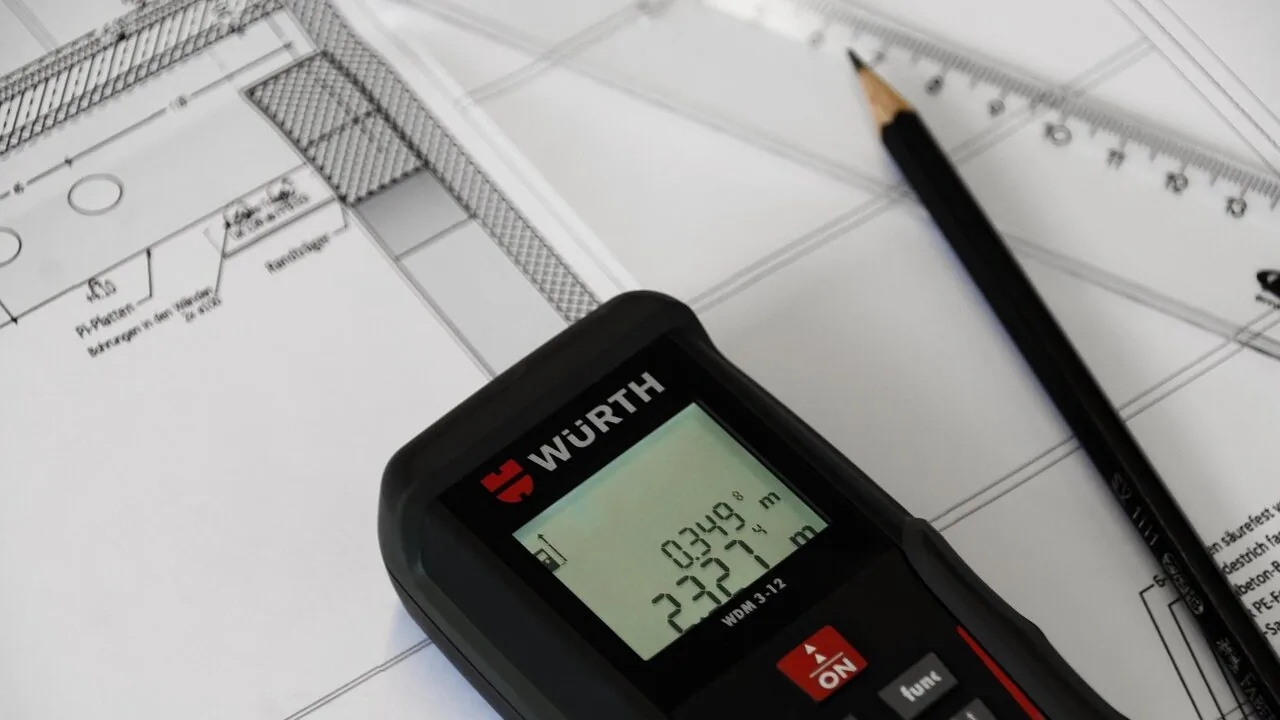
A good laser distance measurer can shave hours off a renovation project, eliminate the need for a second person holding a tape measure, and deliver readings accurate to within a few millimetres across rooms you couldn’t span with a conventional tape.
Whether you’re a contractor calculating material takeoffs on a job site, a real estate agent sketching room layouts, or a DIYer trying to figure out whether that new sofa will actually fit, the right tool pays for itself in the first week.
The category has expanded quickly: today’s options range from no-frills pocket units powered by a single AAA battery to professional-grade outdoor instruments with colour cameras, Bluetooth connectivity, and point-to-point measurement technology.
Sorting through those options is exactly what this guide is for.
At ProductFind, we assembled this list through comprehensive research: we compared published specifications, analysed expert review consensus from professional trade publications and tool specialists, and weighed verified buyer feedback from thousands of confirmed purchases across major retailers.
Every product here has been scored on our 0 to 10 PF Score scale for consistency and transparency.
The picks below span budget-friendly starters from brands like RockSeed and MiLESEEY all the way through professional instruments from Bosch and Leica, so there’s a meaningful option at every price tier.
Read on for our top picks across the full range.
| Award | Product | PF Score About PF ScoreThe PF Score is our own rating from 0 to 10, based on performance, design and build, ease of use, and value. It reflects independent research and is never influenced by manufacturers, retailers, or affiliate commissions. Learn more › | Price | |
|---|---|---|---|---|
| Best Overall |
 Bosch GLM400CL 400-Foot Laser Measure
|
8.7/10 | Buy | |
| Editor's Pick |
 Bosch GLM165-27CGL 165 Ft Laser Distance Meter
|
8.5/10 | Buy | |
| Best Value |
 Leica DISTO X6 800ft Laser Distance Meter with Camera
|
8.3/10 | Buy | |
| Top Rated |
 Leica Disto D5 Laser Distance Meter, 650ft Range
|
8.1/10 | Buy | |
 MiLESEEY S50 Green Laser Distance Meter 400ft
|
8.0/10 | Buy | ||
 Klein Tools 100-Foot Laser Distance Meter
|
7.9/10 | Buy | ||
 MiLESEEY S7 330ft Laser Distance Meter
|
7.4/10 | Buy | ||
 Leica Disto D1 Laser Distance Meter, 130 Feet
|
7.2/10 | Buy | ||
 MiLESEEY D5 229ft Laser Measure with Angle Sensor
|
5.8/10 | Buy | ||
 Kiprim LD120S Dual Laser Distance Meter, 393ft Range
|
5.5/10 | Buy | ||
 RockSeed 165-Foot Laser Measure with Dual Levels
|
5.2/10 | Buy |
Bosch GLM400CL 400-Foot Laser Measure
A professional-grade laser distance meter designed for outdoor projects, delivering 400-foot range with digital viewfinder for spotting measurements at distance. The 11 measuring functions, app integration, and inclinometer make it versatile for construction and surveying tasks.
Pros
- Digital viewfinder eliminates guesswork when targeting distant points, improving accuracy on long-range jobs
- Comprehensive feature set with 11 functions covers most jobsite measurement scenarios
- Excellent accuracy tolerance at +/- 1/16 inch suitable for precision work
- App integration enables organized project tracking with photos and notes
- Reinforced screen glass and compact 0.46-pound weight balance durability with portability
Cons
- No user reviews available yet to validate real-world performance claims
- Digital viewfinder and advanced features may steepen learning curve versus basic laser measures
- Premium positioning suggests higher cost than entry-level laser distance meters
Bosch GLM165-27CGL 165 Ft Laser Distance Meter
A compact laser distance meter designed for jobsite use, delivering measurements up to 165 feet with precision to 1/16 inch. The green-beam technology provides four times brighter visibility than standard red lasers, making it practical for both bright and low-light conditions.
Pros
- Green-beam technology significantly improves target visibility in various lighting
- IP65 durability rating handles rough jobsite conditions
- Live measuring mode eliminates need to hold button, speeding up workflow
- Includes battery, belt clip, and carrying pouch out of the box
Cons
- No verified buyer reviews available to confirm real-world performance
- 165-foot range may be limiting for larger construction projects
- App compatibility requires smartphone; functionality without it not detailed
Leica DISTO X6 800ft Laser Distance Meter with Camera
The DISTO X6 is a premium laser distance meter combining 800-foot range with a built-in camera viewfinder and Bluetooth connectivity. Best suited for professionals needing precise point-to-point measurements indoors and outdoors, backed by a comprehensive kit with tripod and DST360x adapter.
Pros
- Extended 800-foot measurement range covers large-scale projects
- Built-in camera with 4X zoom viewfinder for accurate targeting
- Bluetooth data transfer streamlines workflow and record-keeping
- Comprehensive kit includes tripod, carrying case, and DST360x adapter
- IP65 rating provides dust and water resistance for outdoor durability
Cons
- Fairly heavy at 11 pounds, making extended handheld use less convenient
- Premium pricing reflects professional-grade positioning rather than budget-friendly accessibility
- No verified user reviews available to assess real-world reliability and user experience
Leica Disto D5 Laser Distance Meter, 650ft Range
A premium laser distance meter built for professionals who need precise outdoor measurements up to 650 feet with camera-assisted targeting. Bluetooth connectivity and smart measurement functions streamline data transfer and on-site calculations, though the premium positioning limits appeal to casual users.
Pros
- Camera viewfinder with zoom takes guesswork out of targeting distant points
- Bluetooth integration streamlines workflow on job sites with automatic data syncing
- Lightweight at 0.39 lbs makes all-day carrying comfortable
- 650-foot range handles large buildings, land surveys, and site planning without repositioning
- Smart functions (add/subtract, volume) reduce need for separate calculator
Cons
- Premium positioning creates higher cost barrier compared to basic laser meters
- No verified user reviews available to assess real-world reliability or durability claims
- Bluetooth features require compatible app or device for full functionality benefits
MiLESEEY S50 Green Laser Distance Meter 400ft
A laser distance meter built for construction and layout work, featuring a brighter green-beam laser for outdoor visibility and 18 measurement modes including area and volume calculations. The 2.4-inch backlit display and P2P technology handle most professional scenarios, with rechargeable batteries and cloud sync via app.
Pros
- Green laser visibility significantly better than standard red lasers in outdoor conditions
- Comprehensive 18-mode feature set eliminates need for multiple tools on most projects
- Rechargeable Ni-MH batteries plus USB-C charging offers flexible power options
- Point-to-Point technology enables indirect measurements from a single location
- Smart app with unlimited cloud sync simplifies data management and reporting
Cons
- No verified buyer reviews available yet, limiting real-world performance feedback
- Class II laser classification with <1mW output means effectiveness depends on surface reflectivity in low-light indoor conditions
- Backlit display brightness may still be challenging in direct sunlight despite IPS technology
Klein Tools 100-Foot Laser Distance Meter
A compact laser distance meter that measures up to 100 feet with decent precision for jobsite work. Single-button operation and a reverse contrast LCD make it straightforward to use, though it lacks advanced features like area calculation or Bluetooth connectivity.
Pros
- High precision tolerance (1/16 inch) within first 30 feet makes it reliable for most construction and DIY tasks
- Reverse contrast display ensures readability even in dim lighting on job sites
- Genuinely portable with pocket clip, designed for tradespersons who need hands-free carrying
Cons
- Precision drops to 1/8 inch beyond 30 feet, which may not suit longer distance work requiring tighter tolerances
- No advanced features like area/volume calculation, digital display presets, or memory storage
- Rating is based on zero verified reviews, so real-world durability and user experience remain unvalidated
MiLESEEY S7 330ft Laser Distance Meter
A rechargeable laser measure designed for outdoor long-range measuring up to 330 feet with built-in digital pointfinder camera and P2P technology for two-point measurements from a single location. Best suited for property surveys, warehouse assessments, and outdoor construction projects where accuracy and bright-light visibility matter.
Pros
- Extended range and precision suitable for large property and warehouse measurements
- Digital pointfinder camera eliminates guesswork finding laser spots in bright conditions
- P2P technology enables accurate distance capture between two points without repositioning
- App integration allows on-site photo annotation and project planning with data storage
- IP65 rating and ergonomic grip withstand outdoor weather and rugged conditions
Cons
- No verified buyer reviews available to validate real-world performance claims
- Requires screen angle adjustment in direct sunlight despite backlit display, reducing usability convenience
- App-based features and connectivity not detailed; unclear if compatible across platforms or user-friendly
Leica Disto D1 Laser Distance Meter, 130 Feet
A compact laser distance meter designed for contractors and DIY users who need quick, accurate measurements up to 130 feet. Two-button operation keeps things simple, while Bluetooth connectivity lets you integrate measurements directly into floor plans via the free Disto Sketch app.
Pros
- Professional-grade accuracy at plus/minus 1/16 inch, consistent with Leica's reputation
- Bluetooth 4.0 enables wireless workflow with iOS and Android apps for on-site documentation
- Lightweight and pocket-sized, practical for fieldwork without bulk
- Metric and imperial unit selection for flexible use across different job types
- Distance tracking feature for continuous measurements without repeated button presses
Cons
- No user reviews available yet to confirm real-world durability and performance consistency
- 130-foot maximum range may fall short for large exterior or commercial site measurements
- Requires smartphone or tablet to fully leverage Bluetooth and Sketch app features
MiLESEEY D5 229ft Laser Measure with Angle Sensor
This laser distance meter combines a 229-foot range with an electronic angle sensor for dual-purpose measurements in construction and home projects. Offers automatic calculations for area, volume, and Pythagorean measurements, though it lacks verified buyer feedback to confirm real-world reliability.
Pros
- Electronic angle sensor eliminates reliance on bubble levels for finding horizontal references
- Multiple automatic calculation modes reduce manual math for area, volume, and indirect height measurements
- Compact pocket-sized form factor with non-slip grip design
- 30 data point memory with recall function supports multi-step projects
- IP54 rating provides protection against dust and splashes on job sites
Cons
- No verified customer reviews available to validate manufacturer claims about accuracy and durability in field use
- Electronic angle sensor accuracy of 0.3 degrees may not meet precision requirements for professional construction work
- Auto-level and Pythagorean features require specific measurement scenarios and may add complexity for basic users
Kiprim LD120S Dual Laser Distance Meter, 393ft Range
This dual-laser distance meter covers up to 393 feet with 2mm accuracy, making it practical for construction, DIY, and home renovation projects. Built-in electronic level, Pythagorean function, and rechargeable battery reduce setup time and ongoing costs.
Pros
- Dual laser capability speeds up complex measurement tasks
- Bright LCD display readable in dim lighting conditions
- Rechargeable battery reduces long-term battery costs
- Switchable measurement units (meters, feet, inches) suit different workflows
- Stores measurement history for easy project tracking
Cons
- No verified buyer reviews available yet to confirm real-world performance claims
- Class II laser rating limits power output, which may affect visibility in bright sunlight
- Compact size trades off against potentially smaller display screen
RockSeed 165-Foot Laser Measure with Dual Levels
A budget-friendly laser distance meter designed for DIY users and contractors, featuring 0.2-second measurement speed and accuracy within 1/16 inch. The dual bubble levels and wide temperature range (-10 to 50°C) make it practical for varied job sites, though zero verified reviews limit confidence in real-world durability.
Pros
- Fast measurement speed (2.5x faster than conventional devices per specs)
- Compact and portable with included wrist strap for jobsite mobility
- Handles extreme temperatures from 14°F to 122°F reliably
- Comprehensive feature set including Pythagorean method for hard-to-reach areas
- 2-year warranty and CE/FCC/RoHS certification indicate legitimate manufacturing standards
Cons
- No verified customer reviews available, making real-world reliability and laser dot visibility unclear
- Accuracy of 1/16 inch is adequate for general construction but not suitable for precision carpentry or surveying
- Color listed as blue but title mentions red laser, creating product specification ambiguity
Laser Distance Measurers Buying Guide
Picking the right laser distance measurer means matching the tool’s core capabilities to your actual workflow. A professional surveyor and a weekend DIYer have very different requirements around range, beam visibility, connectivity, and durability.
The sections below walk through every criterion that separates a genuinely useful instrument from one that ends up unused in a drawer.
Thinking carefully about these factors will also help you get the most out of the top picks listed above, in the same way that pairing a capable tool with quality accessories from a well-organised tool bag keeps your kit field-ready at all times.
Measurement Range and Accuracy

Range determines how far the laser can reliably bounce off a target and return a reading. Indoor-focused tools typically cover 100 to 200 feet, which is more than adequate for room measurement, furniture planning, and estimating paint or flooring quantities.
If you work outdoors on construction sites, land assessment, or large-scale renovation, you’ll want a unit rated at 300 feet or beyond.
Professional instruments in our list push well past 400 feet and up to 800 feet, but those are purpose-built for surveying and structural work.
Accuracy is specified as a plus-or-minus tolerance, most commonly between ±1/16 inch and ±1/8 inch for consumer models. Professional tools narrow that to ±1/32 inch or better.
Pay attention to whether the stated accuracy holds across the full rated range or only at shorter distances: some budget units drift noticeably beyond 50 feet.
For most interior applications 2 mm (roughly ±1/12 inch) accuracy is entirely sufficient, but if you’re calculating structural load spans or ordering precision-cut materials, tighter tolerances matter.
Note also whether a device uses a red or green laser beam. Green beams are inherently more visible to the human eye in bright ambient light and are especially valuable when working near windows or outdoors.
Red-beam units are more common at lower price points and perform well in dimly lit interiors.
If outdoor usability is a priority, favour green-beam models or units with a built-in camera viewfinder that lets you see the dot on-screen rather than relying on naked-eye visibility.
Display and User Interface

A backlit LCD is effectively the minimum acceptable display for a modern laser measurer. Without backlighting, readings are nearly impossible to see in low-light conditions inside wall cavities or unfinished basements.
Higher-end units upgrade to IPS colour displays, which offer wider viewing angles and noticeably better contrast under direct sunlight. Screen size matters too: a larger display reduces the squinting and misreading that costs you time on a busy job.
Button layout and control logic vary significantly between brands. The best tools let you switch units, store reference measurements, and toggle between single-distance, continuous, area, and volume modes with no more than two or three button presses.
Poorly designed interfaces require you to consult the manual mid-task, which defeats the purpose of carrying a speed-focused tool. Look for clearly labelled, well-spaced buttons with tactile feedback, particularly if you’ll be using the device while wearing gloves.
Measurement Modes and Calculations
The most basic laser measurers do one thing: return a single linear distance.
That’s sufficient for a surprising number of tasks, but moving up to a mid-range tool unlocks continuous scanning (ideal for finding the shortest or longest dimension in an irregular space), area calculation (length times width in a single workflow), and volume calculation (length times width times height).
These onboard computations eliminate the need for a separate calculator and reduce transcription errors.
More advanced models include Pythagorean or indirect measurement modes that calculate an unknown distance using two known measurements and the angle between them.
This is genuinely useful when you can’t aim the laser directly at a target, for example measuring ceiling height over an obstacle or the diagonal span of a staircase.
Some units also carry electronic angle sensors that replace a bubble level with a digital inclination readout, a valuable feature for slope calculations and tilt compensation.
Thinking about which modes you’ll actually use on a regular basis prevents you from over-spending on functions you’ll never need.
The same thoughtful approach applies when selecting other precision instruments: our guide to digital multimeters walks through a similarly tiered feature landscape.
Connectivity and App Integration

Bluetooth connectivity transforms a laser measurer from a standalone readout device into a data-capture tool.
Paired with a smartphone app, a Bluetooth-enabled unit lets you log measurements directly into a floor-plan sketch, export data to a spreadsheet, or share dimensions with a client in real time.
Bosch’s dedicated app and Leica’s DISTO Plan application are well-regarded examples that have accumulated positive feedback from contractors for their reliability and intuitive layout.
If your workflow is paperless or you frequently produce as-built drawings, Bluetooth connectivity is worth the premium.
If you mainly need quick spot checks and jot dimensions on paper or in a notes app by hand, a non-connected tool saves money with no practical downside.
One caveat: always verify that the companion app is compatible with your current smartphone operating system before purchasing, since some older tools have apps that haven’t kept pace with OS updates.
Build Quality, IP Rating, and Portability
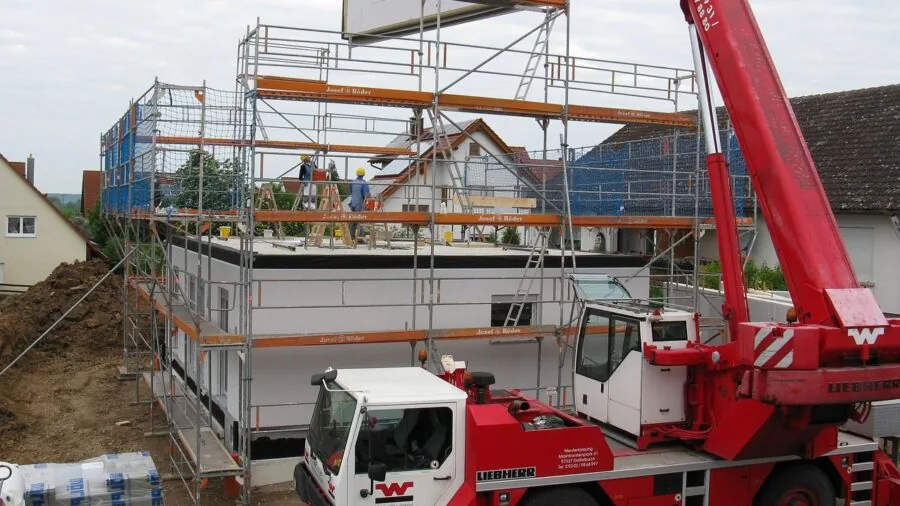
Consumer laser measurers are usually housed in rubber-overmoulded plastic that absorbs minor drops reasonably well.
Professional-grade tools designed for outdoor and construction-site use carry IP ratings: IP54 means protected against dust ingress and water splashing from any direction, while IP65 means fully dust-tight and protected against water jets.
If your tool will spend time on a dusty job site or get caught in the rain, an IP65-rated instrument is worth the higher price. Models without an IP rating should be treated as indoor-only devices.
Pocket-sized units typically weigh under five ounces and slip easily into a cargo pocket or clip to a belt.
That portability is an advantage for someone moving between rooms quickly, but very compact housings can feel cramped in larger hands and may omit features like a tripod thread or a flip-out end-hook.
A tripod thread (standard ¼-20 UNC) is important if you need hands-free operation or if you’re combining the laser with a rotating adapter for horizontal room scanning.
Consider also how the unit is powered: some take standard AA or AAA batteries that are universally available, while others use proprietary lithium-ion packs that require a charger.
Rechargeable models eliminate battery waste and long-run cost, but a dead pack with no spare can halt a job.
Point-to-Point Technology and Camera Viewfinders
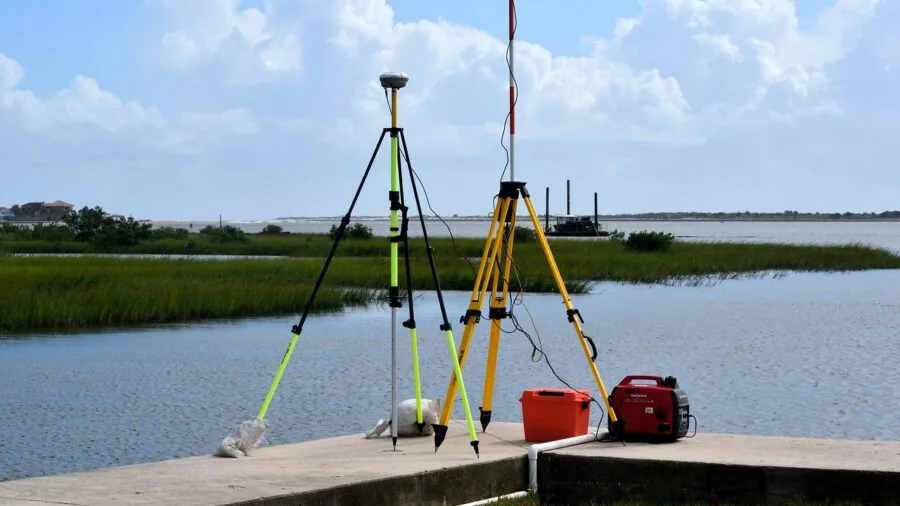
Point-to-point (P2P) measurement technology, sometimes marketed under brand-specific names, lets a laser measurer calculate the straight-line distance between two points that are not directly in line with the device itself.
This is particularly useful in outdoor settings, across irregular terrain, or when measuring façades. It requires two measurement shots from different positions and onboard software to triangulate the true distance.
P2P is a niche feature for most homeowners but invaluable for land surveyors, architects, and site engineers.
Camera viewfinders with optical zoom give users a magnified, on-screen view of the target, which is critical when working outdoors at distances where the laser dot is too far away to see with the naked eye.
Higher-end units in our list feature 4x zoom cameras that make long-range outdoor measurement practical rather than theoretical.
At shorter indoor distances the camera adds little functional value, so if your work is exclusively interior, it’s a feature you can safely deprioritise to keep costs down.
Investing thoughtfully in precision tools carries the same logic across all measurement disciplines, including how you might choose among oscilloscopes for electronic diagnostics.
Why You Should Trust Us
ProductFind is an independent review publication. We do not manufacture, distribute, or sell any of the products we cover, and we have no commercial relationship with any brand that would influence our assessments.
Every laser distance measurer in this article was scored on our 0 to 10 PF Score scale by applying a consistent evaluation framework across the full product set.
We do not conduct our own product trials; our evaluations are grounded in research, published data, expert review consensus, and verified buyer feedback.
Specifically, our research process for this article included: a systematic review of published manufacturer specifications and datasheets; analysis of expert commentary from professional trade publications and specialist tool reviewers; and aggregation of verified buyer feedback from confirmed-purchase reviews across major retail platforms.
Where reviewers reported conflicting findings, we weighted the consensus view and noted areas of genuine disagreement rather than selecting whichever data point supported a predetermined conclusion.
Each PF Score reflects performance across the criteria outlined in the buying guide above, weighted to reflect what matters most to the primary buyer for each category tier.
ProductFind participates in affiliate programmes and may receive a commission if you purchase through a link in this article. That commercial relationship does not affect our scores, rankings, or editorial choices.
Products are ranked by PF Score, not by margin, relationship with a brand, or any other commercial consideration. We flag sponsored content clearly and separately from editorial content; nothing in this article is sponsored.
Final Thoughts
The right laser distance measurer depends almost entirely on where and how you’ll use it.
A construction professional working on large outdoor sites needs a fundamentally different tool than a homeowner measuring rooms before a furniture purchase, and a field engineer doing point-to-point distance work on open terrain has different requirements again.
The good news is that this category covers that entire spectrum, from genuinely capable budget picks through professional instruments that justify a significant investment with corresponding capability and durability.
After evaluating all eleven products in this roundup against consistent criteria, here are our standout awards:
- Best Overall: Bosch GLM400CL 400 Ft Blaze Outdoor Connected Laser Measure. The highest PF Score in the group reflects this tool’s exceptional range, reliable Bluetooth connectivity, and proven outdoor performance at a serious but justifiable price point for regular professional use.
- Best Green-Beam Pick: Bosch GLM165-27CGL 165 Ft Blaze Green-Beam Laser Distance Measure. The green beam delivers meaningfully better dot visibility in ambient light, and the compact, rechargeable form factor suits contractors who move between interior spaces all day.
- Best for Outdoor Professionals: Leica DISTO X6 P2P Kit. The combination of 800-foot range, IP65 weatherproofing, a 4x zoom camera viewfinder, and point-to-point measurement capability makes this the right choice for surveyors and site engineers who need instrument-grade performance.
- Best Mid-Range Upgrade: MiLESEEY S50 Green-Beam Laser Distance Measure. A strong PF Score for its tier, the S50 combines a green beam, rechargeable battery, P2P support, and a colour IPS display into a package priced well below its closest brand-name competition.
- Best Budget Pick: Klein Tools Laser Distance Measure. Klein’s reputation for professional-grade hand tools carries through here: verified buyers consistently praise its accuracy and ease of use at a price accessible to serious DIYers and tradespeople who want a reliable backup unit.
Whichever tier you land in, a laser distance measurer eliminates the measurement errors and awkward solo-stretching that make tape measures frustrating on larger jobs. Pair yours with a purpose-built tool bag to keep it protected and always at hand on site.
Frequently Asked Questions
How accurate are laser distance measurers compared to a traditional tape measure?
Most mid-range and professional laser measurers achieve accuracy of ±1/16 inch or better across their rated range, which is comparable to or better than a carefully used tape measure.
Tape measures introduce human error through sag, angle, and parallax when reading the blade; a laser eliminates most of those variables.
Budget laser units may drift at longer distances, so if precision is critical, look for a model with a stated tolerance of ±2 mm or tighter and verify that the tolerance applies across the full rated range, not just at short distances.
Can laser distance measurers be used outdoors?
Yes, but performance outdoors depends heavily on two factors: laser colour and built-in aids. Red-beam units struggle in bright sunlight because the dot is nearly impossible to see against a lit surface more than 30 feet away.
Green-beam tools perform better but still have limits in direct sun beyond 100 to 150 feet. For serious outdoor work at longer ranges, choose a unit with a camera viewfinder that lets you see the dot magnified on-screen regardless of ambient light.
IP-rated housings (IP54 minimum, IP65 for tough site conditions) protect the optics and electronics from dust and weather exposure.
What is point-to-point (P2P) measurement and do I need it?
Point-to-point measurement calculates the direct distance between two points that the user cannot access from a single standing position. The measurer takes two shots from different angles and uses trigonometry to compute the true straight-line span.
It’s most useful for measuring building façades, distances across open ground, or any situation where a direct line-of-sight shot is obstructed. For indoor residential use, room layout, or straightforward renovation measurements, you will almost certainly never need P2P.
It’s a worthwhile investment only if your work regularly involves outdoor or architectural distance work at range.
Is Bluetooth connectivity worth paying extra for?
Bluetooth adds real value if you document measurements digitally, produce as-built drawings, or work in a paperless field environment.
Pairing the measurer with a dedicated app lets you log readings directly into a floor-plan sketch or export them to a spreadsheet without manual transcription, which is where most measurement errors creep in.
For occasional home use or simple spot-check tasks where you jot the number on a notepad, Bluetooth connectivity is an optional luxury rather than a necessity.
Before paying the premium, verify that the manufacturer’s companion app is actively maintained and compatible with your current phone’s operating system.
What is the difference between a laser distance measurer and a laser tape measure?
A laser distance measurer is a standalone electronic device that uses a laser beam and optical sensor to calculate distance; it has no physical measuring tape.
A laser tape measure is a hybrid tool that combines a traditional retractable metal tape with a built-in laser unit, giving you both a physical blade and an electronic readout in one device.
Laser-only tools tend to offer greater range and more advanced calculation modes, while hybrid tape measures are useful when you need both a short physical measurement and the convenience of a laser for longer spans.
The products reviewed in this article are dedicated laser distance measurers rather than hybrid tape tools.
How should I maintain and store a laser distance measurer?
The lens over the laser emitter and receiver is the most sensitive component. Keep it clean with a soft, dry microfibre cloth; avoid solvents that can leave a residue affecting beam clarity.
Store the unit in the included pouch or a padded section of your tool bag to prevent the lens from picking up scratches in transit. If the tool uses standard batteries, remove them before long-term storage to prevent corrosion.
Rechargeable units should be stored at a partial charge rather than fully depleted. Avoid leaving any laser measurer in a hot vehicle for extended periods, as sustained heat can affect the calibration of the optical sensor over time.
About the author
Noelle is a reviewer and writer for ProductFind who specializes in Test & Measurement. Noelle evaluates products through independent research: specifications, expert review consensus, and verified buyer feedback, and rates each one on the PF Score. Noelle focuses on helping readers pick the right test & measurement for their needs and budget.