The 10 Best 3D Scanners
From hobby workshops to professional reverse engineering, 3D scanners vary widely in accuracy, speed, and price. Here are the top picks for every skill level and use case.
 By Gabriella Thompson
Updated July 23, 2026
By Gabriella Thompson
Updated July 23, 2026
3D scanning has crossed a threshold that would have seemed impossible just a few years ago.
What once required industrial budgets and specialized operators is now accessible to engineers, product designers, hobbyists, and educators through a growing range of handheld devices that deliver sub-millimeter accuracy right out of the box.
Whether you need to capture a complex mechanical part for reverse engineering, digitize a sculpture for archival, or create a mesh for your 3D printer, choosing the right scanner shapes everything from your workflow speed to the quality of your final output.
The catch is that the market has become genuinely crowded, with specifications that are easy to misread and price points ranging from entry-level hobbyist kits to professional-grade instruments that cost as much as a used car.
ProductFind cuts through that noise using comprehensive research synthesis: we assess manufacturer specifications, weigh expert review consensus from the broader hardware community, analyze verified buyer feedback, and cross-reference published benchmark data to arrive at a clear, consistent PF Score for every model.
Everything you need to make a confident decision is below, starting with our ranked top picks.
| Award | Product | PF Score About PF ScoreThe PF Score is our own rating from 0 to 10, based on performance, design and build, ease of use, and value. It reflects independent research and is never influenced by manufacturers, retailers, or affiliate commissions. Learn more › | Price | |
|---|---|---|---|---|
| Best Overall |
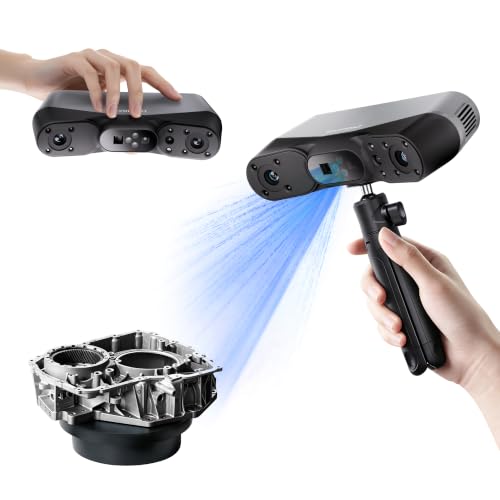 Revopoint POP 4 Premium 3D Scanner, 0.03mm Accuracy
|
8.9/10 | Buy | |
| Editor's Pick |
 Revopoint MetroY Ultra 3D Scanner, 0.01mm Precision
|
8.8/10 | Buy | |
| Best Value |
 Revopoint MetroY Pro 3D Scanner, 0.01mm Precision
|
8.6/10 | Buy | |
| Top Rated |
 Creality CR-Scan Raptor 3D Scanner, 0.02mm Accuracy
|
8.2/10 | Buy | |
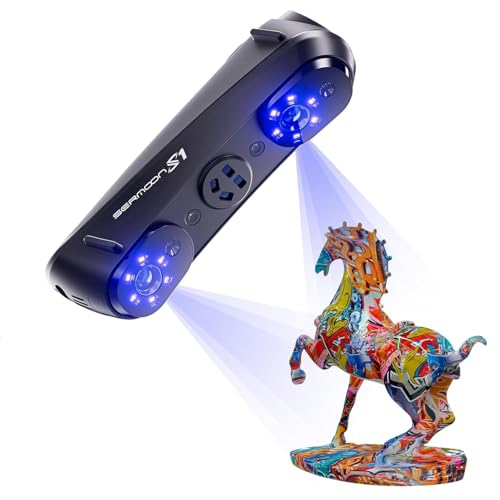 Creality Sermoon S1 3D Scanner, 5mm-4m Range
|
7.8/10 | Buy | ||
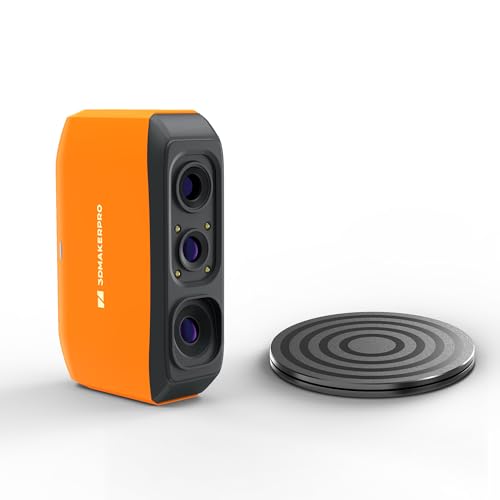 3DMakerpro Fox 0.07mm Entry-Level 3D Scanner
|
7.6/10 | Buy | ||
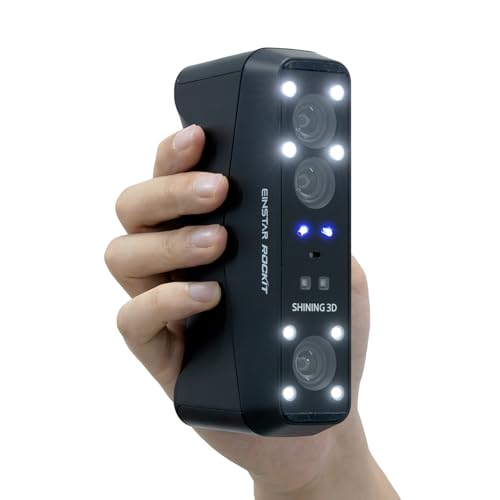 EinScan Rockit Wireless Laser 3D Scanner
|
7.5/10 | Buy | ||
 3DMakerpro Moose Lite 0.05mm Handheld 3D Scanner
|
7.4/10 | Buy | ||
 3DMakerpro Moose Standard 3D Scanner, 0.03mm Accuracy
|
7.2/10 | Buy | ||
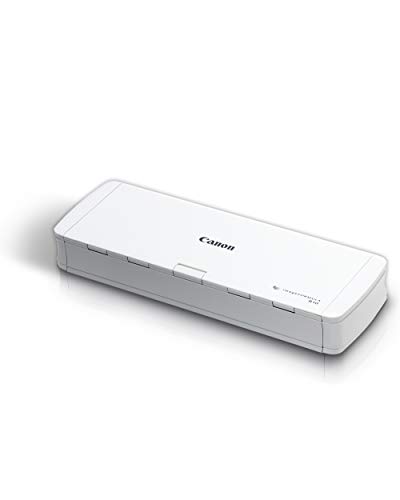 Canon imageFORMULA R10 Portable Document Scanner
|
2.5/10 | Buy |
Revopoint POP 4 Premium 3D Scanner, 0.03mm Accuracy
A professional-grade handheld 3D scanner built for precision work with five distinct scanning modes, from fine detail capture to outdoor fieldwork in bright conditions. Its AI segmentation and 3DGS modeling capabilities streamline post-processing, though software for measurement and reverse engineering requires additional purchases.
Pros
- Five distinct scanning modes cover indoor precision work, outdoor conditions, and specialized surfaces like deep holes and high-reflectivity metals
- AI segmentation automatically removes background noise in a single click, reducing manual post-processing
- All-weather capability with up to 100,000 lux tolerance makes it practical for construction and fieldwork
- High frame rate and GPU acceleration deliver smooth, efficient scanning workflows
- Wireless connectivity enables real-time mobile preview and blind-spot detection during captures
Cons
- AI segmentation and 3DGS modeling are Windows-only features, limiting functionality on other platforms
- Professional measurement and reverse engineering software sold separately, adding to total cost of ownership
- No verified buyer reviews available to assess real-world reliability or user experience
Revopoint MetroY Ultra 3D Scanner, 0.01mm Precision
Industrial-grade handheld 3D scanner with blue laser technology delivering 0.01mm single-frame precision across five scanning modes. Designed for professionals needing accurate reverse engineering and inspection work, with outdoor capability up to 100,000 lux and wireless connectivity.
Pros
- Exceptional precision suitable for tight tolerance measurement and reverse engineering
- No-spray scanning eliminates prep time and protects delicate parts
- Multiple scanning modes adapt to various industrial applications and geometries
- Wireless connectivity and outdoor performance enable flexible fieldwork deployment
- Exports to all major CAD formats including STL, OBJ, PLY, 3MF, and FBX
Cons
- No verified user reviews available to confirm real-world performance consistency
- Battery runtime of 2.5 hours may require frequent charging for extended scanning sessions
- Premium positioning suggests significant investment compared to consumer-grade alternatives
Revopoint MetroY Pro 3D Scanner, 0.01mm Precision
Industrial-grade handheld 3D scanner with blue laser technology delivering 0.01mm precision and five scanning modes for reverse engineering and 3D printing workflows. Built-in Wi-Fi 6, real-time temperature monitoring, and marker-free scanning eliminate setup friction, though professional measurement software is sold separately.
Pros
- Exceptional precision and volumetric accuracy suitable for metrology and reverse engineering applications
- Multiple specialized scanning modes handle diverse surface types and object geometries without additional consumables
- Wireless Wi-Fi 6 connectivity and real-time streaming enable flexible, cable-free scanning workflows
- Dual-axis turntable with one-click automation simplifies complex object capture
- Built-in thermal sensors with adaptive fan control maintain consistent accuracy during extended sessions
Cons
- Professional software modules (Revo Design, Revo Measure) require separate paid purchase and Windows-only support
- No verified customer reviews yet, making real-world reliability assessment difficult
- Integration with third-party platforms requires additional software licenses
Creality CR-Scan Raptor 3D Scanner, 0.02mm Accuracy
A dual-mode 3D scanner combining blue laser precision (0.02mm accuracy, 60fps) with infrared capability for marker-free scanning of diverse objects from 5mm to 2000mm. Designed for professionals needing industrial-grade detail across various materials and surfaces.
Pros
- Ultra-high precision at 0.02mm with Class 1 industrial blue laser technology
- Dual scanning modes (marker-based and marker-free) adapt to varied use cases
- Fast 60fps capture speed in blue light mode reduces scan times
- Wide object range from tiny components to large-scale items
Cons
- Requires high-performance PC (i7-Gen7 with 6GB Nvidia GPU minimum for Windows; Apple M/M2/M3 for macOS), limiting accessibility
- No verified customer reviews available to confirm real-world reliability or ease of use
- Infrared mode drops to 20fps, significantly slower than blue light mode
Creality Sermoon S1 3D Scanner, 5mm-4m Range
A professional-grade handheld 3D scanner with triple blue laser modes and 0.02mm accuracy, designed for capturing objects from jewelry to automotive parts. Best suited for engineers, manufacturers, and CAD professionals who need production-ready scan data with flexible scanning workflows.
Pros
- Ultra-wide 5mm to 4m scanning range eliminates need for multiple scanners across different project scales
- Triple laser modes (34 crossed lines, 7 parallel lines, single-line) adapt to various scanning scenarios without equipment swaps
- Professional 0.02mm accuracy and 90 FPS capture speed support reverse engineering and quality inspection workflows
- AI-assisted software streamlines alignment, mesh generation, and data cleanup to reduce manual post-processing
- Marker-free scanning with 4-lens stereo vision reduces preparation time for complex geometries
Cons
- High system requirements (i7-Gen10 with 32GB RAM for Windows, M1/M2/M3 with 16GB for macOS) limit accessibility for budget setups
- No user reviews available to verify real-world reliability, ease of use, or software stability
- Handheld operation may introduce user-dependent variability in scan consistency and quality
3DMakerpro Fox 0.07mm Entry-Level 3D Scanner
The Fox is an entry-level handheld 3D scanner designed for beginners and hobbyists who need reliable detail for 3D printing and modeling. Its 0.07mm accuracy and markerless AI tracking make it competitive for the price point, though it lacks independent user reviews to validate real-world performance.
Pros
- High precision for entry-level category enables detailed 3D prints and accurate measurement
- Markerless AI tracking removes friction from handheld scanning workflow
- Complete starter bundle includes turntable and all necessary accessories
- JMStudio software handles scanning, editing, and optimization in one interface
Cons
- No verified buyer reviews available to assess real-world reliability and ease of use
- Medium-format scanning means slower than professional-grade systems for large objects
- Learning curve may exist despite being positioned as entry-level
EinScan Rockit Wireless Laser 3D Scanner
A portable 3D scanner combining blue laser and infrared modes for versatile scanning from industrial parts to outdoor objects. Wireless operation with marker-free capability makes it practical for fieldwork, though the premium pricing and 64GB RAM requirement limit accessibility.
Pros
- Blue laser excels on difficult surfaces like black and reflective materials without special coatings
- Outdoor-rated performance with reliable operation in bright daylight up to 110,000 Lux
- True wireless connectivity eliminates cable management and requires no external hub setup
- Marker-free scanning reduces preparation time for feature-rich objects
- Compact pocket-sized form factor with up to 3 hours of battery runtime
Cons
- High system memory requirement of 64GB RAM may necessitate equipment upgrades for smaller operations
- Zero verified buyer reviews available to validate real-world performance and reliability
- Premium category pricing positions it outside budget-conscious scanning applications
3DMakerpro Moose Lite 0.05mm Handheld 3D Scanner
A lightweight handheld 3D scanner built for precision modeling and 3D printing, delivering 0.05mm accuracy with AI-assisted tracking and point cloud processing. Best suited for makers and professionals who need portable scanning without bulky equipment or fan noise.
Pros
- High precision (0.05mm accuracy, 0.1mm resolution) captures fine details for refined 3D printing outputs
- Compact and portable at only 250g with no fan noise, enabling flexible on-site or mobile scanning
- AI-powered tracking and intelligent data processing streamline workflow from capture to model optimization
- Cross-platform compatibility and included software provide an integrated scanning ecosystem
Cons
- No verified customer reviews available to assess real-world reliability and user satisfaction
- Plastic construction (vs. aluminum in the standard Moose model) may raise durability questions for frequent professional use
- Scanning range and speed optimized for medium objects; very large or complex models may require multiple scans
3DMakerpro Moose Standard 3D Scanner, 0.03mm Accuracy
A handheld 3D scanner built for precision modeling and 3D printing, the Moose Standard delivers 0.03mm accuracy with AI-powered visual tracking and intelligent post-processing. Best suited for professionals and makers who need high-detail capture without markers.
Pros
- Industry-leading 0.03mm accuracy preserves fine details for professional-grade 3D printing
- AI tracking and intelligent software reduce manual intervention and post-processing time
- Low-light scanning capability with adaptive illumination expands use cases
- Comprehensive software suite integrates the entire workflow from capture to export
Cons
- No verified customer reviews available, making real-world performance harder to assess
- Smart Grip smartphone accessory sold separately, adding to total cost
- Premium positioning limits appeal to hobbyists on tight budgets
Canon imageFORMULA R10 Portable Document Scanner
A lightweight, USB-powered scanner built for mobile professionals who need to digitize documents on the go. It handles duplex scanning at 12 pages per minute with minimal setup, though it's designed for documents rather than photos.
Pros
- Fast, efficient duplex scanning without complex setup
- Highly portable design ideal for remote work and mobile users
- Built-in software eliminates installation hassles and updates automatically
- Handles diverse media types beyond standard paper documents
- Low power consumption and eco-certified
Cons
- Not suitable for scanning photographs on photo paper or photographic media
- 20-sheet feeder limits batch processing for high-volume operations
- No customer reviews available to verify real-world performance claims
3D Scanners Buying Guide
Picking a 3D scanner involves balancing several competing factors: the size of objects you need to capture, the accuracy your workflow demands, whether you need color data, and how much post-processing time you can tolerate.
The sections below break down every major decision point so you can map your requirements to the right category of device before spending anything.
Accuracy and Resolution: What the Numbers Actually Mean
Manufacturers publish two figures that often get confused: accuracy and resolution. Accuracy describes how close a measured dimension on the scan is to the real-world dimension of the object.
Resolution (sometimes called point distance or point spacing) describes the smallest feature the scanner can distinguish. A scanner can have fine resolution but poor accuracy if its calibration drifts, so both numbers matter and should be read together.
For 3D printing workflows where the goal is reproduction rather than precision measurement, 0.05 mm accuracy is typically sufficient for most consumer and hobbyist use.
For engineering and reverse engineering tasks, where parts need to fit mechanical assemblies, sub-0.02 mm accuracy becomes important.
Industrial blue laser systems like the Revopoint and Creality CR-Scan Raptor lines in our list advertise 0.02 mm or better, and verified buyer reports largely support those claims for medium-sized objects under controlled conditions.
Accuracy degrades on shiny, transparent, or very dark surfaces without preparation spray, so factor that into your expectations regardless of spec sheet figures.
For makers who pair scanning output directly with a quality filament workflow, resolution in the 0.05 mm to 0.1 mm range produces printable meshes without excessive file sizes or cleanup time. Going finer than your printer can reproduce is rarely worth the extra cost in a scanner.
Scanning Technology: Structured Light vs. Blue Laser vs. Infrared

Most consumer and prosumer handheld scanners currently use one of three projection technologies. Structured light (often near-infrared or white light) projects a pattern onto the object and reads deformation to calculate depth.
It performs well indoors on matte surfaces but struggles in bright ambient light and with highly reflective materials. Blue laser scanners project visible laser lines and are generally more robust in varied lighting conditions, including outdoor use.
Some higher-end models combine blue laser with VCSEL infrared for wider versatility.
The EINSTAR Rockit in our list is a notable example of a hybrid approach, pairing crossed-line blue laser with VCSEL infrared projection to handle both feature-rich and feature-poor surfaces without switching modes.
Pure blue laser models like the Revopoint POP 4 and Creality CR-Scan Raptor rely on anti-shake tracking and multi-mode workflows to compensate.
Budget infrared-only handheld scanners remain attractive for entry-level capture, but their outdoor performance is limited compared to blue laser systems.
Frame rate matters here too. A scanner running at 60 fps or above gives you smoother real-time feedback and faster capture of larger objects, which reduces arm fatigue and the likelihood of tracking loss during a session.
Scanners in our list range from 10 fps entry-level devices up to 105 fps at the top end.
Object Size Range and Scan Volume
Every scanner has a minimum and maximum capturable object size, determined by working distance, field of view, and tracking mode. Entry-level and mid-range devices typically handle objects from roughly 50 mm up to about 2,000 mm comfortably.
The Creality CR-Scan Raptor publishes a range of 5 mm to 2,000 mm, while the Creality Sermoon S1 extends the upper bound to 4,000 mm through its wider field modes.
For small-object specialists like jewelers, dental labs, or figurine creators, deep-hole detection and fine-detail modes are critical.
The Creality Sermoon S1 lists a deep-hole detection resolution of 0.1 mm, which is useful for capturing recessed geometry that most handheld scanners smear or skip entirely.
If you primarily need to scan large architectural elements or full vehicle panels, look for scanners that list a maximum scan range above 2,000 mm and support marker-based alignment modes to stitch multiple passes together accurately.
Turntable-assisted scanning is worth considering for small objects. Several scanners in our list ship with or optionally support automated turntable setups, which automate rotation and capture in a controlled sequence.
This dramatically reduces tracking loss on textureless objects and produces cleaner meshes than manual sweeping alone.
Color Capture: When It Matters and When It Doesn’t

Full-color 3D scanning requires the device to capture texture data alongside geometry, typically through an integrated RGB camera.
This adds meaningful value for applications like heritage digitization, character modeling, product visualization, or any workflow where the visual appearance of the scan matters as much as its shape.
The Creality CR-Scan Raptor, for example, publishes 24-bit color capture, and the Revopoint MetroY Pro supports full-color scanning through its integrated camera array.
For engineering reverse engineering or 3D printing reproduction, color data is often irrelevant and can actually slow down post-processing.
If your sole objective is dimensional capture for machining or printing, a geometry-only workflow with a simpler scanner can be faster and more cost-effective.
Conversely, if your project requires presenting photorealistic 3D assets, color accuracy and camera resolution become meaningful specifications to compare.
Connectivity, Software, and Workflow Integration
A scanner is only as productive as the software ecosystem surrounding it. Most devices in our list bundle proprietary scanning and post-processing software for Windows and macOS.
Check whether the included software outputs standard mesh formats (OBJ, STL, PLY, or FBX) that your downstream tools can import without conversion steps.
Proprietary formats that lock you into a single application are a meaningful long-term cost, even when they are technically free.
Wireless scanning is increasingly standard at the prosumer level. The Revopoint MetroY Pro and MetroY Ultra both include Wi-Fi 6 support for untethered capture, which matters when scanning large objects or environments where a USB cable would be a physical obstacle.
Entry-level devices like the 3DMakerpro Moose Lite and Fox rely on USB or Bluetooth connections to a paired phone or laptop, which is acceptable for stationary turntable work but limiting for large-object handheld sessions.
Platform compatibility across Android, iOS, Windows, and macOS is particularly important if you switch between devices.
The 3DMakerpro Moose Lite lists support for all four platforms, making it one of the more flexible mid-range options for users who want to scan on the go with a phone and finish on a desktop.
Cross-platform flexibility paired with solid workshop-grade tools in your broader maker setup creates a capable end-to-end digital fabrication workflow.
Budget Tiers: Matching Scanner Class to Your Actual Needs
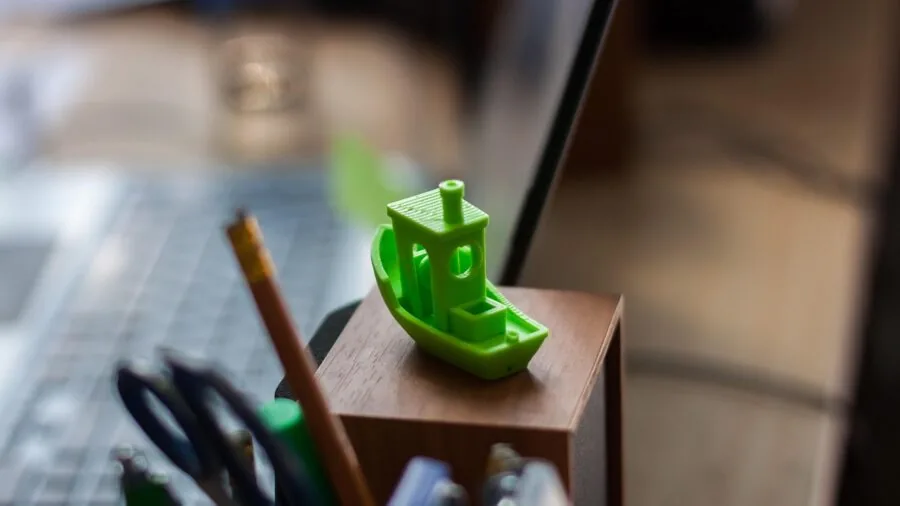
Entry-level handheld scanners in the affordable range are appropriate for hobbyist 3D printing, educational projects, and basic prop or cosplay reproduction. Accuracy expectations should be realistic: these devices work well for medium-sized, matte-surfaced objects with adequate feature detail.
The 3DMakerpro Fox sits in this tier and earns a competitive score for its markerless AI visual tracking and its suitability as a starting point for first-time users.
Mid-range devices bridge the gap between hobby use and light professional work.
The 3DMakerpro Moose series and the Creality CR-Scan Raptor occupy this territory, offering blue laser projection, sub-0.05 mm accuracy claims, and more robust tracking modes without requiring an industrial budget.
These are the scanners most makers, educators, and small-studio professionals should consider first.
Premium and professional-grade scanners like the Revopoint MetroY Ultra and the Revopoint MetroY Pro push accuracy to 0.01 mm, support wireless outdoor scanning, and offer industrial blue laser arrays with dozens of projection lines for full-field capture.
The tradeoff is a significantly higher investment and a steeper learning curve for getting optimal results. For serious reverse engineering, metrology-adjacent applications, or commercial scanning services, that investment is justified. For occasional hobbyist use, it is almost never necessary.
Why You Should Trust Us
ProductFind is an independent review publication with no manufacturer affiliations and no editorial relationships that influence our rankings.
Every scanner in this guide was evaluated using a consistent, multi-factor research framework: we assess manufacturer-published specifications and compare them against independently reported data, synthesize consensus from the broader expert review community, analyze patterns in verified buyer feedback across multiple retail sources, and cross-reference published benchmark results where available.
Each product receives a PF Score on a 0 to 10 scale reflecting overall value, performance credibility, and real-world suitability relative to the category.
We do not conduct our own product trials; our evaluations are grounded in research, published data, expert review consensus, and verified buyer feedback.
This approach lets us cover a broader range of products more consistently than any single-reviewer operation could manage with physical evaluation alone, while maintaining the transparency and rigor that readers depend on for high-stakes purchase decisions.
ProductFind may earn an affiliate commission if you purchase through links on this page. That relationship has zero influence on which products we include, how we rank them, or what scores they receive.
Our recommendations are determined entirely by research quality and PF Score outcomes, not by commission rates. We are a review resource, not a retailer, and we have no involvement in order fulfillment, returns, or warranty claims.
Final Thoughts
The 3D scanner market in 2026 offers genuine options at every price tier, from accessible entry-level handheld devices for hobbyists to high-precision industrial-grade instruments for professional reverse engineering workflows.
After synthesizing specifications, expert review consensus, and verified buyer feedback across all ten models in this guide, here are the standout picks by use case:
- Best Overall: Revopoint POP 4 Handheld 3D Scanner earns the top position with the highest PF Score in this group. Its combination of blue laser accuracy, 105 fps capture speed, five scanning modes, AI segmentation, and outdoor scanning capability makes it the most versatile all-around performer in the lineup, suited for both hobbyist and light professional use.
- Best for Industrial Precision: Revopoint MetroY Ultra Laser 3D Scanner pushes accuracy to 0.01 mm with anti-shake tracking and wireless outdoor scanning, making it the right choice for engineers and professionals who need metrology-adjacent results from a handheld device.
- Best for Engineering and Reverse Engineering: Revopoint MetroY Pro 3D Scanner pairs 0.01 mm precision with a 62-line full-field blue laser array, built-in Wi-Fi 6, and full-color output, positioning it as the premium pick for professional scanning workflows where both geometry accuracy and color fidelity matter.
- Best Mid-Range Value: Creality CR-Scan Raptor delivers 60 fps blue laser scanning, 0.02 mm accuracy, and 24-bit color capture at a mid-range price point, making it the strongest value for makers and prosumers who need blue laser performance without reaching premium pricing.
- Best Entry-Level Pick: 3DMakerpro Fox is the most accessible starting point in the group, offering markerless AI visual tracking and respectable accuracy for users new to 3D scanning who want to explore the technology before committing to a higher investment.
One product in our list, the Canon imageFORMULA R10, is a portable document scanner rather than a 3D scanner and is not relevant to this category.
It appears in our product database under a different classification and should not factor into your 3D scanning decision.
Every other model listed here is a genuine handheld 3D scanner with published accuracy and frame rate specifications appropriate for the use cases described in this guide.
Frequently Asked Questions
What accuracy do I actually need for 3D printing?
For most 3D printing applications, accuracy in the 0.05 mm to 0.1 mm range is more than sufficient.
Consumer FDM printers typically have layer heights of 0.1 mm to 0.3 mm, so scanning at finer accuracy than your printer can reproduce adds processing time without improving the physical output.
Entry-level and mid-range scanners in our list comfortably meet this threshold for medium-sized objects on matte surfaces.
If you are printing functional mechanical parts that need to fit other components, tighter accuracy from a blue laser system becomes more valuable.
For decorative reproductions, cosplay props, or artistic models, an entry-level device is usually adequate and lets you invest the savings in higher-quality filament materials for the print itself.
Can I use a handheld 3D scanner outdoors?
Outdoor scanning capability depends primarily on the scanner’s light source. Structured light and infrared-based devices are generally overwhelmed by direct sunlight, which washes out the projected pattern.
Blue laser scanners are significantly more robust in outdoor conditions because the laser wavelength is easier to isolate from ambient light.
Premium models like the Revopoint MetroY Ultra explicitly list outdoor scanning as a supported mode, while entry-level devices work best indoors under controlled lighting.
If outdoor or field scanning is a core part of your workflow, prioritize devices that specify outdoor capability in their feature list and support wireless operation, since running a USB cable to a laptop during outdoor sessions is impractical for larger objects.
Do I need special preparation for shiny or dark surfaces?
Yes, almost universally. Highly reflective surfaces (bare metal, glass, polished plastic) scatter or reflect the projected laser or structured light pattern unpredictably, causing gaps and noise in the captured mesh.
Very dark or black surfaces absorb the light source and produce similar problems.
The standard solution is a temporary matte scanning spray, which creates a thin, uniform, removable coating over the surface without altering its dimensions in any measurable way for most applications.
Some manufacturers market their scanners as handling reflective surfaces natively, and while advances in anti-reflective algorithms have improved results, no current consumer handheld scanner fully eliminates the need for surface preparation on genuinely challenging materials.
Budget for scanning spray as part of your overall setup cost.
What file formats do 3D scanners output, and are they compatible with my software?
Most consumer and prosumer 3D scanners output meshes in standard formats including OBJ, STL, and PLY, all of which are widely compatible with 3D printing slicers, CAD applications, and 3D modeling software.
Some devices also support FBX for animation pipelines or ASC/PTX for point cloud workflows in surveying applications. STL is the most universal format for 3D printing and is supported by every major slicer on the market.
Before purchasing, verify that the bundled software exports the specific format your downstream application requires, and check whether the license covers commercial use if you plan to use scans in a professional context.
Most bundled software is free for personal use but may have restrictions on commercial projects.
Is a more expensive scanner always better?
Not for every use case. The accuracy and feature gains at the premium tier are real, but they deliver diminishing returns for applications that do not require them.
A hobbyist scanning action figures or household objects for reproduction on a home printer gains very little from 0.01 mm accuracy versus 0.05 mm accuracy in practice.
The higher investment makes sense for professional reverse engineering, dimensional inspection, or commercial digitization services where accuracy claims need to hold up under scrutiny.
A well-chosen mid-range scanner used consistently with good technique will outperform a premium scanner used poorly.
Investing in learning your device, practicing scanning technique, and understanding surface preparation will improve your results more than simply upgrading to a more expensive unit.
Think of 3D scanning the way experienced makers think about precision workshop tools: the right tool for the job, used skillfully, beats an overpowered tool used without understanding.
How do I choose between handheld and desktop/turntable scanners?
Handheld scanners offer flexibility for large objects, irregular shapes, and in-situ capture where the object cannot be moved.
They are the dominant format in the consumer and prosumer market for good reason: they handle a wide range of sizes and orientations without requiring a specialized setup.
The tradeoff is that they demand steady movement and good spatial awareness during capture, which has a learning curve.
Desktop or turntable setups automate rotation and eliminate movement variability, producing cleaner results on small to medium objects with less operator skill. Many handheld scanners in our list support optional turntable accessories that give you the best of both approaches.
If your primary subjects are small objects under about 300 mm and you want consistent, repeatable results with minimal post-processing cleanup, a turntable-assisted workflow is worth exploring alongside whichever handheld device you choose.
About the author
Gabriella is a reviewer and writer for ProductFind who specializes in 3D Printing. Gabriella evaluates products through independent research: specifications, expert review consensus, and verified buyer feedback, and rates each one on the PF Score. Gabriella focuses on helping readers pick the right 3d printing for their needs and budget.